Mapping Cross Direction Bending Resistance to Crease Recovery in Folding Boxboard
Cross direction bending resistance governs crease recovery force, requiring precise scoring die geometry to prevent carton springback during high-speed packing.


Score
Multi-ply folding boxboard relies on a stiff middle layer of chemi-thermomechanical pulp framed by dense chemical pulp liners to maximize flexural rigidity per unit weight. In cross-direction bending, hardwood and softwood fibers align predominantly along the machine wire during sheet formation, creating a structural asymmetry where cross-machine rigidity ranges from forty to fifty percent of machine-direction values. When an automated packaging press creases this substrate, the tool impacts the sheet perpendicular to the fiber alignment.
This localized mechanical deformation disrupts internal fiber bonds within the mechanical pulp core without breaking the outer continuous chemical pulp layers.
Softwood fibers align machine-wise during forming. Measuring bending resistance under ISO 2493-1 requires a fifty-millimeter test span, a fifteen-degree deflection angle, and a loading point positioned ten millimeters from the clamping line, conducted under standard atmospheric conditioning of twenty-three degrees Celsius and fifty percent relative humidity. The measured cross-direction force dictates how much energy the board absorbs before yielding.
Lower baseline bending resistance across the grain reduces the mechanical work required to induce localized delamination inside the CTMP layer. If the internal core lacks adequate thickness or density, matrix penetration crushes the entire ply structure rather than creating controlled shear planes.
Shear Strain in Multi Ply Boxboard Mechanics
Internal fiber bond structures degrade controlledly when a steel rule forces sheet material down into a female matrix. This displacement forces the upper bleached chemical liner into compression while placing the lower liner under tensile loading. The thick central mechanical pulp layer experiences intense shear stress along horizontal planes.
Effective creasing forms multiple internal micro-delaminations within this core layer, effectively dividing one thick solid beam into several thinner, unbonded parallel plies. Because bending stiffness scales with the cube of ply thickness, internal delamination drastically lowers the local flexural rigidity along the impression line while preserving overall surface integrity.
ISO 2493-1 two-point bending resistance testing at a fifteen-degree deflection angle yields a cross-direction force threshold of eight millinewtons on a two hundred and thirty gram per square meter folding boxboard conditioned at twenty-three degrees Celsius and fifty percent relative humidity.
CD stiffness dictates creasing force. When cross-direction bending resistance is high, the mechanical force needed to initiate internal ply separation increases proportionally. Inadequate scoring energy fails to separate the core plies, leaving the middle ply structurally intact.
The unyielded core then acts as a solid elastic element during carton erection, storing elastic strain energy that resists ninety-degree folding. Conversely, excessive force fractures the delicate outer chemical liner, destroying the package barrier and weakening the outer score hinge against repeated flexing on cartoning lines.

Delamination Behaviors across Fiber Orientations
Machine direction alignment concentrates bending stresses along transverse cell walls, requiring deeper matrix penetration to yield permanent deformation. Cross-machine scoring encounters fibers lying parallel to the crease line. Matrix insertion slides these parallel fiber bundles past one another, generating shear failure at lower vertical displacement levels than longitudinal scoring demands.
The relationship between uncreased cross-direction stiffness and creased folding resistance governs how cleanly the hinge articulates without buckling adjacent panel surfaces.
CTMP cores maintain sheet bulk. Optimizing the female channel width and male rule gauge balances vertical displacement against core shear resistance. Standard trade parameters for folding boxboard specify female channel widths equal to one point six times the board caliper plus the rule thickness for cross-direction scores, whereas machine-direction scores require wider channels to accommodate higher transverse fiber compression.
Improper tooling parameters cause uneven ply shear, leading to panel bowing during high-speed carton erecting operations.
| Grammage (g/m²) | Caliper (µm) | MD Bending Resistance (mN) | CD Bending Resistance (mN) | Target CD Crease Force (mN) |
|---|---|---|---|---|
| 215 | 350 | 125 | 55 | 22 |
| 250 | 430 | 210 | 90 | 36 |
| 280 | 490 | 300 | 130 | 52 |
| 315 | 560 | 420 | 180 | 72 |
| 350 | 640 | 580 | 250 | 100 |
| Bending resistance measured at 15-degree deflection angle over a 50 mm span. Target crease force measured at 90-degree fold angle under ISO 5628 protocols. | ||||
- Bleached chemical pulp outer plies supply tensile resistance on the convex side of the fold while resisting surface cracking under high stress.
- Chemi-thermomechanical pulp middle core delivers high volume per unit weight, creating internal shear planes during female matrix penetration.
- Pigment coat surface layers maintain smooth optical properties but crack if outer liner strain exceeds three percent total elongation.
- Starch bond additives reinforce inter-ply adhesion levels, preventing full ply separation when deep matrix penetration occurs.
Inadequate delamination shear during matrix impact leaves residual elastic stress in the outer liners, driving high springback moments that jam cartoner folding arms.

Cantilever
Two-point bending resistance testing applies an angular moment at a set distance from the clamping jaw to measure structural rigidity. ISO 2493-1 defines this apparatus setup, where a flat rectangular specimen of thirty-eight or fifty millimeters width is clamped at one end while a motorized load shoe flexes the free end through a designated deflection angle. For folding boxboard, a fifteen-degree deflection angle over a fifty-millimeter bending length provides the standard baseline for flexural resistance.
The instrument registers the peak resistance force in millinewtons, separating machine-direction from cross-direction performance profiles.
Matrix alignment prevents asymmetrical folds. The flexural resistance of uncreased board directly influences the force recorded during subsequent crease testing under ISO 5628. When testing crease recovery, the sample contains a central score line positioned precisely over the pivot axis of the testing jaw.
The instrument rotates the creased specimen to a ninety-degree angle and measures the residual bending force transmitted across the crease line over a specified dwell time. The ratio of creased bending force to uncreased bending force defines the crease stiffness percentage.

Matrix Geometry and Rule Width Interactions
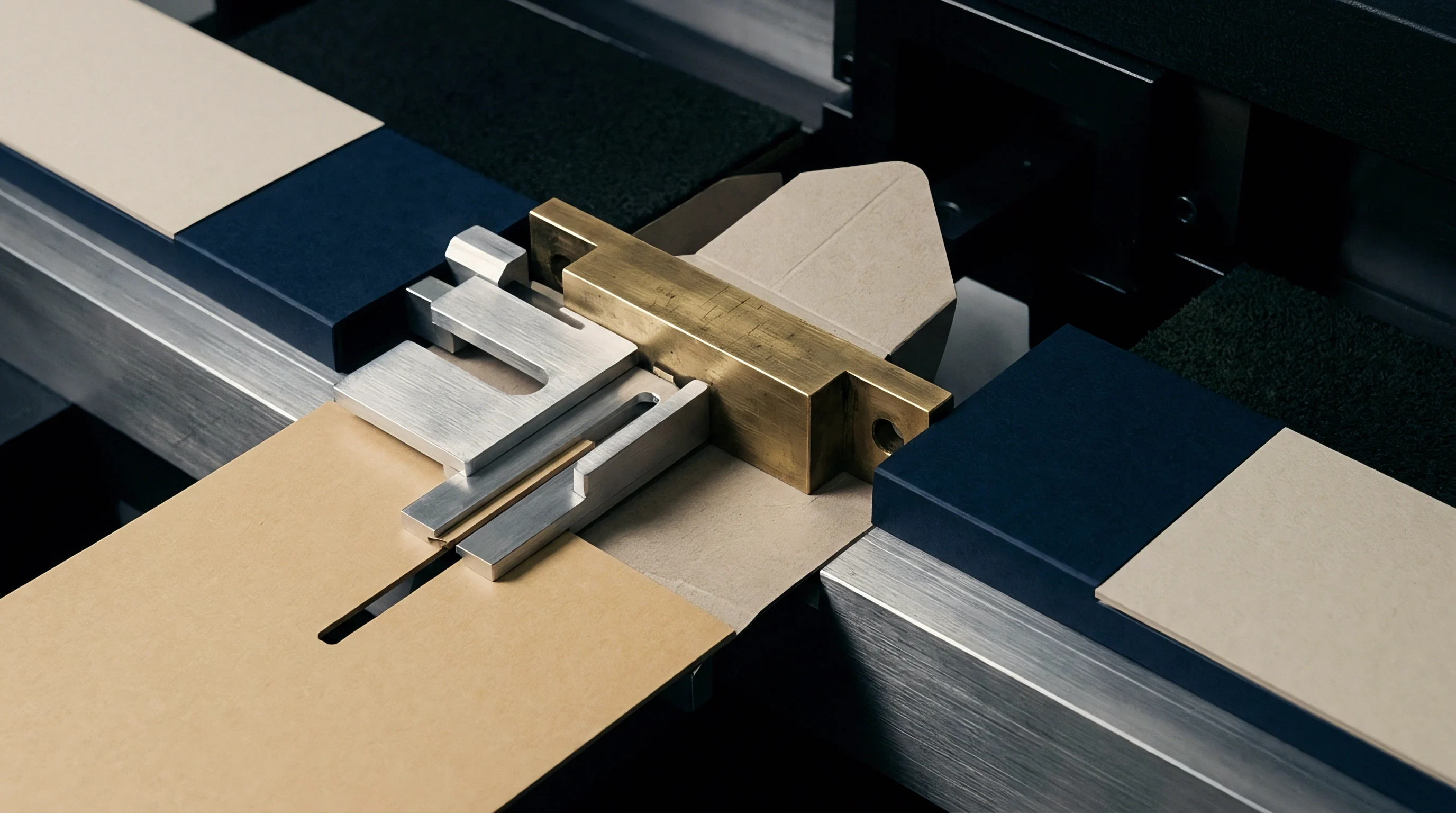
Tooling dimensions for female channels dictate whether the central CTMP core suffers clean shear or destructive surface rupture. Selecting a creasing rule thickness matched to carton caliper ensures uniform distribution of compressive forces. A standard two-pt steel rule measuring zero point seven one millimeters thickness serves board calipers up to four hundred micrometers.
Board calipers exceeding four hundred micrometers demand three-pt rules measuring one point zero five millimeters thickness to broad-spread the vertical impact zone, reducing localized stress concentrations on the top coated liner.
Matching female channel depth to board caliper prevents liner shearing while establishing a clean internal delamination zone.
Crease stiffness drops during dwell. Channel width controls the clearance available for material displacement during matrix entry. If the female channel is too narrow, the board experiences extreme lateral compression, crushing the mechanical pulp plies and splitting the top coating.
Conversely, an oversized channel allows the board to bend loosely into the cavity without inducing sufficient shear strain, producing an under-delaminated score with excessive springback elasticity.

Dimensional Relationships in Female Channels
Calculating groove width requires summing two board thicknesses plus the physical thickness of the steel insertion blade. For cross-direction scoring on folding boxboard, a multiplication factor of one point six applied to sheet caliper compensates for transverse fiber compression dynamics. Machine-direction scores demand a factor of one point8 to two point zero due to the higher resistance of longitudinal fiber bundles entering the matrix opening.
Higher caliper demands wider grooves. Depth calculations align female channel depth directly with sheet caliper. Rubber counter-crease strips or steel counter-plates must maintain precise alignment with the male rule centerline within a tolerance of ten micrometers.
Lateral misalignment skews the crease bead, generating unequal folding resistance on opposing carton flaps during high-speed erecting processes.
- Initial caliper verification verifies board thickness across the web width before tooling selection.
- Tooling ratio selection sets the female channel width to board thickness plus rule gauge.
- Impression depth adjustment lowers the creasing rule in ten micron increments until delamination occurs without liner tearing.
- Crease recovery measurement tests folded sample resistance on an automated tester after fifteen seconds of dwell.
Mill representatives frequently attribute elevated crease springback to atmospheric moisture absorption during transit rather than uneven pulp distribution across the wire.

Recovery
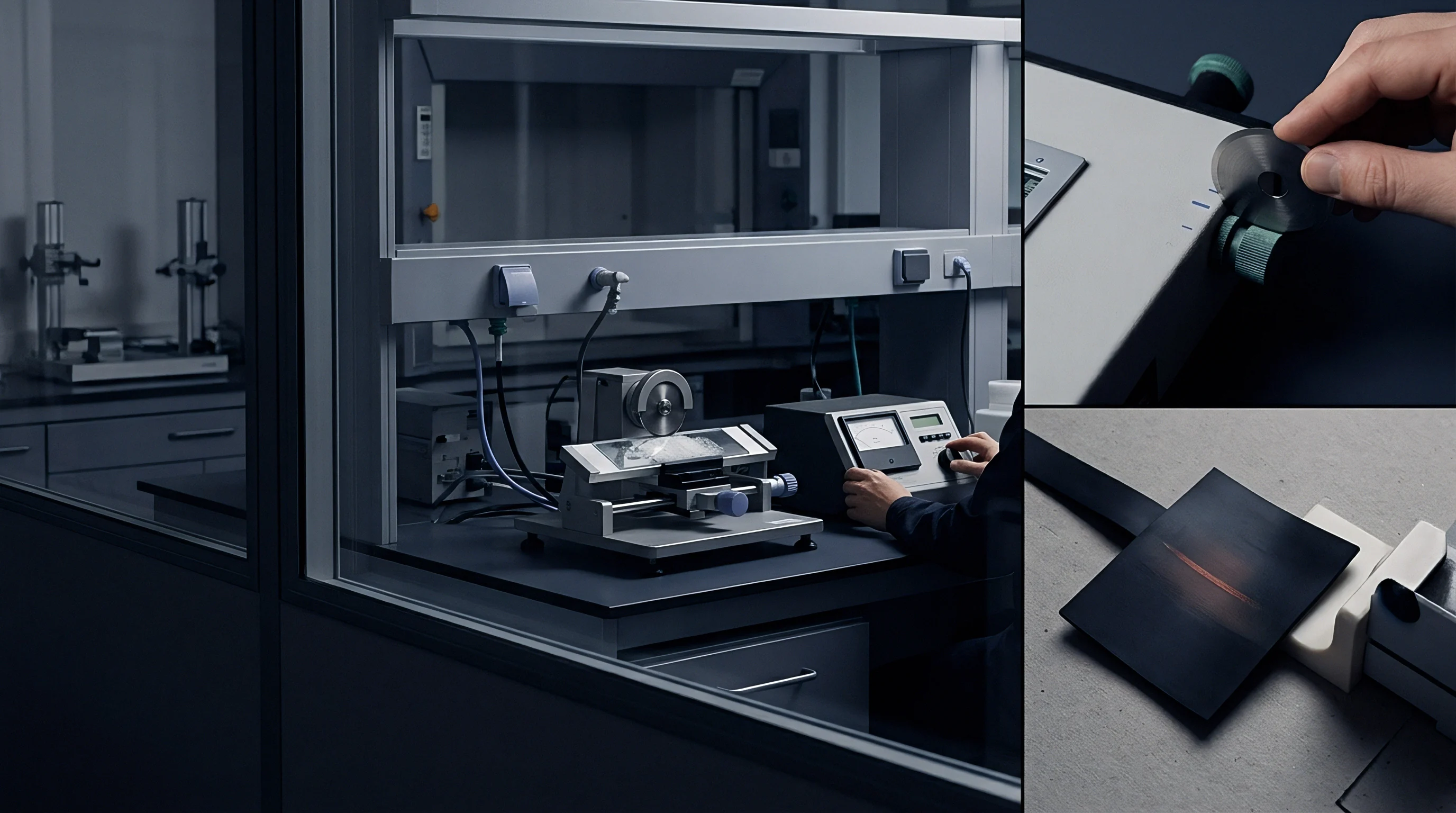
Crease stiffness ratio measures the percentage of uncreased bending force retained by a board line after folding to ninety degrees. ISO 5628 outlines the mechanical protocol for determining this parameter using an automated crease recovery tester. A creased test strip measuring thirty-eight millimeters in width is clamped in a motorized vise, with the score line aligned parallel to the bending axis.
The instrument flexes the specimen to ninety degrees within two seconds, holding the fold while continuous load cells record the declining springback force in millinewtons across a fifteen-second test window.
Outer chemical plies absorb tension. Elastic recovery force declines exponentially during the initial seconds of holding due to stress relaxation within the damaged polymer networks of the fibers. The force value recorded at two seconds represents the immediate resistance encountered by high-speed cartoning machine components during initial sleeve opening.
The value at fifteen seconds reflects the permanent residual springback force acting against gluelines on finished cartons stored in distribution warehouses.

Why Does Cross Direction Resistance Dictate Crease Force Ratios?
Anisotropic alignment of softwood fibers causes transverse folds to encounter significantly lower flexural rigidity than longitudinal folds. Because uncreased cross-direction bending resistance is intrinsically lower than machine-direction resistance, achieving a balanced carton erecting force requires creating lower absolute crease resistance along cross-direction score lines. A carton erected from a flat sleeve relies on orthogonal score lines folding simultaneously.
If cross-direction creases maintain an excessively high crease stiffness ratio, the carton panels bulge outward, causing dimensional distortion across the main body.
Lignin networks relax under flexure. Ideal crease stiffness ratios for folding boxboard fall between thirty percent and fifty percent of the original uncreased bending resistance. Ratios exceeding fifty-five percent indicate insufficient core delamination, forcing packaging machines to exert higher erecting torque.
Ratios dropping below twenty-five percent signal severe fiber damage, resulting in weak, floppy hinges that fail to maintain square carton geometry under top-load compression forces.

Viscoelastic Decay and Springback Kinetics
Polymeric lignin and hemicellulose networks relax stress over initial dwell seconds inside the folding mechanism. In mechanical pulp cores, the amorphous lignin matrix exhibits pronounced time-dependent viscoelastic decay. Immediately after ninety-degree deflection, elastic strain recovery attempts to restore the flat sheet profile.
As stress relaxation proceeds, micro-fractures within the CTMP layer absorb energy, permanently setting the fold angle.
DIN 55437 testing dictates that a crease stiffness ratio exceeding fifty-five percent on a ninety-degree fold causes dimensional bowing on side panels of automated shelf-ready packaging.
Carton erectors require predictable springback. Mathematical modeling links uncreased cross-direction resistance to crease force through a shear-yield constant specific to the furnish composition. Virgin mechanical pulps exhibit higher viscoelastic relaxation rates than recycled fiber furnishes, allowing virgin folding boxboard to hold a fold with lower continuous springback force at equivalent caliper levels.
| Dwell Time (s) | Crease Force 250 gsm (mN) | Crease Force 350 gsm (mN) | Recovery Angle (deg) | Crease Stiffness Ratio (%) |
|---|---|---|---|---|
| 0.5 | 58 | 162 | 88.5 | 64.8 |
| 2.0 | 45 | 124 | 84.2 | 49.6 |
| 5.0 | 38 | 106 | 81.0 | 42.4 |
| 10.0 | 34 | 95 | 78.5 | 38.0 |
| 15.0 | 32 | 90 | 77.0 | 36.0 |
- Liner tensile fracturing occurs when female channel width is set below two board calipers, overstretching outer bleached chemical layers.
- Core crushing failure arises when excessive penetrative depth destroys mechanical pulp fibers rather than shearing internal hydrogen bonds.
- Asymmetric bead rolling develops when rule alignment shifts relative to female groove centers, creating uneven carton panel lengths.
- Flute telegraphing distortion shows on laminated boxboards where local flexural stiffness spikes across inner liner gaps.
Whether micro-fibrillated cellulose additions to the CTMP ply can suppress elastic memory without raising raw furnish costs remains undetermined across commercial board mills.


Converter
High-speed packaging lines require carton blanks with consistent fold resistance to maintain production rates above four hundred packs per minute. Automated cartooning machines pull flat side-seams folded sleeves from a magazine using vacuum suction cups, rotating them against fixed mechanical swords to square the body panels. The force resisting this rotation is carton erecting torque, which directly correlates with cross-direction crease stiffness.
Elevated cross-direction crease resistance forces vacuum cups to lose suction, resulting in machine jams, severe line stoppages, and carton spoilage.
Over-creasing breaks inner liner bonds. In side-seam glued cartons, side panels fold along cross-direction score lines while end flaps articulate along machine-direction scores. Achieving uniform opening performance demands balancing cross-direction and machine-direction crease forces.
Because cross-direction uncreased stiffness is lower, die-cutting operators must adjust cross-direction scoring rule impression depth independently from machine-direction rules to achieve matched absolute crease force levels in both axes.
Erecting Torque and Side Flap Resistance
Mechanical packaging arms apply rapid rotary motion against score lines to open folded flat sleeves into square boxes. Resistance encountered during this dynamic motion depends on the initial crease stiffness measured at two seconds dwell time. Higher initial stiffness increases the kinetic energy needed to square the blank.
If the required erecting force exceeds the structural column strength of the side panels, the panels buckle outward, creating permanent creases across display surfaces.
Consistent cross-direction score delamination prevents carton panel bowing on high-speed end-load cartoning machinery operating above four hundred units per minute.
Bending resistance drops with humidity. Side flap closure operations apply cold dextrin or hot-melt adhesive before tucking end flaps at high speed. Excessive springback force in cross-direction score lines exerts continuous outward tension on freshly glued joints.
If springback force exceeds the green-tack strength of the setting adhesive, flap seals burst open inside the compression belt, causing unsealed packs to exit the production line.

Worked Example of Tonnage Selection for High Speed Packaging
Assume a packaging buyer evaluates two 350 gsm board options for an order of five hundred thousand folding cartons running on an end-load cartoner operating at four hundred and fifty packs per minute. Option A uses a standard virgin FBB with a caliper of 520 micrometers, a cross-direction bending resistance of 18.0 mN under ISO 2493-1, and a target cross-direction crease force of 6.5 mN. Option B uses a downgauged high-bulk virgin FBB with a basis weight of 315 gsm, a caliper of 520 micrometers, a cross-direction bending resistance of 16.0 mN, and a target cross-direction crease force of 5.5 mN.
Option A arrives at a delivered cost of 1,450 USD per tonne, providing a yield of 5,520 sheets per tonne based on parent sheet sizes. Option B arrives at a delivered cost of 1,580 USD per tonne, but yields 6,130 sheets per tonne due to reduced basis weight. Evaluating raw material expense demonstrates that Option B costs 257.75 USD per thousand parent sheets, whereas Option A costs 262.68 USD per thousand parent sheets, generating an initial material savings of 1.88 percent on Option B.
Evaluating converting performance introduces mechanical efficiency variables. Option A exhibits a crease stiffness ratio of 36.1 percent, maintaining carton opening torque under 120 Nmm on the packaging line, resulting in an average spoilage rate of 0.3 percent. Option B exhibits a higher crease stiffness ratio of 48.0 percent due to higher CTMP content density, elevating opening torque to 155 Nmm.
This elevated torque causes minor vacuum cup slippage, increasing line spoilage to 1.8 percent and inducing twelve line stoppages per shift.
A shift stoppage costs 450 USD in lost line availability. Across a production run of five hundred thousand cartons, Option A generates 1,500 spoiled cartons, costing 394 USD in material loss with zero downtime charges. Option B generates 9,000 spoiled cartons, costing 2,320 USD in material loss, plus three thousand six hundred USD in accumulated line downtime charges across eight production shifts.
Net landed cost analysis proves Option A saves 3,194 USD over Option B across the full production run, demonstrating that lower initial sheet stiffness without proper crease force optimization increases total finished pack expense.
| Parameter | Option A (Standard FBB) | Option B (High-Bulk FBB) |
|---|---|---|
| Basis Weight (g/m²) | 350 | 315 |
| Caliper (µm) | 520 | 520 |
| CD Bending Resistance (mN) | 18.0 | 16.0 |
| CD Crease Resistance (mN) | 6.5 | 7.7 |
| Crease Stiffness Ratio (%) | 36.1 | 48.0 |
| Parent Sheet Yield (sheets/tonne) | 5,520 | 6,130 |
| Base Sheet Cost (USD/1k sheets) | 262.68 | 257.75 |
| Line Spoilage Rate (%) | 0.3 | 1.8 |
| Net Landed Cost per 100k Packs (USD) | 26,347.00 | 26,985.80 |
- Measure caliper across ten random sheets per pallet arrival using a dead-weight micrometer under ISO 534 conditions.
- Determine cross direction bending resistance on ten uncreased specimens using an ISO 2493-1 compliant two-point tester.
- Crease test specimens on a laboratory creasing press using standard rule thickness and channel width combinations.
- Record crease force at ninety degrees after fifteen seconds using an ISO 5628 apparatus.
- Calculate crease stiffness ratio and confirm compliance against the specified thirty to fifty percent tolerance band.
Matching channel width directly to board thickness prevents surface cracking while preserving structural squareness during cartoning operations.

Allowance
Technical delivery specifications for folding boxboard specify tolerance limits for bending resistance and crease force ratio across manufacturing batches. ISO 2493-1 establishes testing protocols, but mill certificates report statistical averages across master reel widths. Cross-machine profile variations cause stiffness fluctuations up to plus or minus eight percent from nominal targets across a single tambour.
Sourcing contracts must account for these production tolerances when specifying board grades for critical packaging applications.
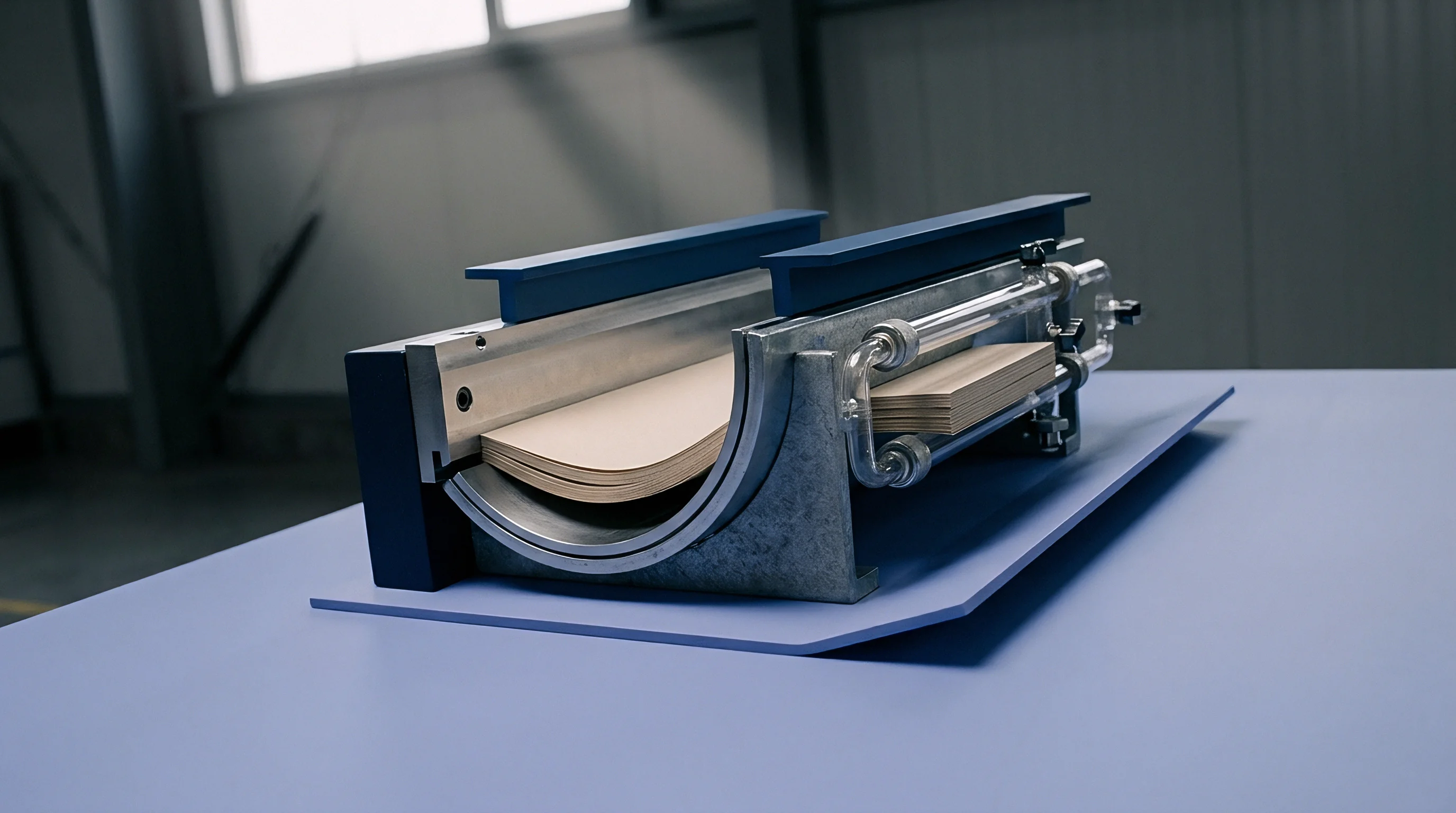
Mill certificates state nominal stiffness. Environmental conditions during transit and storage introduce further dimensional instability. Chemi-thermomechanical pulp absorbs atmospheric moisture rapidly when relative humidity exceeds sixty percent.
A three percent increase in moisture content reduces cross-direction bending resistance by fifteen to twenty percent, softening the mechanical core and altering the established crease stiffness ratio. Unconditioned converting plants risk processing stock with altered flexural mechanics, leading to variable scoring depth during die-cutting runs.
Contractual Tolerances and Environmental Drift
Standard mill performance guarantees permit eight percent variance in basis weight and ten percent variance in flexural rigidity. When cross-direction stiffness drops toward the lower specification limit, standard die-cutting tooling setup applies excess compression, resulting in fiber fracture along score lines. Conversely, when stock arrives at the upper stiffness tolerance limit, standard creasing impressions fail to achieve targeted delamination depth, elevating crease recovery forces above cartoning machine limits.
Thicker rules prevent liner bursting. Quality specifications must define acceptance criteria based on both uncreased cross-direction resistance and post-crease recovery force tested under ISO 187 conditioning standards. Specifying a mandatory crease stiffness ratio band between thirty-two and forty-eight percent on incoming goods-in documentation protects converters against extreme core variability.
Disputing out-of-spec deliveries requires submission of mill test reports backed by independent laboratory verification using conditioned specimens.
Standard purchasing addendums requiring certified ISO 2493-1 cross direction stiffness values on every pallet mill ticket permit buyers to reject lots exhibiting crease resistance ratios above fifty-five percent.