Dynamic Mechanical Analysis Protocols for High Speed Board Conversion and Structural Deflection Limits
Dynamic Mechanical Analysis maps temperature and frequency-dependent storage moduli to optimize paperboard flexural stiffness and eliminate score cracking at high converting speeds.


Modulus
Dynamic mechanical testing evaluates viscoelastic behavior by applying oscillating mechanical stress across controlled temperature and frequency ranges. In solid bleached board, folded boxboard, and coated recycled board, paper fibers and synthetic binder systems display time-dependent strain responses under mechanical load. Standard static testing methods fail to capture the millisecond-scale deformations that occur during web transport and die-scoring on high-velocity packaging lines.
Dynamic Mechanical Analysis measures both the storage modulus, which quantifies elastic energy storage, and the loss modulus, which measures viscous dissipation, to predict how paperboard behaves under rapid stress cycles.

Viscoelastic Response Profiles across Board Grades
Caliper governs flexural stiffness. The arrangement of individual plies determines how mechanical energy propagates through the sheet thickness during high-speed bending operations. Solid bleached board relies on a continuous furnish of chemical softwood and hardwood pulps, yielding a uniform viscoelastic response across the Z-direction.
Multi-ply folding boxboard incorporates a dense groundwood or thermomechanical pulp core bounded by bleached chemical pulp outer liners. This layered geometry alters the dynamic storage modulus profile across the sheet thickness, creating asymmetric stress distribution during rapid flexure.
Recycled paperboard grades present distinct viscoelastic challenges due to shortened fiber lengths and residual starch content. The loss tangent, defined as the ratio of loss modulus to storage modulus, reveals the internal friction within the fiber network. High frequencies shift polymer transitions.
At converting line speeds exceeding four hundred meters per minute, score line bending induces shear rates above ten thousand reciprocal seconds. Under these strain rates, paperboard transitions from a ductile, energy-absorbing state into a brittle regime where fiber bond rupture occurs.
| Substrate Grade | Grammage (g/m²) | Caliper (µm) | Storage Modulus E’ at 1 Hz (GPa) | Loss Modulus E” at 1 Hz (MPa) | Loss Tangent tan(δ) at 100 Hz |
|---|---|---|---|---|---|
| Solid Bleached Board (SBB) | 280 | 370 | 4.85 | 145 | 0.038 |
| Folding Boxboard (FBB) | 275 | 430 | 3.62 | 128 | 0.042 |
| Coated Recycled Board (CRB) | 320 | 450 | 2.95 | 168 | 0.061 |
| Uncoated Recycled Board (URB) | 350 | 510 | 2.40 | 182 | 0.078 |

Dynamic Thermal Sweeps and Glass Transition Spectra
Temperature variations during web coating, drying, and ambient storage alter the polymer state of paperboard binders and native hemicellulose. Heat softens native cellulose polymers. Dynamic temperature sweeps performed between minus forty degrees and plus one hundred and twenty degrees Celsius map the alpha and beta relaxation states of the sheet.
Polyvinyl acetate, styrene-butadiene latex, and natural starch additives exhibit distinct glass transition temperatures within this range. When a high-velocity folder-gluer operates at elevated heat, passing through a binder glass transition alters the internal damping capacity of the coating layer, initiating surface micro-cracking along major crease lines.
ISO 534 thickness measurement at 100 kPa contact pressure defines the baseline caliper for dynamic flexural calculations.
Fibers bound by stiffened hemicellulose matrix structures exhibit elevated storage moduli at room temperature, but suffer rapid modulus decay when relative humidity climbs above sixty-five percent. Water molecules disrupt inter-fiber hydrogen bonding, acting as a plasticizer within the amorphous regions of cellulose. Dynamic Mechanical Analysis protocols incorporating controlled relative humidity chambers demonstrate that loss modulus spikes as moisture enters the sheet, converting elastic storage capability into irrecoverable plastic deformation during carton erecting procedures.
Mills frequently attribute converting splits to ambient plant humidity drops rather than thermal transition shifts in starch binder formulations.


Beam
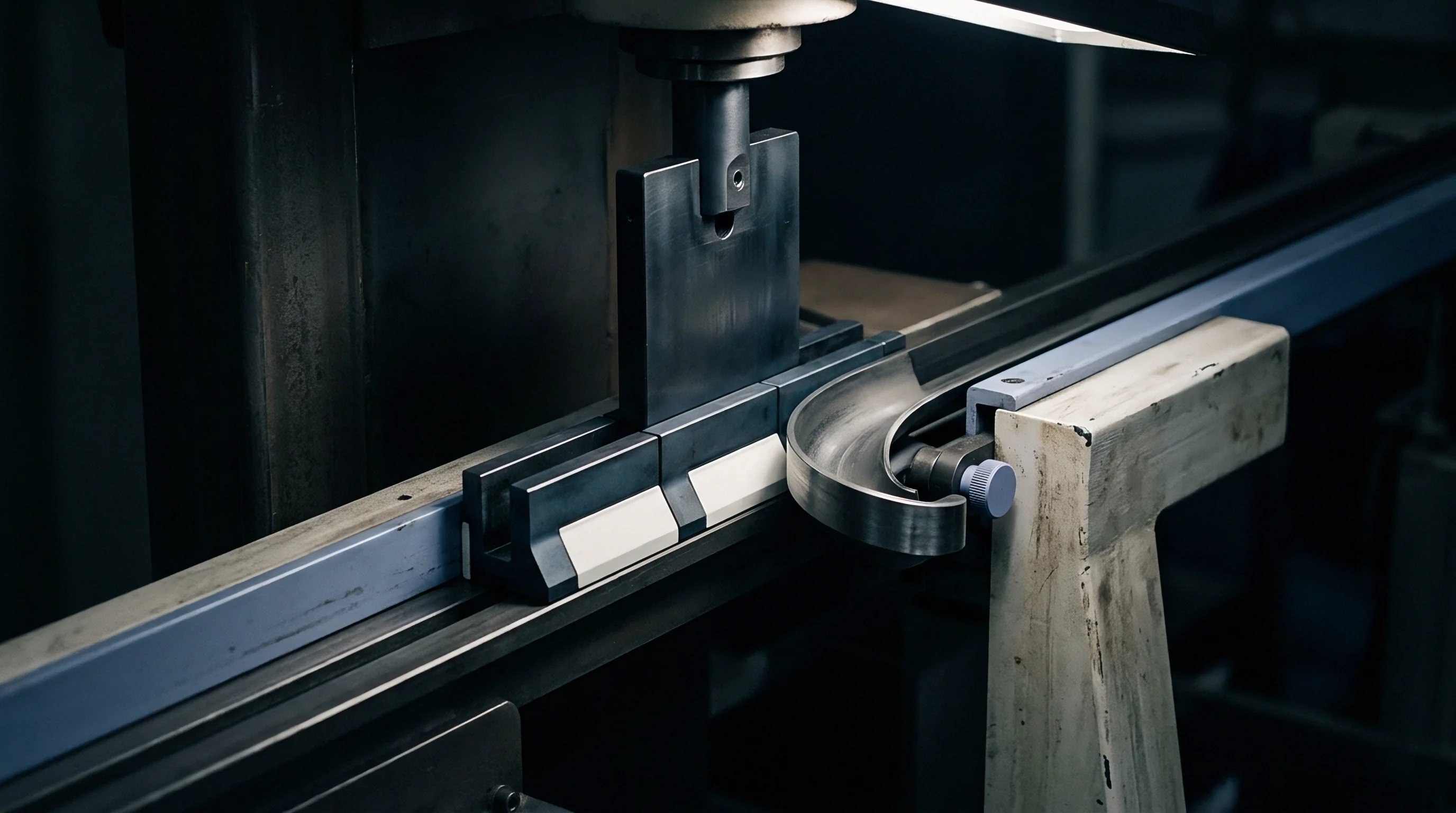
Multi-ply paperboard structures function as engineered composite plates where flexural rigidity dictates load handling during convertor transit. Structural deflection limits on automated packaging equipment determine whether a carton blank feeds smoothly into the loading station or buckles under push-rod actuation. Flexural rigidity depends on the intrinsic elastic modulus of each ply and the squared distance of that ply from the neutral axis of the sheet section.
Outer plies carrying high tensile storage moduli maximize overall bending resistance while minimizing total sheet weight.
Flexural Rigidity and Dynamic Strain Rate Interdependence
Standard two-point and four-point static bending tests, conducted per ISO 2493, measure stiffness at low deflection rates that do not reflect packaging machinery kinematics. Dynamic Mechanical Analysis in flexural mode applies sinusoidal bending oscillations at frequencies ranging from zero point one to one hundred Hertz. Compressive failure initiates ply delamination.
As oscillation frequency increases, the apparent flexural modulus rises due to restricted molecular motion within the cellulose fibers, altering the effective beam deflection under fast loading pulses.
Evaluating multi-layer stiffness requires calculating the dynamic flexural rigidity per unit width, expressed in millinewton meters. High-speed video analysis of carton opening stations shows that blank erection subjects major crease scores to initial deformation spikes within five to ten milliseconds. If the dynamic storage modulus of the outer bleached liner is too high relative to the core ply, the outer liner fails in tension before the core can yield compressively, producing visible cracking along the score crown.
Structural Layering and Middle Ply Mechanics
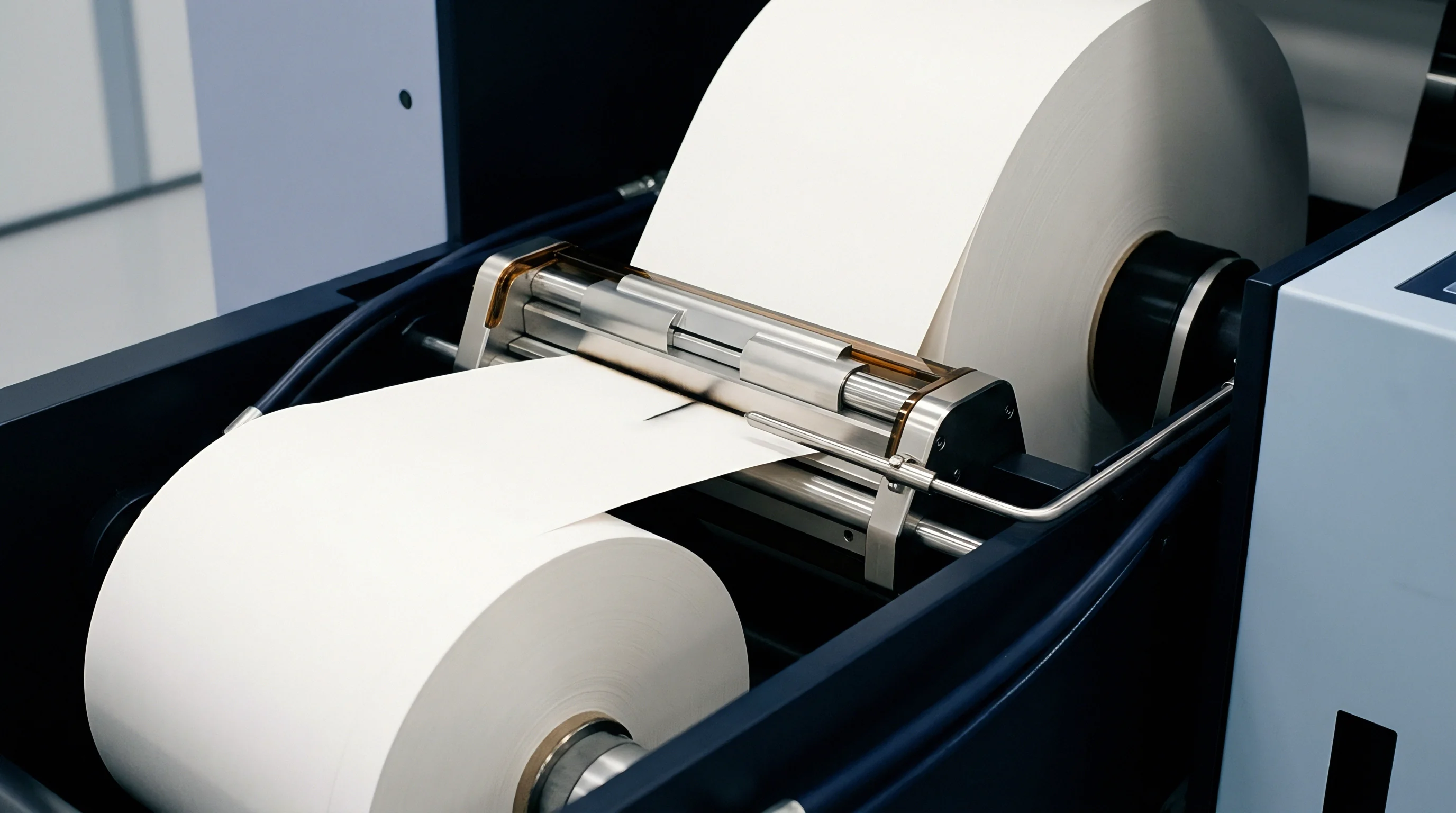
Fitted boxboard constructions utilize bulky middle plies composed of mechanical pulp or recycled fiber to separate the high-modulus surface layers. Shear stress spikes during scoring. The middle ply must resist transverse shear forces generated when the sheet bends around die-cutting rules.
Dynamic Mechanical Analysis in dual-cantilever and shear-sandwich geometries isolates the internal shear modulus of these central core layers under high-frequency loading conditions.
- Score Delamination occurs when internal shear stress exceeds ply bond strength during rapid folding steps.
- Crease Spring Back results from excess elastic storage energy relative to plastic deformation across score channels.
- Corner Bulging develops when compressive strain shifts middle mechanical plies past their buckling threshold.
- Top Load Collapse manifests when flexural stiffness drops under static stacking loads in high humidity environments.
Softwood kraft adds network tensile strength. In contrast, mechanical pulps provide high specific volume, which increases the section moment of inertia without adding dead weight. Balancing these furnish components requires continuous monitoring of dynamic damping parameters to prevent converted blanks from springing open on high-speed gluing lines.
| Test Method | Strain Rate (%/sec) | Flexural Rigidity MD (mNm) | Flexural Rigidity CD (mNm) | Anisotropy Ratio (MD/CD) |
|---|---|---|---|---|
| Static 15° Bending (ISO 2493) | 0.5 | 24.2 | 11.5 | 2.10 |
| DMA Dynamic Flexure (1 Hz) | 10.0 | 28.6 | 13.2 | 2.16 |
| DMA Dynamic Flexure (50 Hz) | 500.0 | 34.1 | 15.0 | 2.27 |
| High-Speed Converter Pulse (Est.) | 2500.0 | 39.8 | 16.8 | 2.36 |
Whether dynamic viscoelastic loss tangent thresholds can reliably predict delamination onset across recycled furnish variations remains an open field inquiry.


Strain
Deformation under cyclic environmental exposure exposes the time-dependent mechanical degradation of fiber networks. Cartons stacked in warehouse environments experience vertical compression loads over extended durations, suffering gradual height loss and sidewall flexure. Creep degrades box stacking capability.
Dynamic Mechanical Analysis quantifies this progressive deformation through creep compliance testing, where a constant static stress is applied while monitoring strain growth over time at specific temperatures and humidity levels.
Time-Temperature Superposition in Box Creep Modeling
Accelerated testing protocols utilize time-temperature and time-humidity superposition principles to construct master creep curves for structural paperboard. Cellulose polymers display thermorheological simplicity within bounded temperature spans, allowing short-term Dynamic Mechanical Analysis data collected at elevated temperatures to predict long-term mechanical creep over months of storage. Moisture plasticizes bonded paper fibers.
Shifting frequency-dependent storage modulus curves along the logarithmic time axis generates shift factors that map directly to the Williams-Landel-Ferry equation framework.
ISO 1924-3 tensile energy absorption requirements govern paperboard fracture limits under rapid mechanical deformation.
Cyclic humidity fluctuations accelerate structural creep beyond the rate observed under static high-humidity conditions. This phenomenon, known as mechano-sorptive creep, arises from local stress redistributions within the fiber network as water vapor adsorbs and desorbs from cell walls. Dynamic Mechanical Analysis humidity-swing cycles show that loss modulus spikes during moisture transitions, allowing structural strain to accumulate rapidly with each humidity cycle.
Nonlinear Rheology at Score Line Inflexions
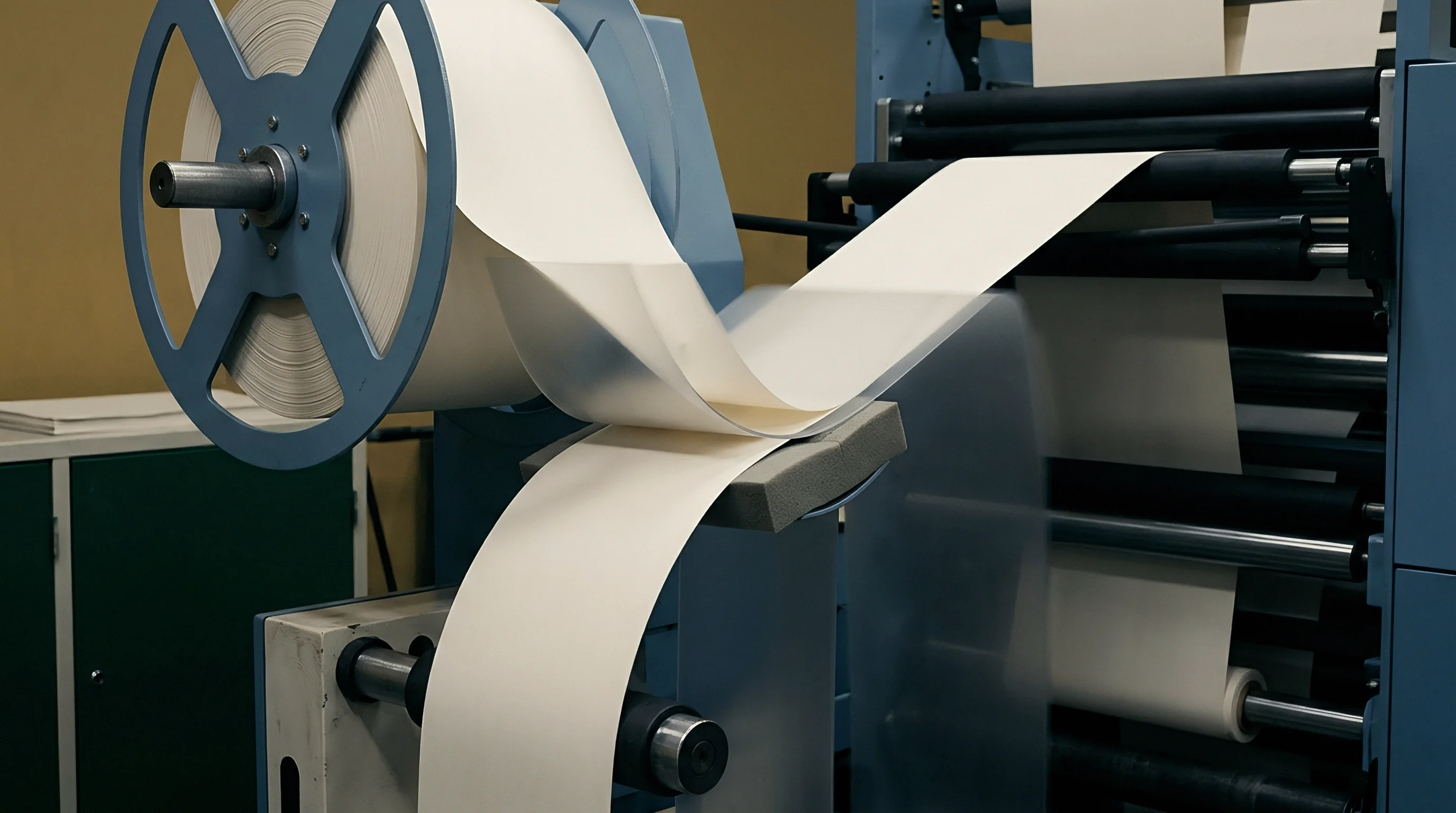
Scoring operations deliberately damage the internal network of paperboard to create controlled bending hinges. Linear viscoelastic assumptions break down within these creased regions due to local fiber breakage and ply separation. Fiber alignment creates machine directional variance.
Applying non-linear dynamic mechanical sweeps isolates the harmonic stress responses that signal structural breakdown during repeated panel articulation.
- Condition paperboard specimens at 23 degrees Celsius and 50 percent relative humidity for 24 hours prior to dynamic testing.
- Clamp the specimen in a dual cantilever fixture with initial clamping torque set to 15 Newton centimeters.
- Execute a strain sweep from 0.01 percent to 2.0 percent amplitude at 1 Hertz frequency to establish the linear viscoelastic region.
- Apply multi-frequency sweeps from 0.1 Hertz to 100 Hertz across a temperature step profile from minus 20 degrees to plus 80 degrees Celsius.
- Construct master curves using time-temperature superposition shift factors to extrapolate creep deflection over 90 days.
Elastic recovery drives crease spring back. When converted cartons enter high-speed cartoning machines, incomplete plastic deformation within the score channel forces the side panels outward, creating interference with loading guide tracks. Dynamic strain recovery tests measure the exact elastic ratio remaining in the crease after bending, setting clear parameters for die-cutting rule selection and scoring matrix depth adjustments.
Inadequate dynamic strain profiling produces container wall deflection exceeding three millimeters, triggering automatic warehouse pallet reject protocols.

Speed
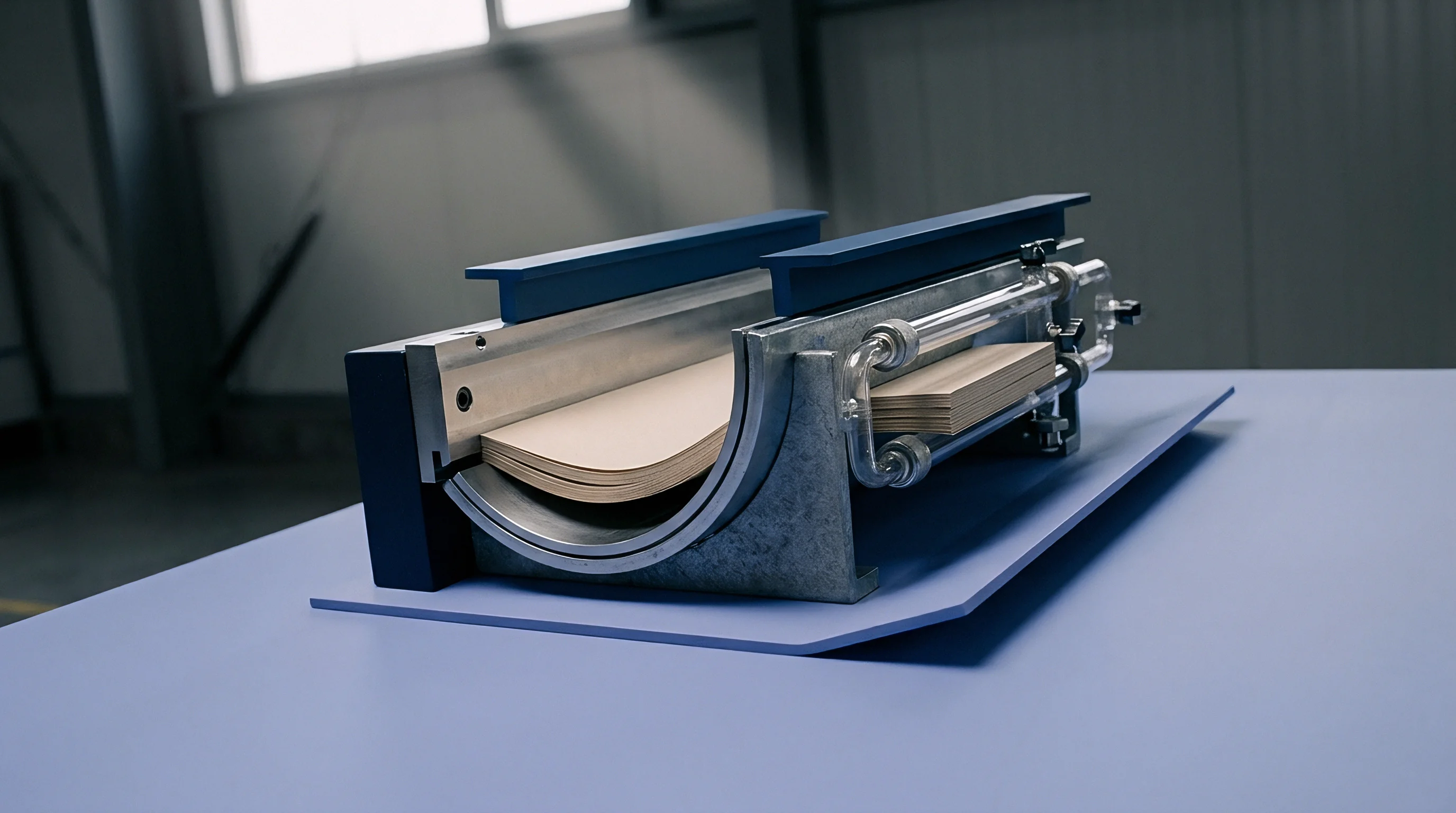
High-velocity converting machinery translates board flat blanks into finished folded cartons at line rates reaching five hundred meters per minute. At these production speeds, mechanical events occur over duration scales measured in single-digit milliseconds. Material response depends heavily on the rate at which stress waves propagate through the sheet thickness.
Dynamic Mechanical Analysis at high frequencies isolates the strain rate sensitivity of different paperboard grades, establishing operating windows that prevent line jamming and structural cracking.
Which Dynamic Storage Ratio Predicts High-Speed Score Fracture?
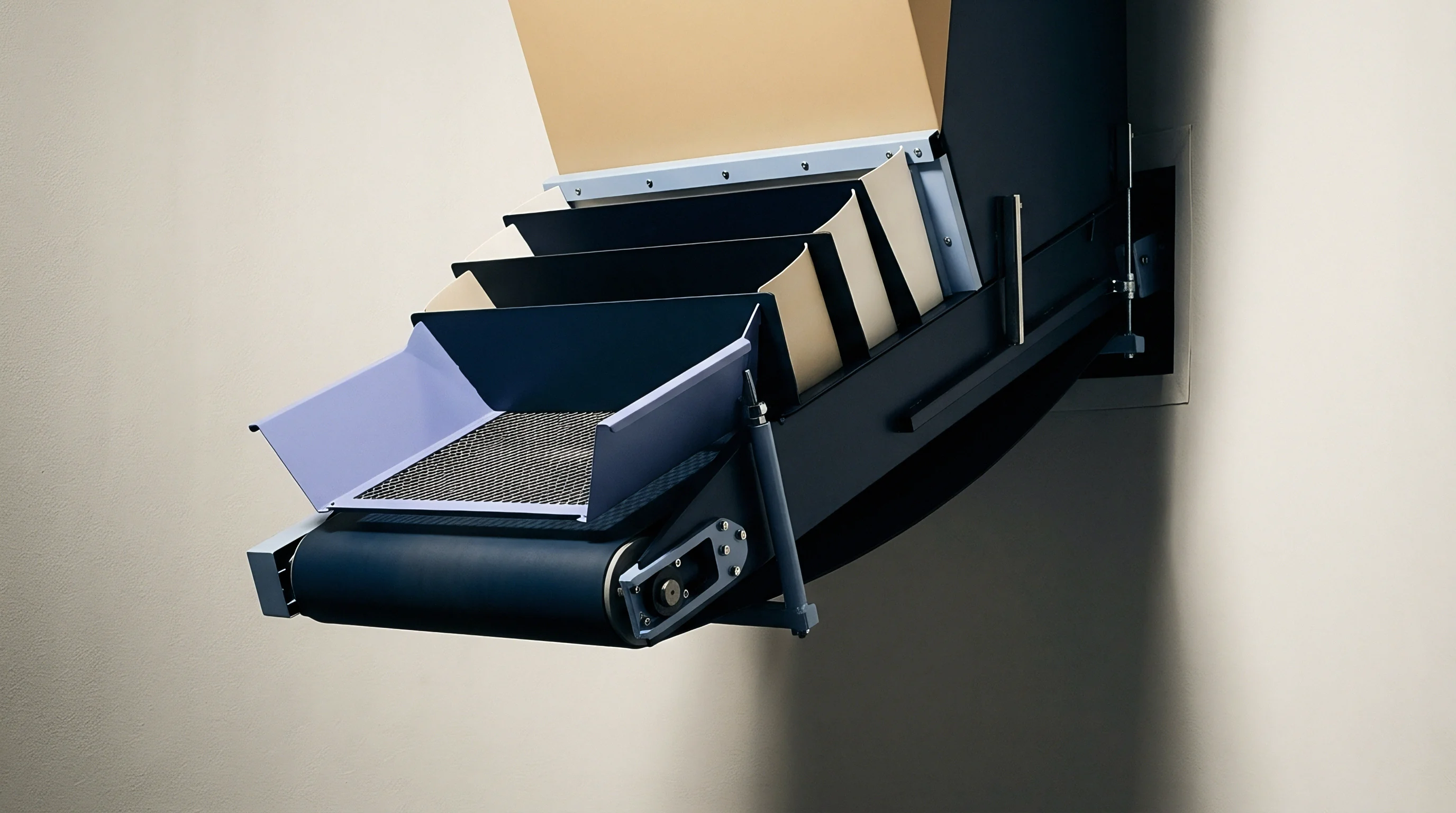
Score cracking occurs when the dynamic strain applied during rapid folding exceeds the ultimate strain limit of the surface fibers. The ratio of dynamic storage modulus in the machine direction to that in the cross direction provides an indicator of surface cracking tendency. An imbalance in directional stiffness creates localized stress concentration along transverse score lines.
High-speed camera arrays synchronized with load cell triggers reveal that board displaying high storage modulus along with low loss tangent exhibits brittle fracture when folded at high angular velocity.
Adjusting folder-gluer belt tensions and transport rail clearances compensates for variations in material damping capacity. Dynamic Mechanical Analysis testing demonstrates that paperboard pre-conditioned to seven percent moisture content retains sufficient viscous damping to absorb high-speed impact energy without matrix failure. Conversely, board dried below four percent moisture undergoes rapid loss modulus reduction, leading to catastrophic score rupture on high-velocity converting lines.

Viscoelastic Dissipation in Millisecond Scoring Operations
The mechanical energy imparted by a rotary scoring tool creates instantaneous shear and compressive stresses within the paperboard structure. Viscoelastic loss dampens high speed impact. Effective creasing creates localized internal delamination while leaving the outer liner layers intact.
Dynamic shear testing at kilohertz frequencies demonstrates how energy dissipates through the core plies without projecting destructive tensile stresses into the print surface coatings.
Higher loss factor at converting temperatures prevents score cracking on high velocity folding lines.
- Storage Ratio Window ensures score lines fold without surface fiber cracking at maximum line velocity.
- Temperature Sensitivity Index controls binder flexibility during thermal drying stages on high-velocity folder-gluers.
- Moisture Absorption Rate determines board stiffness stability when water-based adhesives hit glue flaps.
Sourcing contracts define minimum stiffness targets. Converter operations running multi-layer coated recycled grades require continuous verification of dynamic damping properties to ensure high-speed glue flap sealing. Rapid adhesive set times demand that the paperboard surface resist spring-back force during the brief compression phase on the folder-gluer compression belt.
Substrate specifications incorporating TAPPI T 839 stiffness criteria establish minimum dynamic flexural thresholds that shift legal liability for line jamming back to the board mill.

Yield
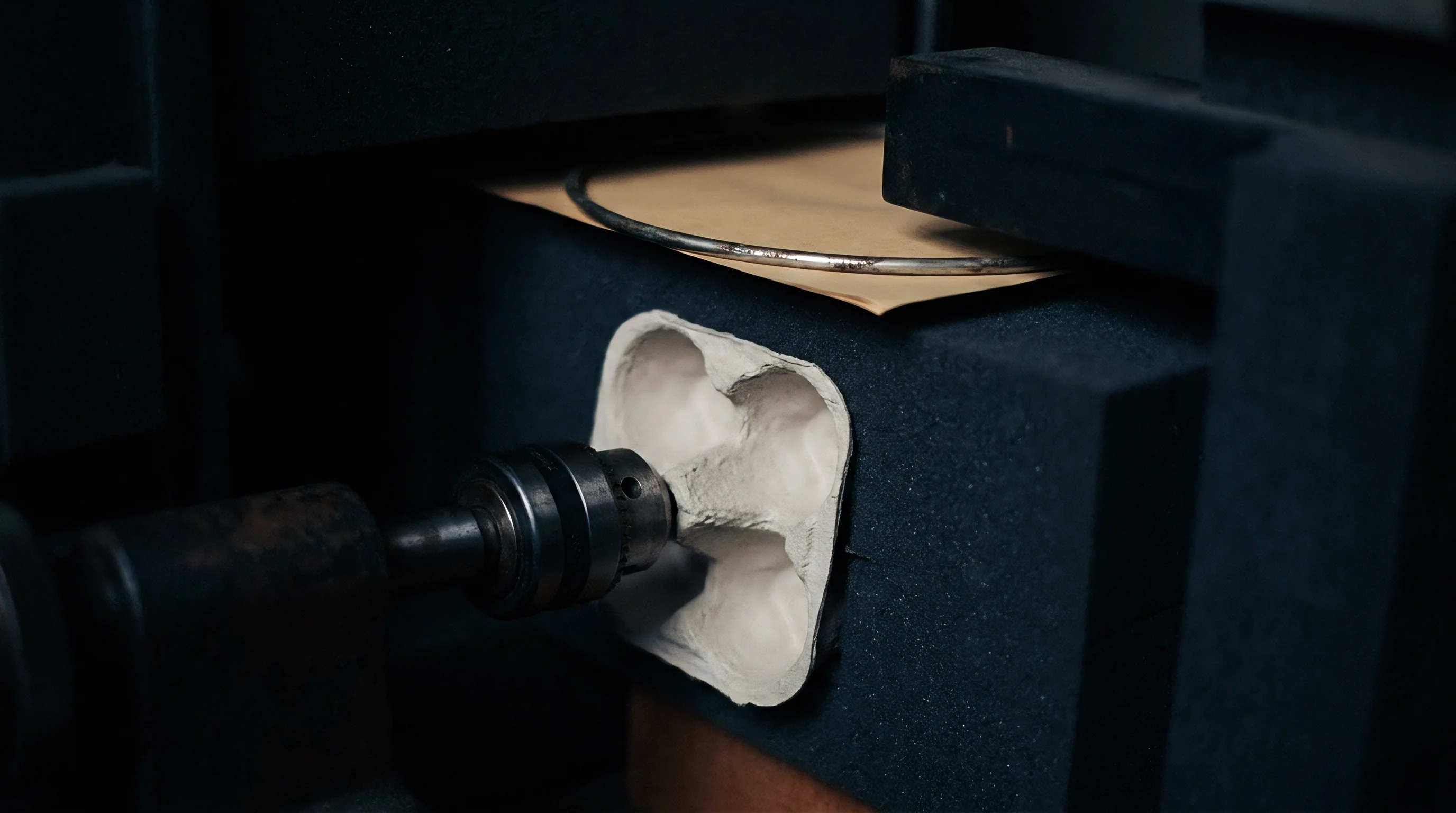
Material economy drives packaging specification, forcing buyers to balance grammage reduction against box structural performance. Downgauging paperboard weight reduces raw material costs and freight expenditures across the supply chain, but risks compromise of load-bearing margins. Dynamic Mechanical Analysis provides the underlying physical data required to optimize sheet thickness without crossing structural deflection thresholds on automated lines.
Accurate determination of dynamic storage modulus allows engineers to substitute lighter, higher-modulus furnishes for heavy, low-modulus recycled grades.

Downgauging Economics and Flexural Stiffness Limits
Bending stiffness scales with the cube of sheet caliper, making thickness the primary structural lever in packaging design. Downgauging caliper changes carton unit costs. Reducing grammage while maintaining caliper through bulk enhancement strategies preserves flexural rigidity while using fewer tons of fiber.
However, high-bulk mechanical or recycled furnishes often display lower intrinsic storage moduli than dense chemical pulp sheets, altering their dynamic strain performance during conversion.
A worked financial model illustrates the commercial mechanics of grade substitution. Consider a consumer packaging procurement program using ten thousand metric tons of solid bleached board annually at a basis weight of three hundred grams per square meter. Substituting a two-hundred-and-sixty gram per square meter folding boxboard with equivalent dynamic flexural rigidity reduces raw material consumption by thirteen percent.
The table below outlines the physical and financial tradeoffs associated with this structural downgauging path.
| Parameter | Baseline Solid Bleached Board | Option A: Low-Grammage SBB | Option B: High-Bulk FBB | |
|---|---|---|---|---|
| Grammage (g/m²) | 300 | 260 | 250 | |
| Caliper (µm) | 395 | 340 | 410 | |
| Density (g/cm³) | 0.76 | 0.76 | 0.61 | |
| Dynamic Storage Modulus E’ (GPa) | 4.90 | 4.95 | 3.55 | |
| Calculated Bending Rigidity MD (mNm) | 25.1 | 16.2 | 24.4 | |
| Top-Load Deflection Margin (%) | 100 (Baseline) | 64.5 (Failed) | 97.2 (Passed) | |
| Annual Fiber Tonnage (Tons/10M Cartons) | 3,000 | 2,600 | 2,500 | |
| Material Cost per 1,000 Cartons ($) | 145.00 | 125.60 | 117.50 | |
| Calculations assume a carton surface area of 0.133 m², baseline board cost of $1,450/ton for SBB, $1,570/ton for low-grammage SBB, and $1,410/ton for high-bulk FBB. Dynamic storage moduli measured via DMA at 1 Hz, 23°C, 50% RH. | ||||
Commercial Verification Protocols and Mill Tolerance Bands
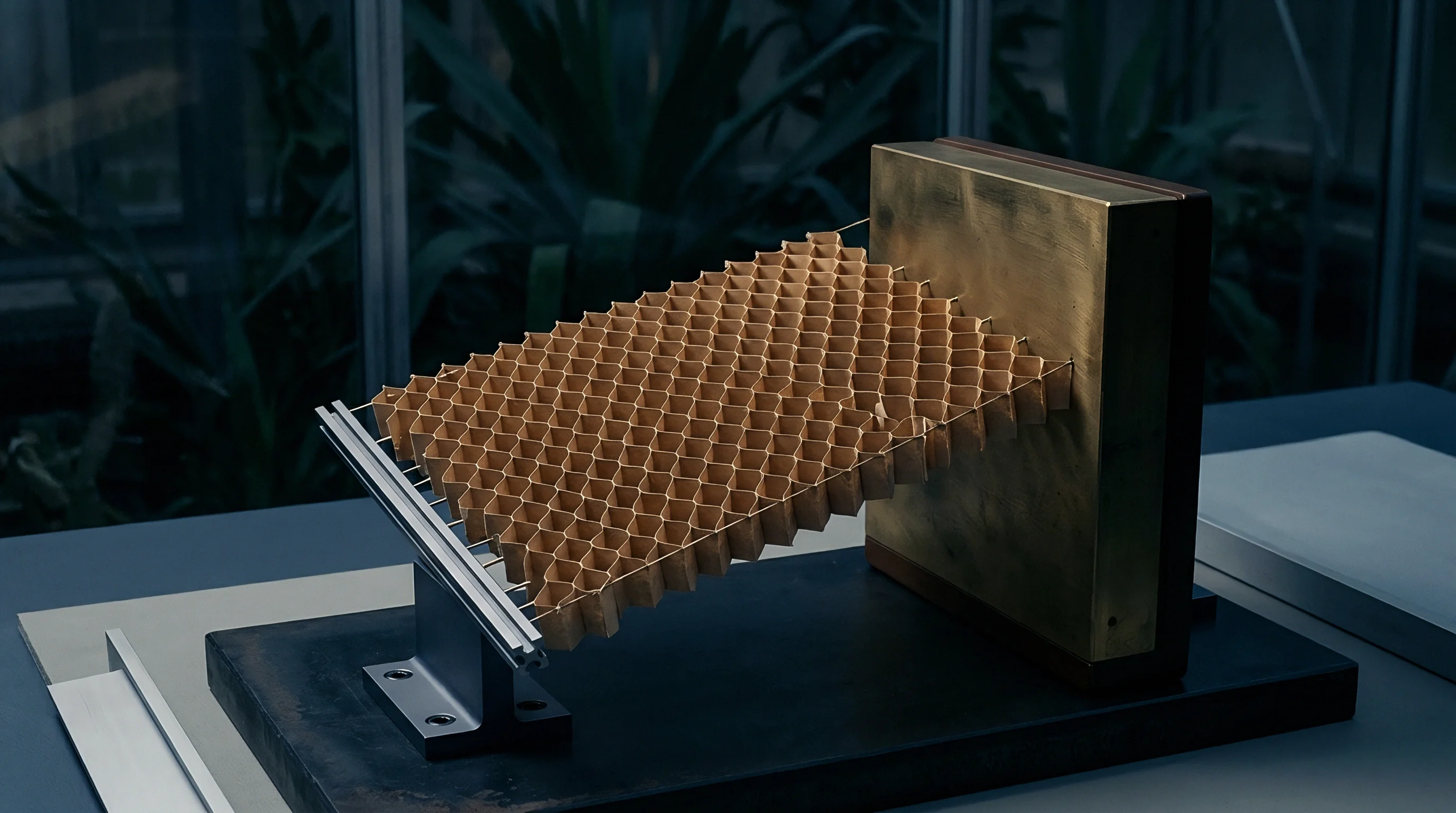
Mill technical data sheets routinely publish mean static stiffness values, omitting the statistical variance across web rolls and manufacturing batches. Stacking failures trigger customer packaging rejections. Basis weight drift across the paper machine wire creates cross-direction variations in dynamic storage modulus.
Goods-in inspection protocols must execute dynamic mechanical sampling on incoming reels to verify that minimum storage modulus thresholds are met across the entire web profile.
Specifying tight dynamic stiffness bands within mill purchase contracts prevents sub-standard board lots from reaching high-speed converting lines. A variance of plus or minus five percent in basis weight can produce a flexural rigidity swing exceeding fifteen percent due to the cubic caliper relationship. Procurement dossiers incorporating Dynamic Mechanical Analysis metrics provide commercial legal grounding for rejecting paperboard lots that fail dynamic strain thresholds, protecting converters from uncompensated line downtime and customer field failures.

Worked Cost Analysis for Grammage Reduction Vs Deflection Failure
Evaluating the true cost of material downgauging requires accounting for waste rates on high-speed folding machinery. Assume a high-velocity cartoning line operates at six hundred cartons per minute. A five percent reduction in dynamic storage modulus increases crease spring-back, causing line stoppages that incur downtime costs of twelve hundred dollars per hour.
If the lighter substrate causes two additional line jams per shift, the resulting production loss overrides the raw material cost savings achieved through lower grammage procurement.
Downgauging caliper without compensating stiffness increases box deflection during pallet stacking.
Integrating Dynamic Mechanical Analysis into the initial stock selection workflow isolates the exact balance point between fiber cost reduction and converting productivity. By establishing clear flexural limits tied to machine speed and structural top-load requirements, packaging buyers secure lower landed carton costs while holding strict quality boundaries on automated filling lines.
Specification targets based on dynamic flexural rigidity rather than basic grammage deliver lower overall carton manufacturing costs across long print runs.