Dynamic Microscale Penetration Testing in Recycled Kraft Linerboard
Dynamic microscale penetration testing resolves sub-second liquid absorption kinetics in recycled kraft linerboard to prevent converting failure.

Pore
Capillary Architecture in Recycled Furnish Webs
Recycled kraft linerboard contains a complex, highly heterogeneous web geometry shaped by repeated pulping cycles, mechanical refining, and pressing. Reclaimed unbleached softwood and hardwood fibers exhibit variable lumen collapse, extensive surface fibrillation, and elevated fines fractions compared to virgin unbleached kraft pulps. These morphological changes alter the spatial arrangement of inter-fiber voids.
Capillary radii within recycled sheet matrices range from sub-micron inter-fibrillar channels measuring 0.05 to 0.5 micrometers up to macro-cavities between coarse fiber bundles spanning 5 to 15 micrometers. Capillary tortuosity factors within recycled sheets routinely reach 2.2 to 2.8, whereas virgin softwood sheets typically exhibit tortuosity values between 1.4 and 1.8. Fluid transport through this matrix depends heavily on local void connectivity rather than average porosity alone.
While standard mercury intrusion porosimetry measures total void volume, it fails to capture the dynamic fluid pathways established during high-speed fluid application. Micro-tomographic reconstructions show that recycled furnishes produce dead-end capillary networks due to compressed fiber walls and densified fines pockets. These occluded pathways force penetrating liquids to follow circuitous routes, altering fluid front progression during short-contact absorption events.

Void Fraction and Fiber Hornification Dynamics
Repeated wetting and drying cycles induce irreversibility in cell wall flexibility, a physical phenomenon known as hornification. Hornified recycled fibers lose internal swelling capacity, reducing their ability to absorb fluid within the cell wall. Consequently, liquid entering a recycled kraft sheet remains largely within the inter-fiber void space rather than swelling the fiber matrix itself.
Fiber stiffness increases, preventing tight void consolidation during wet pressing and leaving a higher frequency of localized macro-voids. Z-directional density gradients created during machine forming further stratify the sheet architecture. Top-wire formers and multi-ply headboxes deposit distinct furnish layers, concentrating short hardwood fibers and fine particles near the surface while retaining long softwood fibers in the center.
This stratification produces a capillary radius gradient from top to bottom. Smaller surface capillaries generate high initial capillary pressure, pulling fluid rapidly into the upper 10 to 20 micrometers before the liquid encounters larger, irregular voids within the core structure.

Wetting

Sub-Millisecond Fluid Sorption Kinetics
Dynamic liquid transport into a porous cellulose matrix operates across distinct timescale regimes. Initial contact between a fluid droplet and the board surface involves dynamic wetting, spreading, and capillary displacement occurring within 1 to 100 milliseconds. Classic Lucas-Washburn equations describe equilibrium capillary absorption based on average pore radius, liquid surface tension, contact angle, and fluid viscosity.
A 140 g/m² recycled kraft linerboard conditioned at 23 °C and 50 percent relative humidity exhibits a dynamic contact angle drop from 108 degrees to 42 degrees within 80 milliseconds of fluid contact.
At timescales under 10 milliseconds, inertial resistance and dynamic contact angle decay dominate fluid motion, causing significant deviation from Lucas-Washburn predictions. Dynamic contact angle decreases rapidly as liquid spreads across surface fibers and wets hydrophobic sizing agents. The rate of contact angle change governs the initial pressure differential driving fluid into surface-connected capillary openings.
Capillary Pressure and Surface Energy Gradients
Capillary driving pressure relies on the cosine of the dynamic contact angle combined with liquid surface tension and effective pore radius. Higher dynamic contact angles create negative capillary pressure, resisting fluid entry until surface energy equilibrium or mechanical pressure forces fluid past surface pore throats. Recycled kraft linerboard surfaces present uneven energy profiles caused by residual chemical additives, migratory waxes, and variable sizing application.
Localized energy variations create pinned contact lines, where liquid droplets hesitate before suddenly advancing into high-energy fiber regions. This stick-slip wetting behavior generates localized micro-penetration fronts, causing uneven ink penetration and non-uniform adhesive setting across the web surface.
| Substrate Grammage (g/m²) | Recycled Content (%) | Initial Contact Angle (deg) | Contact Angle at 50 ms (deg) | Sorption Rate (μL/cm²·s^0.5) | Ultrasonic Attenuation Time (ms) |
|---|---|---|---|---|---|
| 125 | 100 | 104.2 | 58.1 | 14.8 | 42 |
| 140 | 100 | 108.5 | 62.4 | 12.3 | 58 |
| 175 | 85 | 102.1 | 49.3 | 18.1 | 31 |
| 200 | 70 | 98.6 | 41.0 | 22.5 | 22 |
Measurement of fluid penetration dynamics demands high-frequency sampling to isolate initial wetting from bulk sorption. Fast fluid intake occurs before thermal or viscous dissipation balances the driving capillary force. Surface roughness slows horizontal drop spreading while increasing the effective contact area, accelerating liquid transfer into vertically oriented capillary throats.
Fluid viscosity acts as a damping mechanism during early absorption phases. Low-viscosity vehicles penetrate micro-voids almost instantaneously upon contact line detachment, while high-viscosity formulations require sustained capillary pressure or external impulse to enter equivalent pore radii. Droplet impact momentum converts to hydrostatic pressure during high-speed application, forcing liquid into pores that would otherwise reject fluid under static conditions.
Fluid viscosity balances capillary pressure to determine penetration depth within the first 20 milliseconds.
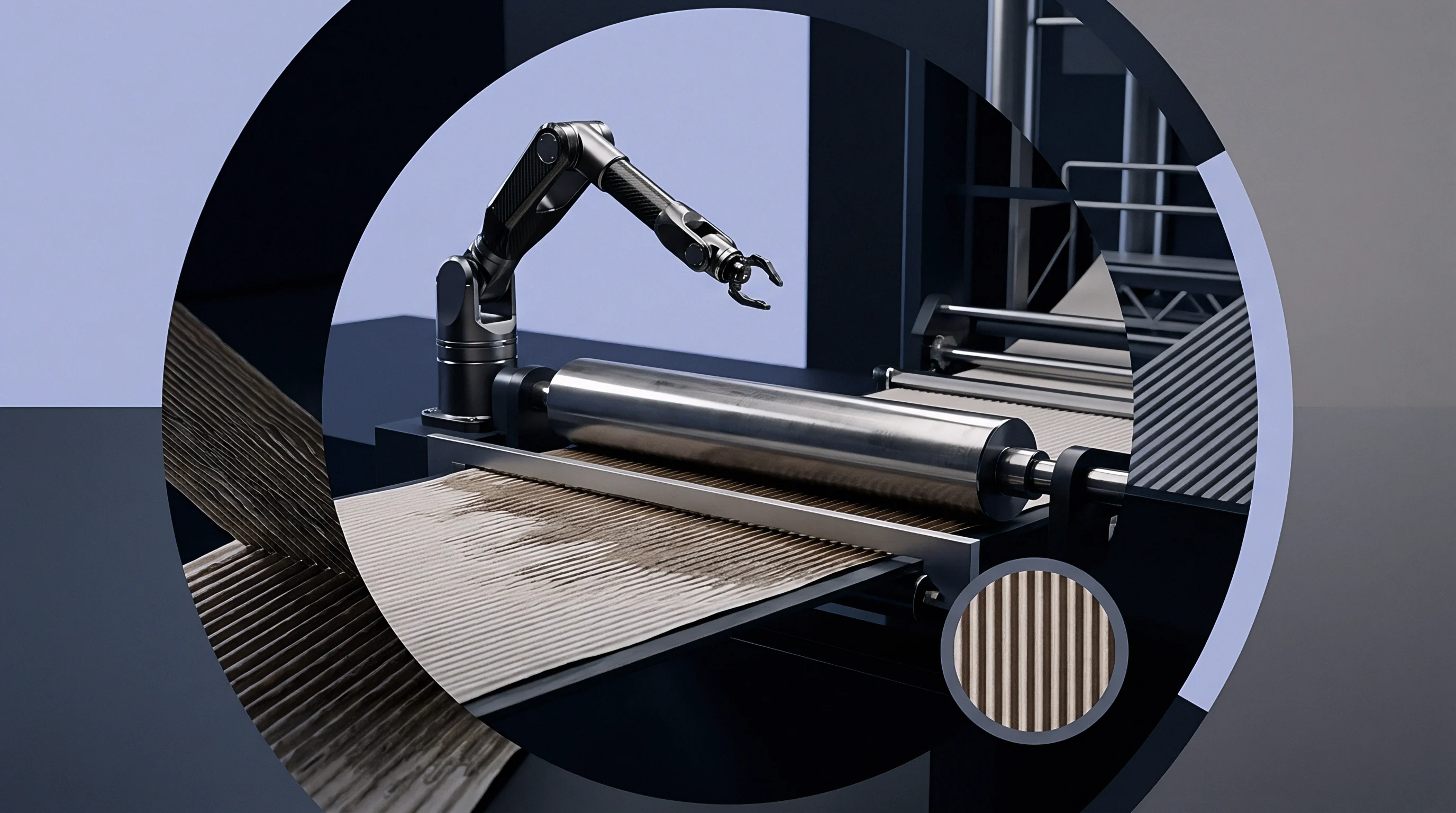

Probes
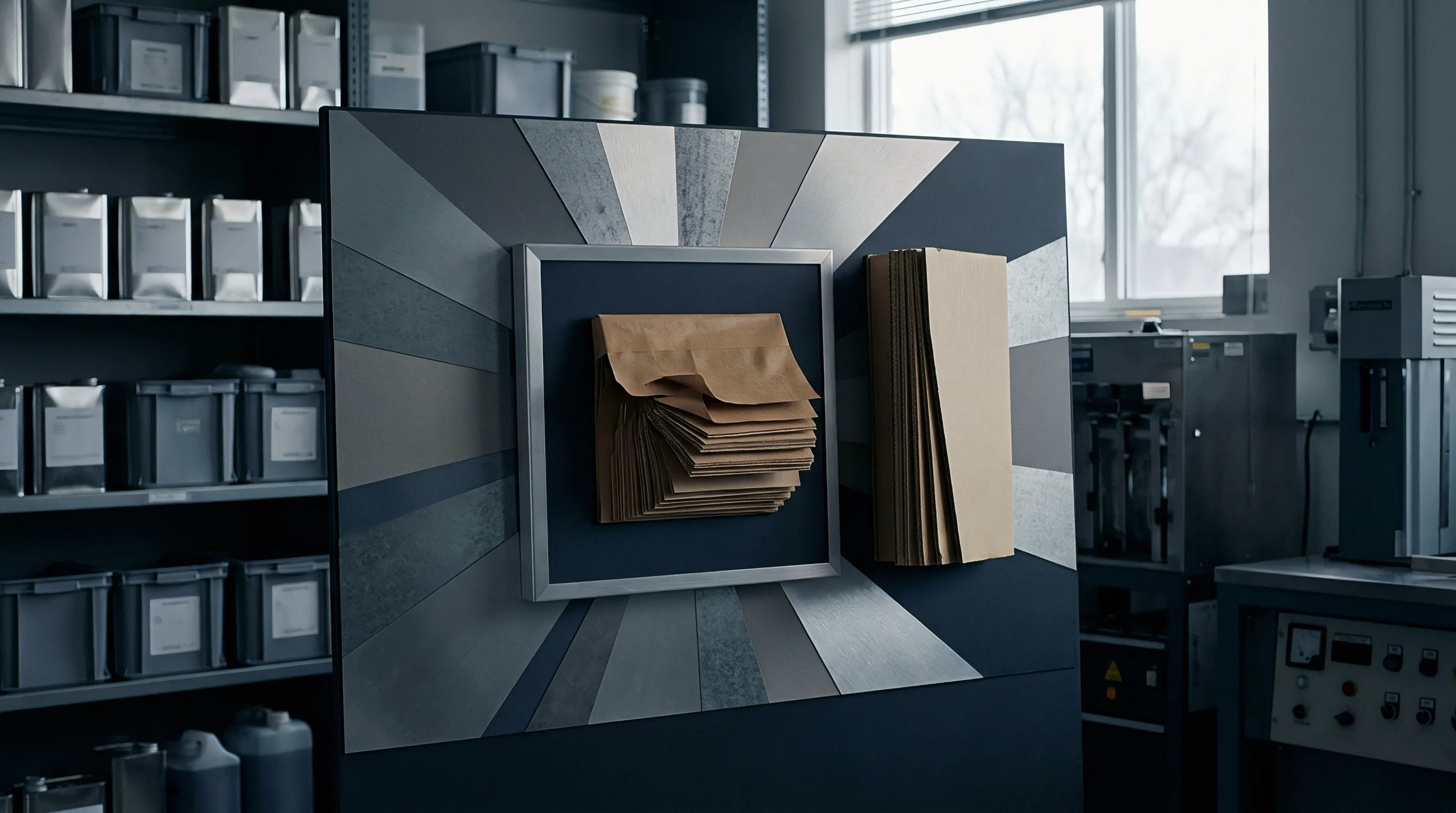
High-Speed Optical and Ultrasonic Test Systems
Measuring microscale penetration requires instruments capable of sub-millisecond temporal resolution and microscale spatial precision. Standard Cobb water absorption tests, operating across 60 to 120 seconds, yield macroscale mass totals that completely obscure early-stage liquid-fiber dynamics.
Automated dynamic contact angle goniometers paired with high-speed video capture image picoliter or nanoliter liquid drops at frequencies exceeding 2000 frames per second. These camera systems map drop volume, base diameter, contact angle, and absorbed volume from 0.5 milliseconds outward. Ultrasonic penetration analyzers monitor sound attenuation through the board thickness during liquid immersion.
Liquid entering the void network displaces trapped air, altering acoustic impedance and signal transmission speeds. The resulting attenuation-time curve identifies distinct phase transitions: surface wetting, capillary absorption, structural swelling, and web saturation.
Contractual rejections for ink feathering drop significantly when linerboard specifications replace Cobb sixty values with ultrasonic penetration thresholds under 50 milliseconds.
Dynamic sorption wheels, commonly termed Bristow wheels, transfer precise liquid volumes onto a moving substrate strip at controlled speeds ranging from 0.05 to 2.5 meters per second. Calculating trace length against applied volume determines liquid transfer rates across contact times from 4 to 500 milliseconds.
How Does Test Fluid Viscosity Affect Sorption Profiling?
Test fluid rheology directly governs penetration rates across variable capillary sizes. Water-based test liquids containing surfactant balances simulate flexographic inks, while glycol-water mixtures replicate fountain solutions or starch adhesives. Solvents with low surface tension rapidly wet hydrophobic regions, masking variations in chemical sizing that would cause failure under water-based ink application.
Standardizing test fluid surface tension to 30, 45, and 72 millinewtons per meter isolates physical pore structure effects from chemical wetting resistance. Testing must occur within climate-controlled enclosures matching ISO 187 conditioning guidelines at 23 degrees Celsius and 50 percent relative humidity. Temperature fluctuations alter fluid viscosity and surface tension, distorting measured penetration speeds.
- Optical Reflection Drift occurs when surface roughness scatters light away from high-speed camera sensors, causing automated baseline detection errors during drop profile analysis.
- Evaporation Loss Artifacts arise during nanoliter drop testing in unconditioned air, artificially inflating calculated absorption rates via droplet mass loss.
- Acoustic Cavitation Signals generate false attenuation spikes in ultrasonic testing when liquid contact entraps air micro-bubbles along board surface depressions.
- Trace Edge Irregularities compromise trace width calculations on Bristow wheel samples when liquid spreads laterally along deep machine-direction wire marks.
Instrument manufacturers often claim that dynamic optical goniometry renders bulk liquid absorption testing obsolete.
Sizing
Internal Hydrophobicity and Chemical Distribution
Chemical sizing agents control fluid penetration rates by lowering the surface energy of cellulose fibers. Alkyl ketene dimer and alkenyl succinic anhydride represent the primary synthetic sizing chemicals used in recycled kraft linerboard production.
Rosin size combined with papermaker alum remains common in acid or neutral recycling mills. Sizing molecules self-assemble on fiber surfaces, orienting hydrophobic hydrocarbon tails outward into inter-fiber void spaces. In recycled furnishes, sizing efficiency degrades due to residual chemical contaminants, high fines content, and uneven chemical retention.
Fine particles possess extremely high specific surface areas, consuming a disproportionate quantity of added sizing agents. Consequently, long fibers retain insufficient hydrophobic protection, creating localized low-energy paths where liquid penetrates rapidly despite high overall sizing additions.
Surface Starch Passivation and Micro-Nonuniformity
Surface sizing applied via size press or film press deposits cooked native or modified starches onto the dry web. Starch films seal surface macro-voids, increasing mechanical resistance to fluid entry and reinforcing surface strength for printing. Recycled linerboard exhibits uneven starch pickup due to base sheet density variations and non-uniform coat weight distribution.
Unsized recycled fibers absorb fluid up to ten times faster than starch-passivated surface regions, producing localized absorption rates that destabilize flexographic dot gain.
When starch film coverage is incomplete, microscopic pinholes remain exposed. High-surface-tension liquids linger on passivated starch regions while selectively invading unpassivated pinholes under capillary action.
| Sizing Configuration | Internal Agent Dosage (kg/t) | Surface Starch Pick-Up (g/m²) | Initial Water Contact Angle (deg) | Micro-Penetration Time to 50% Vol (ms) | Cobb 60 Value (g/m²) |
|---|---|---|---|---|---|
| Unsized Base Sheet | 0.0 | 0.0 | 42.1 | 4.2 | 145.0 |
| Rosin / Alum Standard | 3.5 | 0.0 | 94.5 | 120.0 | 38.2 |
| ASA Internal Sized | 1.8 | 0.0 | 102.3 | 210.0 | 28.5 |
| ASA + Size Press Starch | 1.5 | 2.5 | 112.0 | 480.0 | 22.0 |
| AKD + Modified Starch | 1.2 | 3.0 | 115.4 | 620.0 | 19.5 |
Non-uniform chemical distribution creates micro-scale absorption variations across the sheet surface. Areas with low hydrophobicity absorb water-based ink vehicles instantly, causing pigment sinking, reduced optical density, and dot gain distortion. Sizing agent migration occurs during web drying when steam carrying dissolved or emulsified sizing moves toward outer sheet surfaces.
Accelerated drying profiles cause sizing concentration near the web exterior, leaving inner plies poorly sized and susceptible to rapid lateral fluid transport. Thermal degradation of synthetic sizing agents during extended drying loops breaks down hydrophobic orientation, reducing contact angles and accelerating fluid absorption during converting. Inconsistent internal sizing distribution forces converters to run water-based glues at lower speeds to prevent bond failure along under-sized surface zones.
Coupling

Corrugating Adhesive Set Times and Flap Adhesion
High-speed corrugators operate at line speeds exceeding 300 meters per minute, leaving less than 0.5 seconds for starch adhesive application, linerboard contact, and initial green bond formation. Water-based native corn starch adhesives rely on controlled vehicle absorption into the linerboard surface to concentrate starch solids at the glue line, triggering gelation under heat and pressure. Microscale penetration rates determine glue setting kinetics.
If the linerboard surface absorbs water too rapidly, the adhesive vehicle drains before starch gelatinization occurs, producing a starved bond line with weak fiber tear. Conversely, excessive hydrophobicity blocks vehicle penetration, delaying starch concentration and causing joint failure or pop-opens at the corrugator double-facer or folder-gluer.
Flexographic Ink Vehicle Absorption and Pigment Holdout
Flexographic printing on recycled kraft linerboard requires precise ink vehicle absorption to dry water-based inks quickly while retaining pigment particles on the sheet surface. Fluid penetration dynamics dictate the balance between drying speed and print quality. An optimal absorption profile pulls the liquid carrier into the top 10 micrometers of the sheet within 20 to 50 milliseconds, trapping organic pigments at the surface to maximize color intensity and print sharpness.
1. Inspect incoming linerboard reels for moisture uniformity across the web profile using non-contact infrared sensors.
2. Obtain representative full-width samples from outer reel wraps, discarding damaged outer layers.
3.
Condition samples in accordance with ISO 187 at 23 degrees Celsius and 50 percent relative humidity for a minimum of 24 hours.
4. Conduct micro-picoliter dynamic contact angle testing using distilled water and water-glycol test liquids at 10, 50, and 100 millisecond intervals.
5. Measure acoustic attenuation profiles on an ultrasonic penetration analyzer to identify dynamic absorption phase changes.
6.
Compare micro-penetration rates against established mill baseline limits prior to releasing reel lots to high-speed converting lines. Inadequate microscale fluid absorption forces press operators to increase dryer heat, driving up energy consumption and inducing board curl.
Controlling liquid absorption within the first 30 milliseconds prevents flexographic ink pinholing while maintaining target box drying speeds.
Master supply agreements specifying recycled linerboard for high-speed automated packaging lines mandate micro-penetration absorption thresholds between 15 and 45 milliseconds under ultrasonic testing, overriding standard Cobb specification limits whenever adhesive bond failures arise.
Tonnage
Specification Drafting and Cobb Sixty Limitations
Bulk linerboard purchasing relies on standard specifications including grammage, burst strength, ring crush, and 60-second Cobb sizing values. Standard Cobb metrics measure total mass pick-up over a one-minute duration.
This macroscale time horizon completely fails to reflect sub-second fluid interactions occurring on modern high-speed corrugating and printing machinery. A recycled linerboard lot exhibiting an acceptable Cobb value of 25 grams per square meter can possess highly erratic initial wetting rates within the critical 0 to 100 millisecond window. Buying stock based solely on Cobb data exposes converters to unexplained glue line failures, ink feathering, and machine downtime.
Packaging engineers drafting substrate specifications incorporate dynamic penetration parameters alongside conventional strength metrics to protect converting margins.
Landed Cost Arithmetic across Reclaimed Fibre Grades
Upgrading furnish quality to improve microscale penetration uniformity incurs direct raw material costs. Incorporating virgin softwood pulp or premium double-sorted corrugated cuttings raises the pulp furnish cost per tonne while improving sheet formation and pore uniformity. Higher furnish costs can be offset by operational savings achieved during converting, including reduced adhesive consumption, faster press speeds, and lower scrap rates.
| Furnish Grade Specification | Substrate Cost per Tonne (USD) | Micro-Penetration Reject Rate (%) | Adhesive Application Rate (g/m²) | Corrugator Line Speed (m/min) | Net Landed Cost per 1000 m² (USD) |
|---|---|---|---|---|---|
| 100% Mixed Recycled Standard | 520 | 4.2 | 18.5 | 240 | 182.40 |
| 100% OCC Premium Sorted | 580 | 1.5 | 15.2 | 310 | 174.10 |
| 80% OCC / 20% Virgin Kraft | 640 | 0.4 | 13.8 | 350 | 171.80 |
Purchasing higher-grade linerboard containing virgin fiber content reduces overall board converting costs by minimizing reject rates and maximizing throughput. To ensure consistent performance across high-speed converting equipment, technical procurement teams specify linerboard performance based on clear audit rules:
- Sampling Frequency Standards specify testing two reels per mill pallet using high-speed optical dynamic wetting analyzers.
- Dynamic Sorption Thresholds mandate fluid absorption times between 20 and 60 milliseconds for 50 percent drop volume reduction.
- Non-Conformance Penalties enforce mill credit claims when deliverable lots exceed a 3 percent dynamic penetration variance limit across web width.
- Batch Traceability Verification tracks reel performance metrics directly to paper machine wet-end chemical addition logs.
Procurement contracts that tie price adjustments to dynamic microscale penetration testing eliminate disputes over converting failures caused by furnish non-uniformity. Matching sheet surface physics to specific ink and adhesive systems lowers total finished packaging costs across long production runs.