Orthotropic Deflection Modeling for High Speed Cartoning Line Panel Performance
Carton panel flexural deflection under dynamic suction is predicted by orthotropic plate equations using MD and CD elastic moduli, caliper, and shear stiffness.

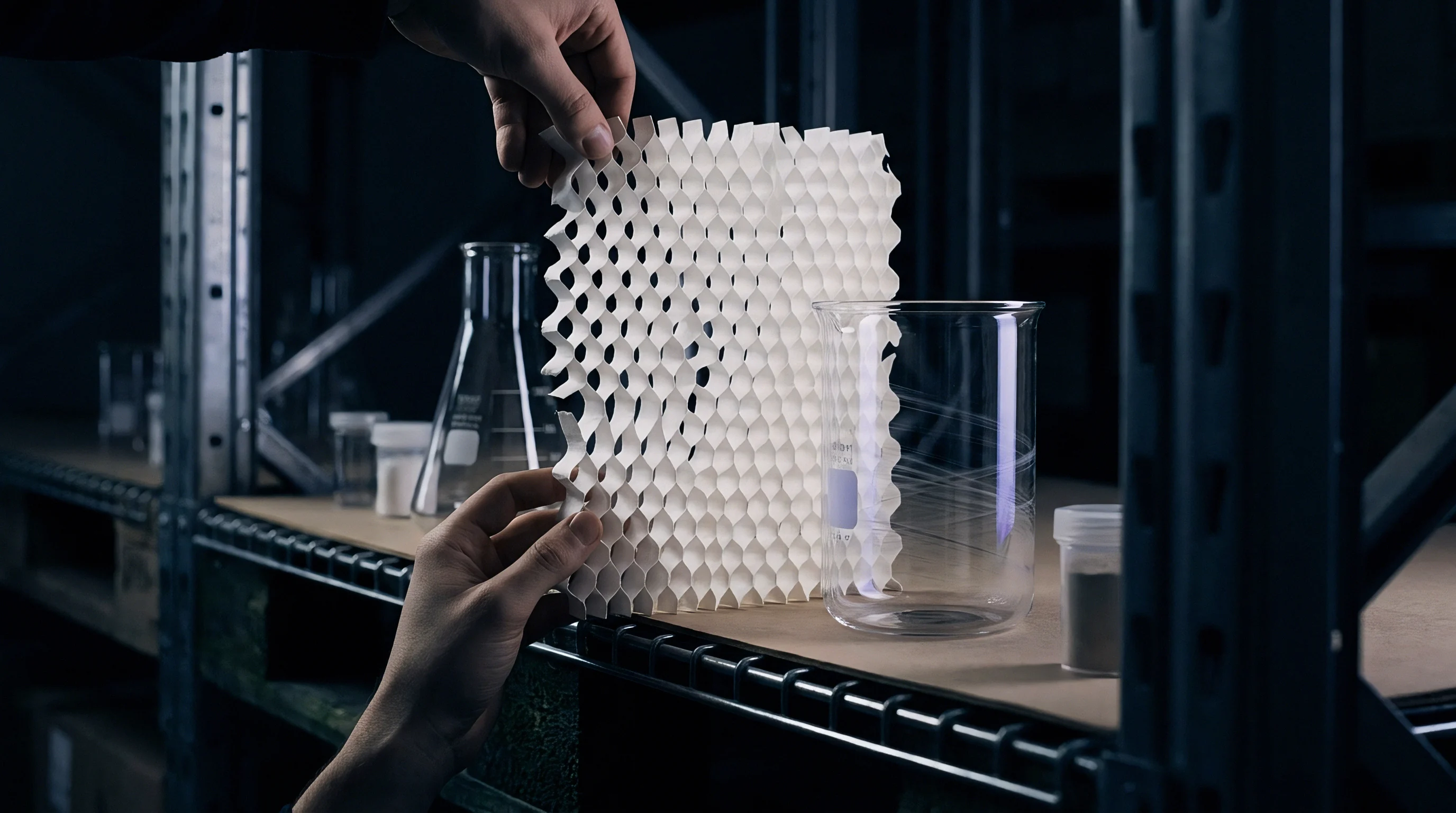
Plate
Kinematics of Vacuum Erect Dynamics
At an erection station running 400 cartons per minute, a vacuum cup pulling -65 kilopascals exerts 18.2 newtons of instantaneous out-of-plane force against the main body panel. Because paperboard is orthotropic, how the panel responds depends entirely on how its principal material directions align with the box geometry. Machine-direction fibers lie parallel to the run of the machine, giving them a much higher elastic modulus than fibers in the cross direction.
As the rotary feeder head grabs the flat blank, this suction flexes the panel out of plane well before it opens along its creased score lines.
If that flexural displacement gets out of hand, the pick head loses vacuum, flanges misalign, and the feeder mispicks. Isotropic deflection formulas regularly underestimate peak deformation because they ignore both the planar shear modulus and the weak cross-direction elasticity. Predicting how a panel actually behaves requires a full two-dimensional orthotropic plate model that incorporates directional stiffness variations, fluctuating suction pressures, and the restraint imposed by score lines.

Governing Equations for Orthotropic Panel Deflection
Thin paperboard panels under lateral suction follow classical Kirchhoff-Love orthotropic plate theory. The terms in the flexural rigidity matrix combine the board’s caliper, Poisson ratios, and primary elastic moduli:
D11 = (E1 h^3) / (12 (1 – v12 v21))
D22 = (E2 h^3) / (12 (1 – v12 v21))
D12 = (v21 E1 h^3) / (12 (1 – v12 v21))
D66 = (G12 h^3) / 12
In these expressions, E1 and E2 are the elastic moduli in the machine and cross directions, G12 is the in-plane shear modulus, v12 is the primary Poisson ratio, and h is board caliper measured under ISO 534 conditioning. For a uniform suction pressure q0, the governing partial differential equation for lateral deflection w(x,y) is:
D11 (d^4 w / dx^4) + 2 (D12 + 2 D66) (d^4 w / dx^2 dy^2) + D22 (d^4 w / dy^4) = q(x,y)
Solving this boundary value problem across rectangular panels ~ whether clamped or simply supported along their creases ~ yields the full displacement field. Deflection peaks directly under the center of the suction cup. If the cross direction happens to run along the longer side of the panel, the lower CD flexural rigidity D22 controls structural stiffness, making the sheet far more prone to distorting during rapid pull-out.
| Paperboard Grade | Grammage (g/m²) | Caliper (µm) | E1 MD (MPa) | E2 CD (MPa) | G12 Shear (MPa) | D11 Flexure MD (N·m) | D22 Flexure CD (N·m) |
|---|---|---|---|---|---|---|---|
| Solid Bleached Sulfate (SBS) | 300 | 380 | 7200 | 3100 | 1850 | 0.0354 | 0.0152 |
| Folding Boxboard (FBB) | 300 | 460 | 5400 | 2200 | 1350 | 0.0468 | 0.0191 |
| Coated Recycled Board (CRB) | 350 | 440 | 4800 | 1800 | 1100 | 0.0364 | 0.0136 |
Calculating peak displacement under dynamic vacuum shows whether a given board will stay flat enough during transfer. For instance, a 150 millimeter by 200 millimeter main panel made from 300 gsm Solid Bleached Sulfate bends 1.12 millimeters under a static 50 kilopascal load. Switch that same panel to 350 gsm Coated Recycled Board, and deflection jumps to 1.78 millimeters under the exact same load, driven by CRB’s lower cross-direction elasticity and weaker shear stiffness.
How planar shear relaxation interacts with dynamic vacuum pulses at accelerations over 25 g remains an open question in current numerical models.
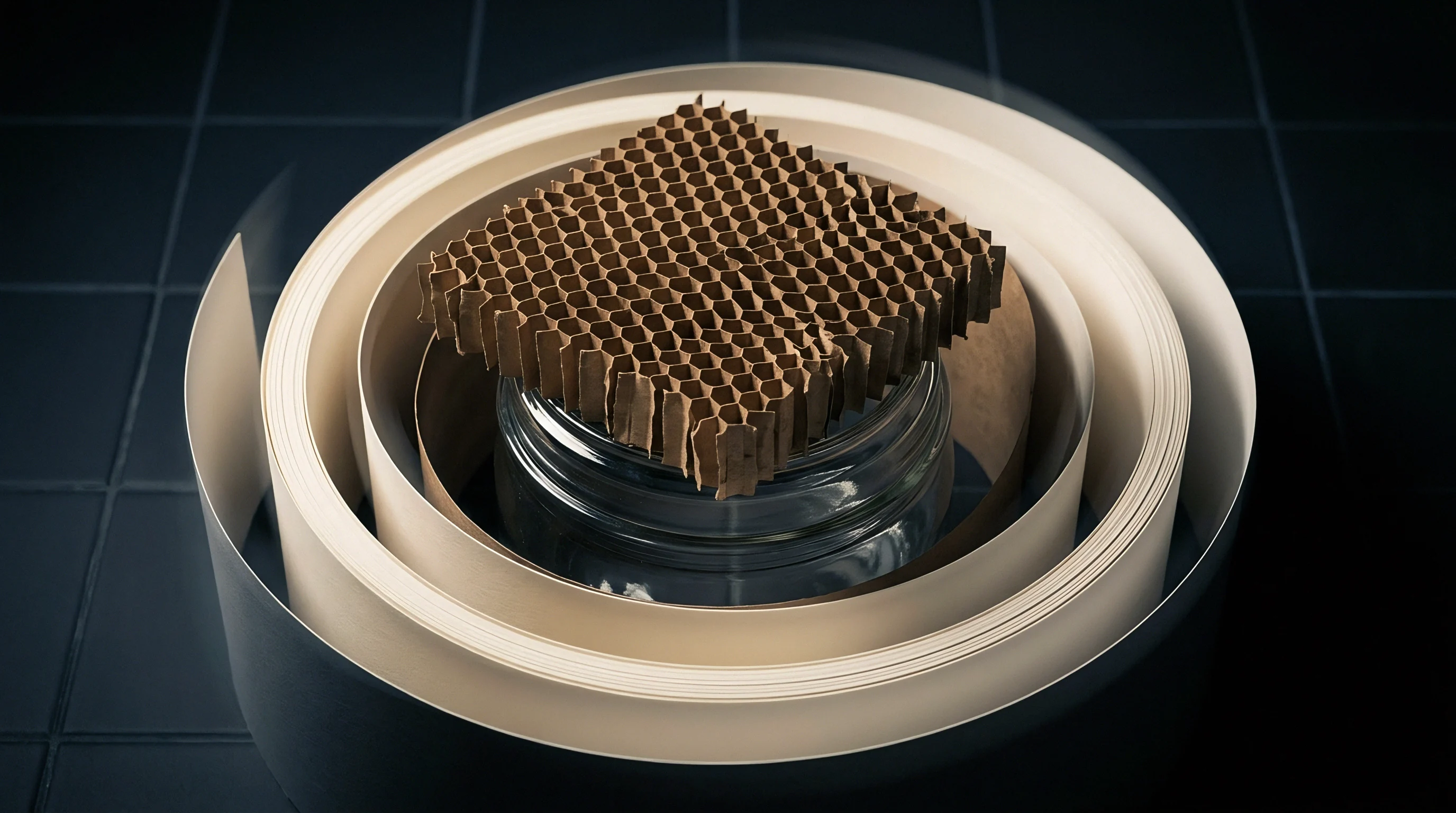
Sheet

Layered Modulus Distribution across Multi Ply Strata
Paperboard is a layered composite, not a uniform solid. Multi-ply grades like Folding Boxboard put dense, bleached chemical pulp on the outer surfaces and high-bulk mechanical pulp in the center. The layout works like an I-beam: because flexural stiffness scales with the cube of thickness, pushing high-modulus fibers as far as possible from the neutral axis yields maximum bending resistance for a given weight.
When a panel bends, the outer plies carry the tension and compression while the core absorbs out-of-plane shear. In Solid Bleached Sulfate, uniform density throughout the sheet provides strong Z-direction shear resistance. Coated Recycled Board, by contrast, relies on short, degraded recycled fibers with poor bonding, which lowers its resistance to shear between layers.
Core bulk dictates overall stiffness, but interlaminar shear strength ultimately controls how much a panel bends when suction strikes near a score line.

Interlaminar Shear and Thick Plate Corrections
Classical Kirchhoff-Love theory assumes zero transverse shear deformation, but that thin-plate assumption breaks down once panel thickness exceeds 0.05 of the span length. Under concentrated suction, thick paperboards undergo notable Z-axis transverse shear strain. Mindlin-Reissner plate theory accounts for this by splitting total displacement into distinct bending and shear components:
w_total = w_bending + w_shear
The transverse shear stiffness terms A44 and A55 depend directly on the out-of-plane shear moduli G13 and G23. In multi-ply recycled grades, G13 frequently falls below 150 megapascals, allowing shear deformation to contribute up to 18 percent of total panel movement during fast vacuum pick-up. Leaving interlaminar shear out of the calculation introduces major errors when predicting how cartons flex on the feed line.
Excessive panel flex leads directly to several common operational failures on high-speed equipment:
- Corner Misalignment Panel bowing draws vertical score lines inward, throwing off alignment with downstream tucking blades.
- Vacuum Cup Breakage Severe curvature breaks the vacuum seal prematurely, dropping blanks onto the feed hopper deck.
- Double Blank Feeding Flexing creates a gap at the trailing edge, dragging adjacent blanks into the feed rollers via friction.
- Score Line Bursting Concentrated shear stresses along stiff creased edges crack outer coated layers during rapid extraction.
- Carton Jam Shutdowns Warped panels strike side guides, tripping sensors and shutting down the cartoning line.
Moisture quickly degrades layer elasticity in multi-ply boards. Stock stored at 75 percent relative humidity picks up water, weakening the hydrogen bonds between fibers. Under these conditions, cross-direction elastic modulus drops 22 percent and Z-direction shear modulus falls 30 percent, causing high-moisture panels to flex far more under suction than properly conditioned sheets.
Multi-ply boards built with mechanical pulp cores achieve higher bending rigidity per gram than solid bleached single-ply sheets of equal weight.


Clamp

Score Line Restraint and Boundary Stiffness Mechanics
Score lines establish the boundary conditions of a carton panel. Creasing breaks down local stiffness to form a mechanical hinge, but an un-broken crease still holds residual rotational stiffness, acting much like a torsion spring. Pre-breaking score lines to 180 degrees breaks up the internal fiber structure permanently, pushing rotational restraint stiffness K_theta near zero.
Real packaging lines operate somewhere between fully clamped and simply supported boundaries. A score line with high residual stiffness pushes the panel toward a clamped state, which reduces peak deflection under suction. That high edge restraint, however, concentrates bending stress along the score line, raising the risk of crease cracking on coated stocks.
Feeder pick heads follow a distinct sequence during blank extraction:
- Suction Contact Vacuum cups move in to grab the flat blank, forming an airtight seal against the face within 12 milliseconds.
- Vacuum Dwell Manifold pressure drops from ambient to -60 kilopascals, applying a localized normal pull force across the grip zone.
- Extraction Stroke The rotary arm accelerates sideways at 20 g, pulling the blank out against score line friction.
- Panel Deflection Peak Peak out-of-plane suction force causes maximum bending across the unsupported span.
- Erecting Interaction Adjacent panels strike stationary plows, overcoming crease stiffness to square up the carton.
Standard testing under ISO 5628 at 23 C and 50 percent relative humidity measures baseline bending resistance, but actual panel movement depends on the dynamic forces applied during feeding.

Dynamic Load Profiles in Rapid Feeder Heads
High-speed cartoners run at up to 600 cartons per minute, extracting each blank in under 100 milliseconds. Suction force isn’t static; it creates a sharp pressure gradient across the face, while rapid acceleration spikes generate strong inertial forces within the board. The total dynamic load q_dynamic(t) reflects both static vacuum pressure and inertial mass resistance:
q_dynamic(t) = q_vacuum(t) + rho h (d^2 w / dt^2)
Where rho is paperboard density, h is caliper, and d^2 w / dt^2 is out-of-plane acceleration. As line speeds scale from 250 to 500 packs per minute, inertial terms quickly dominate the loading. Lowering basis weight cuts material mass, helping offset those higher acceleration forces during vacuum pull.
Running board with insufficient cross-direction stiffness leads to frequent feeder jams, higher scrap, and downtime that can cost thousands of dollars per hour.
Testing
Standardized Bending Methods and Instrument Limitations
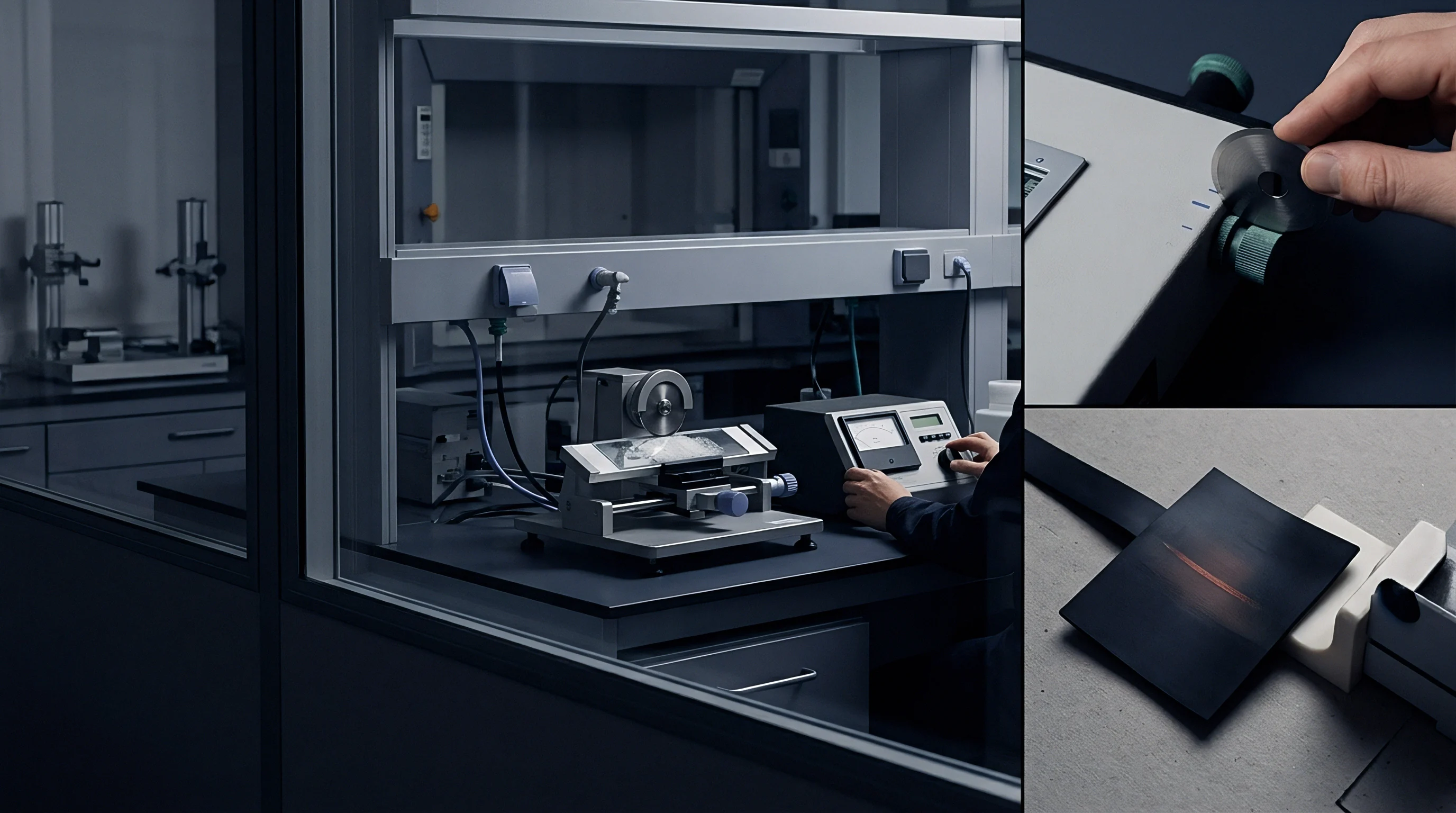
Standard laboratory tests evaluate bending performance under controlled, quasi-static conditions. ISO 5628 lays out procedures for two-point, three-point, and four-point setups, while TAPPI T556 prescribes a two-point test using a 50-millimeter span bent to 15 degrees. Both methods measure force at low strain rates, typically around 5 degrees per second.
Lab instruments record static resistance in millinewton-meters, but high-speed cartoners bend score lines and panels at strain rates over 1000 degrees per second. Static tests completely miss the viscoelastic rate-hardening that occurs in cellulose fiber networks under fast loading.
| Standard Designation | Test Geometry | Bending Angle (deg) | Span Length (mm) | Strain Rate (deg/s) | Primary Output Metric |
|---|---|---|---|---|---|
| ISO 5628 | Two-Point Bending | 15.0 | 50.0 | 5.0 | Bending Stiffness (mN·m) |
| TAPPI T556 | Single-Point Cantilever | 15.0 | 50.0 | 5.0 | Bending Resistance (mN) |
| ISO 2493-1 | Two-Point Deflection | 15.0 | 10.0 or 50.0 | 5.0 | Bending Force (N) |
| SCAN-P 29 | Resonance Method | 0.1 | Variable | Dynamic High | Flexural Rigidity Index (Nm²/kg) |
Do Dynamic Strain Rates Distort Two Point Stiffness Readings?
Viscoelastic materials stiffen under rapid loading. Cellulose fibers relax under slow stress, but hold elastic energy during millisecond load cycles. At actual machine speeds, the dynamic modulus E_dynamic runs 15 to 25 percent higher than the static modulus E_static.
Because quasi-static lab tests underestimate resistance to rapid vacuum extraction, relying on TAPPI T556 numbers often prompts engineers to over-specify board caliper, adding unnecessary weight and expense.
Mill test certificates specifying ISO 2493 bending resistance verify lot consistency, but they do not guarantee that panels will stay flat under rapid vacuum extraction.
Dynamic ultrasonic testing under SCAN-P 29 measures wave propagation speeds along both MD and CD axes. The resulting tensile stiffness index TSI correlates directly with dynamic moduli E1 and E2. Converting plants benefit from ultrasonic profiling because it captures elastic performance without permanently deforming the creases.
When feeding failures occur, mill technical reps often blame machine settings rather than addressing cross-web modulus variations across supplied reels.
Ledger
Downgauging Risk Mechanics and Structural Parity
Paperboard is the single largest recurring cost in high-volume carton production. Procurement teams often attempt to downgauge ~ reducing basis weight to cut cost per thousand units. But dropping grammage without upgrading the fiber furnish severely degrades flexural rigidity terms D11 and D22 because of the cubic relationship between caliper and stiffness.
To downgauge without losing deflection control, plants typically switch from dense single-ply Solid Bleached Sulfate to multi-ply Folding Boxboard. FBB provides equivalent flexural stiffness at a much lower basis weight. Small caliper drops carry heavy penalties: a 5 percent reduction in caliper cuts bending resistance by 14.3 percent, easily pushing suction deflection past cartoning machine tolerances.
| Grade Specification | Grammage (g/m²) | Caliper (µm) | D22 Flexure CD (N·m) | Run Tonnage (t) | Ton Price (USD) | Landed Cost per 1k (USD) |
|---|---|---|---|---|---|---|
| Baseline Solid Bleached Sulfate | 350 | 430 | 0.0225 | 1.575 | 1450 | 22.84 |
| Downgauged Solid Bleached Sulfate | 310 | 380 | 0.0156 | 1.395 | 1450 | 20.23 |
| High-Bulk Folding Boxboard Swap | 290 | 440 | 0.0228 | 1.305 | 1620 | 21.14 |
| Coated Recycled Board Alternative | 380 | 460 | 0.0162 | 1.710 | 1100 | 18.81 |
Evaluating potential substrate swaps requires checking several specific structural criteria:
- Flexural Parity Verification Calculate cross-direction rigidity D22 to confirm the candidate stock matches or exceeds baseline performance.
- Score Line Crease Ratio Audit crease depth and width ratios under ISO 9825 so spring-back forces don’t overpower feeder guides.
- Tonnage Yield Arithmetic Calculate exact sheet yield per metric ton to confirm net unit savings against board price per ton.
- Line Speed Safety Factor Confirm that maximum panel deflection w_max stays under 1.5 millimeters at full line speeds.
Unit Cost Mechanics of High Bulk Substitutions
Replacing 350 gsm SBS with 290 gsm high-bulk FBB drops order weight from 1.575 to 1.305 metric tons per 100,000 blanks. Even though FBB costs 170 USD more per ton, net landed cost per thousand cartons drops from 22.84 USD to 21.14 USD. That saves 170 USD per 100,000 units while keeping D22 flexural rigidity at 0.0228 newton-meters, maintaining deflection compliance and lowering freight costs.
Substituting high-bulk furnishes yields cost savings without sacrificing panel stiffness on high-speed lines.
Board supply contracts should include explicit minimum cross-direction elastic modulus thresholds alongside standard weight and caliper tolerances to maintain machine stability.
Tolerance
Cross Web Variance Control and Mill Tolerance Windows
Paperboard properties vary across the width of wide paper machine webs. Basis weight drifts along cross-machine profiles, causing caliper variations up to 4 percent across front, center, and back reel positions. Moisture content also fluctuates within typical mill windows of 5.5 to 7.5 percent, altering fiber swelling and shifting internal elastic moduli E1 and E2.
These cross-web variations lead to inconsistent panel stiffness during high-speed cartoning. Blanks cut from reel edges often have a lower cross-direction modulus than center-cut sheets. If an edge-cut blank enters a pick station set up for center-cut stiffness, it flexes excessively, triggering feeder jams.
Receiving Protocols for High Speed Stock Specification
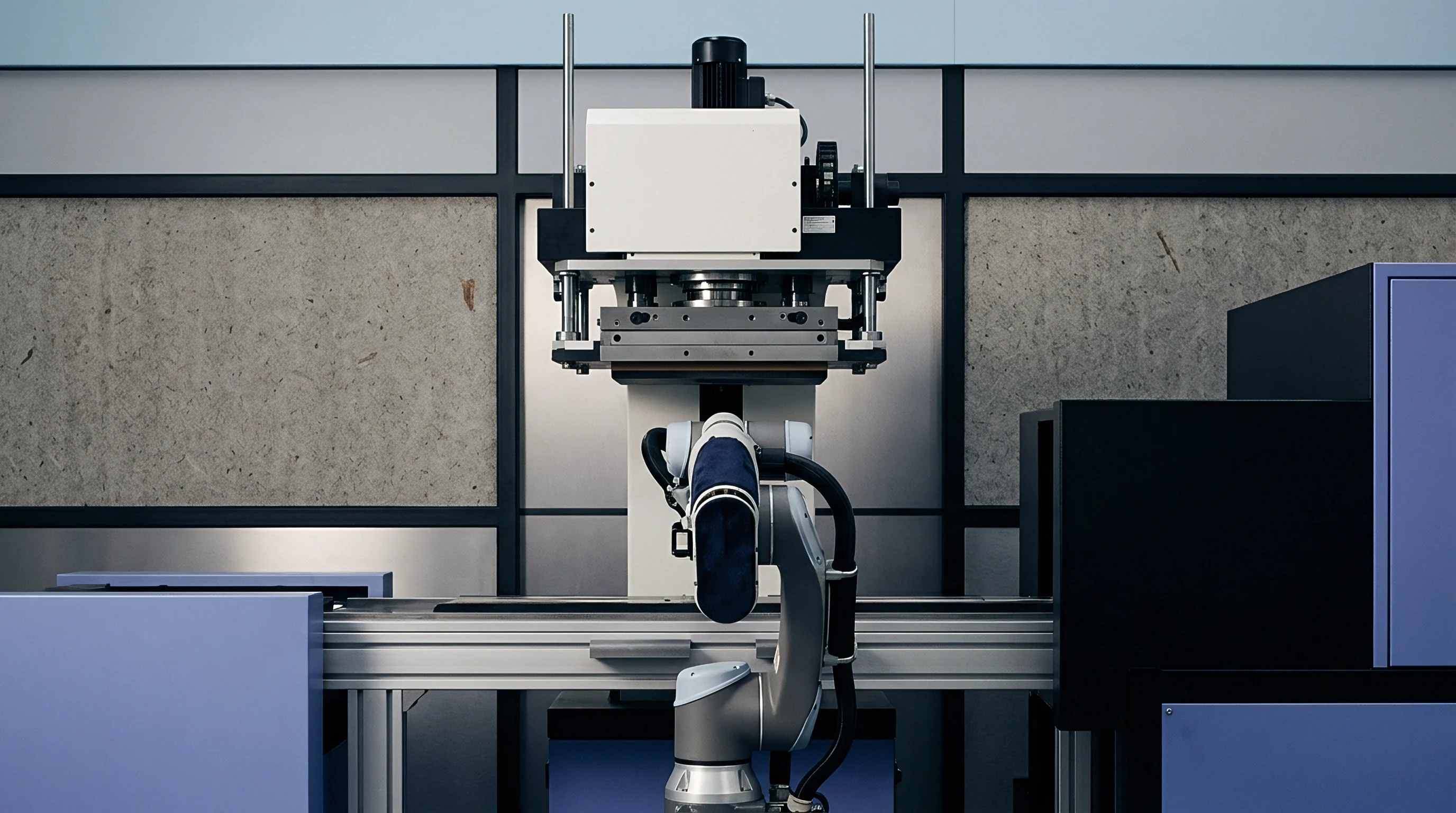
Receiving inspection for high-speed stock should verify orthotropic stiffness before releasing board lots to the pressroom. Quality checks ought to measure dynamic tensile stiffness index TSI in both directions using ultrasonic testers, while caliper audits should reject pallets showing thickness deviations over 3 percent from nominal specification.
Board stored in unconditioned convertor warehouses develops moisture gradients, softening sheet edges while leaving the centers dry. This uneven moisture causes panel curl and unequal flexural stiffness across score lines. Maintaining strict reel traceability, enforcing tight mill certificates, and conditioning pallets in the plant atmosphere before die-cutting protects cartoning lines against deflection-related failures.