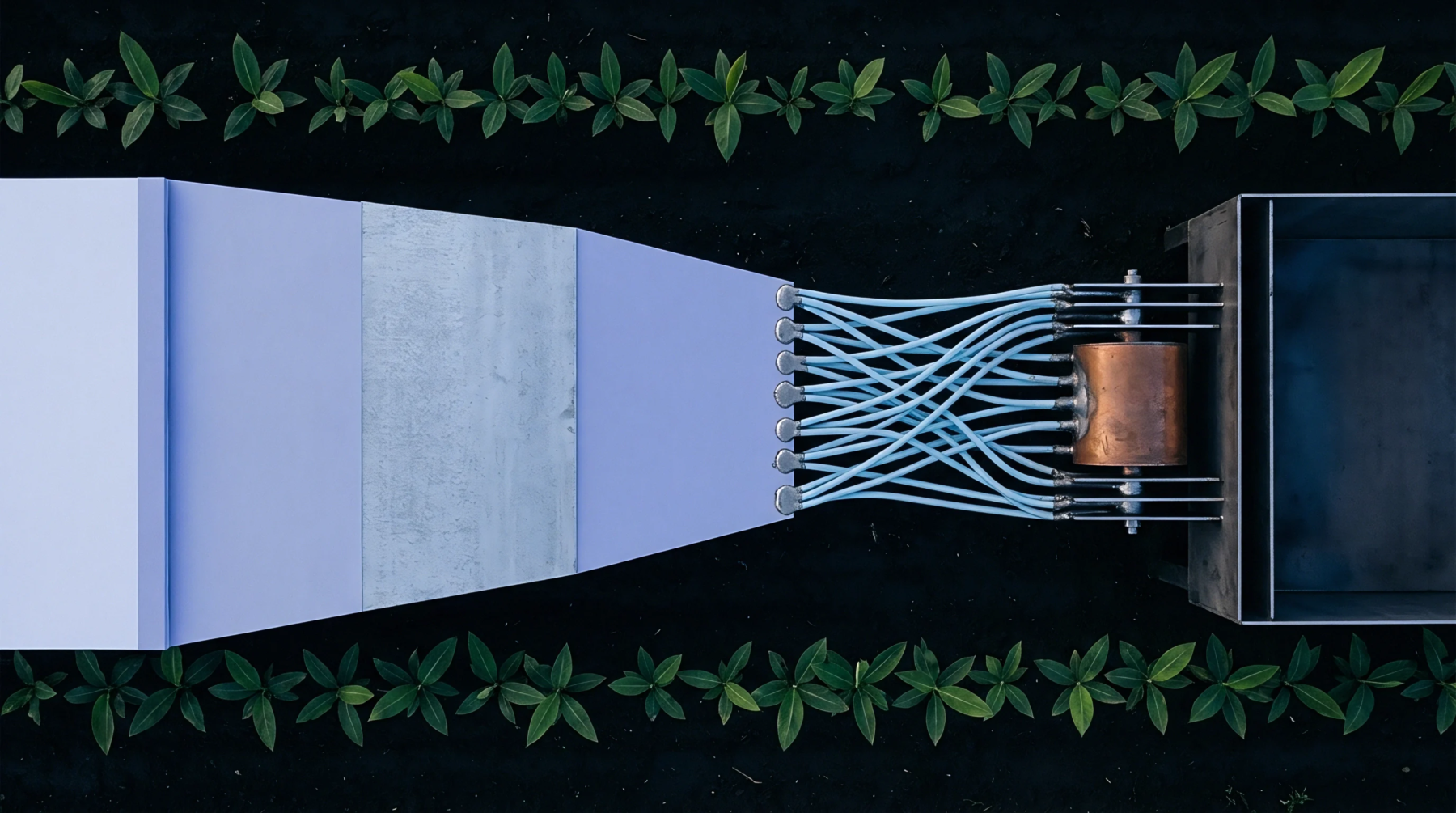
Flexural Hydrodynamics
Application systems that meter liquid coatings onto paperboard webs by flexing a thin spring-steel blade against a backing roll establish a hydrodynamically supported trailing nip. Lower metering angles between three and fifteen degrees allow bent blade metering to deposit smoother coating profiles over rough substrate surfaces without scratching fragile fibres. Viscous drag pulls fluid under the bent tip where film thickness depends on web speed, fluid viscosity, and blade loading pressure.
The boundary of this application regime terminates when high machine speeds generate hydrodynamic lift that overcomes mechanical blade loading and forces film thickness beyond target specifications.
Metering Mechanism
Film thickness control relies on balancing hydraulic pressure generated within the converging liquid wedge against the flexural resistance of the steel strip. Adjusting pneumatic tube pressure shifts the blade profile, changing the nip contact area and altering coat weight without replacing hardware. Rheological forces within high-solids formulations resist compaction, forcing fluid through the trailing boundary at elevated velocities.
Higher solids levels accelerate fluid immobilization near the web surface, creating uniform coverage over low-density fibre networks.
Operational Boundary
Runnability limits appear when rheological dilatancy creates transient pressure spikes under the blade tip. Excessive hydraulic force lifts the flexural element, causing film splitting and streak formation along the web machine direction. Operating below critical solids thresholds prevents thermal buildup caused by viscous dissipation within the high-shear region.
Maintaining constant viscosity prevents hydrodynamic instability across wide production widths.