Structural Metric
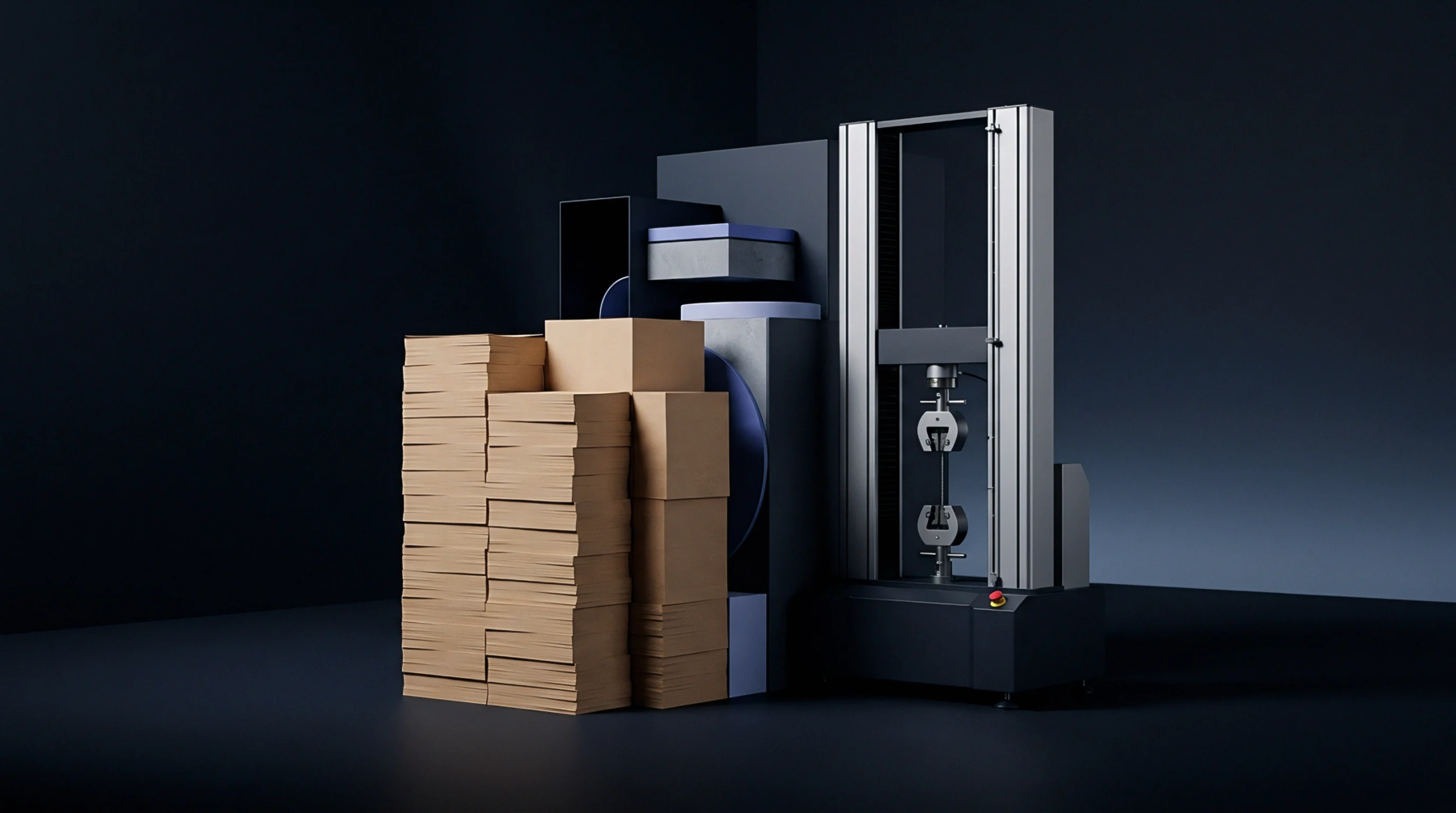
Mathematical assessment of the volume reduction occurring within a fibrous matrix under vertical load quantifies the density changes in corrugated board. Compression ratio calculation determines the relationship between the initial thickness of the material and its height at the point of structural failure. Vertical failure values identify the efficiency of the fluting profile in resisting crushing forces during stacking.
A higher ratio typically indicates a more porous structure or a weaker linerboard combination that yields easily under pressure.
Analytical Procedure
Testing involves the application of a steadily increasing force to a sample of known dimensions while recording the displacement until the peak load is reached. Technicians use the resulting data to map the deformation curve and identify the elastic limit of the cellulose fibers. Calculation of the percentage change provides a standardized way to compare different fluting geometries such as A-flute or E-flute across varying moisture contents.
Standardized laboratory conditions at twenty-three degrees Celsius and fifty percent relative humidity are required to ensure the results are comparable across different production batches. Accurate measurement of the initial caliper ensures the baseline is stable before the mechanical plates begin their descent.
Stacking Height limits
Stacking height limits depend on the final figure to guide the design of shipping containers intended for heavy stacking in high-humidity warehouses. If the calculated ratio exceeds the safety margin of the box design, the risk of a collapsed pallet increases substantially. Material selection depends on these values to maintain package integrity throughout the supply chain.