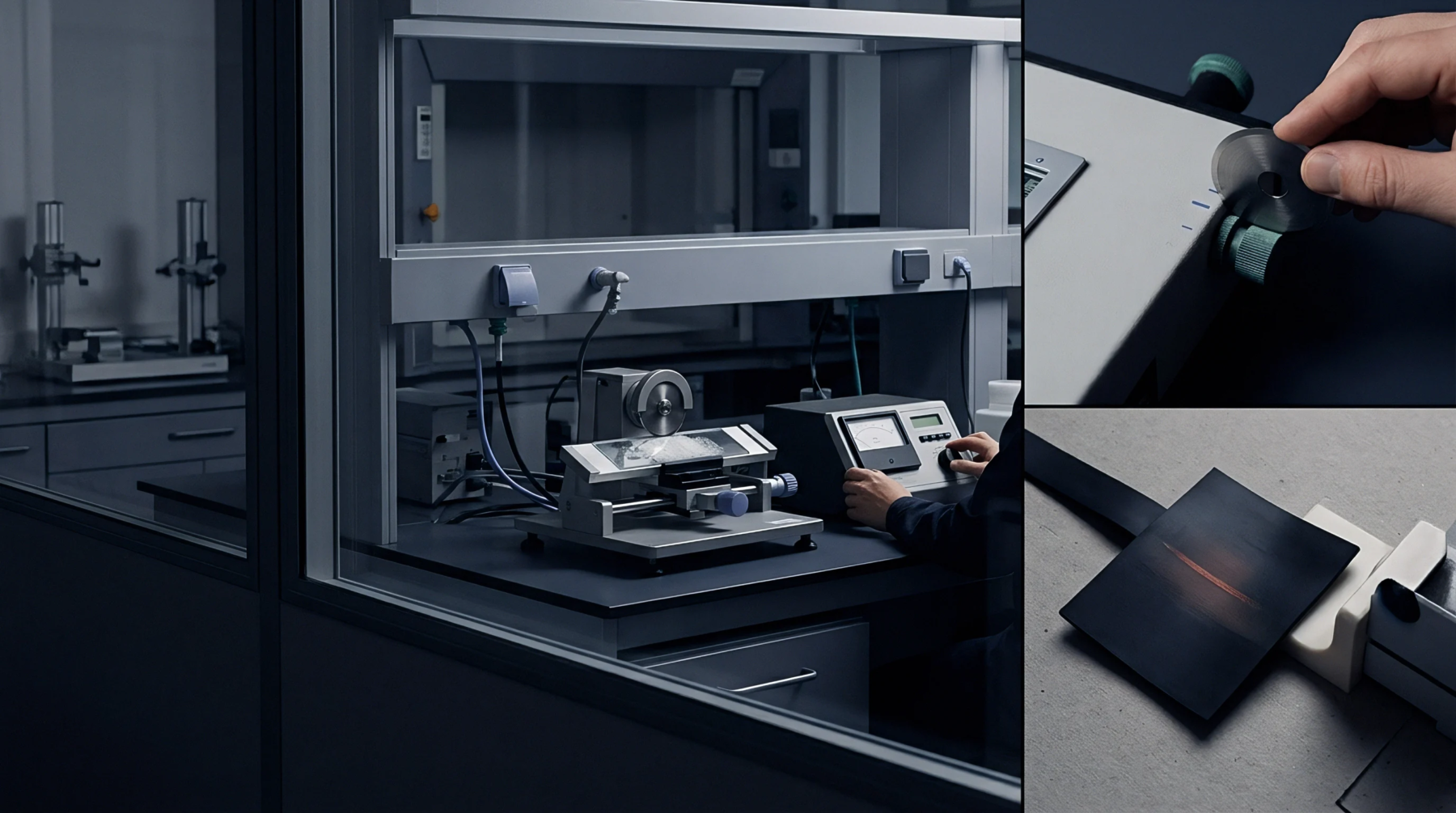
Mechanical Instrument
Laboratory benchtop testing devices measure the bending force and springback torque of pre-creased paperboard specimens at defined angles. An automated crease tester clamps a scored substrate specimen and deflects it ninety degrees at a constant angular velocity. Electronic load sensors capture the peak bending moment generated during the folding stroke.
Board stiffness and scoring geometry dictate the magnitude of resistance recorded by the sensor array.
Folding Resistance
Crease recovery force indicates the memory effect of crushed fibers striving to return to their original unbent orientation. High recovery forces strain glue joints during carton assembly, which causes popped flaps on automated packaging lines. Measuring bending force at ninety degrees isolates the structural response of the score line from general board stiffness.
Deep scoring reduces required bending torque while shallow scoring leaves excessive residual stress in the fold. Proper mechanical alignment of the folding arm guarantees repeatable angular deflection without inducing secondary tension. Calculating the ratio of scored bending force to unscored board stiffness establishes a normalized crease efficiency index.
The index determines whether the score line will fold cleanly without fracturing the outer linerboard during high-speed converting operations.
Board Evaluation
Test results quantify the effectiveness of matrix and rule creasing tools across varying paperboard callipers. Standardized evaluation protocols specify conditioning at fifty percent relative humidity to lock moisture content prior to testing. Comparative readings evaluate creasing rule depth against board cracking thresholds across machine direction and cross-machine direction scores.
Deviations in crease stiffness highlight improper die setup or inconsistent board density across production rolls.