Cross Direction Crease Tuning Parameters for SBS Board
Cross-direction SBS creasing requires female die channels 1.7 to 1.9 times board caliper plus rule width to drive internal shear without coating fracture.

Anisotropy
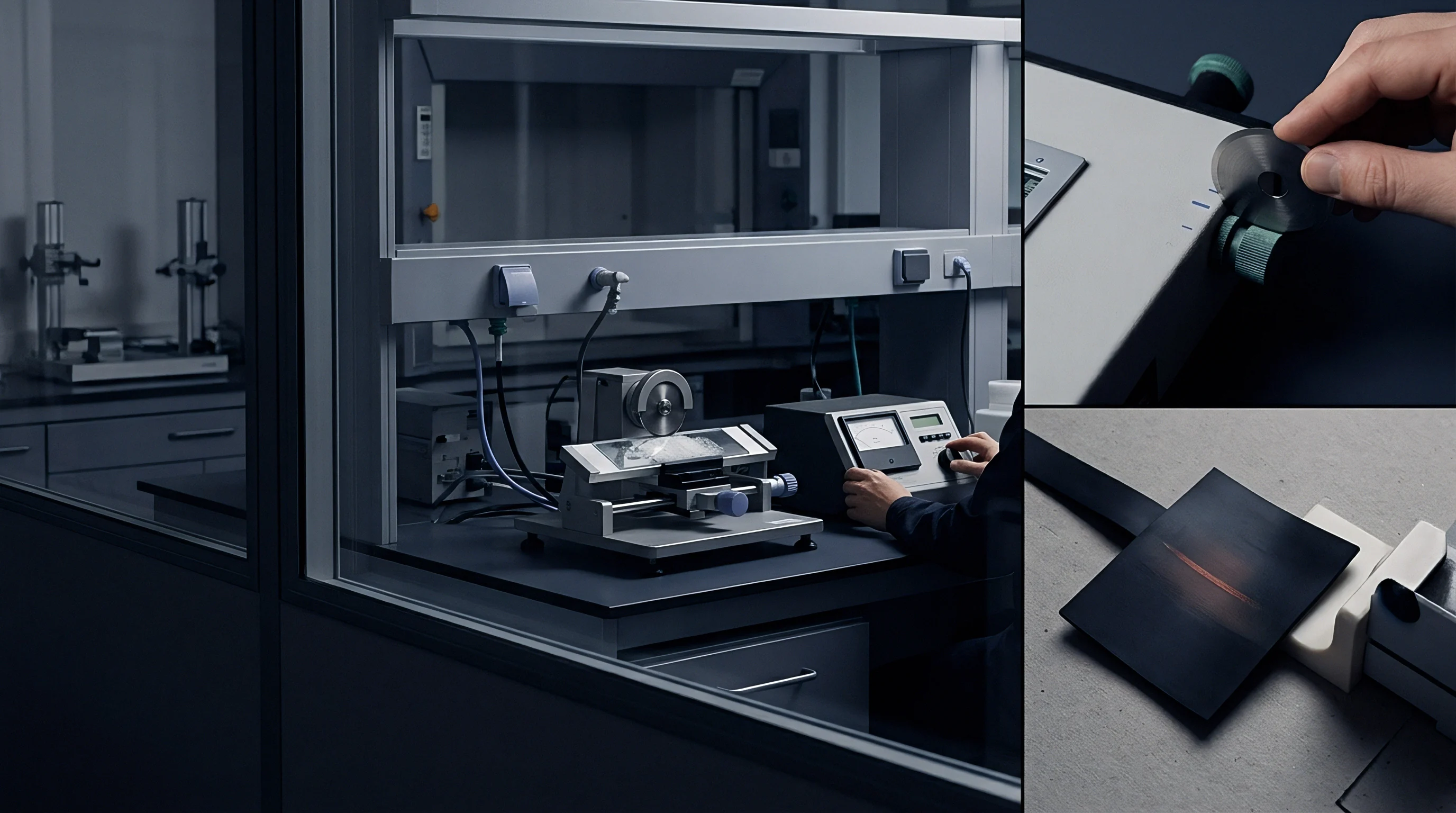
Solid Bleached Sulfate board possesses distinct directional physics created during wet-end formation on the paper machine. Fibres align preferentially along the running direction of the wire, producing a machine direction tensile strength that routinely triples the cross-direction value. Cross-direction crease lines force a fold perpendicular to this primary fibre axis.
Bending along a cross-direction score deforms the softwood and hardwood fibres across their transverse diameters rather than coaxially along their length. Fiber alignment dictates score performance.
During a cross-direction bend, the outer coated liner experiences tensile strain while the inner liner undergoes compressive strain. Internal plies must yield through controlled delamination, sliding laterally along internal planes to relieve strain without tensile rupture of the outer bleached kraft liner. Solid Bleached Sulfate board relies on long softwood fibres in its interior plies to absorb this internal shear energy.
When a cross-direction crease lacks sufficient female die width, internal shear stalls, concentrating strain directly on the top coated surface.
Coated board conditioned at 23 degrees Celsius and 50 percent relative humidity exhibits a maximum outer liner strain limit of 1.5 percent before mineral coating fracture occurs.
Mineral coatings composed of calcium carbonate, kaolin clay, and latex binders exhibit far lower elongation at break than the underlying virgin cellulose matrix. Tensile stress on the outer face during a cross-direction fold easily exceeds the elastic limit of the clay coat. Delamination failure inside the central plies serves as the primary strain relief valve.
Micro-cracking along the cross-direction crease line exposes raw internal fibres, degrading print artwork and compromising the moisture barrier of the finished carton.
Converting lines suffer distinct structural failures when cross-direction scoring parameters fail to match the directional mechanical properties of the furnish.
- Coating micro-fracture presents as fine white line fractures along printed cross-direction score edges caused by insufficient male rule penetration and high outer surface strain.
- Back-liner burst occurs when extreme compression forces cut the unprinted bottom ply against the edge of an overly narrow female die groove.
- Uncontrolled shear spread yields wide, puffy score lines that lack a defined hinge axis, causing inconsistent blank dimensions on automated cartoning lines.
- Delamination resistance failure produces complete ply separation across the score shoulder, reducing internal box compression strength along vertical corners.
Dry board fails in shear. Skimping on cross-direction crease parameters or treating cross-direction scoring identically to machine-direction scoring results in fractured outer coatings, rejected production lots, and carton jams during high-speed secondary filling operations.
Tooling
Precision cross-direction scoring on Solid Bleached Sulfate board demands die geometry calibrated specifically to the caliper of the sheet. Standard machine-direction rules fail when applied cross-direction because the higher cross-direction bending resistance requires wider female channels to establish delamination. Thicker rules demand wider channels.
The cross-direction creasing channel width must accommodate double the board thickness plus the male rule thickness, modified by an expansion coefficient that accounts for cross-direction bulk displacement.
Channel width controls shear displacement. For machine-direction scoring, female channel width traditionally calculates as the rule thickness plus 1.5 times the board caliper. For cross-direction creasing on virgin bleached sulfate stock, the calculation factor increases to 1.7 through 1.9 times the board caliper.
Matrix depth sets score height. Female channel depth equals nominal board thickness, ensuring the displaced board volume fills the groove without crushing the internal fibre matrix into a solid, unyielding mass.
| Board Caliper (pt) | Board Caliper (mm) | Male Rule Thickness (pt / mm) | CD Female Channel Width (mm) | Female Channel Depth (mm) |
|---|---|---|---|---|
| 12 | 0.305 | 2 pt / 0.71 mm | 1.23 to 1.29 | 0.30 to 0.32 |
| 16 | 0.406 | 2 pt / 0.71 mm | 1.40 to 1.48 | 0.40 to 0.42 |
| 18 | 0.457 | 2 pt / 0.71 mm | 1.49 to 1.58 | 0.45 to 0.48 |
| 20 | 0.508 | 3 pt / 1.05 mm | 1.91 to 2.01 | 0.50 to 0.53 |
| 24 | 0.610 | 3 pt / 1.05 mm | 2.09 to 2.21 | 0.60 to 0.63 |
Penetration depth of the male rule into the female die groove determines the degree of internal ply separation. Standard depth setup targets a penetration equivalent to board caliper plus rule thickness minus channel depth, adjusted under static impression force. Insufficient penetration leaves internal plies intact, forcing the outer liner to absorb all folding strain.
Excessive penetration shears the back liner, creating an immediate tensile fracture along the crease root.
- Verify static board caliper across three cross-web samples using a dead-weight micrometer in accordance with TAPPI T 411.
- Select male creasing rule profile with a fully rounded, ground crown radius equal to half the rule thickness.
- Calculate cross-direction channel width using a multiplier of 1.8 times caliper added to the rule thickness.
- Install counter-die matrix strips or milled steel plates, validating channel alignment with an optical impression tape check.
- Set initial press impression to contact level and increment penetration depth in 0.02 mm steps until internal delamination achieves target bending moment reduction without surface coating craze.
Matrix suppliers frequently claim their off-the-shelf universal channel dimensions handle all bleached board grades identically, attributing coating fractures along cross-direction scores to defective mill coating formulation rather than incorrect die geometry.

Moisture
Water acts as a plasticizer within the amorphous regions of cellulose and hemicellulose inside virgin bleached chemical pulp. The mechanical response of Solid Bleached Sulfate board during cross-direction creasing depends directly on the moisture content maintained within the fibre network. Standard laboratory testing mandates conditioning at 23 degrees Celsius and 50 percent relative humidity per ISO 187, yielding an equilibrium moisture content between 6.5 and 7.5 percent in virgin bleached kraft board.
Moisture loss stiffens outer liners. When ambient relative humidity falls below 40 percent, board moisture drops below 5.5 percent. Hydrogen bonding between cellulose microfibrils intensifies, increasing board stiffness while simultaneously reducing strain at break.
Under cross-direction creasing, dry fibres refuse to slide laterally. Strain accumulates entirely in the outer clay coating, causing instantaneous cracking along the score line during folding operations.
| Board Moisture (%) | Conditioning Status | CD Bending Stiffness (Taber Units) | Outer Coating Crack Risk | Score Line Springback Force |
|---|---|---|---|---|
| 4.5 to 5.2 | Severely Desiccated | Elevated (+18%) | Extreme / Immediate Fracture | Low |
| 5.3 to 6.2 | Low Moisture | Moderately High (+8%) | Moderate / Micro-cracking | Medium-Low |
| 6.3 to 7.5 | Target ISO 187 Range | Nominal Baseline | Minimal / Clean Hinge | Optimal (Target) |
| 7.6 to 8.8 | Elevated Moisture | Reduced (-12%) | Negligible | High / Unstable Box Geometry |
High moisture levels generate different structural defects. Board moisture exceeding 8.0 percent softens internal ply bonding to a level where the male creasing rule crushes the sheet without creating a defined internal shear zone. The score line loses its mechanical memory.
The resulting cross-direction crease exhibits excessive springback force, causing glued carton side-seams to pop open on packing lines.
Purchase specifications incorporating ISO 187 conditioning compliance clauses protect buyers by allowing rejection of board lots delivered below 6.0 percent moisture content before converting trials begin.
Warehouse climate control preserves substrate converting windows. Storing palletized board in unheated or non-humidified space during winter months desiccates outer reel wraps within 48 hours. Unwrapping cold pallets in a warm pressroom induces rapid edge condensation followed by localized moisture loss, skewing cross-direction score performance across the sheet.
Standard delivery terms specify that board moisture must remain within 6.0 to 7.5 percent upon arrival at the converting facility, indemnifying the buyer against coating fracture claims if the delivery log proves environmental exposure outside these limits during transit.

Tolerance
Dynamic forces during high-speed die-cutting alter the physical engagement between male creasing rules and female counter-dies. A tool setup that produces flawless cross-direction scores on a hand-pulled proof press often fractures coatings when accelerated to 9,000 sheets per hour on an automated platen cutter. Dynamic impression force varies with speed.
How Does Web Speed Alter Female Die Penetration?
Viscoelastic materials like Solid Bleached Sulfate board exhibit strain-rate hardening. At high deformation rates, cellulose fibres behave more rigidly than under slow, static loads. The time window available for internal plies to delaminate and slide during a cross-direction crease stroke compresses from milliseconds to microseconds.
Higher die-cutting speeds require slightly wider female channels or micro-adjustments to penetration depth to achieve identical delamination levels without tearing the top liner.
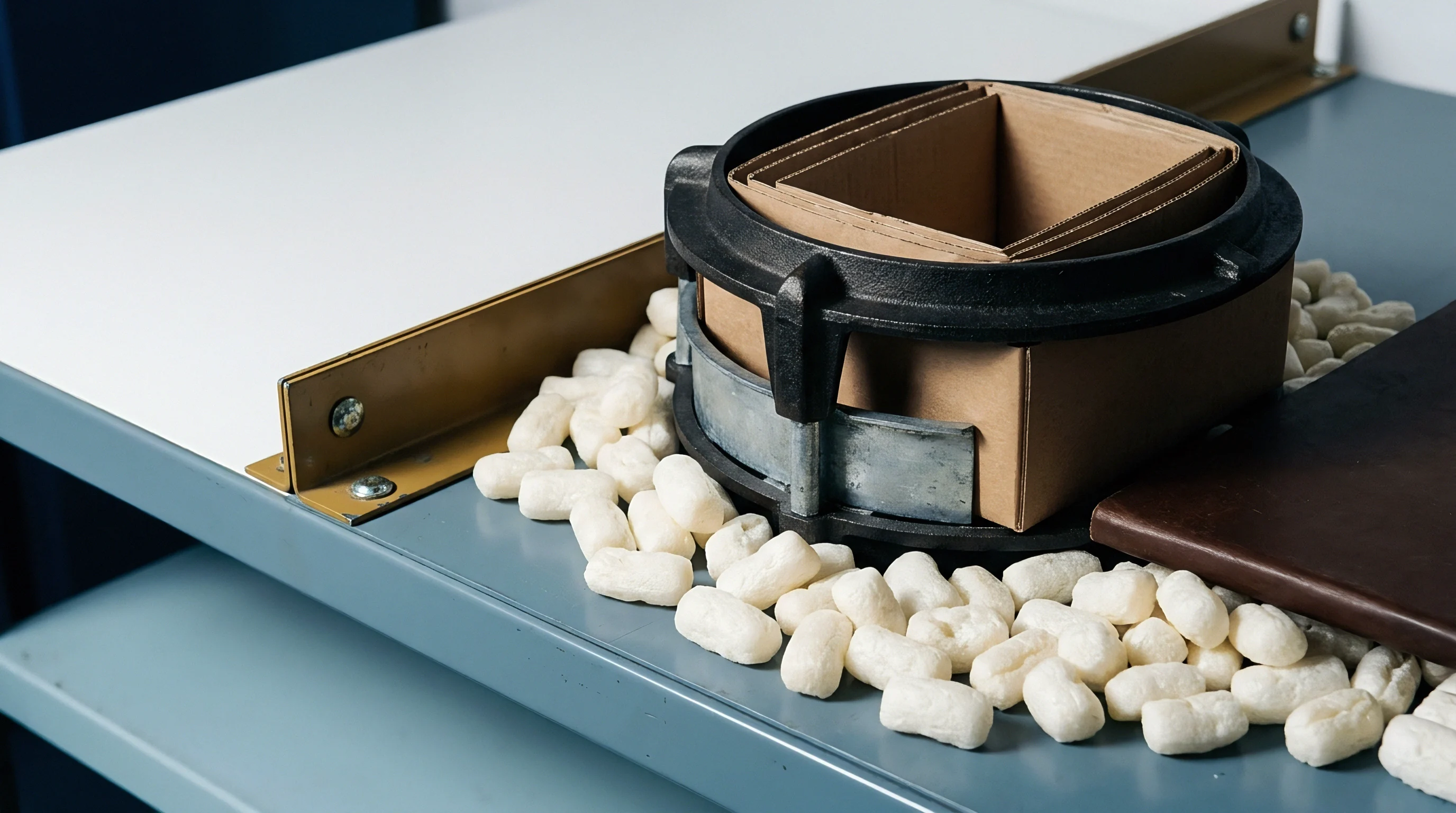
Matrix channel wear degrades cross-direction crease profile consistency over long production runs. Milled steel counter-plates maintain channel geometry past two million impressions, whereas composite creasing matrix strips experience channel wall shoulder breakdown after 80,000 to 120,000 cycles. As the female channel wall rounds off, the lateral shear force applied to the board diminishes, converting a sharp internal score shear into a rounded surface indentation.
Creasing matrix channel wall wear exceeding 0.05 millimetres destroys cross-direction score definition long before visual surface damage appears.
Cross-web caliper variation presents another variable. Paper machines hold cross-machine caliper profiles within tight bands, yet variations of plus or minus 3 percent across a 1.6-metre web remain standard. On a 20-point (0.508 mm) SBS board, a 3 percent caliper drift translates to a 0.015 mm shift in board thickness.
A fixed-depth male rule will under-crease thin zones and over-penetrate thick zones across the die face.
Continuous monitoring of creasing matrix integrity prevents gradual quality drift across long production runs.
Proper counter-die selection balances initial tooling outlay against long-term score repeatability.
- Phenolic matrix strips function well for short runs under 50,000 sheets but widen under continuous cross-direction shear stress.
- Steel counter-plates cut via computer numerical control deliver exact channel geometry across five hundred thousand impressions without shoulder breakdown.
- Elastomeric creasing insert profiles reduce impact shock on delicate high-gloss coated surfaces but require tighter penetration control.
Harder female channel shoulders deliver sharper internal shear definition on heavy SBS calipers.

Penalty
Substandard cross-direction crease tuning carries direct financial consequences that ripple through converting and packaging facilities. When score line delamination fails to achieve target levels, the bending force required to fold a carton panel along its cross-direction score increases significantly. High bending resistance creates dimensional distortion in assembled folding cartons, forcing side-seams out of square and jamming automated high-speed cartoning machines.
The score quality ratio measures creasing efficiency by comparing the bending force of a creased sample against an uncreased sample of the same board using TAPPI T 829 procedure. Uncreased SBS board requires high bending force. A correctly tuned cross-direction crease reduces this force to between 30 and 40 percent of the uncreased baseline.
Crease stiffness governs folder-gluer speed. When cross-direction crease tuning leaves the bending force ratio above 50 percent, folder-gluers must drop running speeds by up to 35 percent to prevent glue-flap pop-backs.
Consider a production run of 500,000 folding cartons produced from 18-point SBS board with a caliper of 0.457 mm. Defective cross-direction scoring that causes a 2 percent reject rate at the folder-gluer due to un-squared blanks wastes 10,000 cartons. At an average landed substrate and converting cost of 0.12 USD per blank, direct material scrap totals 1,200 USD.
However, line stoppages on a secondary packaging line running at 400 cartons per minute generate operational downtime costs averaging 450 USD per hour. Three hours of cumulative downtime spent clearing carton feeder jams adds 1,350 USD in lost line productivity, exceeding the direct scrap cost of the physical substrate.
Correcting cross-direction crease tuning parameters before mounting dies on high-speed equipment remains the single most effective intervention to safeguard gross margins on premium bleached board converting orders.