Structural Orientation
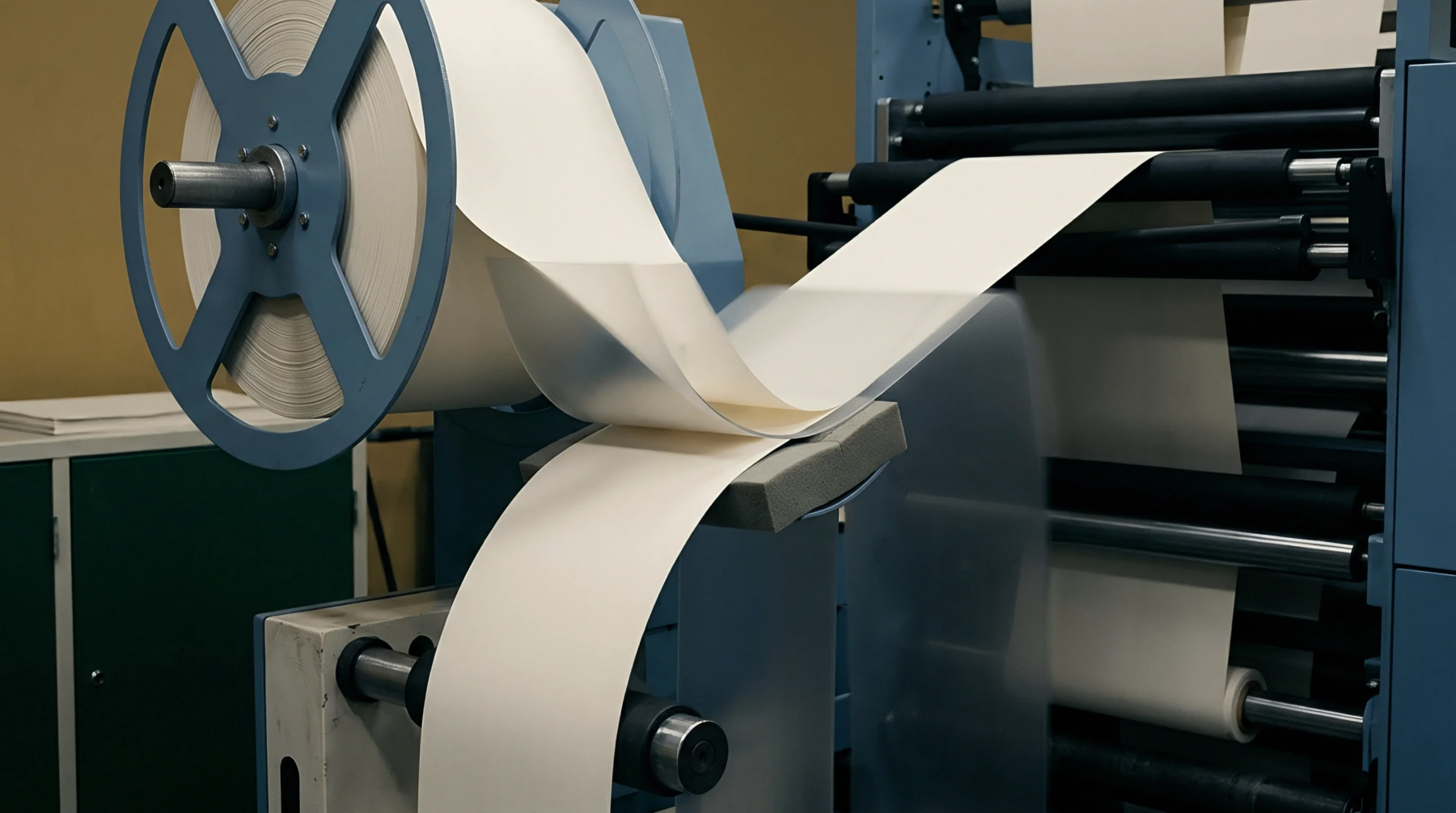
Material anisotropy defines the orientation of wood fibers relative to the travel direction of the paper machine wire during sheet formation. The cross-machine direction lies perpendicular to the web alignment, exhibiting higher hygroexpansivity and lower tensile strength than the machine direction. Fibers naturally align along the moving wire, leaving fewer structural bonds positioned laterally across the sheet.
Anisotropy Yield
Mechanical properties differ substantially across orthogonal axes of paperboard sheets. In the cross-machine direction, bending stiffness is lower, while tearing resistance and elongation at break are higher. Folding carton blanks are aligned so that major load-bearing panels run parallel to the machine axis, while cross-machine direction cuts permit smooth score folding.
Wetting paperboard causes individual fibers to swell in diameter rather than length, making dimensional instability greatest across this axis. Printing presses must compensate for lateral fan-out register shifts caused by moisture absorption during offset ink application. Sheet stiffness ratios between axes determine carton bulging resistance on automated filling lines.
Dimensional Tolerance
Axis measurement standardizes mechanical testing according to ISO 2758 and TAPPI T494 protocols. The cross-machine direction property limits apply only to continuous webs and cut sheets with identified grain orientation. Orientation testing ceases to provide actionable structural data in randomized synthetic nonwovens.
Measurement loses validity when moisture content exceeds twelve percent during testing.