Isotropic Pressure Mechanism
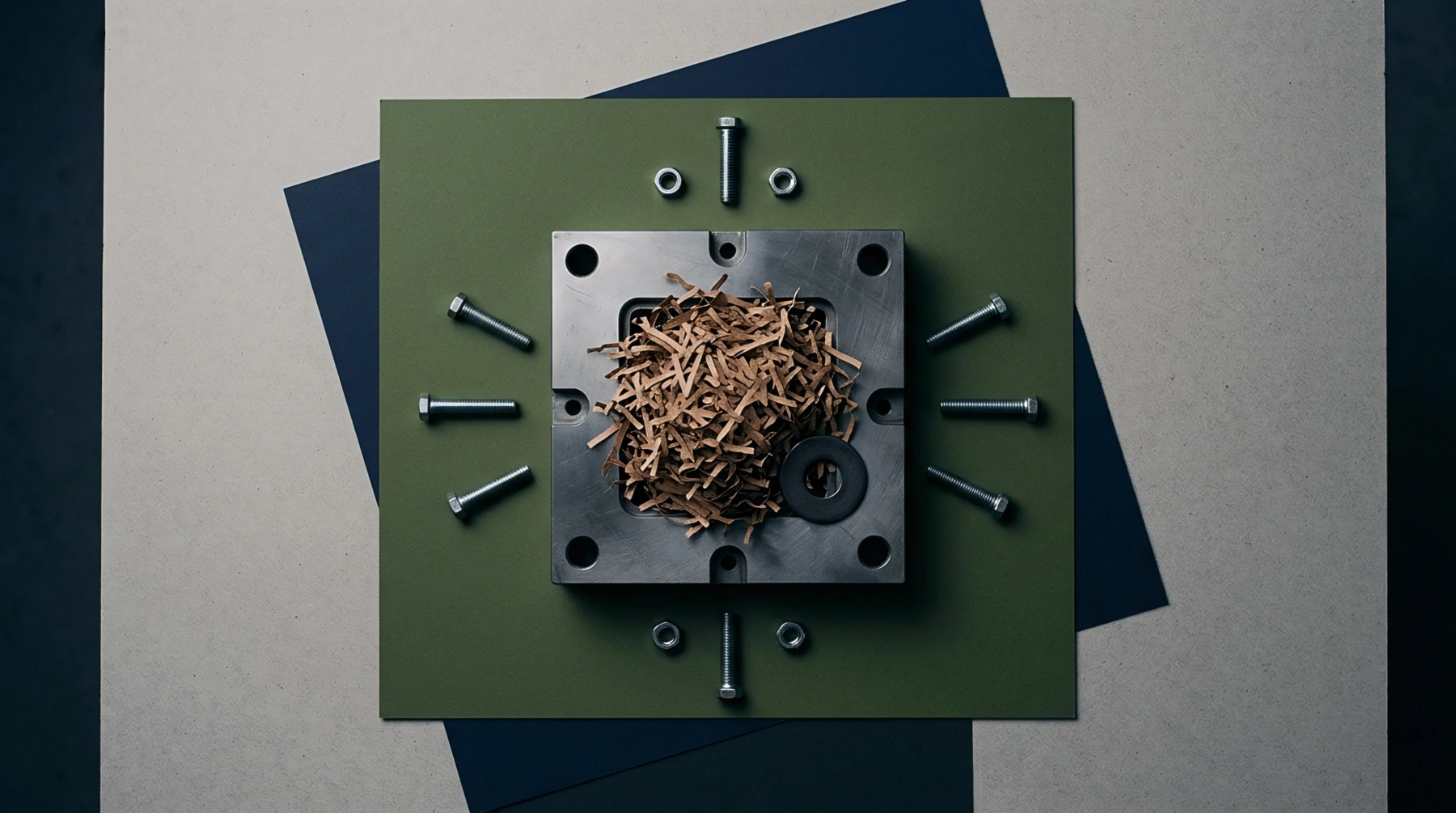
Multi-directional mechanical stress exerted uniformly on a cellular material or fibrous sheet without shearing forces alters internal void volume and fiber wall spacing. Inducing hydrostatic compression across thick paperboard structures decreases specific volume while packing bleached pulp or mechanical furnish elements into denser, mechanically consolidated networks. Unlike linear nip pressing, which introduces severe transverse shear gradients, uniform fluid or elastomeric pressure compacts the sheet evenly across its structural geometry.
The operational limit of this stress mode occurs at complete fiber lumen collapse, beyond which additional isotropic load yields microscopic fiber crushing and brittle cell wall rupture.
Pore Network Compaction
Subjecting fiber networks to balanced isotropic fluid pressure forces interstitial air out of sheet micro-pores, increasing apparent sheet density without directional fiber orientation changes. Internal bonding between cellulosic fibrils intensifies as capillary channels constrict, forcing adjacent hemicellulose surfaces into intimate molecular proximity. Under elevated hydrostatic compression, individual fiber lumens flatten symmetrically, diminishing sheet opacity while simultaneously increasing light scattering coefficients through consolidated boundary areas.
Multi-ply folding boxboard structures exposed to excessive fluid-state compaction lose bending stiffness rapidly, because thickness drops in a cubic relationship to measured bending resistance. Laboratory mercury intrusion porosimetry tracks this pore collapse profile under progressive increments of isotropic compression.
Industrial Converting Response
Corrugated packaging mediums and heavy linerboards experience isotropic compressive forces when operating in high-pressure steam-assisted mould forming operations for three-dimensional paper containers. Retaining structural caliper under balanced external loads prevents converted trays from buckling during hot-press deep drawing operations. Production runs on high-speed carton erectors depend on predictable internal pore structures, because adhesive penetration kinetics follow capillary pore radius distributions established during wet-end and dry-nip compaction.
Corrugating lines balancing moisture conditioning and isotropic pressure retain flute height under downstream handling stresses, eliminating flute fracture along machine direction scoring profiles.