Layer Deformation
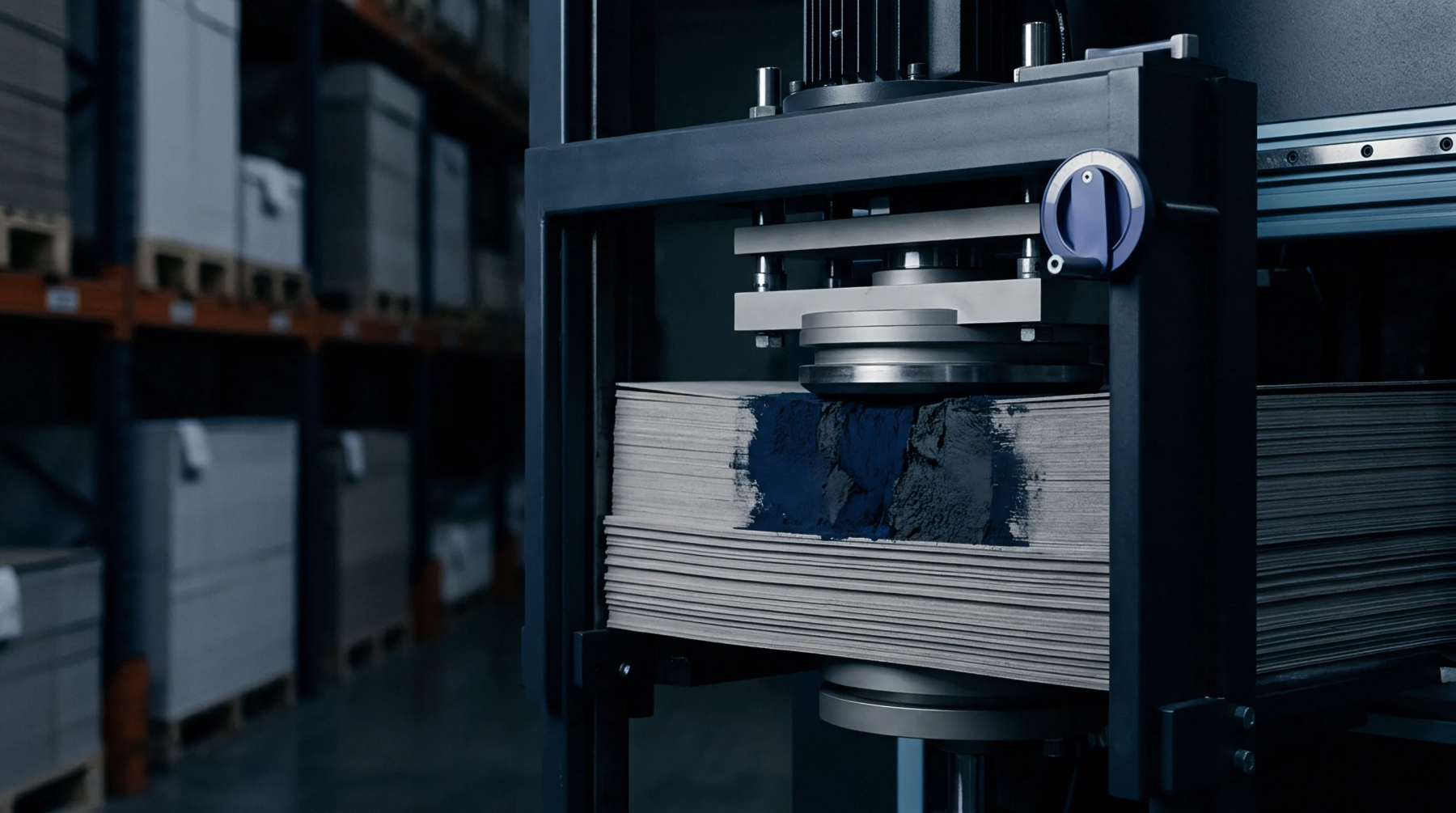
Permanent thickness reduction in the central layer of multi-ply paperboard occurs when compressive forces exceed the elastic limit of inner bulk fibers. Middle ply compression set measures irreversible density increases within middle plies resulting from calendering, printing impression, or creasing matrices. This physical change governs score line folding performance, ending where total ply delamination replaces controlled plastic deformation.
Z-Direction Strain
Multi-ply paperboard structures utilize high-bulk mechanical pulp or recycled fiber in inner layers to maximize bending stiffness at lower total basis weight. When converting machinery exerts high z-direction clamping forces, the porous network of the middle ply collapses permanently, reducing total caliper without altering basis weight. Controlled compression along creasing lines creates localized hinge points necessary for sharp carton folding without cracking the outer bleached chemical pulp liners.
Excessive compression set across the general board area degrades structural bending stiffness, causing carton bulging on automated packaging lines. Laboratory thickness testing under compressive load establishes yield limits for specific board combinations.
Structural Performance
Balancing middle ply bulk resilience and compressional yield ensures optimal creasing depth and carton stacking strength. Paperboard mills optimize mechanical pulp ratios to prevent structural collapse during heavy converting operations. Accurate compression metrics enable precise carton score engineering.