Internal Stress
Mechanical resistance to vertical deformation defines the material property of z-direction compression set. This z-direction compression set tracks the permanent loss of thickness in a paper substrate after the application of a controlled load. Mills quantify this value by measuring the initial height of a sample and comparing it to the height remaining after a specific period of pressure release.
It governs the structural stability of heavy duty shipping cartons where internal spacers bear the weight of stacked goods during transit. Boundary limits exist at the point of fiber crush where the internal bonding of the sheet structure fails to recover.
Structural Performance
Corrugated board manufacturing relies on this property to ensure that fluting arches retain their geometric profile under load. Manufacturers calculate the z-direction compression set to determine if a specific liner grade maintains rigidity when faced with fluctuating humidity levels in a warehouse environment. High values indicate that the paper matrix loses elasticity, which leads to a collapse of the shipping container walls.
Heavy objects stored inside boxes require packaging with low compression set scores to prevent the bottom layers from buckling. The selection of wood pulp and the intensity of the refining process determine how fibers interact under this vertical force.
Measurement Protocol
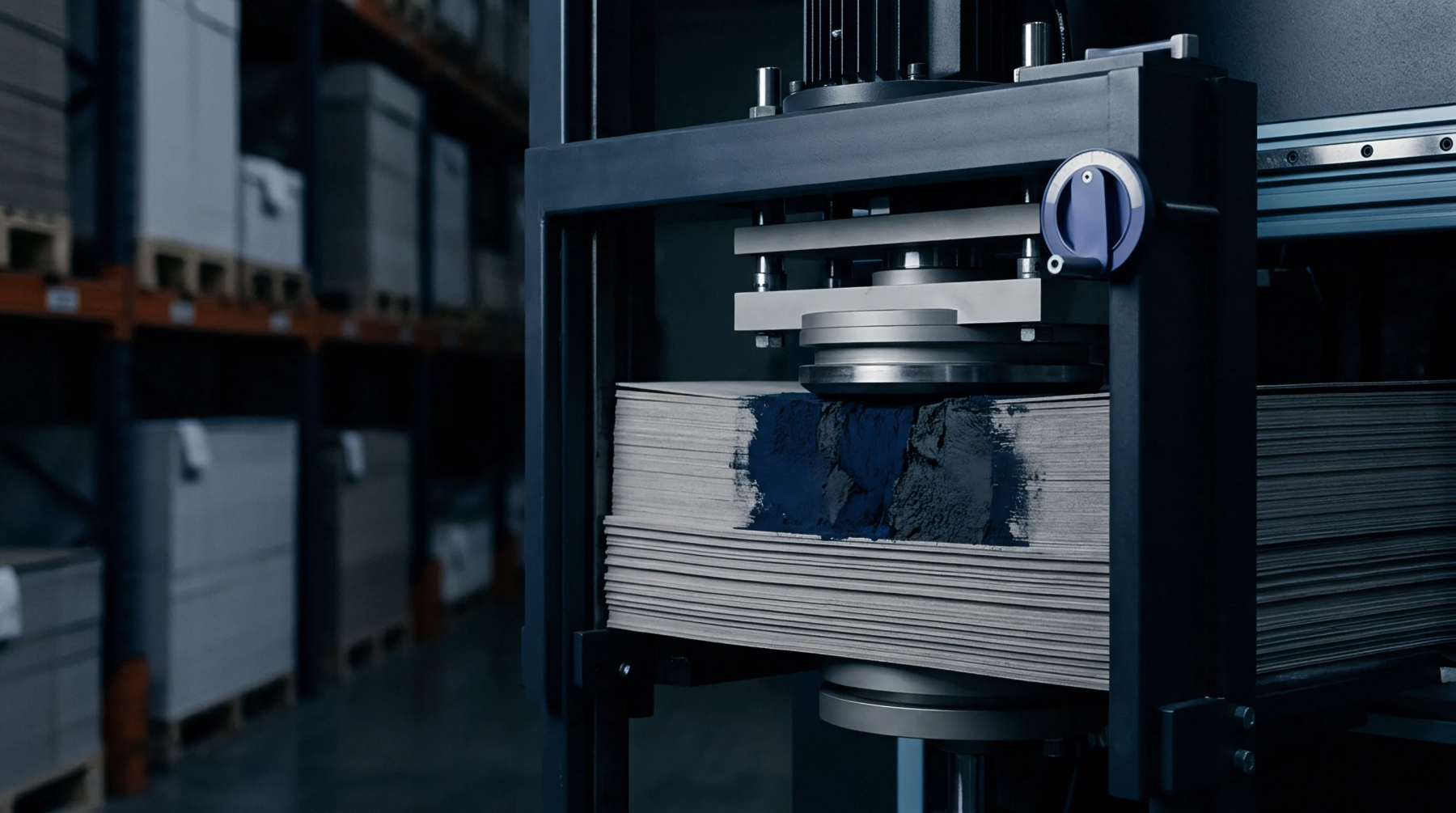
Standardized testing equipment subjects a circular test specimen to a fixed force for a set interval to observe the displacement. Precise micrometers record the thickness before the force is applied and again after the rebound phase concludes. Technicians express the outcome as a percentage of the original thickness loss relative to the applied load.
Stable paper products exhibit minimal change in z-direction compression set despite repeated cycles of heavy stacking. Low values guarantee the maintenance of stacking strength during long term storage.