Paperboard Chain of Custody Accounting Methods
Paperboard chain of custody accounting converts verified fiber inputs into defensible commercial packaging claims through transfer, percentage, or credit systems.


Reel
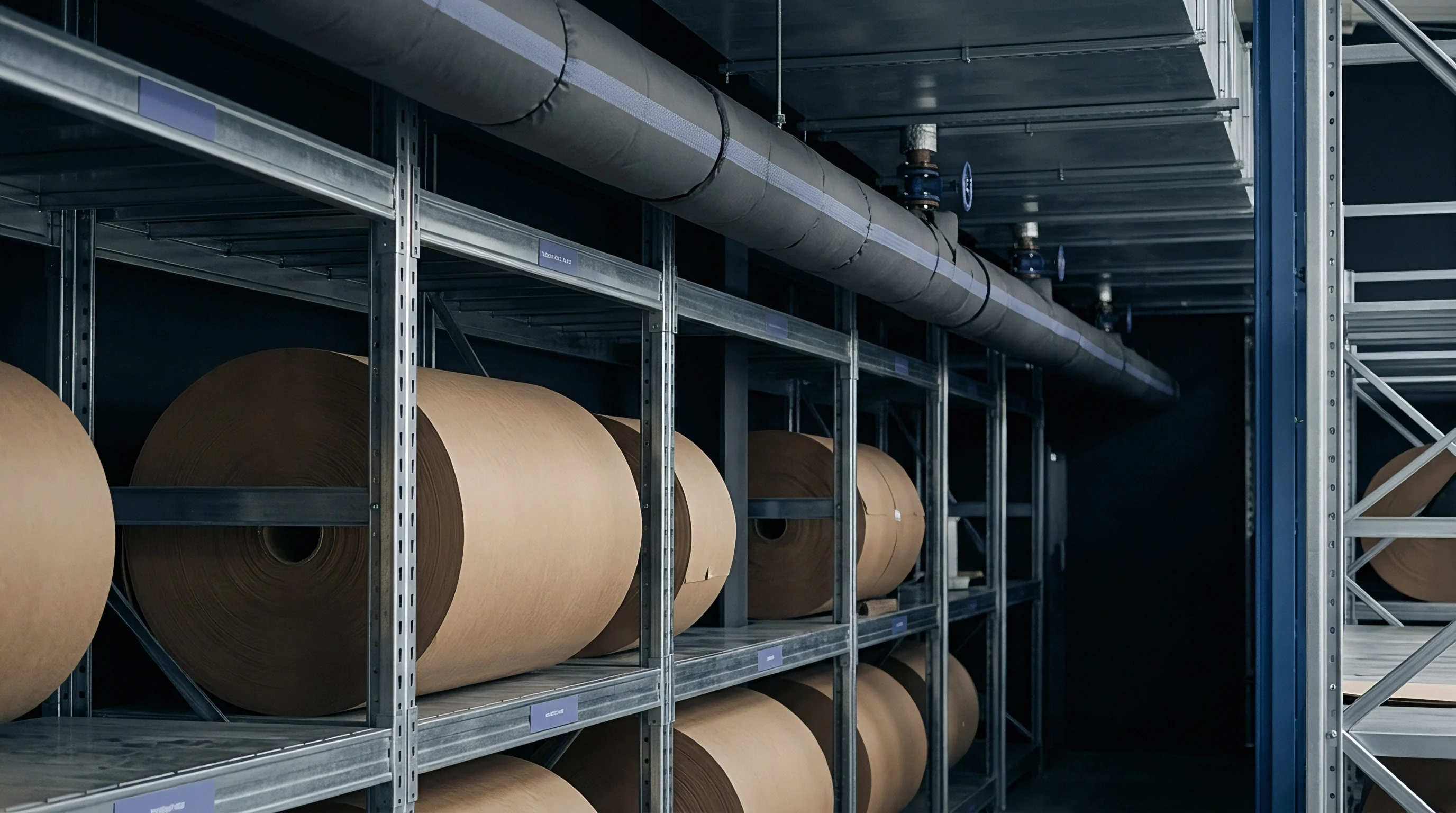
Paperboard converters managing raw material inventory establish custody boundaries before unprinted rolls enter the sheeter. Standard industrial rolls arrive with barcode tags, gross mass tickets, and mill certificates identifying the specific forest certification status of the virgin bleached kraft or recycled furnish. Segregating certified rolls from uncertified fiber on the plant floor allows facilities to use the transfer system, passing the supplier claim directly to finished folding cartons without numerical scaling.
When physical segregation lapses in warehousing or processing, chain of custody compliance collapses immediately. Converters maintaining dedicated production runs for certified brand owners either isolate physical pallets in designated floor bays or run certified virgin folding boxboard through dedicated sheeting lines. The physical inventory matches the ledger.
Batch documents establish legal ownership. If an uncertified board grade enters a die-cutter scheduled for certified production, the transfer system voids the claim across the entire manufacturing order.
A physical mix of certified and uncertified board grades cancels the single-origin claim across the entire converting lot.

Physical Separation under Transfer Rules
Converters choosing physical isolation handle materials through batch runs bounded by documented wash-ups and line clearances. Certified rolls of solid bleached sulphate (SBS) or folding boxboard (FBB) receive dedicated rack positions in raw inventory. Sheeting schedules designate distinct shifts for certified stock, followed by physical counts that reconcile input sheet tally against gross roll mass less core and edge trim.
The transfer accounting method operates on a direct input-output match. An input possessing an FSC Mix Credit or PEFC 100% claim yields finished cartons carrying that exact commercial description, provided no uncertified paperboard enters the converting stream. Fiber inputs do not undergo blending calculations.
Traceability relies on paper records connecting supplier invoices, delivery manifests, production dockets, and outgoing shipping documentation.
- Material Identification Verification confirms the roll barcode matches the certification status recorded on the bill of lading prior to warehouse intake.
- Dedicated Floor Staging establishes distinct yellow-line bays separating certified paperboard skids from conventional packaging grades.
- Production Docket Annotation records specific roll numbers and mill lot codes on the converting job ticket before the web threads the feed rollers.
- Trim Isolation Protocols direct edge trim and offcuts from certified runs into marked balers, preventing uncertified fiber contamination.
Converting facilities lacking floor space for physical segregation cannot sustain the transfer method across shared die-cutters. Running mixed grades through shared high-speed sheeting operations introduces cross-contamination between certified solid bleached board and uncertified recycled chipboard. Facilities facing continuous fiber interchange transition their accounting architecture to mass balance systems.

Which Accounting System Governs Mixed Fibre Runs?
Manufacturing lines consuming diverse raw inputs deploy either percentage calculations or volume credit accounting to manage certified claims. When a mill blends virgin mechanical pulp with uncertified secondary fiber in a hydrapulper, individual finished sheets contain indistinguishable fibers from multiple origins. The physical carton no longer contains purely verified fibers.
Mass balance accounting reconciles this physical blending by tracking certified volumes across defined inventory periods.
Under percentage accounting, the facility calculates the exact proportion of certified input fiber entering the production group over a specified rolling timeframe. The resulting percentage claim applies uniformly to all packaging cartons produced during that accounting window. Credit accounting, conversely, permits a mill or converter to aggregate certification credits from certified inputs into a centralized bank, subsequently allocating full certified claims to a selected portion of finished cartons while selling the remainder as conventional stock.
A rolling inventory period governs the duration over which input receipts and production outputs achieve mathematical equilibrium. Virgin kraft yields clean calculations. Mills balance their ledger balances on a monthly or quarterly schedule, matching purchased tonnages against converted carton shipments.
Converting facilities verify whether their brand clients require specific minimum threshold percentage claims or accept volume credit allocations on commercial invoices.
Physical roll separation remains the most protective operational choice whenever warehouse capacity permits physical isolation.


Credit
Volume banking architectures permit paperboard mills and integrated converters to balance certified material inputs against commercial claims without physical separation on production machines. Under the credit system defined in FSC-STD-40-004 and PEFC ST 2002, facilities deposit certified fiber volume into a virtual account based on incoming delivery documents. The organization subsequently withdraws credits to dispatch finished paperboard with certified claims, leaving uncredited volume to enter trade channels as uncertified packaging material.
The system relies strictly on input-output reconciliation across a specified physical site. Credits do not transfer between independent manufacturing facilities unless certified under an approved multi-site certificate schedule. Credit accounts do not accrue interest.
When a carton plant purchases 100 metric tonnes of virgin coated kraft board with an FSC Mix Credit claim, that exact volume enters the credit ledger, ready for allocation to client orders demanding certified packaging.
Ledger Accumulation across Pulp Lines
Certified fiber entering chemical pulpers creates credit deposits calculated from dry pulp mass. When processing virgin woodchips, mills establish wood consumption factors that determine the volume of certified chemical pulp derived from each green metric tonne of forest logs. Yield variations across chemical kraft processes, thermomechanical lines, and deinking operations directly govern credit accumulation rates in the raw materials ledger.
Secondary fiber processing adds operational complexity to credit calculations. Deinked pulp recovery yields fluctuate based on incoming recovered paper cleanliness, ash content, and stickies contamination. Mills establish certified recovery ratios through historical yield studies over twelve-month baseline periods.
These ratios establish the net certified credit output produced per gross tonne of sorted baled wastepaper.
| Fiber Furnish Type | Processing Technology | Standard Yield Ratio | Credit Factor Per Tonne Input | Primary Contaminant Loss |
|---|---|---|---|---|
| Bleached Softwood Kraft | Chemical Digesting | 0.46 | 0.46 Credit Tonnes | Lignin And Hemicellulose Dissolution |
| Bleached Hardwood Kraft | Continuous Digester | 0.48 | 0.48 Credit Tonnes | Chemical Extraction Rejects |
| Folding Boxboard Mechanical | Stone Groundwood | 0.94 | 0.94 Credit Tonnes | Fines And Screen Rejects |
| Deinked Pulp (DIP) | Flotation Deinking | 0.72 | 0.72 Credit Tonnes | Inks, Fillers, Coating Ash |
| Coated Recycled Board | Hydrapulper Separation | 0.81 | 0.81 Credit Tonnes | Plastics, Stickies, Heavy Grit |
Converting plants purchasing certified reels apply an immediate one-to-one entry into their board credit ledger. A converter receiving 50 tonnes of 350 grams per square meter solid bleached sulphate with FSC Mix Credit enters 50 credit tonnes into the raw inventory ledger. Production losses occurring during sheeting, printing, and blank cutting reduce the shippable credit volume available for distribution to brand customers.

Rollover Windows and Expiry Rules
Credit balances maintained in corporate inventory registers remain subject to statutory expiration timelines under certification scheme rules. Scheme standards impose strict caps preventing indefinite banking of certified volumes. FSC standards restrict the validity of banked credits to a rolling twelve-month window, whereas PEFC systems allow extended credit retention periods up to 24 months where continuous processing cycles warrant ledger stability.
Paperboard machines run continuously. If an integrated mill deposits 500 tonnes of certified mechanical pulp credits during peak harvesting cycles in March, those credits expire on the final calendar day of the subsequent February under twelve-month rules. The credit account balance expires.
Converters unable to sell finished packaging carrying certified claims within the allowable timeframe see their banked equity extinguished on the ledger balance sheet.
Under standard FSC-STD-40-004 rules, banked credit balances automatically extinguish if unallocated upon reaching the twelve-month accounting boundary.
Auditors inspect credit accounts during annual surveillance visits, checking ledger balance sheets against mill material enterprise resource planning (ERP) records. A negative balance in any credit category constitutes a major non-conformity. The accounting algorithm forbids drawing down prospective credits before raw inputs physically cross the weighbridge and clear quality inspection.
- Credit Account Deficits trigger immediate certificate suspension when an audit establishes that dispatched orders exceeded available banked inputs.
- Cross-Product Category Transfers violate scheme standards if credits accumulated from virgin bleached board apply to unbleached linerboard packaging.
- Site-to-Site Credit Leaks occur when sister plants share accounting tallies without formal group chain of custody certification approved by the registrar.
- Input Claim Downgrading requires explicit ledger adjustments when incoming raw stock arrives with mixed claims spanning controlled wood and certified origins.
Management errors in tracking credit expiration windows force facilities to downgrade shippable carton inventory to uncertified status, incurring packaging write-downs and triggering commercial indemnity clauses with retail customers.


Broke
Internal material recovery represents a critical point of friction in paperboard accounting ledger maintenance. Paperboard manufacturing and converting operations generate substantial volumes of scrap, historically termed mill broke, during deckle trimming, web breaks, grade changes, and box blank die-cutting. Determining whether internal broke re-entering the pulper maintains certified fiber status or dilutes the chain of custody requires rigorous mass balance modeling.
Process yield factors dictate the mathematical conversion of raw rolls into finished folding cartons. Virgin folding boxboard converted on high-speed offset lithographic lines experiences typical die-cutting waste ranging between 8 percent and 18 percent depending on carton geometry, nested layout efficiency, and thumb-notch configurations. The conversion factor drops sharply.
Trim returns directly to hydrapulpers. If a converter calculates carton claims against gross input roll weight without deducting manufacturing broke, the exported credit tally overstates real compliance volume.

Is Internal Broke Counted as Certified Reclaim?
Pulping operations divide broke into two distinct categories: pre-consumer reclaimed material and internal mill recirculation. When a paperboard machine generates wet-end broke from an uninterrupted certified web break, the pulp slurry returns directly to the chest without leaving the machine circuit. This closed-loop material retains the certification status of the active production batch because no extraneous furnish enters the flow.
Converting trim generated offsite presents an entirely different classification profile. When a commercial boxmaker strips clean offcuts from a pharmaceutical blister card packaging run and bales the scrap for sale back to a recycling mill, standard definitions classify this fiber as pre-consumer recovered material. Under FSC-STD-40-007, the receiving mill treats this material as certified reclaimed input only if accompanied by verified reclamation vendor declarations and periodic supplier site inspections.
Uncontrolled baling operations frequently mix plain paperboard offcuts with plastic-laminated cartons, metallized film layers, and uncertified corrugated waste. Contamination destroys input integrity. If an audit discovers that a mill credited bales of mixed converting waste as 100 percent certified pre-consumer fiber without executing mandatory supplier verification checks, the certifying body issues a corrective action request disqualifying the generated credits.

Conversion Factor Drift across Calenders
Converting factors establish the mathematical relationship between input raw material mass and finished output carton weight. Mills determine these factors empirically across each grade classification, accounting for moisture variations, calendering density changes, starch addition, and mineral coating pick-up. A triple-coated folding boxboard possesses a finished basis weight where mineral pigments constitute 15 to 25 percent of total sheet mass.
Mineral coatings consisting of calcium carbonate, kaolin clay, and synthetic latex binders do not contribute forest fiber content to the paperboard web. Accounting systems must isolate the organic fiber mass from the non-fibrous coating matrix when computing chain of custody credit balances. Failing to subtract coating slip weight from gross board mass inflates the calculated fiber volume by up to one-fourth of total product tonnage.
Contractual packaging specifications govern whether dry tare mass calculations isolate inorganic coating fractions from net certified cellulosic fiber.
Moisture adjustments alter the equation during converting. Paperboard conditioned at 23 degrees Celsius and 50 percent relative humidity stabilizes at approximately 6 to 8 percent moisture content per ISO 187 methods. If unconditioned paperboard enters converting operations during humid atmospheric cycles, measured gross sheet weights inflate, creating artificial yield spikes that distort credit reconciliation balances.
The material loss occurred during slitting and will naturally balance out across the annual production cycle, according to the plant superintendent.


Threshold
Manufacturing facilities employing the percentage accounting method assign claims to finished paperboard shipments proportional to the certified furnish consumed during defined calculation periods. This method circumvents virtual credit banking by producing a single, mathematically verified claim percentage applicable across all production units within that batch. The ratio determines pack claims.
Converters track fiber inputs daily.
Packaging buyers specifying certified folding cartons frequently mandate minimum percentage thresholds on commercial packaging. Under FSC rules, an on-pack certification mark requires a verified threshold of at least 70 percent certified fiber content. PEFC standards mandate a matching 70 percent minimum threshold for finished goods to display the formal trademark logo on retail packaging.
Lots falling below this numerical limit lose their eligibility for primary consumer-facing marks.

Percentage Method Calculation Periods
Facilities establish specific calculation periods over which input volumes aggregate to generate the composite percentage claim. Typical calculation windows range from single production shifts to monthly, quarterly, or maximum twelve-month rolling periods. Shorter calculation windows produce highly variable claim percentages that reflect immediate fiber sourcing fluctuations, whereas longer windows smooth supply chain volatility across seasonal procurement cycles.
Rolling average calculations demand daily maintenance of enterprise resource management ledgers. At the close of each working day, the system adds new certified and uncertified receipts while shedding input data from the oldest day of the calculation cycle. The formula divides verified certified fiber input weight by total fiber input weight processed across the specified period, multiplying the quotient by one hundred to fix the net percentage claim.
| Certification Framework | Accounting System | Minimum Claim Threshold | Permitted Calculation Window | Eligible On-Pack Mark |
|---|---|---|---|---|
| FSC Chain Of Custody | Transfer Method | 100% Sourced Batch | Single Production Order | FSC 100% or FSC Mix |
| FSC Chain Of Custody | Percentage Method | 70% Certified Input | Rolling 1 to 12 Months | FSC Mix Label |
| FSC Chain Of Custody | Credit Method | No Minimum On Portion | Maximum 12 Months | FSC Mix Credit |
| PEFC Chain Of Custody | Physical Separation | 100% Verified Origin | Single Converting Job | PEFC 100% Certified |
| PEFC Chain Of Custody | Percentage Method | 70% Minimum Threshold | Rolling Up To 12 Months | PEFC Certified Label |
| PEFC Chain Of Custody | Credit Volume Method | No Minimum On Portion | Rolling Up To 24 Months | PEFC Certified Credit |
Audit checks verify the tally. If an integrated paperboard mill consumes 6,500 tonnes of certified thermomechanical pulp and 3,500 tonnes of uncertified kraft pulp across a 30-day calculation window, the resulting percentage yield stands at precisely 65 percent. This figure falls beneath the 70 percent gate.
The mill cannot dispatch that board carrying an on-pack FSC Mix claim, forcing trade distribution under restricted commercial invoice claim statements.

Allocation Measures for Subthreshold Production
When a production run fails to achieve the mandatory 70 percent mark, operations managers select between two commercial pathways. The facility can sell the output with an un-marked percentage claim stated solely on bills of lading and invoices, for example declaring FSC Mix 65% on paperwork without placing trademarks on cartons. Alternatively, operations can transition the inventory block into the credit system where allowable under corporate scope certificates.
Transitioning subthreshold inventory into credit accounts involves mathematical partitioning. If 1,000 tonnes of folding boxboard achieve a verified 65 percent certified ratio, the accounting engine isolates 650 tonnes of 100 percent equivalent credit material. The mill dispatches 650 tonnes with full certified claims, while the remaining 350 tonnes exit the loading dock as uncertified stock.
The overall certified fiber volume remains completely conserved on the site balance ledger.
- Input Furnish Verification tallies verified fiber receipts against raw timber delivery manifests before the start of each pulping shift.
- Batch Threshold Auditing isolates production runs dipping below the mandatory 70 percent certified limit for immediate repackaging or paperwork adjustment.
- Commercial Invoice Downgrading strips consumer-facing trademark authorizations from shipping dockets when batches fail to clear scheme limits.
- Cross-System Transfer Balancing executes mathematical partitioning formulas before shifting subthreshold volumes into site credit bank accounts.
Converting plants processing packaging for food brands face severe contractual liabilities when delivering subthreshold stock. Retail private-label specifications consistently reject shipments carrying invoice-only claims when procurement guidelines specify certified consumer packaging carrying on-pack certified marks. Converters verify that incoming mill mother rolls carry credit or 70 percent minimum claims before slotting production on customer orders.
Under Clause 5.3 of FSC-STD-40-004 V3-1, blending controlled wood with uncertified, un-assessed fiber immediately invalidates the entire percentage batch calculation, requiring full quarantine of the non-compliant material.


Invoice
Commercial paperwork constitutes the legal proof of chain of custody across international borders. The shipping invoice, packing list, and bill of lading carry the specific claim string that links the converted packaging back to the supplier certificate register. Physical inspection stamps on cartons provide zero customs authority without precise, conforming claim lines on the primary financial document.
Customs officials examine commercial invoices. Rejection stops the entire shipment. Importers clearing packaging through European Union customs checkpoints face rigorous scrutiny under environmental provenance directives and packaging waste laws.
When an invoice omits the certified entity registration code or states an ambiguous description like sustainable board instead of approved scheme nomenclature, the customs declaration fails conformity validation.

Documentary Chains at Port Entry
Border clearance of certified paperboard requires exact alignment between the physical product description and the certificate holder public registry entry. The invoice line item must state the formal claim type, including FSC Mix Credit, FSC Mix 70%, PEFC 100% Certified, or PEFC Certified. Alongside the claim, the seller must print their valid, unexpired certificate registration code directly on the face of the document.
Missing certificate numbers cannot be remedied by post-dated supplier letters. If a carton shipment docks in Rotterdam carrying printed FSC marks, but the accompanying commercial invoice lacks the vendor chain of custody code, port market surveillance authorities classify the consignment as mislabeled. Regulatory officials execute administrative holds while initiating investigations into fraudulent green marketing, imposing demurrage costs that rapidly eclipse the value of the packaging shipment.

Regulatory Scrutiny under Green Claims Directives
European environmental enforcement tightens around mass balance paperboard claims. The EU Packaging and Packaging Waste Regulation (PPWR) and the Green Claims Directive establish stringent verification hurdles for recycled content and virgin fiber sustainability declarations. Mass balance credit banking models, long standard under voluntary forest certification programs, face legislative restrictions when applied to mandatory post-consumer recycled content quotas.
National trading standards authorities now penalize brands that display high-recycled-content claims on folding cartons derived from site credit accounts when the physical carton contains predominantly virgin fibers. Consumers assume physical presence of recycled furnish. When regulatory bodies demand chemical tracer or fiber morphology testing under ISO 9184 optical microscopy, paperboard containing pure virgin bleached fibers fails physical verification regardless of valid virtual credits held in an offsite accounting ledger.
Corporate procurement teams manage this regulatory gap by inserting stringent chain of custody stipulations into master supply agreements. Purchasing contracts specify whether carton suppliers may draw down volume credits or must guarantee physical fiber presence via the transfer method or verified batch percentage thresholds. Commercial buyers verify supplier certificates against scheme databases prior to quarterly purchasing commitments, tracking scope coverage for specific paperboard grades.
The regulatory boundary between virtual mass balance credits and mandatory physical material traceability leaves open whether credit-backed paperboard packaging will remain legally defensible for green claims on European retail shelves over the coming decade.