Mechanical Shearing Effects on Corona Treated Polypropylene Web Surfaces
Mechanical shearing removes low molecular weight oxidized material from corona treated polypropylene, degrading surface energy and causing lamination failure.
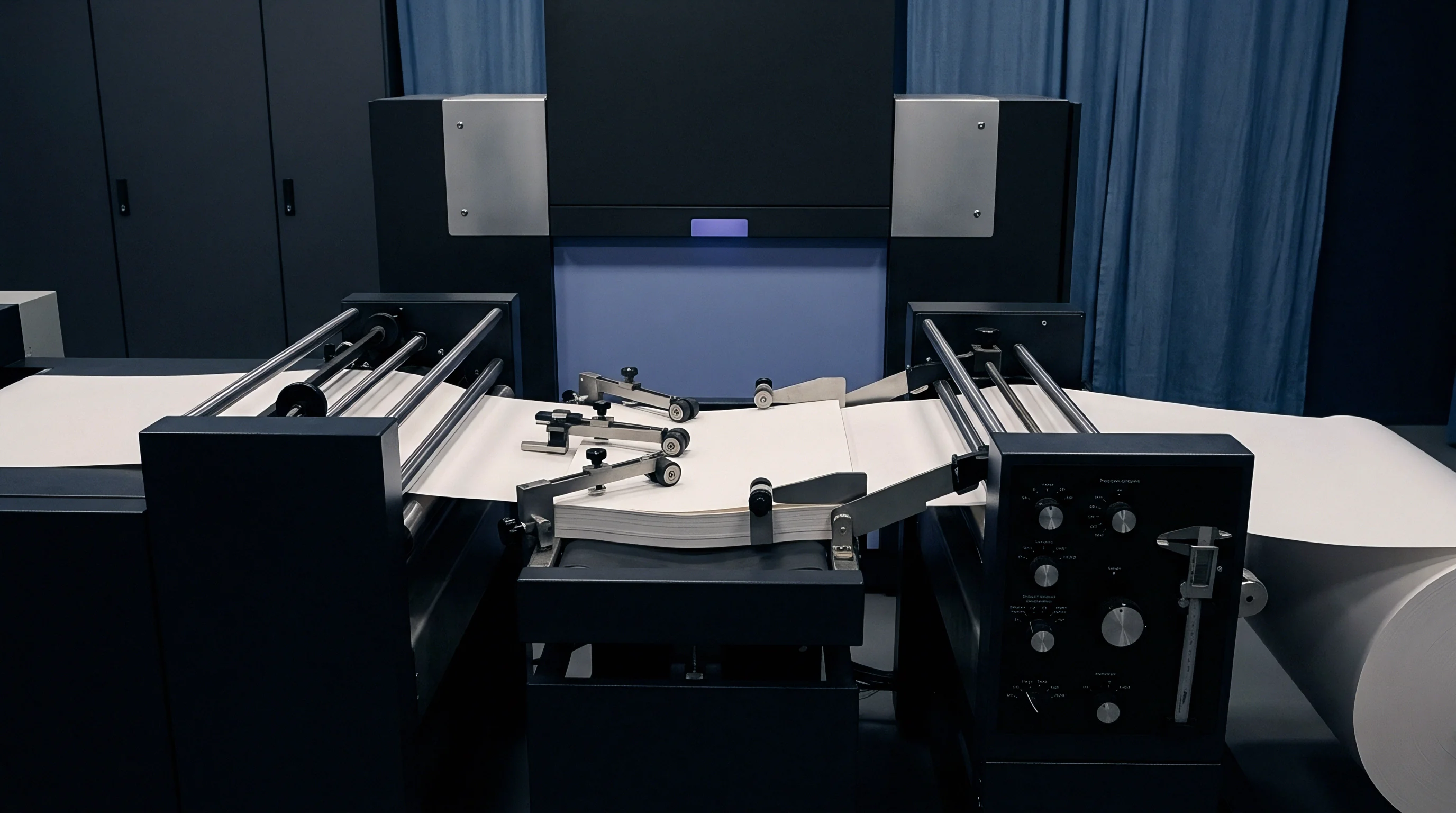
Shear
Biaxially oriented polypropylene film is passed through electrical discharge treaters to introduce the polar oxygen groups needed for ink adhesion. High-energy electrons from the corona treatment strike the hydrophobic polyolefin surface, cleaving carbon-hydrogen bonds to leave free radicals that react instantly with ambient oxygen, creating hydroxyl, carbonyl, amide, and carboxyl groups. This raises surface energy from a baseline of 29 mN/m to 42 or 46 mN/m.
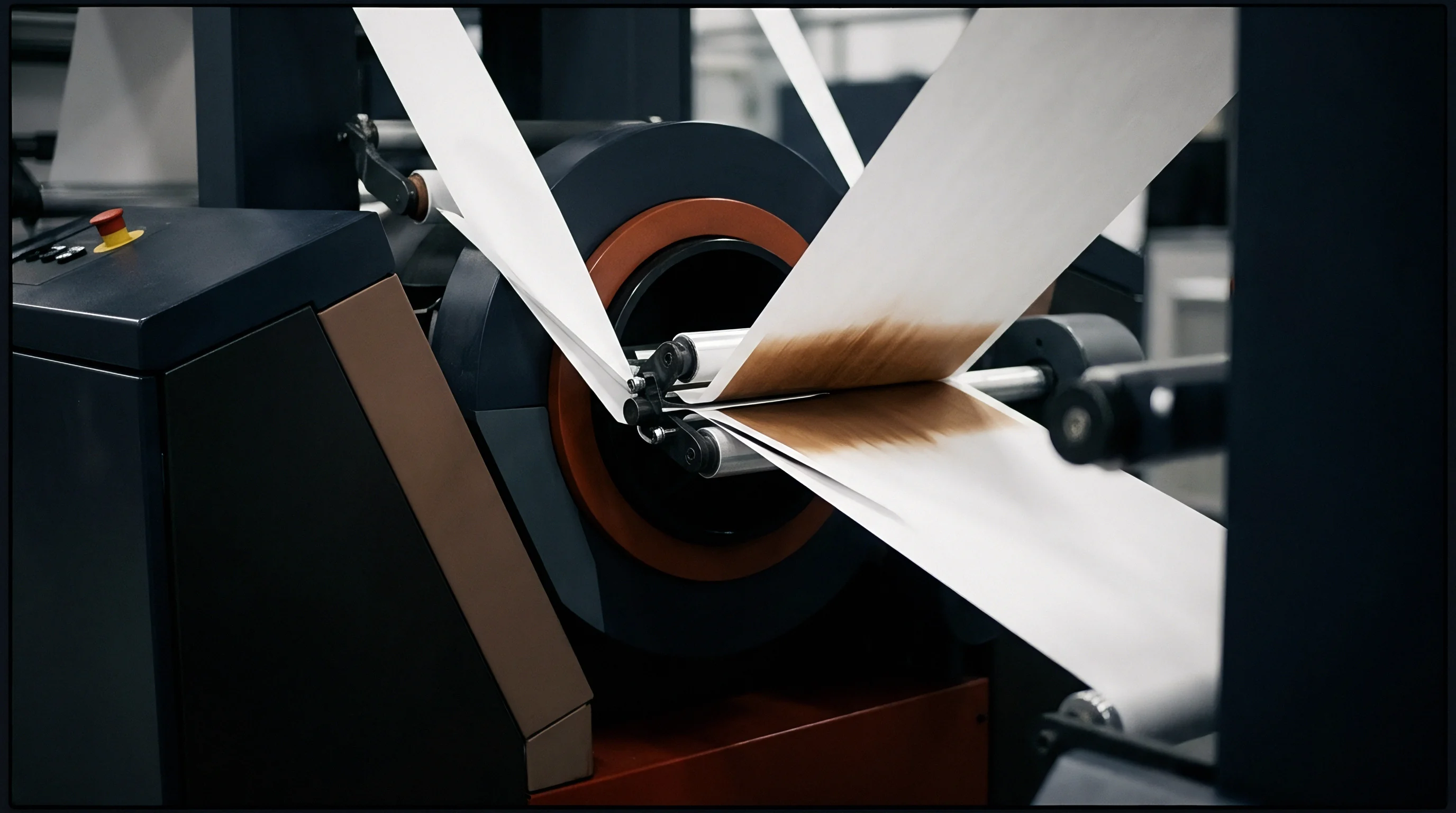
At the same time, the discharge breaks long polymer chains near the surface, leaving a thin, loosely bound layer of low molecular weight oxidized material over the bulk substrate.
Polypropylene Surface Energy Dynamics under Corona Discharge
Ionized gas generates the electrons that sever carbon-hydrogen bonds along the polymer backbones, though corona oxidation reaches only 5 to 10 nanometers into the film. Adding polar functional groups increases both the polar and dispersive components of surface energy, which lets water-based inks and solventless adhesives spread evenly. This surface modification is not permanently stable; over time, polar groups naturally rotate downward into the bulk polymer matrix as the film returns toward thermodynamic equilibrium.
Mechanical friction on the web directly alters this surface chemistry during processing.
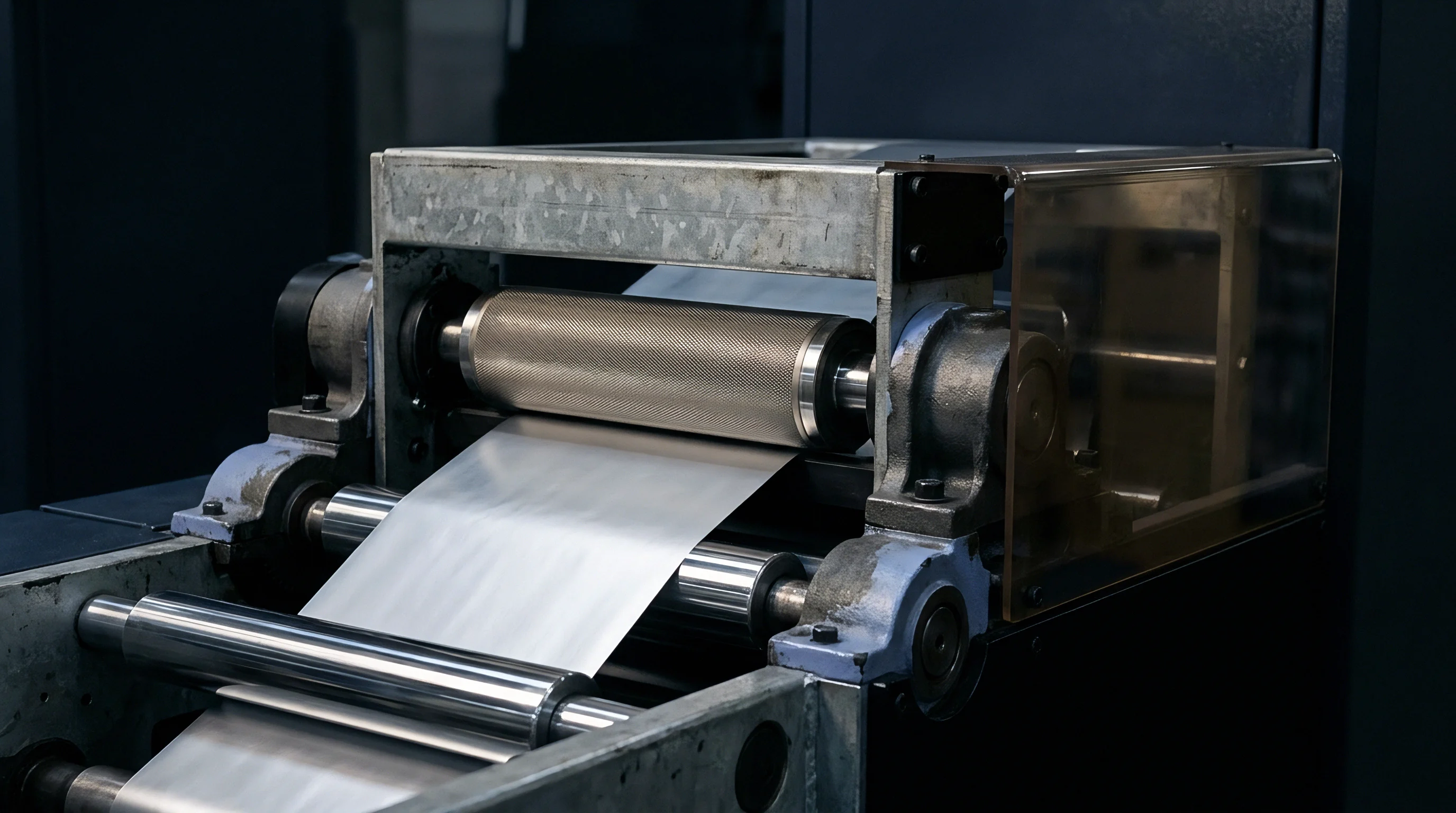
As the web travels across drag bars, guide rolls, squeegee nips, and slitting stations, tangential frictional forces scrape away the loosely bound layer of oxidized material. Physical friction also drags and flips the surface polar groups, turning them away from the interface toward the hydrophobic core. This combination of mechanical stripping and reorientation drives down dyne levels much faster than standard thermal relaxation.
Low molecular weight oxidized material transferred to guide rollers accumulates as abrasive debris during continuous converting runs.
Boundary Layer Ablation and Molecular Reorientation
Frictional drag during web conveyance breaks down the fragile oligomeric layer created by the treater. Friction against metallic or elastomeric rolls generates shear stress across the interface; once that stress exceeds the surface’s boundary yield strength, material transfers off the web. Functionalized oligomers and oxides build up on roll surfaces, exposing untreated or only partially treated bulk polypropylene underneath.
These oxidized oligomers shear off the film web under relatively low physical stress.
Higher line speeds elevate shear rates at every contact point throughout the converting line. Heavy web tension pulls the film firmly against idler rolls, pushing up normal forces and frictional resistance. Frictional heating at the contact interface softens the oligomeric layer so it scrubs off even faster, dropping surface energy below printing and lamination thresholds well before thermal decay would normally take over.
- LMWOM Transfer Splattering occurs when loose oxidized oligomers shear off the film surface and coat elastomer rollers, creating non-uniform sticky residues.
- Polar Group Rotation turns surface carbonyl functionality inward toward the polymer bulk under mechanical drag, diminishing net polar surface energy.
- Interfacial Friction Spikes generate localized thermal energy that softens the top nanometer of polypropylene web during high-speed converting.
Ignoring mechanical friction along the web path leads to poor dyne retention, resulting in ink reticulation and lamination failures on finished rolls.
Abrasion
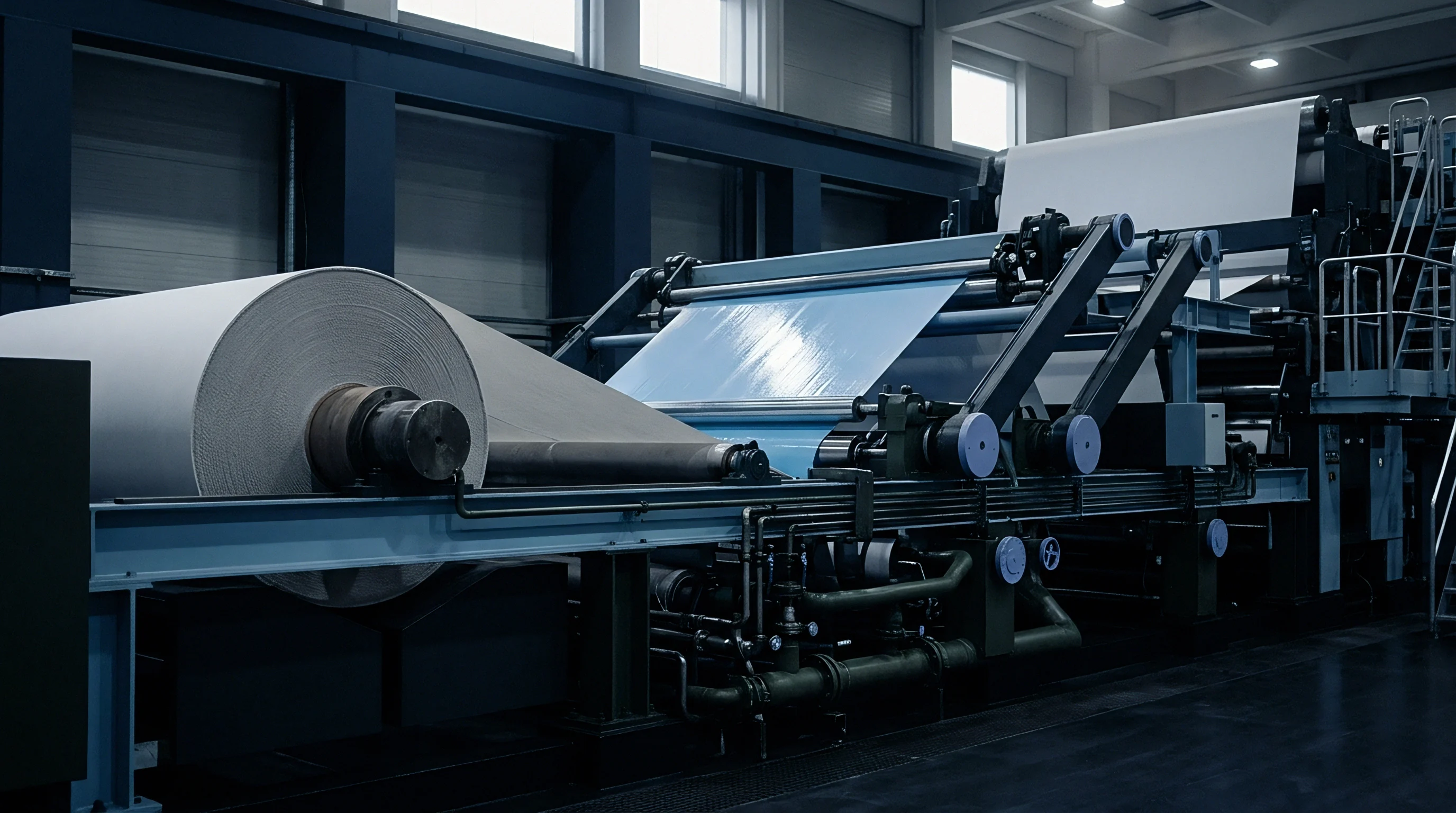
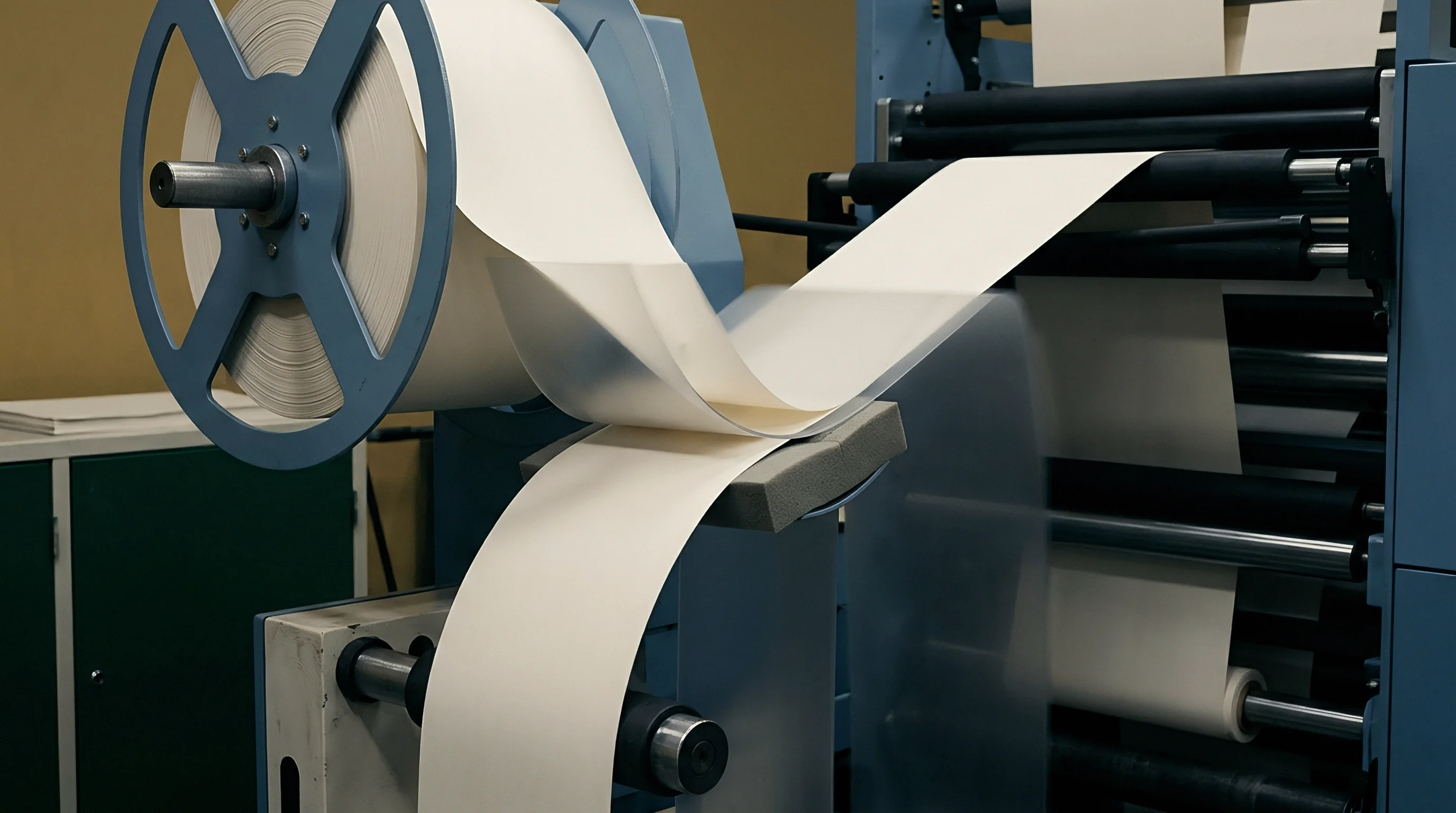
Idler rolls and web guides continuously exert tangential forces against the moving substrate. Contact with unsynchronized roll shells converts kinetic energy into interfacial shear, creating a scrubbing action that strips off polar chemical groups added by corona treatment. Degradation rates depend on wrap angle, web speed, bearing drag, and sleeve durometer.
Contact Geometry and Friction Coefficients across Web Guides
The wrap angle around steel or aluminum transport rolls determines how much tangential drag acts on the film. Wider wrap angles expand the contact area and increase overall friction. For example, a 180-degree wrap around a dead-shaft idler causes far more surface abrasion than a 15-degree wrap over a live-shaft roller, and high dynamic friction coefficients speed up the loss of surface functional groups.
Static charges on the web attract loose debris to the contact area.
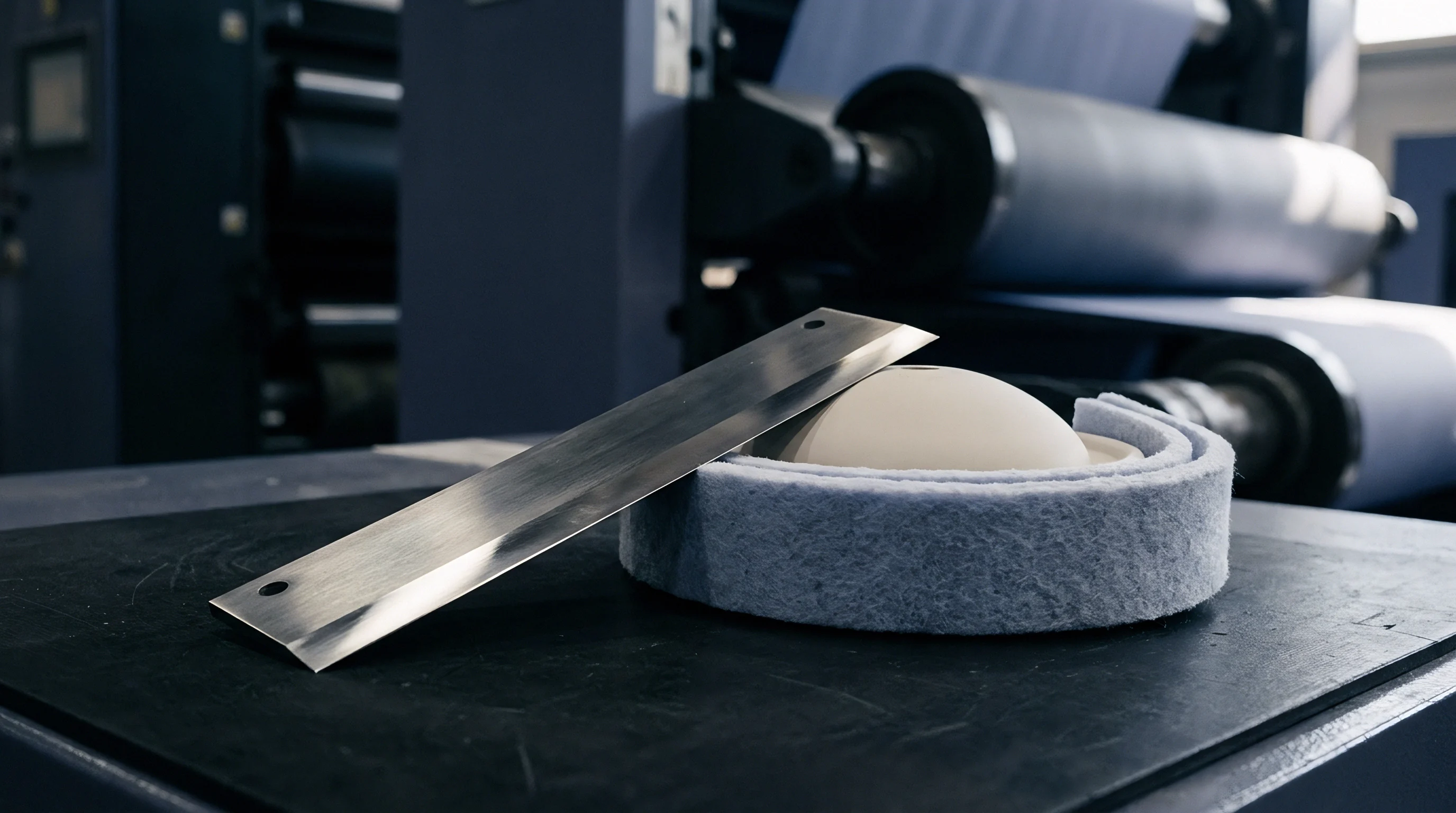
Slitting blades introduce sharp, localized shear forces along the cut edges.
Increased bearing drag directly elevates physical friction across the roll path.
When idler bearings get contaminated or misaligned, the roll shell skids instead of turning freely. That speed difference converts smooth rolling into sliding abrasion, acting like an eraser that strips carbonyl groups from the film surface within meters.
| Contact Interface | Contact Angle (Degrees) | Web Speed (m/min) | Dyne Reduction (mN/m) | Debris Accumulation |
|---|---|---|---|---|
| Dead-Shaft Aluminum Idler | 180 | 350 | 4.2 | Moderate grey oligomer buildup |
| Live-Shaft Steel Roller | 90 | 350 | 1.5 | Low visible residue |
| Elastomer Squeegee Nip Roll | 45 | 200 | 3.8 | High elastomeric and oxide transfer |
| Stationary Stainless Drag Bar | 30 | 150 | 6.0 | Severe localized surface ablation |
| Testing conducted on 20-micron biaxially oriented polypropylene web at 45 N/m web tension under standard atmospheric conditions (23°C, 50% RH). Initial surface energy measured at 44 mN/m immediately post-treater. | ||||
Dyne Decay Progression along Mechanical Transport Pathways
Polar surface values decline steadily as film moves through turning stations on a converting line. Film leaving the corona treater at 44 mN/m frequently drops to 40 mN/m after ten dead-shaft idlers, and down to 36 mN/m by the time it passes slitting and rewinding. Dyne loss accumulates with total sliding contact distance, with each undriven roll shaving off measurable surface energy.
A web tension exceeding 45 N per meter over a 60 Shore A nitrile roller removes 4 mN/m of dyne value within 150 meters of contact.
Squeegee nips apply targeted pressure to press out entrained air during coating or lamination. If pneumatic pressure is too high, the rubber roll cover deforms against the steel backing roll, causing micro-slippage in the nip zone. This micro-slippage exerts high shear across the modified surface, displacing oxides and creating pinholes in ink laydowns downstream.
Dyne loss is frequently attributed solely to natural polymer relaxation rather than mechanical contact against roll surfaces.
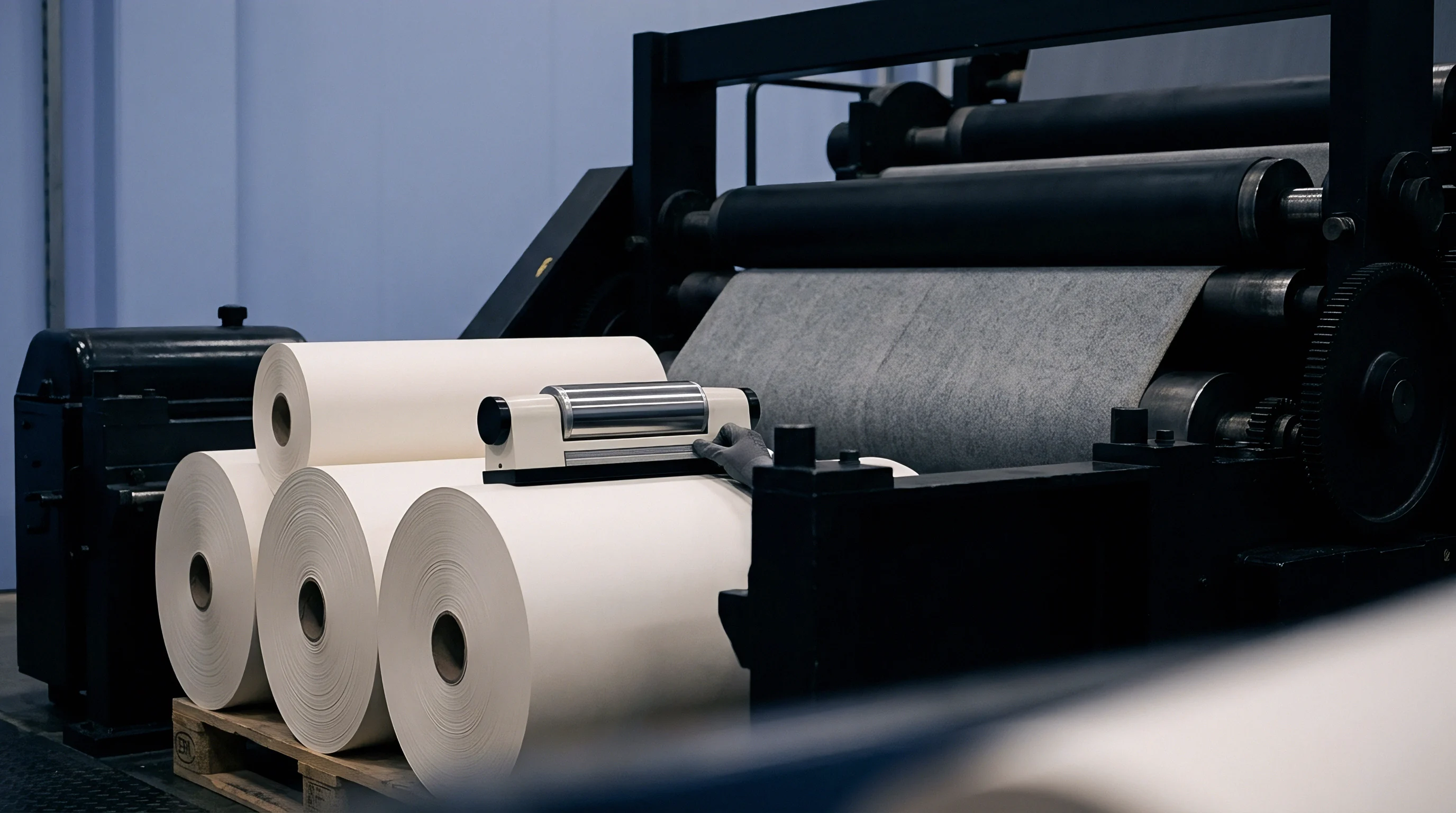
Bench
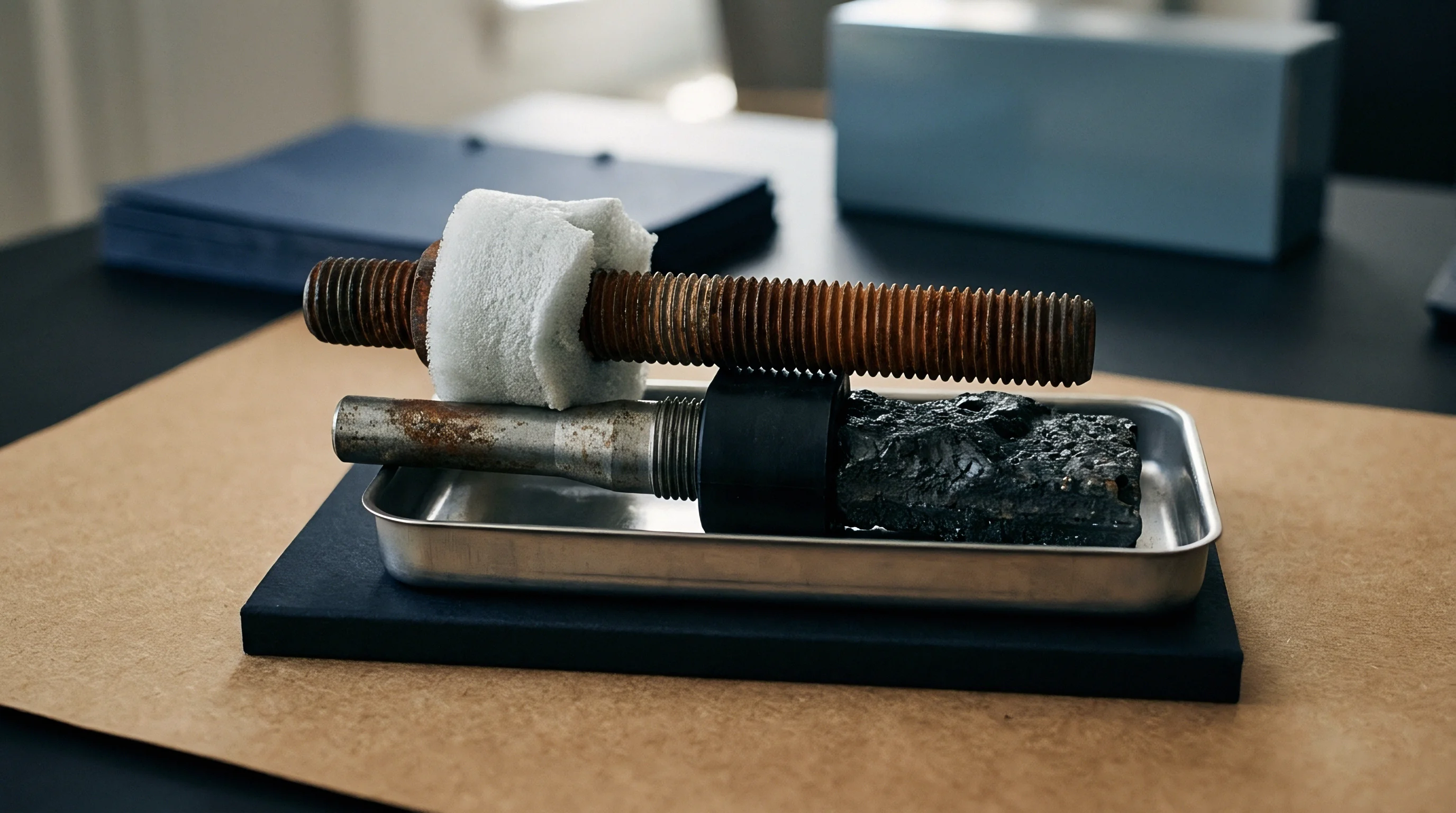
Quantifying functional loss on treated polymer webs requires controlled testing and field sampling. Separating mechanical shear loss from ordinary time and temperature decay relies on comparing untransported treater samples against film collected after passing through web transport paths.
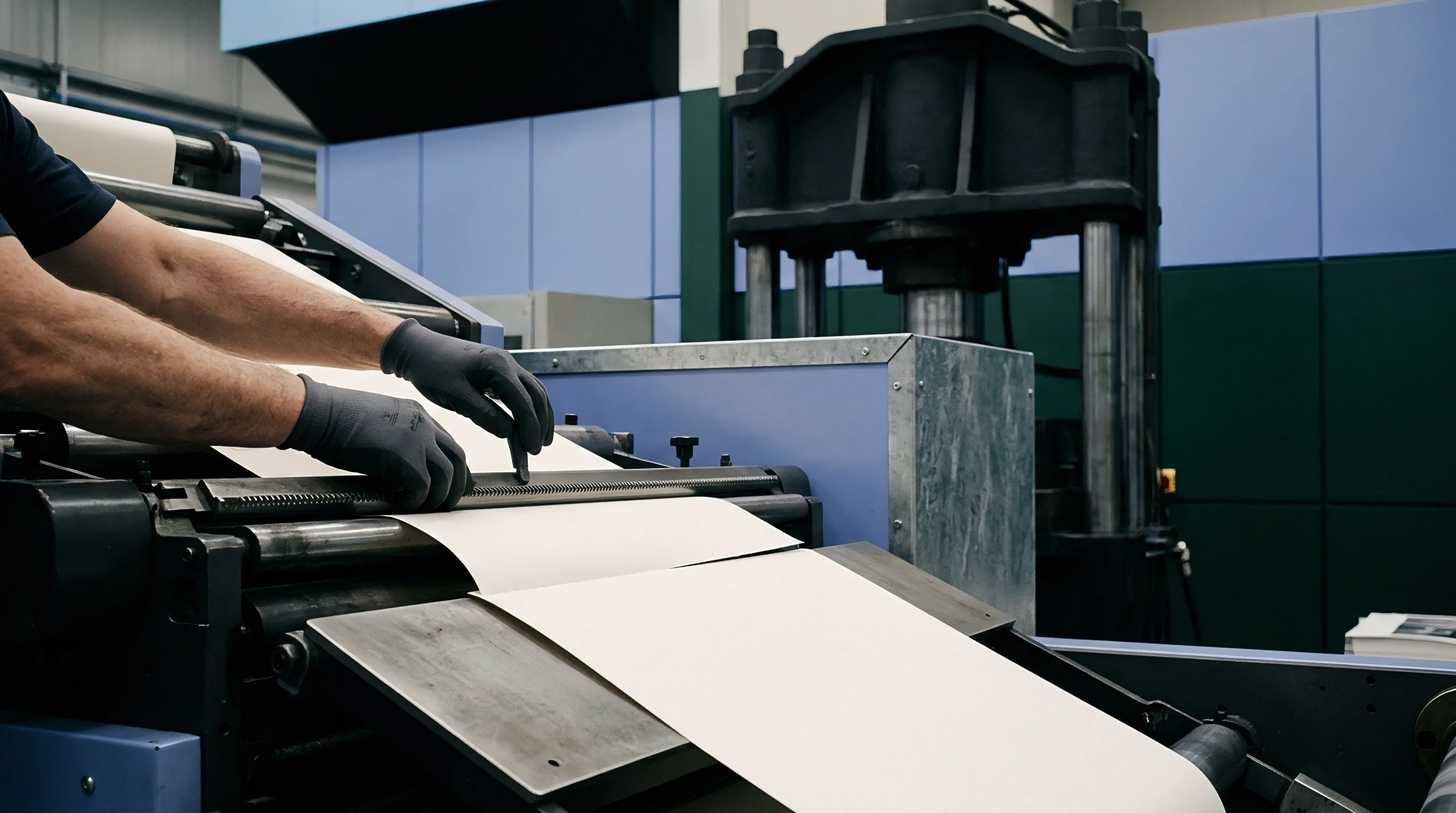
Why Does Surface Shear Accelerate Dyne Decay?
Physical wiping strips low molecular weight oxidized material from the interface, exposing the hydrophobic polyolefin underneath. Corona treatment creates both firmly bound oxides and mobile short-chain species; mechanical contact rubs those mobile species off onto rollers or pushes them deeper into the polymer bulk. As polar groups leave the surface, water contact angles rise and liquid surface tension values drop immediately.
Dyne pens provide a rapid field indication of surface energy.
Standard liquid wetting tests using dyne pens or wire-wound applicator rods show localized drops in surface energy across sheared areas. The test fluids ~ mixtures of ethanol, ethoxyethanol, and formamide ~ form a thin film on the substrate. If the fluid beads up within two seconds, surface energy has dropped below the target specification for ink or adhesive adhesion.
Compliance with ISO 8295 surface friction limits prevents interfacial slip during high-speed rewinding passes.
Spectroscopic and Wetting Measurement Protocols
Applying standardized test mixtures with wire-wound rods highlights surface energy variations across the web width. Full surface characterization combines sessile drop water contact angle measurements with X-ray photoelectron spectroscopy. By tracking advancing and receding angles of deionized water and diiodomethane drops, an increase in advancing contact angle directly confirms the loss of surface polar groups.
- Sample the film web immediately after corona treatment prior to mechanical contact passes.
- Measure surface energy using dyne test fluids compliant with ISO 8295 or ASTM D2578 guidelines.
- Execute a controlled mechanical shearing test using a laboratory friction tester at specified wrap angles and tensions.
- Re-test liquid surface energy on the sheared web surface to establish net mechanical degradation rates.
- Perform X-ray photoelectron spectroscopy to record changes in oxygen-to-carbon atomic ratios across sheared zones.
Spectroscopic testing gives definitive chemical evidence of this degradation. X-ray photoelectron spectroscopy measures oxygen-to-carbon atomic ratios within the top ten nanometers of the film. Untreated polypropylene has an oxygen-to-carbon ratio near zero, which rises to 0.12 or 0.18 after corona treatment.
Mechanical shearing across web guides drops that ratio back to 0.04, confirming that oxygenated functional groups have been physically removed from the surface.
Whether long-chain polar grafting can fully protect polypropylene surfaces against abrasive contact remains under active laboratory investigation.
Tension
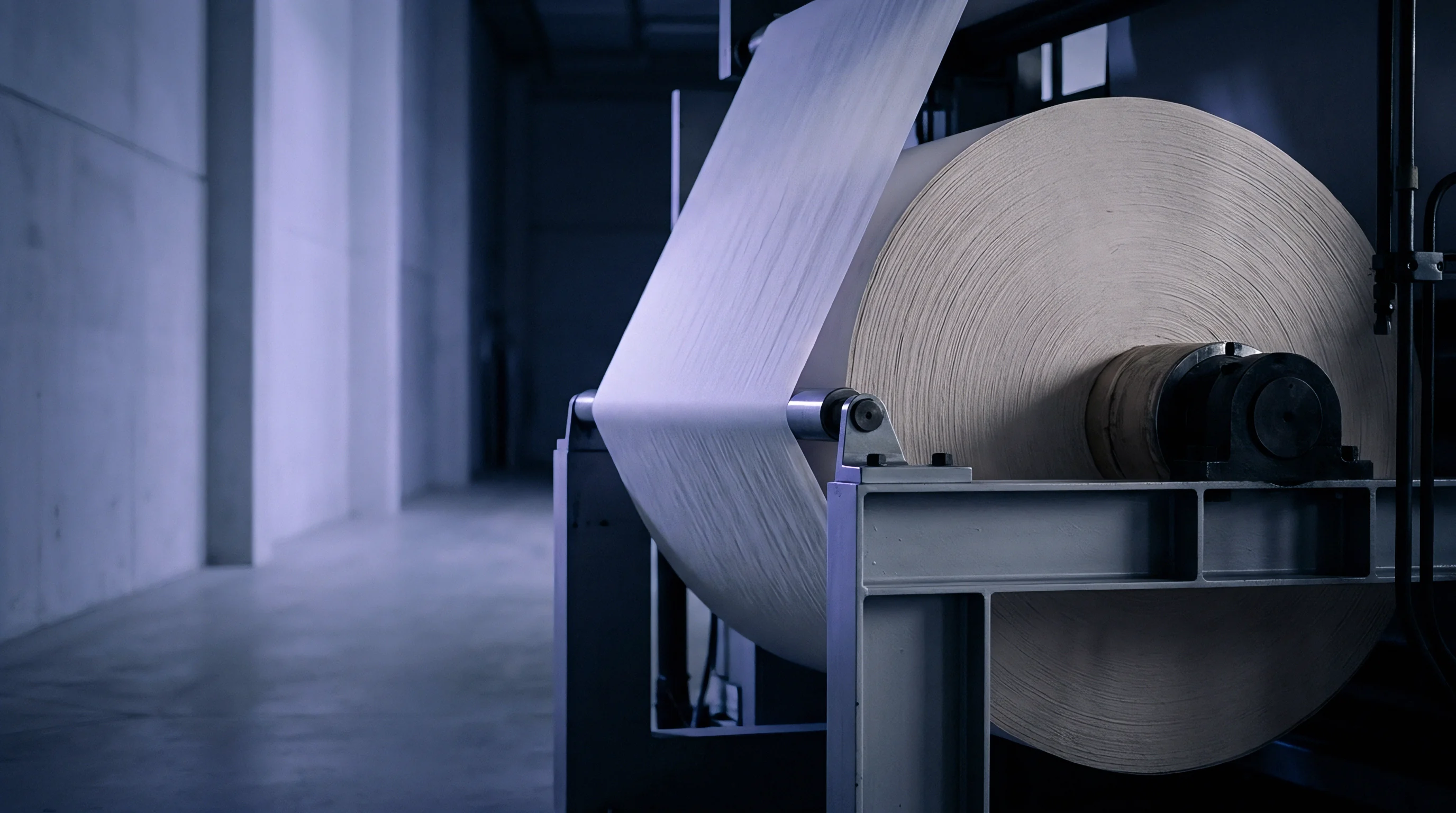
Converting line mechanics govern how much mechanical shear reaches treated film in continuous roll-to-roll processing. Tension control systems isolate web zones between unwinds, print units, laminating nips, and rewinds. Excess tension increases normal contact forces at every guide roller, raising frictional drag and accelerating surface wear.
Nip Pressure Optimization for Flexible Web Converting
Compressive loads at coating and laminating stations require careful tuning to avoid shifting polar polymer chains. Nip rolls press film webs together under high pneumatic force; if the rubber sleeves are too soft, they expand laterally in the nip zone and scrub the film surface. Choosing harder elastomer covers minimizes lateral strain and protects functional surface groups.
Ceramic-coated rollers significantly lower interfacial contact friction.
Under mechanical stress, polar functional groups rotate inward.
Unregulated web tension directly accelerates surface energy loss.
Synchronizing drives minimizes speed differences between rollers and the moving web. Dedicated servo motors on roll stations prevent slipping, whereas high-inertia undriven idlers force the web to drag rolls up to speed, generating heavy shear during acceleration. Lines using dead-shaft idlers suffer greater dyne loss than those equipped with low-inertia live-shaft rollers.
Higher corona discharge wattage cannot substitute for low-shearing roller bearing alignment in web transport.

Elastomer Durometer and Bearing Mechanical Drag
Selecting roll durometer determines the contact footprint and shear distribution on flexible webs. Soft rubbers rated at 40 to 50 Shore A compress under load, widening the nip footprint and extending dwell time under shear stress. Switching to 70 or 80 Shore A synthetic covers limits rubber deformation, reducing micro-slippage in the nip.
- Roller Surface Specification demands micro-grooved or matte ceramic sleeves that reduce continuous film contact area and interfacial friction.
- Drive Motor Synchronization compels precise torque balance across adjacent web drives to eliminate sliding speed differentials.
- Air Flotation Systems replace mechanical idler rolls along high-stress transport spans where surface energy decay is critical.
- Squeegee Impression Control prompts pneumatic loading indicators calibrated to maintain uniform nip pressure without localized surface crushing.
Air flotation turn bars can replace solid metal guide rolls on high-performance converting lines. Floating the web on a compressed air cushion eliminates physical contact at turn points, preventing shear-induced dyne loss and preserving surface energy for printing or laminating.
Including section 4.2 of the European Flexographic Industry Association lamination standard in converting contracts shifts financial liability for dyne loss to the operator whenever line tensions exceed specified limits.
Yield
Converting margins depend on minimizing film scrap and preventing ink adhesion failures. Dyne loss from web friction causes major defects like ink flaking, solvent retention, weak heat seals, and lamination delamination. Rejecting defective rolls wastes raw materials, machine time, and energy.
Financial Impacts of Mechanical Surface Energy Losses
Inadequate lamination bonding leads to costly material waste and rejected lots. Solventless lamination requires a surface energy of at least 38 mN/m, while solvent-based systems can tolerate levels down to 36 mN/m. If web transport shear pulls surface energy down to 32 mN/m, adhesive fails to wet out uniformly, leaving air voids and unbonded channels across the film.
Adhesive wetting fails when surface energy drops below target values.
Applying higher coat weights increases overall production expense.
Reliable lamination bonds require clean, uniform surface energy profiles.
Unoptimized line tensions rapidly degrade surface dyne levels.
Solventless adhesive systems strictly require uniform surface wetting.
To compensate for low dyne levels caused by line friction, operators often increase adhesive coat weight from a standard 1.6 g/m2 to 2.5 g/m2. Extra adhesive masks low-dyne patches but adds significant material cost over long runs. Because solventless adhesives represent a large share of unit costs, higher coat weights quickly shrink converting margins.
| Operational Parameter | Standard Low-Shear Line | Unoptimized High-Shear Line | Variance Impact |
|---|---|---|---|
| Dyne Value at Rewind (mN/m) | 40 | 33 | -7 mN/m decay |
| Lamination Bond Strength (N/15mm) | 2.8 | 1.1 | 59.2% strength loss |
| Waste Film Spoilage (%) | 1.5 | 8.5 | +7.0% scrap rate |
| Adhesive Application Rate (g/m2) | 1.6 | 2.4 | +50.0% chemical consumption |
| Landed Cost per 1,000 m2 ($) | 142.50 | 178.20 | +$35.70 unit cost penalty |
Worked Conversion Scrap Calculation for Sheared Films
Evaluating a 100,000 m2 production lot illustrates the true cost of physical dyne loss. Consider a baseline run laminating 20-micron BOPP film to 12-micron metallized PET, with base film at $0.45 per square meter and adhesive at $3.50 per kilogram. Under optimized low-shear transport, the line operates with a 1.5% scrap rate and an adhesive application rate of 1.6 g/m2, yielding the following breakdown:
Substrate raw material costs $45,000. Base adhesive consumption comes to 160 kilograms ($560), while waste scrap adds $683. This brings the total baseline expenditure to $46,243, or $462.43 per thousand square meters.
When unoptimized guide roll friction reduces surface energy, adhesive coat weight must be raised to 2.4 g/m2. That extra application consumes 80 additional kilograms of resin, raising total adhesive cost to $840. Poor interfacial bonding also causes additional splices and trim waste, driving scrap up to 8.5% ~ which wastes an extra 7,000 square meters of laminated web ($3,150 in substrate value).
Finally, cleaning contaminated rolls adds two hours of machine downtime at $250 per hour.
Under these high-shear conditions, total material expenditure climbs to $49,830. Factoring in downtime brings final job cost to $50,330, or $503.30 per thousand square meters. Mechanical shear losses add a landed cost penalty of $40.87 per thousand square meters, wiping out profitability on high-volume converting runs.