Paperboard Barrier Coating Food Contact Declaration Audit Basics
Audit declarations by matching raw chemistry recipes to migration test reports under actual food contact conditions instead of accepting unverified mill statements.


Dossier
A paperboard declaration packet collapses at incoming customs inspection when a distributor submits a five-year-old mill sheet covering base kraft while omitting the acrylic dispersion applied on an offline coater. Paperwork without chemical identity is worthless. Converters frequently treat a declaration of compliance as commercial boilerplate rather than a live chemical guarantee.
When board passes through flexographic print stations, offline emulsion coating heads, and rotary hot-air drying tunnels, the physical chemistry of the food-contact face changes permanently. A legally defensible dossier reflects the exact chemical state of the finished sheet as delivered to the packaging line.
Article 17 of Regulation (EC) No 1935/2004 penalizes untraceable raw materials with immediate shipment impoundment at the point of customs entry.
Incomplete declarations void transit insurance. Auditors verify paperboard compliance by cross-referencing three regulatory pillars: framework legislation, manufacturing discipline, and specific chemical authorizations. Under European jurisdiction, Regulation (EC) No 1935/2004 establishes baseline safety criteria, while Regulation (EC) No 2023/2006 controls good manufacturing practice.
National recommendations, such as German BfR Recommendation XXXVI for paper and board, set positive lists for fibers, sizing agents, and processing aids. United States jurisdictions look to FDA 21 CFR 176.170 for aqueous and fatty contact alongside 21 CFR 176.180 for dry food contact. An auditor discards any compliance claim referencing an obsolete regulatory amendment.

Mandatory Elements within Food Contact Statements
Article 16 of Regulation (EC) No 1935/2004 establishes direct legal obligations across every tier of the packaging supply chain. The declaration states the identity and address of the manufacturing entity, the trade name of the coated board, the exact date of issue, and clear confirmation of legal conformance. A competent declaration explicitly lists every substance subject to specific migration limits or compositional limits under applicable national rules.
- Identity declaration defines the legal entity manufacturing the board, the production location, and the precise commercial product designation matching commercial invoices.
- Substance disclosures detail every dual-use additive, authorized monomer, and functional chemistry subject to restriction, including European food additive reference numbers where applicable. Chemical families cannot hide behind generic proprietary trade descriptions.
- Contact boundary specifications state permissible food categories, pH limits, filling temperatures, and storage durations. This section determines whether the board tolerates hot extraction during baking or solely ambient dry containment.
- Functional barrier assertions define whether the polymer film completely prevents non-evaluated substance transfer into foodstuffs. The supplier provides experimental extraction curves demonstrating total barrier efficacy over maximum intended shelf life.

Traceability across Converting Passes
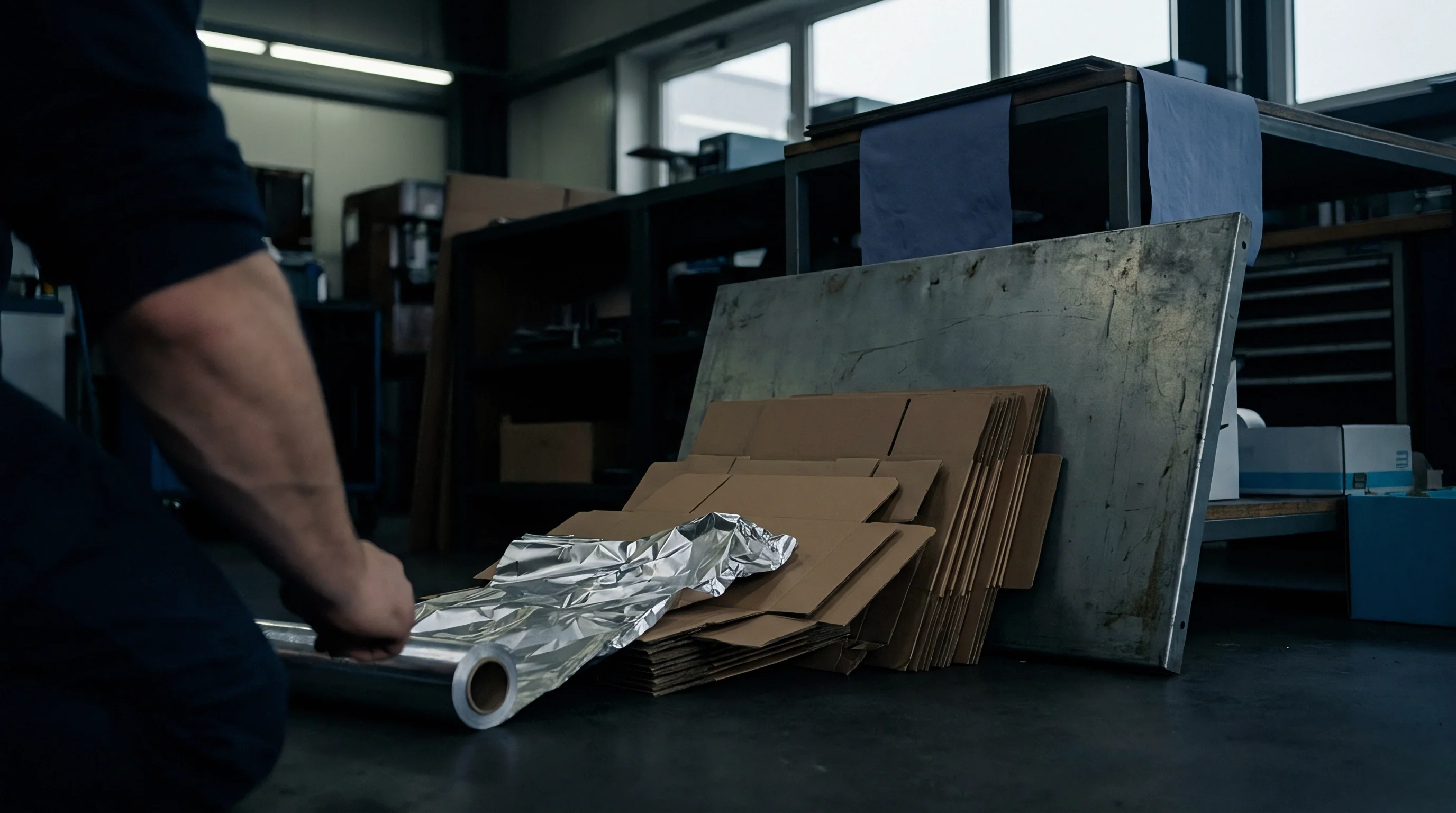
Chain of custody lapses occur when parent reels shift from an integrated production site through merchant warehouses prior to coating application. Secondary coaters frequently introduce synthetic binders, defoamers, biocide packages, and rheology modifiers without generating a downstream declaration update. Each converted run demands a dedicated technical file containing raw material declarations, reel batch numbers, line operating logs, and laboratory extraction certificates.
An auditor traces the physical roll barcode on the warehouse floor backward to the chemical batch sheets for both the virgin pulp furnish and the aqueous dispersion emulsion batch.
Inserting Regulation (EC) No 2023/2006 compliance warranty clauses directly into purchase specifications shifts the legal burden of proof back to the coater before dies strike production board.


Resin
Water-based barrier dispersions rely on synthetic polymers, natural biopolymers, or wax emulsions applied via blade, rod, or curtain coaters at dry coat weights between 4 and 12 grams per square meter. The coating formulation shields hydrophilic cellulose fibers against grease penetration, moisture vapor transit, and liquid wicking. Formulators blend functional binders such as carboxylated styrene-butadiene, styrene-acrylate copolymers, or polyvinyl alcohol with mineral pigments like platy talc and engineered kaolin.
Mineral fillers lengthen the tortuous diffusion path through the polymer matrix. Low surface energy prevents wet adhesion.
Water resistance correlates directly with film continuity across the paperboard valley structure rather than total dry coat weight.
Application defects appear when coaters run high-solids emulsions at excessive shear rates, generating micro-foaming and pinholing across the sheet surface. Pinholes destroy moisture resistance. An auditor checks surface tension data, binder glass transition temperatures, and surfactant levels.
When glass transition temperatures exceed ambient converting temperatures, coatings develop brittle micro-cracks during sheet rewinding. Low glass transition formulations eliminate brittleness but cause roll blocking on jumbo reels under winding pressure. Surfactants migrate faster than polymers.

Aqueous Dispersions and Fluorochemical Replacement
Polyfluoroalkyl substances face sweeping global bans, forcing chemical formulators toward styrene-butadiene latex, acrylic copolymers, and polyvinyl alcohol formulations. Legacy fluorochemical treatments lowered surface energy chemically without creating a physical film barrier. Aqueous polymer dispersions create a physical, continuous polymer membrane across the fibrous board surface.
This structural difference alters how grease and moisture interact with the substrate during extended storage.
- Pinholing from entrained air creates direct microscopic capillary channels through the dry polymer layer down into untreated cellulose fibers. Air entrapment occurs when high-shear pumps agitate dispersion baths without adequate defoamer dosing.
- Blocking inside rewound reels welds the coated food-contact surface directly to the uncoated reverse side during reel take-up. This defect transfers fibers, dust, and non-evaluated chemicals directly to the food contact face under five bars of core nip pressure.
- Blistering during rapid drying happens when high-velocity hot air dries the coating surface before water evaporates from the base paperboard structure. Steam pressure pops open crater-like voids across the barrier surface.
- Emulsifier blooming drives hydrophilic surfactant molecules to the outer surface over days of pallet equilibration. The migrated surfactant layer wets out prematurely, dropping water drop contact angles by thirty degrees.

What Triggers Non-Intentionally Added Substance Screening?
Drying tunnel temperatures reaching 180°C break down volatile surfactants, defoamers, and catalyst residues embedded inside applied polymers. Non-intentionally added substances, designated NIAS, include chemical degradation fragments, synthesis byproducts, reaction intermediates, and environmental contaminants. Uncured crosslinkers taint wet packaged foods.
Analytical laboratories deploy gas chromatography mass spectrometry and liquid chromatography high-resolution mass spectrometry to screen for volatile and semi-volatile NIAS. Toxicological thresholds evaluate detected compounds against Cramer structural classes: Class I compounds tolerate migration up to 1.8 milligrams per person daily, while Class III compounds drop to 0.09 milligrams per person daily.
| Chemistry System | Dry Coat Weight (g/m²) | Cobb 1800s (g/m²) | Kit Value (Grease) | WVTR 23°C/50%RH (g/m²/day) | PFAS Content |
|---|---|---|---|---|---|
| Styrene-Acrylate Latex | 6.0 to 9.0 | 12 to 18 | 8 to 10 | 15 to 30 | Zero detectable |
| Polyvinyl Alcohol Blend | 4.0 to 6.5 | 35 to 55 | 12 | 120 to 250 | Zero detectable |
| Bio-Based Polylactic Dispersion | 8.0 to 12.0 | 8 to 14 | 7 to 9 | 20 to 45 | Zero detectable |
| Fluorochemical Surface Size | 0.8 to 1.5 | 80 to 120 | 10 to 12 | > 500 | High bound fluorine |
Mills often deflect complaints by claiming that edge wick penetration during Cobb testing stems entirely from downstream die-cutting dullness rather than binder starvation in the coating matrix.

Migration
Laboratory verification quantifies chemical transfer from finished board into food simulants under controlled time and temperature regimes. Coated board samples face specific exposure conditions based on intended packaging shelf life and processing temperatures. Testing without verified laboratory accreditation under ISO/IEC 17025 invalidates audit dossiers.
Raw materials drift over time. Solvent traces trigger customs seizures.
Auditors evaluate migration reports using standardized surface-area-to-food-mass ratios. Take a converting job running a 350 g/m² folding boxboard lined with an aqueous barrier dispersion at 8 g/m² dry coat weight. European standardized calculations assume six square decimeters of packaging contact one kilogram of foodstuff.
Assume the laboratory extracts a coated test swatch measuring one square decimeter exposed to 100 milliliters of simulant. If the analytical instrument measures 0.12 milligrams of an acrylic monomer in that volume, calculating specific migration yields 0.72 milligrams per kilogram of food. Where the applicable regulation lists a specific limit of 0.05 milligrams per kilogram for that monomer, the shipment fails clearance twelvefold.
Tenax extraction tests at 40°C for ten days yield overall migration figures below 2.4 milligrams per square decimeter on fully cured acrylic dispersion boards.

Simulants and Exposure Modeling Regimes
Standardized protocols EN 1186 and EN 13130 target specific food types using ethanol solutions, dilute acetic acid, and modified polyphenylene oxide known as Tenax. Simulant selection reflects the physical nature of the packaged food product. Fatty foods demand aggressive screening.
Wax coatings fail high heat contact. Testing laboratories substitute 95 percent ethanol or isooctane for vegetable oil when measuring paperboard to prevent vegetable triglycerides from absorbing into the fibrous cellulose edge, which distorts gravimetric balances.
| Simulant Code | Representative Medium | Target Food Category | Standard Exposure | Overall Migration Limit |
|---|---|---|---|---|
| Simulant A | 10% Ethanol (v/v) | Aqueous, neutral foods | 10 days at 40°C | 10 mg/dm² |
| Simulant B | 3% Acetic acid (w/v) | Acidic media (pH < 4.5) | 10 days at 40°C | 10 mg/dm² |
| Simulant C | 20% Ethanol (v/v) | Low alcoholic beverages | 10 days at 40°C | 10 mg/dm² |
| Simulant D1 | 50% Ethanol (v/v) | Dairy, oil-in-water emulsions | 10 days at 40°C | 10 mg/dm² |
| Simulant E | Poly(2,6-diphenyl-p-phenylene oxide) | Dry, fatty solid foods | 10 days at 40°C or 2h at 175°C | 10 mg/dm² |

Analytical Limits and Toxicological Thresholds
European regulations set an overall extraction ceiling at 10 milligrams per square decimeter on finished board surfaces. Specific limits drop lower for classified compounds: caprolactam holds a limit of 15 mg/kg, bisphenol derivatives face strict exclusion, and primary aromatic amines remain undetectable below 0.002 mg/kg. Heavy metals extracted into 3 percent acetic acid must measure below 1.0 mg/kg for aluminum, 0.05 mg/kg for barium, and 0.002 mg/kg for lead.
Discrepancies emerge between total immersion extraction and single-sided cell testing. Total immersion extracts compounds through the cut edges and unvarnished reverse side, producing false positive failures for components intended exclusively for external graphic layers.
Failing an extraction screening triggers product quarantine, mandatory notification across safety portals, complete destruction of finished packaging inventory, and catastrophic commercial liability.


Seal
Heat, dwell time, and mechanical pressure fuse opposing coated surfaces during automated carton forming at web speeds reaching four hundred meters per minute. The dispersion layer melts, softens, and interdiffuses across the mating interface before chilling into a solid adhesive bond. Fiber tear validates bond strength.
Cold boards split along creases. High caliper boards crack under tension. Heat seal dwell dictates line speed.
Scoring dies blunted by abrasive mineral coatings tear surface fibers before folding pressures engage the barrier layer.
Heat Dwell Windows and Interface Integrity
Carton forming machines apply platen temperatures between 140°C and 210°C to weld polymer coatings under hydraulic pressure. Narrow thermal operating windows disrupt conversion efficiency. Polymers requiring high sealing temperatures risk scorching outer inks and inducing odor through binder thermal degradation.
Operating below the minimum film formation temperature produces incomplete chain entanglement, causing seams to pop open during blast freezing or hot filling cycles.
- Platen temperature calibration verifies heating element consistency across both jaws using high-precision surface thermocouples. Operators reject dies displaying heat gradients exceeding five degrees across the sealing face.
- Interface pressure setting adjusts mechanical stop blocks to compress board calipers by thirty percent without crushing flutes or splitting fiber walls. Excessive mechanical pressure squeezes molten polymer sideways away from the seam, causing bead starved leaks.
- Dwell time synchronization aligns rotary sealer timing with web transport speeds to guarantee minimum eighty-millisecond dwell contact. Line acceleration without proportional heat compensation generates cold seals.
- Chilling cycle application locks polymer chains into a rigid state before vacuum carton transfer arms strip the package from forming mandrels. Inadequate cooling results in seal delamination under elastic paperboard memory springback forces.

Is Crease Strain Rupturing the Barrier Interface?
Female matrix depth and male score rule thickness dictate board deformation during carton scoring. When scoring rules push board fibers into the die channel, outer ply layers stretch under high tension while inner plies compress. Standard polymer dispersions tolerate up to 15 percent elongation before microscopic fissures develop along the crease bead.
Once fissures appear, moisture and grease migrate directly through fractures into the paperboard core, voiding barrier declarations.
When scoring cross-grain on dense folding boxboard, wider channel clearance prevents hairline surface fractures better than higher nip compression.

Trace
Auditing a food contact declaration requires verifying the entire technical dossier supporting each line item against physical mill rolls received at the loading dock. Expired certificates forfeit legal protection. Document checks verify that testing regimes simulate actual food use.
A statement valid for dry grain cereal provides zero legal protection when packing moist chilled meats. Auditors cross-examine trade names, grammages, chemical additions, and laboratory test dates across the procurement chain.

Documentation Cross-Examination in Supply Audits
Technical dossiers require verifiable alignment between independent test certificates, raw chemical batch codes, and warehouse receiving manifests. Discrepancies between base board grammage on laboratory reports and physical production manifests indicate unverified material substitutions. Submitting declarations referencing superseded base boards represents a critical audit non-conformance.
| Verification Level | Document Target | Discrepancy Indicator | Immediate Risk Class | Disposition Action |
|---|---|---|---|---|
| Tier 1: Document Validity | Declaration of Compliance | Date exceeds 24 months | High administrative | Reject paperwork; quarantine roll stock |
| Tier 2: Chemical Mapping | Substance Declaration | Missing monomer CAS numbers | Critical regulatory | Halt production; demand chemical disclosures |
| Tier 3: Test Fitment | EN 1186 Test Report | Dry simulant used for moist pack | Critical safety | Order emergency extraction re-testing |
| Tier 4: Trace Integrity | Delivery Manifest vs Roll Tag | Batch lot suffix mismatch | Moderate operational | Isolate lot until mill verifies reel history |
Decision Matrix for Lot Clearance
Quality control teams balance commercial delivery pressures against legal liabilities whenever inbound stock displays ambiguous compliance records. Receiving teams cross-reference roll numbers with certificate issue dates. Any unannounced alteration in base pulp furnishes, sizing formulations, or barrier latex binders voids existing laboratory certifications under Article 15 of Regulation (EC) No 10/2011.
Whether regional regulators will eventually standardize NIAS limits for aqueous dispersions remains an unsettled commercial question as recycled fiber mandates intersect with barrier chemistry.