Polypropylene Film Mechanical Limits in Packaging Lamination Passes
Polypropylene lamination limits depend on controlling web strain below two percent elongation and matching crease matrix width to film thickness
Web
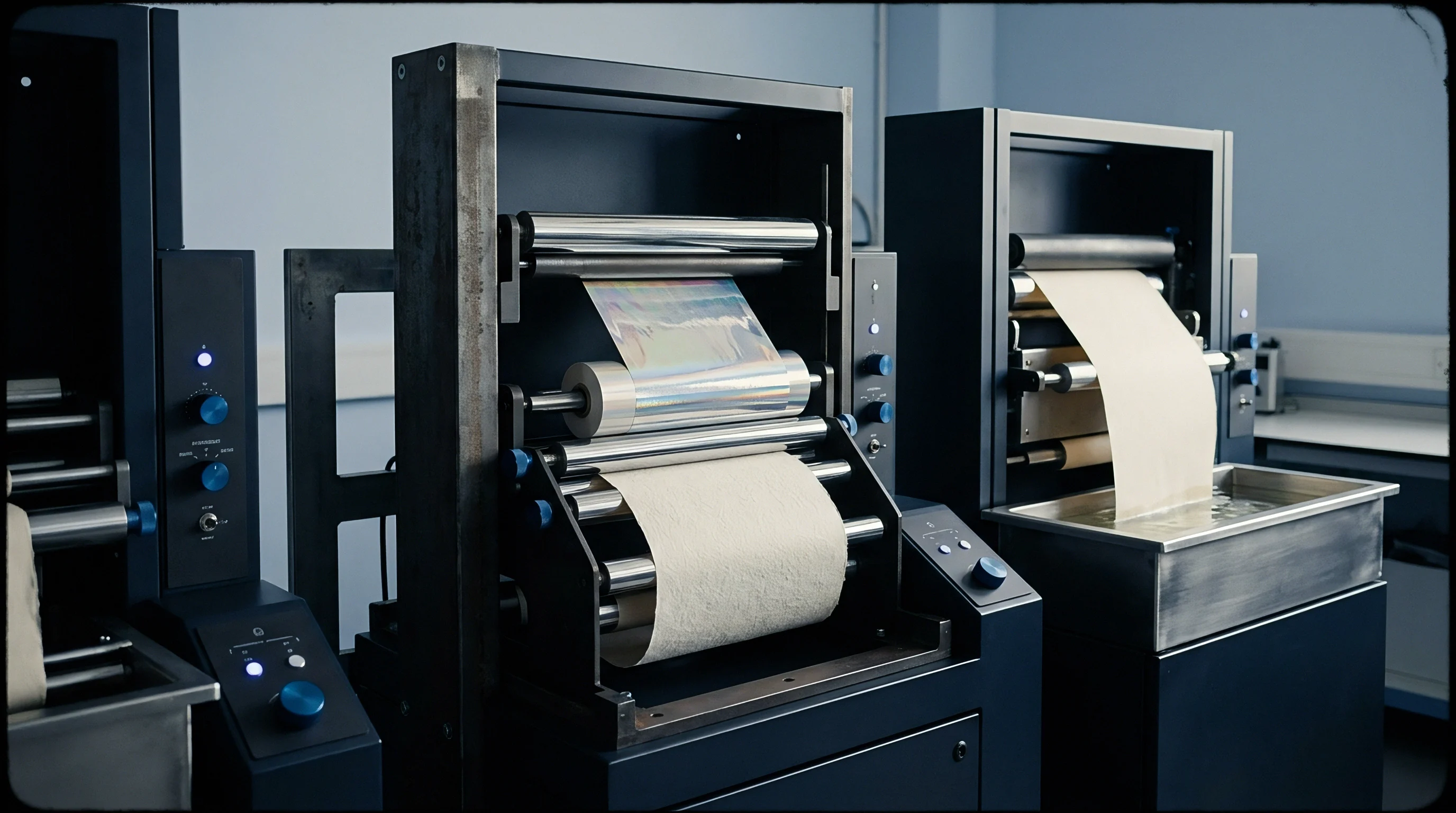
Biaxially oriented polypropylene film stretches under machine directional tension when thermal nip rollers exceed sixty degrees Celsius. Standard twelve-micron to thirty-micron films exhibit viscoelastic deformation under combined thermal and mechanical strain, where film tension dictates pitch accuracy and high heat lowers yield stress. Thermal laminating passes apply continuous web tension alongside localized nip pressure to press an extruded ethylene-vinyl acetate layer or adhesive film onto paperboard.
Above eighty degrees Celsius, the mechanical yield point of oriented polypropylene drops rapidly. Tensile modulus measurements under ISO 527-3 demonstrate that film stiffness decreases by over thirty-five percent as web temperature rises from twenty-three degrees Celsius to ninety-five degrees Celsius. Operating a lamination line near the lower limit of adhesive activation preserves film dimensional stability.
Excess tension from the unwinding braking assembly causes both elastic and plastic web extension, with machine directional strain altering the cross-directional gauge profile through neck-in deformation. When film stretches axially across the heating cylinder, cross-web caliper drops and creates non-uniform contact across the laminating nip: thin spots suffer reduced adhesive contact, while thicker edge zones absorb disproportionate pressure. Tensile strain beyond one point five percent permanent elongation disrupts optical appearance and leaves latent elastic recovery stress within the laminated reel.
After rewinding, the film attempts to shrink back to its unoriented equilibrium state, exerting continuous shear stress on the setting adhesive interface.
| Film Grade | Nominal Caliper (µm) | Test Temperature (°C) | Tensile Modulus MD (MPa) | Yield Stress MD (MPa) | Elongation at Yield MD (%) |
|---|---|---|---|---|---|
| Gloss Thermal BOPP | 12 | 23 | 2200 | 140 | 4.5 |
| Gloss Thermal BOPP | 12 | 95 | 1350 | 78 | 8.2 |
| Matt Thermal BOPP | 15 | 23 | 1950 | 125 | 5.0 |
| Matt Thermal BOPP | 15 | 95 | 1180 | 65 | 9.5 |
| Soft-Touch BOPP | 18 | 23 | 1700 | 105 | 5.5 |
| Soft-Touch BOPP | 18 | 95 | 920 | 50 | 11.0 |
High speed converting operations demand tight web tension control within a window of fifteen to forty Newtons per meter of web width, as excessive line tension stretches the film past its elastic limit during high temperature contact ~ a risk that makes low nip heat essential for thin substrates. The mechanical strain induced during lamination remains stored within the polymer matrix until post-processing passes release it. Subsequent hot foil stamping or die-cutting steps apply localized heat and pressure, triggering immediate film retraction around tool boundary lines.
At ninety-five degrees Celsius, standard twelve-micron polypropylene film loses forty percent of its tensile modulus.
The sequence of mechanical events leading to web strain failure during thermal lamination follows a distinct physical progression.
- Thermal softening phase begins as unoriented micro-crystalline regions within the polypropylene matrix absorb heat from the chrome nip cylinder, reducing overall material stiffness.
- Elastic extension phase occurs when unwind brake torque pulls the softened film, causing immediate proportional elongation along machine direction paths.
- Plastic yield transition takes place when web tension exceeds the temperature-reduced yield point, introducing permanent molecular orientation shifts.
- Cross-web neck-in phase reduces web width and alters localized caliper, destabilizing web tracking across lay-flat impression rollers.
- Latent stress locking freezes oriented tension into the reel as the film contacts the cooling cylinder prior to rewinding.
Cool rolls stabilize film tension, but when tension settings exceed the thermal yield threshold of the selected film caliper, permanent web neck-in forces line operators to trim width margins. This increases edge waste and pushes job spoilage costs beyond acceptable margins.
Adhesion
Interfacial bonding between polypropylene film and printed paperboard relies upon surface energy differentials and wet-out kinetics. Oriented polypropylene possesses a non-polar surface structure with an intrinsic surface energy near thirty-one dynes per centimeter, whereas printing inks, varnishes, and laminating adhesives demand surface energy levels of thirty-eight to forty-four dynes per centimeter for proper spreading and chemical keying. Corona discharge treatment oxidation creates polar functional groups on the polymer surface, though surface energy degrades as corona decay sets in.
Storage time, ambient humidity, and surface migration of slip additives further decrease corona effectiveness over time.
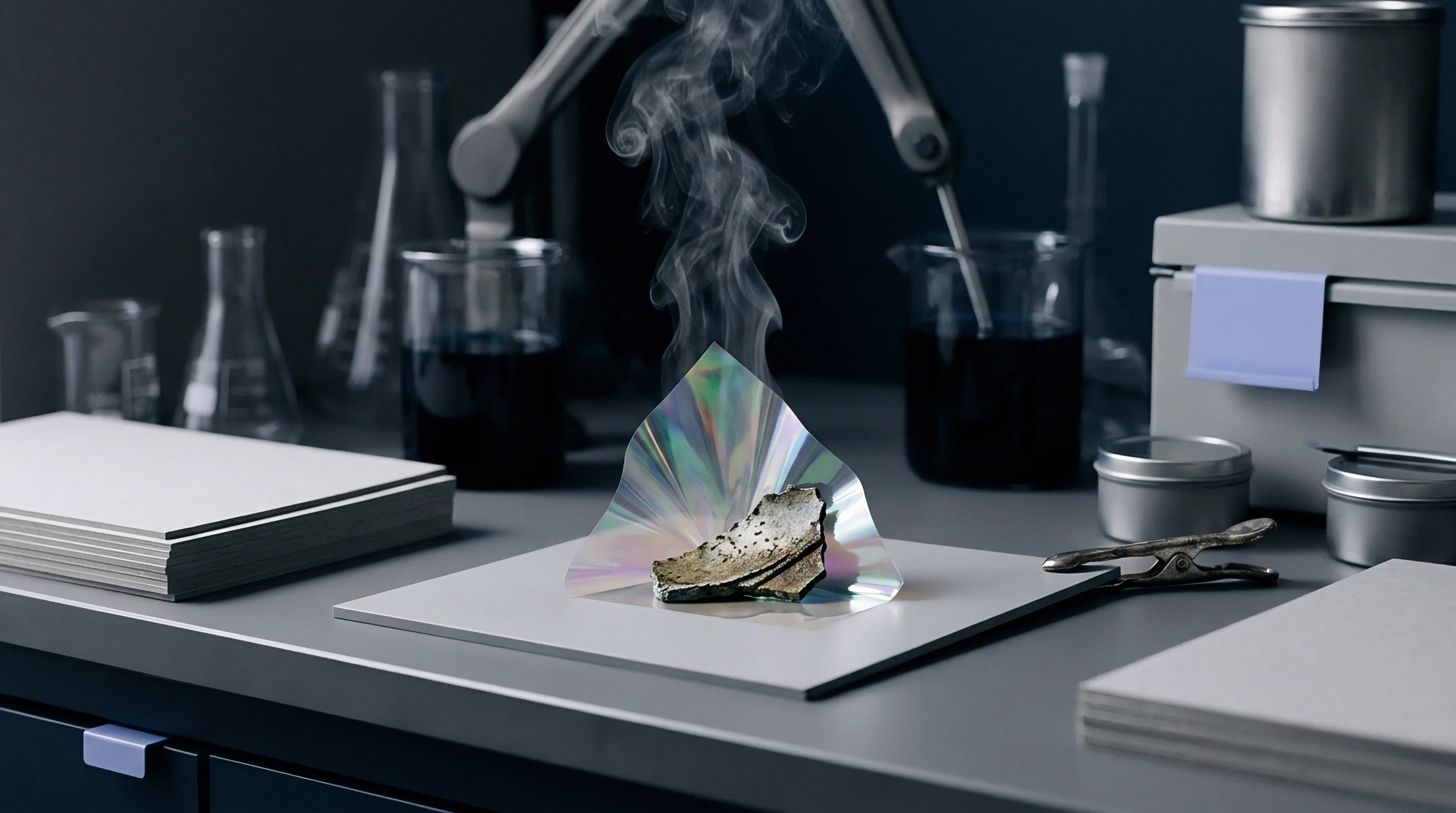
Surface Energy Decay and Corona Dynamics
Laminating over wet offset inks containing alkyd resins or high levels of waxes inhibits mechanical anchoring. Siliconized set-off powders create physical barriers across the print sheet, blocking adhesive flow and forming micro-voids at the interface. Thermal lamination relies on melted ethylene-vinyl acetate copolymer flowing around ink pigment structures under heavy nip pressure.
By contrast, solventless polyurethane systems use reactive liquid adhesives that polymerize in situ over twenty-four to forty-eight hours, with high nip pressure forcing the liquid adhesive into the porous fiber matrix of paperboard substrates.
Test standard ISO 8510-2 specifies a ninety-degree peel angle for evaluating substrate interfacial separation forces.
Adhesive failure destroys score integrity when surface energy drop-off causes delamination during downstream converting activities such as folding, embossing, or die-cutting. Evaluating bond durability demands standardized peel strength testing under controlled laboratory conditions, using ISO 8510-2 or ASTM D903 protocols at twenty-three degrees Celsius and fifty percent relative humidity.
Interfacial bond failures emerge through distinct chemical and mechanical mechanisms during converting passes.
- Corona energy decay reduces functional surface polarity below thirty-eight dynes per centimeter, preventing full adhesive wet-out across printed ink solids.
- Waxy set-off interference creates unbonded micro-voids where anti-set-off powder particles isolate the adhesive layer from the paperboard fiber network.
- Ink vehicle crystallization forms a hard, non-porous surface barrier that blocks chemical bonding between polyurethane adhesives and underlying pigment layers.
- EVA thermal cleavage happens when nip temperatures remain below adhesive melting points, preventing polymer chains from penetrating paperboard surface pores.
- Plasticizer migration transfers low molecular weight additives from film coatings into the adhesive line, softening the bond interface over extended storage periods.
Contractual acceptance specifications referencing ISO 8510-2 peel strength values below two point five Newtons per fifteen millimeters reclassify surface film separation from a material flaw into an unaccepted converting execution failure.
Deformation
Structural scoring and folding of laminated packaging material subject the polymer layer to localized elongation strains exceeding forty percent. Paperboard creasing tools compress the internal fiber structure while forcing the outer surface, including the laminated film coat, into an extended arc. Bending paperboard over a narrow male rule stresses the film layer directly above the score center line.
Standard folding cartonboard ranging from three hundred to four hundred and fifty micrometers in caliper requires precise creasing geometry to prevent film cracking or delamination.
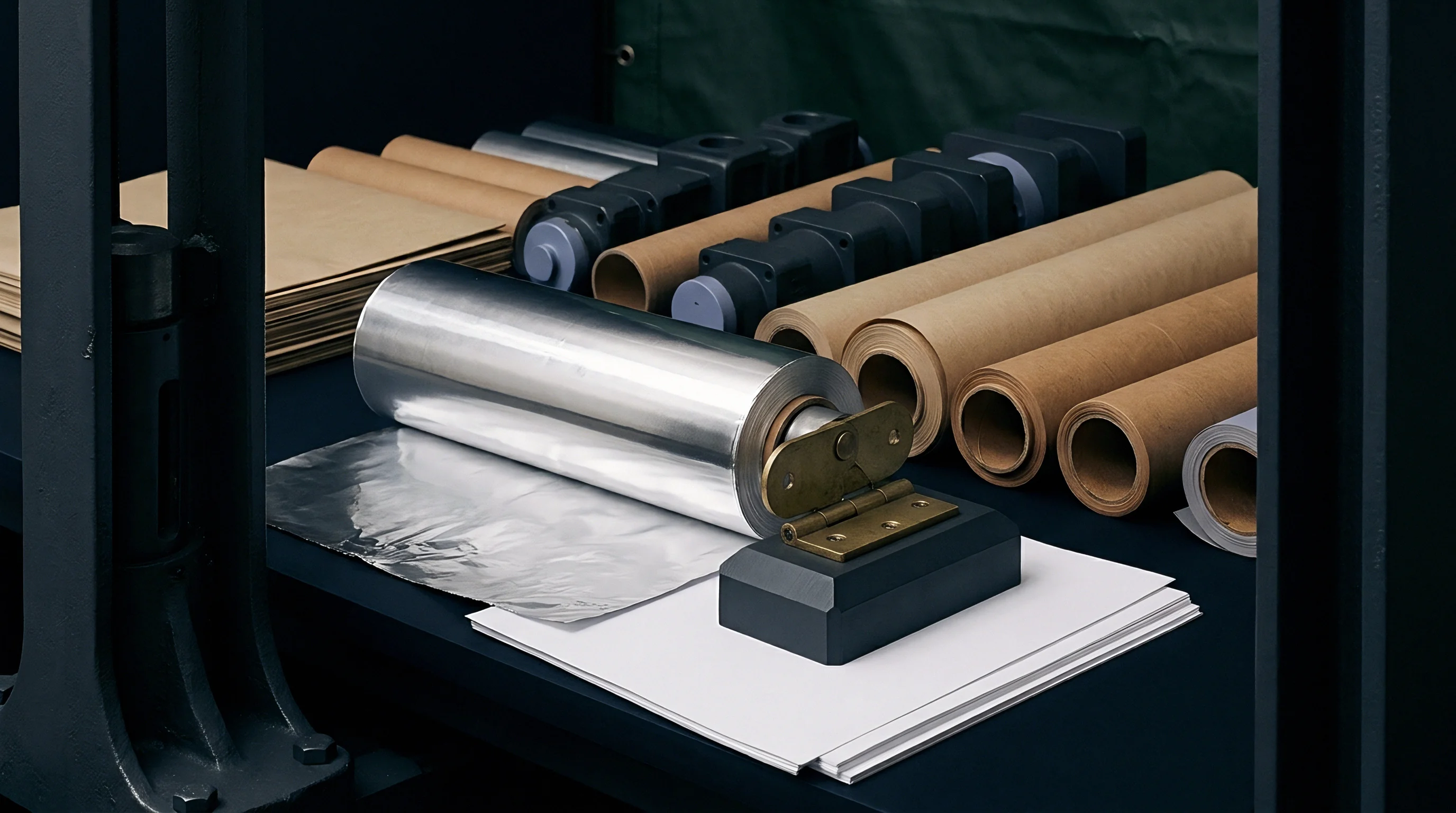
Which Crease Geometry Prevents Polypropylene Shearing?
Female matrix channel width and male rule thickness determine the bend radius of the laminated outer liner. A narrow matrix channel compresses board fibers tightly, forcing the laminated film to stretch beyond its ultimate elongation limit and crack along the score apex when local tensile strain exceeds thirty percent. While soft-touch coatings alter surface friction, using a wider matrix channel distributes the bending arc across a larger area, lowering peak surface strain.
Deep creasing rules push the film into severe angular displacement, generating shear forces that break the bond between the adhesive and the board surface.
| Board Caliper (µm) | Male Rule Thickness (mm) | Matrix Channel Width (mm) | Matrix Depth (mm) | Peak Film Strain (%) | Observed Crease Integrity |
|---|---|---|---|---|---|
| 300 | 0.71 | 1.20 | 0.40 | 38.5 | Film cracking observed along score apex |
| 300 | 0.71 | 1.40 | 0.40 | 22.1 | Clean crease without surface rupture |
| 400 | 1.05 | 1.70 | 0.55 | 35.0 | Localized film delamination at fold edge |
| 400 | 1.05 | 2.00 | 0.55 | 19.8 | Clean crease without surface rupture |
| 500 | 1.42 | 2.20 | 0.70 | 32.4 | Film micro-cracking and optical haze |
| 500 | 1.42 | 2.60 | 0.70 | 17.5 | Clean crease without surface rupture |
Because board moisture alters stress distribution, die-cutting operators modify creasing parameters using a systematic adjustment sequence during tooling bring-up.
- Caliper baseline measurement identifies the precise substrate thickness using a digital micrometer under standard ISO 534 test protocols.
- Channel width selection assigns the female matrix channel width according to a ratio of one point five times board caliper plus rule thickness.
- Make-ready pressure calibration increases cylinder impression force incrementally until board fibers yield without cutting surface film fibers.
- Visual fold inspection evaluates one-hundred-eighty-degree score line bends under ten-times magnification to detect micro-fissures in the polypropylene layer.
- Peel stress audit checks for delamination along score flanks after mechanical folding sequences on automatic gluer lines.
Narrower scoring channels concentrate strain and tear the laminated polymer coat.
Hot foil stamping over laminated board adds thermal stress to the mechanical strain of embossing tools. Foil stamping dies heated to one hundred and twenty degrees Celsius soften the polypropylene film directly beneath the stamp area, while high relief embossing dies stretch the softened film vertically. If die depth exceeds three times film caliper, the polymer layer thins down, creating pinholes or structural tears along die edges.
Score line cracking is often attributed to low atmospheric humidity in the pressroom rather than diminished film elongation limits under multi-pass stress.
Drift
Dimensional variances across a ten-thousand-sheet press run emerge as thermal energy accumulates in the nip roller assembly. Heat transfer from internal oil or electric heating elements expands metal cylinders, increasing local nip pressure, while the outer rubber impression roll swells under sustained thermal contact and mechanical friction. Roll expansion alters the effective nip width, changing dwell time and mechanical pressure profiles.
As thermal expansion shifts register print lines, film speed accelerates slightly across expanded roller zones, creating register drift between printed graphics and downstream spot varnish or die-cutting tooling.
Post-lamination curl results from asymmetric stress between paperboard and polymer film. Polypropylene expands during heating at the nip roll and contracts upon cooling, whereas paperboard exhibits high dimensional stability under heat but expands or contracts with ambient moisture shifts. Single-sided lamination creates an unbalanced composite sheet structure.
As the hot film cools on the chill roll, it contracts against the rigid paperboard substrate; when film tension remains high during cooling, excess nip pressure induces curling that bows the sheet toward the laminated side.
Unbalanced single-sided film lamination pulls cartonboard into concave curl as the polymer film relaxes over twenty-four hours.
Moisture regain inside the paperboard substrate exacerbates curling over time. Heat inside the laminating nip drives bound moisture out of the board’s top fibers, but storage in ambient environments restores board moisture levels over twenty-four hours. As paperboard fibers re-expand while the polymer film remains dimensionally fixed, the sheet warps away from the laminated face.
Maintaining equilibrating moisture levels within pressroom environments between forty-five and fifty-five percent relative humidity mitigates post-lamination structural warping. Controlling chill roll cooling water temperatures within eighteen to twenty-two degrees Celsius prevents sudden polymer shock and stabilizes machine-direction tension lines before sheeting passes, though whether active humidity control during post-lamination conditioning can fully neutralize machine-direction differential curl in paperboard under twenty-five micron film coats remains unclear.
Economics
Commercial viability in print finishing depends on controlling spoilage rates while navigating modulated recycling levies on film-coated packaging. Adding a film lamination pass increases overall job costs through film stock consumption, adhesive outlay, machine setup time, and spoilage allowances. Make-ready waste for thermal lamination averages three to five percent of total sheet counts during tension calibration and temperature stabilization, whereas wet lamination runs require extended setup times to achieve consistent adhesive coat weights across full sheet formats.
Recyclability rules penalize heavy film layers, with European paper recycling guidelines under CEPI and 4evergreen frameworks setting strict limits on plastic mass fractions in fiber-based packaging. Polypropylene film coatings exceeding fifteen percent of total pack weight cause structural rejection at de-inking and repulping mills, and packaging exceeding five percent plastic mass faces higher Extended Producer Responsibility fees in multiple jurisdictions. Specifying twelve-micron film instead of twenty-four-micron film reduces the plastic mass fraction, avoiding modulated fee surcharges while maintaining scuff resistance.
| Lamination Type | Film Caliper (µm) | Make-Ready Waste (Sheets) | Running Waste Rate (%) | Substrate Yield Loss (%) | Modulated EPR Fee Index |
|---|---|---|---|---|---|
| Thermal Gloss BOPP | 12 | 250 | 1.8 | 2.1 | 1.00 |
| Thermal Matt BOPP | 15 | 300 | 2.2 | 2.5 | 1.15 |
| Thermal Soft-Touch BOPP | 18 | 450 | 3.5 | 4.2 | 1.45 |
| Solventless Wet BOPP | 12 | 600 | 2.8 | 3.0 | 1.00 |
| Water-Based Wet BOPP | 12 | 500 | 2.5 | 2.8 | 1.00 |
Evaluating commercial targets requires a formal financial compliance review before launching high-volume laminated folding carton production runs.
- Plastic mass compliance verifies that polypropylene film weight stays below five percent of total carton weight to qualify for base recycling levies.
- Spoilage budgeting allocates a minimum four percent material scrap buffer for multi-pass jobs combining lamination, hot foil, and die-cutting.
- Speeds calibration aligns laminator throughput rates with adhesive curing speeds to eliminate downstream delamination scrap.
- Tooling offset calculation adjusts die-cutting creasing matrix dimensions to accommodate added film caliper and avoid re-tooling costs.
- Certificate verification checks supplier food contact declarations under Regulation 10/2011 for laminated inner packaging structures.
Running the laminator ten percent below maximum rated speed prevents nip heat degradation, saving more money in scrap reduction than is lost in throughput.