Tool Apex Radius Effects on Transverse Cell Wall Yield Behavior
Matching tool apex radius to board caliper prevents outer liner rupture by inducing internal cell wall shear rather than tensile wall fracture.
Notch
Rule Apex Profiles and Contact Pressure Distribution
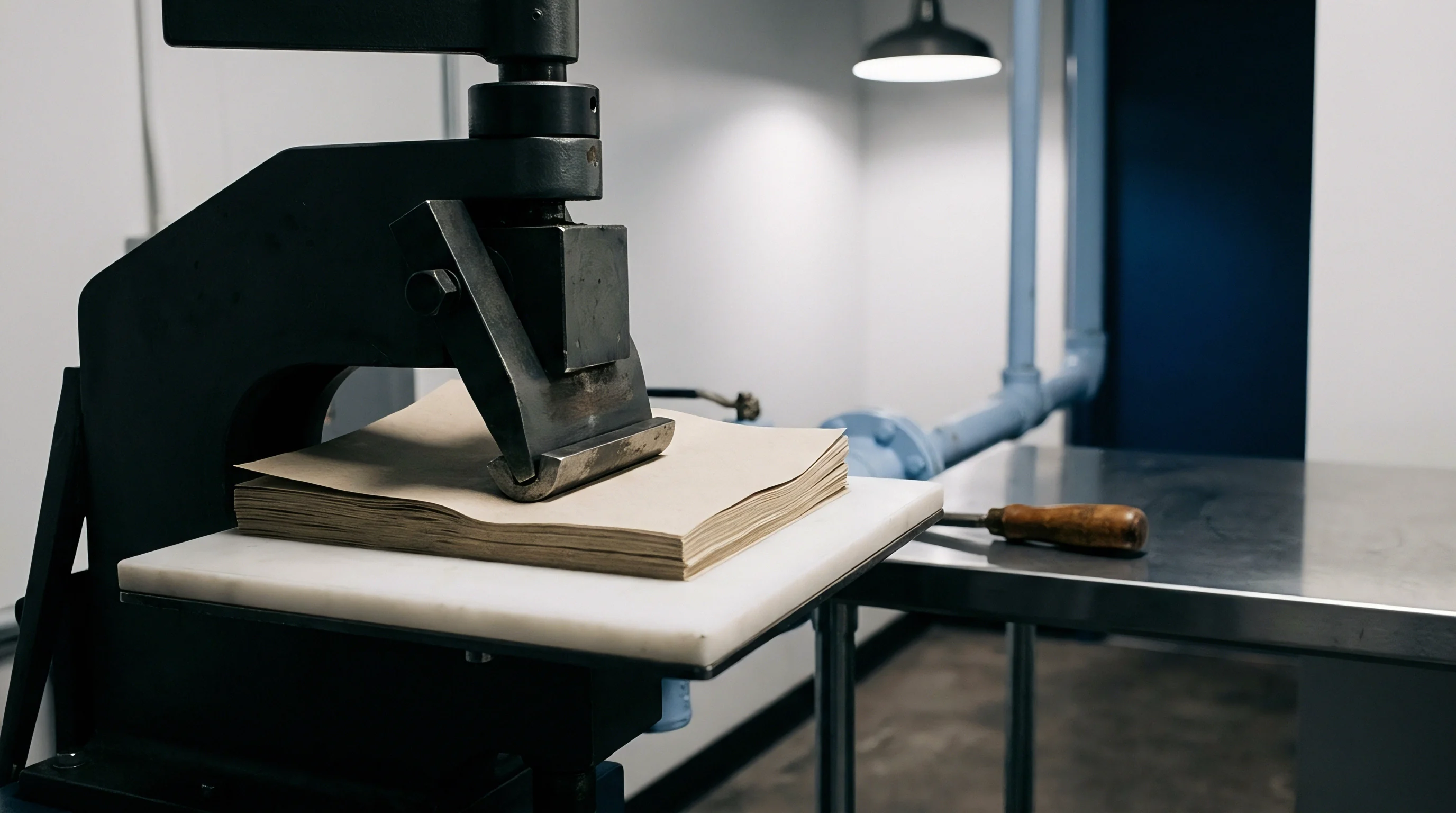
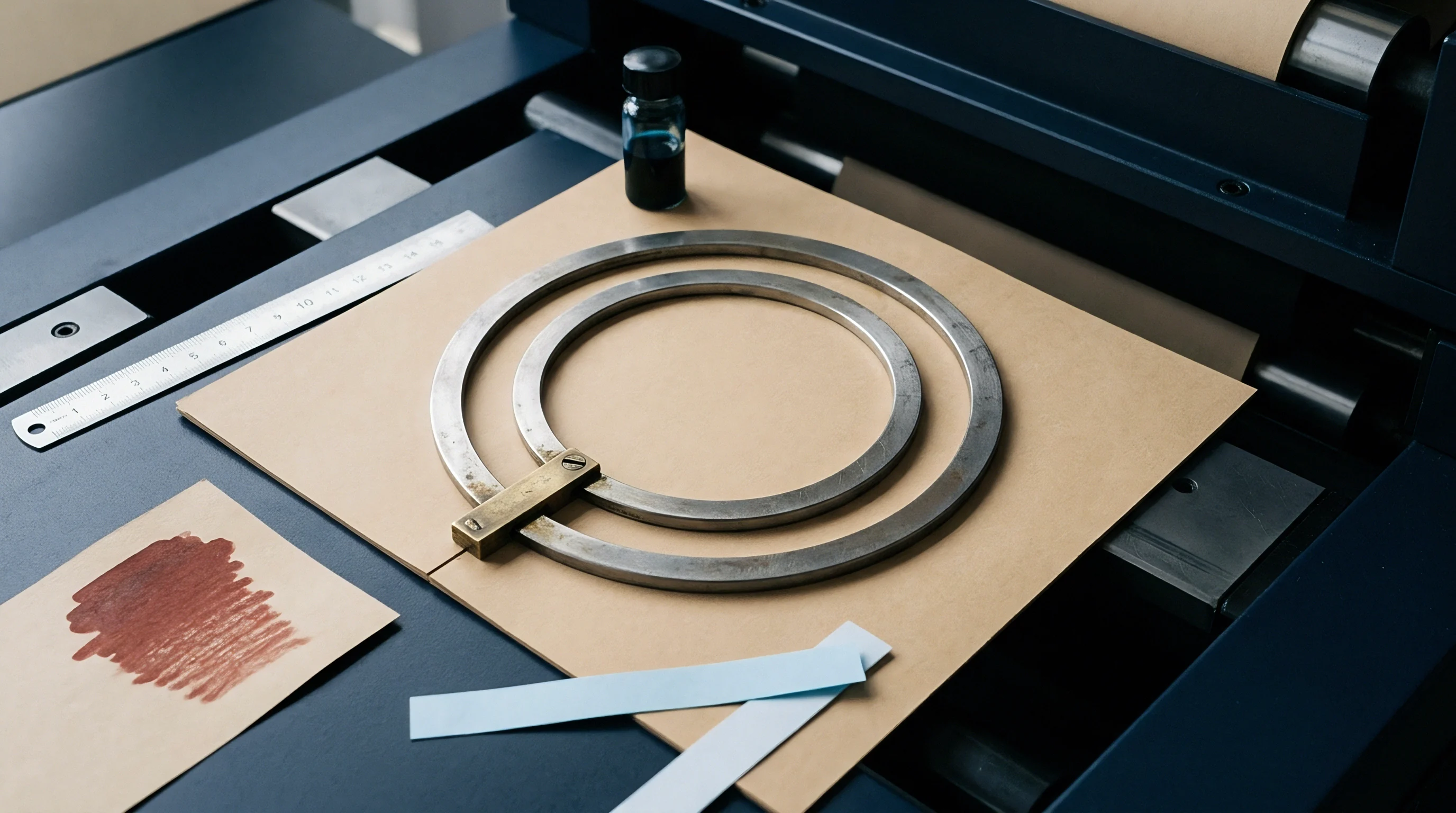
Creasing rules operate by driving paperboard into a female matrix channel to create a defined bending hinge. The geometry of the steel tool edge, specifically the rounding radius ground onto the apex tip, governs initial stress concentration during impression. Tip radii range from 0.35 mm for thin solid bleached boards up to 1.42 mm for heavy corrugated liners.
As the punch descends, contact width expands proportionally to apex curvature. Force concentrates at the tip. Small radii generate narrow contact areas with extreme local compressive forces, whereas larger radii broaden the contact footprint, distributing vertical force over multiple fiber bundles.
Contact width dynamics follow Hertzian compression mechanics modified for anisotropic cellular solids. When a sharp rule apex engages the sheet, surface pressure spikes rapidly before the internal bulk yields. This rapid pressure buildup generates intense localized transverse shear strain immediately beneath the tool tip.
Broad tips spread vertical load. Spreading the load across a wider contact arc lowers peak surface pressure, forcing mechanical deformation deeper into the internal layers of the substrate.
Indentation Geometry across Caliper Variations
Board thickness dictates the mechanical strain ratio across the substrate during matrix entry. For a caliper of 400 micrometers, a 0.71 mm tool apex creates an indentation arc that engages surface plies with controlled lateral strain. When the apex radius drops below 0.50 mm on the same caliper, vertical shear forces dominate over transverse compression.
The sheet undergoes localized pinching before structural bending begins. Small radii increase peak shear. This mechanical shift determines whether fiber layers deform plastically through lumen collapse or fail catastrophically under localized shear stress.
Tool apex curvature directly alters the ratio of vertical displacement to lateral sheet draw. A broad apex pulls board material smoothly into the channel, establishing symmetrical strain distribution across both sides of the score. A narrow apex cuts into the top liner like a dull wedge, restricting lateral draw and concentrating all bending stress into a narrow rupture zone.
Matching apex curvature to caliper ensures that indentation energy converts into inter-ply shear rather than surface perforation.
Die makers frequently explain away score cracking on heavy boards by asserting that press speed and ambient humidity variations mask the mechanical shearing caused by using standard off-the-shelf narrow-tip scoring rules.


Yield

Transverse Compression and Lumen Failure Pathways
Micro-structural response in wood pulp fibers depends heavily on the stress state imposed during tool penetration. Paperboard consists of multi-layered networks where individual fiber lumens contain hollow central cavities. Under broad apex tools, compressive loads force these hollow cylinders to collapse flattened across their cross-sections.
Fiber lumens collapse under shear. Inter-fiber hydrogen bonds within individual plies experience shear displacement while retaining structural cohesion. Severing micro-fibrils occurs when tool geometry over-concentrates vertical load.
| Pulp Furnish Type | Board Caliper (µm) | Tool Apex Radius (mm) | Peak Contact Stress (MPa) | Primary Failure Mechanism | Delamination Yield Ratio |
|---|---|---|---|---|---|
| Bleached Softwood Kraft | 350 | 0.35 | 48.2 | Transverse Fiber Wall Shear | 0.28 |
| Bleached Softwood Kraft | 350 | 0.71 | 29.4 | Controlled Lumen Buckling | 0.74 |
| Unbleached Hardwood Kraft | 450 | 0.71 | 34.1 | Inter-Ply Bond Separation | 0.68 |
| Unbleached Hardwood Kraft | 450 | 1.05 | 22.8 | Progressive Lumen Collapse | 0.82 |
| Thermomechanical Pulp (TMP) | 550 | 0.71 | 41.5 | Brittle Fiber Wall Fracture | 0.35 |
| Thermomechanical Pulp (TMP) | 550 | 1.42 | 25.1 | Internal Delamination Bulge | 0.79 |
| Data measured at 23 °C and 50 % relative humidity per ISO 187 conditioning standard. Delamination yield ratio defines internal ply separation area relative to total indentation depth under ISO 1924-2 testing. | |||||
Cell wall deformation initiates when transverse stress exceeds the elastic limit of the wet-laid fiber matrix. In softwood kraft plies, long flexible fibers deform plastically, yielding through lumen buckling without losing tensile continuity. Mechanical pulps contain short rigid fibers with thick cell walls that resist transverse compaction.
Applying a sharp tool apex to mechanical pulp layers causes micro-fracturing of the rigid cell walls, destroying the structural integrity of the internal ply and leading to complete score failure during carton assembly.
At 23 °C and 50 % relative humidity, a 0.71 mm apex radius reduces peak outer-liner transverse shear stress by 38 percent compared to a 0.35 mm tip on 450-micrometer folding boxboard.
Deformation Modes in Multi-Ply Fiber Structures
Stratified paperboards rely on differential stiffness between top plies, middle bulk layers, and back liners to form clean score hinges. The middle layer, composed of mechanical or recycled pulp, yields in shear to form an internal bulge, known as a bead, inside the female matrix groove. Inter-ply delamination absorbs bending energy.
If the apex radius fails to distribute vertical stress, the top liner ruptures rather than initiating inter-ply separation.
- Transverse Cell Wall Shearing severs individual fiber structures prior to delamination when apex radii fall below 0.40 mm on heavy boards.
- Inter-Ply Bond Separation forms the required internal hinge bulge when broad apex radii convert vertical forces into horizontal shear stresses.
- Lumen Buckling Collapse flattens hollow fibers within mechanical pulp plies, absorbing compressive energy without fracturing outer clay coatings.
- Liner Tensile Rupture splits outer printed surfaces during folding whenever sharp apex rules over-concentrate surface strain.
Modifying tool apex geometry shifts the failure location within the substrate cross-section. Sharp tips concentrate stress in the top two plies, creating clean surface cuts that act as stress concentration points when folded. Broad tips drive peak shear stress into the central interface between plies, triggering progressive delamination.
This internal separation creates a flexible paperboard hinge that folds with low resistance, protecting printed surface coatings from tensile cracking.
Incorrect selection of tool apex curvature creates unannounced score line failure on automated packaging lines, resulting in rejected pallet shipments and total loss of converted inventory.

Matrix

Counter-Die Channel Clearance and Rule Engagement
Female creasing grooves guide board displacement around the apex point. Groove width and groove depth establish the total spatial volume available for internal fiber deformation. Channel depth fixes crease height.
When rule apex radius increases, matrix channel width widens proportionally to maintain clearance for double the board caliper plus the rule thickness. Incorrect width splits outer plies. If matrix width remains narrow while apex radius widens, the board experiences extreme lateral compression, pinching sheet edges and jamming die-cutting presses.
Clearance geometry within the matrix groove governs final bead symmetry. As the rule tip pushes paperboard into the channel, the board forms two distinct shoulder bends at the matrix channel edges. A broad apex profile reduces the severity of these shoulder bends, creating smooth transition angles.
Smooth transition angles prevent localized stress concentrations where the creased zone meets uncreased board, maintaining structural stiffness across the carton panel.

When Does Apex Geometry Modulate Matrix Channel Clearance?
Substrate thickness variations across board mill lots demand precise dynamic clearance planning. An apex radius of 1.00 mm operating on a 600-micrometer board requires a channel width calculated from rule thickness plus twice the board caliper plus an apex clearance constant. Expanding the tip radius increases the lateral displacement zone within the matrix channel.
This expansion alters the neutral axis of bending, transferring strain energy into controlled delamination zones away from printed surfaces.
DIN 55437-1 specifies that counter-groove width tolerances match rule apex curvature to prevent localized fiber shearing during high-speed conversion.
- Baseline Caliper Verification measures sheet thickness across five sample points before selecting rule apex and matrix dimensions.
- Apex Radius Selection matches tool tip curvature to substrate caliper to ensure sufficient contact area without crushing surface fibers.
- Channel Width Matching aligns female matrix groove width with apex profile geometry to avoid lateral board pinching during press stroke.
- First-Off Crease Depth Adjustment sets platen press tonnage until the score groove achieves target bead formation without fracturing bottom plies.
- Bending Moment Audit verifies folder-gluer resistance figures on sample blanks to confirm hinge flexibility before releasing the full run.
Over-sizing the matrix channel relative to apex radius reduces indentation precision. Excessive channel width allows paperboard to slip laterally into the groove without undergoing necessary transverse compaction. This slipping motion produces shallow, poorly defined score lines that exhibit high bending resistance and unpredictable fold lines on high-speed packaging machinery.
Matching rule apex curvature to substrate thickness ensures consistent hinge formation without risking outer liner fracture across variable press speeds.
Fracture
Score Cracking Mechanisms in Coated and Laminated Substrates
Surface treatments present distinct mechanical challenges during creasing operations. Polyethylene extrusion coatings, oriented polypropylene laminations, and heavy mineral clay coatings alter surface elongation properties. Film stretch masks micro-cracks.
When a narrow apex tool scores a laminated sheet, high vertical stress creates micro-fractures in the brittle clay layer beneath the elastic film. Clean creases preserve print surface. Upon folding 180 degrees on a carton machine, the stretched film snaps over the fractured clay substrate, exposing unprinted white fibers.
High stiffness stalls folder-gluers. Broad apex tools mitigate this by distributing strain over a wider arc, preventing localized clay fracturing.
| Board Grade & Surface Coating | Film Lamination Type | Apex Radius 0.35 mm Index | Apex Radius 0.71 mm Index | Apex Radius 1.05 mm Index | Failure Mode Class |
|---|---|---|---|---|---|
| Solid Bleached Board (Clay Coated) | None (Varnish Only) | 8.4 | 2.1 | 0.8 | Clay Coating Flaking |
| Folding Boxboard (Double Clay) | 12 µm Gloss OPP | 6.2 | 1.4 | 0.3 | Film Necking & Splitting |
| Coated Recycled Board (CRB) | 15 µm Matt PET | 9.1 | 3.8 | 1.1 | Liner Delamination Rupture |
| Solid Unbleached Kraft (SUK) | 20 µm PE Extrusion | 4.5 | 0.9 | 0.2 | Substrate Fiber Shearing |
| Average Index Across Test Matrix | Standard Formulations | 7.05 | 2.05 | 0.60 | Combined Mechanical Defect |
Extrusion-coated barrier boards demand special tool apex considerations. Polyethylene films deform elastically under indentation, but if the underlying fiber wall shears due to a sharp tool apex, the unsupported film stretches over the damaged fiber gap. Environmental humidity changes cause the stretched polymer film to pull away from the fiber matrix, creating void channels along the score line that compromise liquid and moisture barrier performance.
Broadening the tool tip radius prevents surface coating micro-fractures by spreading tensile strain across multiple outer fiber layers during 180-degree panel folding.
Delamination Profiles under Dynamic Creasing Loads
Platen press speed dramatically affects how cell walls yield under transient tool impact. Dwell time at peak impression lasts only milliseconds on high-speed rotary convertors. Fiber lumens require finite time to collapse and dissipate compressive energy.
Wear broadens the effective tip. Tooling geometry dictates waste rates. A sharper tool forces high-rate deformation, driving strain rates past the viscoelastic limit of cellulose, causing brittle fiber breakage instead of ductile yield.
- Solid Bleached Board Selection specifies 0.71 mm apex tools for calipers up to 450 micrometers to preserve smooth surface clay layers.
- Folding Boxboard Protocol utilizes 1.00 mm apex rules on bulk mechanical plies to maximize internal delamination bead volume.
- Film Laminated Board Checklist demands rounded 1.05 mm apex profiles to prevent polymer film necking and pinhole tearing during folding.
- Recycled Kraft Board Assignment pairs 0.71 mm rules with wide matrix channels to accommodate variable fiber length distributions without surface splitting.
Dynamic strain distribution across the score width varies directly with apex curvature. High-speed camera analysis confirms that broad apex rules initiate internal delamination earlier in the stroke cycle, allowing fiber layers to slide past one another smoothly before peak impression is reached. Early delamination lowers overall conversion tonnage requirements and extends die life across long production runs.
Whether micro-cracking in barrier coatings induced by small apex radii significantly increases water vapor transmission rates across folded carton corners remains unresolved in current packaging research.

Benchmark
Crease Quality Metrics and ISO Standard Compliance
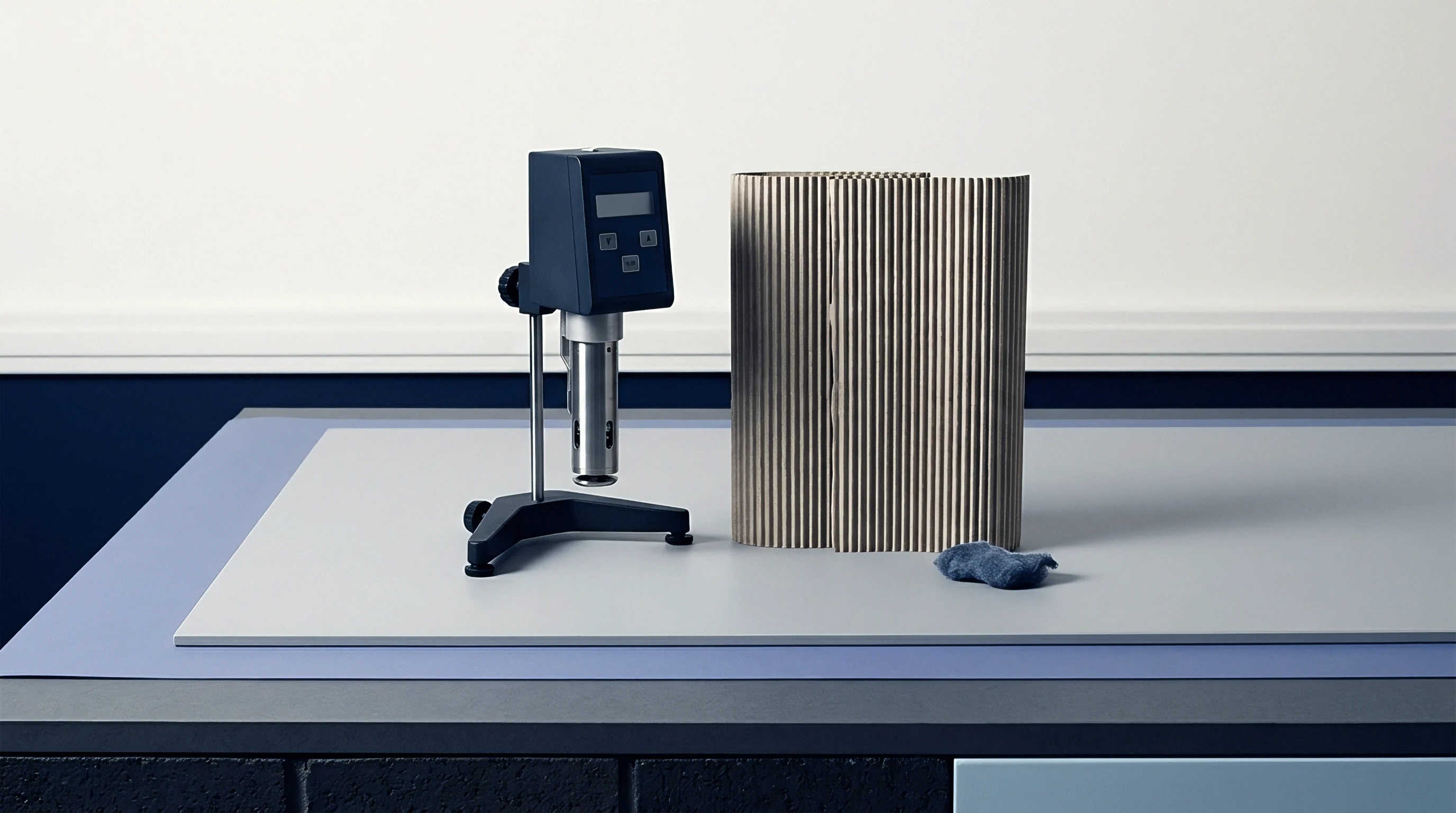
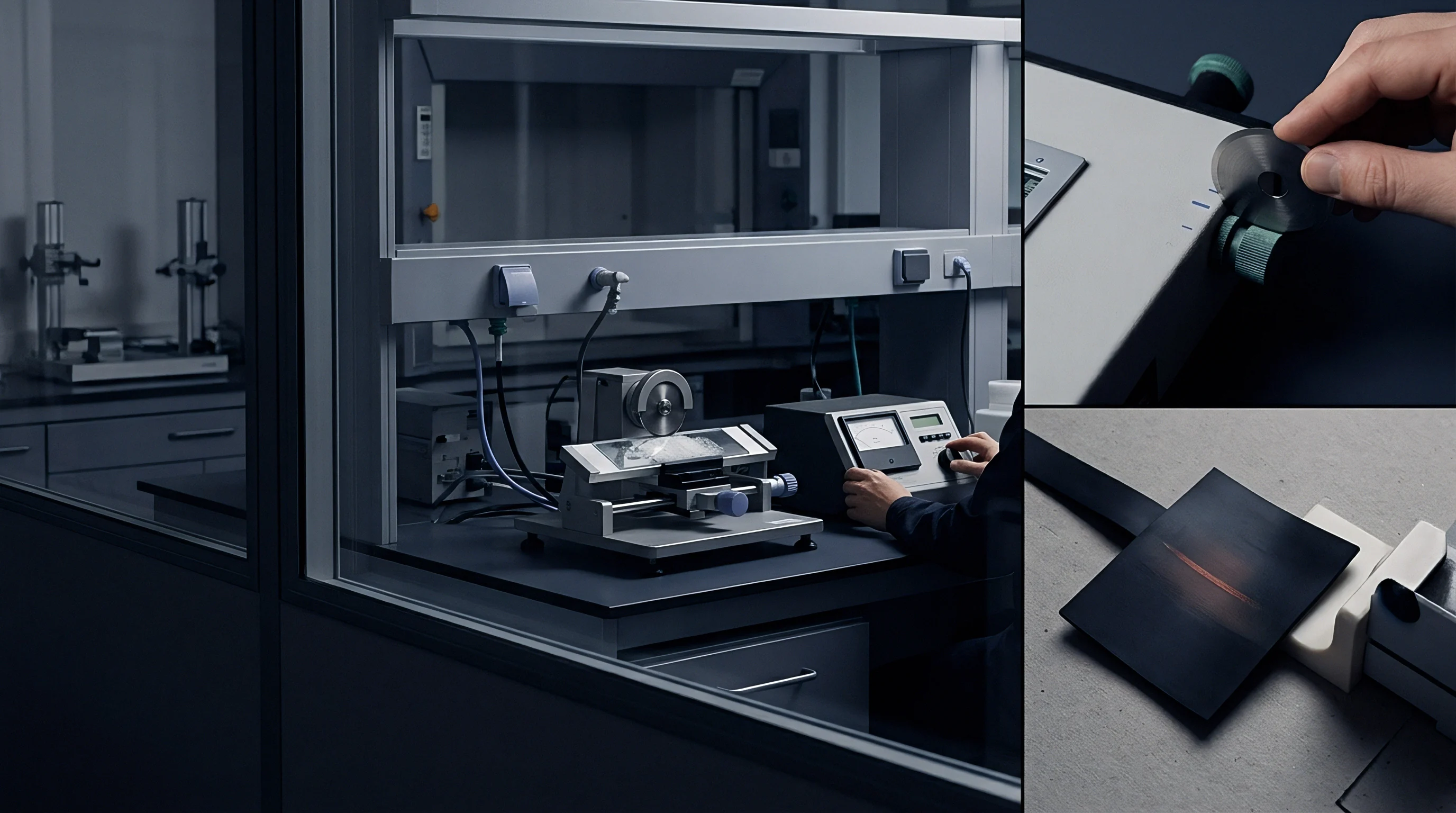
Standardized test procedures evaluate score integrity and folding resistance. Mechanical testing instruments measure bending force required to deflect a creased specimen to a 90-degree angle per ISO 5628 protocols. Crease stiffness ratio compares the bending moment of creased board against uncreased board.
Ideal ratios sit between 1.5 and 2.5 for efficient automated folding. When apex radii calibrate properly to board calipers, bending stiffness drops predictably, preventing panel bowing during packaging machine erection.
Evaluating score hinges involves measuring both moment resistance and springback angle recovery. A score produced with an undersized apex radius may display low initial bending force due to fractured outer plies, but it lacks structural memory, leading to skewed cartons during folder-gluer compression belts. Standardized lab testing isolates these defect profiles before mass production.
DIN Bending Moment and Springback Evaluation
Laboratory measurements according to DIN 55437 evaluate springback recovery force over time. Score lines formed with overly sharp tools exhibit erratic springback because damaged outer fibers fail to maintain dimensional memory. Conversely, score lines formed with excessively broad apex tools show high initial resistance due to incomplete cell wall collapse.
Precision verification ensures folder-gluer efficiency across varying plant temperatures.
Bending moment measurements on uncreased board compared against creased samples quantify the exact reduction in hinge stiffness achieved by tool apex profile calibration.
- Condition board samples at 23 degrees Celsius and 50 percent relative humidity for 24 hours prior to creasing tests.
- Cut test strips 38 millimeters wide perpendicular to the machine direction to evaluate cross-directional score performance.
- Mount the creased specimen in a motorized bending tester and record peak moment force required to achieve 90-degree deflection.
- Calculate the crease stiffness ratio by dividing uncreased bending moment by creased bending moment to verify carton folding compliance.
Documenting crease quality across mill lots creates an audit trail that isolates conversion issues from paperboard manufacturing defects. When bending stiffness numbers drift during a production shift, checking tool apex wear profiles identifies whether edge erosion has flattened the rule tip beyond specified engineering tolerances.
Section 4.2 of ISO 5628 specifies that crease stiffness evaluation requires standardized sample conditioning, shifting legal responsibility for score cracking to converters who fail to document pre-test environmental controls.
Outlay

Tooling Wear Curves and Re-Tooling Economics
Precision steel rules experience edge erosion across extended production runs. Sharp 0.35 mm tool tips suffer accelerated wear, rounding off non-uniformly under high compressive forces. High tonnage accelerates die wear.
As the apex flattens unevenly across the die platen, crease depth definition drifts out of tolerance, raising make-ready adjustments mid-run. Broad apex rules withstand high production volume with minimal edge degradation, maintaining consistent cell wall compaction profiles over hundreds of thousands of impressions.
| Run Quantity (Cartons) | Rule Apex Radius (mm) | Die Wear Rate (µm / 100k) | Make-Ready Spoilage (%) | Re-Tooling Frequency | Landed Unit Cost (USD) |
|---|---|---|---|---|---|
| 50,000 | 0.35 | 14.2 | 2.8 | Every 2 Runs | 0.084 |
| 50,000 | 0.71 | 4.1 | 1.1 | Every 6 Runs | 0.079 |
| 250,000 | 0.71 | 4.3 | 1.2 | Every 4 Runs | 0.062 |
| 250,000 | 1.05 | 1.8 | 0.5 | Every 10 Runs | 0.058 |
| 1,000,000 | 1.05 | 1.9 | 0.4 | Every 8 Runs | 0.041 |
| 1,000,000 | 1.42 | 0.9 | 0.3 | Every 15 Runs | 0.039 |
Selecting durable apex profiles lowers overall tooling expenditures over the lifetime of a packaging line. Sharp rules require frequent knife replacement and extended press setup times to prevent score splitting on variable-caliper board lots. Standardizing on broader rule radii stabilizes press operation, reducing setup waste sheets and lowering labor costs per converted job.
Spoilage Rates and Recyclability Fee Impacts
Machine downtime caused by jam-ups on folder-gluers directly traces back to inconsistent score line bending moments. Converters who attempt to compensate for poor scoring by adding plastic laminations face steep regulatory penalties. Extended producer responsibility frameworks impose higher modulated fees on plastic-laminated paperboard packaging due to repulpability penalties.
Selecting correct tool tip geometry creates robust physical hinges without requiring non-recyclable synthetic film reinforcement.
Financially optimizing creasing operations requires evaluating total converted cost rather than initial die rule purchase prices. Premium laser-cut steel rules with hardened broad apex radii carry a higher upfront tooling cost, but they eliminate line stoppages, reduce surface cracking rejects, and preserve full paperboard recyclability grading.
Balancing rule apex radius against board caliper reduces scrap rates on high-speed converting lines, protecting margin performance without adding synthetic layer costs to the finished pack.