Transverse Mechanical Deformation in Polyolefin Barrier Packaging Structures
Transverse deformation exceeding 3.5 percent fractures EVOH and metallized layers, causing permanent barrier loss across converted polyolefin packaging structures.


Web
Running flexible multi-layer barrier structures at high converting speeds generates complex lateral tensile stress. When unprinted or surface-printed polyolefin films feed through slitting lines, laminators, and packaging units, web tension rarely stays uniform across roll width. Gauge profile variations in the blown film, uneven winding tension, and misaligned idlers readily translate machine-direction traction into cross-direction strain.
Polyethylene and polypropylene skins yield viscoelastically under transverse loads like these, but the functional barrier plies inside have much lower strain limits. Long before an operator spots web weave or visible stretching on the floor, microscopic fractures have already begun spreading through the barrier stratum.
Tension spikes across the web split brittle plies outright. In both symmetrical and asymmetrical coextrusions, the modulus mismatch between polyolefin bulk skins and high-barrier resins sets up sharp shear stresses at internal boundaries. Low-density polyethylene skins yield smoothly at room temperature; ethylene vinyl alcohol copolymers and inorganic vacuum depositions do not.
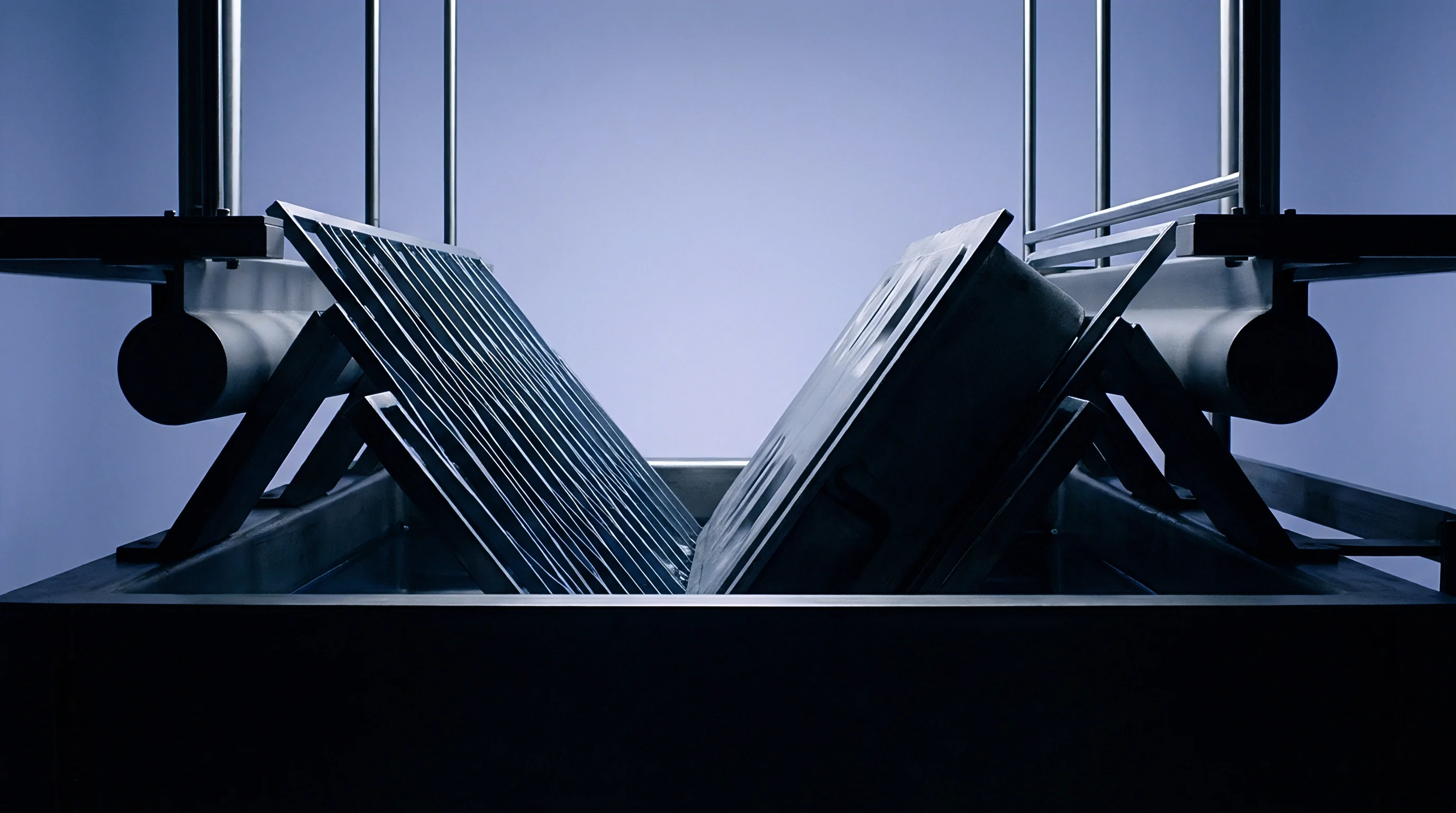
Lateral web spreading across bowed rollers prevents center wrinkles while increasing edge tensile fractures in thin barrier plies.
Interfacial Mechanics across Coextruded Polyolefin Layers
Coextrusion lines join polyethylene or polypropylene skins to functional barrier polymers using functionalized tie resins placed between the dissimilar materials. Maleic anhydride grafted linear low-density polyethylene bonds the non-polar polyolefins to polar ethylene vinyl alcohol copolymer chains. Under transverse deformation, these tie layers take on shear parallel to the film plane.
They absorb initial shear stress, but if the tie layer lacks sufficient caliper or grafting density, interfacial delamination sets in before the functional stratum itself fails. The cohesive strength at that interface ultimately determines whether cross-web elongation draws the barrier down uniformly or snaps it into isolated fracture bands.
- Skin Layer Ductility allows polyolefin outer plies to elongate past fifteen percent strain before necking occurs.
- Tie Layer Elasticity distributes interfacial shear forces between non-polar polyolefins and polar barrier resins during transverse stretching.
- Cohesive Stratum Splitting generates micro-channels across brittle EVOH plies when cross-web elongation exceeds four percent.
- Metallized Layer Crazing creates conductive discontinuities and pinholes in vacuum-deposited aluminum coatings under lateral tension.
Transverse Orientation versus Machine Direction Alignment
Polymer chains aligned along the extrusion axis have little room to elongate when pulled perpendicularly. Blown films produced at low blow-up ratios concentrate orientation along the machine direction, leaving the transverse axis dominated by unoriented amorphous regions and weak inter-spherulitic boundaries. As slit rolls run through downstream coating or lamination, transverse flutter subjects these lateral paths to rapid cyclic elongation.
Because orientation ratios govern cross-direction elongation, biaxially oriented polypropylene films display balanced mechanical properties, yet their high transverse modulus concentrates stress directly into thin vacuum-deposited ceramic or metallic barriers.
Converters running metallized oriented films often see unexplained barrier loss near roll edges, right where bowed expander rolls exert their highest outward deflection. High line tension pulls the web taut over the bow. In smoothing out center troughs, the spreader stretches the outer thirds of the web path laterally, while downstream drives try to compensate through continuous tension adjustments.

Yield
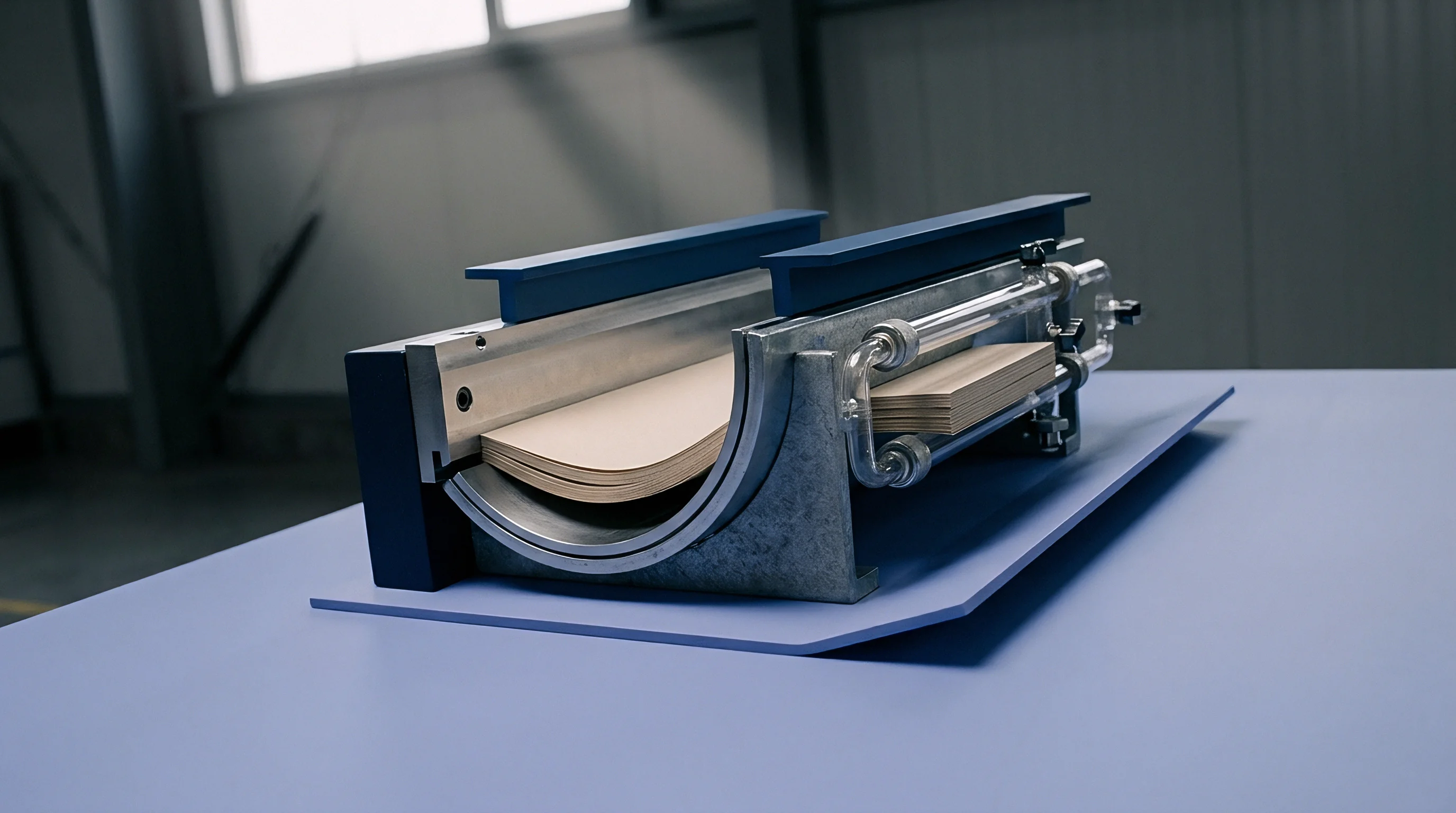
Cross-direction tensile deformation triggers permanent plastic flow once local stress passes the polyolefin matrix’s elastic limit. In unoriented and blown polyethylene structures, yielding begins through lamellar slip and inter-lamellar separation inside crystalline spherulites. Rolls unwinding under tension store residual transverse stresses.
Once strain exceeds the yield threshold, polymer chains reorganize into fibrillar structures and neck down locally. Necking begins at four percent strain, and that lateral displacement immediately damages embedded barrier layers that cannot deform plastically to match.

What Governs Poisson Contraction in Cross Direction?
Lateral necking under axial pull depends primarily on the balance between crystalline spherulites and amorphous tie chains in the polyethylene skins. When converting equipment pulls a web machine-direction against heavy brake resistance, Poisson contraction draws the web inward across its width. If edge guides or chilled nips clamp the margins at the same time, this contraction is blocked.
Biaxial tension fields spread across the central span, putting the film under multiaxial stress that drives local loads inside the barrier layer well past its critical yield limit.
| Film Construction | Orientation Process | TD Modulus (MPa) | TD Yield Strain (%) | Barrier Crack Initiation Strain (%) |
|---|---|---|---|---|
| PE / Tie / EVOH 32 mol% / Tie / PE (70 µm) | Blown Film (BUR 2.5:1) | 380 | 8.5 | 3.5 |
| PE / Tie / EVOH 44 mol% / Tie / PE (70 µm) | Blown Film (BUR 2.5:1) | 340 | 9.2 | 4.8 |
| PP / Tie / EVOH 38 mol% / Tie / PP (60 µm) | Cast Film (Unoriented) | 620 | 7.0 | 3.8 |
| BOPP / Metallized Al (20 µm) | Tenter Frame Biaxial | 2100 | 4.2 | 1.2 |
| BOPE / AlOx Coating (25 µm) | Tenter Frame Biaxial | 1450 | 5.0 | 0.9 |
EVOH barrier strata exhibit brittle fracture when transverse tensile strain exceeds 3.5 percent at 23 degrees Celsius and 50 percent relative humidity.

Crystalline Morphology and Functional Stratum Stress Concentration
Spherulite dimensions in cast polypropylene or blown polyethylene dictate how mechanical tension transfers into adjacent barrier resins. Coarse spherulites produce wide, rigid crystalline domains separated by narrow amorphous corridors where stress concentrates heavily. When transverse loads pull on the film, these corridors open rapidly, driving sharp knife-edge shear into the adjacent tie resin and barrier core.
Thinner skins transfer these loads directly inward.
High-density polyethylene has higher crystallinity and larger spherulites than metallocene linear low-density grades, giving it a higher tensile modulus at the cost of strain dissipation. Blending metallocene plastomers or hexene-copolymer LLDPE into outer skins moderates these stress peaks. Because those ductile resins distribute elongation over a wider area, they delay micro-cracking in adjacent ethylene vinyl alcohol layers during transverse machine draw.
Brittle coatings crack before polyolefins yield, meaning heavy unwind braking might flatten film ripples only to narrow the safe operating window for the barrier layer.

Jaw
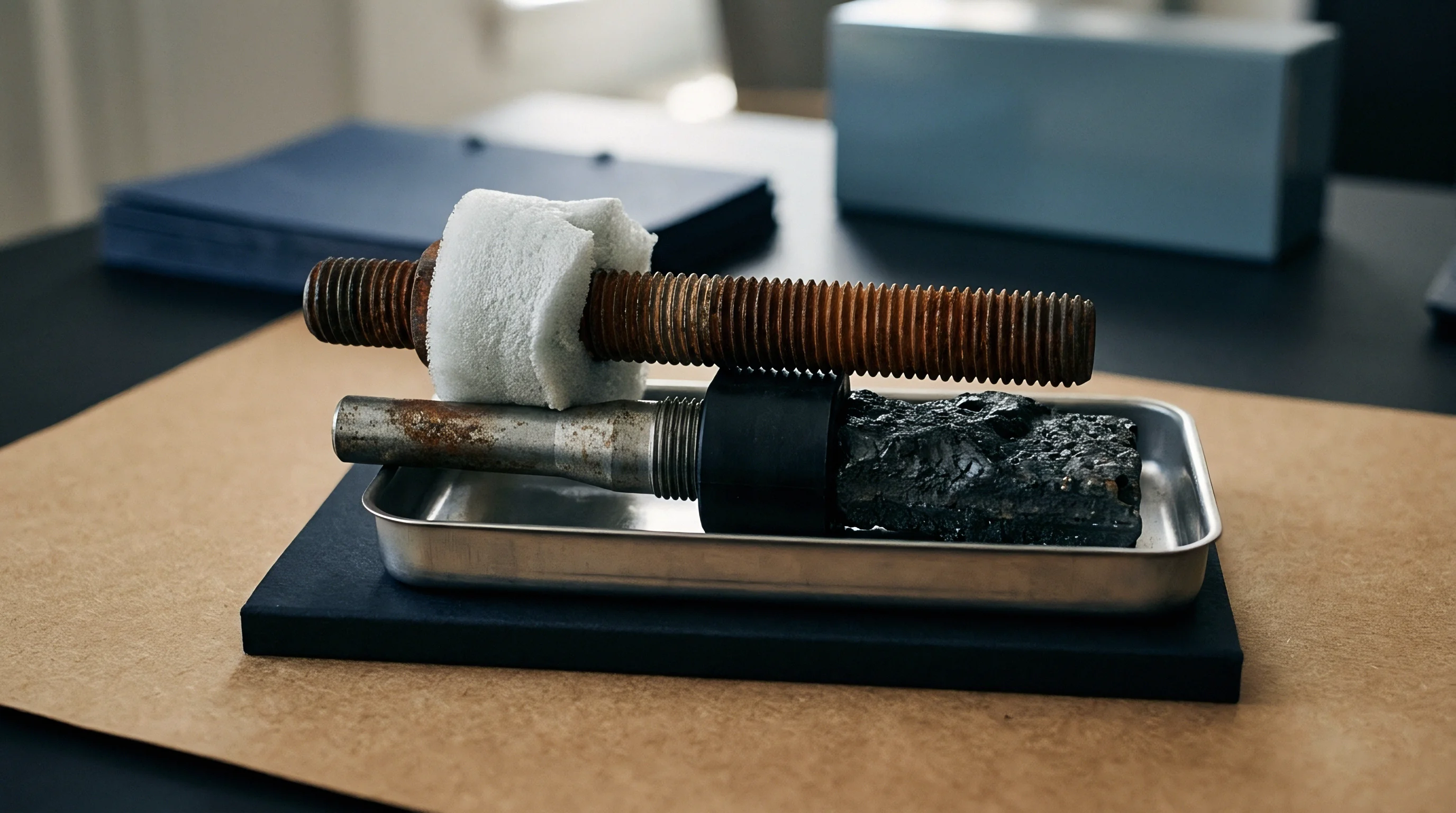
Forming collars, sealing bars, and creasing tools subject multi-layer barrier webs to concentrated lateral strain during pouch conversion. On horizontal and vertical form-fill-seal equipment, webs undergo sudden three-dimensional deformation across rigid metal tooling. Drawing across the compound curves of a forming shoulder stretches the film transversely to the point of necking, while contact with unheated seal bars can initiate micro-tears.
Localized Shear along Heated Sealing Tooling
Thermal contact softens the internal sealant layer while the outer carrier film remains under active web tension. When serrated sealing jaws strike a folded gusset or fin seal, pneumatic cylinders drive metal teeth into the structure, displacing molten sealant sideways from tooth crests into adjacent roots. This bulk movement drags embedded barrier plies across sharp tooth radii, imposing transverse shear on layers that remain solid.
Platen dies concentrate these transverse shear bands, and seal width governs final package hermeticity.
- Seal Bar Serration Pitch dictates the local transverse strain profile across the fin seal zone.
- Forming Shoulder Radius controls cross-web draw tension as flat laminates bend into cylindrical tubes.
- Anvil Clearance Setting determines whether scoring rules crush or cut the polyolefin barrier structure along fold lines.
- Pneumatic Clamp Pressure balances pouch immobilization against interfacial layer peeling during transverse gusset tucking.
Creasing Rules and Forming Collar Friction
Abrupt directional turns over curved steel generate localized cross-web bending moments. When high-speed formers draw wide barrier laminates over a collar, friction against the collar shoulders produces uneven lateral drag. The web centerline advances faster than the edges, setting up transverse shear across the entire sheet width.
Creasing tooling on box-pouch and stand-up pouch lines introduces similar mechanical hazards. Scoring rules compress outer polyethylene layers to create clean fold lines, displacing polyolefin sideways and forcing internal barrier plies over very tight bending radii. If score penetration exceeds sixty percent of total laminate caliper, transverse tensile stress along the outer fold axis fractures the barrier ply, creating pinholes that destroy barrier performance immediately.


Permeance
Gas barrier integrity collapses the moment micro-cracks penetrate the functional core. Oxygen and moisture vapor transmission follow steady-state Fickian diffusion only so long as barrier layers stay continuous and uniform. Once transverse deformation opens fractures, gas transport shifts from slow solubility-diffusion to rapid Knudsen diffusion and hydrodynamic flow through pinholes, an effect accelerated when higher line speeds amplify shear forces and ambient moisture plasticizes polar copolymer resins.
Geological fault mechanics show the same stress transfer pattern when ductile sedimentary rock drives brittle granite strata to shear under tectonic compression. Flexible web converting replicates these subsurface fracture dynamics on a micron scale: brittle inorganic layers shatter while the surrounding polyolefin skins stretch without visible blemish.
Compliance with ASTM F1927 establishes oxygen transmission thresholds that disqualify barrier laminates experiencing micro-fracture during transverse mechanical forming.
Microscopic Crack Onset in Inorganic Coatings
Vacuum-metallized aluminum and silicon oxide coatings fail at tensile strains below one percent. Physical vapor-deposited aluminum oxide relies on surface oxide bonds to adhere to polyolefin substrates. When transverse tension during converting surpasses zero point eight percent strain, the coherent oxide layer develops micro-cracks perpendicular to the draw direction that widen into channels under continued load.
Standard optical density checks miss these micron-scale fissures entirely because the outer polymer skins keep their gloss, even while gases pass through the open fractures unhindered.
Microscopic crazing across inorganic barrier coatings occurs well before visible whitening appears on the polyolefin carrier surface.
Barrier Transmission Rates after Mechanical Elongation
Laboratory measurements after transverse stretching reveal exponential increases in oxygen transmission. Biaxially oriented polyethylene with an aluminum oxide coating typically shows baseline oxygen transmission below one cubic centimeter per square meter per day. Stretching that laminate just two percent in the cross direction drives oxygen transmission up by two orders of magnitude.
- Conditioning Protocol Selection specifies pre-test equilibration at twenty-three degrees Celsius and fifty percent relative humidity under ASTM D618.
- Tensile Stage Mounting aligns specimen transverse orientation with crosshead travel to eliminate angular shear vectors.
- Strain Velocity Calibration fixes elongation rates at twelve point five millimeters per minute to replicate form-fill-seal speeds.
- Permeation Chamber Clamping seals deformed samples into diffusion cells without pinching boundary lines.
| Structure Description | Transverse Strain Level (%) | Initial OTR (cc/m2/day) | Post-Strain OTR (cc/m2/day) | Initial WVTR (g/m2/day) | Post-Strain WVTR (g/m2/day) |
|---|---|---|---|---|---|
| BOPE / AlOx / PE (65 µm) | 1.0% | 0.8 | 4.5 | 0.9 | 1.8 |
| BOPE / AlOx / PE (65 µm) | 2.5% | 0.8 | 85.0 | 0.9 | 12.4 |
| BOPP / Met Al / PP (55 µm) | 1.5% | 1.2 | 48.0 | 0.4 | 3.6 |
| PE / EVOH 32% / PE (75 µm) | 3.0% | 1.5 | 2.1 | 2.1 | 2.2 |
| PE / EVOH 32% / PE (75 µm) | 5.0% | 1.5 | 62.0 | 2.1 | 5.8 |
Converters evaluate post-forming barrier retention by pairing modified Gelbo flex protocols with coulometric sensors. Testing specimens cut straight from converted pouch gussets shows whether forming collar geometry or sealing jaw alignment caused localized failures. There is still little industry consensus on whether dynamic molecular orientation in modified tie resins can arrest micro-crack propagation at production line speeds.
Scrap
Barrier failures hit converting margins hard. When finished pouches fail oxygen transmission testing, the plant forfeits not just the raw film substrate, but invested press hours, lamination passes, and pouch-machine capacity. Scrap rates climb noticeably during winter startups: unheated production floors lower the impact resistance of ethylene vinyl alcohol, dropping the strain threshold where transverse fracturing begins.
Mono-Material Recyclability Thresholds and Layer Thickness
Circular packaging guidelines increasingly cap non-polyolefin barrier resins at five percent of total pouch weight, while European recycling protocols penalize constructions relying on mixed polymer families or aluminum foils. To hit these mono-material thresholds, laminators restrict ethylene vinyl alcohol layers to three microns or less. At that gauge, however, barrier strata fracture under far less transverse deformation than heavier plies can tolerate.
Dropping EVOH thickness from five microns to two microns cuts resin cost and satisfies recyclability rules, but it sharply narrows operating margins on high-speed lines. A two-micron barrier layer drawn to two percent transverse strain develops cohesive pinholes, whereas a thicker layer necks locally without breaking open. Brand owners are left balancing recyclability ratings against the risk of shelf-life failures.
| Barrier Architecture | Substrate Cost (EUR) | Converting Waste Rate (%) | Modulated EPR Fee (EUR) | Total Finished Cost (EUR) |
|---|---|---|---|---|
| PET / Al Foil / PE (Multi-Material Legacy) | 42.50 | 2.1% | 14.80 | 58.19 |
| PE / EVOH 5 µm / PE (Standard Barrier) | 38.20 | 3.8% | 8.20 | 47.85 |
| PE / EVOH 2 µm / PE (High Recyclability) | 35.40 | 7.4% | 3.10 | 41.12 |
| BOPE / AlOx / PE (Full Mono-Material) | 44.10 | 8.9% | 2.90 | 50.92 |
Cost Modeling across Converting and Extended Fees
Total package economics depend on a delicate balance between raw resin costs, converting scrap, and end-of-life packaging levies. Because modulated fees penalize non-polyolefin content, moving to a two-micron EVOH mono-material structure reduces extended producer responsibility levies per thousand units, but higher converting waste can wipe out those regulatory gains. When transverse web strain causes micro-cracking across seven percent of finished pouches, unsaleable inventory quickly erodes net margin.
Plants manage this exposure by tightening mechanical tooling tolerances before launching high-speed runs. Polishing forming shoulders, opening up creasing rule radii, and reducing bowed spreader angles all help limit transverse strain buildup. Under standard supply contracts with DIN 55350 incoming inspection clauses, converters absorb full financial liability for post-forming barrier loss as long as the incoming roll stock complied with tensile specifications.