Dynamic Triangulation Drift Mechanisms in Multi-Ply Recycled Boxboard High-Speed Line Converting
Dynamic triangulation drift in multi-ply recycled boxboard converting stems from surface roughness noise, hygroexpansion curl, and interlayer shear slip.

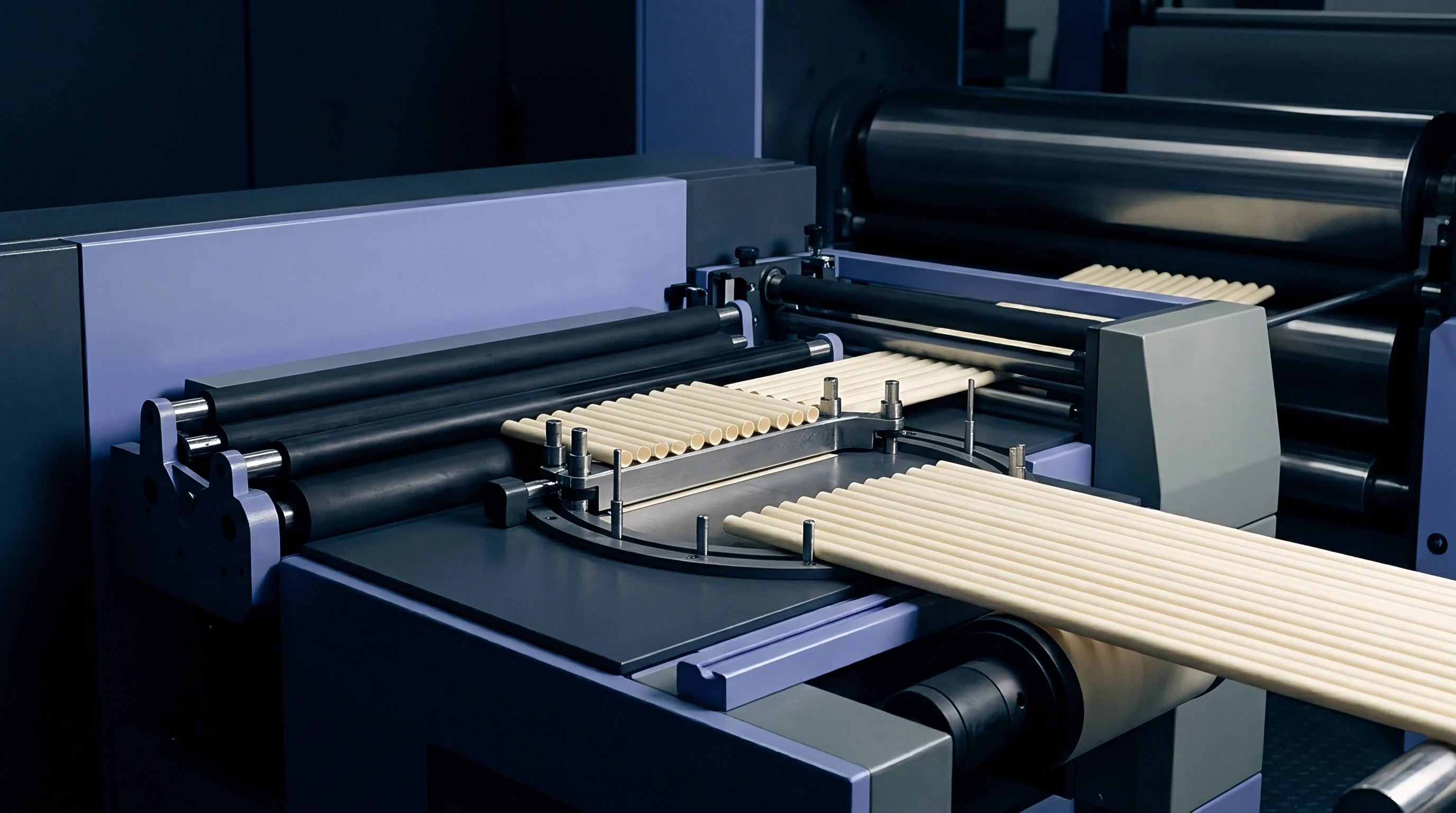
Vector
Triangulation Sensor Geometry on High Speed Webs
Position tracking on high-speed folding carton lines relies on non-contact optical triangulation sensors mounted upstream of die-cutting and creasing stations. Operating at line speeds between 250 and 400 metres per minute, these optical sensors project a laser spot onto the top liner of the moving web and map reflection angles back to a linear charge-coupled device array. Mechanical vibration, web oscillation, and surface roughness continuously perturb the laser spot path.
A displacement of 0.05 millimetres in distance from sensor head to sheet surface alters the calculated angle by 0.12 milliradians, producing positional output errors at the rotary die cutter.
Optical triangulation units measure target position by establishing an emitter-to-surface distance baseline. When processing multi-ply coated recycled boxboard, known commercially as GD2 or GT2, variations in top-liner thickness cause high-frequency signal noise. A laser diode emitting at 650 nanometres with a spot diameter of 80 micrometres captures microscopic surface changes as structural registration drift.
The signal processing module interprets surface topographies as physical web displacement. The converting line system makes rapid, unneeded register adjustments to correct errors that exist only in optical readings.
| Substrate Grade | Top Liner Composition | Laser Spot Diameter (µm) | Sampling Frequency (kHz) | Position Drift Noise (mm) |
|---|---|---|---|---|
| GD2 Recycled Chipboard | Coated Waste Paper | 80 | 20 | 0.082 |
| GT2 White Lined Chip | Coated De-inked Pulp | 50 | 40 | 0.045 |
| CRB Uncoated Recycled | Mechanical Waste Ply | 100 | 10 | 0.115 |
| SUB Solid Unbleached | Virgin Unbleached Kraft | 40 | 50 | 0.018 |
| Test condition: ISO 187 standard atmosphere (23°C, 50% RH). Line speed fixed at 300 m/min under 200 N/m web tension. | ||||
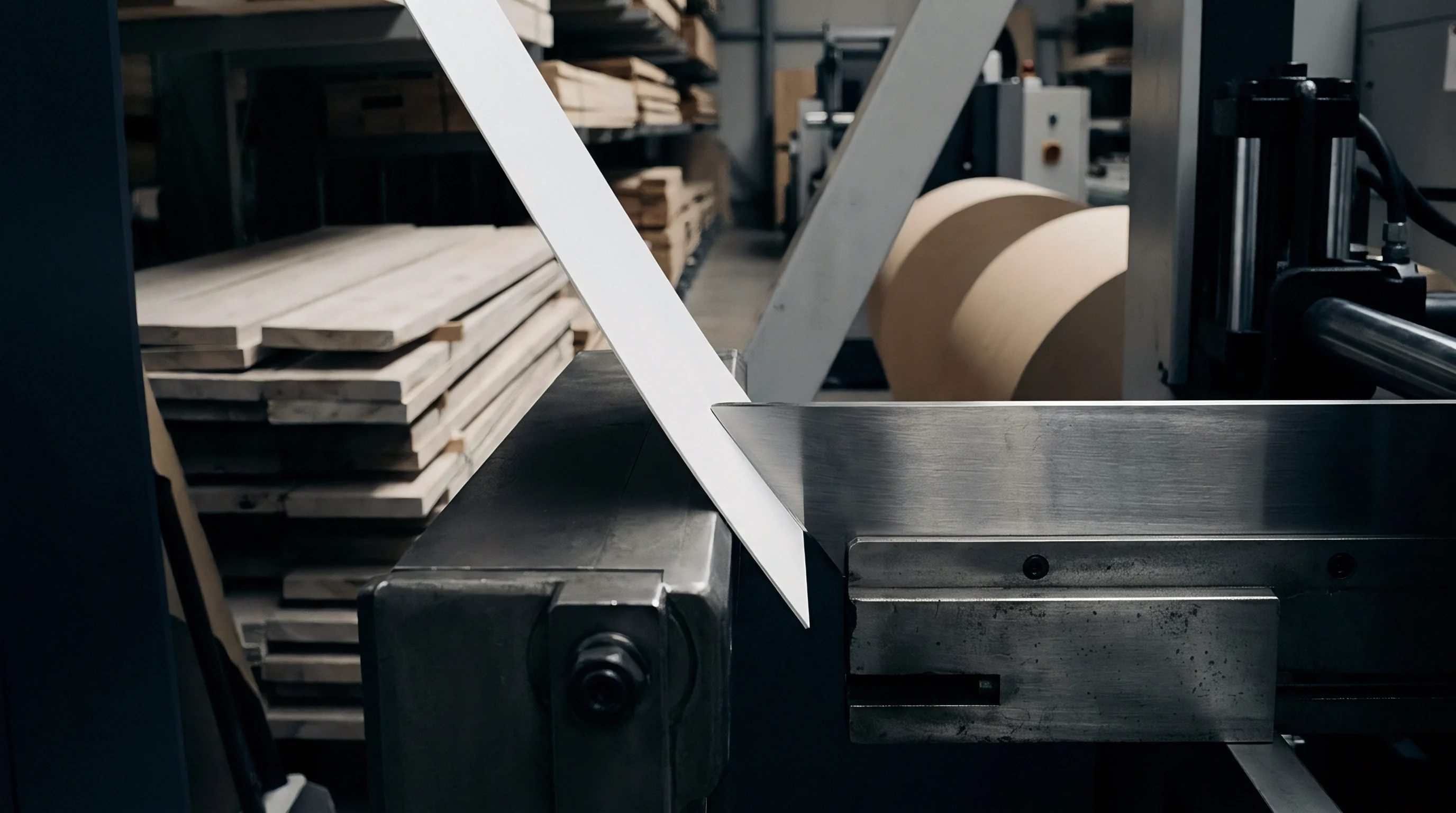
Optical sensors misread diffuse surface reflection. Higher spatial frequency roughness on recycled chipboard scattering light away from the receiver array triggers fake displacement readings. When light scatters across degraded top plies, signal processing algorithms fail to isolate true edge positions.
Surface Topography Noise in Recycled Fiber Layers
Fiber composition across multi-ply recycled substrates lacks the structural consistency found in virgin solid bleached sulfate boards. Top plies made from recovered office paper or mixed waste streams exhibit variations in pore distribution, coating pick rate, and fiber bundle density. A high concentration of groundwood shives or un-defibered paper specs alters local surface reflectance by up to 18 percent under blue laser illumination.
Top liner speckle disrupts optical feedback. These short-interval changes in surface absorption cause baseline sensor signal wandering. Digital filtering circuits inside high-speed registration system controllers damp this noise by averaging signals over sequential clock cycles.
Averaging raw data introduces time delays into positional correction loops. At a web speed of 350 metres per minute, a 5-millisecond filtering lag moves board stock 29.1 millimetres past the sensor head before the actuator adjusts die position, creating registration errors on finished packaging blanks.
Equipment manufacturers claim that surface roughness variation stays within acceptable noise thresholds for standard sensor arrays during high-speed production runs.


Swell
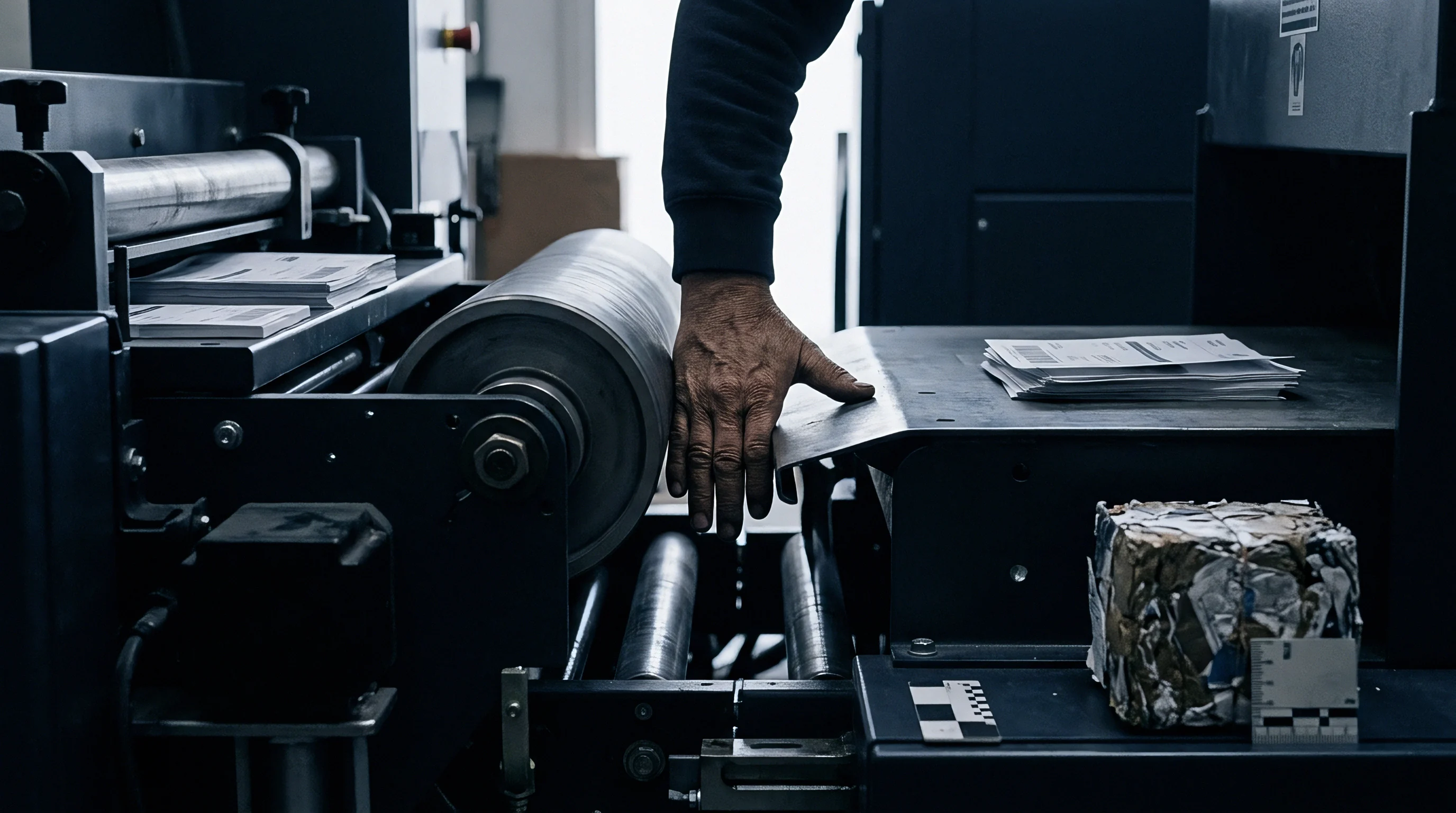
Hygroexpansion Gradients in Multi Ply Recycled Furnish
Dimensional instability in recycled boxboard stems from moisture-driven structural expansion across individual paperboard plies. Multi-ply GD2 chipboard incorporates distinct fiber furnishes: a coated top ply of de-inked pulp, mechanical waste filler plies, and an unprinted gray back ply. Each ply absorbs ambient moisture at different rates depending on refined fiber length, starch loading, and internal hydrophobic sizing levels.
Standard Cobb 60 water absorption tests reveal that uncoated back plies absorb up to 110 grams of water per square metre, whereas clay-coated top plies take in fewer than 25 grams per square metre under identical relative humidity exposures.
A 0.5 percent change in relative humidity at 23 degrees Celsius shifts cross-machine board dimension by 0.18 millimetres across a 1000 millimetre web width.
Moisture absorption changes paperboard dimensions fast. Machine direction stiffness resists cross expansion. Fibers expand three to six times more in diameter than in length when taking on water.
Because paper machine wire section dynamics align fibers predominantly along the machine direction, dimensional expansion occurs primarily across the machine direction web. As ambient humidity shifts inside converting plants, asymmetric ply absorption alters web geometry, producing cross-machine directional curvature known as board curl.
- Linerboard Clay Fill Dispersion Flaws introduce uneven moisture barrier zones, causing localized sheet expansion variances during web transport.
- Interlayer Voids Under Mechanical Compression store free ambient moisture, accelerating transverse swelling during high-speed unwinding operations.
- Localised Thickness Variation across Web Edges creates variable cross-machine tension profiles, resulting in differential mechanical strain accumulation.
- Unsymmetric Moisture Sorption in Waste Backs induces rapid sheet cupping, throwing off laser displacement measuring sensors.

Z Directional Cross Sectional Moisture Differential
Plies within a multi-ply boxboard structure transfer water vapor through pore networks via capillary action and vapor diffusion. When parent reels move from cold storage directly to high-speed converting halls, temperature gradients across the board profile generate interior moisture transfers. The unprinted back ply reaches thermal and moisture balance with room air faster than interior filler plies, creating a moisture differential across the sheet thickness.
Internal moisture gradients create uneven cross-sectional strain. As the back ply expands while interior plies remain dry and rigid, internal shear stress accumulates between plies. Optical triangulation sensors measuring web edge coordinates track physical path deviations resulting from this localized warping.
Converting plants without automated atmospheric controls risk registration errors exceeding 0.40 millimetres across die-cutting blanks when using unconditioned stock, causing cut-to-crease misalignment and glue-flaps landing out of specification.
Tension
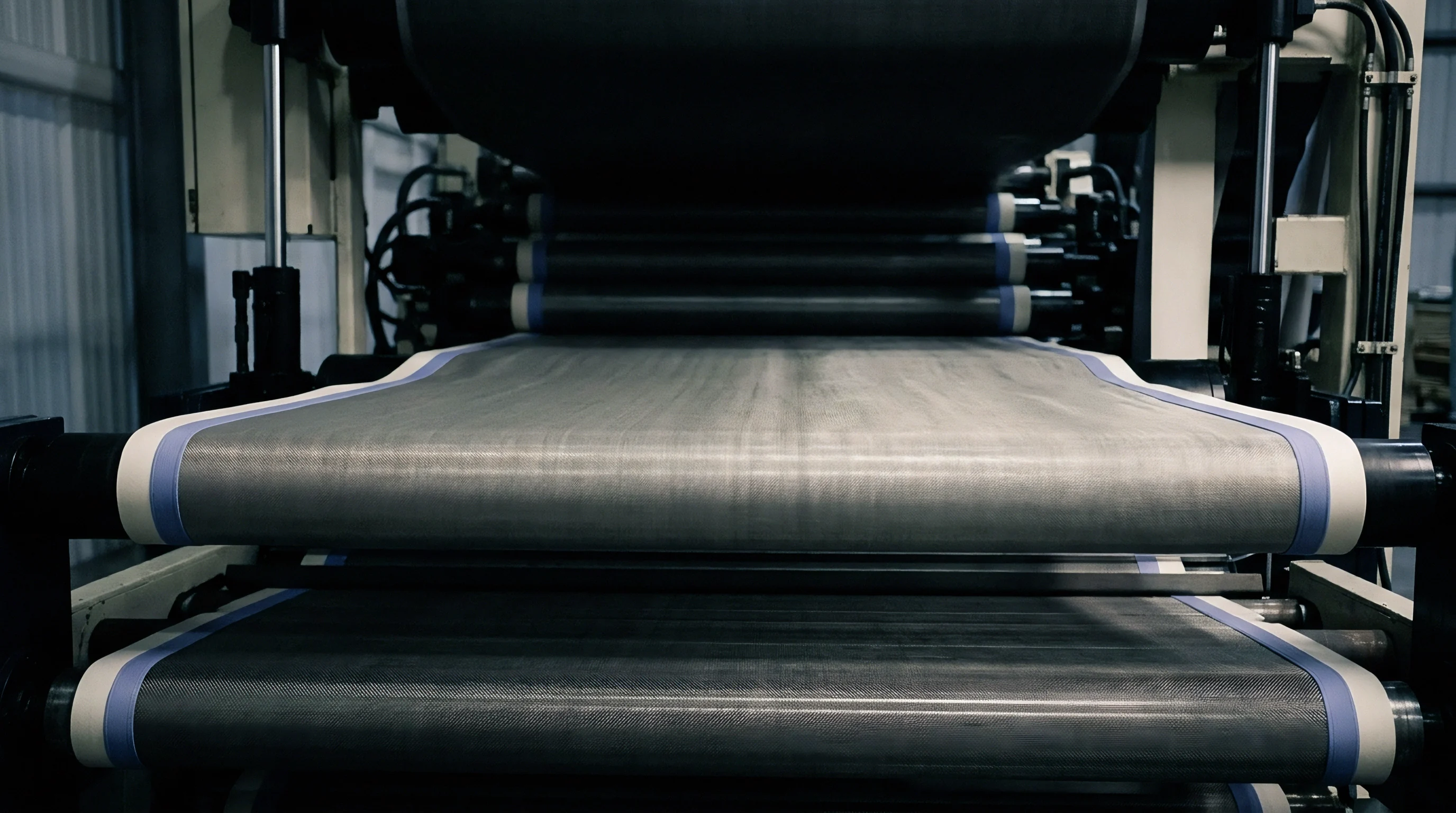
Viscoelastic Creep and Web Strain Propagation
Paperboard exhibits viscoelastic material behavior when subjected to mechanical loading along high-speed converting lines. Tension control systems apply continuous longitudinal force to stabilize the moving web through impression rollers, printing units, and matrix creasing stations. Under continuous web tension of 180 to 250 Newtons per metre, recycled fiber networks undergo immediate elastic deformation followed by time-dependent viscous flow, known as mechanical creep strain.
Unconditioned board expands inside the converting hall. Tensile forces stretch short, highly recycled fibers beyond elastic recovery limits. The machine-direction modulus of elasticity for GD2 boxboard ranges between 4.2 and 5.8 Gigapascals under standard conditions, but drops by 22 percent when board moisture content rises from 6.5 to 8.5 percent.
Strain propagation along the converting web shifts printed register marks relative to physical creasing tools, altering blank dimensions.
Asymmetric ply tension across multi-ply board structures creates permanent curl when web tension drops at the blanking station.
Tension spikes tear weak recycled fibers. Machine operators often increase web tension to flatten curved sheets before entry into rotary die-cutters. High longitudinal strain stretches the web unevenly across its width due to thickness variations across the roll.
Non-uniform elongation changes positional relationships between registered printed graphics and mechanical die-cutting knives.
Why Does Interlayer Shear Accelerate Optical Triangulation Error?
Viscoelastic deformation creates unrecoverable web strain. When multi-ply board passes over web guide rolls, outer plies experience tension while inner plies undergo compression. Differential stress across plies induces microscopic interlayer shear slip along starch bonding planes.
Lower Scott Bond values in recycled filler plies reduce shear resistance, letting plies slide past one another under lower bending stresses.
Internal bond strength drops when tension spikes. Interlayer shear displacement alters the cross-sectional geometry of the boxboard sheet before it enters optical measurement zones. As top plies shift laterally relative to lower plies, surface-mounted optical triangulation sensors read false register mark coordinates.
Triangulation algorithms assume a rigid cross-sectional sheet geometry; when internal plies slip, the sensor interprets surface shear displacement as linear web translation. The control system applies improper register corrections, compounding overall alignment drift.
Consider a 450 micrometre GD2 recycled boxboard running through a rotary blanking unit at 320 metres per minute under a nominal web tension of 220 Newtons per metre. Assume the machine-direction elastic modulus drops from 5.1 Gigapascals at the drive roller to 4.3 Gigapascals at the creasing nip due to localized moisture absorption and tension spikes. Over a 12-metre draw span between the unwinder and die station, this modulus drop increases web elongation from 0.43 millimetres per metre to 0.51 millimetres per metre.
Across the 12-metre span, total elongation increases by 0.96 millimetres. If the optical triangulation sensor array samples web position at a fixed location 1.5 metres ahead of the blanking cylinder without dynamic strain compensation, the laser system fails to catch 0.12 millimetres of viscoelastic creep occurring within the final free span. Consequently, die impressions land 0.12 millimetres off target, exceeding tight carton folding tolerances.
Maintaining uniform web tension requires balancing draw speeds across drive stations, as setting nip pressures too high damages recycled fiber bonds in the central filler plies.

Shear

Delamination and Ply Slip at Creasing Dies
Creasing operations subject multi-ply boxboard to rapid transverse shear forces that break internal fiber bonds along intended fold lines. Male crease rules force the board substrate into female matrix channels, causing controlled internal delamination within central filler plies. This intentional damage lowers bending stiffness, allowing clean packaging folds without tearing the outer coated liner.
When web alignment shifts before die entry, creasing rules strike off-center relative to female matrix channels.
Die blades strike off target line. Off-center die impacts apply unequal shear forces to left and right crease walls. One side of the board undergoes excess compression while the opposite side experiences tensile failure, causing lateral sheet tracking drift during matrix extraction.
Displaced board stock twists as it exits the creasing nip, altering path geometry into downstream blanking dies.
| Boxboard Grade | Nominal Caliper (µm) | Scott Bond Energy (J/m²) | Bending Stiffness MD (mNm) | Crease Registration Drift (mm) |
|---|---|---|---|---|
| GD2 Recycled Chip | 400 | 115 | 18.5 | 0.22 |
| GT2 White Lined Chip | 400 | 140 | 21.0 | 0.14 |
| CRB Uncoated Recycled | 450 | 95 | 16.2 | 0.31 |
| FBB Folding Boxboard | 400 | 190 | 28.5 | 0.06 |
Delamination causes score alignment failure. Substrates with lower Scott Bond energy delaminate under lower creasing loads, increasing vulnerability to structural distortion. When internal shear strength falls below 100 Joules per square metre, creasing rules crush recycled filler layers rather than producing clean delamination planes.
Crushed filler plies expand laterally inside matrix channels, shifting the sheet sideways relative to sensor positions.
Rotary Blanking Alignment under Variable Strain
High converting speeds amplify position errors. Rotary blanking units use precise knife-to-anvil clearance to cut individual folding carton blanks out of continuous webs. Variable longitudinal strain changes blank length, while transverse web drift causes side-register misalignments.
When creasing forces cause local shear distortions, optical sensor arrays tracking print-to-cut registration misread guide marks.
- Scott Bond Energy Threshold Verification ensures the substrate withstands die impact stresses without premature ply separation.
- In-Line Laser Sensor Beam Calibration Range compensates for surface height variations during web transport.
- Score Matrix Depth Alignment Protocol balances mechanical shear distribution across the creasing channel width.
- Web Moisture Equilibrium Standard Verification stabilizes internal viscoelastic responses before sheet conversion starts.
Rotary die cutting systems rely on constant web tension to hold sheets flat against die cylinders. Localized variations in fiber density cause uneven strain accumulation across the web profile. As high-density areas resist stretch while low-density regions elongate, individual carton blanks distort along non-linear paths through cutting stations.
How does variable fiber orientation across secondary furnish plies alter dynamic lateral shear resistance during continuous high-speed rotary die blanking?
Metrics

In Line Measurement Calibration and Signal Filtering
Standardizing optical triangulation sensors on high-speed converting lines requires systematic calibration routines that adjust for substrate reflectivity, caliper changes, and line velocity. Raw position signals contain low-frequency noise from machine frame vibration alongside high-frequency noise from surface roughness. Bandpass digital filters separate physical web drift signals from surface noise inputs.
- Position the optical sensor head 150 millimetres upstream of the rotary die cutter beam.
- Zero the laser triangulator using an optical reference block conditioned to ISO 187 standards.
- Set the sensor sampling frequency to 50 kilohertz to match web line speeds exceeding 300 metres per minute.
- Record raw distance readings across 5000 consecutive sheet blank cycles.
- Filter surface topography noise from top liner speckle using a digital bandpass filter set to 500 hertz.
Uncalibrated lasers generate false edge signals. High-resolution laser triangulators require recalibration whenever changing substrate grades on high-speed lines. Switching from clay-coated GT2 boxboard to uncoated recycled chipboard alters surface reflection characteristics, shifting sensor voltage outputs.
Without baseline re-zeroing, edge-detection algorithms misinterpret gain variations as physical position shifts, introducing systematic offset errors into register correction loops.
Compliance with ISO 187 atmospheric conditioning during testing prevents dispute over moisture-induced dimensional tolerances.
Laser triangulation sensors calculate sheet distance by focusing scattered light onto detector arrays. Recycled board surfaces scatter light diffusely, broadening reflected beam spots across multiple detector pixels. Weighted center-of-gravity algorithms determine the primary signal peak within the pixel array.
As surface roughness varies across recycled sheets, signal peak positions drift across pixel groups, producing false displacement readings up to 0.06 millimetres.
Recycled boxboard surfaces scatter focused laser beams more diffusely than virgin bleached sulfate sheets.
Standardized Inspection Protocols for Recycled Board
Physical measurement protocols for multi-ply boxboard must account for test atmospheric conditions and substrate history. Standard laboratory evaluation requires sample conditioning at 23 degrees Celsius and 50 percent relative humidity per ISO 187 criteria for at least 24 hours. Mill certificate figures produced in unconditioned environments miss hygroexpansion behavior observed during production runs.
Register drift increases scrap unit cost. Laboratory measurements using benchtop micrometers apply static contact pressures of 100 Kilopascals per ISO 534 specifications, which compress soft recycled board plies. Dynamic line measurements using non-contact optical triangulation measure uncompressed sheet caliper.
The difference between static laboratory thickness readings and dynamic web caliper profiles creates systematic calibration offsets in optical registration equipment.
Standard packaging procurement contracts specify that registration drift must remain within a plus or minus 0.25 millimetre tolerance window under ISO 187 standard conditioning environments.

Settlement

Commercial Tolerance Limits for Converter Yield
Registration drift directly impacts operational yield, waste rates, and landed packaging costs in high-speed converting plants. When registration errors exceed 0.30 millimetres, die-cut blank edges cut into printed graphics or score lines miss intended fold paths. Out-of-specification cartons jam automated high-speed cartoning machines at customer packaging lines, leading to rejected deliveries and commercial downtime claims.
Consider a 50-tonne packaging production run producing 500,000 finished cartons from 420 micrometre GD2 recycled boxboard valued at 1,150 Euros per tonne. Operating at 350 metres per minute, an uncompensated registration drift of 0.35 millimetres forces the die-cutter operator to slow line speed to 220 metres per minute to stabilize optical tracking. Line speed reduction drops output from 21,000 blanks per hour to 13,200 blanks per hour, increasing hourly conversion costs by 37 percent.
Uncompensated registration drift causes die-cutting off-register faults that force the sorting system to reject 3.8 percent of produced blanks. Scrap generation rises from a baseline of 1.2 percent to 5.0 percent, destroying 1,900 Euros worth of usable board stock while creating 28 production hours of lost capacity across the run.
| Operational Metric | Standard Alignment (< 0.20 mm Drift) | Uncompensated Drift (> 0.35 mm) | Net Commercial Variance |
|---|---|---|---|
| Converting Line Speed | 350 m/min | 220 m/min | – 37.1 % Output Efficiency |
| Die-Cutting Scrap Rate | 1.2 % | 5.0 % | + 3.8 % Material Loss |
| Total Usable Cartons Produced | 494,000 units | 475,000 units | – 19,000 Defective Units |
| Substrate Waste Cost | 690 EUR | 2,875 EUR | + 2,185 EUR Net Direct Cost |
| Net Conversion Cost per 1k Cartons | 28.50 EUR | 39.20 EUR | + 37.5 % Unit Production Cost |
Substrate substitution affects conversion stability. Swapping higher-grade solid bleached sulphate board for lower-cost recycled chipboard cuts material procurement expenses by 18 to 24 percent per tonne. However, unmanaged hygroexpansion and surface roughness increase internal scrap rates and line stoppages, eroding initial paperboard purchasing savings.
Net yield arithmetic determines whether lower substrate prices deliver actual cost reductions on finished packaging pallets.

RFQ Specification Clauses for Board Registration Drift
Procurement documents for multi-ply recycled boxboard must mandate explicit physical performance parameters alongside standard grammage and caliper criteria. Buying specifications that state only nominal basis weight leave buyers vulnerable to high scrap rates during line speed escalations. Supply agreements must explicitly define cross-machine direction hygroexpansion limits, Scott Bond energy ranges, and top-liner optical surface smoothness parameters.
Technical purchase orders state maximum allowable hygroexpansion coefficients under dynamic relative humidity changes between 45 and 65 percent. Including strict mill certificate verification clauses allows buyers to reject board lots that exceed dimensional variance limits before stock lands on converting floors. Adding automated optical triangulation registration logging into goods-in qualification protocols provides verifiable tracking data when settling commercial supplier disputes.
Delivery contracts state that board shipments exhibiting cross-machine hygroexpansion exceeding 0.15 percent under a 15 percent relative humidity shift trigger mill credit adjustments to cover converter scrap expenses.