Fluid Absorption Dynamics in Recycled Linerboard Sizing and Converting Workflows
Dynamic fluid absorption in recycled linerboard relies on balancing pore tortuosity and internal sizing to stabilize adhesive setting and print ink drying.
Porosity
Capillary Network Architecture in High-Yield Recycled Stock
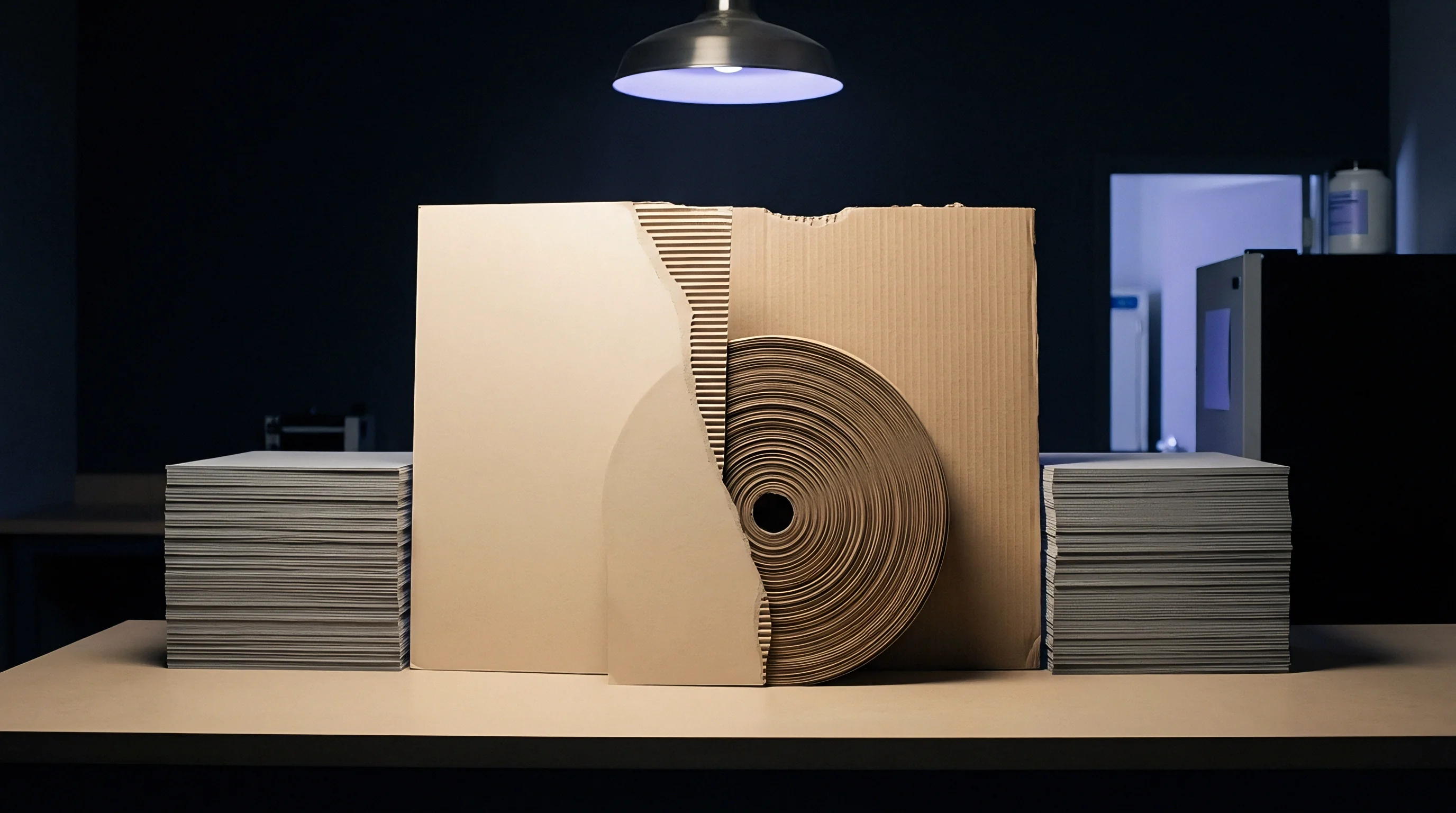
Recycled linerboard originates from recovered corrugated containers that undergo repeated repulping, refining, and drying cycles. These thermal and mechanical treatments induce irreversible pore collapse within the cell walls of secondary softwood and hardwood fibers. Hornification reduces the internal swelling capacity of the cell wall while simultaneously altering the inter-fiber pore geometry during sheet formation on the Fourdrinier or multi-ply former web.
In a virgin kraft sheet, fluid migration proceeds primarily through uniform capillary channels bounded by flexible, hydrated fibers. In contrast, 100 percent recycled linerboard contains a heterogeneous distribution of shortened fibers, fine fragments, and mineral fillers such as calcium carbonate. This structural complexity changes liquid transport from steady capillary rise to tortuous, localized imbibition.
Pore radius distribution governs the initial liquid intake rate. The Lucas-Washburn dynamic model describes fluid penetration distance as a function of capillary radius, surface tension, contact angle, fluid viscosity, and contact time. In recycled linerboard sheets, the pore network exhibits a bimodal pore size distribution.
Large inter-fiber voids measuring between 5 and 15 micrometers drive rapid initial fluid uptake, while micro-pores below 1 micrometer retain fluid through strong capillary forces. When water or water-based converting adhesives contact the sheet surface, the initial penetration phase occurs within milliseconds. The pore volume fraction directly dictates total fluid capacity, whereas pore tortuosity determines the rate at which the liquid front advances into the substrate interior.
Water absorptiveness measured by the Cobb 60 test on 175 gsm recycled linerboard conditioned at 23 C and 50 percent relative humidity yields a target value of 32 grams per square metre under ISO 535.
Fibre orientation across the paper machine web creates directional absorption anisotropy. Fiber alignment along the machine direction aligns capillary channels parallel to the sheet plane, accelerating lateral fluid spreading. Cross-direction liquid travel encounters higher geometric resistance due to fiber alignment perpendicular to the flow vector.
Machine-direction to cross-direction absorbency ratios routinely range from 1.3 to 1.8 depending on jet-to-wire speed differentials during sheet formation. High jet-to-wire speed variance increases fiber orientation along the machine axis, which amplifies lateral fluid diffusion while reducing vertical Z-direction penetration depth. Sourcing engineers quantify this spatial variance to ensure uniform adhesive set times during high-speed corrugating and laminating operations.
Filler content further complicates the capillary profile of secondary fibers. De-inked and post-consumer recycled stocks accumulate finely divided calcium carbonate particles ranging from 1 to 3 micrometers in diameter. These inorganic particles lodge within inter-fiber voids, creating secondary micro-capillary networks.
Higher mineral loading increases total void surface area while reducing mean pore size. Consequently, high-ash recycled linerboard exhibits a higher initial rate of surface wetting alongside slower long-term Z-direction liquid penetration. The balance between organic fiber swelling and inorganic filler capillary attraction establishes the baseline liquid absorbency profile before chemical sizing agents enter the furnish.
| Grade Description | Basis Weight (gsm) | Apparent Density (g/cm³) | Bendtsen Porosity (ml/min) | Cobb 60 Absorption (g/m²) |
|---|---|---|---|---|
| 100% Post-Consumer Recycled Liner | 140 | 0.64 | 450 | 38.5 |
| High-Performance Recycled Liner | 175 | 0.68 | 310 | 31.0 |
| Dual-Arch Test Linerboard | 200 | 0.71 | 220 | 27.5 |
| Surface-Sized Recycled Medium | 120 | 0.59 | 680 | 44.0 |
How far the internal void structure continues to collapse during high-speed nip compression remains unmeasured during standard atmospheric laboratory testing.

Chemistry
Internal Sizing Mechanisms and Surface Hydrophobization
Internal sizing agents control liquid penetration rates by modifying the surface energy of recycled wood fibers. Alkyl ketene dimer and alkenyl succinic anhydride represent the primary synthetic sizing chemicals applied in neutral or alkaline papermaking systems. Alkyl ketene dimer forms covalent ester linkages with hydroxyl groups on cellulose molecules during the drying section of the paper machine.
Alkenyl succinic anhydride reacts rapidly with fiber surfaces in the wet end, establishing hydrophobic aliphatic tails that project into the inter-fiber pore spaces. Recycled furnish contains residual surface-active contaminants, pitch, and dissolved organic solids that consume sizing molecules or block active cellulose binding sites. Chemical addition rates must compensate for these interferences to achieve stable water resistance specifications.
Starch application at the size press alters both chemical resistance and mechanical pore closure. Oxidized or hydroxylated corn starch applied at wet-end surface sizing stations fills large surface pores, creating a dense film upon drying. This film acts as a mechanical barrier to high-viscosity liquids while modulating the absorption rate of low-viscosity aqueous solutions.
Sizing performance relies on uniform starch pick-up across the paper web. Uneven starch distribution leaves microscopic void pathways, allowing local fluid strike-through during converting. Measuring hydrophobic stability requires tracking contact angle decay over time using dynamic optical tensiometry under controlled atmospheric conditions.
Internal sizing performance degrades when residual wet-end surfactants exceed chemical neutralization thresholds during stock preparation.
Surfactants and residual de-inking agents alter liquid surface tension at the fiber interface. Lower liquid surface tension reduces the contact angle between the aqueous phase and the sized cellulose wall. A contact angle below 90 degrees initiates spontaneous capillary suction into the sheet pores under the Young-Laplace relation.
Synthetic sizing agents increase the thermodynamic contact angle above 90 degrees, converting capillary suction into capillary depression. However, post-consumer recycled pulp streams frequently contain residual printing inks, wetting agents, and process defoamers. These amphiphilic contaminants migrate to the liquid-solid interface, lowering water surface tension from 72 mN/m toward 45 mN/m and accelerating fluid ingress despite adequate sizing chemical dosage.
| Sizing Chemistry | Addition Rate (kg/t) | Surface Energy (mN/m) | Contact Angle at 0.1s (degrees) | Cobb 180 Value (g/m²) |
|---|---|---|---|---|
| Alkyl Ketene Dimer (AKD) | 1.5 | 34.2 | 102 | 42.0 |
| Alkenyl Succinic Anhydride (ASA) | 2.0 | 31.8 | 108 | 36.5 |
| Rosin Size + Alum (Acidic) | 4.0 | 38.5 | 94 | 51.0 |
| AKD + Surface Starch Film | 1.2 + 25.0 | 28.4 | 115 | 26.0 |
Chemical sizing formulations must balance water resistance against adhesive bonding speed on converting equipment.
- Surfactant Carryover Instability occurs when unwashed post-consumer pulp releases residual wetting agents into the wet-end stock circuit, depressing contact angles and driving Cobb values above targeted contract specifications.
- Alkyl Ketene Dimer Hydrolysis develops when emulsion storage temperatures exceed 25 C or stock pH shifts above 8.2, generating non-reactive ketone side products that reduce hydrophobic efficiency.
- Size Press Starch Reticulation Failure arises when high surface application temperatures prevent continuous film formation, creating pinhole channels that permit fluid migration into the core plies.
- Charge Inversion Flocculation happens when excess cationic sizing polymers neutralize anionic trash in secondary fiber loops, causing premature chemical precipitation before fiber adsorption occurs.
A simple rule of thumb holds that double the internal sizing dosage never compensates for poor size press starch film continuity.
Steam
Thermal Moisture Dynamics on Corrugating Lines
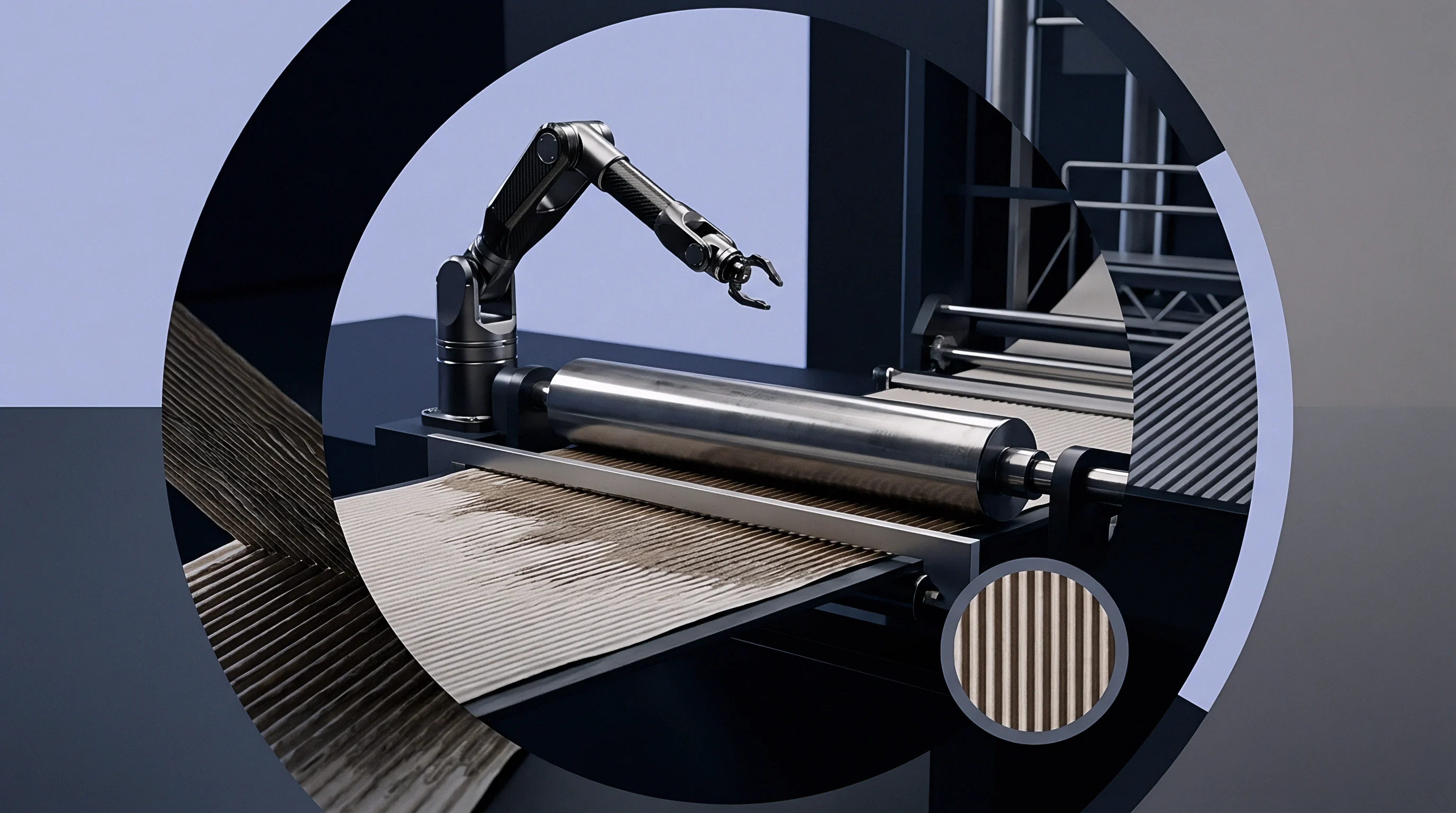
Corrugating machinery subjects recycled linerboard to intense thermal and hydric stress during combined board manufacture. Preheating rolls operating at temperatures between 150 C and 180 C vaporize moisture held within the fiber lumen and cell wall. Steam showers inject saturated water vapor into the linerboard structure immediately before the web enters the single-facer or double-facer pressure nips.
This rapid influx of heat and moisture temporarily disrupts the hydrophobic orientation of synthetic sizing molecules. Thermal expansion opens closed pore channels, allowing vapor and liquid condensation to penetrate deeper into the substrate core ply. Sizing levels that perform adequately at room temperature frequently soften under thermal processing, altering subsequent liquid absorption rates.
Gelatinization of corrugating adhesives requires precise fluid absorption dynamics at the paper surface. Starch-based corrugating adhesives consist of uncooked starch granules suspended in a cooked carrier starch matrix. When applied to the fluted medium tips, the adhesive must release water into the linerboard sheet at a controlled rate.
Rapid water loss into an unsized, highly porous recycled liner starves the adhesive bond line before starch granules reach their gelatinization temperature of 62 C to 66 C. This liquid exhaustion yields a brittle, poorly bonded joint known as a dry bond failure. Excessive sizing water resistance prevents liquid transfer, leaving excess water at the glue line and causing slow setting speeds or soft corrugated board upon discharge from the double-facer belt.
- Excessive preheater drum wrap angle elevates web surface temperature above 95 C, driving bound moisture out of the outer ply and collapsing fiber hydrogen bonds.
- High web temperature forces synthetic sizing waxes to migrate away from surface fibers, exposing raw cellulose sites to rapid liquid absorption during glue application.
- Application of cold adhesive onto over-dried board drops the interface temperature below the critical gelatinization point of 62 C.
- Inadequate capillary absorption leaves liquid water suspended at the adhesive interface, causing flute roll slippage and delamination under downstream shearing stresses.
Failure to regulate preheater steam pressures directly causes blistered board, warped sheets, and delaminated score lines across high-speed packaging runs.


Glue
Adhesive Penetration Kinetics and Interface Formation
Adhesive setting on recycled linerboard surfaces depends on viscous flow into capillary pores driven by external pressure and dynamic wicking. Polyvinyl acetate and cold-set emulsion glues rely on water loss to build green strength and reach final cure. When cold-set adhesive lands on a recycled linerboard surface, the fluid phase splits into two paths: Z-direction penetration into the paper matrix and lateral spreading along surface fibers.
The absorption rate governs setting speed. High Cobb values permit rapid water evacuation from the emulsion, initiating rapid polymer coalescence. Low Cobb values prolong open assembly times, requiring longer compression section lengths on folder-gluers.

How Does High Cobb Value Impact Water Gelatinization?
High Cobb values indicate a sheet with low fluid resistance, which rapidly drains water out of aqueous adhesive formulations. When water drains too fast, starch or polymer components fail to hydrate completely. The adhesive solids concentration spikes prematurely at the interface, forming a weak interfacial layer.
This condition starves the subterranean fiber network of polymer anchoring roots, leading to fiber-free bond separation under impact testing. Proper adhesive joint formation demands a balanced absorption rate where liquid penetrates to a depth of 15 to 30 percent of total sheet thickness, mechanical keying without structural depletion of the glue line layer.
Standard mill specifications mandate a Cobb 180 value between 28 and 36 grams per square metre to maintain consistent adhesive setting speeds on automated converting lines under FEFCO Testing Method No. 7.
Water-based flexographic inks exhibit absorption mechanics comparable to cold-set adhesives. Flexo inks contain pigments, resins, amines, and water carriers applied at wet film thicknesses ranging from 2 to 6 micrometers. Rapid absorption of the liquid vehicle prevents ink pigment bleeding and accelerates drying before sheets enter stacking stations.
Excessively absorbent recycled linerboard draws ink binder deep into the core, leaving un-bound pigment particles on the surface. This phenomenon, termed ink chalking, reduces rub resistance under ASTM D5264 testing. Saturated surface fibers also swell, increasing post-print surface roughness and reducing gloss values on high-graphics micro-flute packaging.
- Liquid Viscosity Control requires maintaining adhesive solids content between 24 and 28 percent to prevent deep strike-through on high-porosity recycled stocks.
- Compression Section Dwell Time must adjust dynamically based on sheet Cobb 60 absorbency metrics to prevent premature bond separation at discharge.
- Flexographic Ink pH Stability depends on maintaining volatile amine concentrations to control resin solubility as water absorbs into the substrate.
- Surface Energy Alignment mandates matching adhesive surface tension to board surface energy to guarantee complete wetting prior to absorption.
Suppliers routinely assert that variation in adhesive setting speed stems entirely from operator glue-lap pressure adjustments rather than fluctuating sheet absorption dynamics across delivered paper pallets.


Score

Mechanical Strain and Micro-Fissure Fluid Transport
Scoring and creasing operations deform recycled linerboard webs to form mechanical hinge lines for box folding. During male-to-female score wheel engagement, the outer linerboard ply undergoes tensile elongation while the inner ply experiences compressive deformation. Recycled fibers possess lower individual tensile strength and elongation-to-break values than virgin kraft fibers due to hornification and structural shortening.
Tensile stresses routinely exceed the strain limit of secondary fiber bonds, generating micro-fissures along the score line crease. These mechanical micro-fractures sever hydrophobic surface sizing layers and open raw, un-sized fiber surfaces within the interior sheet structure.
Micro-fissures radically accelerate localized fluid absorption along score lines. When printed or glued box blanks pass through humid storage environments or encounter cold-chain condensation, liquid water enters the exposed micro-cracks via low-resistance capillary channels. The local absorption rate along a damaged score line can exceed the baseline absorption rate of undamaged board by 300 to 500 percent.
Localized water uptake causes selective fiber swelling along the hinge line. Swelling stresses weaken inter-ply adhesion, leading to score line burst, liner delamination, and loss of top-to-bottom compression strength in finished corrugated containers under ambient moisture fluctuations.
Creased score lines on recycled linerboard show localized fluid intake rates three times higher than un-creased sheet areas under dynamic absorption testing.
Converting specifications must address the structural consequences of score-line absorption spikes. Sourcing engineers specify score profiles based on board caliper, furnish composition, and moisture content at the time of converting. Deep male score profiles applied to dry recycled board increase crack density and fluid absorption potential.
Incorporating surface plasticizers or conditioning sheets to 7.0 percent moisture content mitigates fiber fracture during scoring. Controlling score-line cracking preserves the integrity of internal sizing layers, maintaining uniform barrier properties across flat and folded package surfaces alike.
Standard delivery contracts mandate that corrugated container score lines retain at least 70 percent of flat sheet Cobb water resistance when tested directly over creased impressions under TAPPI T 441.
Ledger
Yield Economics and Cost Impacts of Sizing Variations
Sizing agent chemical additions represent a direct operational cost input per metric tonne of recycled linerboard produced. Mills balance internal sizing dosages against paper machine runnability and customer performance specifications. Synthetic sizing agents such as AKD or ASA carry chemical unit costs ranging between 2.50 USD and 4.80 USD per kilogram of active chemical.
Increasing ASA dosage from 1.5 kg/t to 2.5 kg/t to compensate for poor recycled pulp quality adds 2.50 USD to 4.80 USD in direct material cost per tonne of finished board. Over a 50,000-tonne annual supply contract, unoptimized sizing chemistry increases raw material expenditure by hundreds of thousands of dollars without adding structural paper strength.
Inconsistent absorption dynamics generate indirect costs through converting line downtime and material scrap. When linerboard pallets arrive with wide Cobb value distributions, converting operators must continuously alter machine speeds, adhesive application rates, and dryer settings. High absorption variation increases set-up waste during flexographic printing and corrugating runs.
A two percent increase in boxboard scrap caused by adhesive delamination or ink smearing on a 40-tonne converting job represents a direct financial loss in trim waste, unrecoverable conversion energy, and missed delivery windows.
| Parameter Operational State | Cobb 60 Range (g/m²) | Chemical Cost (USD/tonne) | Converting Waste Rate (%) | Landed Unit Cost Delta (USD/msf) |
|---|---|---|---|---|
| Under-Sized (High Absorption) | 45.0 | 3.20 | 4.5% | + 1.85 |
| Target Specification Sizing | 28.0 – 34.0 | 5.40 | 1.2% | Baseline |
| Over-Sized (Low Absorption) | 8.90 | 3.8% | + 2.10 | |
| Un-Sized Raw Base Stock | 75.0 | 0.00 | 12.0% | + 6.40 |
Worked financial models clarify the economic trade-offs between linerboard procurement price and converting line efficiency. Consider a packaging converter purchasing 100 tonnes of 175 gsm recycled linerboard at a baseline cost of 650 USD per metric tonne. The lot converts into 571,400 square metres of linerboard surface, or approximately 6.15 million square feet (msf).
Under optimal Cobb sizing parameters (28 to 34 g/m²), converting waste runs at a baseline rate of 1.2 percent, yielding a finished material cost of 10.70 USD per thousand square feet (msf). If the mill supplies under-sized stock with Cobb values exceeding 45 g/m², rapid adhesive absorption forces the converter to drop machine speed by 15 percent while increasing cold-set glue application rates by 1.5 g/m² dry weight to avoid dry bonds. The added glue consumption increases adhesive cost by 0.35 USD per msf, while machine speed reduction adds 0.80 USD per msf in converting machine overhead.
Combined with a elevated scrap rate of 4.5 percent from warp and score cracking, total landed converted board cost rises to 12.55 USD per msf. The apparent purchase price savings of buying under-sized bargain board vanishes instantly against downstream converting penalties.
Extended storage of finished reels in unconditioned warehouses introduces moisture gradient shifts across reel outer edges. Edge-moisture pickup changes localized contact angles, shifting Cobb values along reel margins relative to the reel core. Converters processing edge-conditioned reels encounter edge-wipe delamination and variable ink gain across the printed web width, illustrating that technical sizing specifications hold commercial value only when protected by tight moisture control protocols throughout transportation and warehousing chains.