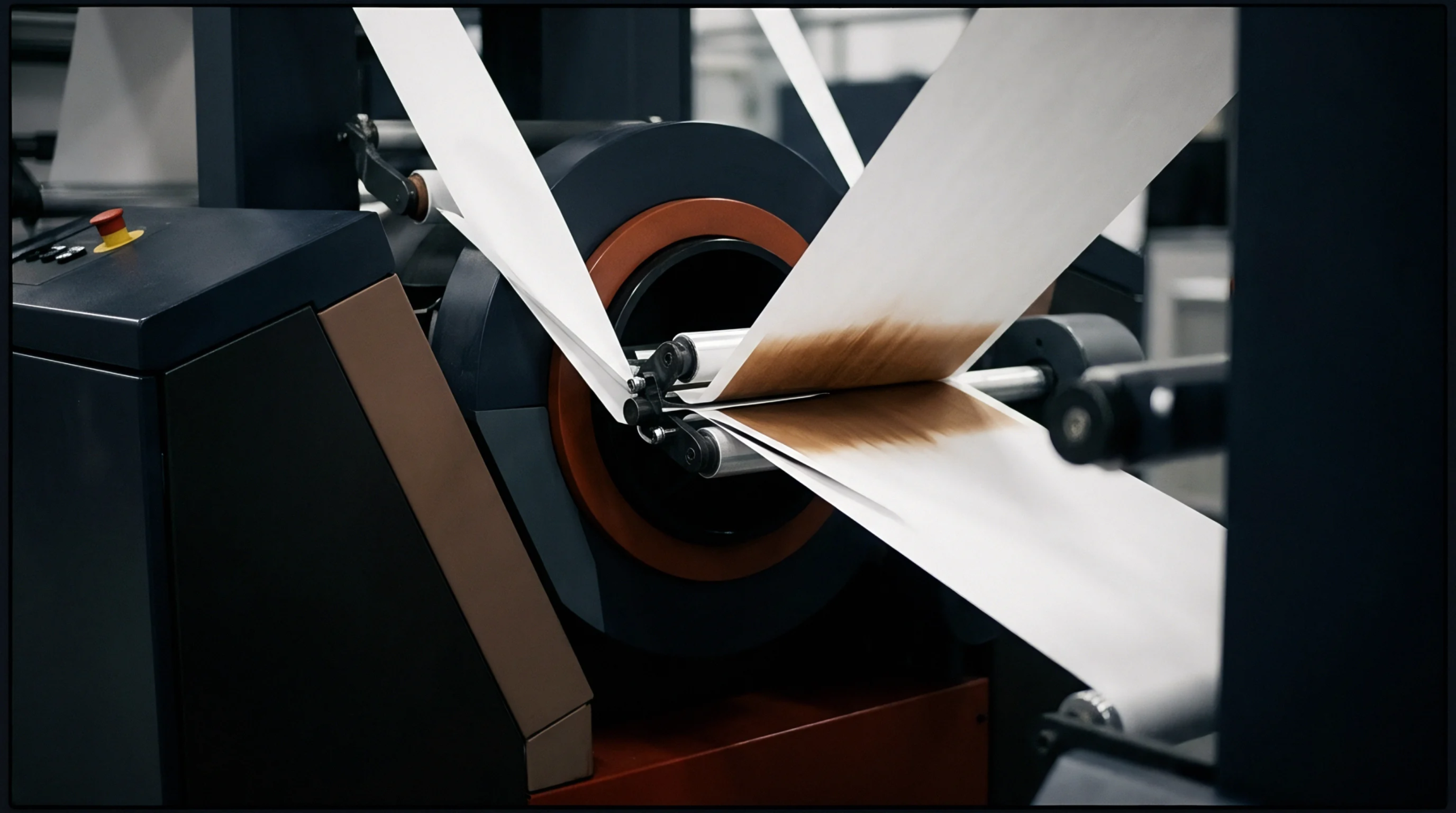
Web Tension
Control systems regulate the mechanical forces applied to paper webs during converting operations. Mechanical feedback loops maintain constant load across rotating cylinders to prevent web breakage and register drift. Load cells measure continuous tension while variable speed drives adjust nip roll velocities.
Sudden acceleration spikes tear lightweight substrates before mechanical clutches slip. High speed printing presses demand exact tension profiles to keep cyan and magenta plates aligned on coated stock. Substrate elongation limits restrict the maximum pulling force applicable to recycled linerboard.
Unwind stands employ pneumatic brakes to counteract inertia changes as parent roll diameters decrease.
Roll Deflection
phenomena alter nip pressure distributions across wide paper machines. Heavy steel cylinders bend slightly under hydraulic loading, creating uneven caliper reduction in laminated boards. Crowned rollers compensate for internal bending moments by increasing diameter toward the center.
Uneven nip pressure causes differential ink transfer on offset lithography blankets. Operators monitor hydraulic pressure logs to detect bearing wear before vibration amplitude exceeds acceptable thresholds.
Drive Synchronization
architecture coordinates multiple electric motors along continuous production lines. Master reference frequencies dictate instantaneous speeds for individual sections handling absorbent tissues or heavy boxboard. Electronic gearing ratios prevent web accumulation between drying cylinders and coating stations.
Encoder feedback loops correct phase errors within milliseconds of detection. Variable frequency drives dissipate regenerative braking energy through resistor banks during deceleration sequences.