Tooling Geometry
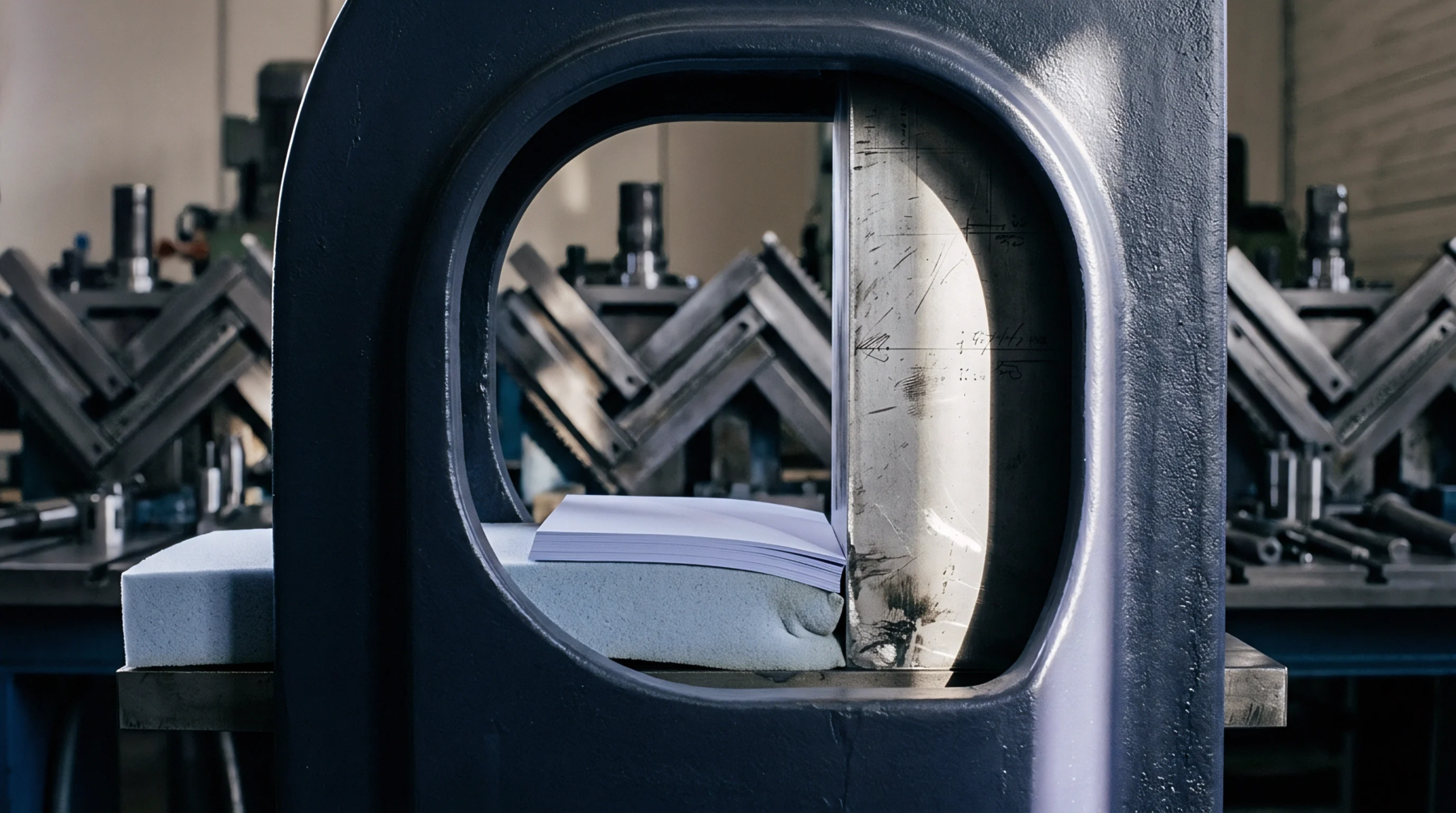
Recessed grooves cut into a steel plate or polyurethane matrix receive the paperboard as the creasing rule pushes the board downward. The dimensions of this female crease channel dictate the volume of board that can be displaced without tearing the surface fibers. Correct sizing of this groove prevents cracking on both the inside and outside of the subsequent fold.
Mechanical Deformation
During the die-cutting process, the paperboard is forced into the groove to form a permanent hinge. If the female crease channel is too narrow, the excessive shear stress will rupture the linerboard and cause unsightly cosmetic defects. Conversely, a channel that is too wide leads to an undefined fold line and poor carton squaring on the high-speed packing line.
Crease Quality
Adjustments to the channel width and depth are determined by the caliper and density of the specific paperboard grade being processed. When converting recycled board, which has shorter fibers, a wider female crease channel is often necessary to avoid fracture. Operators must measure the matrix wear regularly during a production run to ensure that the profile remains stable and the folding resistance of the carton does not increase over time.
This continuous monitoring prevents costly downtime and keeps the packaging lines running at maximum efficiency.