Substrate Rupture
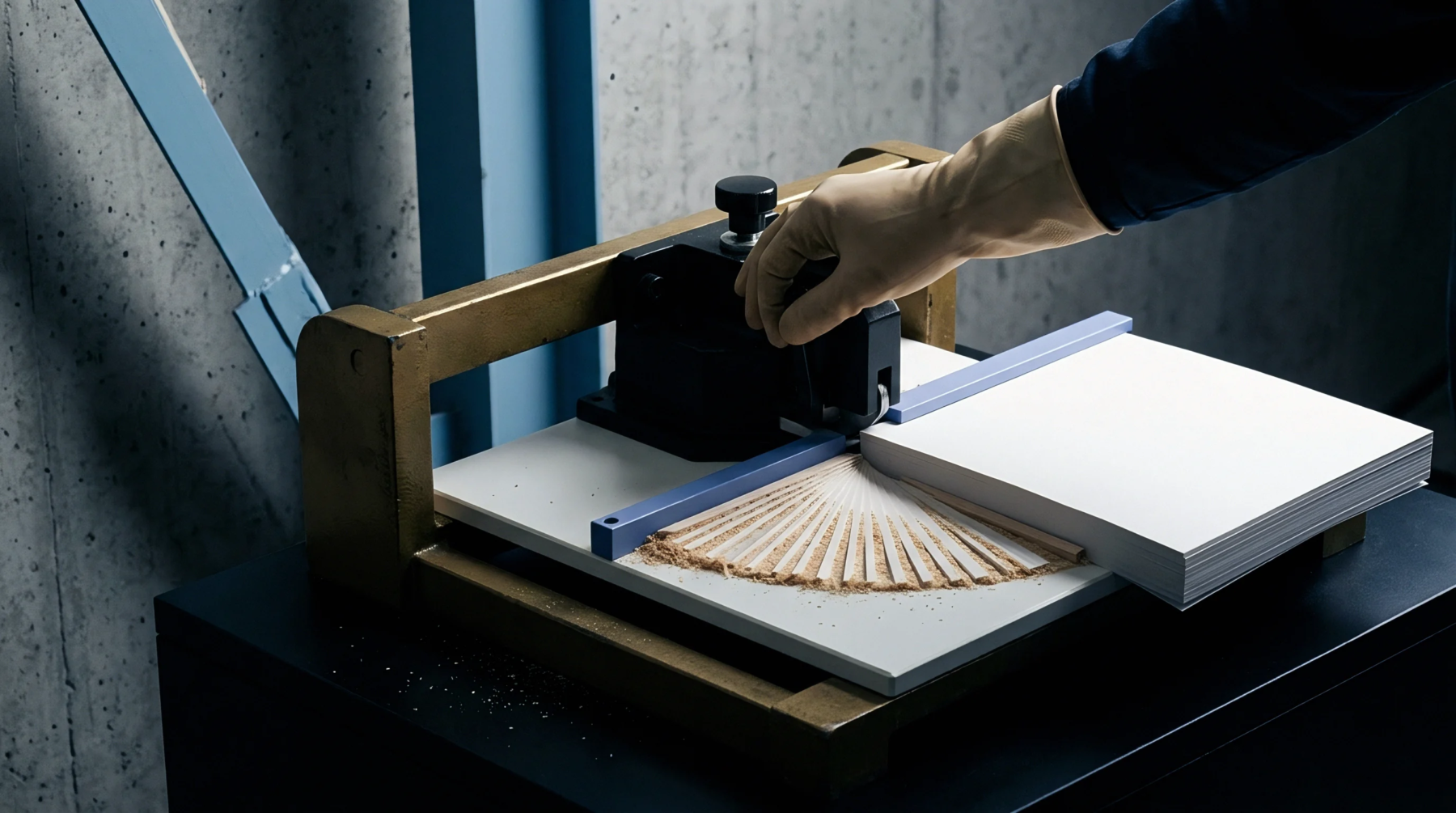
Surface cracking induced by mechanical stress during folding or embossing operations represents substrate rupture. Converting lines monitor micro-fracturing along creasing channels to prevent barrier layer delamination and ink flaking on folding cartons. This phenomenon occurs when bending radii exceed the elongation limits of coated paperboards, causing internal bond failure within the multi-ply matrix.
Production engineers adjust cutter clearance and creasing matrix widths to control stress distribution across the stock. A board with excessive internal sizing resists moisture penetration but grows brittle, increasing susceptibility to microscopic failures under heavy creasing pressure. Low relative humidity in the converting plant accelerates this degradation by depleting moisture content inside the cellulose network.
Fibre Strain
Tensile forces applied during high speed packaging conversion create localized fibre strain within the outer plies of paperboard. Rotary die cutters generate intense shear loads that push mineral coatings beyond their elastic threshold, resulting in hidden structural fissures. High grammage substrates demand precise anvil adjustments to manage the mechanical resistance offered by dense hardwood and softwood pulps.
Converting plants track these defects using optical scanners and ink penetration tests to identify compromised folding zones before finished cartons leave the press room.
Delamination Threshold
Specific pressure limits define the boundary where internal bonding fails during score line formation on multilayer substrates. Laboratory technicians measure this limit using dynamic burst testers and Scott bond equipment to evaluate ply adhesion before stock release. When embossing depth surpasses the internal bond strength, structural integrity collapses along the fold axis, ruining greaseproof barriers and polyethylene extrusion coatings.
Proper pre-moistened conditioning of heavy carton stock shifts the failure point upward, allowing deeper folds without internal tearing.