Physical Impression Resistance
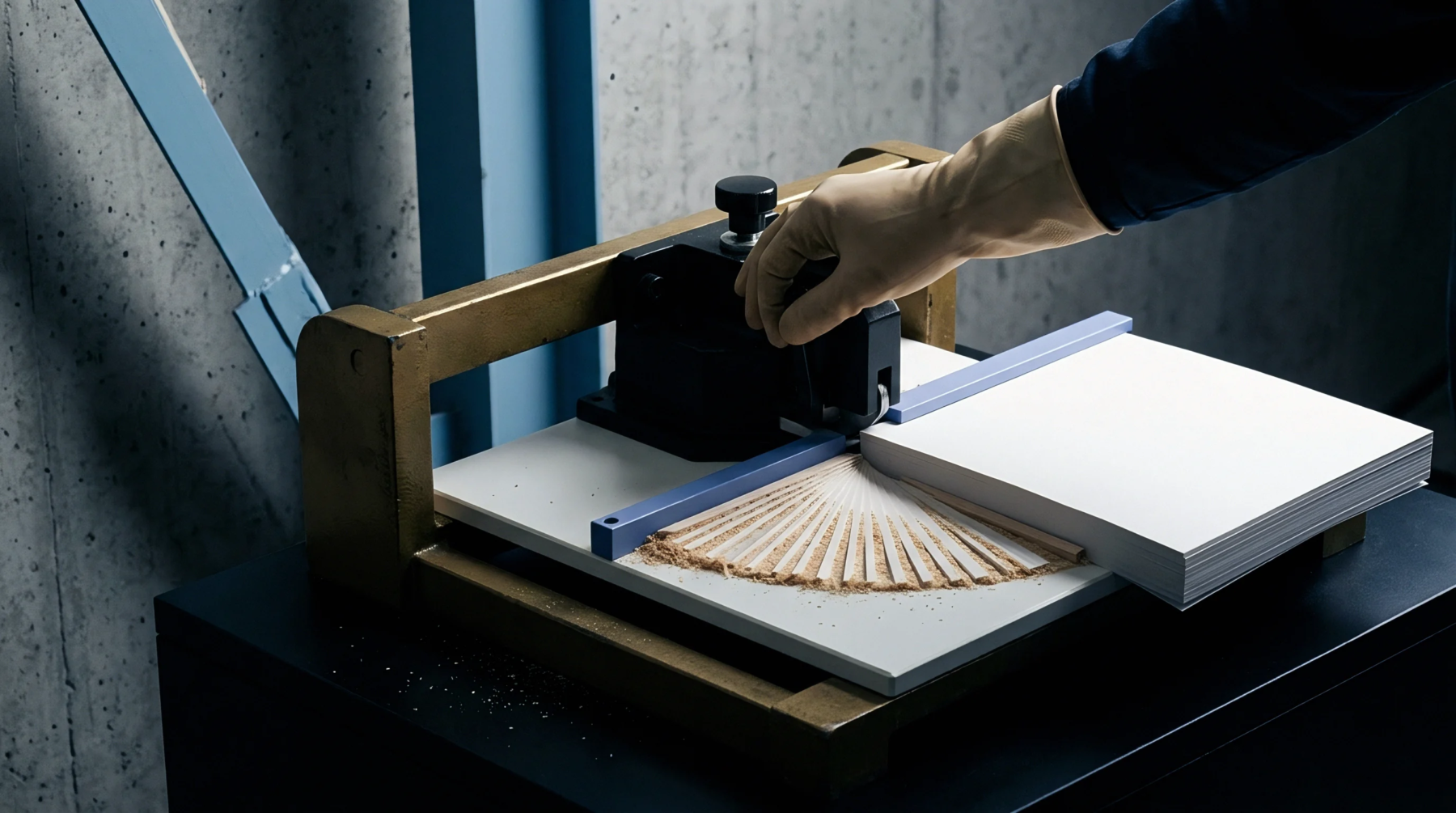
High density fiberboard serves as a die component for forming shallow indentations in heavy weight paper substrates during the finishing phase. A pressboard matrix functions as the counter-die or female surface when mated with a male creasing rule to displace substrate fibres into a controlled channel. Proper registration requires the operator to align this recessed path precisely with the male rule path to ensure consistent fold quality across varying caliper levels.
Alignment errors generate fractured liner surfaces or inconsistent fold angles because the displaced material exceeds the available internal volume of the channel. Tolerance settings often dictate a width two times the material thickness plus the rule width to account for compression dynamics.
Die Construction Integrity
Material hardness and binder stability dictate the longevity of a set under repetitive strike cycles on high speed folder-gluers. Manufacturers formulate the board from compressed cellulose pulps treated with synthetic resins to resist permanent deformation during the repeated impact of the steel rule. Heat sensitivity dictates the performance limits, as elevated temperatures soften the binder and reduce the depth of the crease profile.
Friction coefficients between the die and the paper surface determine the drag generated during the stroke, which alters the tension applied to the substrate exterior.
Substrate Compatibility Calibration
Selection of the correct die depth depends upon the grain direction and moisture content of the folding carton stock. Fibre orientation creates resistance that varies based on the path of the crease relative to the machine direction of the sheet. High moisture levels increase internal plasticity, allowing for a sharper fold without surface rupture when the die depth matches the specific fibre requirements.
Calibration occurs through the adjustment of the channel width to accommodate the specific displacement volume of the packaging board. Accurate channel depth prevents stress concentrations that cause premature material failure during final carton assembly.