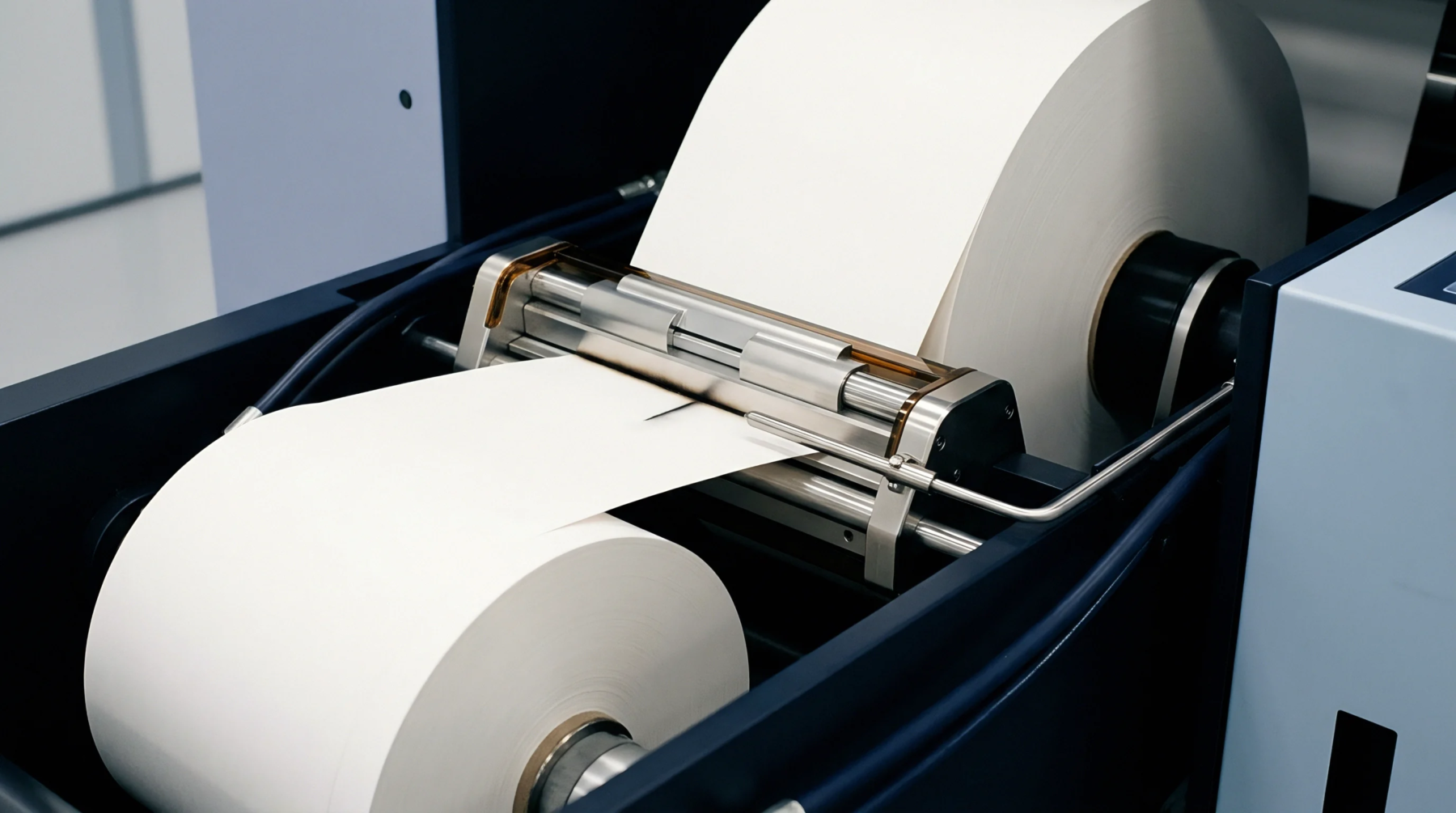
Blade Cant Direction
Positional alignment of a circular top slitter knife relative to the travelling web path establishes the convergence point between cutting edges. The shear rake angle tilts the top blade slightly outward into the bottom anvil face, directing shear forces along a narrow contact point rather than across a wide plane. Measuring this cant angle typically yields values between one quarter of a degree and one full degree, depending on web speed, knife metallurgy, and paper grammage.
Accurate angular alignment holds the upper blade cutting tip firmly against the lower anvil shoulder under dynamic web tension. Improper angular configuration degrades slitting efficiency and increases edge fuzz.
Shear Mechanics
Setting this geometry accurately ensures that the cutting edge penetrates the web cleanly while the trailing edge clears the cut path immediately. When shear rake angle is adjusted too shallow, the blade rubs against the newly severed paperboard, producing friction heat, coating dusting, and edge burnishing. Setting the angle too steep causes the top blade tip to dig into the bottom anvil face, inducing rapid tool wear and knife chipping.
Slitter positioning holders utilize micrometer verniers or calibrated swivel blocks to lock this angle securely against vibration. The shear contact point must remain precisely at the line where the passing web touches the bottom slitter anvil circumference. Downward web movement, web flutter, or shifting web tension moves this effective cut point, requiring angular adjustments during high-speed commissioning runs.
Clean shear separation demands constant side pressure, typically regulated by pneumatic pistons inside the top slitter head assembly.
Grade Requirements
High-density paperboards and multi-wall sack papers require modest cant angles to minimise lateral blade deflection under high cutting resistance. Light publication papers and tissue grades tolerate slightly wider angles that guarantee continuous point contact across irregular web tensions. Maintaining exact angular control prevents blade separation and edge tearing during continuous production.