Mapping Verified Mill Recycled Content Percentages across Automated Converting Lines
Mapping mill recycled percentages across automated converting lines requires mass balancing reel certificates through waste factors to finished pack units.


Reel
Delivered paperboard arrives at the converting plant gate with a certified claim recorded on the bill of lading, but that invoice percentage detaches from the physical substrate the instant the clamp truck loads the roll onto the unwind stand. A mill certificate stating seventy percent recycled fiber under FSC-STD-40-004 or PEFC ST 2002 reflects an administrative mass balance account reconciled over a quarterly balance period across an entire pulp line. The paperboard on the roll before the operator was produced during an eight-hour machine run that drew virgin kraft pulp and recovered furnish through separate chest refiners at fluctuating consistency.
The physical furnish across the caliper profile does not match the accounting average on the mill delivery docket. In high-speed automated folding carton and corrugated lines, this divide between documentary provenance and machine furnish creates immediate commercial risk. When high-speed machinery runs at four hundred meters per minute, substrate performance governs throughput, while documentary tracing dictates border compliance.
Automated conversion begins at the roll stand. As the outer packaging wrap strips away, operators log the roll identification barcode into the plant Manufacturing Execution System. The barcode indexes the mill reel number directly to the supplier certificate, locking the incoming percentage declaration to the physical coil.
On virgin-recycled hybrid grades like coated duplex board with a white recycled clay-coated top liner and a reclaimed newsprint back, fiber distribution across individual plies varies along the web length. The outer plies deliver tensile strength and print smoothness, whereas the middle and back plies incorporate lower-grade recovered furnish to supply bending stiffness at target caliper. When moisture variations hit the roll core, automatic web tension controllers compensate by modulating brake pressure at the unwind brake drum.
Higher proportions of short, hornified recycled fibers lower the internal tear resistance, increasing the frequency of web flutter through the primary print units.
Under twenty-three degrees Celsius and fifty percent relative humidity, a two-gram shift in moisture content across a recycled fluting reel alters web tension by fourteen newtons per meter of width.
Tracking the documentary credit requires linking the mill roll serial number directly to the printed blank. At web speeds exceeding eight meters per second, automated barcoding systems print sequential two-dimensional matrix marks onto the board margin immediately ahead of the infeed nip. These matrix identifiers tie each cut carton directly to the specific reel identity, recording the precise timestamp of line processing.
When the unwind reaches core depletion, the operator prepares the flying paster. Splicing connects the expiring tail of the current roll to the leading edge of a fresh roll, often joining two master batches with divergent certified credit percentages.

Raw Material Intake Documentation
Receiving inspection checks the physical delivery against the mill certified claim profile before warehouse staging. The receiving clerk verifies the certificate category on the delivery note against the official online certificate database, confirming the code covers folding boxboard grades under product group classifications. A certificate stating a credit percentage claim cannot be converted into an physical percentage guarantee on an isolated pallet.
If the delivery note references a credit account, the mill exercised an administrative transfer, pooling fiber inputs over an extended manufacturing window. The plant records the mill trade designation, reel batch number, net weight, core tare, and certified claim percentage directly into the enterprise resource planning database to establish the intake baseline for subsequent production lots.
Physical roll condition determines whether the stated mass balance credit survives intact into conversion. Water damage, edge cracks from improper clamp handling, or out-of-round deformation produce perimeter stripping that reduces usable board mass before the roll ever meets the unwind chucks. Stripping sixty kilograms of damaged outer plies from a twelve-hundred-kilogram roll eliminates five percent of certified furnish from the processing run before production begins.
The receiving line logs stripped mass under dedicated waste codes, isolating raw material intake shrinkage from converting process broke. Unrecorded roll trimming shifts the mass balance calculation, artificially depressing the calculated recycled content yield of the finished converting run.
| Board Classification | Standard Caliper (µm) | Typical Basis Weight (g/m²) | Furnish Stratification | Claim Transfer Mechanism | Verification Artifact |
|---|---|---|---|---|---|
| White Lined Chipboard (WLC) | 350 to 600 | 250 to 450 | Multi-ply, recycled filler and back, virgin or bleached deinked top | FSC Mix Credit or Percentage | Mill Invoice and Chain of Custody Annex |
| Folding Boxboard (FBB) | 300 to 550 | 200 to 380 | Mechanical pulp middle, bleached chemical virgin pulp outer plies | Controlled Wood or FSC Mix Credit | Delivery Note Batch Number Record |
| Testliner 2 (Recycled Liner) | 170 to 300 | 120 to 200 | Two plies, selective deinked recovered furnish surface | PEFC Recycled or FSC Recycled | Mill Quality Certificate to EN 17085 |
| Solid Bleached Sulfate (SBS) | 250 to 500 | 180 to 400 | Single or multi-ply pure chemical virgin wood pulp | FSC 100% or FSC Mix Credit | Mill Production Order Matching Docket |
Mill technical sales managers describe furnish variations across master reels as an unavoidable natural characteristic of high-volume recycled pulp processing that administrative mass balance systems accommodate without adjusting lot documentation.


Splice
Web splicing on a continuous automated corrugator or flexographic press disrupts the physical continuity of the certified fiber stream. Flying pasters join an expiring roll to a new reel within a window of two hundred milliseconds while the converting line operates at sustained production velocity. The splicing tape bonds the tail and head beneath a pneumatic nip roller, forming a structural overlap that cannot run through high-tolerance embossing or creasing tools.
The automated converting monitoring system must track this splice joint as an excluded defect through downstream cutting and folding sections. High-speed optical inspection arrays scan the web for the colored splicing adhesive tape, signaling the rejection gate to divert the joint blanks into the salvage chute.
Mass balance accounting faces severe operational friction at this transition. A line converting corrugated fluting may join a reel holding an eighty percent post-consumer claim to an incoming reel carrying a forty percent mass-balance allocation. Over an intermediate zone of eighty to one hundred meters, tension adjustments and festoon accumulation smooth the mechanical handover, but the finished packaging blanks emerging from the rotary die-cutter will contain board from both reels.
If the downstream printing process prints a static on-pack declaration asserting seventy percent certified recycled content, the cartons cut during the changeover window violate the on-pack claim. Automated converting plants resolve this boundary by programmatically tagging the changeover production zone, applying the lowest common denominator percentage to the intermediate batch until the new reel runs exclusively.

Where Do Splicing Losses Corrupt Mass Balance?
Splicing waste extends far beyond the physical double-thickness overlap joint. As the web accelerates following the joint cycle, transient tension imbalances produce registration drift across print units and rotary die cylinders. Color-to-color registration errors exceeding seventy-five micrometers trigger immediate automated optical rejection.
The cutting die ejects these out-of-register blanks alongside the physical splice waste, dumping finished, printed board directly into the shredder collection ducting. Converting plants operating automated nesting lines record this discarded board as process broke, but standard enterprise scrap ledgers rarely attribute this rejected mass to the specific incoming reel identity.
When the plant aggregates scrap into a single bulk recycling baler, the documentary connection between specific reel input and finished pack output fractures. The system assumes a flat average waste percentage across the whole production job. This assumption breaks down when an unstable roll produces six splice breaks and two hundred kilograms of localized registration broke, while a companion roll runs cleanly to the core.
Distributing process scrap evenly across both rolls overstates the yield of the problematic reel and understates the certified output derived from the clean reel. Defensible chain-of-custody tracking requires the programmable logic controller on the flying paster to tie reel-specific scrap signals directly to the individual roll docket in the enterprise manufacturing execution ledger.
A thirty-millimeter registration drift during high-speed splicing ejects up to forty-two linear meters of printed web into the reject hopper before the servomotors restore lateral tension.
The sensor infrastructure responsible for verifying reel consumption relies on continuous physical monitoring. Core diameter laser sensors read the radius of the unwinding roll in real time, calculating elapsed linear length against basis weight to verify instantaneous fiber mass entry into the processing stream. Caliper gauges mounted post-unwind measure board thickness variations, detecting density drops associated with uncontrolled fiber substitution.
If an incoming roll labeled as pure mechanical virgin board displays caliper variations and surface pick behavior typical of deinked recovered newsprint, the converting line alerts the quality control technician to review the intake paperwork.
Unresolved questions persist regarding whether dynamic splice tracking must capture microscopic furnish blending at the paster or whether commercial mass balance standards will permanently accept aggregate batch allocations across flying splices.

Scrap
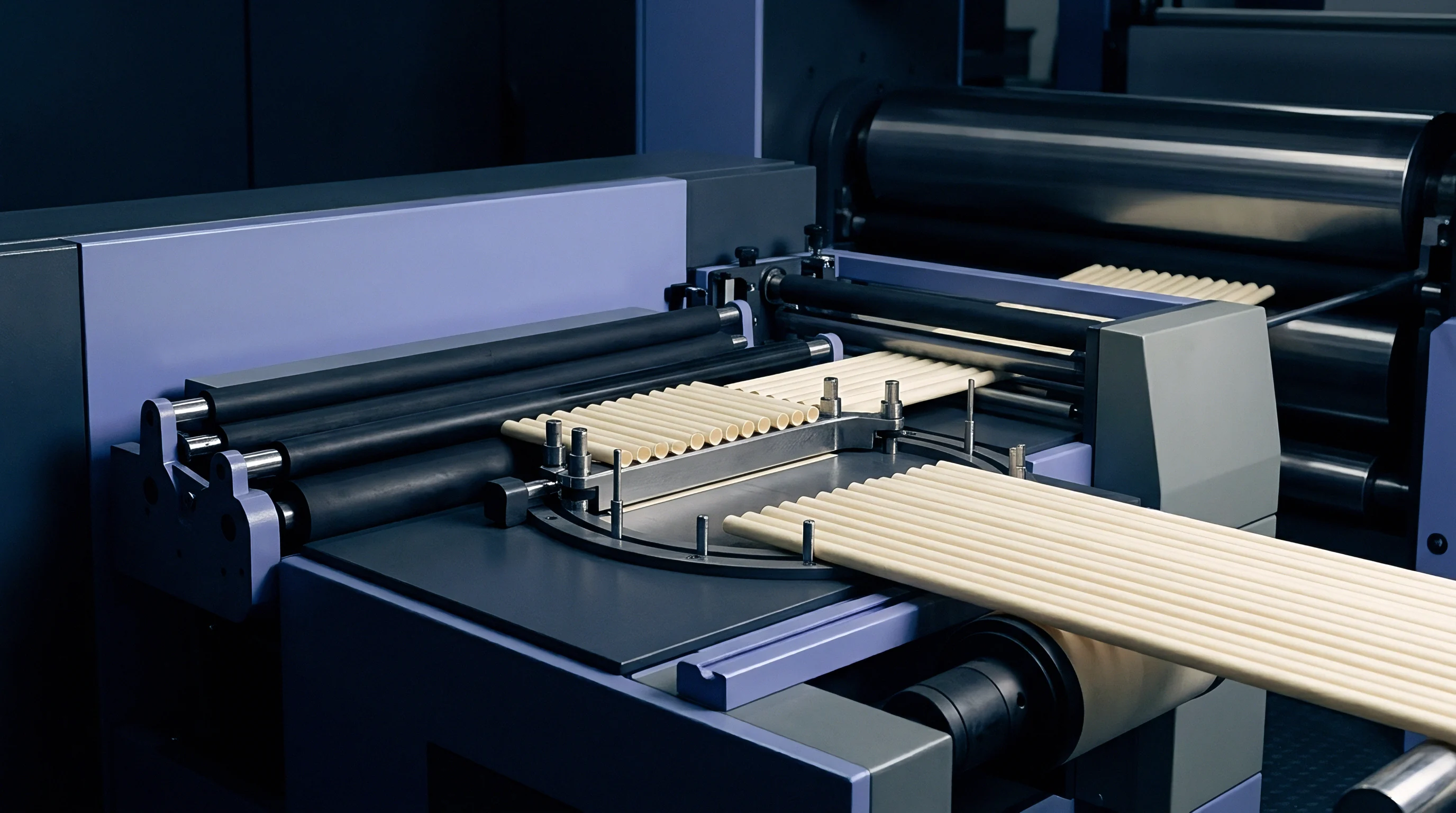
Trim collection systems operating on high-speed automated lines extract solid board mass at rates reaching fifteen percent of total roll consumption. Edge trim slitters remove unprinted margins to establish accurate web width, while rotary or flatbed die-cutters strip internal carton windows and skeleton matrices through high-velocity vacuum venturi hoods. This extracted broke travels through enclosed pneumatic ductwork directly to cyclonic separators and hydraulic balers.
The recovered scrap exits the converting plant as industrial recycled waste, destined for re-pulping at an external mill. In terms of mass accounting, this material represents certified fiber purchased at virgin or high-percentage recycled pricing that converts into low-value secondary scrap.
Handling internal converting waste introduces regulatory scrutiny under modern chain-of-custody protocols. When converting lines mix skeletons from an FSC Mix Credit folding boxboard run with trim cut from a hundred-percent virgin medical packaging board, the mixed baled waste down-grades to generic recovered paper grade 1.05 under EN 643 specifications. The converting facility cannot claim credit for returning pristine virgin fiber to the supply chain if the vacuum collection ductwork commingles trim across adjacent machine bays.
Segregated trim extraction systems maintain duct integrity for specific converting lines, preserving the certified pedigree of high-grade unprinted pre-consumer furnish. The plant logs this clean scrap in a dedicated credit balance account, allowing certified paperboard converters to recover material value through audited closed-loop recycling contracts.

Whose Ledger Absorbs Broke Reclassification Deficits?
Converting broke balances reveal significant discrepancies between theoretical nesting layouts and actual baler scale weights. Computer-aided nesting programs calculate theoretical sheet waste down to tenths of a square millimeter, forecasting an expected trim loss of nine and a half percent for a standard tuck-end folding carton layout. In practice, operational machine setup, web threading, ink color adjustments, and sheet de-jamming raise physical broke levels to twelve or fourteen percent of intake tonnage.
The difference between theoretical engineering waste and actual baler weight represents unallocated fiber mass that distorts the certified percentage calculation of the delivered job.
When an automated line generates more process scrap than budgeted, the yield of finished certified cartons per ton of incoming raw material drops. If the converting agreement stipulates that the buyer pays a premium for verified high-content packaging, the customer absorbs the cost of discarded fiber unless the contract explicitly pins the certified claim to net converted carton weight. A buyer purchasing ten metric tons of certified seventy-percent recycled folding cartons cannot verify their corporate claim if the converter consumed fourteen metric tons of raw board and discarded three metric tons of broke without re-balancing the credit ledger.
The converter must deduct the exact certified mass of the discarded broke from their internal material account, preventing the artificial duplication of certified volume claims across secondary markets.
| Unit Operation | Loss Classification | Typical Mass Loss (%) | Furnish Segregation State | Credit Balance Impact |
|---|---|---|---|---|
| Roll Unwind and Splice | Core slab and wrapper waste | 1.5 to 3.0 | Clean unprinted, roll-specific | Deducted directly from parent reel credit |
| Inline Flexo / Gravure Printing | Registration setup and washup | 2.0 to 4.5 | Surface-contaminated, unsegregated | Treated as downgraded unrecoverable broke |
| Die-Cutting and Creasing | Skeleton and window cutout | 6.0 to 12.0 | Printed, line-segregated | Deducted from net product mass allocation |
| Folder-Gluer Finishing | Ejection of skewed blanks | 0.5 to 1.5 | Finished composite (adhesive included) | Excluded from clean paper broke recycling |
Diverting printed and adhesive-contaminated blanks into unprinted broke bales instantly corrupts the industrial paper grade classification of the whole baling lot. Contamination by hot-melt ethylene-vinyl acetate adhesives or polyurethane cold glues impairs fiber repulpability at the recycling mill, causing stickies that foul forming fabrics and create pinholes in recycled sheet webs. Modern automated converting facilities isolate folder-gluer reject bins entirely from pneumatic die-cutter extraction pipes.
The waste collected at the gluer exit undergoes disposal as non-recoverable industrial solid waste, ensuring that the certified pre-consumer material credit returned to the balance sheet contains zero synthetic adhesive mass.
- Unprinted edge trim retains original fiber purity and supports direct return to closed-loop mill pulpers under grade-specific collection agreements.
- Printed skeleton broke contains ink resins and crosslinked varnishes that limit re-pulping applications to lower-grade fluting or core board manufacture.
- Adhesive-joint scrap introduces synthetic polymers and tackifiers that prevent the furnish from qualifying as uncontaminated pre-consumer material under ISO 14021.
- Core waste carries heavy starch adhesives and paperboard laminations requiring dedicated mechanical shredding before repulping lines accept the bales.
Material balances balance completely only when gross intake tonnage equals the sum of net finished product mass, verified scrap baler weights, and recorded moisture loss.


Allocation
The mathematical reconciliation of certified fiber through automated converting operations depends on the strict application of formal chain-of-custody accounting models. Under FSC-STD-40-004 Clause 9 and PEFC ST 2002 Section 6, converters elect either the transfer system or the percentage and credit system to account for fiber inputs. Under the transfer system, the converted carton inherits the precise certified claim of the incoming reel, demanding absolute physical batch separation on the converting line.
An automated line running a reel carrying an FSC Mix 70% claim produces cartons carrying an identical FSC Mix 70% claim, provided no secondary uncertified paperboards enter the assembly. In modern multi-ply or laminated packaging, where an automated converting line laminates a pre-printed virgin liner to a recycled corrugated single-facer, the transfer system requires downgrading the entire composite structure to the lowest certified claim among the combined components.
Under the percentage and credit system, converters decouple the physical furnish within a specific carton from the administrative claims printed on the carton exterior. The facility maintains a rolling credit ledger, accumulating volume credits from incoming certified reels and expending those credits when printing claims on outgoing finished goods. This system allows a high-speed flexo-folder-gluer to run continuously using whatever approved board rolls are staged in the floor inventory, irrespective of whether an individual roll carries a fifty percent, seventy percent, or one hundred percent recycled declaration.
The automated plant control system tallies total incoming certified fiber kilograms into the ledger, verifies the net finished box weight, and deducts the appropriate volume credit when shipping the completed order. Physical cartons emerging from the packing line contain variable fiber mixes, but the aggregated documentary account remains mathematically balanced.
Calculating Real Batch Mass Balances
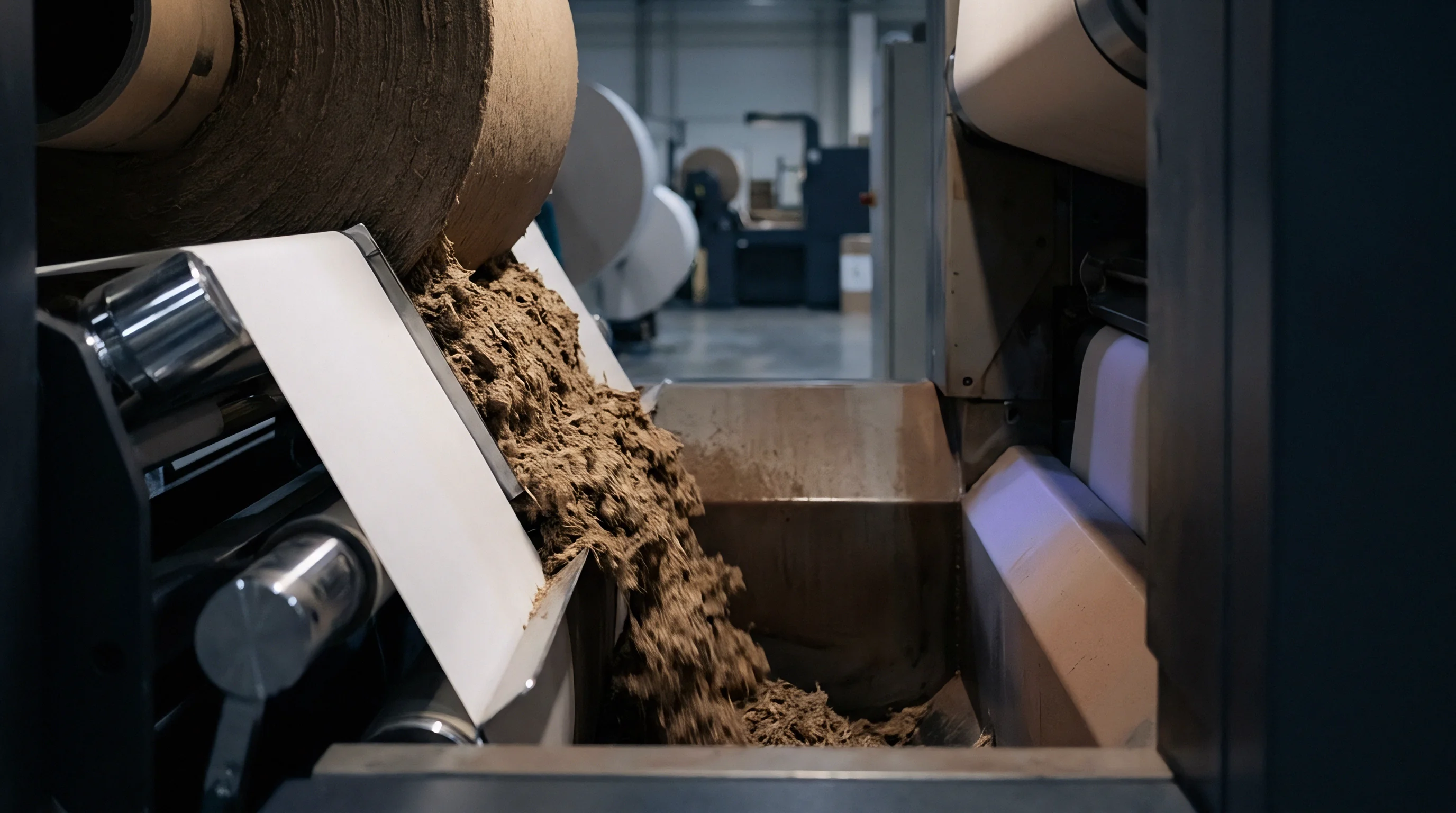
Establishing the real verified recycled percentage of a converted packaging run requires precise mathematical accounting that tracks furnish mass through converting shrinkage. Let gross intake mass be represented by Min, with a verified mill recycled content percentage Rmill. Line scrap generation occurs across setup waste (Wset), trim and skeleton broke (Wtrim), and quality ejection waste (Wrej).
Net product mass delivered to the customer equals Mnet.
Gross input mass balances against outputs:
Min = Mnet + Wset + Wtrim + Wrej + Δ Mmoist
where Δ Mmoist accounts for moisture lost or gained during radiant ink drying and climate-controlled plant conditioning. The net recycled fiber mass contained within the finished converted product (Mrec) depends on whether the line operations remove virgin and recycled furnish uniformly:
Mrec = Mnet × Rmill
If the converting process incorporates non-paperboard components on the automated line, including window-patching polyethylene terephthalate films, structural plastic handles, or heavy hot-melt adhesive beads, the physical recycled percentage of the total packaging unit (Runit) dilutes according to the non-fiber mass addition (Mnonfiber):
Runit = fracMnet × RmillMnet + Mnonfiber × 100
Window-patching an eight-hundred-milligram folding carton with a sixty-milligram polyester barrier film reduces an initial seventy-percent fiber recycled claim to an effective sixty-five point one percent total pack recycled content. Packaging compliance frameworks, including the European Union Packaging and Packaging Waste Regulation and national plastic packaging taxes, increasingly evaluate the total weight of the finished composite packaging component rather than isolated paperboard layers. Omitting the mass of functional polymer barriers or laminated barrier coatings during automated converting line balance reconciliation leads to false regulatory declarations.
A thirty-gram functional barrier lamination applied across a three-hundred-gram recycled carton drops the real packaging unit recycled content from seventy percent to sixty-three point six percent.
The operational reconciliation period poses another operational hurdle. Converters often run rolling credit accounts across a three-month or twelve-month window. If a converting line consumes high-recycled-content board in January to produce unlabelled generic boxes, it accumulates a surplus of certified recycled credits in the corporate ledger.
In March, the plant can theoretically consume virgin board on the automated line while printing certified recycled claims onto the cartons, drawing down the accumulated credit balance. The carton shipped to the client carries a certified recycled label despite containing pure chemical virgin pulp. While fully compliant with standard chain-of-custody administrative rules, this discrepancy creates severe vulnerability if the physical packaging undergoes laboratory verification testing by an aggressive retail customer or national trade authority.
| System Model | Physical Segregation Demanded | Line Cleaning and Separation | Claim Uniformity on Finished Pack | Credit Expiry Limit | Lab Test Exposure |
|---|---|---|---|---|---|
| Transfer System | Mandatory, reel-to-carton isolation | Required between production changeovers | Identical to lowest incoming reel claim | No ledger accumulation permitted | Low, physical furnish matches documents |
| Percentage System | Not required within batch run | Standard operational clearance only | Calculated rolling average claim percentage | Reconciled per production run or job lot | Medium, localized ply variance occurs |
| Credit System | Zero, full inventory decoupling | None, continuous mixed processing | Maximum claim printed until credits deplete | Maximum twelve to twenty-four months | High, physical pack may contain zero recycled fiber |
ISO 14021 Clause 7.8 requires that environmental claims asserting recycled content declare the specific proportion by mass of recycled material present in the finished packaging unit, invalidating credit-swapped declarations in jurisdictions where trade standards prioritize physical material reality over administrative mass pooling.


Duty
Border authorities and tax collection agencies increasingly scrutinize environmental packaging claims, moving compliance risk from marketing departments directly onto import declarations. Under the United Kingdom Plastic Packaging Tax and emerging European Union packaging levy mechanisms, packaging components failing to achieve verified recycled content thresholds face direct fiscal penalties at the port of entry. When paperboard packaging incorporates laminated functional polymer layers or heat-seal polyolefin coatings, customs appraisers classify the item under composite packaging tariff codes.
If the importer declares a carton as containing eighty percent verified recycled content to secure green procurement exemptions or lower producer responsibility fee tiers, the complete chain of custody dossier must substantiate that specific production batch. A generic company-level certificate covering paperboard conversion does not suffice to clear customs audits.
Regulatory scrutiny intensifies under the European Packaging and Packaging Waste Regulation requirements for post-consumer recycled content and recyclability performance grades. Importers of converted paperboard packaging must hold technical documentation demonstrating that recycled claims correspond to verified post-consumer origins rather than standard mill broke or industrial trim scrap. Post-industrial scrap conversion, while industrially efficient, does not satisfy regulatory mandates targeting municipal post-consumer packaging collection quotas.
If an automated converting line feeds on white-lined chipboard derived from converter trim broke, the finished packaging cannot claim post-consumer recycled status on custom import declarations. Misclassifying pre-consumer waste as post-consumer content exposes the importer of record to customs fraud investigations, confiscation of goods, and retroactively adjusted tariff duties.

Batch Traceability Gaps at the Frontier
Auditors at the customs frontier cross-check three distinct documents: the commercial invoice displaying the tariff code and certification claim, the mill delivery dockets listing reel identification numbers, and the converter manufacturing records linking those reels to the specific batch number stamped onto the shipping pallet. When automated converting lines operate under administrative credit systems, this documentary chain frequently breaks. The pallet tag bears a batch number from a production run executed on the fourteenth of June, but the converter credit ledger draws down fiber credits purchased on an invoice dated the third of January from an entirely different mill division.
The physical cartons contain no analytical markers verifying the claim, and the production logs show that the converter ran four different board grades through the die-cutter during the same twenty-four-hour shift.
When discrepancies arise, customs inspectors demand destructive testing and microstructural fiber analysis. Laboratory test methods, including microscopic fiber furnish identification under ISO 9184 and thermogravimetric determination of mineral filler levels, estimate the ratio of mechanical, chemical, and recycled fibers within the paperboard plies. High presence of hornified fiber lumens, ash residues from kaolin coating clays, and calcium carbonate filler particles reveal high recycled fiber loading, whereas unbleached virgin kraft boards show uniform, undamaged tracheid cells with low ash content.
If the laboratory analysis reveals that an imported pallet of cartons claiming eighty percent recycled content consists entirely of pristine unbleached virgin softwood fiber derived from a credit swap, border authorities reject the customs entry under consumer protection and deceptive marketing statutes.
Contractual liability falls directly on the purchasing brand unless the master supply agreement establishes ironclad warranties. Converted packaging purchase agreements must bind the converting supplier to supply-chain transfer accounting for all border-cleared shipments, explicitly forbidding the application of unsegregated credit systems for goods requiring customs environmental declarations. The contract must mandate that every shipping invoice list the specific mill reel serial numbers consumed in that production lot, accompanied by a verified mass balance reconciliation table signed by the plant quality manager.
If the converter substitutes uncertified rolls during machine setup or fails to record broke deductions properly, the resulting customs penalties, demurrage fees, and retailer delisting fines pass back to the converting plant via liquidated damage clauses.
- Mill intake reconciliation demands cross-referencing invoice claim categories directly against live certification register databases to catch expired, suspended, or out-of-scope certificates before rolls enter the warehouse.
- Machine consumption tracking requires logging physical reel IDs through automated line barcode scanners at the unwind, preserving the exact link between mother coils and printed blanks.
- Broke deduction accounting insists on recording physical trim, skeleton, and setup waste by mass and furnish category, preventing the re-crediting of discarded fiber to active customer production runs.
- Finished dossier assembly compiles the mill proof, the converting line run logs, the tare-deducted mass balance sheet, and the final pallet batch tag into a single verification file held ready for customs inspection.
Failing to establish reel-to-batch physical traceability across automated converting operations exposes importing brands to packaging tax surcharges, port-of-entry shipment seizures, and formal corporate liability under cross-border greenwashing enforcement frameworks.