Traceability Protocols for Recycled Fiber Accounting in Packaging Supply Chains
Recycled fiber claims require third-party mass balance credit accounting backed by yield-adjusted ledgers and validated supply chain invoices.


Bale

Physical Grade Categorization and Contamination Dynamics
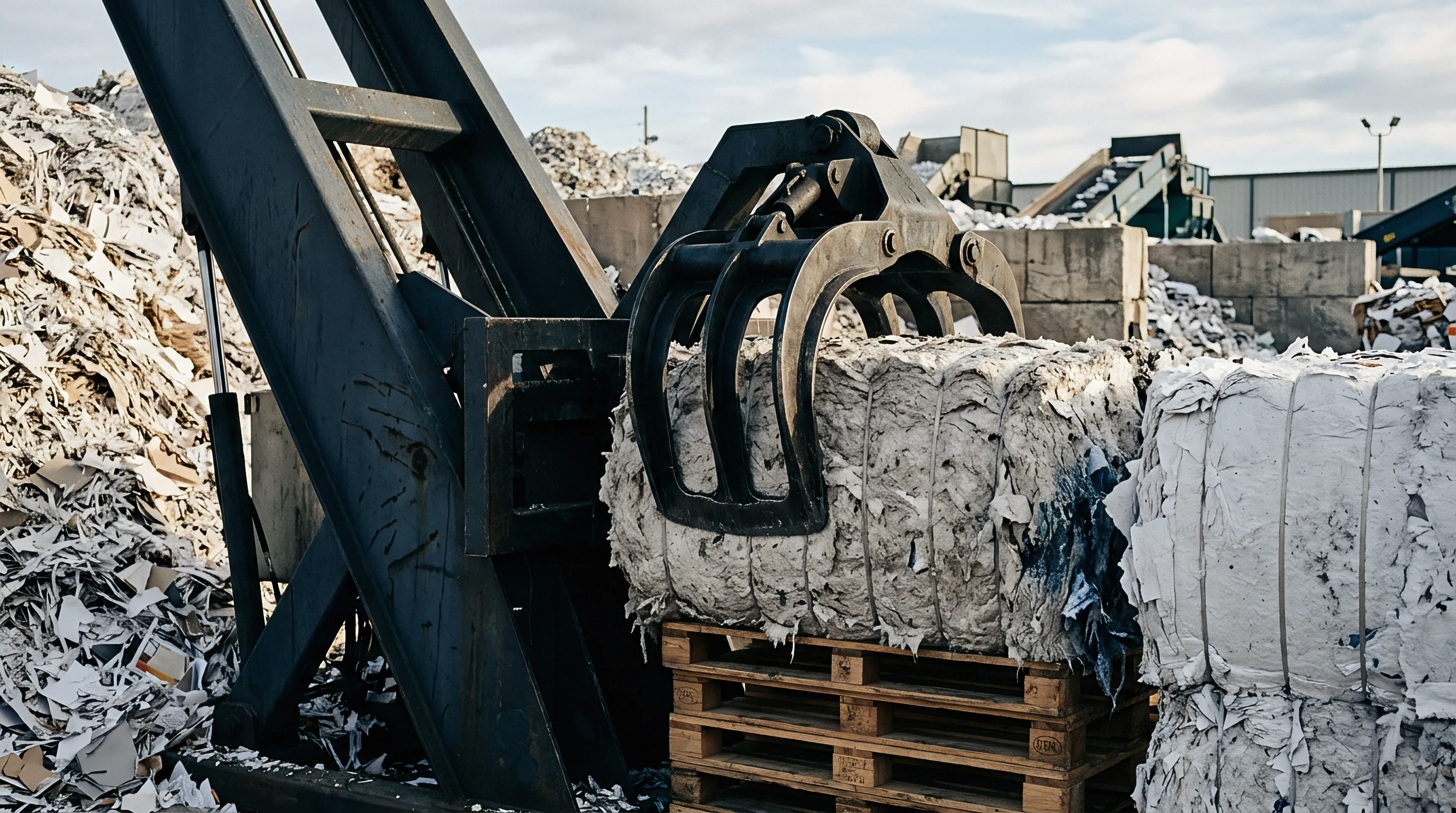
Reclaimed fiber entering a pulping system arrives under specific industrial classifications that determine its accounting treatment before chemical processing begins. Standardized mill inputs rely on EN 643 specifications in European supply networks and ISRI guidelines across North American routes. Bales designated as post-consumer recovered paper contain varying proportions of non-paper components, moisture fluctuations, and short-length fines that are lost during initial slush pulping.
A incoming lot of Grade 1.05.00 corrugated board carries up to three percent by weight of non-paper materials, including hot-melt adhesives, polyolefin tapes, and metallic staples. When calculating the mass of verified fiber entering the process, accounting systems that record gross wet bale weights overestimate clean fiber yields.
Dry matter determination forms the base measurement for raw material balance sheets. Sampling protocols mandate core drilling or infrared moisture sensor sweeps across fresh deliveries to establish bone-dry fiber weight. A bale arriving at twelve percent moisture content yields fewer usable dry tons than a ten percent bale of identical gross scale mass.
Mill operations adjust stock entry records by subtracting measured moisture premiums alongside estimated reject rates derived from pulper heavy-reject traps and screen reject flumes. Post-industrial recovered fiber from converting plant trims displays lower moisture variance and under one percent non-paper contamination. Combining post-industrial cuttings with post-consumer residential collections within the same physical storage yard without segregated batch weigh-ins invalidates claim percentage calculations at the hydrapulper.
Fiber degradation during repulping further alters physical recovery ratios. Repeated wetting, refining, and drying cycles reduce individual cell-wall thickness and hornify the fiber structure, causing a fraction of short fibers to pass through extraction plate perforations into the wash water effluent. Secondary fiber processing lines lose between five and fifteen percent of solid mass to screen rejects, clarification sludge, and deinking flotation froth.
Yield factors must be calibrated per specific raw material grade rather than applied as a uniform mill-wide constant. Processing post-consumer deinked pulp for graphic packaging incurs higher solids loss than repulping unbleached kraft cuttings for linerboard. Accounting ledgers that record fiber input solely at the weighbridge fail to reflect actual furnish contributions in the finished reel.
The physical dry weight of recovered fiber entering the hydrapulper drops by eight to twelve percent after primary screening and high-density cleaning remove non-cellulosic contaminants.

Inbound Sourcing Classification and Verification Controls
Distinguishing pre-consumer waste from post-consumer material requires documentary proof linked directly to the origin site. Pre-consumer sources encompass damaged rolls, converting offcuts, printer waste, and mill broke that has passed outside the manufacturing site. Internal mill broke returned directly to the pulper within the same facility cannot be credited as recycled content under major chain-of-custody standards.
Post-consumer inputs comprise paper items discarded by end-user households, commercial offices, or retail distribution centers after their intended end use. Supply documentation must establish that the material completed its commercial distribution cycle before re-entering the recovery circuit.
Receiving checks at the mill gate require systematic sampling of incoming transport vehicles. Inspectors record bale identifiers, grade codes, moisture readings, and visual contamination scores into the inventory database. Bales exhibiting mold, oil saturation, or heavy chemical odor are turned back at the unloading dock because volatile organic compounds and microbial populations compromise food-contact compliance in downstream board lines.
Traceability breaks down when scrap aggregators consolidate unsegregated materials from multiple small collectors into secondary bales without maintaining lot-level provenance. Downstream auditors reconcile mill intake weighbridge tickets against origin collection manifests to confirm the authenticity of claimed post-consumer volume ratios.
Suppliers sometimes state that post-industrial offcuts from packaging converting lines carry identical mechanical properties to post-consumer collections and therefore warrant equivalent reporting under single-category fiber balances.


Batch

Mass Balance Accounting Mechanisms
Chain-of-custody protocols permit certified facilities to track recycled fiber volumes through three primary inventory controls: the transfer system, the percentage system, and the credit system. The transfer system applies straight pass-through logic, where the outputs carry the exact percentage of recycled content present in the inputs. The percentage system calculates a rolling average of recycled input over a defined claim period, applying that exact ratio to all finished stock dispatched during that timeframe.
The credit system creates a dynamic ledger account where verified recycled inputs earn claim credits that can be allocated selectively to specific production batches, leaving other batches uncredited.
Operating a credit account demands strict temporal and volume boundaries. Certification standard FSC-STD-40-004 V3-1 and PEFC ST 2002:2020 mandate that credit accounts balance within a maximum claim period of three months, with accumulated credits expiring if unused after twelve to twenty-four months depending on the governing scheme. The mill establishes site-specific conversion factors that account for manufacturing losses before credits enter the account.
If a mill inputs 100 dry metric tonnes of 100% post-consumer recycled fiber and operates with a verified manufacturing yield factor of 0.88, exactly 88 metric tonnes of 100% post-consumer credit land in the credit account. Mills cannot allocate more credits to output products than the calculated net output volume available.
Physical mixing of virgin and recycled fibers occurs continuously inside stock preparation chests, headboxes, and white water loops. Mass balance accounting does not claim that every specific cartonboard sheet contains the exact physical percentage stated on the delivery note. Instead, the claim asserts that an equivalent volume of certified recycled fiber entered the mill system during the designated accounting window and was allocated in accordance with scheme rules.
Physical fiber tracking across complex multi-ply board machines, where top liners use virgin bleached kraft while middle plies take post-consumer waste, requires individual ply mass balancing to ensure physical allocation limits match total board grammage compositions.
Credit transfers across multiple sites owned by the same legal entity require explicit scheme authorization. Credits accumulated at a pulp mill in one location cannot be applied to a converting facility in another jurisdiction unless both sites operate within a centralized multi-site certification scope using a shared corporate enterprise resource planning infrastructure. Cross-site credit transfers across different product groups are strictly prohibited.
Packaging paper credits earned on unbleached kraftliner lines cannot offset virgin fiber usage on graphic board lines or tissue machines.
| Accounting System | Input-Output Relationship | Claim Allocation Method | Inventory Balancing Frequency | Primary Operational Context |
|---|---|---|---|---|
| Transfer System | Direct proportionality | Fixed percentage matching input batch | Per job order or single batch | Dedicated short-run converting lines |
| Percentage System | Rolling average ratio | Uniform percentage on all output in period | Monthly or quarterly period | Continuous pulping with stable furnish |
| Credit System | Decoupled volume ledger | Selective 100% or high-claim allocation | Continuous ledger with 12-month expiry | Multi-ply board mills with variable inputs |

Who Absorbs Mass Balance Losses during Continuous Deinking?
Yield calculations during high-consistency deinking and flotation cleaning introduce accounting discrepancies between raw furnish receipts and ledger credits. Mechanical pulping and deinking lines separate ink particles, filler clays, and short fiber fragments, discharging them into sludge streams that exit the accounting system. If a mill receives 500 tonnes of post-consumer office paper containing fifteen percent calcium carbonate filler by weight, acid washing and flotation steps remove the mineral content alongside ink residues.
The net yield of usable cellulosic fiber drops to 380 tonnes. The mill must record the true yield loss on the ledger rather than converting raw wet tonnage directly into finished paper credits.
When mass balance accounting formulas neglect yield losses, the credit ledger generates synthetic inventory. Certification bodies penalize mills that apply input gross weights directly to credit calculations without deducting recorded shrinkage factors. Process losses must be verified annually during third-party surveillance audits by comparing stock flow meters, sludge press dry-cake weights, and finished reel scales.
Discrepancies exceeding two percent between actual mill yield and established conversion factors require immediate retrospective adjustments to the credit ledger balances.
Standard CoC schemes limit credit accumulation windows to twelve months to prevent long-term speculative hoarding of recycled volume claims across changing market cycles.

Worked Mass Balance Conversion Calculation
Consider a folding boxboard mill operating a three-ply paper machine fed by two separate furnish lines. The top and bottom liners use virgin bleached chemi-thermomethane pulp, while the middle filler ply utilizes post-consumer recycled paper. A buyer orders 200 metric tonnes of 350 grams per square meter board carrying a 60% post-consumer recycled credit claim under a mass balance credit system.
The mill needs to calculate the precise input volume of post-consumer bales required to support this output batch while maintaining ledger integrity.
Assume the middle ply constitutes 60 percent of the total sheet grammage, requiring 120 metric tonnes of physical middle-ply fiber for the 200-tonne order. The middle-ply pulping and screening circuit operates at a verified yield efficiency of 84 percent due to heavy rejection of stickies, plastics, and short fines. The accounting conversion factor (CF) is expressed as 0.84.
To generate the necessary 120 tonnes of net recycled fiber credit needed for the order, the mill calculates required gross dry bale input (I) using the equation:
I = fracOcreditCF
Plugging in the operational values where Ocredit = 120 tonnes:
I = frac1200.84 = 142.86 dry metric tonnes
If the incoming bales carry an average measured moisture content of 9.5 percent, the mill purchasing desk must order gross wet bale mass (Mwet) calculated as:
Mwet = frac142.861 – 0.095 = 157.86 wet metric tonnes
Recording only the 120 tonnes of finished sheet content on the input ledger would create a deficit of 22.86 dry tonnes of actual recycled fiber consumed. Conversely, claiming the full 142.86 dry tonnes as finished product credit without applying the 0.84 yield factor would artificially inflate the mill credit ledger by 22.86 tonnes of non-existent credit. Contractual terms must specify whether recycled content percentages reflect finished sheet weight or dry furnish input weight to prevent double-counting across mill-converter boundaries.
FSC-STD-40-004 V3-1 Clause 8.3 explicitly dictates that entity credit ledgers must undergo immediate cancellation of over-allocated credits whenever process yield factors drift more than two percentage points below recorded baseline figures during any single surveillance quarter.


Paperwork

Transactional Proof and Document Linkage
Documenting recycled fiber claims across complex packaging conversion chains relies on an unbroken audit trail connecting invoice line items to physical shipments. Every commercial transfer of certified material requires specific claim language on both the delivery note and the final financial invoice. A generic line item describing folding cartons does not convey a valid certified claim even if the manufacturing facility holds a valid chain-of-custody certificate.
The invoice must list the seller certificate registration code, the specific claim statement, and the assigned claim percentage or credit code matched directly to the line item quantity.
Reconciling physical movements against accounting entries requires cross-referencing three core documents: the bill of lading, the mill test certificate, and the sales invoice. Discrepancies between the shipping weight on the bill of lading and the billed weight on the invoice signal potential stock substitution or unrecorded off-spec volume inclusions. Inbound receiving logs at converting plants must register the supplier certificate code in the material management system upon receipt.
Automated systems flag purchases where the supplier certificate status is listed as suspended or terminated on the scheme public database at the time of shipment dispatch.
Verification protocols mandate quarterly reconciliations of output claims against verified input purchases. Auditors check the material accounting summary, where total input credits purchased equal finished product output claims plus physical scrap losses and remaining inventory balances. If a converter purchases 100 tonnes of 100% recycled board stock, generates 15 tonnes of die-cutting scrap, and sells 90 tonnes of 100% recycled finished cartons during the same accounting period, a 5-tonne volume deficit exists.
This discrepancy indicates that uncertified board stock was packed into certified production orders or that scrap factors were incorrectly recorded.

Sequential Chain-of-Custody Audit Protocol
Validating an incoming packaging shipment for regulatory compliance involves a systematic audit of documentary evidence before accepting recycled content declarations for consumer packaging lines.
- Confirm the vendor chain-of-custody certificate code on the official public scheme registry to verify active status and scope coverage for the specified product type.
- Cross-check the shipment bill of lading against the supplier delivery note to verify matching batch numbers, reel identification codes, and net physical weights.
- Inspect the commercial invoice to ensure the explicit chain-of-custody claim statement appears directly adjacent to the line item describing the supplied board grade.
- Verify that the claim format matches the governing standard terminology, distinguishing between percentage claims and mass balance credit allocations.
- Extract the mill lot number from the reel cores or pallet labels and trace it back to the mill batch sheet to confirm raw material furnish composition.
- Record the verified transaction details, physical weights, and certificate codes into the internal material accounting ledger for annual surveillance reconciliation.
Under FSC-STD-40-004 V3-1, an invoice lacking the seller explicit certificate code and precise claim wording transfers zero claim rights to the buyer regardless of the physical composition of the board.

Transactional Verification Systems
Digital transactional verification platforms eliminate documentary fraud by matching seller sales declarations against buyer purchase confirmations in real time. Systems like the FSC Transaction Verification database require both counterparties to register transactional data for certified volume exchanges. When a mill reports selling 50 tonnes of recycled linerboard to a corrugated converter, the system matches this entry against the buyer receiving log.
Mismatches in reported volume, claim type, or transaction timing trigger automated audit alerts that suspend claim propagation down the chain.
Manual paperwork checks remain vulnerable to double-counting where a single batch of certified material is claimed across multiple sales transactions. Unscrupulous intermediaries may purchase 100 tonnes of certified board and issue duplicate invoices claiming certified status to multiple customers for a total of 200 tonnes. Transactional verification databases prevent this by decrementing the seller certified volume account instantly upon claim registration.
Converting entities trading high volumes of recycled packaging must integrate their enterprise software with scheme verification endpoints to maintain continuous validation of inbound stock allocations.
Inconsistencies between physical delivery manifests and electronic ledger allocations result in immediate customs rejection under European import enforcement protocols, triggering physical re-inspection fees and mandatory re-labeling of non-compliant shipments at port entry facilities.

Assurance

Analytical Verification Techniques
Physical and chemical testing provides independent validation of declared recycled content, serving as a secondary verification layer alongside documentary accounting. Carbon-14 radiocarbon analysis, conducted in accordance with ASTM D6866 or ISO 16620-2, measures the ratio of radioactive carbon-14 to stable carbon isotopes within a packaging sample. Modern plant matter contains a known atmospheric carbon-14 level, whereas fossil-fuel-derived synthetic polymers and functional coatings contain zero carbon-14.
Radiocarbon testing quantifies the total bio-based carbon fraction versus fossil-derived carbon in coated boards, although it cannot directly differentiate virgin wood pulp from recycled wood pulp because both exhibit identical biogenic carbon signatures.
Microscopic fiber morphology analysis identifies physical characteristics associated with recycled processing. Optical microscopy paired with automated fiber analyzers evaluates fiber length distribution, coarseness, kink index, and micro-fibrillation patterns. Repeated repulping shortens average fiber lengths and increases fiber wall collapse and lumen compaction.
Fiber species identification according to ISO 9184 reveals furnish diversity; virgin kraftliner typically exhibits uniform softwood tracheid profiles from single-origin harvests, whereas post-consumer recycled containerboard contains a heterogeneous mixture of softwood tracheids, hardwood vessel elements, non-wood agricultural fibers, and mechanical pulp shives.
Spectroscopic methods detect chemical markers characteristic of post-consumer recovery streams. Attenuated Total Reflectance Fourier Transform Infrared spectroscopy and Pyrolysis-Gas Chromatography-Mass Spectrometry identify residual binder resins, flexographic ink binders, synthetic sizing agents, and wet-strength additives commonly present in post-consumer recovered paper but absent from virgin pulp formulations. Differentiating post-consumer input from post-industrial waste relies on detecting trace contaminants from consumer contact, such as fragrance compounds, plasticizers, and mineral oil hydrocarbons derived from printing inks.
| Test Method | Primary Target Analyte | Limit of Detection | Analytical Scope and Limitations |
|---|---|---|---|
| ASTM D6866 (14C) | Biogenic vs synthetic carbon ratio | 0.5% bio-based carbon | Distinguishes bio-base from fossil coatings; cannot distinguish virgin pulp from recycled pulp |
| ISO 9184 Microscopy | Fiber morphology and species blend | 1.0% species fraction | Identifies furnish heterogeneity and fiber damage; qualitative for recycled content estimation |
| DIN 54370 Ash Analysis | Inorganic filler and coating pigment mass | 0.1% total ash mass | Measures calcium carbonate and kaolin content from recycled magazine or deinked paper inputs |
| ISO 18380 (GC-FID) | MOSH and MOAH hydrocarbon fractions | 0.5 mg/kg paper mass | Detects post-consumer newsprint contamination from mineral-oil-based offset printing inks |

Chemical Marker and Contaminant Profiling
Recycled packaging materials intended for food contact undergo screening for chemical contaminants that migrate from previous life-cycle uses. Mineral Oil Saturated Hydrocarbons (MOSH) and Mineral Oil Aromatic Hydrocarbons (MOAH) enter the recycled fiber stream through newsprint inks and adhesive additives. European safety guidance, guided by EFSA opinions and German draft mineral oil ordinances, sets strict limits on low-viscosity MOSH (C10 to C25) and MOAH fractions due to potential bioaccumulation and carcinogenic risks.
Gas chromatography with flame ionization detection (GC-FID) quantifies these fractions following solvent extraction with hexane and ethanol.
Testing for recycled paper safety involves extractions using cold water (EN 645) or hot water (EN 647) followed by analysis for primary aromatic amines, heavy metals, formaldehyde, and fluorinated compounds (PFAS). Polyfluoroalkyl substances used in legacy grease-proofing treatments persist in post-consumer recycled streams even when intentional PFAS additions are phased out in fresh production. High-Performance Liquid Chromatography paired with Tandem Mass Spectrometry (HPLC-MS/MS) measures target PFAS compounds down to parts-per-billion levels.
Packaging converters must verify that recycled board stocks contain total fluorine levels below regulatory thresholds to maintain compliance for food-contact applications.
What Analytical Thresholds Establish Definitive Post-Consumer Contamination Proof?
Establishing whether a sample contains post-consumer recycled fiber rather than post-industrial offcuts requires analyzing multi-contaminant profiles rather than single markers. A sample exhibiting a broad spectrum of MOSH compounds between C16 and C35 alongside trace levels of photoinitiators like 2-isopropylthioxanthone (ITX) and bisphenol plasticizers provides chemical proof of post-consumer newspaper or commercial print inputs. Post-industrial box shop cuttings show negligible MOSH/MOAH background profiles and lack photoinitiator residues.
Quantifying these chemical signatures enables compliance laboratories to verify whether a furnish batch matches documentary post-consumer claim statements.
Threshold determination remains complex due to variations in mill washing procedures. Advanced deinking plants operating multi-stage dispersion and wash-flotation systems reduce MOSH concentrations by up to eighty percent compared to raw furnish inputs. A highly purified post-consumer deinked pulp may display chemical contamination levels overlapping with heavily contaminated post-industrial converting scrap.
Forensic material analysis must combine microscopic fiber degradation scoring, ash content determination (DIN 54370), and chemical marker quantification to build a defensible evidentiary file.


Tariff

Regulatory Enforcement and Eco-Modulation Mechanics
National packaging regulations increasingly tie financial levies directly to verified recycled fiber percentages. Under the European Union Packaging and Packaging Waste Regulation (PPWR) and national Extended Producer Responsibility (EPR) schemes, packaging producers pay modulated fees based on material recyclability and recycled content levels. High-recycled-content packaging qualifies for discounted eco-modulation fee tiers, whereas virgin packaging incurs maximum financial penalties.
Misrepresenting recycled fiber content on packaging declarations constitutes eco-modulation fraud, exposing brand owners to retroactive fee assessments and financial penalties.
Customs authorities utilize Harmonized System (HS) code classifications to enforce recycled content duties and import controls. Importers declaring recycled paperboard under HS code heading 4805 must present valid chain-of-custody documentation upon border inspection. Failure to substantiate claimed recycled percentages results in re-classification under virgin board headings, triggering higher baseline tariff rates and administrative holds.
European border controls cross-reference customs entry filings against national EPR producer registers to confirm that declared packaging volumes align with annual compliance returns.
Green claims enforcement directives mandate that consumer-facing recycled content claims carry verifiable documentary proof behind every retail unit sold. Regulatory bodies fine corporations for misleading environmental claims when on-pack marks promise recycled percentages that cannot be substantiated by lot-specific mass balance ledgers. The burden of proof rests entirely on the entity placing the packaging on the market, requiring brand owners to secure full supply chain traceability files from their packaging converters before releasing printed materials into commercial distribution.
| Jurisdiction / Regulation | Mandatory Target Threshold | Verification Requirement | Non-Compliance Consequence |
|---|---|---|---|
| EU PPWR Framework | 35% post-consumer by 2030 (contact sensitive) | Third-party audited mass balance ledger | Market sales prohibition and administrative fines |
| UK Plastic / Packaging Tax | 30% recycled content threshold | Accredited supply chain audit trail | Flat tax levy per tonne plus interest penalties |
| French AGEC Law | Mandatory post-consumer consumer labeling | Annual EPR scheme volume declaration | Eco-modulation fee malus up to 100% premium |
| US State EPR (Oregon/CA) | Graduated post-consumer minimums | Producer Responsibility Organization audit | Civil penalties up to 50,000 USD per day |
Discrepancies in recycled content accounting exposed during EPR registry audits trigger immediate retro-active fee adjustments across all billing cycles within the open statutory audit window.