Controlling Grazing Specular Gloss on Packaging Board
Controlling grazing gloss on packaging board demands isotropic pigment matrices and micro-asperity varnishes that scatter light at eighty-five degree incidence angles.
Reflectance
Incident illumination striking a packaging surface at five to fifteen degrees off horizontal follows physical laws dictated by dielectric boundaries. At these steep grazing angles, specular reflection deviates sharply from observations made at twenty or sixty degrees. Fresnel equations reveal that as the angle of incidence approaches ninety degrees from normal, the reflection coefficient for unpolarized light approaches unity regardless of substrate pigment chemistry or baseline color absorption.
Optics of Steep Angle Light Scattering
High angles of incidence alter how light waves interact with coated paperboard surfaces. Under normal display conditions, light hitting a carton face at sixty degrees encounters surface micro-roughness that scatters incoming photons diffusely. When illumination shifts to an eighty-five degree grazing angle, microscopic surface irregularities shorter than the wavelength of visible light fail to disrupt specular coherence.
The surface acts as an optically smooth plane for grazing rays, generating an intense directional glare despite measuring low gloss values at standard viewing angles. A folding boxboard measuring 7 Gloss Units at sixty degrees under ISO 2813 can register 55 Gloss Units when evaluated at eighty-five degrees if the substrate micro-topography lacks sufficient vertical amplitude to disrupt phase coherence.
At an 85-degree geometry, kaolin clay coatings with high aspect ratios produce gloss values exceeding 52 GU under 23°C and 50% relative humidity test conditions.
Surface Topography and Ray Deviations
Microscopic surface profile height variations dictate whether incoming light scatters diffusely or reflects speculatively. Optical roughness, defined by the root-mean-square surface height variance relative to wavelength, determines the transition between specular glare and diffuse scattering. When average surface roughness falls below 0.15 micrometers, specular reflection dominates at eighty-five degrees.
Mineral coatings composed of oriented platy minerals create continuous planar micro-domains that accentuate grazing reflection. Suppressing grazing specular gloss mandates engineering topographic asperities with spatial frequencies between 1 and 10 micrometers and vertical amplitudes exceeding 0.5 micrometers.
When grazing glare escapes specification limits, retail display lighting transforms deep solid black packaging graphics into washed-out grey fields on store shelves.

Coat
Formulating surface layers for paperboard demands balancing optical coverage against scattering geometry. Pigment shape plays a governing role in low-angle optical behavior, as platy particles lie flat under nips.

Do Platy Clay Pigments Eliminate Grazing Sheen?
Hexagonal platy minerals naturally align parallel to the substrate during application and subsequent pressing. Kaolin clay, with aspect ratios ranging from 20:1 to 30:1, forms smooth, overlapping horizontal structures during blade coating. When high-pressure calender rolls compress clay-coated paperboard, these platelets pack into a dense, mirror-like plane.
This orientation minimizes void volume and enhances sheet smoothness for high-resolution gravure or offset printing, yet creates ideal conditions for high-angle Fresnel reflection. Platy clay pigment matrices rarely eliminate low-angle glare without substantial chemical or physical modification.
Interlocking Particle Architecture and Micro-Asperity Creation
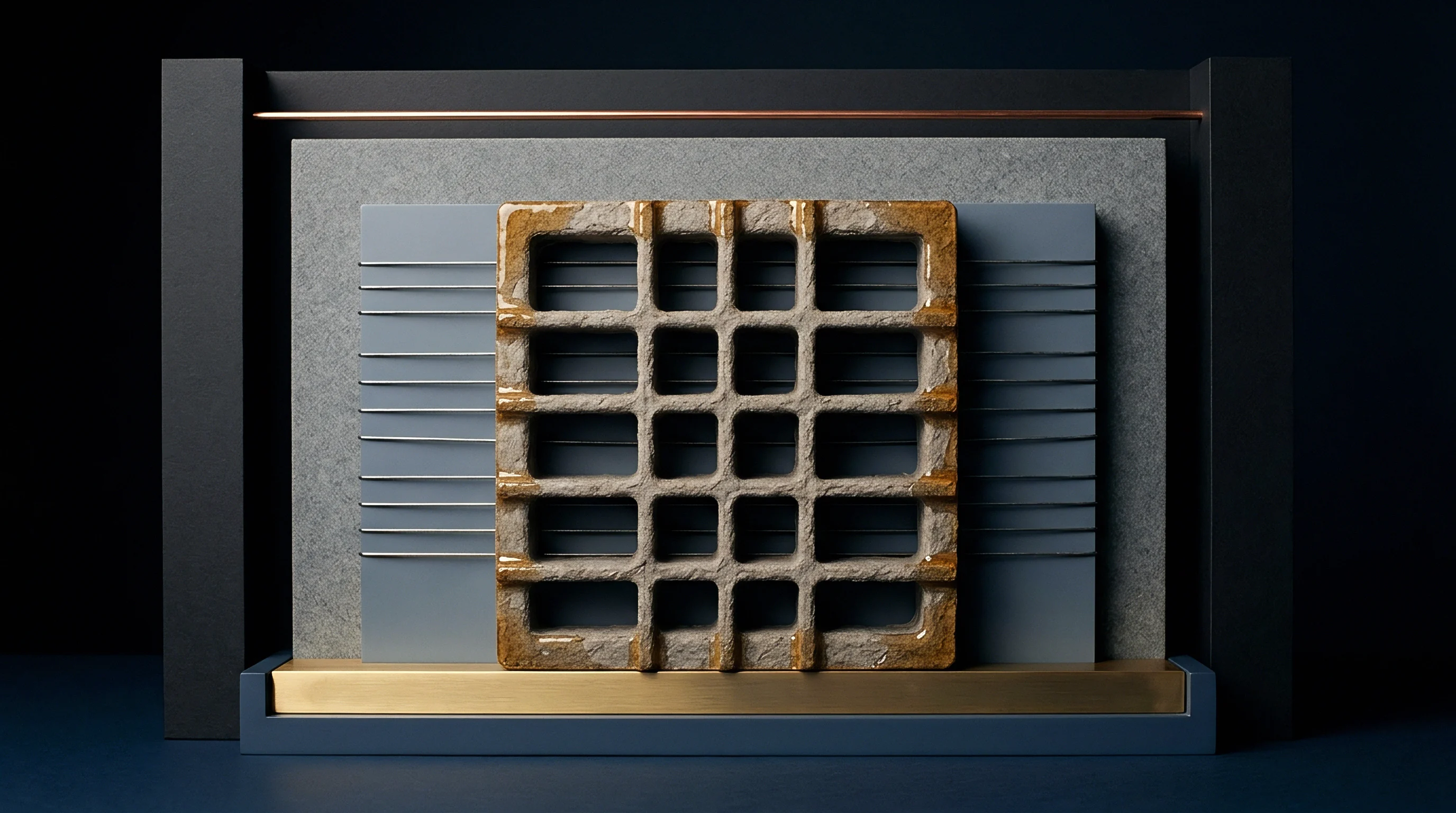
Combining blocky minerals with porous silica disrupts the continuous plane of mineral coatings. Rhombohedral ground calcium carbonate and scalenohedral precipitated calcium carbonate offer isometric, blocky particle structures that resist planar orientation during calendering. Adding synthetic amorphous silica with particle sizes between 3 and 6 micrometers introduces controlled surface asperities that project above the average coating boundary layer.
Soft-nip calendering at reduced temperatures between 40°C and 60°C and lower linear pressures between 20 and 40 kN per meter preserves these micro-asperities, allowing the coating to scatter eighty-five degree grazing light while keeping Parker Print Surf roughness values under 1.8 micrometers for acceptable print transfer.
Substrate coating failure modes causing elevated grazing specular gloss include:
- Platy Mineral Alignment resulting from high blade pressure during coating application, which forces tabular clay crystals into parallel surface planes.
- Latex Binder Migration occurring during high-temperature air-cap drying, creating a smooth polymer film that seals surface micro-asperities.
- Excessive Calender Burnishing caused by high-temperature hard-nip steel rolls that polish mineral faces into continuous optical mirrors.
- Narrow Pigment Size Distribution yielding tight particle packing without the spatial voids required to scatter steep-angle light rays.
| Pigment System Composition | 60-Degree Gloss (GU) | 75-Degree Gloss (GU) | 85-Degree Gloss (GU) | Parker Print Surf Roughness (µm) |
|---|---|---|---|---|
| 100% Fine Platy Kaolin Clay | 12.4 | 38.5 | 58.2 | 1.12 |
| 70% GCC / 30% Fine Clay Blend | 8.1 | 22.4 | 34.6 | 1.45 |
| 60% Coarse GCC / 30% PCC / 10% Synthetic Silica | 4.2 | 11.8 | 14.3 | 1.82 |
| 50% Scalenohedral PCC / 50% Calcined Clay | 5.5 | 14.2 | 18.9 | 1.68 |
Increasing surface micro-roughness at scales near the wavelength of visible light scatters grazing illumination without degrading low-angle color density.
Coarser isotropic pigment particles provide superior anti-glare scatter compared to fine platy minerals that align flat under calender nips.

Scale
Standardizing bench procedures prevents discrepancies between quality control laboratories and converting operations. Measuring grazing gloss demands strict adherence to defined optical geometries, as small variations in incidence angle or detector aperture introduce substantial errors at high angles.
Multi-Angle Measurement Protocols and Instrument Geometry
Quantifying low-angle light reflection relies on specialized photometer configurations specified in international standard documentation. ISO 8254-1 specifies a seventy-five degree geometry historically developed for paperboard evaluation, incorporating a convergence angle of 11.4 degrees for the illumination beam. ISO 2813 establishes an eighty-five degree geometry designed specifically for low-gloss industrial finishes, utilizing a narrow source aperture of 0.75 degrees and a receiver aperture of 4.3 degrees.
Standardizing light source polarization is critical because perpendicular and parallel polarization components exhibit radically different reflectance curves past seventy degrees incidence.

Sample Preparation and Bench Standardisation
Environmental conditions directly alter paperboard moisture content and physical dimensions prior to optical testing. Packaging board samples undergo conditioning under ISO 187 parameters at 23°C and 50% relative humidity for a minimum of twenty-four hours before bench analysis. Technicians verify instrument drift using polished black glass standards with known refractive indices of n = 1.567 at 589.3 nanometers wavelength, assigning a nominal 85-degree gloss value of 99.7 Gloss Units.
- Condition paperboard specimens in an environmental chamber at twenty-three degrees Celsius and fifty percent relative humidity for twenty-four hours per ISO 187 standards.
- Clean the primary optical black glass standard using dry optical tissue and calibrate the eighty-five degree photometer to ninety-nine point seven gloss units.
- Place the specimen flat on a vacuum plate to eliminate board curvature or micro-bowing during optical measurement.
- Take five distinct measurements across the sheet aligned with the paperboard machine direction and average the specular gloss values.
- Rotate the specimen ninety degrees to measure cross-machine direction reflection and calculate orientation gloss anisotropy.
- Record ambient room temperature, relative humidity, and instrument light source temperature to ensure measurement traceability.
ISO 2813 mandates specifying detector beam geometry alongside aperture angles to prevent legal ambiguity during cross-laboratory gloss audits.
Including ISO 2813 eighty-five degree gloss compliance in supply contracts shifts legal acceptance from visual inspection to bench verified optical tolerances.

Varnish
Applying clear liquid overprints across printed folding carton sheets alters the final boundary layer interaction. Overprint varnishes provide a versatile mechanical method to control grazing gloss on standard coated board substrates without altering mill coating formulations.
Overprint Formulations and Silica Dispersion
Matte fluid coatings rely on suspended particulate solids to disrupt smooth film formation during drying. Synthetic amorphous silica particles, precipitated or hydrogel derived, serve as primary matting agents in aqueous flexographic and offset varnishes. Silica particles with an average diameter between 4 and 8 micrometers protrude from 2 to 3 micrometer varnish films, creating microscopic surface bumpiness.
Micronized polyethylene or PTFE wax additives enhance slip properties while contributing secondary scattering, though oversized silica particles cause scuffing. When matting agents settle unevenly in press fountains, local gloss variations emerge across the printed web.

Converting Performance and Regulatory Compliance
Downstream packaging lines demand robust mechanical properties from surface treatments to prevent scuffing and cracking. High silica loadings increase matting performance but reduce film flexibility, risking score cracking when folding boxboard passes through high-speed folder-gluer lines. Fast-curing UV matte varnishes require careful photoinitiator selection to ensure complete cross-linking in heavy matte coats while maintaining compliance with EU Regulation 1935/2004 for food contact packaging.
Recyclability rules also restrict fluorinated additives, so packaging intended for paper stream recycling under EN 13430 guidelines must avoid non-repulpable cross-linked synthetic wax concentrations that impair fiber re-pulping efficiency.
Key overprint varnish qualification parameters for anti-glare packaging boards include:
- Matting Particle Distribution matching the wet film thickness to ensure uniform micro-asperity projection without causing surface dusting.
- Rheological Shear Stability under continuous flexographic pump circulation, preventing particle agglomeration and pan settling during long converting runs.
- Low Migration Integrity verified through extraction testing under Regulation 10/2011 for direct and indirect food contact packaging.
- Dry Rub Resistance assessed via TAPPI T 830 testing to prevent matte surface burnishing during high-speed transit and folding.
| Overprint System Chemistry | Added Pass Count | 60-Degree Gloss (GU) | 85-Degree Gloss (GU) | Recyclability Rating (EN 13430) | Pass Cost per 1000 SRA1 Sheets (USD) |
|---|---|---|---|---|---|
| Aqueous Silica Dispersion Matte Varnish | 1 | 5.2 | 12.1 | Pass (Fully Repulpable) | 14.50 |
| UV-Curable Micronized Silica Varnish | 1 | 6.8 | 18.4 | Pass with Minor Residue | 22.00 |
| Two-Pack Polyurethane Soft-Touch Coating | 1 | 2.1 | 6.3 | Conditional Pass | 38.00 |
| Offset Wax-Based Matte Paste Ink Overprint | 1 | 9.4 | 28.7 | Pass (Fully Repulpable) | 11.20 |
| Data measured on 300 gsm coated folding boxboard substrate under standard laboratory conditions (23°C, 50% RH). Costs reflect medium volume run baselines excluding make-ready scrap. | |||||
Inline aqueous matte overprints reduce specular sheen while preserving substrate recyclability under European repulping protocols.
Batch gloss spikes often originate from mill substrate variations rather than unstable matting agent settling in the coating pan.

Ledger
Financial analysis determines whether low-angle gloss targets belong at the paper mill or on the converting press. Sourcing decisions balance raw board premium costs against post-print finishing pass operational charges, where pass count directly drives total cost.

Commercial Tradeoffs between Substrate and Added Pass
Selecting between pre-coated anti-glare board stocks and custom overprint passes alters upfront material expenditure and press line risk. Specialty mill-coated matte boards featuring engineered PCC and silica topcoats eliminate downstream coating steps entirely. Buying standard high-volume gloss or satin board and applying an inline waterborne matte varnish introduces an added material pass on press but preserves substrate purchasing flexibility.
Offline soft-touch or high-performance UV matte passes incur dedicated press setup charges, additional make-ready sheets, and elevated spoilage rates.
Worked Run Economics and Spoilage Arithmetic
Calculating total cost per unit requires accounting for setup waste, running scrap, ink consumption, and machine hour rates. Spoilage mounts during complex multi-pass runs. Take a production run of 50,000 packaging sheets printed on SRA1 format (640 mm x 900 mm) 300 gsm board.
Standard clay-coated folding boxboard costs 1,250 USD per metric tonne, whereas specialized mill-coated matte board commands an 18 percent premium at 1,475 USD per tonne. Applying an inline aqueous matte varnish pass on standard board adds 14.50 USD per thousand sheets in chemistry costs plus 1.5 percent running spoilage. Running an offline UV soft-touch coating adds a separate machine pass costing 38.00 USD per thousand sheets, plus 180 USD make-ready tooling and 3.0 percent running spoilage.
Extended producer responsibility packaging fees in several European jurisdictions impose monetary surcharges up to 85 EUR per tonne on boards carrying non-separable plastic film laminations, favoring direct-coated or aqueous-finished boards.
| Production Strategy | Substrate Cost (USD) | Finishing Pass Cost (USD) | Spoilage Waste Cost (USD) | Total Job Cost (USD) | Effective Unit Cost per Sheet (USD) |
|---|---|---|---|---|---|
| Strategy A: Premium Mill-Coated Matte Substrate (Inline Print Only) | 4,956.00 | 0.00 | 99.12 | 5,055.12 | 0.1011 |
| Strategy B: Standard Board + Inline Waterborne Matte Varnish Pass | 4,200.00 | 725.00 | 147.00 | 5,072.00 | 0.1014 |
| Strategy C: Standard Board + Offline UV Soft-Touch Varnish Pass | 4,200.00 | 2,080.00 | 288.40 | 6,568.40 | 0.1314 |
Evaluating substrate mill certificates against downstream press capabilities protects converters from unrecoverable finish rejections before board enters the pressroom floor.