Rotary Scoring Crease Quality Evaluation through Piezoelectric Acoustic Sensors
Inline piezoelectric acoustic sensors detect internal board ply fracture during rotary scoring, enabling real-time crease depth control and waste reduction.


Acoustics
Rotary scoring forces paperboard through localized compressive shear zones to construct precise folding hinges. Multi-ply packaging substrates like solid bleached board and coated folding boxboard possess distinct fiber orientations and chemical binder distributions across their cross-sections. When a scoring rule enters the substrate against a female anvil disc, internal ply bonds yield mechanically to create an internal delamination pocket.
Fiber bonds release under shear. This controlled internal fracture permits clean folding without cracking the decorative outer print liner or tearing the back liner during carton erection.

Stress Wave Generation in Fiber Matrix
Mechanical strain energy accumulates rapidly within the cellulose structure during initial die penetration. Delamination releases transient strain energy. High-speed converting lines operating at line speeds between 200 and 450 meters per minute transmit compression pulses into the board structure in microsecond durations.
These sudden micro-structural fractures generate micro-seismic elastodynamic waves that propagate omnidirectionally through the board matrix. Stress waves travel through board plies. The velocity and frequency distribution of these elastic waves depend directly on the density, elasticity modulus, and moisture content of the web.
Cellulose fibers emitting elastic transient signals exhibit distinct spectral energy signatures. High-frequency acoustic bursts, occurring between 100 kHz and 500 kHz, correlate directly with fiber-to-fiber bond rupture and micro-delamination between discrete board plies. Lower frequency mechanical vibrations generated by roll rotation, gear engagement, and press drive shafts occupy frequency bands below 50 kHz.
Sensor placement along the acoustic transmission path captures these transient elastodynamic waves as they exit the nip area.
A 350 gsm solid bleached sulphate board releases acoustic strain energy peaking between 120 kHz and 280 kHz during controlled score deformation at 250 meters per minute.

Transient Energy Release Mechanisms
Micro-structural failure modes in paperboard produce distinct acoustic amplitude profiles. Tensile failure of individual cellulose fibers generates sharp, brief energy spikes characterized by high crest factors and rapid decay times. Matrix shear, involving fiber sliding and starch binder rupture, produces lower amplitude, longer duration acoustic bursts.
Inadequate scoring rule pressure fails to generate the strain energy necessary to initiate interior ply separation, resulting in high fold resistance and bulging carton edges on downstream packaging machines.
Excessive rule penetration crushes the entire board caliper, severing top-layer fibers and reducing score durability. The energy released during catastrophic liner fracture shifts peak acoustic energy toward higher amplitude bands, producing distinct signal bursts easily separated from ideal delamination profiles. Real-time capture of these transient energy distributions enables precise monitoring of internal material transformations while the web moves through the rotary scoring unit.
Inconsistent ply delamination across a score line causes asymmetrical fold geometry, leading to high reject rates during automated carton gluing passes.


Notch
Male scoring discs working in conjunction with recessed female anvil rings define the geometry of the crease impression. The physical dimensions of the scoring rule apex radius, side relief angle, and female channel width govern the strain distribution across the board thickness. Proper score formation hinges on forcing the central plies into the channel without cutting or severe tensile tearing of the surface plies.
Tooling alignment holds critical tolerances across continuous production passes.

Anvil Clearance and Rule Geometry
Rule penetration depth determines the volume of material forced into the female anvil groove. Rule alignment dictates crest height. Incorrect female channel width selection changes the deformation mechanics completely.
Excessive channel width permits board flexure without establishing localized ply shear, yielding weak scores that spring back after folding. Insufficient channel width pinched between rigid steel tool faces crushes the board matrix, causing liner splitting along the score spine.
Rule wear gradually alters the apex profile over high-volume production runs. Tool wear shifts peak frequency. As the scoring edge flattens, the contact area expands, requiring higher nip forces to achieve equivalent penetration depths.
Excessive depth cuts top plies. Piezoelectric acoustic sensors detect this continuous change in contact mechanics, tracking the subtle transition from sharp ply shearing to broad matrix compression before visual surface defects manifest on the sheet.
- Adjusting rule penetration depth prevents outer liner cracking while achieving required internal fiber delamination across variable caliper runs.
- Aligning female groove centers eliminates asymmetrical strain distribution along the folding hinge axis.
- Verifying anvil ring hardness maintains consistent impression profiles across high-volume continuous manufacturing passes.
- Matching scoring speed to moisture content mitigates brittle fiber shearing during low-humidity converting operations.

Deformation Dynamics across Caliper Profiles
Substrates ranging from light folding boxboard at 250 micrometers caliper to heavy virgin liners exceeding 600 micrometers demand specific tool geometry relationships. The depth of the female channel typically scales between 1.4 and 1.8 times the board caliper, while channel width scales between 1.6 and 2.2 times the caliper plus the rule thickness. Dimensional variances within paperboard reels require dynamic verification to prevent under-scoring or deep matrix rupture.
| Board Caliper (µm) | Rule Thickness (mm) | Groove Width (mm) | Peak Acoustic Amplitude (dB) | Ply Delamination Profile |
|---|---|---|---|---|
| 250 | 0.71 | 1.20 | 42 to 48 | Uniform interior ply shear |
| 350 | 1.05 | 1.75 | 50 to 56 | Optimal central delamination pocket |
| 450 | 1.42 | 2.30 | 58 to 65 | Extended multi-ply shearing |
| 550 | 2.13 | 3.10 | 68 to 74 | Deep matrix separation with high energy |
| Data acquired using solid bleached sulphate board conditioned at 23°C and 50% relative humidity under ISO 187 standard conditions. | ||||
ISO 5628 bending resistance metrics fall by more than forty percent when internal fiber shearing occurs without exterior liner fracture.
Tooling suppliers frequently contend that dimensional variations in substrate caliper account entirely for inconsistent crease depth, ignoring the gradual clearance shifts that occur as mechanical anvil shaft bearings warm up across a full operational shift.


Transducer
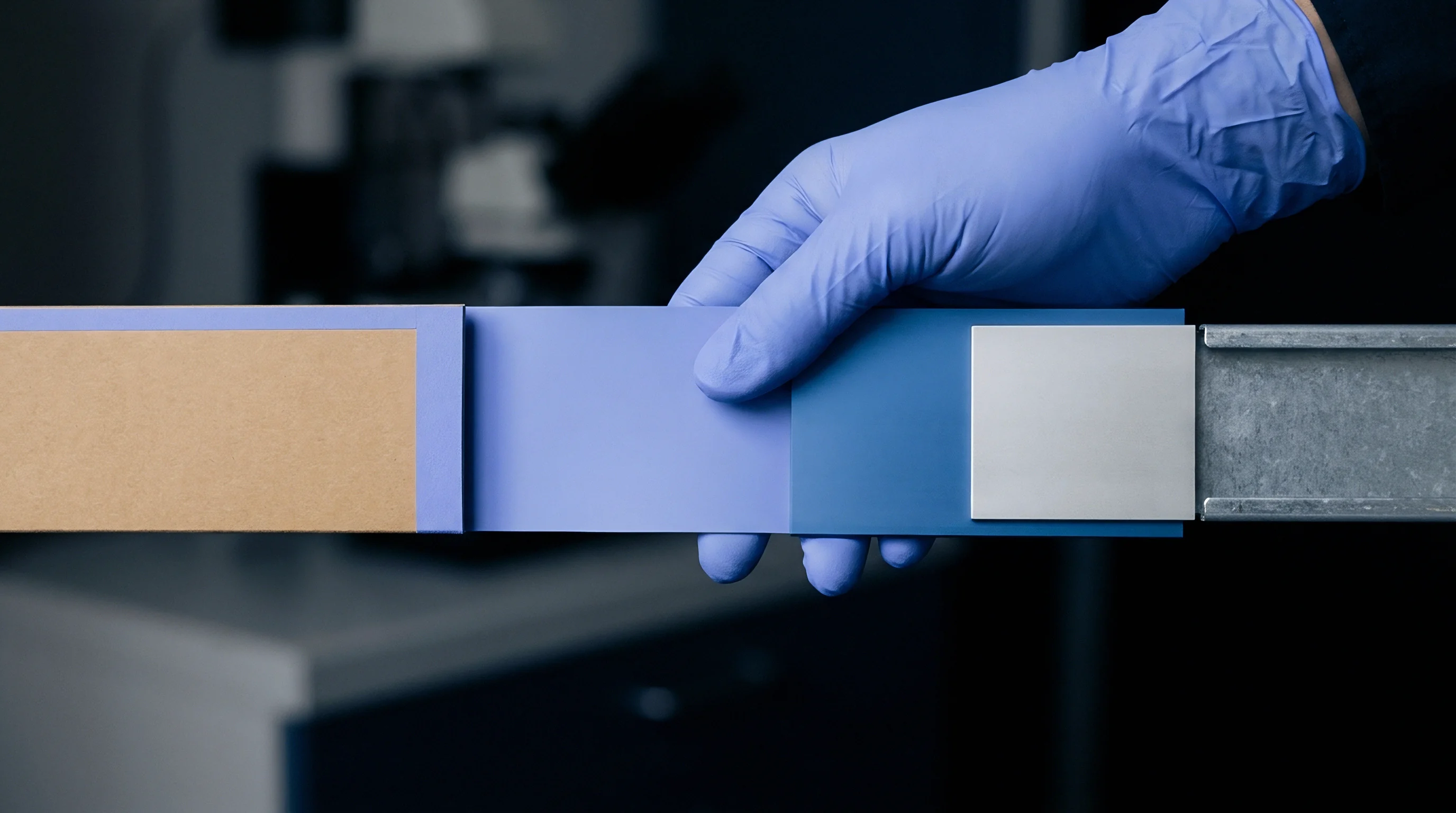
Piezoelectric sensor elements convert mechanical stress waves into high-fidelity electrical charge signals through the direct piezoelectric effect. Lead zirconate titanate ceramics, polarization-treated under high voltage, form the core sensing elements inside industrial acoustic emission probes. These inorganic crystals yield high voltage sensitivity and exceptional stiffness, enabling them to track transient high-frequency displacement pulses down to sub-nanometer amplitude scales.
Piezoelectric Crystal Selection and Mounting
Sensor construction determines frequency response bandwidth and signal-to-noise performance. Piezo elements output proportional charge. Resonance-type transducers exhibit sharp sensitivity peaks near specific frequencies, amplifying low-energy fiber fracture signals within selected target bands.
Broadband sensors offer flat frequency response curves across wide spectra, enabling detailed waveform analysis across variable material grades.
Coupling mechanics govern acoustic signal transfer from the rotary anvil assembly to the piezoelectric crystal. Moisture alters wave velocity. Direct mounting on non-rotating anvil housing blocks using high-viscosity acoustic couplants or magnetic bases minimizes attenuation across structural interfaces.
Attenuated signals distort energy counts. Rotating shaft installations utilize specialized acoustic slip rings or telemetry modules to transfer charge signals from moving scoring rings without signal degradation.
- Selecting resonant frequency bands amplifies subtle ply fracture waves above lower-frequency machine noise floors.
- Ensuring flat housing contact maintains uniform acoustic impedance across the sensor interface during continuous vibration.
- Positioning transducers near scoring nips minimizes structural signal attenuation through heavy machine side-frames.
- Utilizing differential charge amplifiers reduces electromagnetic interference induced by adjacent high-power press drive motors.

Signal Pre-Amplification and Bandpass Filtering
High electrical impedance inherent to piezoelectric ceramic elements necessitates immediate pre-amplification near the sensor location. Low-noise charge amplifiers transform high-impedance voltage signals into robust low-impedance signals suitable for long-distance cable transmission to signal processing units. Pre-amplifier gain settings match the acoustic output range of specific substrate calipers to maximize signal dynamic range without saturating analog-to-digital converters.
| Mounting Position | Bandwidth Range (kHz) | Signal Attenuation (dB) | Noise Floor Level (mV) | Installation Complexity |
|---|---|---|---|---|
| Direct Anvil Bearing Block | 100 to 400 | 2 to 4 | 12 | Moderate |
| Rotating Anvil Shaft Center | 50 to 750 | 0.5 to 1.5 | 8 | High |
| Scoring Station Frame Block | 50 to 200 | 12 to 18 | 35 | Low |
Direct anvil shaft mounting delivers superior signal clarity compared to frame-mounted sensors isolated by bearing oil films.
Quality management standards like ISO 9001 demand calibrated signal verification protocols for inline sensing hardware, altering how packaging converters document tool maintenance cycles and quality audit records.

Calibration
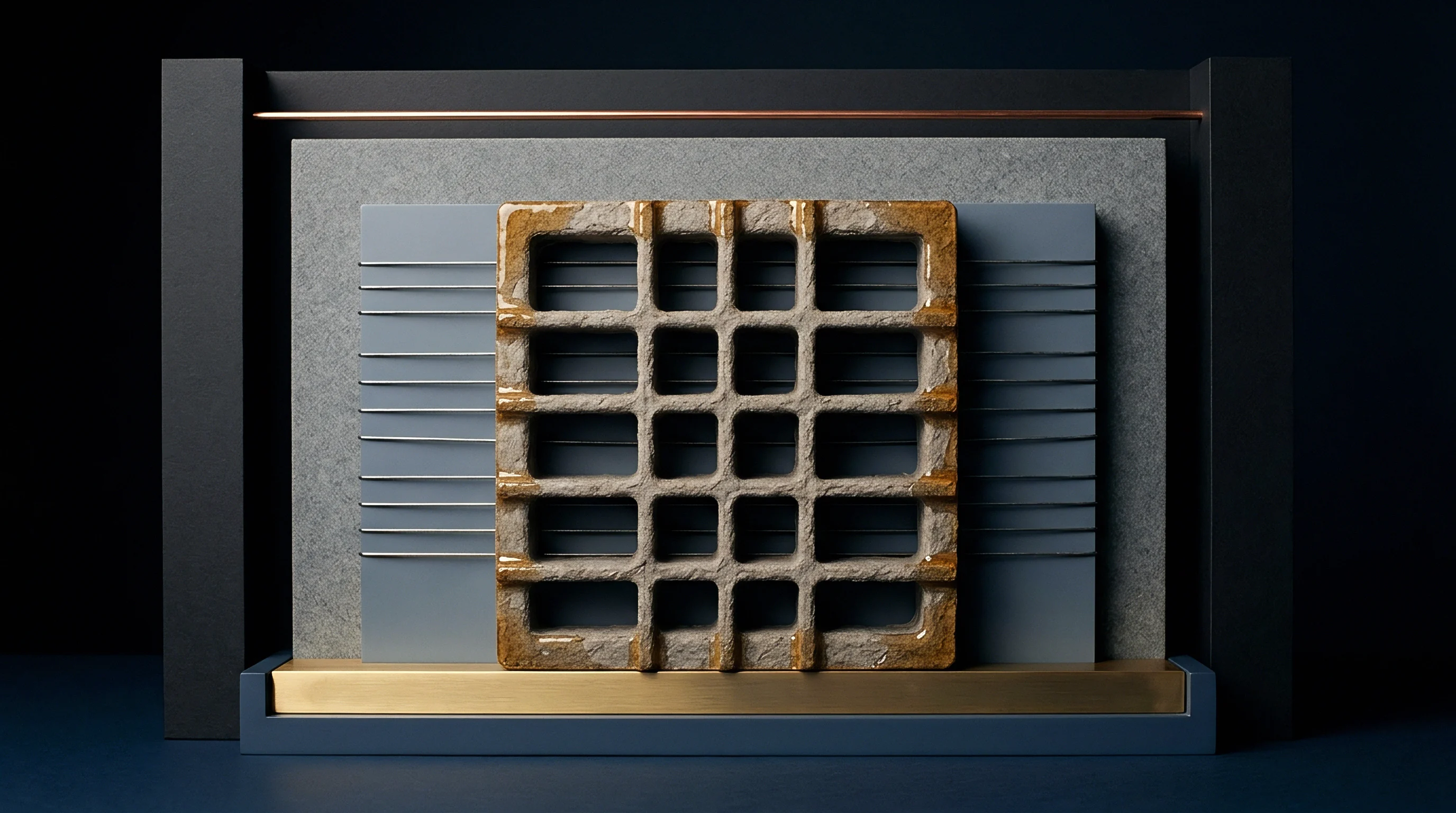
Filtering mechanical press noise out of piezoelectric charge outputs isolates true substrate structural failure signals. High-speed converting machinery generates significant continuous acoustic energy through gear meshing, bearing rotation, belt drive pulses, and web tension variations. Signal isolation algorithms process raw sensor streams to extract valid fiber fracture acoustic events from background press interference.

Noise Floor Isolation in High Speed Press Environment
Frequency filtering removes stable low-frequency press vibrations. Noise floors mask subtle fractures. High-pass analog or digital filters with cutoff thresholds set between 80 kHz and 100 kHz eliminate drive-train harmonics.
Harmonic peaks obscure ply shearing. Dynamic thresholding continuously measures background noise amplitudes during non-scoring operational windows, automatically updating trigger levels to accommodate press speed changes.
Time-domain gating isolates acoustic signal acquisition precisely to the duration when board material passes through the scoring nip zone. Clean scores prevent liner bursting. Syncing acoustic sampling windows with rotary shaft encoder inputs prevents transient shocks from upstream feeding units or downstream die-cutting tools from registering as false scoring events.
- Establishing baseline noise profiles captures mechanical ambient vibration spectra across press speed ramps.
- Setting fixed voltage thresholds eliminates low-amplitude mechanical rumble from event extraction logic.
- Applying bandpass digital filters isolates specific cellulose fiber yield frequency spectra between 150 kHz and 350 kHz.
- Correlating encoder position pulses limits signal evaluation strictly to the score line deformation window.

Acoustic Event Thresholding and Ring down Metrics
Quantifying crease quality relies on calculating discrete acoustic parameters from filtered signal waveforms. Peak amplitude records the maximum voltage excursion within an event burst, reflecting maximum instantaneous fracture intensity. Signal duration measures the time elapsed between initial threshold crossing and final decay below noise levels, mapping directly to total deformation length within the score nip.
Ring-down counts quantify the total number of times an acoustic waveform crosses the preset voltage threshold during a single creasing event. High ring-down counts combined with moderate peak amplitudes indicate extensive, uniform micro-delamination throughout the interior fiber matrix. Low ring-down counts with high peak amplitudes signal localized, aggressive fiber fracture or surface liner splitting, indicating poor crease ductility.
Continuous acoustic monitoring reveals subtle fiber shearing variations long before visible cracking appears on folded box edges.
How do subtle shifts in ambient machine temperature alter acoustic wave propagation across cast steel anvil housings during twenty-four-hour continuous converting passes?

Yield
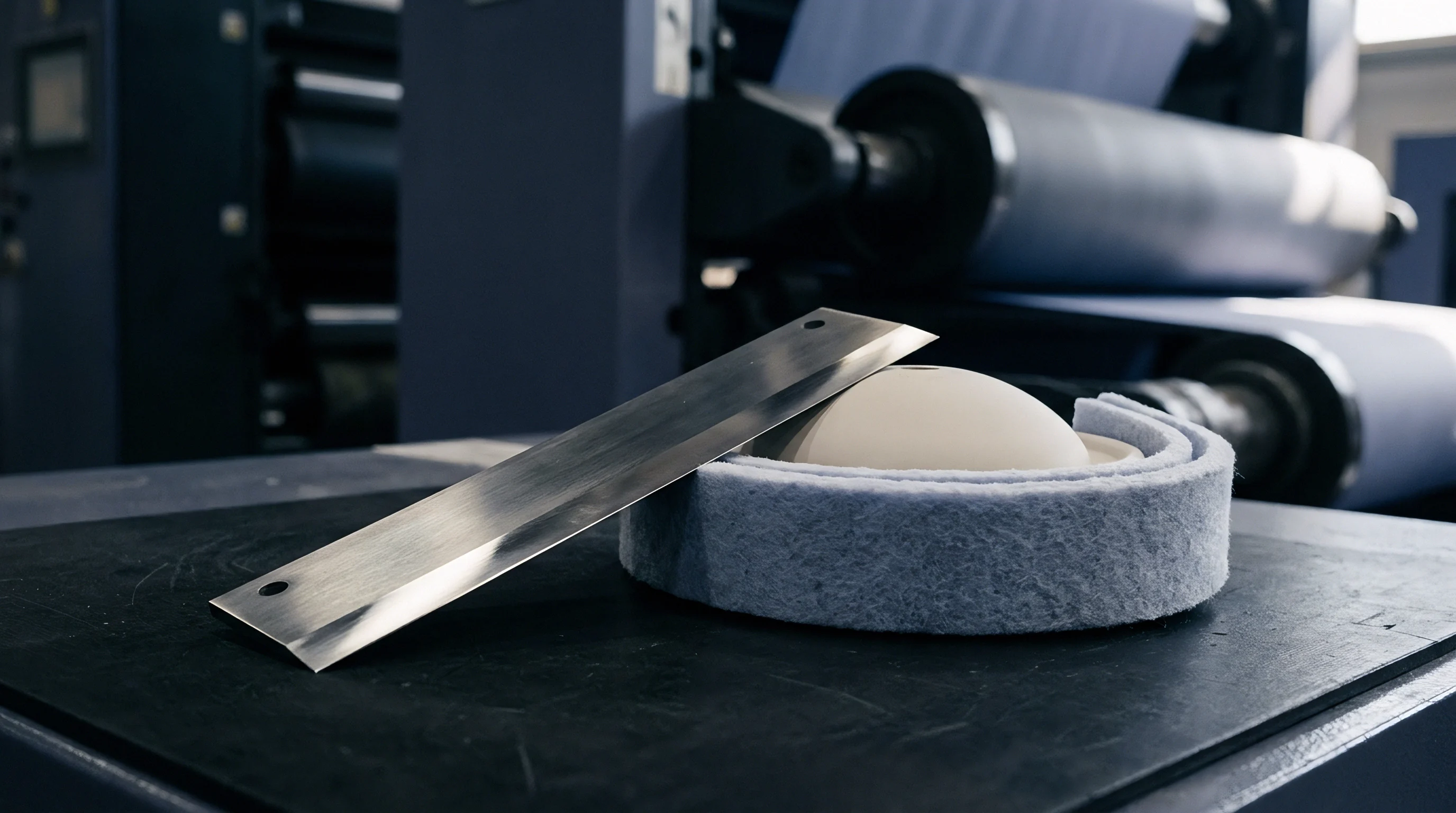
Inline acoustic evaluation transforms quality control from retrospective manual testing to real-time process control. Inline monitoring cuts material waste. Automated processing of piezoelectric acoustic emission data enables instant verification of crease structural integrity at press production speeds exceeding 300 meters per minute.
Immediate defect detection prevents thousands of meters of sub-standard board from passing through subsequent printing, laminating, and die-cutting steps.

Inline Waste Reduction and Automatic Rejection
Connecting acoustic event processing units directly to press control systems enables automated sheet diversion. Automated gates divert damaged blanks. When energy metrics fall outside defined quality windows, indicating under-scored stiff folds or over-scored cracked liners, high-speed divert gates route off-spec material into scrap channels within milliseconds of nip exit.
Scrap reduction lowers unit costs.
Real-time scoring evaluation eliminates reliance on offline laboratory spring-back tests like ISO 5628 bending resistance or manual crease visual inspections. Manual testing typically captures one sheet every several thousand produced, allowing extended defect runs to occur unnoticed between sampling intervals. Inline acoustic monitoring evaluates every individual score line continuously across the entire job lot.

Tooling Wear Tracking and Unit Cost Metrics
Consider a high-speed folding boxboard packaging line processing a 50-tonne order of 350 gsm board at a raw material cost of $1,350 per tonne. The machine runs at 350 sheets per minute. Standard manual quality control protocols inspect five sample sheets every 3,000 sheets produced.
A tooling alignment drift or scoring rule nick occurring immediately after a sampling pass runs undetected for 2,995 sheets, generating roughly 850 kilograms of defective board before discovery, incurring a direct scrap material loss of $1,147 plus wasted machine operating time.
Implementing inline piezoelectric acoustic monitoring limits off-spec output to a maximum of three continuous defective sheets before press control intervention, reducing scrap volume to under one kilogram per defect event. Over an annual operating volume of 15,000 tonnes, maintaining acoustic inline quality bounds reduces overall scrap rates from an industry average of 2.8 percent down to less than 0.6 percent, yielding direct material cost savings exceeding $44,000 annually while protecting press productivity.
Acoustic energy trend lines tracked across multiple shifts provide accurate predictive indicators for die maintenance, signaling tool sharpening requirements long before score profiles exceed allowable physical tolerances.