Calculating Baseline Deckle Trim Loss across Variable Secondary Slitter Web Width Schedules
Calculating baseline deckle trim loss requires subtracting secondary slit widths and edge trim from parent web deckle to determine baseline scrap percentage.
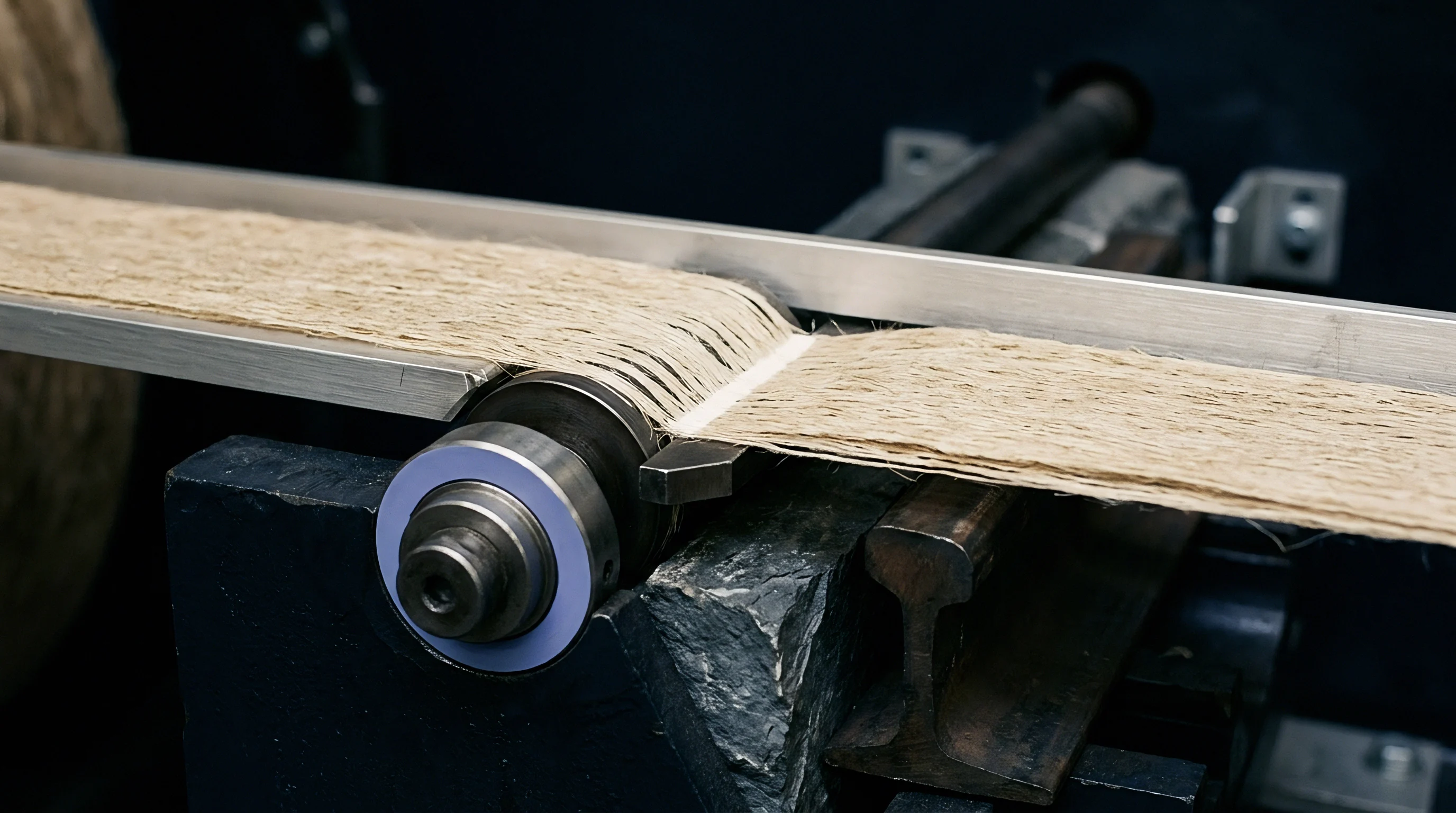

Reel
Parent paper webs emerge from the machine press section with non-uniform moisture and caliper distributions across the master sheet width. The paper machine deckle defines the total usable width of paper or board produced during a continuous manufacturing run. Machine deckle is governed by headbox slice geometry, wire width, and edge shower positions.
Papermakers set primary web width boundaries to protect mechanical wire edges and maintain web tracking across dry cans. The physical web width exiting the reel section exceeds the commercial specification, requiring primary slitting on the paper machine winder. Primary slitting removes rough deckle edges, known as wet-end trim or mill side trim, which returns directly to the hydrapulper as un-dried couch pit scrap or repulped dry broke.
Calculating the true baseline deckle trim loss requires separating primary mill deckle loss from secondary slitter trim loss. Primary deckle loss occurs at the paper mill winder when parent reels cut into master customer rolls. Secondary deckle loss occurs downstream at converting facilities or narrow-web slitter-rewinders, where master rolls are sliced into specific customer web width schedules.
Primary paper machines run fixed width. When customer order width schedules fail to sum to the full net usable parent deckle, the unallocated web section becomes unusable side trim. This unused deckle scrap incurs full raw material, pulping, energy, and freight costs while yielding only scrap repulping credit.

Master Web Geometry and Usable Width Limits
Paper machines deposit stock onto forming wires across continuous spans ranging from 2,800 to 9,500 millimeters. Hydraulic slice adjustments govern the basis weight profile across the machine direction, but physical web edges experience localized cross-machine drainage variations. Basis weight drops off rapidly within 40 millimeters of the web edge due to lateral slurry spreading and boundary layer turbulence.
Caliper spikes occur simultaneously along outer boundaries where shrinkage during drying pulls the edge inward, creating localized high-density bands known as hard deckle edges.
| Substrate Grade Specification | Basis Weight Range (g/m²) | Nominal Machine Deckle (mm) | Primary Edge Trim Allowance per Side (mm) | Maximum Usable Web Deckle (mm) |
|---|---|---|---|---|
| Solid Bleached Sulfate (SBS) Board | 220 ~ 380 | 4,200 | 45 | 4,110 |
| Unbleached Kraft Linerboard | 125 ~ 440 | 6,800 | 60 | 6,680 |
| Coated Fine Paper (Woodfree) | 80 ~ 170 | 5,400 | 35 | 5,330 |
| Flexible Packaging Kraft Paper | 40 ~ 90 | 3,300 | 25 | 3,250 |
Primary roll winders trim these defective outer boundaries before shipping reels to converters. The remaining usable web width represents the maximum physical deckle available for secondary slitter scheduling. Substrates with higher bulk and stiffness, such as solid bleached board, require wider primary edge trim allowances because edge caliper spikes cause web weaving and offset rewinding at higher line speeds.
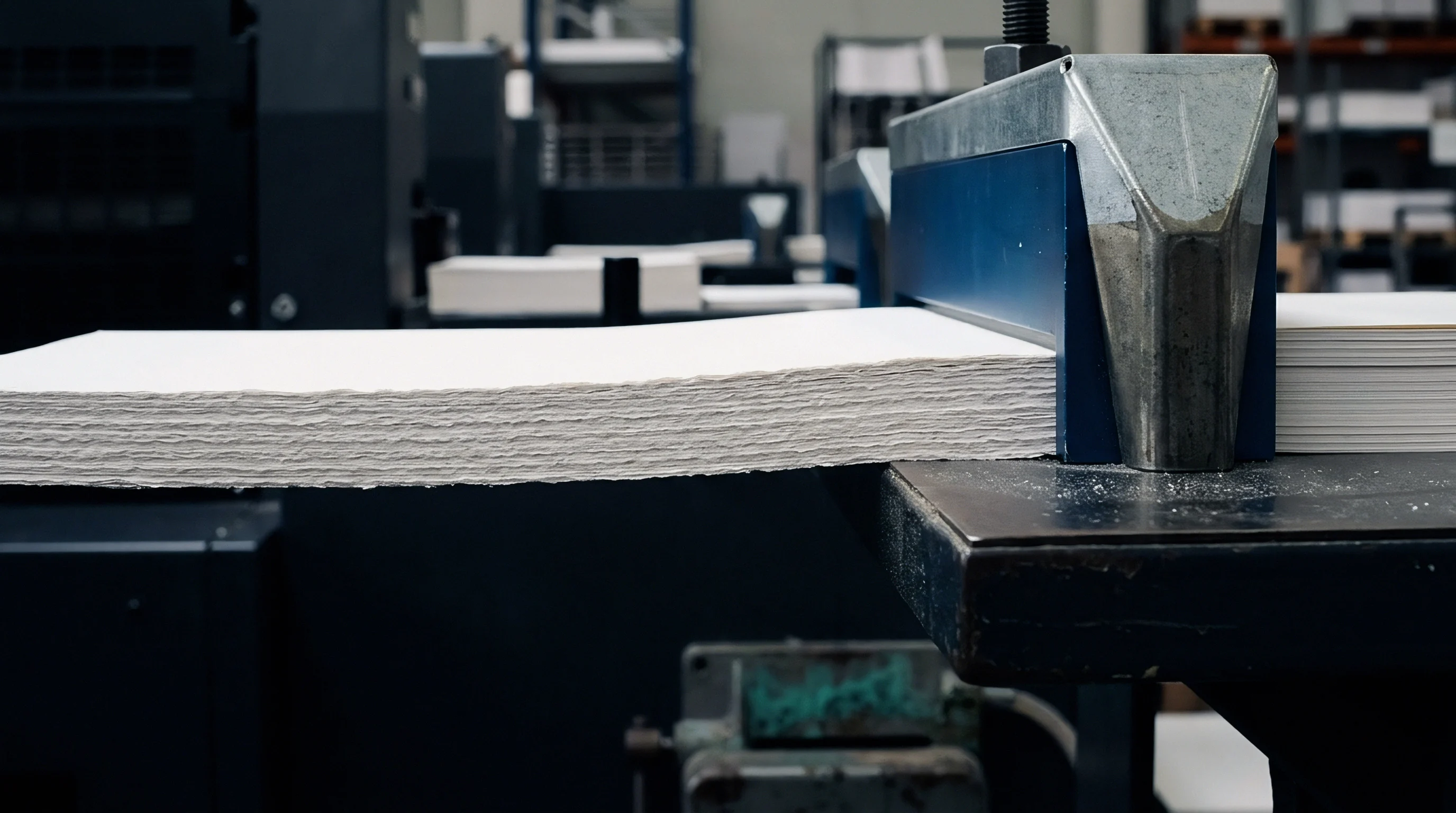
Primary Edge Trim and Caliper Profile Variance
The raw margin of a sheet contains irregular fiber orientation and density drops that make the outer 50 millimeters unusable for converting. Cross-machine caliper variability destabilizes secondary unwinds when high spots create uneven roll tension across multi-roll shafts. Profile controls such as induction heating rolls and localized air knives flatten cross-machine thickness drift, yet baseline trim allowances remain mandatory.
Paper web tension varies across width. If secondary slitter operators attempt to harvest rolls from the extreme 20 millimeters of usable parent deckle, roll diameter variation causes web breaks during high-speed printing or laminating.
Primary web deckle utilization improves when master roll widths match the natural trim envelope of the paper machine.
Parent roll deckle width varies between paper mills even for identical nominal width ratings. Thermal expansion of drying cylinders, wire tension drift, and wet-end furnish drainage modifications alter the physical sheet width by up to 0.8 percent between production runs. Mill technical managers state that cross-direction moisture profiles vary by season, preventing tighter side-trim guarantees on master parent rolls.

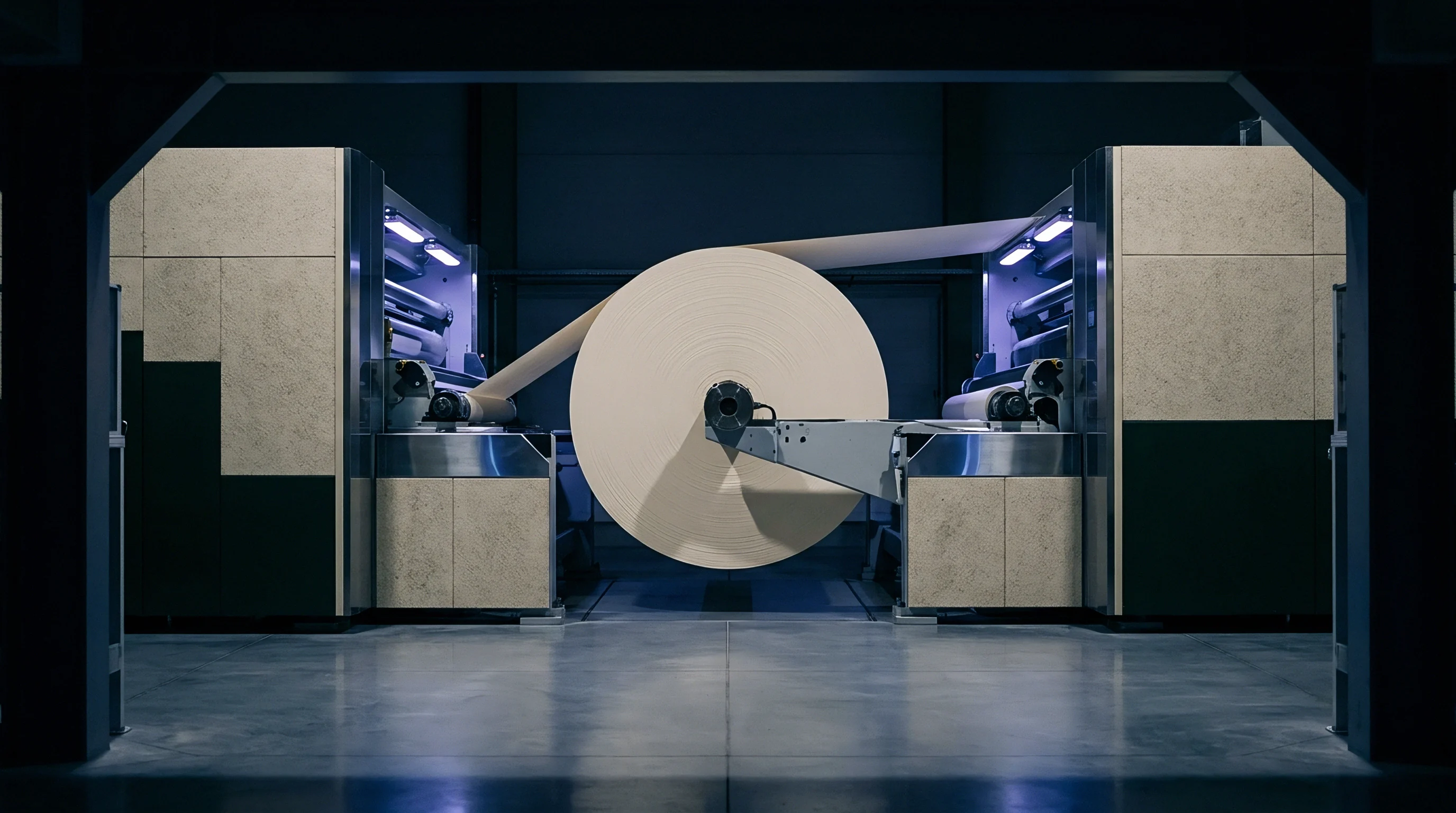
Patterns
Calculating deckle loss across variable slit orders requires constructing structured width combinations against the available usable deckle. A secondary slitter web schedule combines multiple customer roll widths onto a single unwind reel to maximize sheet usage across the parent deckle. The secondary slitter cuts the master web into parallel streams in a single pass.
When order quantities for individual web widths differ, the slitter operator shifts blade positions across successive master rolls, generating a sequence of distinct cutting patterns. Deckle loss accumulates whenever a specific pattern fails to total the exact usable deckle width.
Mathematical modeling of secondary deckle loss relies on one-dimensional cutting stock equations. The master roll usable deckle acts as the fixed container capacity. Customer roll width orders function as discrete items with specific demand counts.
The mathematical challenge lies in selecting a combination of cutting patterns that minimizes total parent reel consumption while satisfying all order quantities. Unplanned side trim creates scrap tonnage. Small secondary width variances create significant changes in total trim waste when volume increases.

Mathematical Formulation of One-Dimensional Cutting Schedules
Linear programming models convert a customer demand vector into continuous roll width combinations that fill parent web boundaries. Let the usable parent reel deckle width be represented by constant uppercase W. Let small w sub i represent the target secondary roll width for item i, and let x sub j represent the number of parent reels cut using pattern j. The integer variable a sub ij defines how many rolls of width w sub i are cut in pattern j.
The linear programming objective minimizes total parent reels used while keeping trim loss per pattern below allowable thresholds.
- Quantify net usable parent deckle width by subtracting primary mill edge allowances from the measured master reel width.
- Compile target secondary roll width demands into a vector of required roll counts and minimum order quantities.
- Generate all feasible cutting patterns where the sum of secondary roll widths plus required secondary knife kerfs remains equal to or less than net usable deckle width.
- Formulate the integer linear program to solve for pattern frequency counts that minimize total unusable side trim mass.
- Calculate baseline deckle trim loss percentage by dividing unallocated width tonnage by total parent reel tonnage consumed.
Pattern generation routines evaluate thousands of possible width combinations within seconds. Manual scheduling by rewind operators rarely achieves optimal deckle fill because human planners favor uniform single-width roll layouts over complex multi-width combinations. Yield loss scales with deckle mismatch.
Automated pattern generation identifies narrow filler roll options that capture leftover deckle width before scrap is generated.
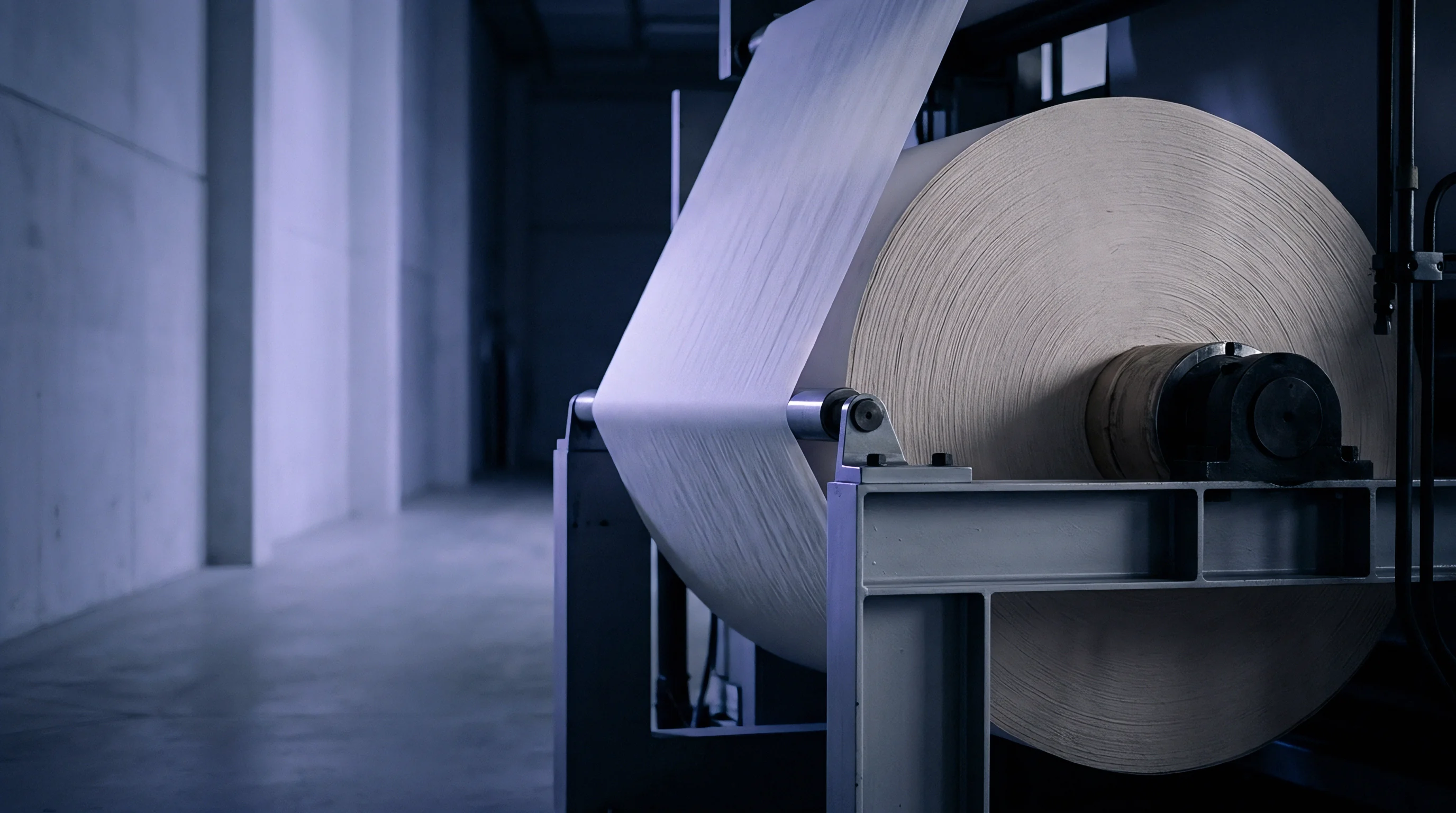
Deckle Filling Procedures and Combinatorial Rules
Converting planners sort target roll dimensions into descending magnitude before calculating web combinations. Placing wide rolls first establishes the structural framework of the pattern array, leaving narrow gaps that accept standardized filler widths. Standardized filler widths consist of stock inventory sizes, such as 100-millimeter or 150-millimeter tape cores, which converters hold for general stock sales.
Conditioned paperboard samples tested under TAPPI T 402 at 23 degrees Celsius and 50 percent relative humidity display an edge shrinkage allowance of 1.8 percent across the machine deckle.
Web wander demands edge safety margins. The secondary slitter requires an edge clearance margin to account for web weave caused by unwind core displacement or braking torque fluctuations. Secondary web schedules that omit edge safety allowances experience frequent edge dropouts, where outer slit blades run off the physical paper web, destroying entire customer rolls.
Combining wide customer roll items with narrow filler widths consistently reduces residual deckle waste across variable slitter runs.


Edge
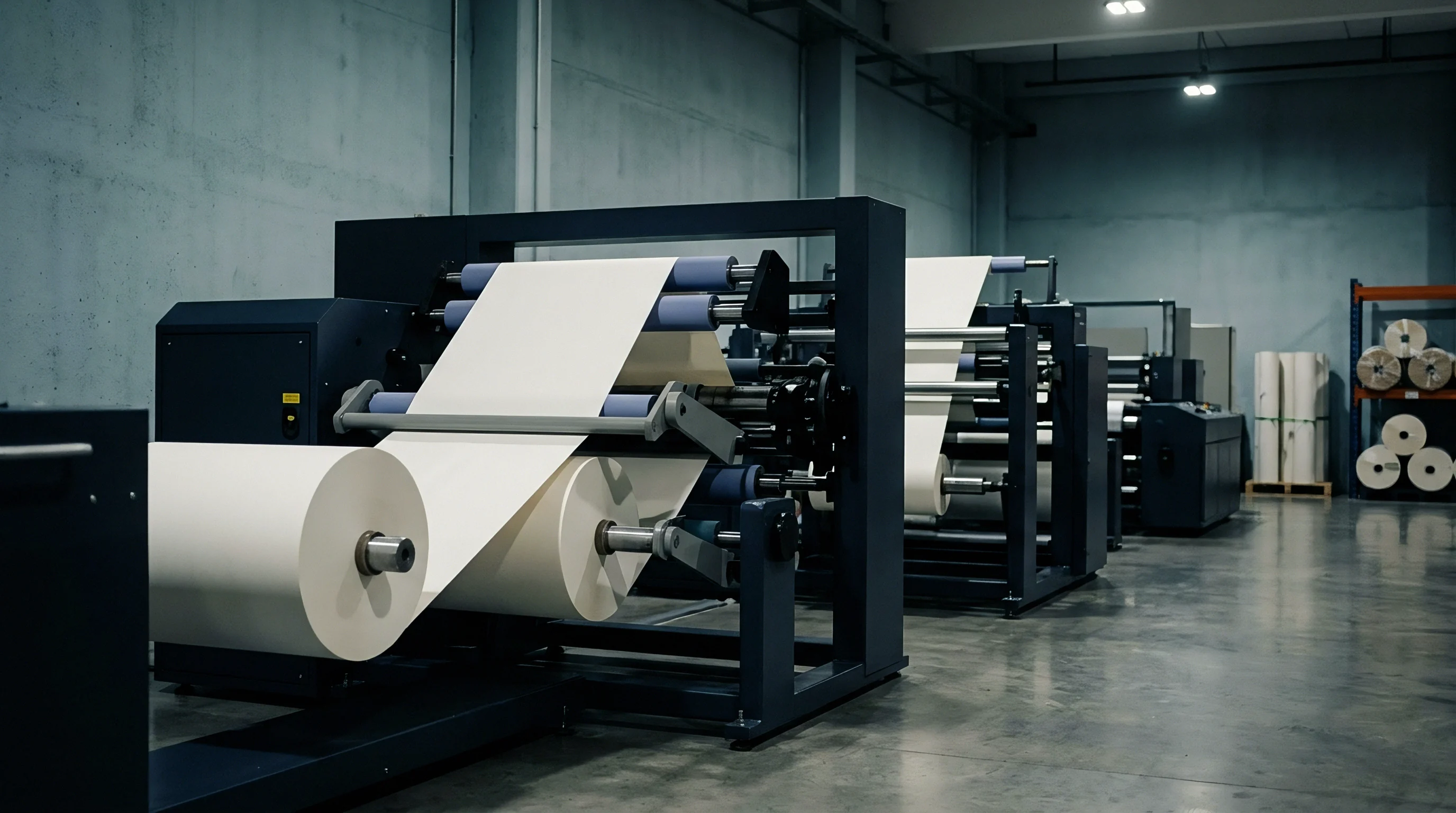
Secondary rewinders use pairs of circular top and bottom shear knives to slice parent web widths into narrow customer slit rolls. Top knives are overlap-mounted shear blades driven against motor-driven bottom anvil rings. The knife contact point subjects paper fibers to intense localized shear stress, cleanly shearing the sheet matrix.
Physical slitting creates blade wear, dust release, and micro-fractures along cut edges. Insufficient side trim width at the secondary slitter prevents outer knives from maintaining constant bilateral web tension, causing edge tearing or sliver formation.
What Secondary Slitter Trim Limits Protect Rewind Stability?
Maintaining continuous control through the cutter section demands a side margin of 15 millimeters per boundary on paperboard under 200 grams per square meter. Lighter paper grades, including flexible packaging kraft under 60 grams per square meter, operate with side trim margins as low as 8 millimeters per edge when web tracking control systems use ultrasonic edge sensors. Thicker packaging substrates require wider side trim allowances to prevent blade deflection.
When solid bleached board at 350 grams per square meter runs through secondary shear knives, side trim narrower than 20 millimeters curls away from the blade and hitches in the trim removal suction chutes.
| Substrate Grammage Class | Shear Knife Cant Angle (Degrees) | Minimum Secondary Side Trim (mm) | Blade Penetration Depth (mm) | Dominant Cut-Edge Failure Mode |
|---|---|---|---|---|
| Lightweight Kraft (40 ~ 80 g/m²) | 0.25 ~ 0.50 | 8 ~ 10 | 0.8 ~ 1.0 | Edge tear from low lateral stiffness |
| Medium Paperboard (150 ~ 250 g/m²) | 0.50 ~ 0.75 | 12 ~ 15 | 1.0 ~ 1.5 | Slitter dust and edge fiber pulling |
| Heavy SBS / Folding Boxboard (300 ~ 450 g/m²) | 0.75 ~ 1.00 | 18 ~ 25 | 1.5 ~ 2.0 | Delamination and blade deflection shear failure |
Blade wear accelerates dust generation. Incorrect knife clearance or improper cant angle causes shear knives to crush paper fibers rather than severing them cleanly. Microscopic debris collects along roll edges, creating web dust that transfers onto printing plates downstream.
Cut edge quality drops rapidly when top blades lose sharp profile radii, mandating regular blade re-grinding schedules.

Slitter Knife Shear Dynamics and Blade Wear
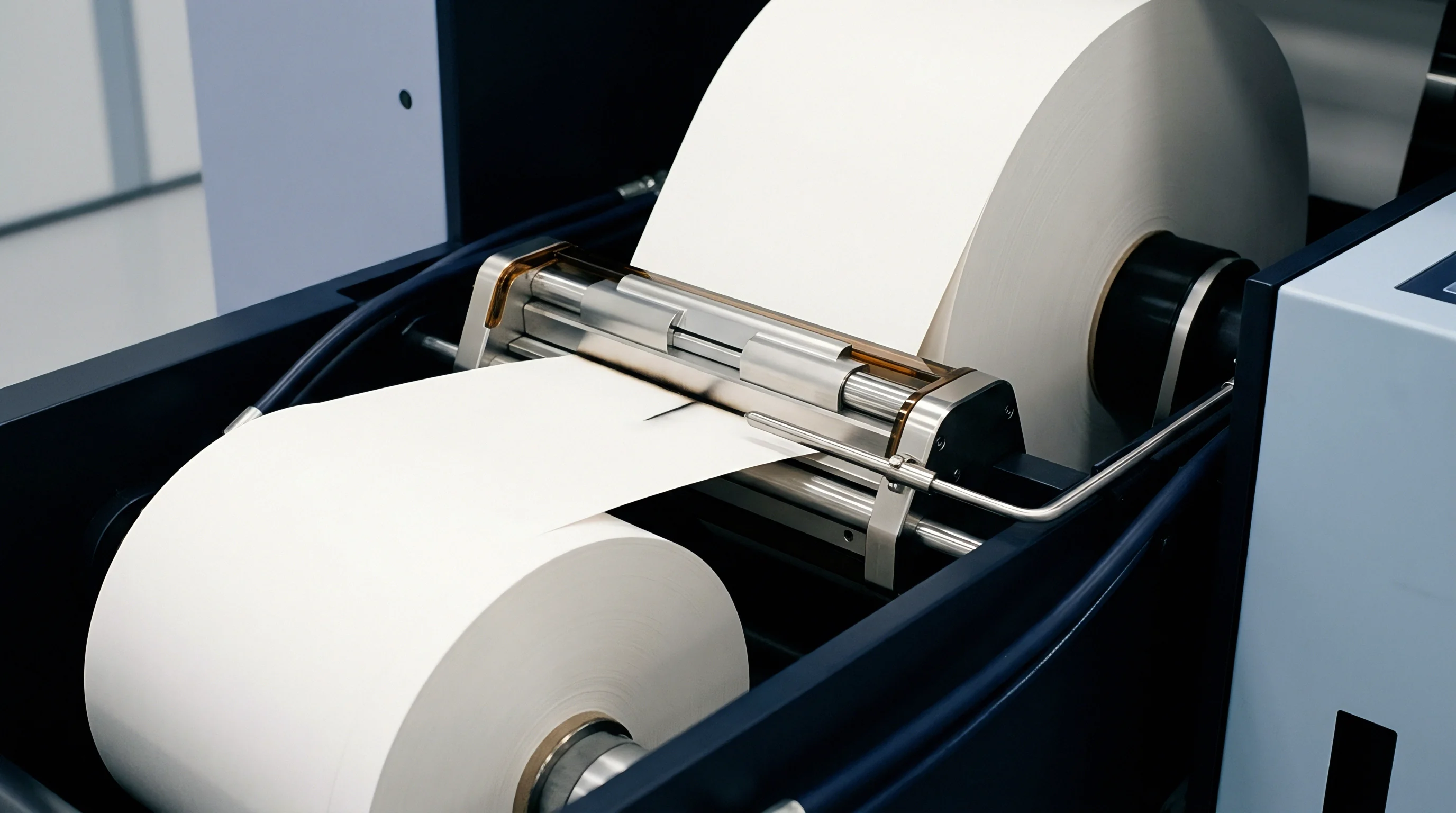
The physical compression zone created by top and bottom slit cutters subjects paper fibers to high transverse forces. Slit edges demand minimum knife penetration. When top shear blades penetrate too deep into bottom anvil grooves, friction heats the blade edge, degrading blade temper and inducing thermal warp across the cutter shaft.
Blade wear alters lateral forces, causing slit rolls to develop interweaving edges on single-shaft winders.
- Slitter Dust Accumulation occurs when dull shear blades crush fiber bonds, releasing unattached particulate matter onto cut roll margins that ruins print press blankets.
- Edge Bleed Delamination arises when excessive top knife overlap forces ply separation along cut edges of multi-ply folding boxboard substrates during secondary rewinding.
- Rolled Slit Edge Burrs build up when incorrect knife cant angles pinch the web boundary, forming a raised caliper ridge that causes stretched roll edges.
- Trim Chute Blockage Failures happen when narrow side trim strips buckle inside pneumatic scrap evacuation lines, forcing emergency secondary slitter line stops.
Standard TAPPI T 547 testing establishes that edge slitter dust accumulation above 0.05 milligrams per square meter of cut web edge invalidates converter acceptance.
Web tracking systems adjust unwind reel positioning dynamically to offset parent reel telescoping. Automatic edge guide sensors maintain web centerline placement within a tolerance band of plus or minus 0.5 millimeters. Narrow side trim margins fail when parent reel telescoping exceeds the correction speed of the edge guide, pushing outer shear knives past the physical web edge.
Standard commercial supply agreements under ISO 15359 specify that side trim loss exceeding agreed tolerances transfers full cost liability to the converting facility.

Schedule
Evaluating deckle loss across changing production runs requires walking through a complete tonnage balance. Calculating baseline deckle trim loss across variable secondary slitter web width schedules requires quantifying the financial spread between gross paperboard purchased and net commercial roll yield delivered. A paperboard converter buying master reels pays for total gross weight including core weight and primary mill edge allowances.
The converter earns commercial revenue solely on net slit roll width shipped to end users.

Worked Tonnage Trim Calculation for Variable Secondary Widths
Assume a parent roll dimension of 3,800 millimeters of solid bleached sulfate board at 260 grams per square meter. The converting order specification demands four distinct secondary roll widths: Option A at 1,120 millimeters, Option B at 850 millimeters, Option C at 620 millimeters, and Option D at 440 millimeters. The secondary rewinder requires a minimum side trim allowance of 15 millimeters per edge, leaving a maximum usable cutting deckle of 3,770 millimeters.
Knife clearance per cut consumes 3 millimeters of web width. The scheduler evaluates three competing secondary width layouts across a 50-tonne production lot.
| Scheduling Pattern Strategy | Secondary Roll Width Layout (mm) | Total Slit Width (mm) | Unused Trim Width (mm) | Baseline Deckle Loss (%) | Net Delivered Tonnage (Tonnes) | Landed Cost per 1,000 m² ($) |
|---|---|---|---|---|---|---|
| Single-Width Uniform Layout | 3 x 1,120 (Option A) | 3,360 | 410 | 11.05 % | 44.47 | 482.10 |
| Greedy Combination Layout | 1,120 + 850 + 850 + 620 | 3,440 | 330 | 8.94 % | 45.53 | 470.90 |
| Optimal Pattern Combination | 1,120 + 850 + 620 + 620 + 440 | 3,650 | 120 | 3.42 % | 48.29 | 444.05 |
The single-width layout cuts three 1,120-millimeter rolls, generating 410 millimeters of trim loss per linear meter of web. The greedy layout combines mixed sizes but leaves 330 millimeters of unallocated deckle. The optimal pattern layout fits five rolls onto the parent reel, reducing unusable side trim to 120 millimeters, including side margins and slitter knife kerfs.
Across the 50-tonne lot, the optimal pattern saves 3.82 tonnes of board compared to the single-width schedule.

Web Width Combinations and Secondary Yield Metrics
The comparison between single-roll production and multi-size master runs highlights how deckle fill alters landed product cost. Parent roll width sets hard boundaries. Converting trim drives total landed cost.
When virgin substrate costs $1,450 per tonne landed, generating 11.05 percent trim loss adds $160.22 of unrecoverable material cost to every tonne of finished product sold.
- Parent Deckle Audit verifies physical master roll widths against invoice weights to catch mill deckle drift before secondary scheduling begins.
- Secondary Slitter Knife Setup enforces precise lateral blade indexing to prevent cumulative width errors across multi-roll sets.
- Scrap Evacuation Monitoring measures real-time side-trim scale mass to verify actual scrap generation against theoretical cutting model predictions.
- Filler Width Demand Integration matches inventory buffer orders to leftover deckle gaps during primary schedule compilation.
Scrap recovery yields partial financial credit. Secondary trim waste collected in pneumatic choppers is baled and resold to paper recycling merchants. Unbleached kraft linerboard scrap fetches approximately 15 to 20 percent of virgin roll purchase price, whereas high-brightness coated folding boxboard scrap retrieves up to 25 percent.
Knife position errors destroy roll margins. Committing to secondary slitting combinations without calculating baseline deckle loss forces converting operations into unplanned scrap penalties that degrade gross profit margins.


Allowance
Commercial purchasing agreements specify the exact percentage of parent deckle waste that a paper mill includes in the base roll price. Paper buyers negotiate trim allowance clauses to establish financial responsibility for unallocated deckle width. Standard mill contracts grant papermakers a trim tolerance band, typically permitting up to 3 percent unusable deckle before price surcharges apply.
When custom customer web schedules leave large deckle gaps, mills apply unusable width penalty fees to cover lost machine capacity.

Contractual Trim Terms and Mill Settlement Rules
Paper suppliers state explicit loss limits within customer supply agreements, capping unusable deckle waste at two to three percent of gross machine span. If a buyer places a tight order schedule that uses only 3,200 millimeters of a 3,500-millimeter paperboard machine deckle, the remaining 300 millimeters represents an 8.5 percent trim loss. The mill bills the buyer for the full 3,500-millimeter reel deckle or adds a deckle surcharge rate per tonne to compensate for lost paper machine production capacity.
Minimum order quantities enforce efficient deckle utilization. Mills mandate minimum tonnage breaks per custom web width to ensure slitter winders run stable pattern schedules without frequent knife setups. When small packaging buyers order non-standard roll widths below mill minimums, converters pool orders onto shared master reels, distributing baseline trim loss across multiple customer accounts.
Scrap Pricing and Landed Roll Cost Reconciliation
Converting facilities sell slit side waste back to recycling brokers or pulp producers at a substantial discount compared to virgin sheet rates. The net financial loss per tonne of trim scrap equals the virgin paper purchasing price plus conversion energy costs minus delivered scrap recycling revenue. Freight costs further erode scrap value when secondary converters transport loose, unbaled side trim over long distances to recycling mills.
Reconciling landed roll costs requires recalculating effective substrate unit prices after accounting for final trim loss metrics. High baseline trim loss turns an inexpensive per-tonne paperboard purchase into an expensive finished packaging component. Industry buyers continue to debate whether dynamic machine deckle adjustments during pulp production can eliminate static trim allowances across custom web orders.