Edge Moisture Ingress Mechanics and Curl Control in Multi Ply Packaging Grades
Matching middle-ply hydrophobic sizing with surface coat barrier performance prevents differential hygroexpansion and moisture-induced curl across converted boxboard.

Boundary
When multi-ply boxboard is slit into ribbons or die-cut into folding carton blanks, the knife cuts directly through the composite cross-section. This mechanical action breaks the protective boundary formed by top coating layers and surface sizing films. The freshly severed profile exposes thousands of individual cellulose fiber lumens and inter-fiber void channels per square millimeter.
Atmospheric moisture contacts these raw porous interfaces directly, initiating liquid capillary uptake and vapor diffusion into the bulk structure. Water migration along open edges happens several orders of magnitude faster than vapor transiting through intact, double-coated top liners.
Pore architecture along the cut face governs initial fluid uptake rates. Uncoated mechanical pulps, thermomechanical pulps, and recycled fiber furnishes situated in the middle plies possess higher bulk, larger mean pore diameters, and greater total porosity than highly refined bleached chemical pulp skins. Liquid water transport through these open voids obeys the Washburn equation, where capillary pressure scales inversely with effective capillary radius and directly with the liquid surface tension and cosine of the contact angle.
Capillary forces drive rapid fluid migration. In densely compacted chemical pulp plies, small effective pore radii generate elevated capillary pressure differentials that draw liquid deep into the sheet. In open-structured middle plies, larger pore radii decrease capillary pressure, yet lower viscous resistance allows rapid fluid volumetric throughput when water contact angles drop below ninety degrees.
| Grade Architecture | Grammage (g/m²) | Cobb Surface Water Absorption 60s (g/m²) | Edge Wick Rate ISO 535 Mod (kg/m²) | Dominant Middle Ply Furnish |
|---|---|---|---|---|
| Solid Bleached Sulfate (SBS) | 300 | 28 ± 2 | 0.42 ± 0.04 | Bleached Hardwood/Softwood Kraft |
| Folding Boxboard (FBB) | 280 | 31 ± 3 | 0.88 ± 0.07 | Groundwood / Bleached CTMP |
| Coated Unbleached Kraft (CUK) | 330 | 25 ± 2 | 0.35 ± 0.03 | Unbleached Softwood Kraft |
| White Lined Chipboard (WLC) | 350 | 42 ± 4 | 1.45 ± 0.12 | Deinked mixed waste and newsprint |
Exposed Fiber Intersections at Slitter Cuts
Dull die-cutting knives or incorrect anvil clearances aggravate liquid ingress mechanics by crushing and fraying fiber bundles along the perimeter. Microscopic fiber delamination creates artificially wide entry channels at ply interfaces. Open edges accelerate moisture uptake.
Shear stresses during knife penetration dislodge internal sizing particles, exposing pristine hydrophilic hydroxyl groups on cellulose surfaces. Liquid water contacting these un-sized fiber surfaces spreads rapidly along internal walls, driven by hydrogen bonding affinity. Moisture travels parallel to the sheet plane along machine direction fibers faster than in the cross direction due to preferential fiber alignment established during web formation on the wet end.

Penetration Dynamics in Uncoated Middle Plies
Uncoated middle plies function as moisture reservoirs within multi-ply boards. High-yield pulps containing residual lignin retain variable surface energies that alter local wetting behavior. Vapor diffusion through air filled voids precedes liquid wicking along fiber walls.
As local moisture content within middle plies rises from a standard equilibrium state of six percent to over ten percent, water molecules penetrate the amorphous regions of cellulose microfibrils. This molecular uptake disrupts inter-fiber hydrogen bonds, causing individual fibers to swell predominantly in their radial and tangential directions. Bulk density drops locally along the package boundary as middle plies expand in caliper, generating internal shear stress against outer chemical pulp liners.
Relative humidity transitions above seventy percent trigger exponential increases in edge capillary migration rates within un-sized mechanical middle plies under standard ISO 187 testing atmospheres.
Converter technical departments often encounter mill claims attributing perimeter swelling solely to storage atmospheric anomalies. Mills frequently argue that edge wicking stems entirely from post-converting storage humidity rather than inconsistent internal sizing dosages.

Sizing
Internal hydrophobization creates a barrier against edge liquid transport in multi-ply board structures. Papermakers introduce chemical sizing agents into the stock suspension prior to sheet formation to alter the surface energy of individual fibers. Alkyl Ketene Dimer (AKD) and Alkenyl Succinic Anhydride (ASA) serve as the primary reactive synthetic sizes, while rosin size precipitated with aluminum sulfate remains common in specific recycled board applications.
These hydrophobic chemicals must anchor uniformly across fiber networks to prevent water molecules from spreading along the capillary walls exposed during converting slit operations.
Synthetic sizes function through distinct chemical reaction pathways and cure times. Alkyl ketene dimer molecules undergo a esterification reaction with hydroxyl groups on cellulose, forming covalent beta-keto ester bonds that orient hydrophobic hydrocarbon tails outward into fiber pores. Full esterification requires thermal energy during cylinder drying and continues curing in the ream over twenty-four hours.
Alkenyl succinic anhydride reacts rapidly with cellulose hydroxyls during paper drying, establishing ester linkages instantly, but hydrolyzes quickly in wet-end systems if process water retention times extend. Hydrophobic particles that fail to bond chemically form unreacted spots, leaving localized pathways for water ingress when cut edges encounter liquid or vapor.
Reactive Alkyl Ketene Dimer Distribution across Layers
Distribution profiles of reactive size across individual plies determine the edge wicking resistance of the finished composite sheet. Top and back liners receiving heavy surface applications of starch and synthetic surface sizing frequently exhibit low sixty-second Cobb values under ISO 535 testing. Surface sizing films do not penetrate into the core of thick board grades.
If middle mechanical plies receive insufficient internal AKD dosages, edge wicking proceeds unimpeded through the board core while top and bottom surfaces remain completely dry. Internal sizing agents must be dosed proportionally to total fiber surface area rather than ply mass, as high-yield mechanical pulps present significantly higher specific surface areas than bleached softwood kraft pulps.
Surface Contact Angles versus Cut Edge Sorption
Surface contact angle measurements evaluating dynamic wetting fail to predict perimeter moisture wicking behavior. Droplet contact angles measured on coated surfaces reflect surface topography, coating pore structure, and latex binder distribution. Cut edge sorption relies entirely on three-dimensional fiber network porosity and internal sizing chemical coverage.
Internal hydrophobicity slows lateral absorption. High contact angles on top liners frequently coexist with high edge wicking rates when middle plies lack adequate hydrophobization.
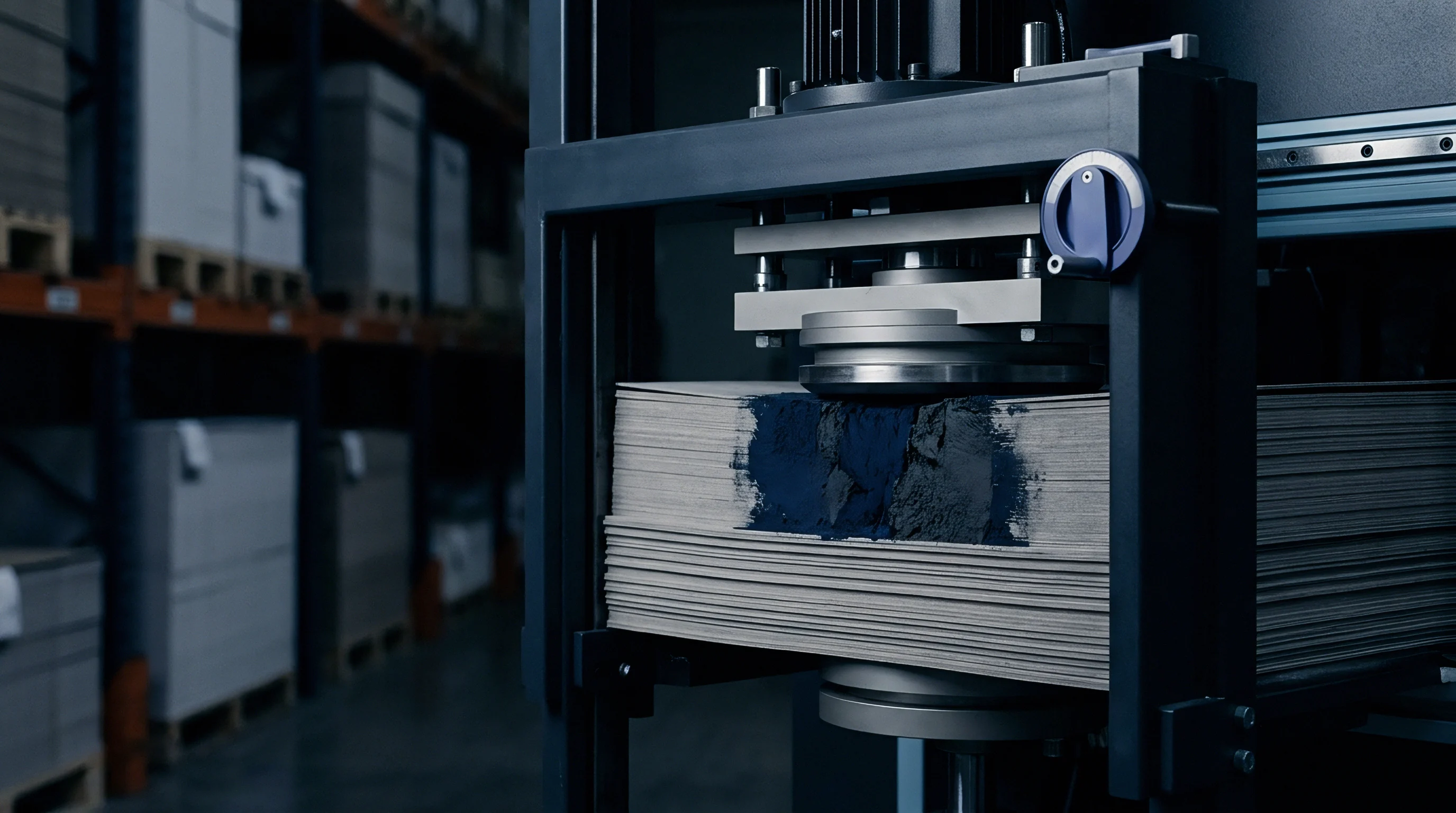
Failure modes associated with inadequate hydrophobization across multi-ply structures display distinct physical manifestations during converting and end-use exposure:
- Core Delamination occurs when liquid wicks through under-sized middle plies, weakening internal bond strength until outer liners peel away under tensile load.
- Edge Flaring manifests as localized caliper expansion along cut carton borders, creating thickness variations that stall high-speed packaging equipment.
- Blistering under Coating appears when moisture entering exposed edges migrates beneath extrusion-coated polyethylene layers, lifting plastic films off the paper board base.
- Score Line Micro-Cracking develops when dry, heavily sized outer liners resist bending stress while moisture-softened inner plies yield unevenly during scoring operations.
Sizing agent retention in mechanical middle plies dictates the moisture boundary far more than surface coating continuity.

Asymmetry
Multi-ply paperboards inherit structural asymmetry from the wet-end forming section through layer-by-layer consolidation. A representative folding boxboard consists of a smooth, heavily refined bleached hardwood top liner, one or more bulky middle plies composed of mechanical pulp or recycled fibers, and a moderately refined unbleached or bleached softwood back liner. Each ply possesses distinct fiber species, fiber length distributions, degree of refining, filler content, and orientation ratios.
These material differences yield variations in moisture sorption isotherms and hygroexpansivity coefficients through the z-direction of the sheet.
Moisture sorption isotherms quantify the equilibrium moisture content of individual board layers across varying ambient relative humidity levels. Bleached chemical pulps absorb higher equilibrium moisture percentages than high-yield mechanical pulps at equivalent relative humidity due to higher amorphous cellulose availability and absence of hydrophobic lignin structures. Recycled furnishes demonstrate altered sorption profiles caused by hornification, where repeated drying cycles permanently collapse fiber pore structures and reduce water binding capacity.
When ambient humidity shifts, each ply seeks a different moisture equilibrium state, generating internal stress gradients across the composite structure.
| Ply Location | Furnish Type | Apparent Density (g/cm³) | MD Hygroexpansion Coefficient (% / % ΔMC) | CD Hygroexpansion Coefficient (% / % ΔMC) |
|---|---|---|---|---|
| Top Liner | Bleached Hardwood Kraft | 0.85 ± 0.03 | 0.012 ± 0.002 | 0.048 ± 0.004 |
| Under Liner | Unbleached Chemical / Broke | 0.72 ± 0.04 | 0.015 ± 0.002 | 0.052 ± 0.005 |
| Middle Ply 1 | Groundwood / Bleached CTMP | 0.45 ± 0.03 | 0.022 ± 0.003 | 0.075 ± 0.006 |
| Middle Ply 2 | Unsized Mechanical / Recycled | 0.48 ± 0.03 | 0.024 ± 0.003 | 0.078 ± 0.007 |
| Back Liner | Bleached Softwood Kraft | 0.78 ± 0.03 | 0.014 ± 0.002 | 0.050 ± 0.004 |
Layer Hygroexpansivity Variations across Furnish Types
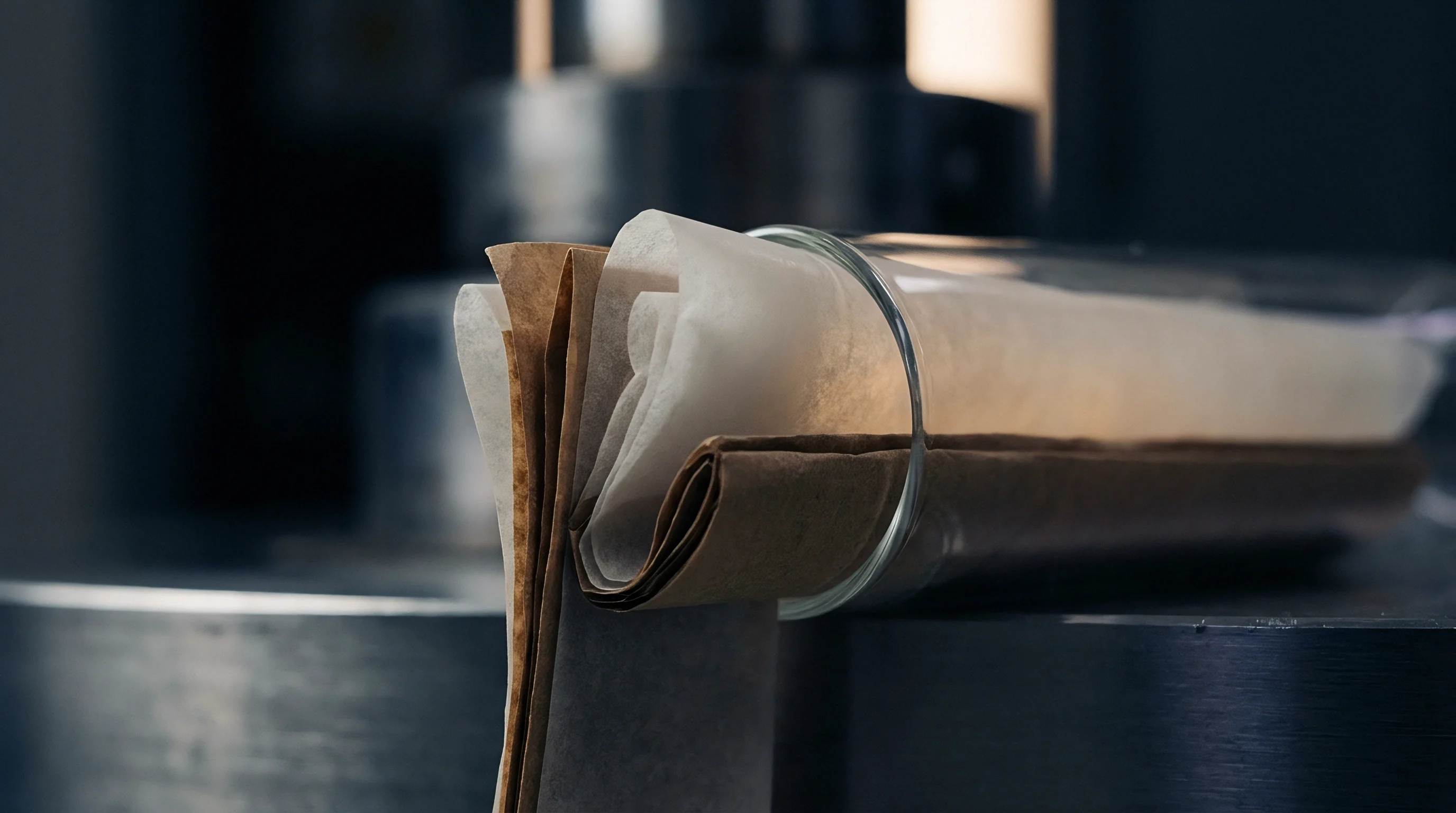
Hygroexpansivity defines the fractional dimensional change of paperboard per unit change in sheet moisture content. Fiber anisotropy ensures that hygroexpansion in the cross direction exceeds machine direction expansion by a factor of four to eight. Fiber orientation distributions established at the headbox dictate this anisotropy ratio.
Middle plies formed on cylinder formers or fourdrinier wires with high jet-to-wire speed ratios exhibit strong fiber alignment along the machine direction. Top liners formed on modern gap formers achieve lower anisotropy ratios, resulting in balanced directional properties. Unsized mechanical pulps act like sponges.
When moisture penetrates exposed edges, mechanical middle plies expand significantly more in the cross direction than the surrounding chemical pulp liners, creating severe inter-ply shear forces.
Moisture Gradients and Z-Directional Strain
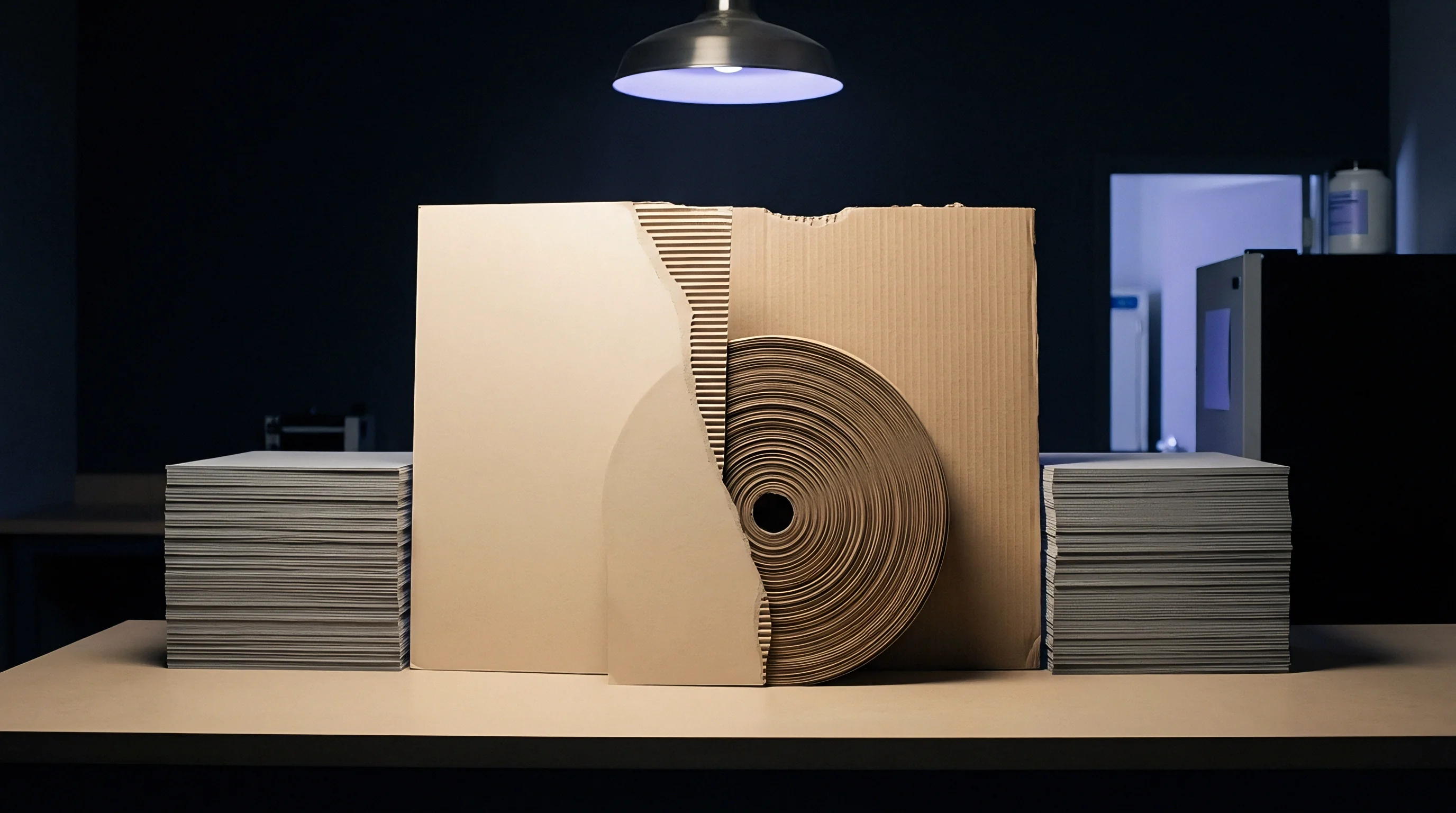
Transient environmental exposures establish non-uniform moisture profiles across the board caliper. Edge moisture ingress introduces a horizontal moisture gradient extending inward from the perimeter, while surface absorption creates a vertical gradient between top and back liners. As outer plies absorb moisture, they expand laterally.
Inner plies, remaining temporarily dry, restrict this lateral movement, inducing compressive strain in the outer layers and tensile strain in the core. Once moisture diffuses fully into the middle plies, the reverse strain state develops. Mechanical stress concentrates at ply interfaces.
Unbalanced hygroexpansion coefficients between top and back liners transform uniform environmental humidity shifts into bending moments that warp flat packaging sheets.
Paperboard mechanics research continues to investigate whether online moisture profiling during multi-cylinder drying can fully eliminate residual stress differentials across recycled middle plies.
Deformation
Dimensional deformation in multi-ply paperboard follows the classical laminate theory applied to orthotropic plate structures. Elastic modulus, thickness, and hygroexpansivity of each individual ply define the overall stiffness matrix of the sheet. When asymmetric moisture ingress induces internal strain, the composite structure relaxes strain energy through out-of-plane displacement, resulting in sheet curl or diagonal twist.
Differential expansion triggers dimensional instability.
Curl vectors categorize into machine direction axis curl, cross direction axis curl, and complex diagonal twist. Axis curl develops when moisture content changes generate asymmetric linear expansion between top and back surfaces. Machine direction curl occurs when the top liner expands or contracts differently from the back liner along the machine axis.
Cross direction curl manifests as curvature around the machine direction axis, driven by high cross-direction hygroexpansion coefficients. Diagonal twist arises when principal anisotropy axes of individual plies misalign relative to the structural axes of the board, introducing shear-coupling bending moments under changing moisture conditions.

Bending Stiffness Loss under Asymmetric Moisture Profiles
Bending stiffness depends directly on the z-directional distribution of elastic modulus. According to the flexural rigidity equation for multi-ply beams, outer plies contribute exponentially more to total bending stiffness than middle plies due to their distance from the neutral bending axis. As moisture enters outer chemical pulp liners, hydrogen bond breaking reduces the elastic modulus of those outer layers.
Wet edges lower structural stiffness. A three percent increase in local moisture content in top liners can decrease total bending stiffness by over twenty percent before any dimensional dimensional displacement becomes visible.
What Threshold Governs Moisture Induced Deckle Curl?
Out-of-plane curvature initiates when internal bending moments generated by differential ply expansion exceed the critical buckling resistance of the sheet. The mathematical relationship governing sheet curvature utilizes the flexural rigidity matrix and moisture expansion strain vectors:
κij = int-h/2h/2 Dij-1 · Ez(z) · βij(z) · Δ MC(z) · z , dz
Where (kappa_{ij}) represents the curvature tensor, (D_{ij}) defines the flexural stiffness matrix, (E_{z}) is the z-dependent elastic modulus, (beta_{ij}) represents the directional hygroexpansivity coefficient, (Delta MC) is the local moisture content change, and (z) indicates distance from the neutral axis. Curvature scales directly with distance from the neutral plane, making top and back liner moisture balance paramount.
Mathematical modeling of board deformation relies on precise mechanical assumptions during structural evaluation:
Assume a 320 g/m² folding boxboard with a caliper of 450 micrometers subjected to a localized edge moisture increase of four percent in the middle CTMP ply while outer liners remain fixed at six percent equilibrium moisture. Assume an initial cross-direction elastic modulus of 2.8 GPa for outer liners and 0.9 GPa for middle mechanical plies, with a cross-direction hygroexpansivity coefficient of 0.075 percent length change per percent moisture change in the core. The core ply attempts a local cross-direction elongation of 0.30 percent against the rigid outer liners.
Elastic strain energy calculations show this localized expansion generates internal shear stresses at the ply interface exceeding 1.2 MPa. This internal stress surpasses the z-directional tensile strength of CTMP fiber networks, causing localized micro-delamination along the package margin and initiating an out-of-plane curl radius of less than 350 millimeters.
Contracts omitting strict curl limits leave buyers exposed to continuous production losses. Asymmetric swelling across board layers distorts blank geometry during transit, causing high-speed cartoning line jams and complete packaging rejection.

Converting
High-speed packaging converting converts flat paperboard sheets into folded, glued, and packed cartons through precise mechanical operations. Cutting, creasing, printing, and gluing rely on consistent sheet dimensions, uniform flat feed profiles, and predictable edge absorbency. Edge moisture ingress directly disrupts these converting processes, causing feed registration errors, die-cutting matrix breakdown, and adhesive bonding failure on carton seams.
Automated sheet feeders on printing presses and die-cutters utilize vacuum suckers to lift individual board sheets from the top of a delivery stack. Stack weight accelerates edge diffusion. When edge moisture ingress causes perimeter curling or edge flaring, vacuum suckers fail to establish a flush seal against the board surface.
Air leaks reduce vacuum lifting force, resulting in double-feed trips, misaligned sheet registration, or complete press stoppages. Uncontrolled curl stalls automated feeders.
- Position incoming palletized board loads into temperature equalization chambers forty-eight hours prior to unwrapping protective moisture barrier shrink wrap.
- Audit relative humidity and temperature in pressroom storage areas using calibrated psychrometers to ensure ambient conditions match mill certificate equilibrium values within five percent.
- Inspect cut edges of unwrapped board stacks using surface contact moisture meters to verify zero localized moisture gradients exist between core and stack perimeters.
- Adjust die-cutting side guide alignment and feed vacuum pressures to compensate for minor edge profile variations prior to initiating full speed converting runs.

Mechanical Compaction of Cut Edge Pore Networks
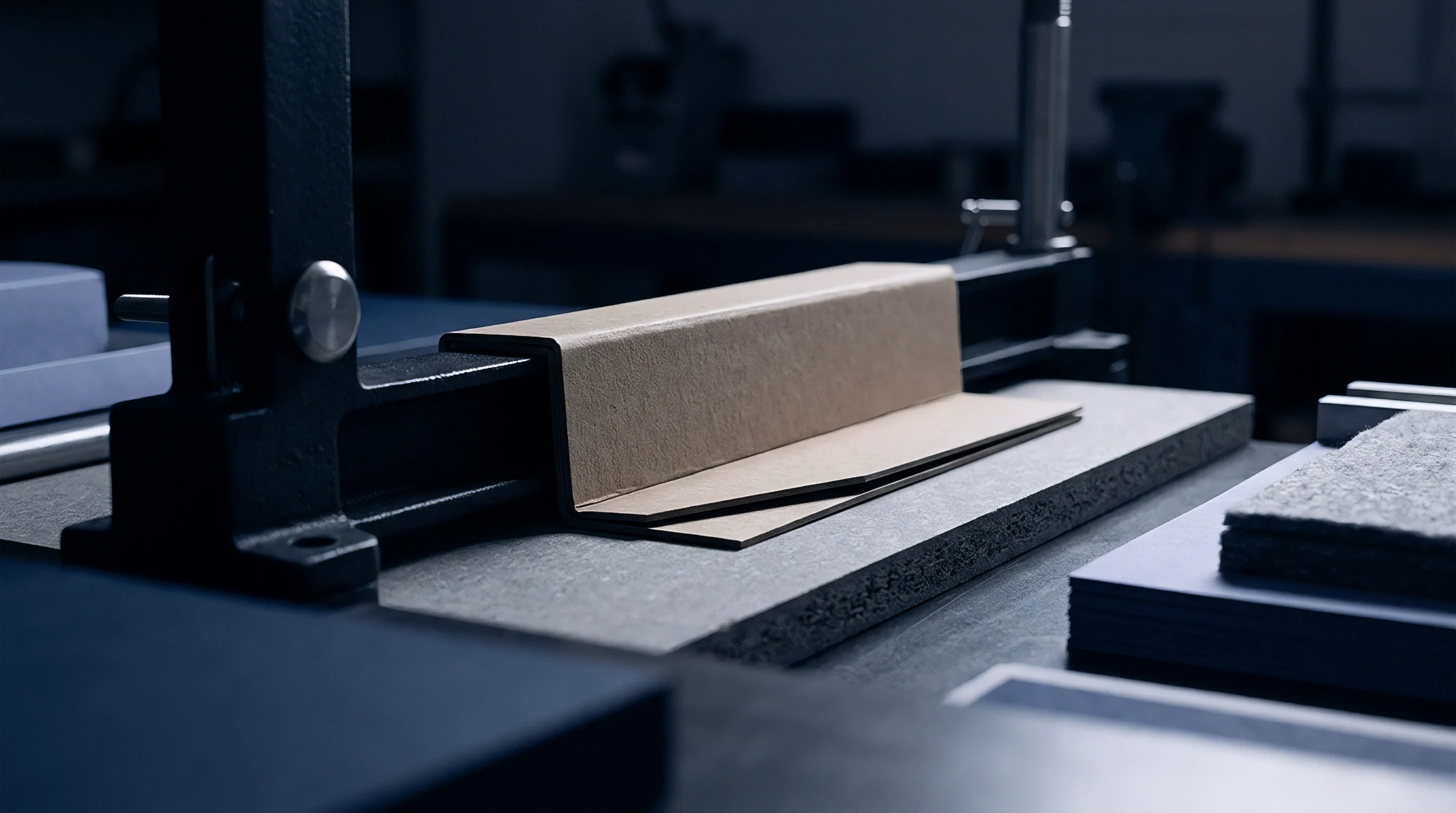
Die-cutting tooling specifications influence subsequent edge moisture absorption. A sharp, properly set cutting knife shears cleanly through board fibers, leaving a compact cut face. Continuous shear force during penetration compresses fiber ends together, partially closing macroscopic pore openings.
Dull knives or excessive anvil cutting pressure crush the sheet edge, generating internal ply separation and increasing effective capillary radius along middle plies. Proper knife selection reduces edge wick susceptibility by up to thirty percent compared to worn tooling profiles.
Storage Microclimates and Stack Moisture Equilibrium
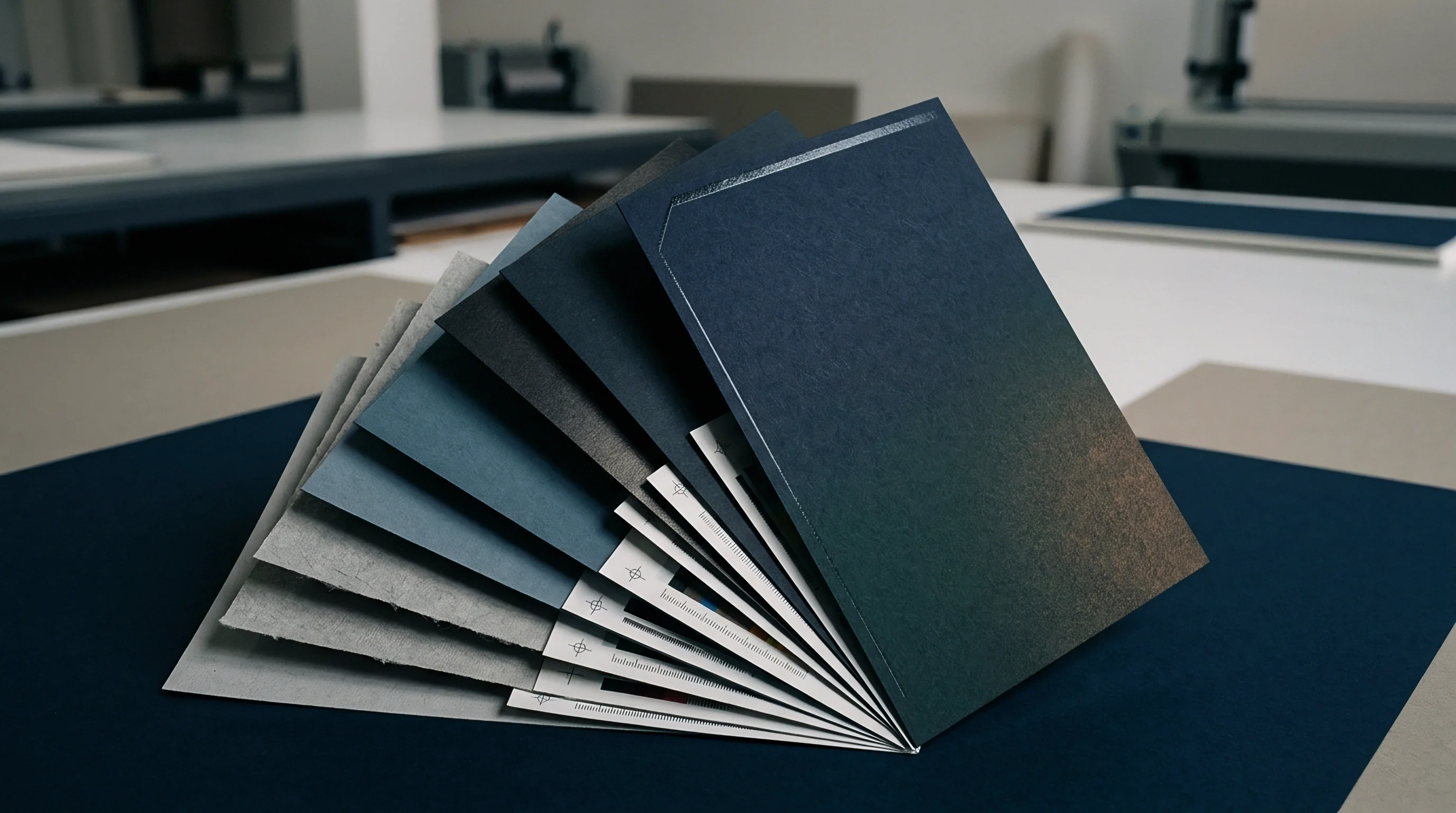
Palletized board stacks wrapped in stretch film experience perimeter microclimates when stored in unconditioned warehouses. Cold ambient air causes moisture vapor inside the protective wrap to condense along the outer edges of the pallet. Cut board edges directly absorb this free liquid condensate.
Stack edges expand in caliper while the center of the pile remains at original mill moisture levels. This condition, known as wavy edges, creates irreversible thickness variations across die-cut blanks, causing folder-gluer machine jams during side-seam adhesive application.
Maintaining pressroom relative humidity within a tight five percent control band prevents edge hygroexpansion and ensures consistent folding line crease stiffness.
Contracts referencing DIN 55437 specify that ambient relative humidity within converter storage areas stays within four percent of the mill equilibrium release certificate, shifting financial liability for edge curl to the buyer when storage logs exceed that band.

Arbitration
Resolving commercial disputes regarding moisture-induced board defects demands rigorous standardized laboratory verification and precise financial impact modeling. When converted folding cartons distort or delaminate on end-user packaging lines, buyers and mills dispute liability based on test certificates, storage environmental logs, and edge absorption metrics. Definitive physical testing isolates raw material defects from converting floor humidity mismanagement.
Laboratory evaluation of edge wicking relies on modified ISO 535 Cobb water absorption methods and specialized edge wick testing apparatus. In standard surface Cobb testing, water contacts a defined 100 cm² surface area for sixty seconds. In edge wick testing, sample edges are submerged to a controlled depth of two millimeters in distilled water while top and bottom surfaces are sealed with impermeable foil tape.
Water uptake per meter of cut edge length is measured over exposure intervals ranging from ten minutes to twenty-four hours. This isolates core hydrophobization efficacy from surface coating protection.
| Defect Mechanism | Line Speed Reduction (%) | Mean Downtime per 100k Packs (Hours) | Scrap Rate Bump (%) | Direct Downtime Cost per Shift ($) |
|---|---|---|---|---|
| Feeder Jam from Edge Curl | 15 – 25 | 1.8 ± 0.3 | 2.5 ± 0.4 | 2,400 |
| Folder Gluer Misalignment | 20 – 35 | 2.4 ± 0.5 | 4.1 ± 0.6 | 3,800 |
| Side Seam Glue Failure | 10 – 20 | 1.2 ± 0.2 | 1.8 ± 0.3 | 1,600 |
| Blistering / Delamination | 40 – 60 | 4.5 ± 0.8 | 8.2 ± 1.1 | 6,200 |

Standardized Edge Wick Test Methods and Conditioning
Testing protocols mandate strict climate conditioning per ISO 187 standard atmosphere set at 23 °C and 50 percent relative humidity. Samples drawn from delivered pallets must be conditioned to moisture equilibrium prior to physical testing. Lab conditioning verifies mill compliance.
Testing samples directly out of an unconditioned stack yields invalid results that fail to hold up in formal legal arbitration proceedings.
Downtime Cost Calculations for Distorted Blanks
Commercial compensation claims calculate total financial loss by summing ruined substrate tonnage, wasted converting consumables, lost production line availability, and labor overheads during downtime events. A worked economic model illustrates the financial magnitude of board deformation failures on high-speed packaging lines:
Consider a pharmaceutical cartoning run scheduled for 500,000 unit boxes operating at a target line speed of 400 cartons per minute. The specified board is a 280 g/m² premium FBB landed at $1,650 per metric tonne, with a total batch mass of 14.2 tonnes representing a substrate investment of $23,430. Moisture-induced deckle curl forces a line speed reduction of thirty percent to prevent feeder jams, dropping actual throughput to 280 cartons per minute.
Total run time expands from 20.8 hours to 29.8 hours, adding 9.0 net hours of press downtime. Operating costs for the high-speed cartoning line are audited at $450 per hour in direct operational labor, equipment depreciation, and facility overhead. Wavy board edges further cause glue wheel skips, resulting in a 4.8 percent scrap rate above the standard 1.5 percent baseline, wasting an additional 0.68 tonnes of board valued at $1,122.
Total direct financial loss equals $4,050 in downtime labor plus $1,122 in scrap substrate plus $1,350 in unrecovered facility overhead, totaling $6,522. Proper conditioning prevents line stoppages. Material rejection carries direct financial costs.
Tight tolerances protect converter margins.
Sourcing dossiers submitted for technical verification must contain detailed material properties and environmental logging records:
- Mill Test Certificate providing ply-by-ply grammage, caliper, internal bond strength (TAPPI T 569), surface Cobb, and 24-hour edge wick values.
- Environmental Datalogger Logs tracking temperature and relative humidity continuously inside transport containers from mill loading bay to converter warehouse.
- Goods Inward Inspection Report confirming stack moisture profile measurements taken upon arrival using calibrated microwave moisture probes.
- Laboratory Verification Dossier detailing ISO 187 re-conditioned curl radius measurements, optical cross-section microscopy of cut edge compaction, and AKD retention analytics.
Formal claims require proof that incoming substrate properties deviated from written mill specification boundaries before unwrapping. When incoming edge wick metrics exceed certified maximums under standard testing atmospheres, technical arbitration awards full reimbursement for ruined stock and documented converting downtime.