Evaluating Dynamic Load Carrying Capacity and Elastic Modulus Profiles in Recycled Board Grades
Dynamic carrying capacity in recycled board depends on ultrasonic cross-direction elastic stiffness and cyclic creep resistance, not static burst strength.
Modulus
Ultrasonic stiffness testers measuring sound propagation through paperboard webs reveal sharp directional variances across recycled containerboard grades. The ratio of machine direction to cross direction elastic stiffness frequently ranges from 2.1 to 2.8 in recycled testliner, whereas virgin kraftliner holds a tighter envelope near 1.8 to 2.2 under ISO 187 standard conditioning at 23 degrees Celsius and 50 percent relative humidity. This disparity originates during sheet formation on multi-fourdrinier or cylinder forming tables where recycled fibres, possessing lower intrinsic cell-wall flexural compliance and higher hornification, align heavily along the line of web travel.
When converted fluting and liner plies undergo cyclical compressions, the effective bending stiffness per unit basis weight drops markedly faster in sheets dominated by secondary fibres than in virgin unbleached kraft furnishes.
Sonic Wave Velocity and Elastic Tensor Measurements
Resonance frequency testing through automated acoustic transit time gauges provides instantaneous calculation of specific stiffness along every polar angle of the sheet. Under TAPPI T 578 conditions, compressional acoustic velocities through 150 grams per square metre recycled fluting register between 2,800 metres per second in the cross direction and 4,400 metres per second in the machine direction. The in-plane shear stiffness and out-of-plane polar response establish whether the combined corrugating medium can maintain flute geometry under sustained lateral racking.
When moisture levels rise from 7.5 percent to 11.0 percent inside oceanic containers, acoustic transit velocities drop by more than 18 percent, signalling an immediate collapse of the underlying elastic network before visible permanent strain manifests across the box perimeter.
Under TAPPI T 578 conditions at 23 degrees Celsius and 50 percent relative humidity, a 150 grams per square metre recycled linerboard with an ultrasonic machine-direction velocity below 4,100 metres per second exhibits premature crease roll during rotary die-cutting.
Polar stiffness maps demonstrate that recycled furnish profiles suffer from asymmetrical off-axis dips, specifically between 30 and 60 degrees off the machine axis. This asymmetry compromises the edge crush resistance of finished corrugated packaging, as corner posts subjected to diagonal twisting loads deform along these soft vectors. Mill laboratories attempting to predict box compression margins from static short span compression tests (ISO 9895) routinely overestimate vertical column strength because uniaxial compressive failure tests bypass the multi-axial shear coupling that occurs during pallet vibration.
Specifying board without accounting for the complete directional elastic matrix produces high box rejection rates, where secondary packaging collapsed under distribution loads despite meeting static laboratory crush thresholds.
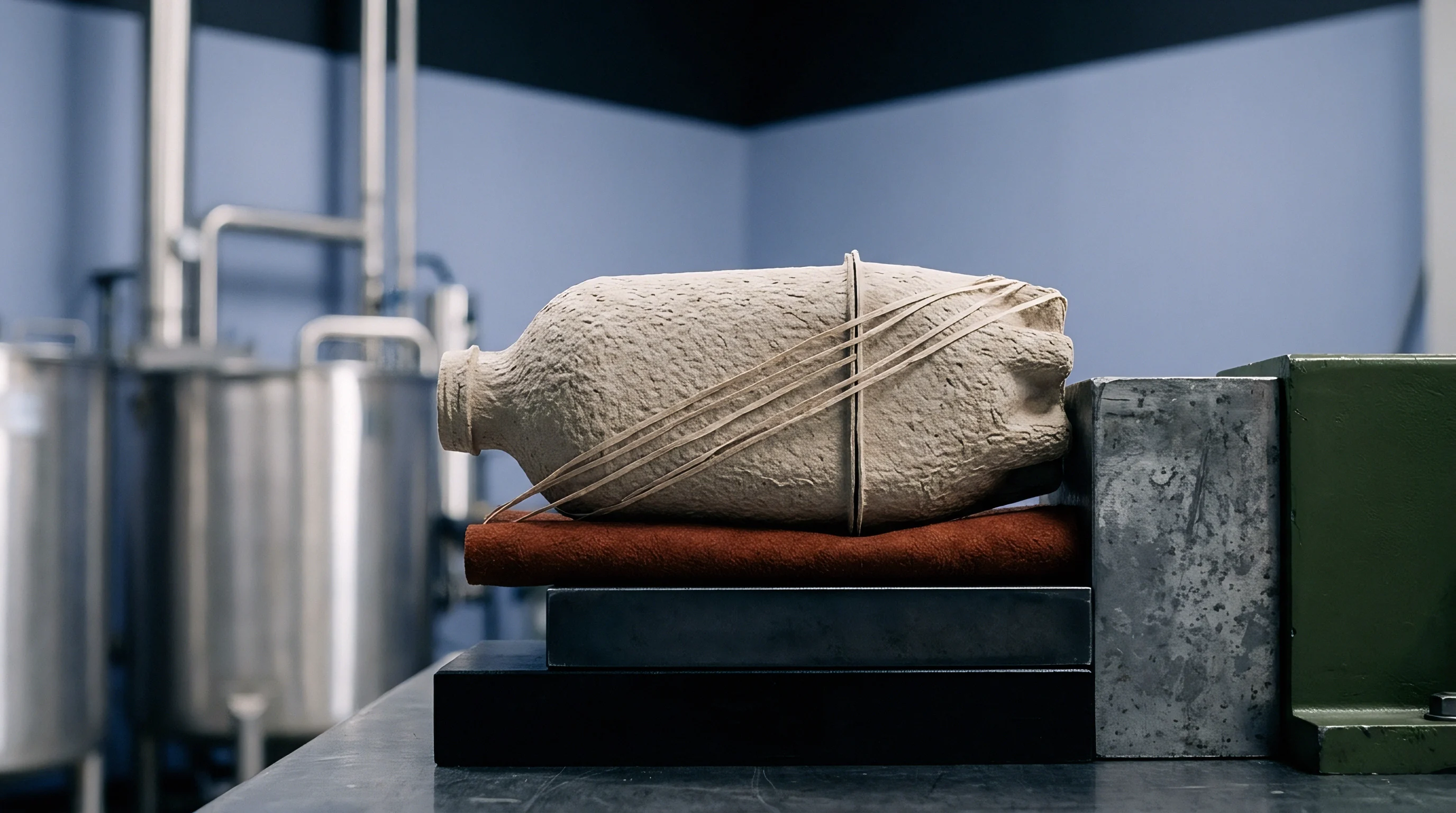
Wave
Cyclic excitation spectra recorded during road and rail transport impose continuous harmonic frequencies ranging between 3 and 18 Hertz directly onto lower pallet tiers. Recycled testliner combinations exhibit pronounced internal damping capacities compared to virgin kraftliner boards, absorbing vibration through micro-slip displacement between unbonded fibre fragments and residual mineral filler deposits. This structural damping carries a steep physical trade-off.
Energy absorbed within the fibre network generates localized internal shear heating, accelerating the slip of moisture-plasticized hemicellulose chains and prompting rapid loss of flute structural resistance.
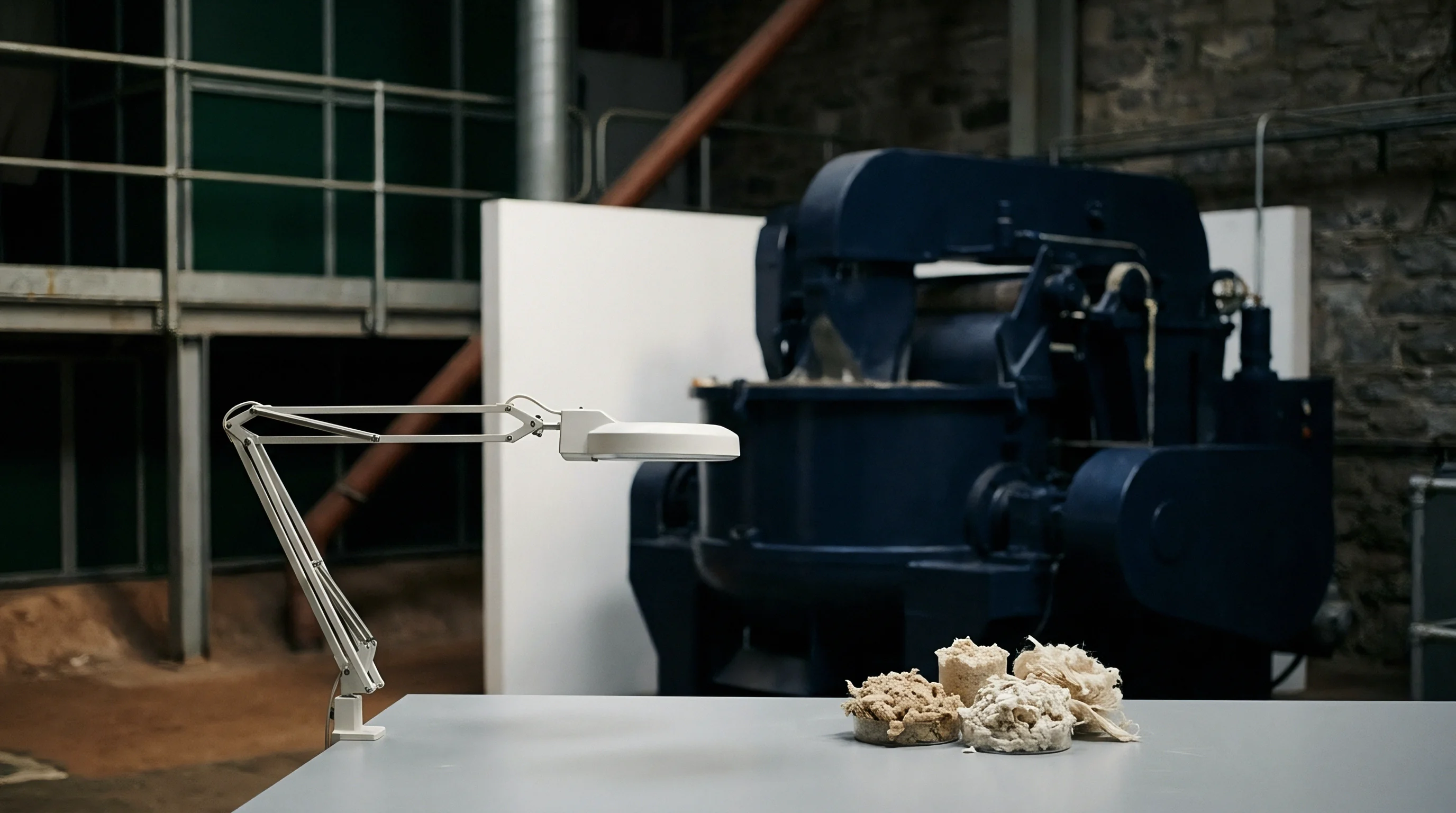
Damping Ratios and Frequency Response Profiles
Resonance curves captured through sweep vibration analysis indicate that secondary fibre packaging structures possess natural frequencies up to 25 percent lower than virgin paperboard structures of equivalent basis weight. When a transport vehicle engine and suspension cycle oscillates near 4.5 Hertz, secondary-fibre packaging loaded with heavy industrial goods enters harmonic resonance rapidly. Amplitude amplification factors at the bottom tier reach ratios of 3.5 to 1, compounding vertical compressive stresses far past calculated static safety margins.
| Grade Designation | Furnish Type | Grammage (g/m²) | Sonic MD Modulus (GPa) | Loss Factor (tan δ) | Natural Frequency (Hz) |
|---|---|---|---|---|---|
| Kraftliner K1 | Virgin Unbleached Kraft | 175 | 7.85 | 0.018 | 8.4 |
| Testliner T2 | 100% Old Corrugated Containers | 175 | 5.40 | 0.034 | 6.2 |
| Testliner T3 | Mixed Waste with Mineral Ash | 175 | 4.65 | 0.048 | 5.1 |
| Semi-Chemical Fluting | Virgin Neutral Sulphite | 140 | 6.20 | 0.015 | 9.1 |
| Recycled Fluting Medium | 100% Deinked and Mixed Slush | 140 | 4.10 | 0.039 | 5.8 |
Mineral filler loading, particularly precipitated calcium carbonate and talc introduced via recovered office waste and coated magazine stock, shifts damping mechanisms. Filler particles disrupt inter-fibre hydrogen bonding networks, lowering the storage modulus while raising the mechanical loss factor. Board mills blend fractions to maintain basis weight economically.
The consequence shows up on the road: high-ash plies experience internal matrix breakdown under low-amplitude cyclic frequencies, loosening flute tips from liner inner faces before destination arrival.
Converting plants defending collapsed cases routinely inform buyers that fluctuating road conditions and third-party driver speeds void structural performance warranties on recycled corrugated boxes.


Stack
Determining true pallet stacking life requires abandoning static McKee formula derivations in favour of continuous cyclic endurance calculations. McKee equations assume constant elastic behavior across box panels, drawing only on caliper, combined board flexural stiffness, and edge crush resistance measured under static press platens (ISO 3037). When recycled board forms the packaging, actual pallet performance drops up to 45 percent below theoretical McKee predictions once transit vibrations enter the equation.
Fibre wall delamination and permanent shear deformation of fluting arches accumulate under alternating upward accelerations and gravity drops.
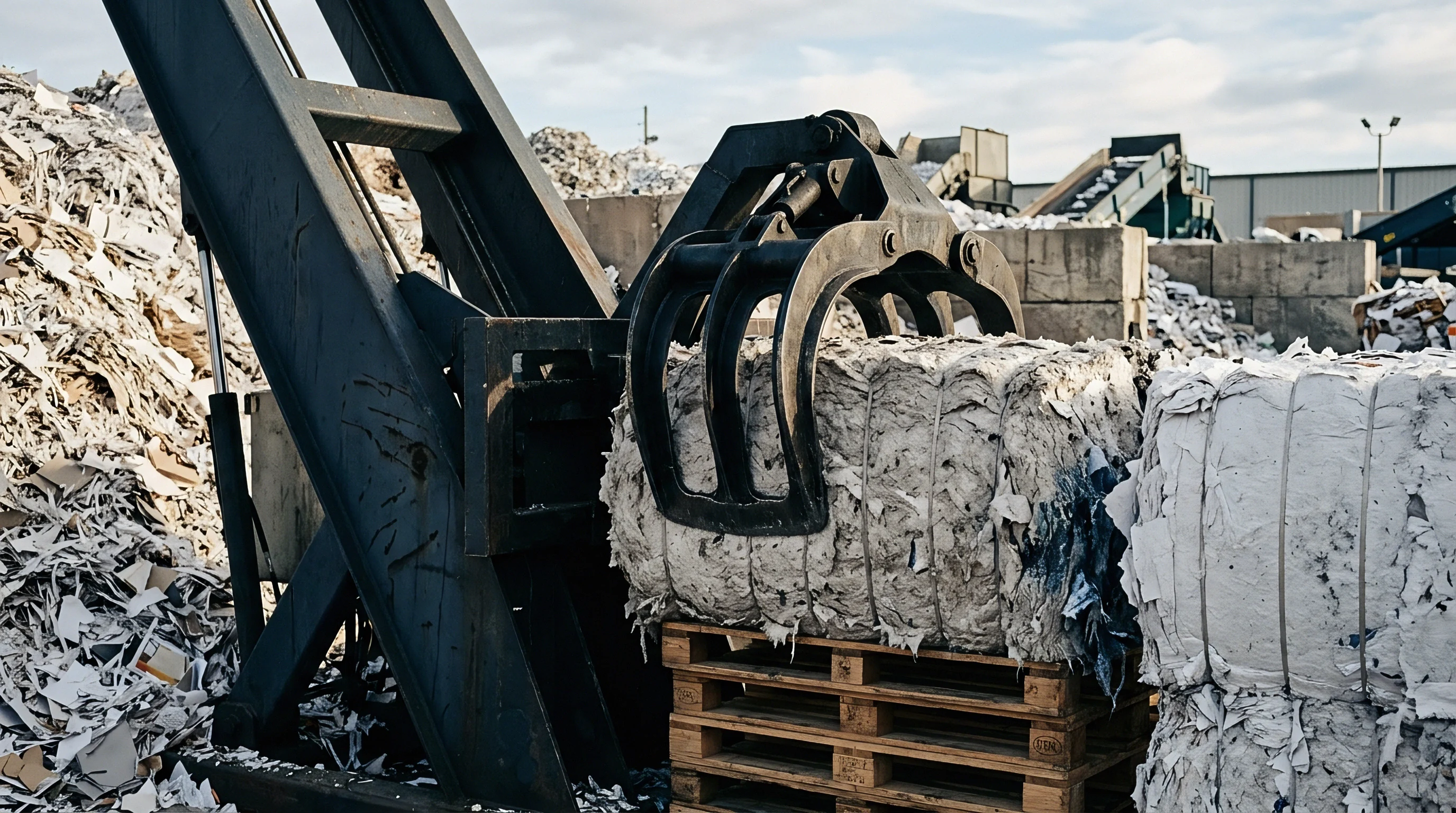
Progressive Loss of Compressive Resistance under Transport Stress
Vibrational energy degrades edge crush strength progressively across pallet transport routes. A corrugated box fabricated from 100 percent recycled testliner and medium might deliver a lab-certified static compression resistance of 3,800 Newtons under ISO 12048 conditions. After experiencing 250 kilometres of combined highway and uneven distribution routes, testing the same box reveals a residual compression strength hovering near 2,200 Newtons.
The damage occurs inside the fluting tips, where stress concentrations exceed the low yield strength of recycled cellulose bonds.
- Uniaxial Static Compression Measurement identifies baseline structural capability at goods-in, certifying whether the box meets nominal design specifications under clean laboratory platen movement.
- Continuous Random Vibration Stressing subjects test pallets to standard ASTM D4169 spectra, accelerating cyclic fatigue across inner flute glue lines and outer liners.
- Residual Box Compression Determination measures structural capacity remaining in the tired container, capturing the exact extent of fibre-slip softening.
- Caliper and Scoreline Integrity Inspection audits the physical thinning of structural panels, confirming whether panel bowing or crease fracture drove the performance loss.
Creep acceleration under changing environmental relative humidity interacts catastrophically with in-transit bouncing forces. In transit through variable climates, secondary fibre plies undergo mechanosorptive creep. As ambient air shifts between 50 percent and 85 percent relative humidity, the rate of compressive panel bulging increases by up to four times compared to static exposure.
The moisture shifts act like physical levers, loosening hydrogen bonds while oscillating pallet loads repeatedly drive localized buckling along the vertical scorelines.
Every increase in moisture content above eight percent reduces the fatigue endurance threshold of secondary fibre containerboard by more than twelve percent per moisture point.
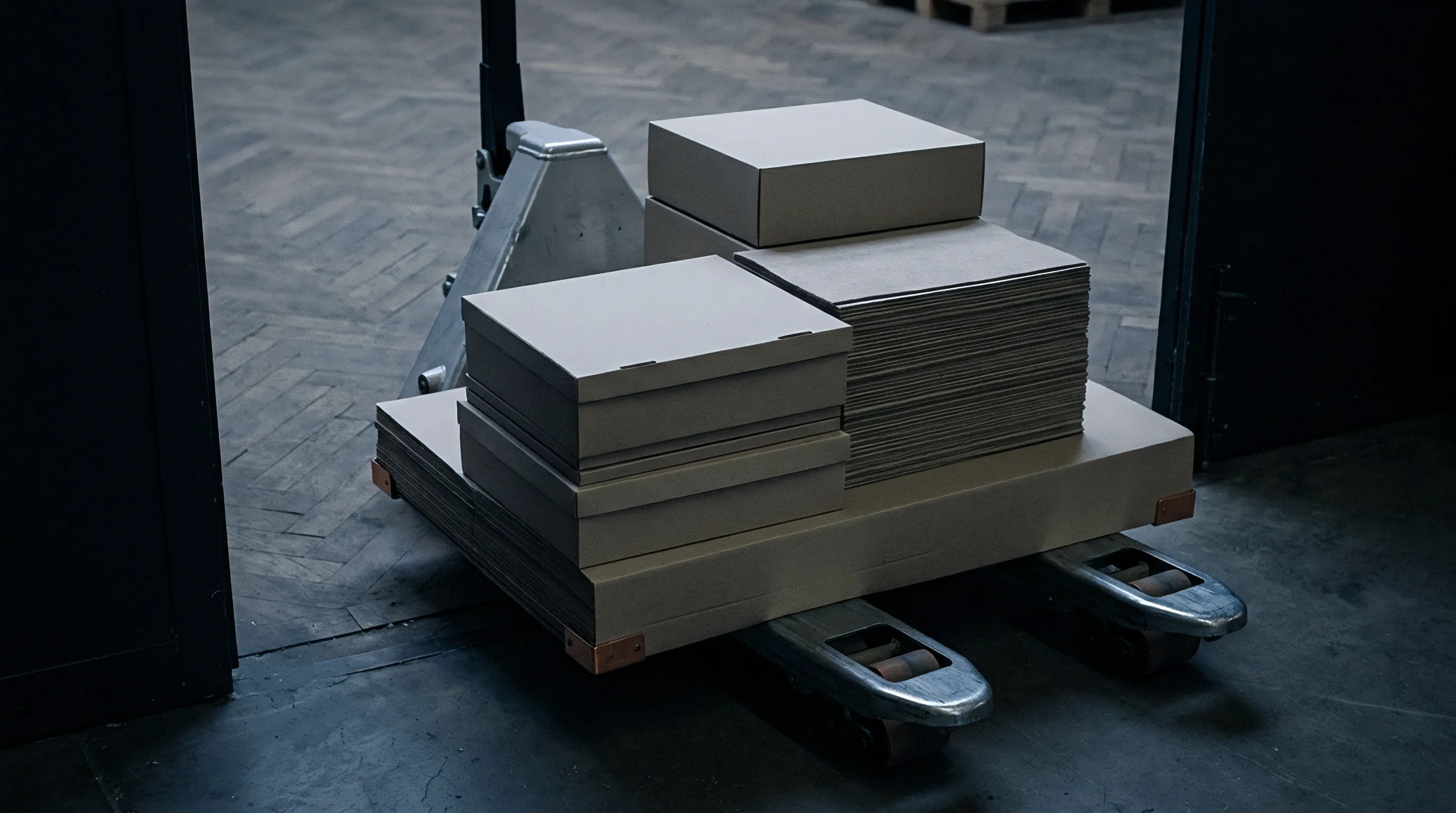
Economic Realities of Virgin Substitution versus Board Downgauging
Evaluating raw substrate pricing requires looking past the invoice cost per metric tonne. A typical 175 grams per square metre recycled testliner sells at 620 EUR per metric tonne, whereas a 140 grams per square metre virgin semi-chemical or kraftliner alternative trades around 840 EUR per metric tonne. At first glance, procurement teams favour the recycled selection due to apparent unit price savings.
Calculating the yield across 10,000 finished cartons exposes a different commercial outcome.
Assume a regular slotted container requirement using 1.25 square metres of combined corrugated board per box. A carton utilizing a 175 grams per square metre recycled outer liner, 150 grams per square metre recycled medium, and 175 grams per square metre recycled inner liner requires 500 grams of total paperboard per square metre, resulting in 0.625 kilograms of board per box. At an average blended recycled paper price of 600 EUR per tonne, raw material costs 0.375 EUR per box.
Due to in-transit fatigue failures, supply chain teams must over-specify safety factors, driving board grammages upward to maintain stack integrity.
Replacing this construction with a virgin-dominant structure comprising a 135 grams per square metre kraftliner, 120 grams per square metre semi-chemical fluting, and 135 grams per square metre recycled inner liner drops total paperboard weight to 390 grams per square metre, or 0.4875 kilograms per carton. Blended virgin substrate pricing averages 760 EUR per tonne, bringing substrate cost to 0.371 EUR per box. The virgin board structure simultaneously reduces total pallet shipment tare weight by 22 percent, cutting downstream freight outlays and extended producer responsibility fees without sacrificing dynamic box integrity.
Secondary fibre walls that yield under harmonic bouncing never regain their initial vertical load-bearing shape.

Creep
Time-dependent deformation of paperboard panels under sustained vertical weight manifests far more aggressively in recycled stock than in primary kraft furnishes. The molecular mechanism involves the progressive rupture and imperfect reformation of inter-fibre hydrogen bonds under continuous stress fields. In recycled fibres, previous wetting, drying, and refining cycles have fractured internal cell walls, leaving micro-cracks that concentrate shear strain within the S2 secondary cell wall layer.
Under static and transient warehouse stresses, these micro-cracks propagate along the fibre length, causing the entire sheet to extend or compress plastically at strain levels well beneath ultimate tensile or compressive limits.
Mechanosorptive Acceleration Factors
Moisture sorption cycles provoke rapid acceleration of creep rates, an effect termed the mechanosorptive phenomenon. When ambient relative humidity cycles between 40 percent and 80 percent on a daily rhythm, the deformation rate of paperboard exceeds the creep rate observed under constant high humidity at 90 percent. Secondary fibres suffer disproportionately from this mechanism because their porous, unbonded internal surface area invites faster moisture diffusion into amorphous cellulose regions.
Short fibres stiffen differently. This uneven expansion introduces internal shear gradients between the outer print face and inner corrugating plies.
| Substrate Blend | Mean Fibre Length (mm) | Recycled Content (%) | Creep Rate (μm/m/hr) | Time to Tier Collapse (Hours) |
|---|---|---|---|---|
| Bleached Softwood / Hardwood Virgin | 2.45 | 0 | 14.2 | 720 |
| High-Yield Unbleached Kraft | 2.10 | 15 | 18.6 | 540 |
| High-Grade Recovered OCC (Testliner 1) | 1.45 | 85 | 38.4 | 210 |
| Mixed Post-Consumer OCC (Testliner 2) | 1.15 | 100 | 54.2 | 115 |
| Low-Grade Mixed Paper / OCC Blend | 0.85 | 100 | 96.5 | 42 |
Comparing these rates shows that low-grade secondary furnishes reach panel buckling thresholds within two days of cyclic humidity exposure under identical load ratios. Pallet vibration forces compress bottom cartons. The combination of cyclic mechanical shock from warehouse forklift handling and cyclic moisture sorption drives micro-buckling across the fluting tips, prompting complete collapse of the container perimeter.
Standard ISO 287 moisture meters must calibrate against specific recycled fibre blends to avoid underestimating water retention in high-lignin furnish fractions.
Flute Delamination and Scoreline Fatigue
Scoreline fatigue represents another primary failure point in corrugated boards converting secondary fibre. Rotary creasing tools induce localized crushing across the linerboards to create 90-degree and 180-degree hinges for box folding. In virgin kraftliner, long flexible softwood fibres redistribute bending stresses through the hinge zone, producing a uniform rolling deformation without cracking.
In recycled linerboards, short and stiffened fibres cannot flex around tight fold radii, snapping clean across the tension side of the crease.
- Hinged Tension Cracking shears outer plies open during high-speed case erector handling, stripping away corner rigidity before boxes receive product loads.
- Starch Line Delamination occurs when weak surface sizing on recycled medium fails under cyclic shear, popping the fluting loose from the facing liner.
- Cross-Flute Creep Rolling allows vertical flutes to tilt diagonally under top weight, reducing edge crush resistance by over forty percent.
- Corner Post Crushing flattens vertical box seams under localized load transfer, shifting the entire tier mass onto delicate interior contents.
How do chemical wet-end retention aids and synthetic dry-strength resins influence the long-term viscoelastic relaxation of repeatedly recycled papermaking fibres?


Margin
Procurement teams navigating containerboard transactions must bridge the gap between mill swatch data and real distribution reliability by formalizing technical specifications in purchasing contracts. Relying strictly on basis weight and static burst strength (ISO 2759) offers no guarantee against shipping damage. Static burst testing, while deeply embedded in historical shipping regulations, measures multi-axial tensile elongation under liquid bladder pressure rather than compressive buckling resistance along box vertical axes.
High burst figures can be engineered in paper mills through heavy synthetic surface sizing without adding meaningful structural stiffness to the underlying web.
Auditing Goods-In Tolerances
Containerboard reels arriving at converting docks exhibit substantial basis-weight and moisture drift across the machine profile. Variations in moisture profile generate localized slack edges across the paper web, causing uneven flute formation in the single facer. A web that runs damp along the centre collects too much adhesive, while dry edges generate brittle bond lines that crack under cyclic highway shock.
Systematic quality control verifies properties across every mill roll using standardized protocols.
- Cut full-width cross-machine strips to measure basis weight distribution according to ISO 536 across ten equally spaced intervals.
- Run non-destructive ultrasonic resonance scans under ISO 187 conditioning to map the directional ratio of elastic modulus across the web.
- Measure short span compression resistance in the cross direction under ISO 9895, confirming values stay within five percent of nominal targets.
- Evaluate water absorptiveness using sixty-second Cobb sizing tests under ISO 535 to detect uneven hydrophobic chemical application.
Test certificates conceal cross web scatter. Mill certificates routinely report average lot properties calculated from two or three outer tambour reel samples. An uninspected roll carrying a cross-direction short-span compression strength dip of twelve percent along its outer edge will reliably translate into crushed bottom cartons in double-stacked export containers.
Contractual specifications must replace static Mullen burst criteria with minimum ultrasonic cross-direction stiffness targets to safeguard automated pallet integrity.
Under ASTM D4169 distribution testing protocols, failure to stipulate an ultrasonic modulus threshold across purchase agreements leaves the buyer contractually liable for transit-related box collapses whenever the delivered board meets basic nominal grammage tolerances.