Interfacial Adhesion Testing in Coextruded Polymer Board Packaging
Verify coextruded polymer board adhesion via ASTM F904 peel tests; enforce 3.0 N/25mm minimums with fiber tear to avoid costly field delamination.

Melt
Extrusion Interface Thermodynamics and Polymeric Interdiffusion
Extrusion coating and coextrusion lamination bind molten thermoplastic resins directly onto paperboard substrates, forming multi-layer barrier structures for liquid, food, and industrial packaging. Strong bonding requires molecular entanglement, chemical interaction, and physical anchors at the interface. High-density polyethylene, linear low-density polyethylene, and ethylene vinyl alcohol copolymer resins possess distinct polarities and rheological profiles.
When non-polar polyolefins meet polar cellulosic fibers, natural chemical repulsion limits adhesion unless processing conditions active surface modifications or introduce specialized functional tie resins.
Functional tie layers rely on maleic anhydride grafted polyolefins to bridge the gap between non-polar polyethylene webs and polar substrates like paperboard, foil, or ethylene vinyl alcohol layers. Grafted maleic anhydride groups undergo covalent bonding with hydroxyl groups on cellulose or ethylene vinyl alcohol chains, while the backbone integrates into the bulk polyolefin matrix through co-crystallization and chain entanglement. Temperature controls this interdiffusion process.
Extrusion web temperatures falling below 285 degrees Celsius reduce oxidation and functional group reactivity, yielding weak mechanical contact across the joint.
Thermal degradation presents an opposing threshold. Polymer web temperatures above 330 degrees Celsius generate low-molecular-weight degradation products at the interface, weakening boundary layers and reducing peel strength. Oxidation of low-density polyethylene at the melt curtain creates carbonyl, carboxyl, and hydroxyl functional groups.
These polar sites enhance wet-out and surface adhesion on unbleached kraft and bleached chemical pulp boards. The dwell time in the air gap determines the extent of oxidation before the molten web enters the nip nip line.
Peak interfacial strength relies on achieving polymer oxidation at the curtain surface while keeping core resin degradation to zero.
Paperboard surface topography affects mechanical interlocking. Uncoated solid bleached sulfate presents exposed cellulosic fibers and porous micro-voids, allowing low-viscosity polymer streams to penetrate under hydraulic nip pressure. Clay-coated paperboards restrict mechanical penetration, shifting the adhesion burden onto chemical bonding and functionalized tie-layer chemistry.
Sizing agents, moisture content, and surface pH on the paperboard substrate alter the interfacial energy, modifying the wet-out dynamics of incoming molten polymer streams.
Thermal mass dictates interface dwell conditions. Heavy paperboard grades act as heat sinks, drawing thermal energy rapidly from thin coextruded polymer curtains. Rapid thermal quenching prevents complete polymer chain relaxation and interdiffusion across tie-layer boundaries, freezing in high residual interfacial stresses.
Preheating the board web to 50 or 60 degrees Celsius slows cooling, promoting extended interdiffusion time and superior final bond strength.
Functional polar groups require sufficient contact time to reorient toward the substrate surface before crystallization locks the polymer matrix. High line speeds compress this contact window into milliseconds. Balancing extrusion line speed, curtain air gap distance, and thermal retention determines whether the polymer board interface achieves structural integrity or separates under downstream converting stresses.
High web speed reduces interfacial adhesion when resin temperature drops before complete wetting occurs.
Peel

Standardized Test Mechanics and Failure Mode Classification
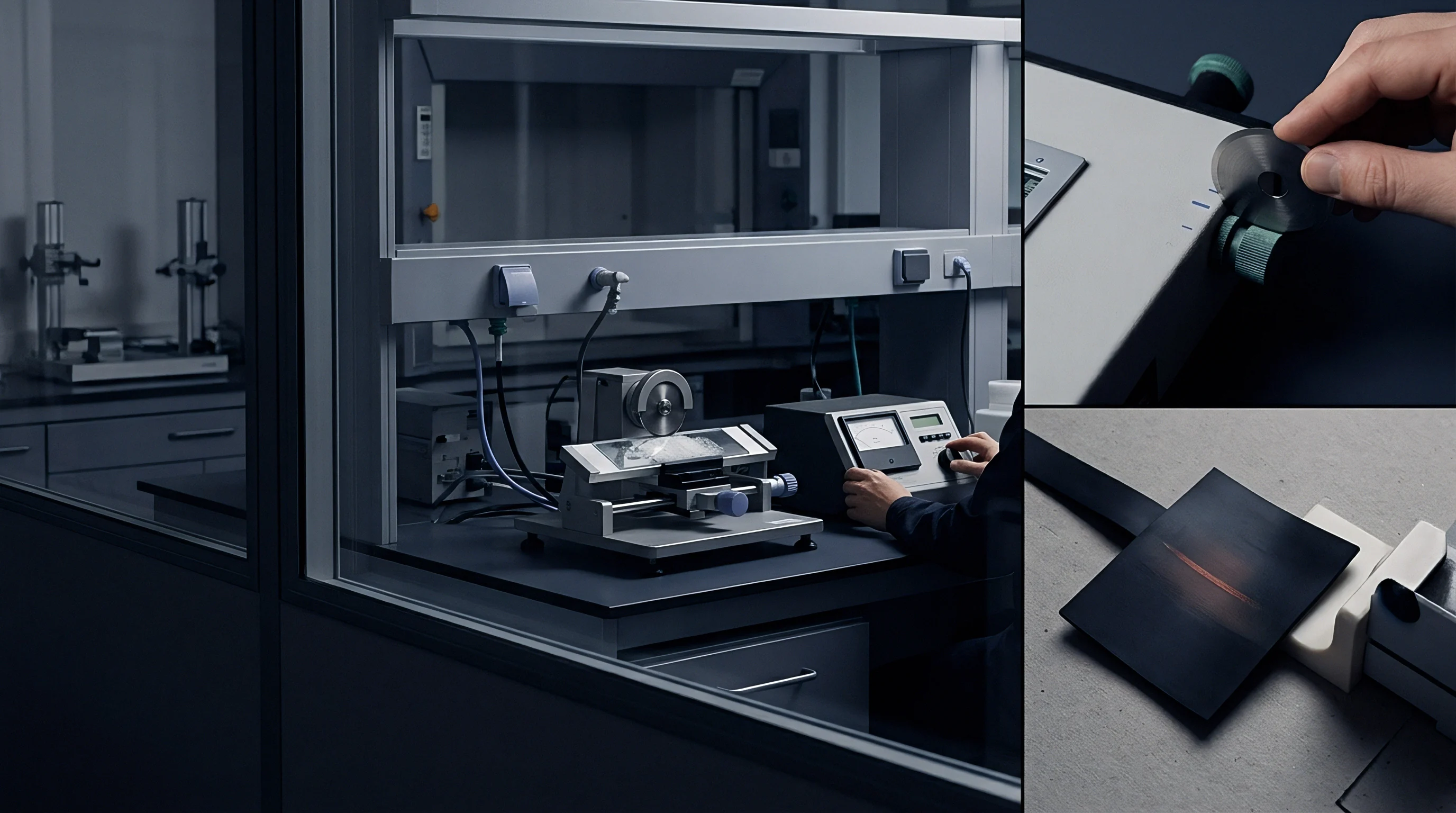
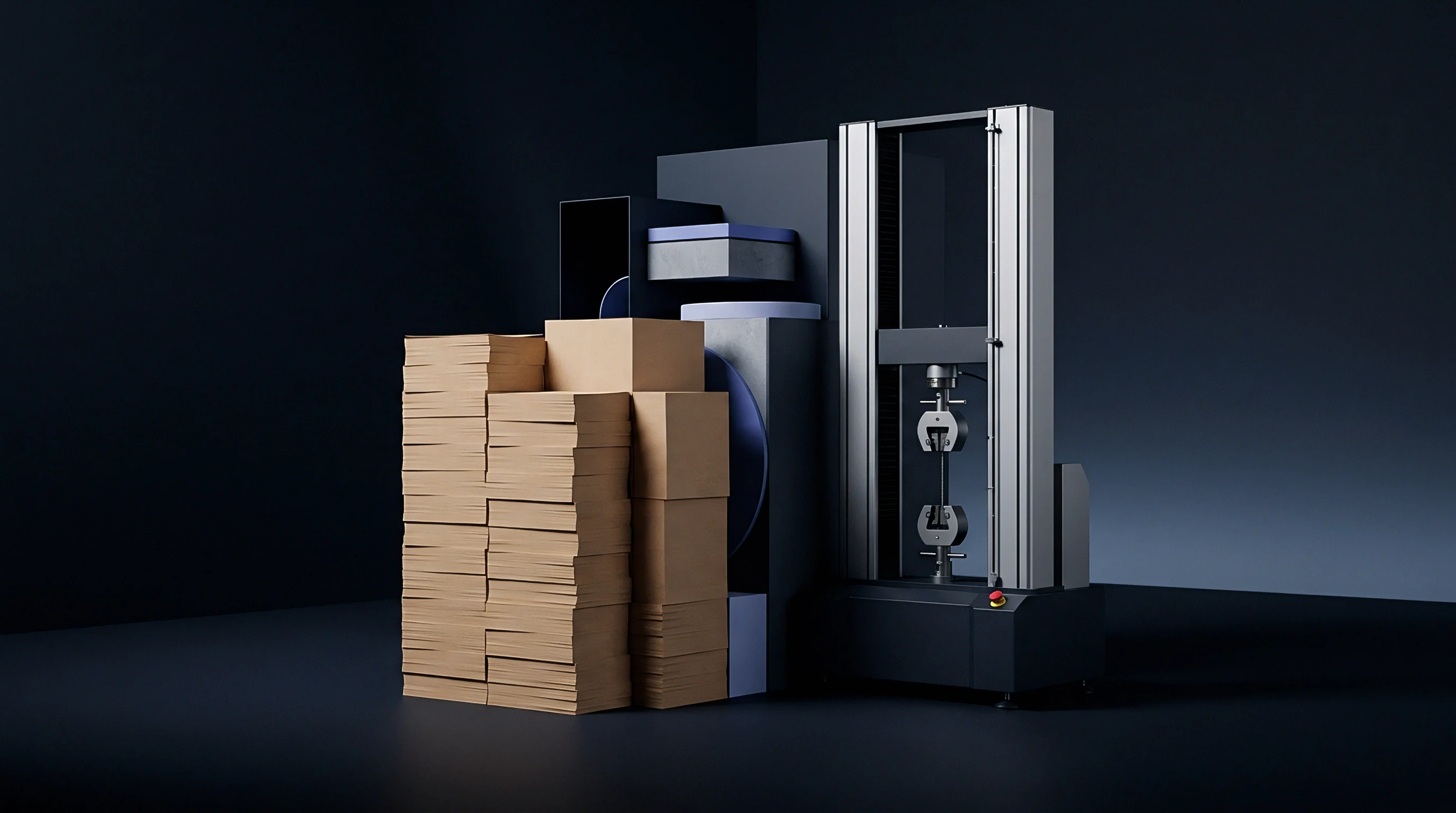
Quantifying bond strength between coextruded polymer films and paperboard requires mechanical separation testing under controlled laboratory atmospheres. Standard procedure specifies conditioning samples at 23 degrees Celsius and 50 percent relative humidity under ISO 187 rules for 24 hours prior to testing. Mechanical testing clamps strip specimens into a universal testing machine, measuring force per unit width during continuous separation.
Tension applied during separation isolates the interface, revealing internal mechanical weaknesses across individual resin and fiber layers.
ASTM F904 governs the comparison of bond strength or inter-layer adhesion in flexible laminates and coextruded polymer packaging board. The procedure uses a continuous 90-degree or 180-degree strip separation. ASTM D1876 standardizes T-peel testing, pulling flexible substrate legs in opposite directions at a constant crosshead speed of 300 millimeters per minute.
TAPPI UM 403 applies specific peel protocols to extrusion-coated paperboard, tracking average force across a 25-millimeter width. Notch initiation dictates baseline consistency; uneven tab prep introduces stress concentrations that cause premature tearing.
| Test Standard | Separation Angle | Crosshead Speed | Specimen Width | Primary Measurement Focus |
|---|---|---|---|---|
| ASTM F904 | 90 or 180 Degrees | 280 to 300 mm/min | 25.4 mm | Comparative lamination bond strength |
| ASTM D1876 | T-Peel (180 Degrees) | 300 mm/min | 25.0 mm | Flexible-to-flexible layer separation |
| TAPPI UM 403 | 90 Degrees | 300 mm/min | 25.4 mm | Polymer coating adhesion to paperboard |
| ISO 11339 | T-Peel | 100 to 300 mm/min | 25.0 mm | Flexible bonded assembly strength |
Interfacial test failure modes fall into distinct structural categories during mechanical separation. Identifying the precise plane of failure reveals whether defect root causes originate in extrusion chemistry, substrate surface preparation, or mechanical stress concentration.
- Adhesive Interfacial Separation indicates clean detachment between the polymer layer and paperboard surface without fiber pull or polymer transfer, proving insufficient chemical bonding or inadequate melt oxidation.
- Cohesive Tie Layer Rupture occurs when separation fractures the interior of the tie resin layer, indicating high interface adhesion but inadequate internal shear strength within the resin formulation.
- Substrate Sub Surface Fiber Tear pulls paperboard fibers cleanly away from the web structural core, confirming interfacial bond strength exceeds the internal bond strength of the paperboard stock.
- Polymer Layer Elongation Necking causes film stretching before interfacial separation occurs, yielding distorted force values that require correction using rigid backing tapes.
Reinforcing flexible polymer film strips with high-tack pressure-sensitive pressure tape prevents backing stretch during T-peel trials. Bare film stretching absorbs mechanical energy, generating artificially high peel force values that misrepresent actual interfacial adhesion. Force trace recordings should display a steady plateau during separation; wild oscillations indicate stick-slip behavior linked to non-uniform tie-layer deposition or moisture variation across the paperboard web.
Crosshead speed alters measured peak force values due to polymer viscoelasticity. Testing at 100 millimeters per minute yields lower peel resistance than testing at 300 millimeters per minute, as slower separation rates allow polymer chains time to yield and relax. Specifying exact strain rates across supply chain contracts prevents disputes stemming from incompatible lab settings.
ASTM F904 separation tests require rigid backing tape application whenever polymer film elongation exceeds ten percent during specimen pulling.
Inconsistent sample cutting introduces edge nicks that trigger premature tearing across the paperboard substrate. Precision razor cutters ensure parallel specimen edges, eliminating micro-cracks that bias mechanical measurements. Five valid test strips cut from the machine direction and five from the cross direction constitute a minimum statistical sample set for batch acceptance.
Misinterpreting necking force as true interfacial adhesion leads to specifying under-engineered tie resins that delaminate under real-world package converting stress.


Chill
Line Variables and Surface Energy Energetics
Extrusion process conditions dictate physical and chemical characteristics at the resin-board interface. The temperature of the cooling roll, air gap distance, nip pressure, and substrate corona pretreatment act in combination to establish or ruin surface adhesion. Dynamic adjustments made during mill runs shift crystallization rates and molecular orientation across coextruded structures.
Corona discharge treatment modifies paperboard and polymer surfaces by generating high-voltage electrical ionization. Surface energy, measured in dynes per centimeter using critical wetting tension liquids under ASTM D2578, increases following corona exposure. Raw polyolefins present low surface energies near 31 dynes per centimeter, resisting polar adhesion.
Corona treatment introduces hydroxyl and carbonyl groups, elevating polymer surface energy to 42 dynes per centimeter or higher. Over-treating paperboard degrades fragile surface fibers, producing a weak boundary layer that fails under low peel loads.
- Measure bare paperboard surface energy using calibrated dyne pens under ISO 8625 protocol before web entry into the extrusion station.
- Set primary corona discharge power to achieve target substrate surface tension between 44 and 48 dynes per centimeter.
- Verify melt curtain temperature at the die exit using calibrated infrared pyrometry to ensure target window parameters.
- Adjust air gap distance to maintain sufficient web oxidation exposure without suffering excessive thermal loss before nip contact.
- Monitor chill roll surface temperature continuously to hold targeted cooling profiles across the solidifying laminate.
Nip pressure forces molten polymer into paperboard surface micro-cavities. Steel-to-rubber nip configurations operate at pressures between 0.3 and 0.7 megapascals. Excess pressure distorts paperboard caliper, crushing structural bulk and altering board stiffness without improving mechanical adhesion.
Insufficient pressure leaves trapped air pockets at the interface, lowering total contact area and reducing measured peel strength.
Cooling roll surface temperature controls resin crystallization kinetics. Chill rolls maintained below 15 degrees Celsius freeze the polymer melt immediately upon contact, halting molecular interdiffusion at the interface. Raising roll temperature to 25 degrees Celsius slows solidification, allowing tie-layer functional groups extended time to align with polar substrate sites.
Excessively warm cooling rolls cause web sticking, resin wrapping, and surface marking during high-speed production runs.
Maintaining chill roll temperatures within a tight five-degree window prevents sudden drops in interfacial peel strength caused by rapid polymer crystallization.
Air gap geometry influences oxidation time and film width neck-in. Extending the distance between the die exit and the nip roll increases melt curtain exposure to atmospheric oxygen, enhancing polar group formation on non-grafted resins. Extended air gaps accelerate melt cooling, increasing polymer viscosity and hindering surface micro-wetting under the pressure roll.
Optimization strikes a balance between chemical oxidation generation and thermal energy retention.
Suppliers frequently cite unconditioned paperboard moisture spikes as the sole root cause for sudden interfacial delamination incidents during downstream converting.

Dispute
Why Does Coextruded Board Delaminate under Frozen Storage?
Interfacial failure in low-temperature packaging applications often occurs despite compliant room-temperature mill test certificates. Standard laboratory testing under ISO 187 rules conditions specimens at 23 degrees Celsius and 50 percent relative humidity. Frozen food packaging and cold-chain liquid containers operate between 4 degrees Celsius and minus 18 degrees Celsius.
Cold storage alters polymer mechanics, driving polyolefins below their glass transition temperatures and making tie-layer structures brittle.
Differential thermal expansion drives interface stresses inside cold storage environments. Polyethylene layers exhibit linear thermal expansion coefficients nearly ten times higher than underlying cellulosic fiber substrates. As temperature drops, the polymer layer contracts rapidly while the rigid paperboard substrate maintains dimensional stability.
This dimensional mismatch generates continuous shear stresses directly across the interfacial boundary layer.
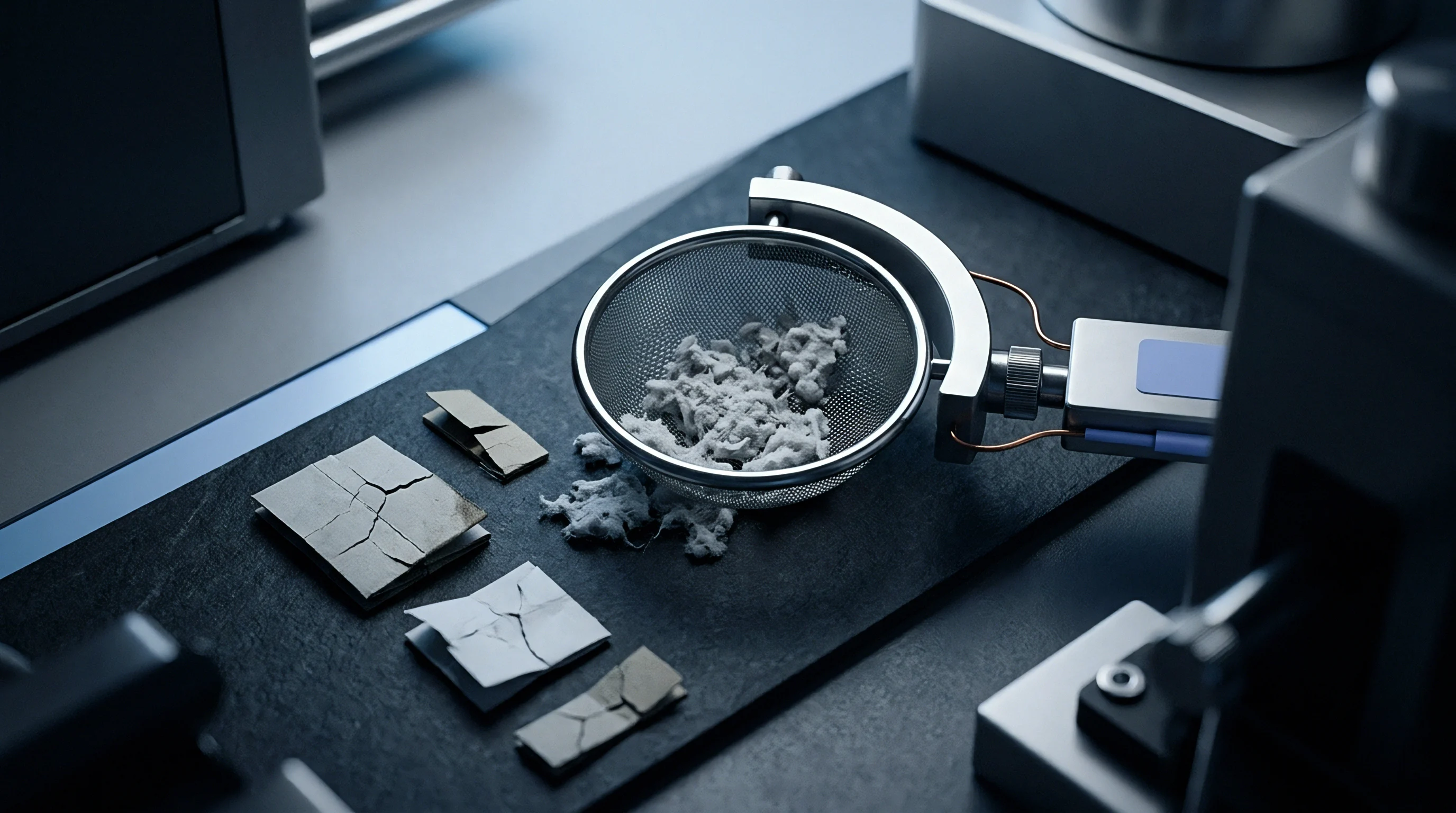
Moisture migration exacerbates cold storage bond degradation. Paperboard absorbs atmospheric moisture if cut edges remain unsealed in high-humidity cold stores. Absorbed water collects near the polymer interface, undergoing volume expansion upon freezing.
Micro-ice crystals force mechanical separation between tie-layer resins and cellulosic fibers, propagating micro-cracks along the perimeter of the packaging board.
Dynamic impact forces during transport compound static cold stresses. Drop impacts on frozen packages transfer kinetic energy directly through rigid, embrittled polymer layers. Room-temperature peel tests fail to predict these cold dynamic failures because polymer impact resistance degrades non-linearly below zero degrees Celsius.
Standard QA protocols that omit cold-chamber peel testing miss critical low-temperature failure modes.
Analytical resolution requires testing interfacial adhesion within temperature-controlled environmental chambers mounted directly onto universal testing frames. Conducting T-peel trials at minus 18 degrees Celsius isolates low-temperature embrittlement effects from baseline adhesion properties. Comparing ambient peel strength to sub-zero peel strength reveals resin flexibility retention across seasonal shipping cycles.
Does standard ambient conditioning mask underlying chemistry flaws that trigger catastrophic interfacial separation in cold-chain logistics operations?
Ledger
Yield Arithmetic, Resin Costs, and Failure Exposure
Specifying coextruded polymer layers on paperboard substrate requires balancing tie-layer resin costs against customer claims exposure. Premium functionalized tie-layer resins cost between 2,800 and 4,200 USD per metric tonne, whereas standard low-density polyethylene resin costs between 1,200 and 1,600 USD per metric tonne. Downgauging or substituting tie-layer chemistry cuts raw material expense while narrowing the margin for processing error.
Consider a production run of 50 metric tonnes of 300 gram per square meter solid bleached sulfate board coextruded with a 20 gram per square meter barrier film structure. The polymer construction comprises LDPE / Tie / EVOH / Tie / LDPE at layer ratios of 35 / 10 / 10 / 10 / 35 by weight. The combined tie resin weight equals 2 grams per square meter, representing 10 percent of the polymer coating mass.
Skimping on tie-layer caliper by reducing thickness by half saves raw resin cost but risks widespread lamination failure.
| Layer Configuration | Tie-Layer Mass (gsm) | Tie-Resin Cost per Run (USD) | Mean Peel Strength (N/25mm) | Delamination Risk Level | Total Claim Exposure (USD) |
|---|---|---|---|---|---|
| Standard (Full Tie) | 2.0 | 370 | 3.8 (Substrate Failure) | Negligible (<0.1%) | 0 |
| Downgauged Tie (-25%) | 1.5 | 278 | 2.4 (Interfacial Peel) | Moderate (2.5%) | 4,100 |
| Downgauged Tie (-50%) | 1.0 | 185 | 1.1 (Adhesive Failure) | Critical (18.0%) | 29,500 |
| Substituted Low-Grade Tie | 2.0 (Low Graft) | 250 | 1.6 (Adhesive Failure) | High (9.0%) | 14,750 |
Financially driven resin reductions alter overall converting yield. A 50-tonne board run yields approximately 156,000 square meters of material. Reducing tie resin mass by 1.0 gram per square meter saves 185 USD in raw material per run.
If that reduction triggers an interfacial peel strength drop below 2.0 Newtons per 25 millimeters, packaging lines face edge delamination during high-speed folding and filling operations.
Scrap costs escalate rapidly once converting line failures occur. Converting machine downtime costs between 800 and 1,500 USD per hour. Material rejected at customer goods-in due to low peel test values incurs replacement manufacturing costs, double freight charges, and financial disposal penalties under supplier agreements.
A single rejected pallet wipes out the resin savings generated across months of downgauged production.
Quality assurance specs must establish unambiguous interfacial adhesion rejection limits tied to standard test protocols. Incorporating binding peel strength minimums directly into mill procurement contracts protects buyers against unannounced resin grade substitutions or aggressive cost-cutting initiatives undertaken by converting partners.
A procurement specification clause enforcing a minimum 90-degree peel strength of 3.0 Newtons per 25 millimeters under ASTM F904 with mandatory sub-surface fiber tear shifts financial liability for interfacial separation back to the mill.