Transient Vapor Diffusion Modeling across Multilayer Coated Folding Boxboards
Multilayer folding boxboard transient vapor flux depends on dynamic layer diffusivity and score-line micro-cracking rather than steady-state cup test averages.


Matrix
Bleached chemical pulp, mechanical fibers, and mineral coating formulations create distinct thermodynamic domains within a single sheet of folding boxboard. Standard solid bleached sulfate substrates rely on uniform, high-freeness softwood and hardwood fibers, producing isotropic porosity across the Z-direction. Multi-ply folding boxboards (such as GC1, GC2, or recycled WLC structures) separate physical roles into discrete layers.
The top liner combines refined bleached chemical pulp with double or triple mineral coating applications, designed for ink holdout and smooth surface properties. Mechanical pulp forms the thick middle plies, introducing high bulk, intra-fiber void volume, and variable density gradients that govern unsteady-state moisture migration.
When atmospheric water vapor contacts the outer face of a coated folding boxboard, transport begins through a dense, non-porous polymer or mineral pigment layer. Ground calcium carbonate and kaolin clay particles suspended in styrene-butadiene or acrylic latex binders create tortuous pathways. Vapor molecules traverse this outer boundary via a solution-diffusion mechanism before encountering the cellulose fiber web.
Inside the fiber network, vapor transport switches to a hybrid model involving Knudsen diffusion within micro-pores, bulk vapor diffusion through inter-fiber voids, and bound-water surface diffusion along the sorptive cellulose pore walls. Each ply exhibits a unique local moisture sorption isotherm, establishing non-uniform chemical potential gradients during environmental shifts.
Relative humidity fluctuations between 30 percent and 80 percent at 23 degrees Celsius shift the effective moisture diffusivity of mechanical middle plies by more than two orders of magnitude due to bound-water plasticization.
Transient modeling across these composite substrates requires isolated parameter determinations for each ply. Standard steady-state measurement techniques, such as the gravimetric dry-cup or wet-cup methods defined in ISO 2528, yield an averaged water vapor transmission rate across the entire board assembly. These steady-state values disguise the localized accumulation of moisture that occurs within internal fiber plies before equilibrium is reached.
In high-humidity transit conditions, this transient moisture buildup reduces Z-direction tensile strength, causes stiffness loss, and alters structural dimensions long before vapor permeates into the internal package cavity.
Understanding layer-specific mass transfer rates enables structural packaging engineers to isolate barrier failures. A thick pigment coating layer restricts early vapor ingress, yet once water vapor breaks through the top coating, the bulky mechanical pulp core acts as a capacitive moisture sink. If the back-ply coating or sizing does not match the flux rate of the top side, asymmetric swelling generates curl and panel bulging.
Modeling the time-dependent moisture profile across each ply wall prevents structural collapse under dynamic supply chain atmospheres.
Outer coating layers dominate the initial barrier response while internal fiber plies govern the delayed equilibrium curve.


Pore
Gas phase diffusion through paperboard depends on the spatial geometry and void structure of the material. Water vapor molecules navigate three distinct pore regimes across a coated folding boxboard cross-section: macro-pores within the unrefined mechanical plies, micro-pores between mineral pigment particles in the coating layer, and nano-pores within the swollen cellulose cell walls. Transport modes transition fluidly between Fickian bulk diffusion and Knudsen diffusion depending on the mean free path of water vapor relative to the pore diameter.

Pore Size Distribution and Tortuosity
Mineral coating formulations present average pore radii ranging from 0.02 to 0.1 microns, where the mean free path of water vapor molecules (approximately 0.065 microns at ambient conditions) forces frequent collisions with pore walls. Knudsen diffusion governs vapor flux in this domain, rendering transport heavily dependent on particle shape, aspect ratio, and binder distribution. Platy kaolin clay pigments lengthen the diffusion path by increasing structural tortuosity compared to spherical calcium carbonate particles.
Within the fibrous core plies, pore diameters range from 1 to 50 microns. Bulk Fickian diffusion dominates this network, where vapor flux correlates directly with total sheet porosity and basis weight distribution.
| Layer Identification | Dominant Material Composition | Mean Pore Radius (microns) | Dominant Transport Mechanism | Typical Tortuosity Factor |
|---|---|---|---|---|
| Top Coating Layer | Kaolin / GCC / Latex Binder | 0.015 – 0.080 | Knudsen & Solution-Diffusion | 4.5 – 8.0 |
| Top Bleached Ply | Hardwood / Softwood Kraft | 0.50 – 3.50 | Transition & Fickian Diffusion | 2.2 – 3.5 |
| Middle Bulk Ply | Mechanical / CTMP / Recycled | 4.00 – 45.00 | Bulk Fickian Diffusion | 1.4 – 2.1 |
| Back Coating Layer | Starch Sizing / Dispersion Coat | 0.10 – 1.20 | Knudsen & Surface Diffusion | 2.8 – 4.2 |
Sorption Kinetics and Bound-Water Surface Flux
Cellulose fibers adsorb moisture dynamically, converting gaseous vapor into bound water within the amorphous regions of the cell wall. As local relative humidity rises, bound water molecules gain mobility, migrating along internal fiber surfaces under a concentration gradient. This surface diffusion runs parallel to vapor diffusion through the void network.
At relative humidity levels above 70 percent, capillary condensation occurs within fine fiber pores, shifting transport from vapor phase movement to liquid water transport under capillary pressure gradients. Transient numerical models must account for this non-linear coupling between vapor flux, sorptive accumulation, and surface transport.
Test protocol ISO 15106-2 executed at 38 degrees Celsius and 90 percent relative humidity understates transient core moisture buildup by calculating transmission rates only after steady-state equilibrium is achieved.
Discrepancies in transient transport behavior frequently stem from mill-scale coating anomalies. Coating formulation sheets often report high dry-coat weights while omitting localized variations in binder migration, leaving micro-porous channels that accelerate initial moisture breakthrough during environmental transfers.


Barrier
Transient vapor diffusion through a multi-ply coated folding boxboard substrate is expressed mathematically by integrating Fick’s second law across multi-layered domains with variable, concentration-dependent diffusion coefficients and non-linear sorption isotherms. For a single layer, unsteady-state mass transfer follows the governing differential equation:
dC / dt = d/dz ( D(C) (dC / dz) ) – S(C, t)
In this expression, C represents local water vapor concentration, t is time, z is the thickness coordinate along the board caliper, D(C) is the concentration-dependent diffusion coefficient, and S(C, t) represents the volumetric sink term corresponding to moisture sorption into the fiber walls.
Multilayer Boundary Conditions and Interface Continuity
At the boundary between adjacent plies (for instance, between the mineral top coating layer 1 and the bleached kraft top ply layer 2), mass conservation requires continuity of vapor flux and thermodynamic equilibrium. The interface continuity conditions are specified as:
D1 (dC1 / dz) |z_interface = D2 (dC2 / dz) |z_interface
C1 |z_interface / K1 = C2 |z_interface / K2
Here, K1 and K2 represent the Henry’s law solubility coefficients of the respective layers, ensuring that chemical potential remains continuous across the structural boundary despite sharp step-changes in moisture concentration.
Worked Formulation for a Three-Layer Coated Board Structure
Consider a 350-micron folding boxboard substrate consisting of a 20-micron mineral top coating (Layer 1), a 280-micron mechanical pulp core (Layer 2), and a 50-micron bleached kraft back ply (Layer 3). The substrate transitions instantly from an initial storage environment of 23 degrees Celsius and 30 percent relative humidity to a tropical transit condition of 40 degrees Celsius and 90 percent relative humidity.
Assumptions: Layer 1 exhibits a constant diffusivity D1 of 1.2 x 10^-12 square meters per second and solubility K1 of 0.05 kilogram per cubic meter per Pascal. Layer 2 features a concentration-dependent diffusivity D2(C) scaling from 3.5 x 10^-10 to 1.8 x 10^-9 square meters per second as moisture content rises, with a sorption rate constant k_s of 0.04 per second. Layer 3 has D3 of 1.5 x 10^-10 square meters per second.
Step 1: Calculate initial vapor concentration at the outer boundary. At 40 degrees Celsius, saturation vapor pressure P_sat is 7,384 Pascals. At 90 percent relative humidity, partial vapor pressure P_v is 6,646 Pascals.
Outer surface concentration C_surface equals K1 multiplied by P_v, yielding 332.3 grams per cubic meter.
Step 2: Solve the spatial concentration profile across Layer 1 using the error function solution for transient semi-infinite transport during the initial penetration phase (t = 120 seconds):
C(z, t) = C_surface erfc( z / ( 2 sqrt(D1 t) ) )
At depth z = 10 microns (0.00001 meters):
Argument = 0.00001 / ( 2 sqrt( 1.2 x 10^-12 120 ) ) = 0.00001 / ( 2 1.2 x 10^-5 ) = 0.4167
Evaluating erfc(0.4167) yields 0.556. Local concentration C(10 um, 120s) equals 332.3 0.556 = 184.7 grams per cubic meter.
Step 3: Determine flux entering the mechanical pulp core (Layer 2). The instantaneous flux J at the Layer 1-Layer 2 interface (z = 20 microns) is calculated via Fick’s first law:
J_interface = -D1 (dC / dz) |z=20um = ( D1 C_surface ) / sqrt( pi D1 t )
Substituting values: J_interface = ( 1.2 x 10^-12 332.3 ) / sqrt( 3.14159 1.2 x 10^-12 120 ) = 3.987 x 10^-10 / 2.126 x 10^-5 = 1.875 x 10^-5 grams per square meter per second.
Step 4: Integrate core moisture absorption over a 3,600-second exposure window. Moisture concentration within the core ply increases exponentially toward dynamic sorption saturation, shifting local fiber saturation from 6.5 percent to 14.2 percent dry weight. This local concentration increase triggers a 38 percent drop in transverse shear modulus prior to moisture reaching the back ply.
Contractual delivery terms governing high-barrier folding boxboards mandate compliance with EN 13676, requiring clear verification that pinhole defects do not exceed 2 per square meter to preserve transient diffusivity guarantees.
Standard purchase terms specify that measured transient lag times falling below contractual limits invalidate barrier performance performance claims for moisture-sensitive dry food packaging.

Bench
Accurate parameter extraction for transient vapor modeling requires testing methods that isolate dynamic sorption kinetic data from steady-state transport values. Standard cup tests fail to capture early-stage transient diffusion due to long equilibration times and continuous boundary air layer resistance. Advanced instrumentation combines dynamic vapor sorption with automated high-speed sensor cells to measure unsteady-state mass flux profiles.

Dynamic Vapor Sorption and Quartz Crystal Microbalance Analysis
Gravimetric Dynamic Vapor Sorption (DVS) isolates sorption isotherms and effective diffusion coefficients for individual plies. Micro-gram balances track mass change as relative humidity steps adjust automatically around a suspended board sample. By analyzing initial mass uptake slope during small relative humidity steps (typically 5 percent or 10 percent increments), the Fickian diffusion coefficient is calculated directly from early-time kinetic data:
M_t / M_infinity = ( 4 / L ) sqrt( ( D t ) / pi )
Here, M_t represents mass uptake at time t, M_infinity is equilibrium mass uptake, and L is ply thickness. Applying this analysis across various humidity steps exposes non-Fickian swelling behaviors and moisture-dependent diffusion coefficients.

Continuous Permeation Sensor Monitoring
Automated permeation instruments utilizing modulated infrared absorption or electrolytic coulometric sensors (operating per ISO 15106-2 and ASTM F1249) capture transient flux curves continuously from initial environmental exposure to steady-state flux attainment. The resulting flux-versus-time response curve reveals the lag time parameter, enabling analytical back-calculation of overall substrate diffusivity.
| Test Method | Standard Reference | Primary Measured Parameter | Conditioning Environment | Transient Suitability |
|---|---|---|---|---|
| Dynamic Vapor Sorption | ISO 21363 / ASTM E2535 | Sorption Isotherm & Diffusion Kinetix | 23 – 40 °C, 0 – 95% RH | High (Isolates Ply Kinetics) |
| Infrared Sensor Permeation | ISO 15106-2 / ASTM F1249 | Transient Flux Curve & Lag Time | 23 – 38 °C, 50 – 90% RH | High (Real-Time Flux Tracking) |
| Electrolytic Sensor Method | ISO 15106-3 | Water Vapor Transmission Rate | 23 – 38 °C, 50 – 90% RH | Moderate (Focuses on Steady State) |
| Gravimetric Cup Method | ISO 2528 / TAPPI T448 | Steady-State Transmission Rate | 23 – 38 °C, 50 – 90% RH | Unsuitable (Lacks Time Resolution) |
Extracting Model Parameters from Test Data
- Cut micro-scale sample disks from isolated individual plies obtained through precise mechanical microtome sectioning.
- Mount the sectioned ply sample inside the dynamic sorption balance chamber at 23 degrees Celsius under continuous dry nitrogen purge until dry mass stabilizes.
- Apply a sudden stepped humidity jump from 0 percent to 50 percent relative humidity while recording high-frequency mass accumulation data.
- Plot normalized mass uptake against the square root of elapsed time to identify the initial linear Fickian kinetic region.
- Calculate the concentration-dependent diffusion coefficient from the linear slope using the Fickian boundary equation.
- Repeat stepping sequences up to 90 percent relative humidity to establish the full diffusivity-concentration function across the complete sorption profile.
Standard gravimetric dry-cup testing conditioned under ISO 187 at 23 degrees Celsius and 50 percent relative humidity masks transient moisture accumulation profiles during the initial 48 hours of exposure.
Whether laboratory-derived single-ply diffusion coefficients can predict structural performance when high-speed converting machinery induces localized compression and shear stresses remains an active area of investigation.


Score
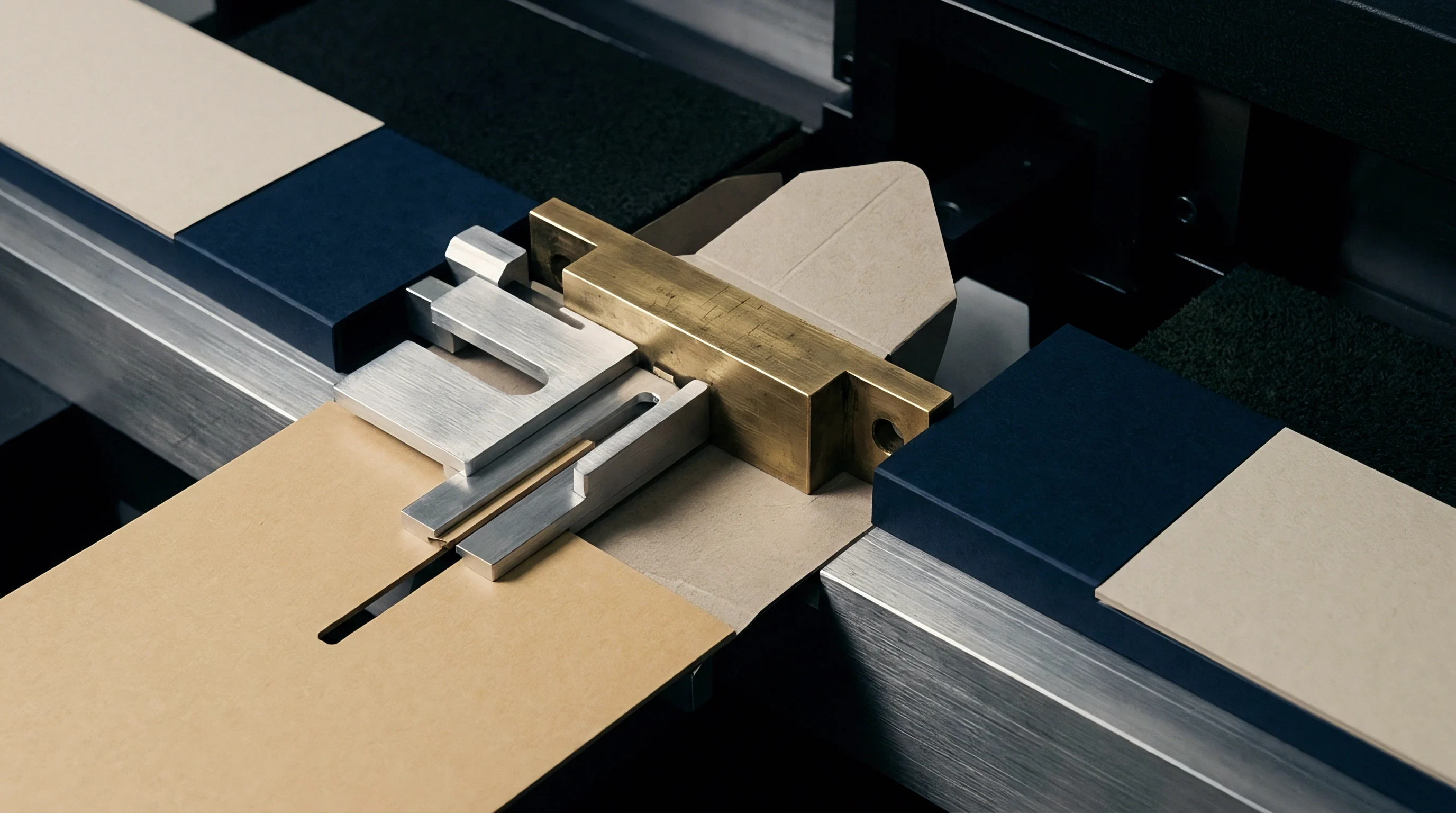
Converting operations transform flat folding boxboard sheets into functional three-dimensional packaging through creasing, scoring, and folding. These mechanical operations compress the fibrous core plies while stretching the outer pigment coatings. Mechanical strain disrupts the uniform multi-ply cross section, introducing localized structural fractures that drastically alter regional vapor transport dynamics.

Coating Layer Micro-Fracturing and Delamination
Creasing tools force the board into a die channel, forming an internal male-female impression designed to fold cleanly without outer liner cracking. Under tension, brittle mineral pigment coatings experience localized micro-fracturing along the fold line. Kaolin and calcium carbonate particle matrices separate from latex binders under elongation exceeding 1.5 percent.
These micro-fractures create direct macroscopic channels through the high-barrier top coating, bypassing the tortuous Knudsen diffusion network and accelerating vapor ingress directly into the middle fiber plies.
Concurrently, severe shear stresses along the crease line cause internal delamination between adjacent fiber plies. Delamination voids create internal channels where water vapor diffuses rapidly along the package seams via unhindered bulk gas diffusion. Transient models that assume uniform planar diffusion underestimate seam ingress rates by several orders of magnitude if score-line damage parameters are omitted.
Crease Failure Modes in Barrier Packaging
- Outer Coating Micro-Crazing occurs when tensile strains across outer fold radii break latex binder bonds, converting dense barrier coatings into micro-porous transport pathways.
- Delamination Void Shearing separates internal mechanical plies from outer kraft liners, forming continuous air gaps that accelerate vapor transport along package edges.
- Back-Ply Tensile Fracturing breaks internal fiber bonds along the inner fold line, allowing direct vapor entry into core plies under humid ambient storage.
- Sizing Matrix Degradation occurs when mechanical scoring breaks hydrophobic internal sizing networks, allowing rapid liquid water absorption along raw cut carton edges.
Improper matching of creasing rule width to board caliper causes outer coating fracture, elevating local vapor flux rates and compromising package shelf-life targets across supply chain environments.

Model
Numerical implementation of transient vapor diffusion across multilayer folding boxboards requires finite element or finite difference schemes capable of managing non-linear diffusivity functions, localized creasing damage multipliers, and dynamic relative humidity boundary conditions. Integrating calibrated transport models into packaging design workflows enables accurate shelf-life estimation and material optimization without exhaustive storage testing.
Finite Element Mesh Setup and Material Assignment
Two-dimensional cross-sectional models split the folding boxboard geometry into distinct spatial domains corresponding to actual ply calipers. The dense top coating requires an ultra-fine mesh resolution (element size under 0.5 microns) to capture steep initial vapor concentration gradients. Coarser elements (5 to 10 microns) suffice for the thicker mechanical core plies.
At creased corners and score lines, local material properties incorporate localized degradation factors that increase diffusion coefficients based on measured fold angles and die geometry.
| Substrate Ply Domain | Caliper (microns) | Density (g/cm³) | Base Diffusivity D0 (m²/s) | Sorption Parameter (Henry’s K) |
|---|---|---|---|---|
| Double Pigment Top Coat | 18 | 1.45 | 8.5 x 10^-13 | 0.045 |
| Bleached Top Chemical Ply | 45 | 0.82 | 2.1 x 10^-10 | 0.320 |
| Mechanical Core Ply | 220 | 0.48 | 1.4 x 10^-9 | 0.580 |
| Bleached Back Chemical Ply | 40 | 0.78 | 2.8 x 10^-10 | 0.310 |

Shelf-Life Simulation and Packaging Optimization
Calibrated multi-ply transient models simulate package moisture gain over extended storage periods under variable climate profiles, such as ISO 2233 environmental sequences. Simulations predict the precise time required for internal package relative humidity to reach critical quality thresholds for moisture-sensitive products like dry infant formulas, powdered pharmaceuticals, or crisp food goods.
Replacing empirical trial-and-error prototyping with transient diffusion modeling allows converters to optimize coating weights, refine furnish selections, and adjust creasing geometry efficiently. Material specifications defined through validated transient numerical modeling protect product integrity while minimizing excess fiber mass and coating consumption.