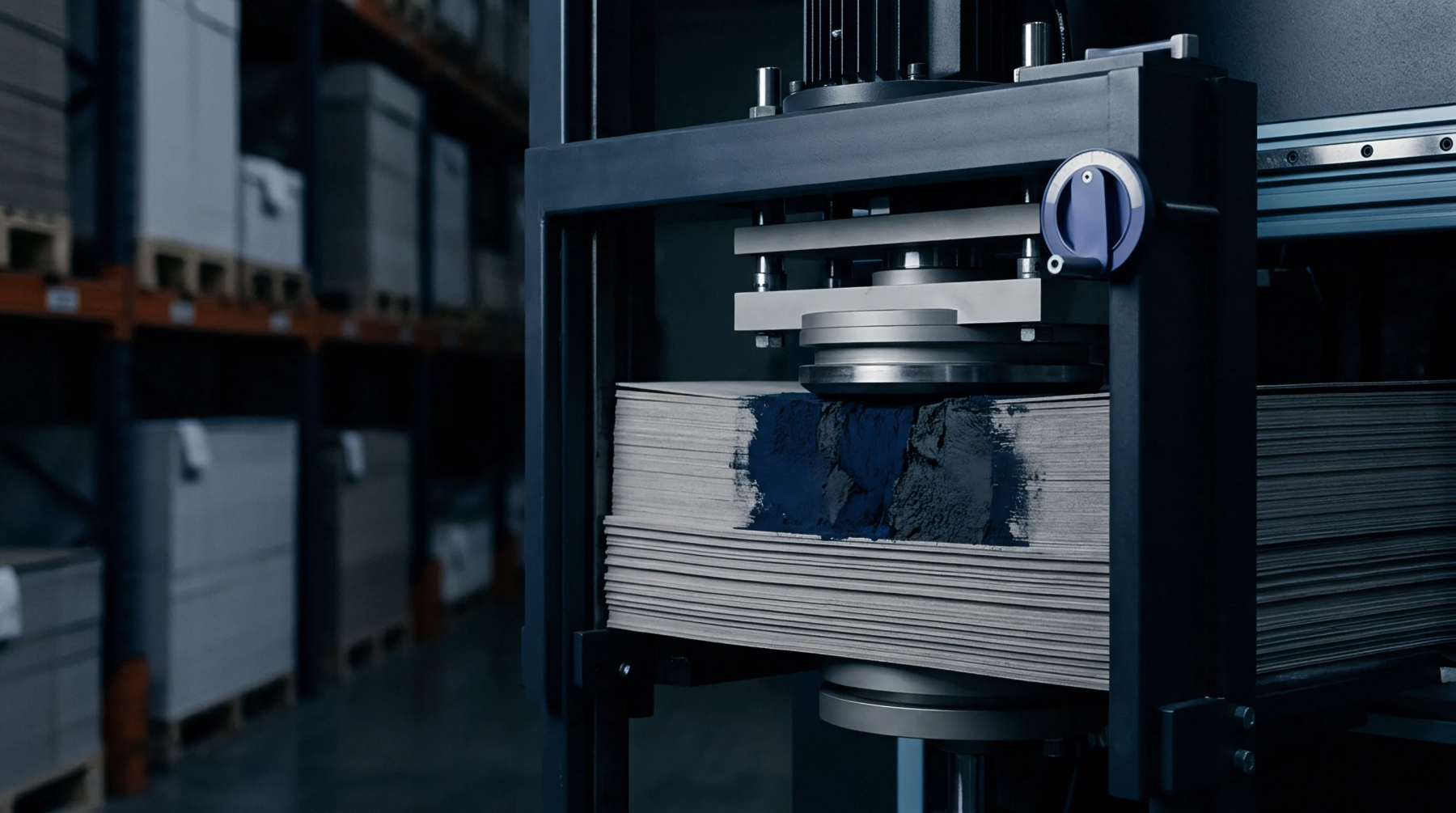
Thickness Reduction
Material compression of paperboard under pressure represents a permanent decrease in thickness that affects the structural integrity of the substrate. Caliper loss occurs during high-pressure processes such as winding, embossing, or printing. It alters the bending stiffness of the material and limits the protective performance of the finished cartonboard.
Structural Failure
Converting lines and printing presses exert substantial nip pressure that can crush the delicate air voids between cellulose fibers. When a cartonboard with high bulk is subjected to excessive forces in the calender or the offset press, the fiber network undergoes irreversible deformation. This permanent set directly reduces the stiffness of the sheet, and the board may fail to run smoothly through automatic packing machines.
The phenomenon is most pronounced in high-yield mechanical pulps where the stiffness is derived from bulk rather than fiber weight, meaning that even a small reduction in the profile thickness results in a severe drop in the top-to-bottom compression strength of the completed packaging box.
Press Tuning
Adjustment of the cylinder packing and nip clearances remains the primary method for controlling this thickness change on a production line. Operators set the minimum pressure required to achieve clean ink transfer without exceeding the elastic limit of the paperboard. In carton production, maintaining the initial thickness ensures that creasing and folding operations can proceed without cracking the outer plies of the board.