Foundation Matrix
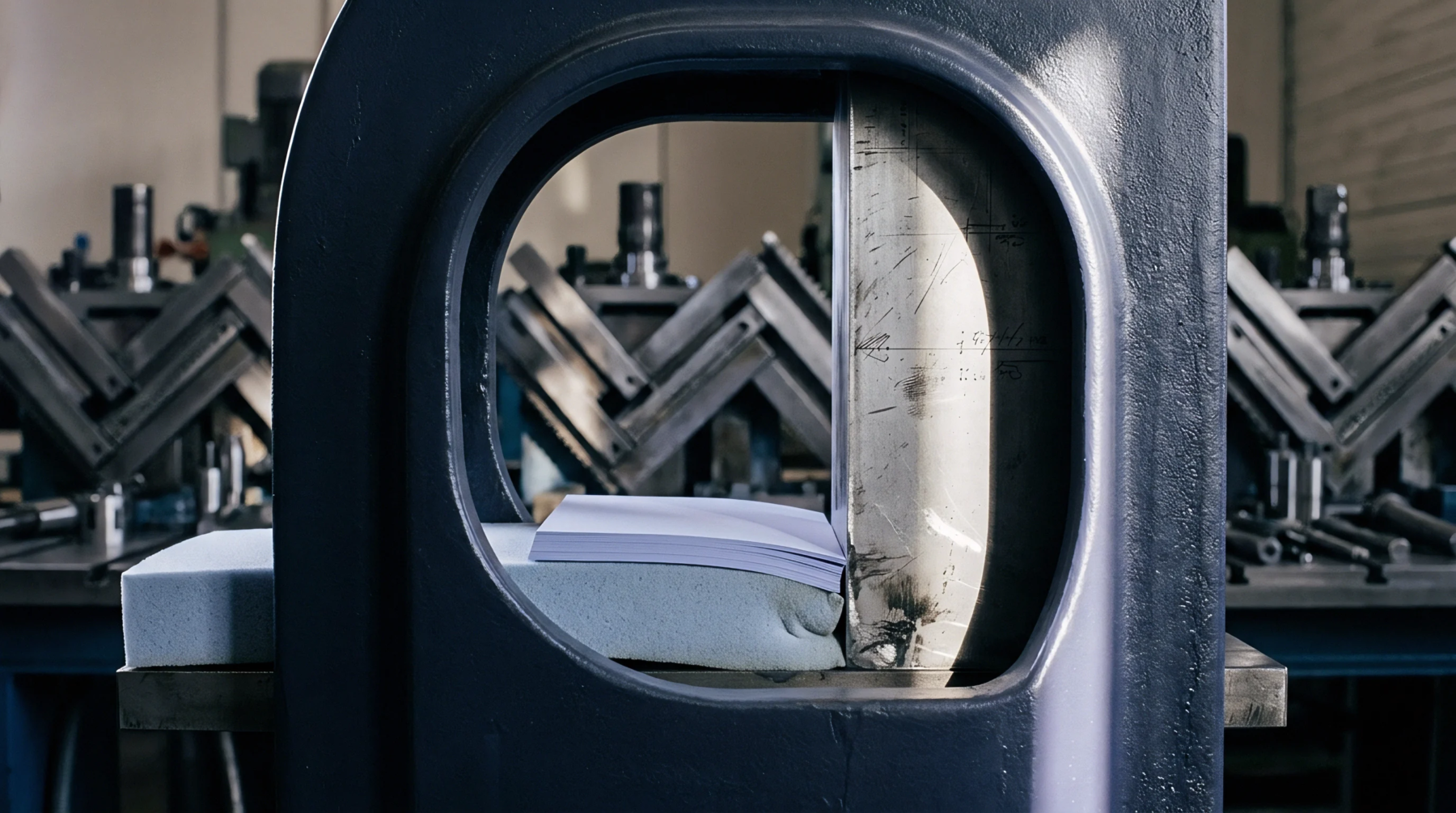
Precision tooling plates fitted to the bottom platen of a die-cutter provide the counter-grooves needed to form clean creases in folding boxboard. A counter plate acts as the rigid base against which creasing rules force board fibers during the conversion process. Milled steel or synthetic composite variants feature micro-channeled grooves aligned precisely with male creasing rules on the upper die frame.
This alignment controls the fold line geometry in folding cartons. Substrate caliper determines channel width and depth specifications. Correct groove geometry prevents fiber cracking during high-speed folding operations.
Creasing Precision
Forming crisp hinges in heavy paperboard requires tight dimensional tolerances across every impression. The counter plate receives board sheets at rates exceeding eight thousand blanks per hour on automated lines. Accurate positioning relative to the upper cutting die prevents offset creases that skew finished carton geometry.
Precision milling ensures uniform channel walls, which shapes board fibers without rupturing outer liner layers. Synthetic materials offer rapid preparation times for short packaging orders, whereas hardened steel plates suit long production runs.
Wear Threshold
Repeated impact from steel rules gradually wears down channel edges over extended production runs. A worn counter plate produces shallow crease profiles, leading to inconsistent folding resistance on high-speed cartooning machinery. Timely replacement maintains crease definition across long manufacturing cycles.