Paperboard Wet End Electrokinetics and Dynamic Charge Control
Dynamic wet-end electrokinetic control optimizes retention and dewatering by maintaining furnish zeta potential near neutrality through automated polyelectrolyte titration.

Charge
Surface Electrodynamics of Papermaking Stock Streams
Colloidal particles suspended in aqueous pulp slurries carry net electrical potential derived from ionization of functional groups on polysaccharide chains. Carboxylic acid functional groups on cellulose fibers dissociate in neutral mill water circuits, creating an electrical double layer at the solid-liquid interface. This interface consists of a stern layer of strongly bound counter-ions surrounded by a diffuse ion cloud extending into the bulk liquid phase.
The electrokinetic potential at the hydrodynamic shear plane, designated as the zeta potential, governs particle-to-particle repulsion forces according to standard Derjaguin-Landau-Verwey-Overbeek (DLVO) electrokinetic theory.
System pH alters potential density. Unbleached kraft carries high ionic demand. In typical paperboard furnishes operating at pH 6.8 to 7.4, virgin bleached softwood fibers exhibit zeta potentials ranging from negative 15 to negative 25 millivolts.
Unbleached kraft pulps and high-yield mechanical stocks present significantly higher surface potentials, reaching negative 35 to negative 45 millivolts due to residual lignin fragments and oxidized hemicelluloses. Managing these electrical forces is critical for maintaining stock suspension stability prior to wet-end sheet consolidation.
Dissolved Anionic Compounds in Recycled Furnishes
Recycled old corrugated containers introduce significant quantities of soluble wood extractables, residual starch, and oxidized lignosulfonates into papermaking water loops. These dissolved and colloidal substances, collectively termed anionic trash, consume cationic papermaking additives before those chemicals can interact with structural pulp fibers. Mill circuits operating with high water closure rates accumulate these polyelectrolytes, pushing dissolved ionic demand from a baseline of 50 micro-equivalents per liter up to 800 micro-equivalents per liter.
Distinguishing between fiber surface potential and dissolved charge demand represents a fundamental operational requirement. A pulp suspension can exhibit a near-neutral zeta potential while simultaneously carrying an immense concentration of dissolved anionic trash in the filtrate phase. Cationic additives added to such a system are consumed instantaneously by soluble polymers, leaving structural fibers unconditioned and causing severe retention losses on the forming wire.
A wet-end system operating near absolute zero surface potential suffers from severe process instability and uncontrolled flock agglomeration.
| Furnish Type | Zeta Potential Range (mV) | Anionic Demand (µeq/g dry stock) | Fines Content (ISO 12625 %) | Specific Surface Area (m²/g) |
|---|---|---|---|---|
| Bleached Softwood Kraft | -15 to -22 | 12 to 25 | 4.2 to 6.5 | 1.4 to 1.8 |
| Bleached Hardwood Kraft | -18 to -28 | 20 to 35 | 8.5 to 12.0 | 2.1 to 2.6 |
| Unbleached Softwood Kraft | -30 to -42 | 45 to 70 | 6.0 to 9.5 | 1.8 to 2.3 |
| Thermo-Mechanical Pulp (TMP) | -35 to -50 | 90 to 140 | 22.0 to 30.0 | 4.5 to 6.2 |
| Recycled OCC Furnish | -25 to -38 | 110 to 185 | 18.0 to 26.0 | 3.2 to 4.8 |
Scientific consensus remains incomplete regarding the exact spatial boundary where colloidal trash transitions from soluble polyelectrolytes into physically suspended micro-flocs under ultra-high shear forces within modern top-wire paperboard formers.
Titration
Analytical Methods for Ionic Demand Quantification
Polyelectrolyte neutralization testing measures the volume of oppositely charged standard polymers required to bring stock filtrate to electrical neutrality. Standard laboratory protocols rely on high charge density polymers of known stoichiometry. Poly-diallyldimethylammonium chloride (Poly-DADMAC) serves as the primary cationic titrant, while potassium polyvinyl sulfate (PVSK) acts as the reference anionic titrant.
Colorimetric endpoint determination utilizing metachromatic dyes such as orthotoluidine blue allows visual or spectrophotometric verification of neutralization points.
Conductivity changes shift electrical double layers. Excess titrant inflates chemical expenses. Automated streaming current detectors measure the streaming potential generated when liquid filtrate is forced through a narrow capillary channel containing a reciprocating piston.
The displacement of counter-ions relative to adsorbed polymers on channel walls generates a measurable alternating current signal, providing continuous feedback on net ionic charge state.
Distinguishing Soluble Demand from Fiber Surface Potential
Membrane filtration through 0.45 micron pores isolates dissolved polyelectrolytes from suspended fines prior to laboratory evaluation. Testing raw headbox stock without prior filtration measures total chemical demand, combining fiber surface sites, fine particle surfaces, and dissolved organics into a single unrefined metric. Separate analysis of the 0.45 micron filtrate quantifies pure soluble demand, isolating the specific chemical fraction responsible for consuming low-molecular-weight cationic fixatives.
- Filtrate turbidity masking ~ Particulate carryover through coarse sample filters distorts optical endpoint detection during polyelectrolyte neutralization measurements.
- Conductivity compression ~ High inorganic salt levels compress electrical double layers, suppressing measured potential readouts without structural ionic balance shifts.
- Polymer adsorption lag ~ High molecular weight titrants demand extended equilibration intervals, causing over-dosing errors during rapid automated laboratory testing cycles.
- Temperature-induced calibration drift ~ Thermal variations in stock streams alter fluid viscosity, shifting sensor shear rates and producing artificial voltage baselines.
Continuous measurement of headbox filtrate yields far more reliable operational control than periodic bench testing of thick stock slurries.

Additive

Polymer Architecture and Fixation Chemistry
Synthetic polyelectrolytes neutralize dissolved anionic contaminants through charge patch formation or bridging mechanisms. Low molecular weight polymers with high positive charge density bind rapidly to soluble wood extractables and oxidized starches. Poly-DADMAC, polyamines, and polyethyleneimine (PEI) reduce anionic trash concentrations, creating favorable conditions for subsequent retention aid applications.
Dosages typically range from 0.5 to 2.5 kilograms of active polymer per dry tonne of paperboard furnish.
Dissolved organics consume high-charge polymers. Shear stress strips adsorbed polymers. High molecular weight cationic polyacrylamides (c-PAM) operate through bridging flocculation.
Long polymer chains extend beyond the electrical double layer of individual fibers, adsorbing onto multiple particle surfaces simultaneously. Dual-polymer retention systems combine high molecular weight c-PAM with inorganic microparticles such as colloidal silica or bentonite clay to form dense, shear-resistant flocs capable of surviving high-speed headbox nozzle hydraulics.

How Does Dynamic Ionic Charge Shift Strength Development?
Fiber surface potential directly regulates hydrogen bonding availability between adjacent pulp fibers during sheet consolidation in the press section. Over-cationization repels adjacent fibers through net positive electrostatic charges, creating loose, uneven sheet formation and degrading Scott Bond internal strength values. Under-cationization leaves fine particles un-retained, allowing them to migrate into press felts where they cause sheet crushing and uneven density profiles across the web.
- Low-molecular-weight fixatives ~ High charge density polymers coagulate colloidal trash, preventing interference with secondary retention programs.
- Cationic starches ~ Moderate substitution polymers provide both electrical neutralization and internal hydrogen bonding strength across fiber intersections.
- High-molecular-weight polyacrylamides ~ Long-chain polymers produce bridge flocculation, capturing fines while increasing first-pass retention efficiency.
- Inorganic microparticles ~ Colloidal silica and bentonite alter floc structure under high shear, releasing trapped water and accelerating wire dewatering.
Consider a 350 g/m² folding boxboard middle-ply line processing 100% recycled OCC at 450 meters per minute with an incoming anionic demand of 160 micro-equivalents per liter. Option A utilizes a single cationic polyacrylamide retention aid dosed at 0.45 kilograms per tonne, yielding a first-pass retention of 68% and an annual polymer cost of 142,000 USD. Option B implements a dual-component program comprising 1.2 kilograms per tonne of low-molecular-weight poly-DADMAC fixative paired with 0.25 kilograms per tonne of c-PAM and 1.5 kilograms per tonne of colloidal silica.
Option B lowers filtrate anionic demand to 22 micro-equivalents per liter, elevates first-pass retention to 86%, and reduces dryer section steam consumption by 7.4%, generating net operational savings of 310,000 USD annually despite a higher initial chemical expenditure of 198,000 USD.
Compliance with BfR Recommendation XXXVI restricts acrylamide monomer content in dry paperboard to a maximum limit of 0.5 milligrams per kilogram of finished substrate.
Improper polymer dosage selection causes extensive felt blinding, forcing unplanned machine shutdowns and accelerating wash chemical consumption.

Drain
Dewatering Kinetics on the Forming Wire
Dewatering rates on fourdrinier tables depend heavily on the state of micro-flocculation established in the headbox stock slurry. Water removal across vacuum suction boxes accelerates when fine solids bind securely to longer structural fibers. Unbound fines accumulate at the wire mesh interface, forming a dense filter cake that increases drainage resistance and elevates vacuum requirements.
Dynamic drainage analyzers quantify dewatering speeds by tracking filtrate volume accumulated over fixed time intervals under controlled agitation rates.
Poor retention increases white water solids. Over-cationic systems cause severe foaming. Neutralizing stock potential to a window between negative 5 and negative 2 millivolts optimizes water removal rates while maintaining uniform fiber orientation.
Crossing into positive electrokinetic territory causes severe fiber reflocculation, generating optical cloudiness, reduced burst ratios, and degraded printability on finished boxboard surfaces.

Impact on Internal Bond and Sizing Retention
Internal sheet integrity depends on uniform particle distribution achieved when colloidal repulsive forces reach balanced equilibrium. Hydrophobic sizing agents such as alkenyl succinic anhydride (ASA) and alkyl ketene dimer (AKD) depend entirely on cationic carrier polymers for retention on fiber surfaces. ASA emulsions stabilized with cationic starch require consistent wet-end electrical potential to ensure rapid orientation of hydrophobic tails away from fiber surfaces prior to dryer section curing.
| Net Zeta Potential (mV) | Vacuum Dewatering Rate (L/min) | First-Pass Retention (%) | Scott Bond Strength (J/m²) | Cobb 60 Water Absorption (g/m²) |
|---|---|---|---|---|
| -18.5 | 142 | 62.4 | 145 | 48.2 |
| -10.2 | 178 | 74.1 | 168 | 31.5 |
| -3.4 | 215 | 88.6 | 192 | 22.4 |
| +1.8 | 222 | 82.3 | 154 | 26.1 |
| +8.5 | 190 | 71.0 | 121 | 38.7 |
Maintaining wet-end potential between negative 5 and negative 2 millivolts yields a peak first-pass retention of 88 percent while preserving sheet formation index above 75.
Chemical vendors frequently attribute sudden retention drop-offs to undisclosed raw material variations in recycled pulp shipments rather than deficiencies in polymer activity.
Control
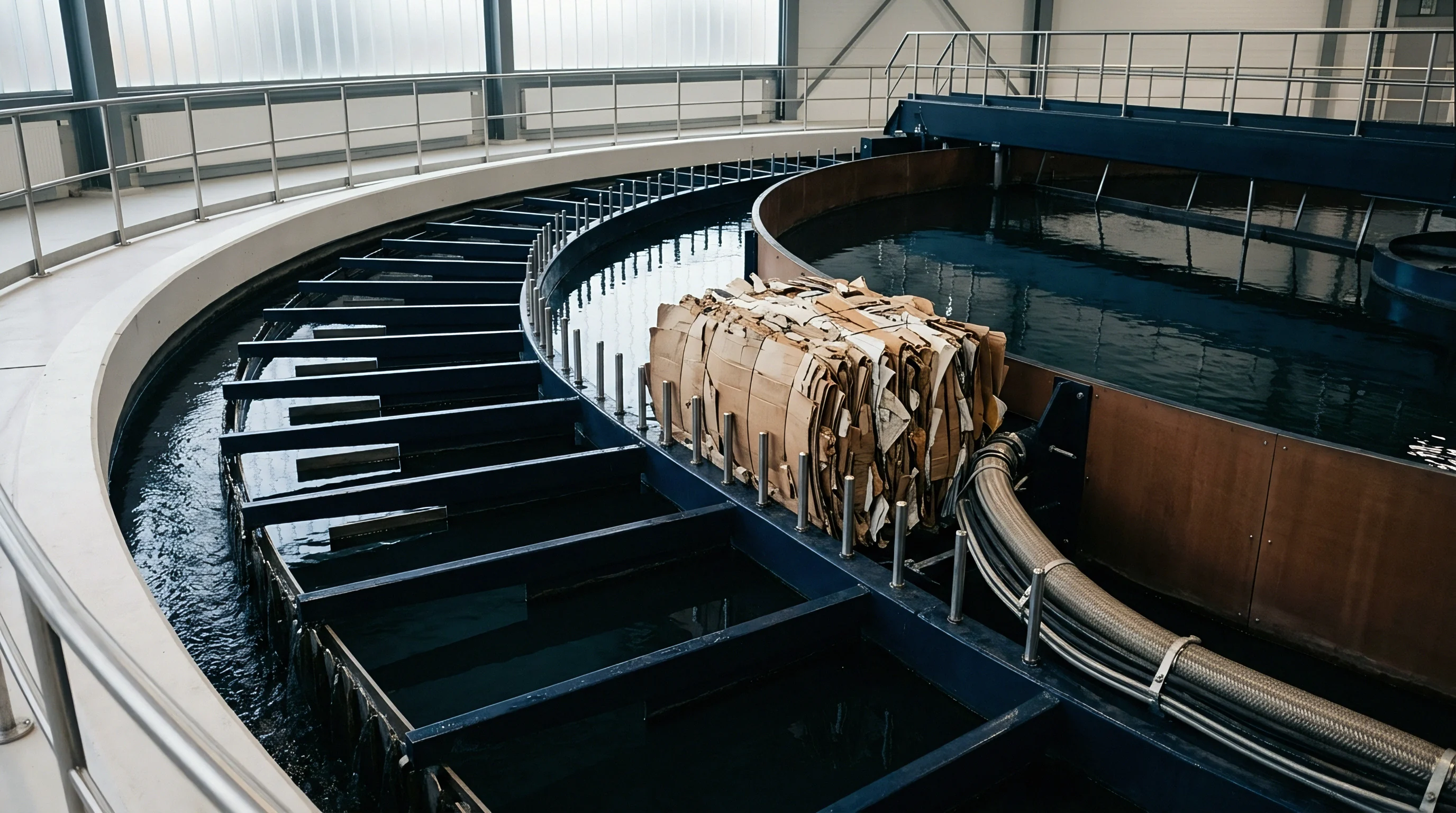
Automated Closed-Loop Wet-End Monitoring Systems
Modern papermaking lines utilize continuous streaming current sensors integrated directly into headbox recirculation loops. Continuous signal processing enables automated dosing pumps to adjust polymer feed rates in real time. Systems adjust cationic fixative additions based on filtrate charge measurements while modulating high-molecular-weight retention aids against optical consistency meters installed in white water trays.
Conductivity surges destabilize polymer performance. Zeta potential measurements require dilution. Wet-end disturbances caused by broke additions, furnish grade changes, or deinking plant efficiency shifts are stabilized before chemical imbalances disrupt sheet formation.
Closed-loop control systems prevent over-cationization cycles, holding chemical additives within narrow operational bands that protect substrate compliance profiles.

Compliance Verification and Import Regulatory Risk
Package regulatory verification requires comprehensive documentation proving chemical additives fulfill chemical migration and environmental safety standards. European Regulation EC 1935/2004 and BfR Recommendation XXXVI specify strict composition limits for functional wet-end chemicals intended for food contact packaging. Chemical additives contributing up to 3% of dry board mass must carry verified certificates of analysis showing residual monomer concentrations remain within legal boundaries.
| Failure Mode | Analytical Signature | Regulatory & Operational Exposure | Financial Consequence Range |
|---|---|---|---|
| Fixative Over-Dosing | Filtrate Zeta Potential > +10 mV | Residual poly-DADMAC migration into dry food simulants under EN 645 | Customs holds; batch rejection at 45,000–120,000 USD per 100-tonne lot |
| Anionic Trash Spike | Filtrate Demand > 300 µeq/L | Retention collapse, white water solids exceed 0.8%, felt blinding | Unplanned machine downtime costing 8,000–15,000 USD per hour |
| Acrylamide Carryover | c-PAM Monomer > 0.025% active ingredient | Non-compliance with BfR XXXVI residual limits for food contact board | Product recall; delisting by retail buyers; regulatory compliance fines |
| ASA Sizing Failure | Cobb 60 > 45 g/m² | Uncured sizing hydrolysis producing liquid penetration during filling | Converter claim compensation for damaged packaging line runs |
- Calibrate online streaming potential sensors against laboratory polyelectrolyte titration results every eight hours using standard filtrate sampling.
- Map stock conductivity variation across headbox supply lines to establish baseline electrical double-layer compression thresholds.
- Set automated feed-forward dosing pumps for primary cationic fixatives based on incoming recycled furnish percentage changes.
- Adjust secondary high molecular weight retention polymer additions through real-time headbox consistency optical feedback loops.
- Audit chemical additive certificates of compliance against BfR Recommendation XXXVI extractable residue limits prior to batch release.
Border authorities reject food contact board declarations when chemical additive scopes fail to specify migration testing under worst-case solvent simulants.
Quality assurance agreements specifying EN 645 cold water extraction limits below 0.1 milligrams per square decimeter transfer financial liability for rejected shipments directly to board mills relying on unverified polymer additives.