Structural Performance Gaps in Recycled Containerboard under Humidity Cycling
Dynamic relative humidity cycling accelerates mechanosorptive creep in recycled containerboard, causing structural stack failure below static load limits.
Swell
Recycled containerboard takes up atmospheric moisture through hygroscopic processes tied to pore distribution, chemical makeup, and remaining hemicellulose. Prior drying cycles cause hornification in recycled pulp, altering the microfibrillar structure of cell walls. As cellulose fibers lose internal volume and stiffen, lumen elasticity declines.
Secondary papermaking strips away natural wood resins, leaving exposed hydroxyl sites on the cellulose surface ready to bind ambient moisture.
Immersion or moisture contact causes these fibers to swell.
Cell microstructures expand unevenly as moisture enters. Across the transverse direction, fibers expand up to twenty times faster than along their longitudinal axis. Absorbed water breaks inter-fiber hydrogen bonds, substituting liquid water films for solid structural bridges.
Because recycled fibers have lower tensile strength than primary wood pulp, cross-grain expansion accelerates under fluctuating relative humidity.
Fibre Wall Restructuring across Recycled Furnish
Furnish recovered from post-consumer corrugated containers carries a large share of short, damaged hardwood and softwood fibers. Repeated recycling loops shorten fibers and weaken their bonding potential. Once hornified, these fibers pull in water via capillary condensation inside secondary pores instead of uniform uptake through the lumen.
Static short-span compression strength drops by 38 percent after four cycles between 50 and 80 percent relative humidity at 23 degrees Celsius.
Losing hemicellulose through repeated repulping cuts the moisture-buffering capacity of recycled containerboard. Without enough hemicellulose, water cannot distribute evenly across the sheet caliper. Pockets of moisture build up near filler particles and residual starch deposits, generating internal shear stress along ply boundaries that destabilizes multi-ply linerboard under compressive loads.
Hydrogen Bond Disruption Mechanics
Cellulose chains within the fiber wall divide into crystalline and amorphous regions. Water molecules readily penetrate the amorphous zones, driving individual microfibrils apart. This microfibrillar separation lowers the elastic modulus of the paperboard and alters shear resistance in the z-direction.
- Initial Vapor Sorption Free water molecules attach to unbonded hydroxyl groups on amorphous cellulose chains, raising equilibrium moisture content.
- Hydrogen Bond Dissociation Inter-fiber hydrogen bonds break when water molecules lodge between adjacent hydroxyl pairs.
- Transverse Fiber Expansion Individual cell walls expand sideways, building internal tension across the paperboard web profile.
- Structural Stiffness Loss Elastic modulus drops rapidly as solid fiber-to-fiber contacts give way to lubricated sliding interfaces.
Paperboard naturally takes up ambient water vapor.
Strength loss under humidity exposure reflects inherent paper chemistry and fits standard contract manufacturing tolerances.


Creep
Deformation in paperboard under constant load accelerates when ambient relative humidity swings between high and low levels. This mechanosorptive effect causes structural strain to accumulate well beyond static creep rates measured at high, steady humidity. Fiber hornification and short fiber geometry make recycled containerboard especially vulnerable to this mechanism.
Under cyclic exposure, creep deformation builds rapidly.
Transient moisture flux forces ongoing molecular movement within the fiber matrix. As moisture shifts into and out of the cellulose network, temporary hydrogen bonds break while external mechanical loads pull adjacent polymer chains past each other. Once moisture levels stabilize, new hydrogen bonds form in these displaced positions, locking in permanent strain.
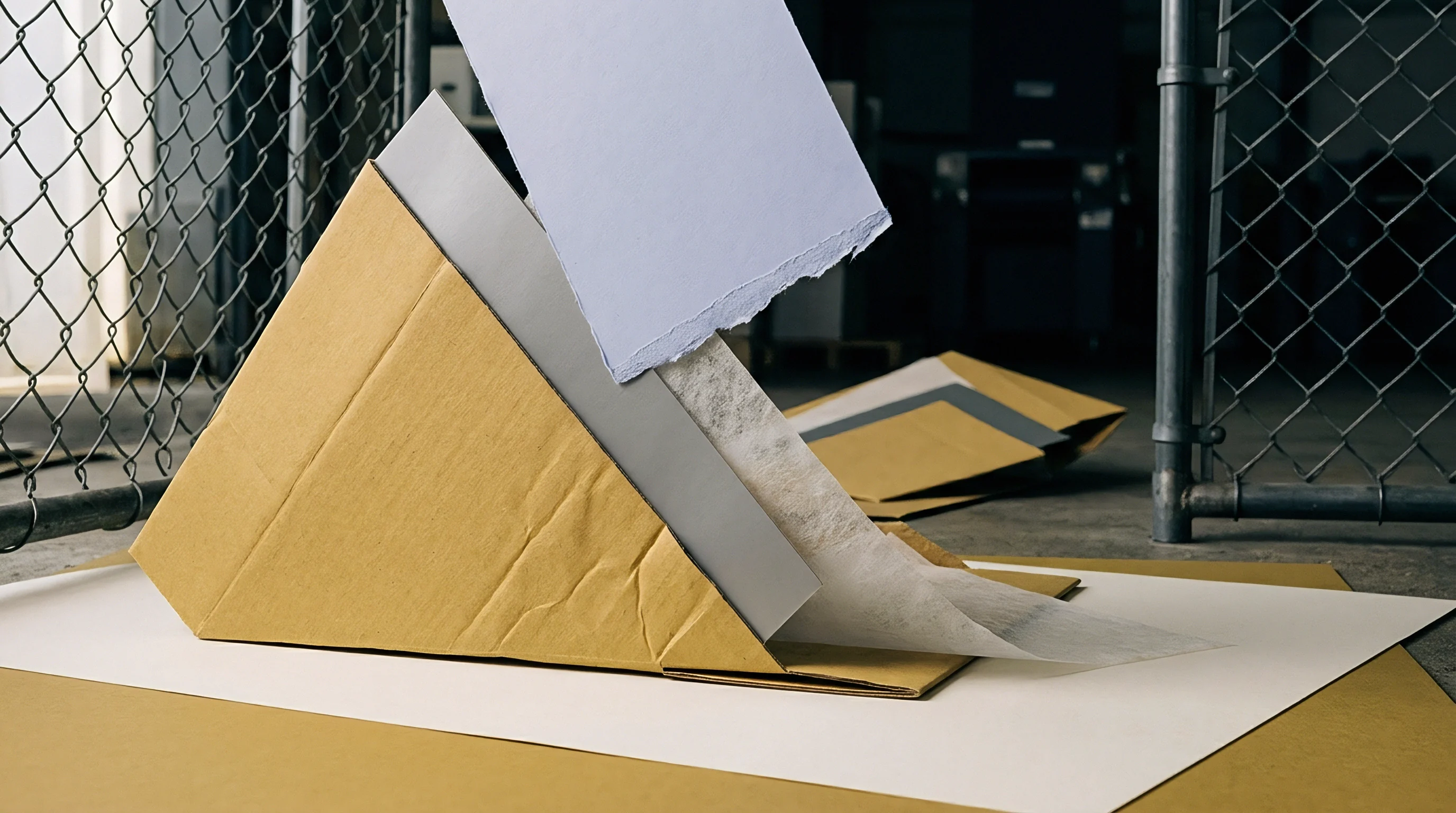
Mechanosorptive Phenomena under Transient Moisture Flux
Dynamic humidity cycling drives moisture gradients directly across the paperboard caliper. Outer plies gain and shed moisture faster than the inner core, setting up cyclic tension and compression stresses through the sheet profile. These localized stress peaks exceed material yield limits long before the total load capacity of the box is reached.
| Grade Composition | Grammage (gsm) | Conditioning Type | Static SCT Loss (%) | Cyclic Strain Rate (% per hour) |
|---|---|---|---|---|
| 100% Recycled Testliner | 140 | Static 85% RH (48 hr) | 22 | 0.04 |
| 100% Recycled Testliner | 140 | Cyclic 50-90% RH (48 hr) | 41 | 0.19 |
| Virgin Kraftliner | 140 | Static 85% RH (48 hr) | 14 | 0.02 |
| Virgin Kraftliner | 140 | Cyclic 50-90% RH (48 hr) | 26 | 0.08 |
| Data obtained under ISO 554 conditioning and cyclic RH protocols at 23 degrees Celsius with 3-hour ramp rates. | ||||
Moisture flux weakens load-bearing capacity throughout supply chain storage. Corrugated boxes stored in unconditioned warehouses accumulate structural damage with every day-to-night shift in relative humidity.

Does Virgin Top Liner Prevent Mechanosorptive Failure?
Multi-ply paperboards combining a virgin kraftliner top sheet with a recycled core aim to balance surface strength against cost. While the outer virgin ply slows initial surface wetting, core layers of recycled furnish continue absorbing ambient vapor through exposed box edges and flute channels.
Fluctuating internal moisture content drives this structural breakdown.
Differences in expansion coefficients between virgin face plies and recycled core layers generate internal shear forces. When moisture gradients peak during swift humidity shifts, plies delaminate along internal starch glue lines. Choosing lower-recycled-content grades without increasing box grammage often leads to sudden stack collapse along maritime shipping routes.

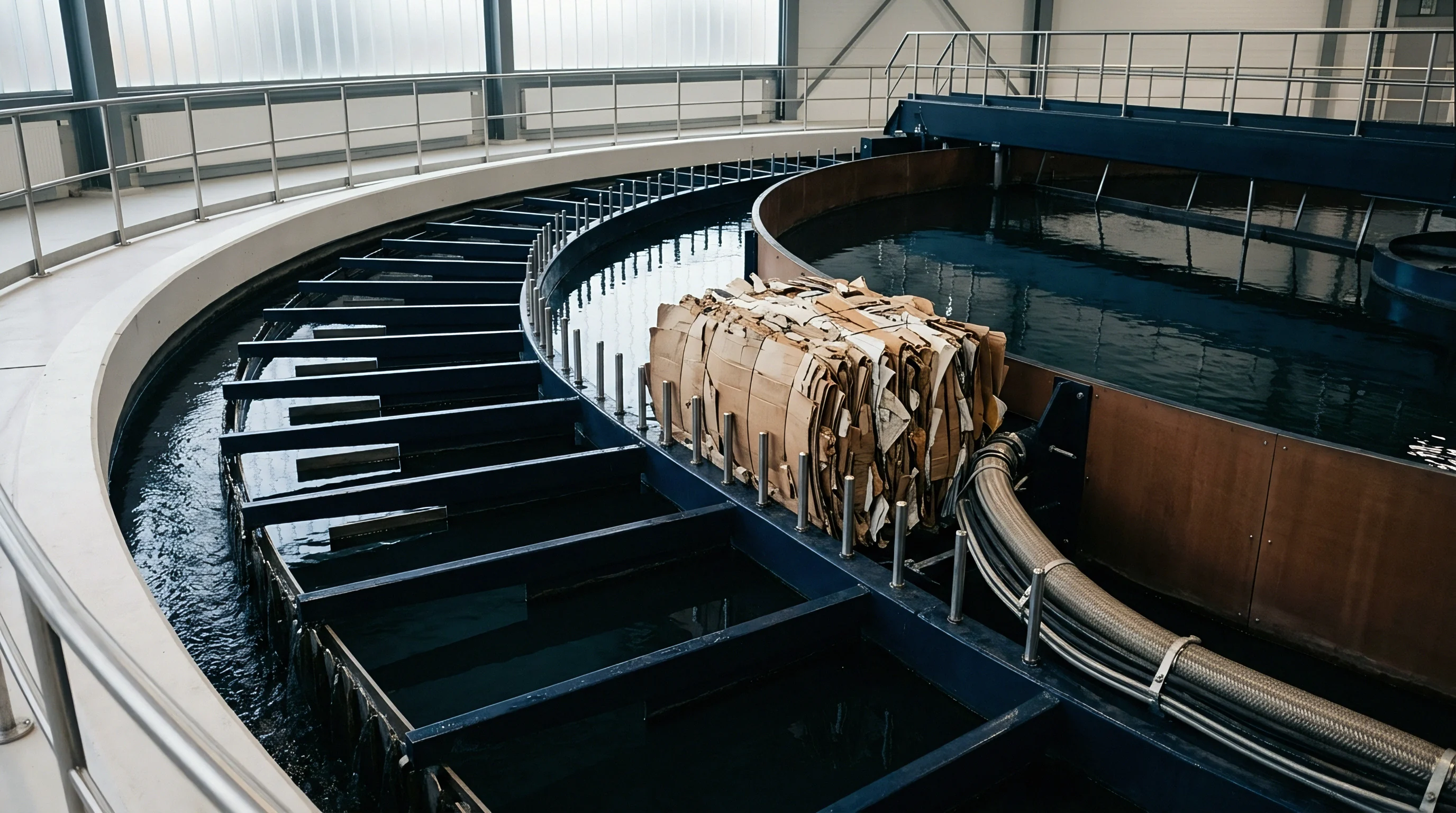
Flute
The geometry of the corrugated medium governs how compressive loads transfer between top and bottom linerboards. Humidity cycling destabilizes flute crests through simultaneous material softening and geometric distortion. As starch adhesive lines bonding flute tips to the liners absorb moisture, edge crush resistance falls.
Adhesive bond lines soften under combined moisture and load.
Edge compression tests evaluate the combined strength of liners, medium, and starch joints under vertical loading. Under dynamic relative humidity, the corrugated medium loses bending stiffness faster than flat linerboard plies. When flutes flex laterally, the flat liners lose vertical support, setting off secondary face-buckling failures.
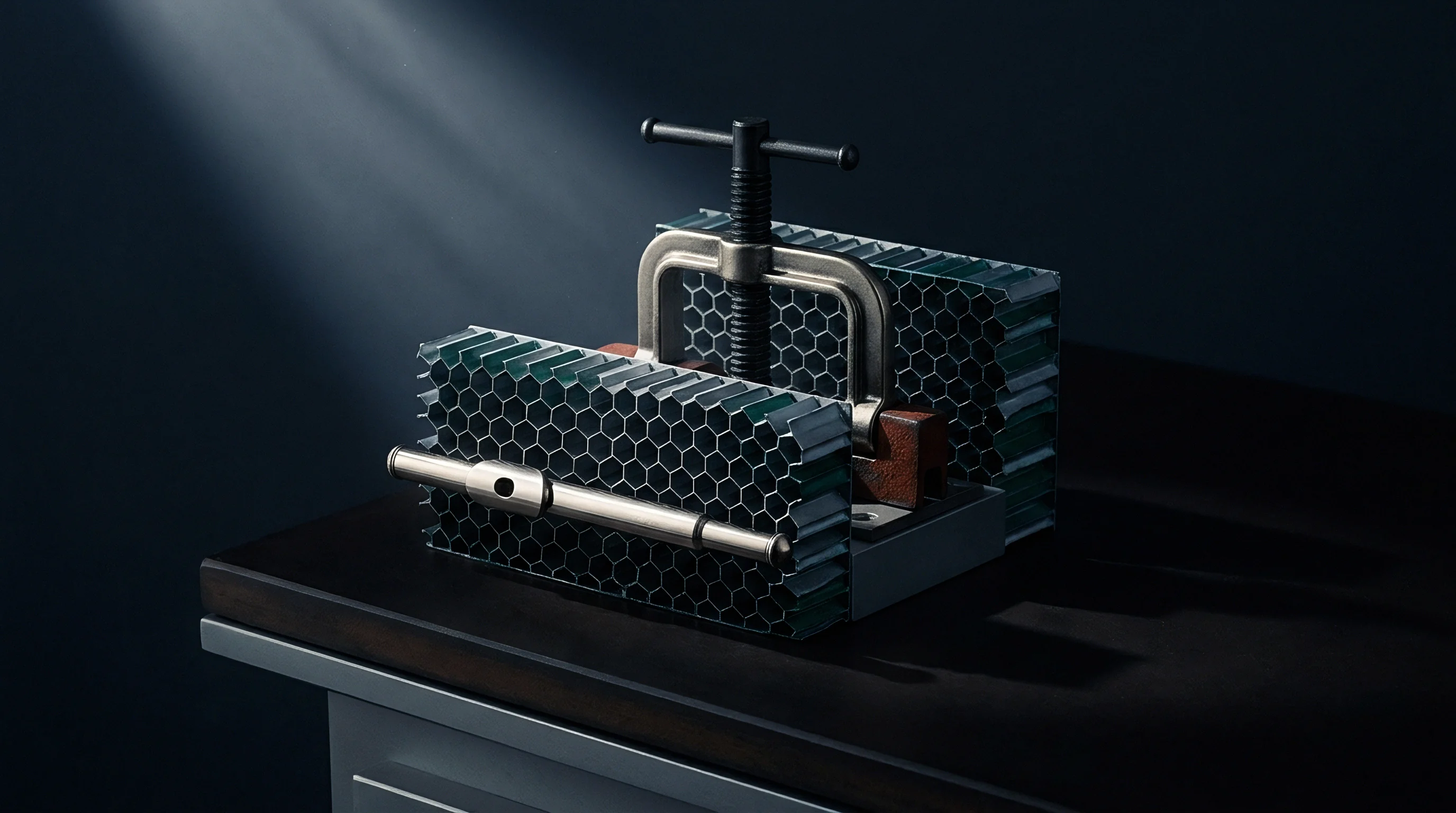
Compression Strength Loss across Board Components
Short-span compression testing measures intrinsic fiber-to-fiber compressive resistance apart from sheet buckling, while ring crush testing evaluates the structural stiffness of circular paperboard strips. Both metrics decline under humidity cycling, but short-span values drop faster in recycled medium than in virgin semi-chemical fluting.
- Flute Crest Flattening Moisture softening causes flute tips to flatten permanently under vertical pallet loads.
- Adhesive Delamination Hydrated starch glues lose shear strength, letting linerboards shear away from the corrugated core.
- Lateral Wall Buckling Softened flutes deflect sideways, converting vertical compression into horizontal bending moments.
- Cross-Direction Creep Wrinkling Cyclic expansion forms micro-folds along the corrugated web axis, permanently reducing structural inertia.
Recycled pulp is dominated by shorter, damaged fibers.
Short recycled fibers conform poorly while wet, producing uneven starch lines along flute tips during combination. Water vapor aggregates in these lower-density starch zones during humidity ramps, hastening bond failure.
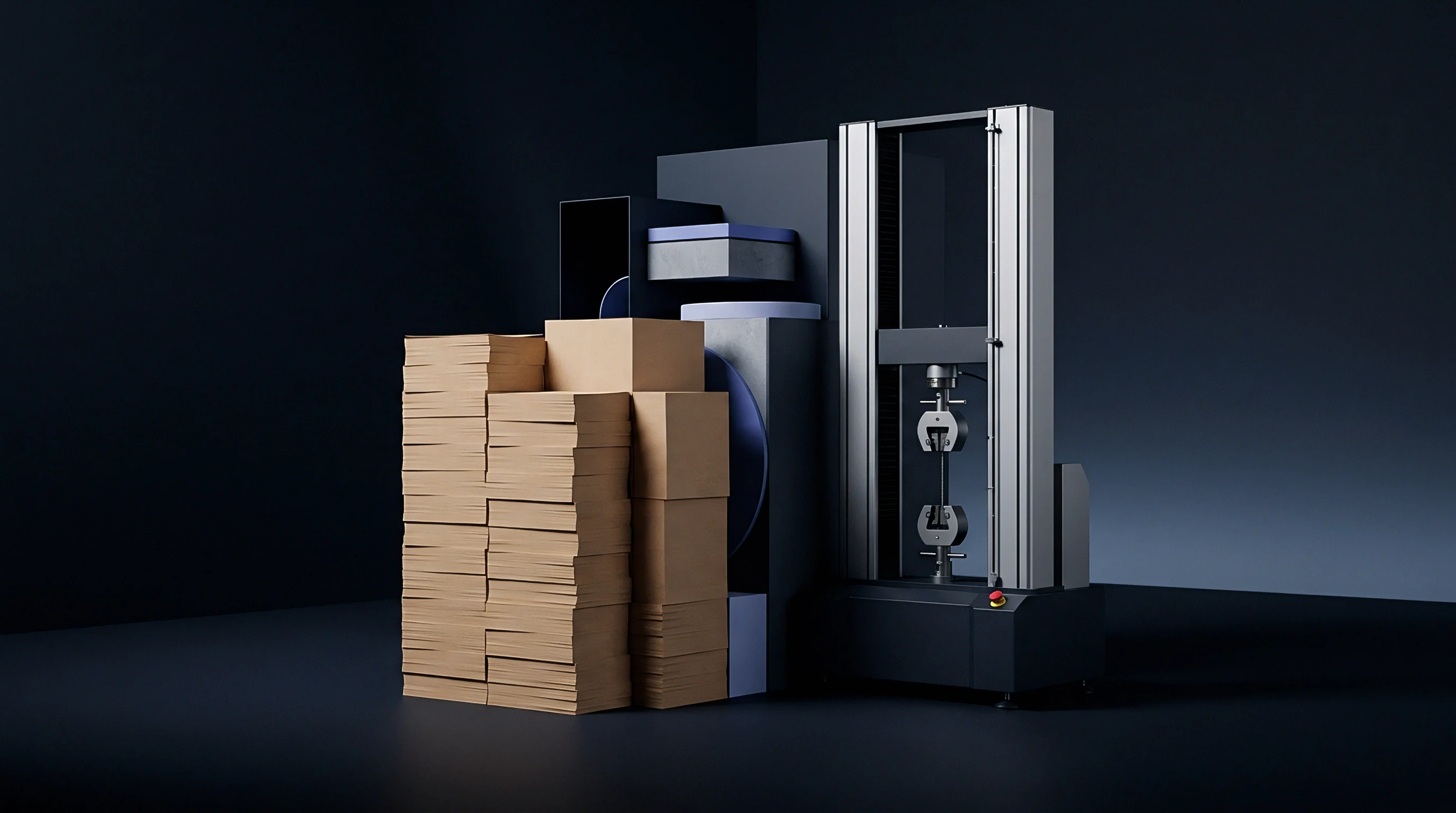
Adhesive Line Integrity in Damp Shipping Corridors
Native corn and wheat starch adhesives swell when relative humidity exceeds 80 percent. Adding synthetic resins improves water resistance, but does not alter the hydro-expansion rate of adjacent recycled fibers. Dimensional mismatch between rigid glue lines and expanding paper fibers tears the corrugated bond apart.
Virgin softwood top plies delay mechanosorptive creep but cannot prevent structural collapse once recycled core fibers reach moisture equilibrium.
Selecting flute profiles based solely on initial dry crush strength without accounting for dynamic humidity degradation leads directly to structural failure along humid shipping routes.
Stack
Box Compression Test ratings determine safe pallet stacking heights in distribution networks. Standard engineering models rely on empirical formulas to predict failure from liner compression strength and board caliper, but recycled containerboard exposed to cyclic relative humidity deviates sharply from those predictions.
Under prolonged creep, warehouse stacks lean and destabilize.
Standard safety factors underestimate structural creep under dynamic ambient conditions. McKee box compression equations must be modified to account for mechanosorptive degradation in recycled fibers. A worked comparison shows how dynamic moisture exposure reduces load capacity over time.
Consider a single-wall corrugated shipping container made from 140 gsm recycled testliner and 120 gsm recycled corrugated medium, with dimensions of 400 mm length, 300 mm width, and 250 mm height. The box perimeter equals 1400 mm. Initial laboratory testing under standard ISO conditions (23 degrees Celsius, 50 percent relative humidity) yields an Edge Crush Test rating of 5.2 kN/m and a flexural stiffness of 1.2 Nm. Standard McKee formula calculations give an initial dry Box Compression Test score of 2340 N.
In a static warehouse environment held at 85 percent relative humidity, the box retains 70 percent of its initial compression strength, leaving a strength floor of 1638 N. Applying a standard environmental safety factor of 1.8 sets the allowable continuous static load at 910 N.
Under conditions cycling between 50 percent and 90 percent relative humidity every six hours, mechanosorptive creep reduces effective compression resistance by an additional 35 percent compared to static wet storage. The strength floor drops to 1064 N. Using the standard 1.8 safety factor yields a safe continuous load limit of only 591 N. Relying on static design multipliers for recycled boxes in cycling humidity creates an unhedged load deficit of 319 N per box.
| Containerboard Type | Standard Dry BCT (N) | Static 85% RH BCT (N) | Cyclic RH Floor (N) | Required Safety Factor |
|---|---|---|---|---|
| 100% Recycled Testliner Board | 2340 | 1638 | 1064 | 3.95 |
| 50% Recycled / 50% Kraft Board | 2650 | 1987 | 1457 | 2.88 |
| 100% Virgin Kraftliner Board | 3100 | 2480 | 1984 | 2.11 |
Static laboratory ratings fail to reflect these working limits.
Without adjustment, stacked pallets can collapse without warning.
What structural safety factor prevents dynamic mechanosorptive stack collapse without making recycled box grammages commercially uncompetitive?
Specimen
Laboratory conditioning standards establish a uniform baseline for comparing raw materials. Standard ISO 187 procedures call for test specimens to equilibrate at 23 degrees Celsius and 50 percent relative humidity. By intentionally eliminating moisture movement during physical testing, standard conditioning masks the mechanosorptive failure mechanisms that degrade recycled packaging in real transit.
Static testing hides these real-world failure risks.
Evaluating recycled containerboard solely under constant atmospheric conditions generates misleading structural efficiency metrics. Qualifying materials for variable-humidity supply chains requires cyclic humidity screening inside controlled climate chambers.
Standard Atmospheric Conditioning Gaps
Standardized testing assumes paperboard reaches equilibrium moisture content before force is applied. In real logistics corridors, packaging never settles into stable equilibrium, as ambient humidity fluctuates continuously during truck transport, cross-dock handling, and warehouse storage.
Specifying containerboard compliance solely under ISO 554 standard atmosphere leaves warehouse stacking strength exposed to severe humidity cycling.
Short-span compression values recorded under stable conditions correlate closely with virgin fiber performance. Yet when subjected to active humidity ramps, recycled specimens lose compressive resistance faster than virgin boards at identical moisture contents.

Laboratory Protocols for Dynamic Moisture Testing
Evaluating mechanosorptive resistance requires cyclic relative humidity creep chambers. Test procedures apply constant compressive stress while swinging relative humidity between set upper and lower limits.
- Precondition test specimens at 23 degrees Celsius and 50 percent relative humidity for 24 hours to establish baseline weight and dimensions.
- Mount the specimen in a continuous short-span compression fixture housed inside a climate chamber.
- Apply a continuous static compressive load equal to 40 percent of the pre-conditioned dry failure load.
- Ramp relative humidity from 50 percent to 90 percent over 120 minutes, hold at 90 percent for 60 minutes, ramp down to 50 percent over 120 minutes, and hold for 60 minutes.
- Repeat the humidity ramp cycle four times while recording vertical deformation continuously at 1-minute intervals.
- Calculate the creep rate parameter by determining strain increment per relative humidity cycle.
Tension redistributes across internal plies as moisture shifts.
Contracts referencing ISO 187 standard conditioning without dynamic humidity qualification clauses leave buyers without recourse when recycled boxes fail under cyclic field exposure.

Settlement
Commercial packaging contracts rely on technical specifications to define quality boundaries and defect liability. Yet purchasing specs limited to minimum grammage, bursting strength, and dry edge crush strength fail to protect against mechanosorptive failure. Commercial disputes frequently arise when boxes pass all pre-shipment laboratory testing but collapse inside humid distribution centers.
Well-drafted procurement terms assign these operational risks clearly.
Containerboard converting contracts must integrate specific performance thresholds for variable moisture regimes. Defining clear compliance criteria reduces financial exposure across international supply chains.
Contractual Defect Liability Allocation
Sourcing practices manage compliance risk through structured testing clauses, documentation, and chain-of-custody tracking. FSC and PEFC certificates verify recycled fiber origin, but offer no technical assurance regarding structural integrity or mechanosorptive resistance.
Regulatory checks can stall uncertified shipments at import borders.
Packaging mandates, such as the European Union Packaging and Packaging Waste Regulation, require higher levels of post-consumer recycled content in transport packaging. Meeting these content targets while maintaining pallet stack durability requires adjusting structural designs, adhesive selections, and safety margins.

Commercial Dossier Architecture for Packaging Compliance
Building a defensible compliance file requires combining regulatory certificates, mill furnish reports, and dynamic test data. This documentation protects buyers against non-conformity claims and regulatory penalties at import clearance.
- Chain of Custody Dossier FSC or PEFC transfer claim documents validating recycled content percentages across converting runs.
- Chemical Safety Clearance Food contact compliance declarations under Regulation EC 1935/2004 for packaging exposed to direct or indirect food contact.
- Dynamic Mechanical Verification Environmental chamber test reports recording short-span compression strain rates under 50-90 percent RH cycling.
- Heavy Metal Analysis EN 13428 and CR 13695 compliance records confirming combined heavy metal concentrations remain below 100 ppm.
Purchasing specifications for recycled containerboard require explicit benchmarks under dynamic environmental exposure. Technical agreements should specify minimum short-span compression retention after standardized humidity cycling. Building dynamic creep metrics directly into supply contracts provides clear legal grounds for cost recovery when material failure causes product loss in distribution networks.