Closed Loop Infrared Profiling for Anisotropic Tensile Stiffness Angle Compensation
Closed loop infrared profiling corrects paper tensile stiffness angles during drying to eliminate board twist, score splitting, and lamination curl.
Beam
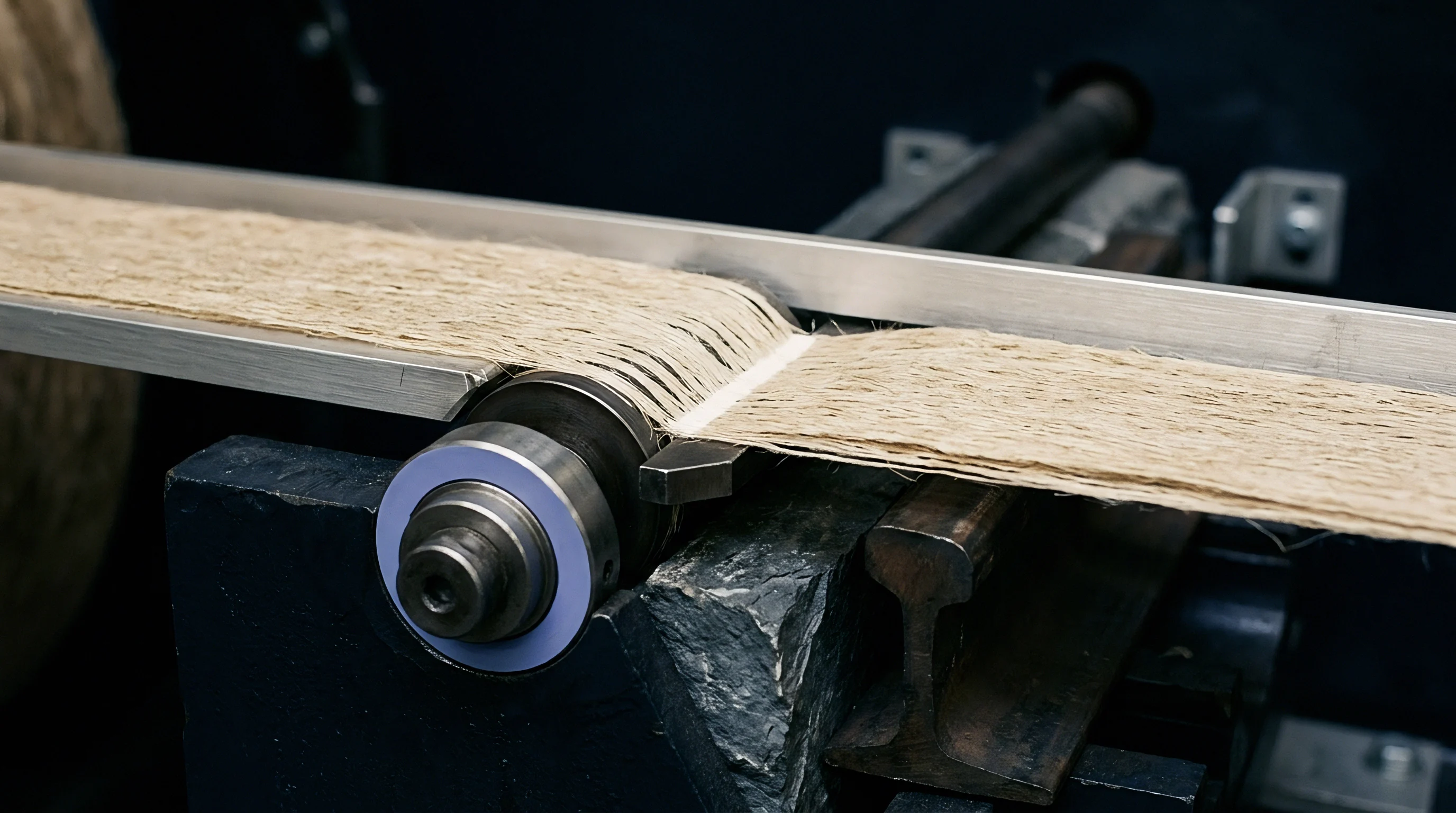
High-density shortwave emitter arrays targeted across wet paper web zones alter cross-directional evaporation rates. This localized thermal energy application modifies moisture profiles before wet-end shrinkage locks physical sheet structures into place. Tensile stiffness determines sheet stability.
Paperboard stock exhibits anisotropic mechanical behavior due to the preferential alignment of cellulose fibers during wet-end deposition. When fiber alignment strays from the true machine direction, the principal stiffness axis tilts, creating an off-axis Tensile Stiffness Orientation angle. Uncorrected Tensile Stiffness Orientation angles induce severe twisting, board curl, and register distortion during subsequent finishing passes like thermal film lamination, precision embossing, and high-speed die-cutting.

Fiber Orientation Dynamics and Jet-Wire Velocity
Stock slurry exiting headbox slice lips carries suspended cellulose structures into immediate contact with moving synthetic fabrics. The velocity differential between the liquid jet and the forming wire establishes the initial fiber alignment distribution. A jet speed exceeding wire speed stretches the slurry, aligning fibers predominantly along the machine direction.
Conversely, dragging the sheet by running wire speed above jet speed generates shear forces that alter alignment geometry. Fiber alignment governs mechanical response. When slice lips distort locally or cross-machine stock distribution experiences turbulence, the local flow vectors rotate away from the machine centerline.
This angular deflection causes the principal axis of elastic modulus to rotate correspondingly across discrete web lanes.
Measuring this mechanical variance across running webs relies on high-frequency ultrasonic pulse propagation systems. Ultrasonic propagation speeds yield stiffness orientation. Ultrasonic velocity correlates directly with the square root of the specific elastic modulus along the measurement vector.
By sweeping ultrasonic transducer heads across the moving web, continuous profiling systems map the Tensile Stiffness Index and calculate the precise Tensile Stiffness Orientation angle across thirty-two or sixty-four cross-machine zones. Angle deviations as small as 1.5 degrees off machine direction generate sufficient asymmetry to ruin flat board converting performance.
Substrate dimensional stability improves when high-density thermal profiling targets moisture peaks before wet end shrinkage locks fiber network orientation.
Thermal Energy Deposition across Segmented Zones
Concentrated infrared radiation between 0.8 and 1.5 micrometers penetrates damp web boundaries to elevate local sheet temperatures. Shortwave infrared modules deliver precise thermal doses that accelerate water evaporation within targeted cross-machine channels. Selective moisture removal alters local web hygro-expansion potential.
Cross-directional drying shrinkage creates stress. As water leaves the fiber matrix under controlled heating, inter-fiber hydrogen bonds collapse into rigid structures while the sheet remains under machine direction web tension. This differential zonal shrinkage forces a structural realignment of internal stress vectors.
Positioning high-capacity infrared emitter banks immediately before or within the early dryer section allows targeted moisture modification while the fiber network remains sufficiently plastic to deform. Thermal energy shifts moisture local distribution. Increasing infrared emitter power in specific edge zones accelerates localized drying, forcing those channels to shrink earlier than adjacent damp lanes.
The resulting tension redistribution rotates the local principal elastic axis, drawing an off-angle Tensile Stiffness Orientation back into alignment with the machine direction before final drying sets the sheet geometry permanently.
- Headbox Hydraulics Misalignment generates asymmetrical stock shear forces across the forming wire, causing localized rotations of the fiber orientation angle away from the machine centerline.
- Uneven Cross-Machine Evaporation creates localized moisture differentials during main cylinder drying, forcing differential transverse shrinkage that pulls the principal elastic axis off alignment.
- Unbalanced Machine Direction Web Tension stretches damp web channels disproportionately, exaggerating minor mechanical angular deviations into permanent structural distortions.
- Differential Dryer Fabric Restraint permits unconstrained transverse shrinkage in edge lanes while pinning center zones, rotating edge stiffness vectors up to three degrees off axis.
Machine manufacturers frequently claim that cross-directional moisture variations originate entirely from upstream headbox stock variations beyond the correction range of infrared profile actuators.


Feedback
Closed control loops combine online ultrasound sensors with downstream actuators to stabilize machine direction physical properties. Continuous real-time measurement feeds algorithmic response models that calculate exact power outputs for individual infrared emitter zones. The profiling architecture monitors two distinct physical metrics: total cross-machine moisture profile variation and the cross-machine Tensile Stiffness Orientation angle profile.
Because thermal evaporation affects both parameters simultaneously, control algorithms utilize decoupled response matrices to isolate moisture profile flattening from angle compensation adjustments.

Sensor Response Matrices and Actuator Cross-Talk
Continuous online ultrasonic scanners calculate cross-machine propagation velocities across thirty-two discrete web channels. The measurement head traverses the moving web at speeds up to 1.5 meters per second, collecting acoustic velocity data at multiple angles to derive both Tensile Stiffness Index magnitude and Tensile Stiffness Orientation angle. The continuous stream of positional and directional data populates a real-time cross-machine array.
Actuator cross-talk represents a primary control challenge. Infrared heat deposited in zone sixteen conducts laterally through the wet web into zones fifteen and seventeen, while convective air boundary layers carry thermal energy downstream across neighboring lanes.
Deconvolution models resolve this spatial dispersion by applying spatial response kernels to actuator commands. The system models each infrared zone’s thermal footprint as a Gaussian distribution function across the web width. When the control algorithm identifies a target Tensile Stiffness Orientation angle deflection in zone twenty, it calculates a primary power adjustment for zone twenty alongside compensating counter-adjustments for zones nineteen and twenty-one.
This spatial decoupling prevents control loop oscillation and maintains flat overall moisture profiles while enforcing localized mechanical alignment corrections.
Operating infrared profiling systems at 85 percent continuous power capacity under ISO 187 conditioning maintains cross-machine tensile stiffness orientation within 0.8 degrees of machine direction.
Closed Loop Control Algorithm Calibration
Automated tuning protocols match zonal power adjustments against measured moisture changes across three drying passes. The closed-loop controller compares real-time ultrasonic scanner profiles against pre-set target profiles established for specific paperboard grades. Machine direction tension fixes elastic modulus.
The system updates infrared emitter power outputs at intervals ranging between five and fifteen seconds, matching the thermal response lag of the shortwave quartz elements and web transit times between the heater bank and the scanner frame.
Web speed variations exacerbate curl. When line speeds change during reel turns or grade changes, feedforward control modules automatically scale overall infrared emitter array base power proportional to total web mass throughput. This feedforward action preserves the established cross-machine power profile shape while adjusting absolute kW output, keeping localized moisture-driven shrinkage corrections stable through speed ramps.
Dynamic tuning prevents thermal overshoot and protects heat-sensitive surface coatings from scorching during web speed drops.
| Web Zone Identifier | Target Moisture Content (%) | Measured Moisture (%) | Measured TSO Angle (deg) | IR Zone Power Output (%) | Corrected TSO Angle (deg) |
|---|---|---|---|---|---|
| Zone 04 (Edge) | 7.5 | 8.8 | +2.3 | 88 | +0.4 |
| Zone 08 (Quarter) | 7.5 | 8.1 | +1.1 | 72 | +0.2 |
| Zone 16 (Center) | 7.5 | 7.4 | -0.2 | 45 | -0.1 |
| Zone 24 (Quarter) | 7.5 | 8.3 | -1.4 | 76 | -0.3 |
| Zone 28 (Edge) | 7.5 | 9.1 | -2.7 | 94 | -0.5 |
- Initialize scanner frame calibration sequences to verify ultrasonic sensor time-of-flight measurements against solid reference blocks under ISO 187 standard atmosphere conditions.
- Establish baseline machine direction web tension controls to eliminate speed-induced structural noise before activating profiling loops.
- Map spatial actuator response matrix values by executing individual step-change power increases across odd-numbered infrared zones while recording downstream TSO angle shifts.
- Input decoupling algorithm parameters into the main programmable logic controller to compensate for cross-directional thermal conduction across neighboring channels.
- Engage full closed-loop control modes, setting target maximum allowable Tensile Stiffness Orientation angle limits to within plus or minus 0.5 degrees from centerline.
Adjusting zonal infrared heat input provides effective moisture profile corrections only when wet end jet speed ratios remain constant across the entire production shift.

Crease
Mechanical scoring creates controlled folding lines by compressing internal paperboard structures under defined rule profiles. When paperboard stock exhibits an uncorrected off-axis Tensile Stiffness Orientation angle, the principal elastic resistance of the sheet does not line up with the creasing rule matrix. This mechanical angular offset forces folding stress to resolve along the path of least resistance rather than along the indented score line.
Unbalanced shrinkage drives board twist. Converting operations processing off-axis board suffer from asymmetrical crease bead displacement, scoring rule fracture, score splitting, and severe panel twist during folder-gluer runs.

Laminate Bowing and Diagonal Box Twist
Thermal film application subjects paper substrates to mechanical stress during cooling phases. Standard converting practice applies oriented polypropylene or polyethylene terephthalate films to single sides of paperboard using heat and nip pressure. As the laminated web exits the lamination nip, the polymer film cools and contracts rapidly.
The underlying paperboard substrate resists this thermal contraction through its internal elastic modulus. Film tension pulls single-sided laminates.
When the substrate stiffness orientation matches the machine direction precisely, cooling film shrinkage generates balanced longitudinal curvature that post-processing curl-breaker rolls easily correct. Conversely, an off-axis Tensile Stiffness Orientation angle introduces asymmetric elastic resistance against film shrinkage. The principal stiffness axis resists bending along its angle while the orthogonal weak axis yields readily.
Moisture regain destroys box alignment. This mechanical imbalance transforms straight machine-direction curl into diagonal panel twisting. Finished folding cartons display prominent diagonal twist across panel faces, preventing flat blank feeding into automated carton fillers and causing glue-seam misregistration on high-speed converting lines.
Purchasing specifications aligned with DIN 53121 allow converters to reject board lots exhibiting cross-directional stiffness variations exceeding twelve percent.

Score Splitting along Anisotropic Axes
Deep embossing and rule impression passes break linerboard fibers when alignment angles stray from structural axes. Mechanical creasing relies on localized shear deformation within the paperboard core, causing internal delamination along predefined middle plies while keeping top and bottom linerboard surfaces intact. Score lines crush solid fiber networks.
The creasing rule pushes top liner fibers downward into the matrix channel, straining the outer fiber layers under tension. Thermal exposure alters polymer chain relaxation.
When the principal fiber alignment sits at a three-degree angle to the scoring rule, outer liner fibers sustain compound torsional and tensile loading during the 90-degree fold pass. Instead of stretching uniformly perpendicular to the score line, outer fibers shear diagonally along their primary orientation axis. This torsional stress concentration ruptures top liner coatings and breaks surface fibers along score edges, revealing raw white substrate beneath printed surfaces.
The resulting score cracking defect invalidates the barrier integrity of food packaging and causes cosmetic rejection on premium packaging runs.
- Substrate Anisotropy Ratio Requirements dictate a maximum Tensile Stiffness Index ratio between machine direction and cross direction below 2.2 to prevent excessive transverse score cracking.
- Maximum Permissible Off-Axis TSO Angle setting must remain strictly below 1.0 degree to avoid diagonal panel twist on single-face thermal film laminated cartons.
- Crease Depth to Caliper Ratios require adjustments from 0.45 down to 0.38 when processing stock with uncompensated off-axis stiffness angles to reduce outer liner tensile strain.
- Laminator Web Pre-Heating Limits must stay under 65 degrees Celsius to restrict differential post-nip thermal contraction on asymmetrical board structures.
Excessive stiffness angle deviation causes complete structural rejection of finished folding cartons during high-speed automated cartoning line assembly.

Verification
Laboratory measurement of tensile stiffness index values establishes baseline mechanical properties for incoming paperboard stock. Quality assurance protocols mandate physical sampling across the entire reel width to verify mill certification data against converted sheet performance. Standard laboratory testing utilizes destructive physical tensile testing under ISO 1924-3 alongside non-destructive ultrasonic velocity testing per ISO 187 standard atmosphere conditioning.
Ultrasonic testing measures propagation speed across multiple angular vectors on excised samples, providing precise validation of online infrared profiling system effectiveness.

Non-Destructive Ultrasonic Profiling versus Tensile Testing
Pulse propagation velocity instruments evaluate elastic modulus distributions without destroying test swatches. The laboratory instrument clamps a circular or square paper sample between ultrasonic sender and receiver transducers arranged in a rotating ring array. The apparatus transmits high-frequency acoustic pulses through the sheet plane across sixteen directional angles from 0 to 180 degrees.
Tensile stiffness correlates directly with sound transmission velocity square value multiplied by sheet density. The software plots sound velocity distribution curves, deriving both the Tensile Stiffness Index magnitude and the exact Tensile Stiffness Orientation angle.
Physical tensile testing under ISO 1924-3 provides direct force-elongation measurements but requires cutting multiple narrow strips at defined increments across 360 degrees. Strip testing introduces sample preparation errors, edge damage variations, and long testing times. Ultrasonic evaluation measures pure elastic modulus response without inducing edge stress concentrations or plastic deformation.
Comparing mill online ultrasonic scanner data against laboratory benchtop ultrasonic readings provides exact verification of closed-loop profiling performance, catching drift in online sensor calibration before converted stock reaches processing lines.
Where Does Off-Axis Stiffness Degrade Scoring Geometry?
Converting operations encounter registration failures when principal elastic axes deviate from the machine center line. Scoring performance depends directly on matching mechanical creasing rule alignment with substrate elastic symmetry axes. Off-axis stiffness forces folding deformation into asymmetric strain patterns, pushing folded carton panels out of parallel alignment during high-speed folding passes.
Benchtop score evaluation tools measure folding moment curves across a 90-degree bend sequence. A balanced score profile displays a smooth, symmetrical resistance curve peaking near 15 degrees of rotation before dropping steadily as internal plies delaminate cleanly. Stock exhibiting a 2.5-degree off-axis Tensile Stiffness Orientation angle shows a secondary resistance peak during mid-fold rotation, signaling internal ply shearing and lateral score bead deflection.
This secondary peak indicates that outer liner fibers are under severe diagonal shear stress, directly forecasting score splitting and box glue-line skew during high-speed production runs.
| Test Protocol | Governing Standard | Measurement Principle | Sample Size Needed | Testing Time | Measurement Accuracy |
|---|---|---|---|---|---|
| Benchtop Ultrasonic Profiling | ISO 187 / TAPPI T 526 | Acoustic pulse velocity ring scanning | 200 mm x 200 mm sheet | 45 seconds | +/- 0.2 deg TSO angle |
| Axial Tensile Strip Testing | ISO 1924-3 / EN ISO 1924-2 | Constant rate elongation stress strain | 12 strips (15 mm x 100 mm) | 15 minutes | +/- 0.8 deg TSO angle |
| Inline Ultrasonic Scanner Frame | TAPPI T 577 | Continuous non-contact acoustic array | Continuous running web | Real-time (100 ms) | +/- 0.4 deg TSO angle |
| Score Resistance Bending Assay | DIN 53121 / ISO 2493-1 | 90-degree rotational fold moment curve | 50 mm x 38 mm creased blank | 2 minutes | +/- 2.5 mN resistance |
Standard purchasing addendums invoking ISO 1924-3 stipulate that delivered board lots exceeding three degrees of off-axis stiffness orientation transfer all sorting waste charges back to the supplying mill.

Yield
Waste tracking on continuous converting lines quantifies material spoilage across every production phase. Operating board converting lines with off-axis Tensile Stiffness Orientation stock incurs compounding operational costs from make-ready delays, reduced line running speeds, and finished product scrap rates. Retaining closed-loop infrared profiling on paperboard machines reduces off-axis angle variation from a typical uncompensated baseline spread of +/- 2.8 degrees down to +/- 0.6 degrees across the full reel width.
Rejected pallets eliminate print margins. This mechanical stabilization directly improves converting line pass rates and protects total run economics.
Worked Conversion Economics and Spoilage Rates
Financial modeling for board converting runs balances make-ready losses against raw stock costs. Consider a commercial production run of 250,000 thermal-laminated, die-cut folding cartons utilizing 350 grams per square meter solid bleached sulfate board. Assuming a board raw material cost of 1,450 Euros per metric ton, the job consumes approximately 35 metric tons of substrate representing 50,750 Euros in net board expenditure.
Running substrate with an uncompensated 2.2-degree off-axis Tensile Stiffness Orientation angle introduces a baseline scrap rate of 6.5 percent due to lamination twist, score splitting, and folder-gluer register misalignments. The resulting scrap incurs a direct material loss of 3,298 Euros alongside 12 machine hours of lost press time valued at 180 Euros per hour, totaling 5,458 Euros in direct waste. Implementing closed-loop infrared profiling keeps Tensile Stiffness Orientation angles strictly under 0.8 degrees.
This alignment control drops converting scrap rates to 1.2 percent, saving 2,689 Euros in board material while recovering 9.6 machine operating hours per run. The combined operational saving lands at 4,417 Euros per job docket.
Conversion line speed dictates dwell time. Capital investment costs for retrofitting a 3.2-meter wide cross-machine closed-loop infrared profiling array average 320,000 Euros, including scanner frame integration, high-density emitter banks, and control software modules. Amortizing this capital investment across a mill output volume of 45,000 metric tons per year yields an added profiling process cost of 1.42 Euros per ton.
Comparing this minimal operational process cost against converted customer scrap savings proves a full capital payback period of under nine months of continuous mill operation.
Modulated Packaging Fees and Extended Producer Responsibility
European recycling regulations assess financial penalties on laminated paperboard structures containing synthetic film components. Under modulated Extended Producer Responsibility guidelines, monomaterial paperboard packaging earns base recycling fee rates, while plastic-laminated structures incur surcharge penalties up to 220 Euros per ton due to recycling re-pulping difficulties. High-performance converters minimize synthetic film reliance by switching to water-based functional dispersion coatings.
Water-based barrier coatings apply liquid polymer dispersions directly to paperboard surfaces on press. These liquid coatings exhibit high sensitivity to substrate mechanical stability. Substrates with uncompensated off-axis stiffness angles form uneven coating film thicknesses under doctor blades, creating micro-pinholes along web edges that ruin oxygen and moisture vapor barrier performance.
Closed-loop infrared profiling maintains uniform mechanical substrate lay-flat, enabling defect-free water-based barrier application. Successfully replacing film laminates with dispersion coatings eliminates Extended Producer Responsibility packaging surcharges, providing an immediate 220 Euro per ton fee reduction while improving recyclability compliance grading under EN 13430 criteria.
Thermal lamination passes amplify underlying substrate stiffness angle misalignments into visible panel bow across wide carton blanks.
The precise threshold where localized infrared drying intensity induces permanent thermal degradation of surface sizing remains a subject of ongoing operational debate across commercial converting plants.