Dynamic Crease Stiffness Ratio Optimization in High Speed Packaging Lines
Dynamic crease stiffness ratio optimization balances rule geometry and substrate mechanics to eliminate high-speed packaging jams and score cracking.


Anvil
Creasing paperboard creates a controlled internal rupture along a localized line, transforming a rigid sheet into a mechanical hinge. During steel rule impression against a female counter channel, the paperboard structure experiences extreme shear and compressive stresses in the Z-direction. The top surface liner compresses while inner plies shear apart, forming a localized delamination bubble.
This intentional internal structural breakdown reduces the bending moment required to rotate adjacent carton panels during folding operations. Without this internal delamination zone, folding forces induce unpredictable surface buckling, erratic panel alignment, and external liner tearing.
The static creasing ratio expresses creased board bending stiffness as a direct percentage of uncreased board stiffness, evaluated using low-velocity benchtop instruments. Bending moment instruments compress samples through prescribed angular displacements, typically fifteen degrees, over standard durations of one to three seconds. High-speed packaging lines, operating between three hundred and eight hundred cartons per minute, subject board score lines to folding velocities exceeding one thousand degrees per second.
Kinetic bending forces differ significantly from static laboratory measurements due to the rate-dependent response of cellulosic fibers and synthetic surface coatings.

Mechanics of Paperboard Crease Formation
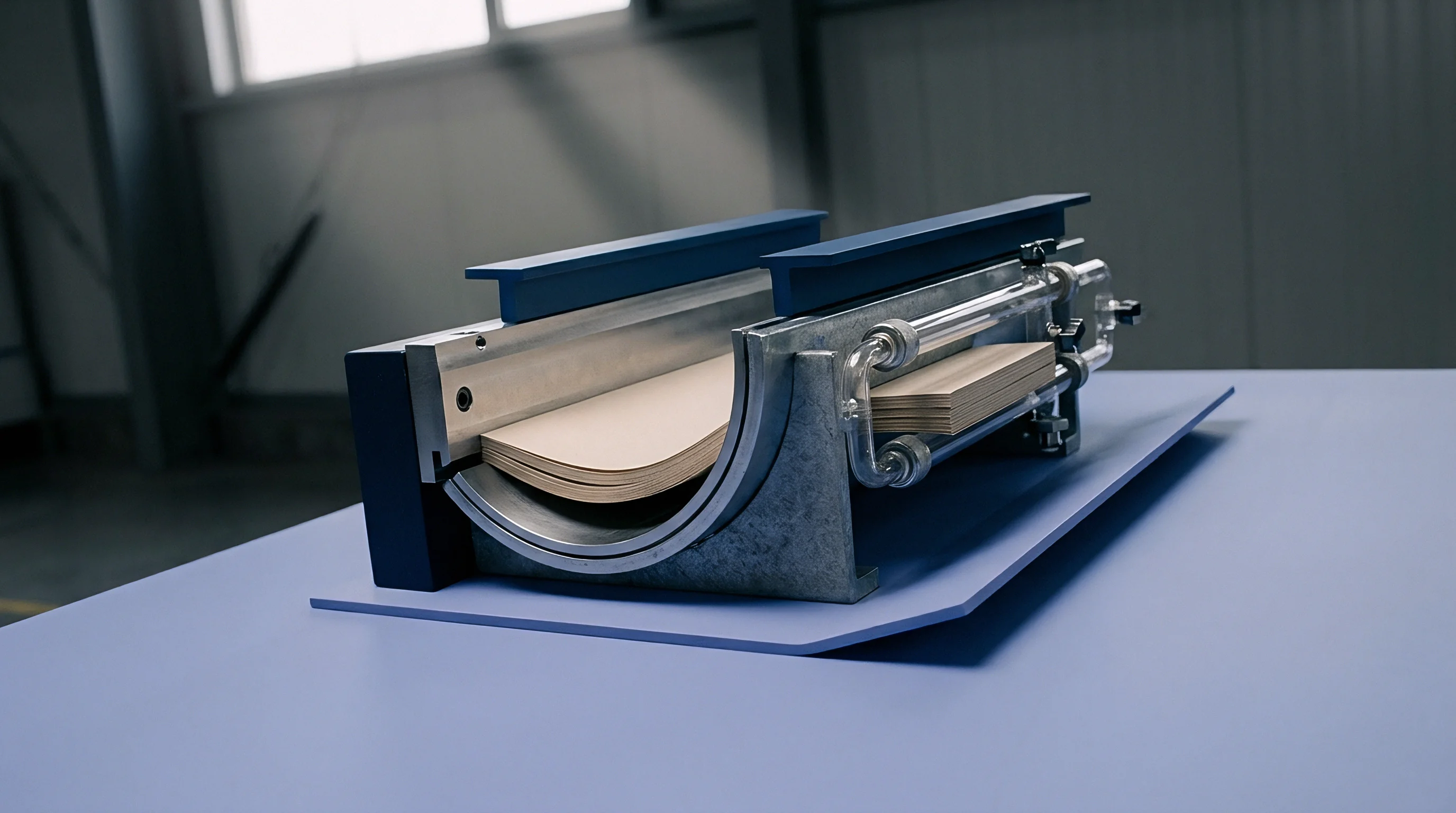
When a male scoring rule forces paperboard into a counter groove, three distinct deformation zones emerge across the sheet thickness. The score line compresses the top liner directly under the rule tip, creating tension in the bottom liner spanning the groove width. Intermediate fiber plies experience intense shear stresses that rupture inter-fiber hydrogen bonds without destroying the continuity of outer clay coatings.
Proper creasing depth forces the middle plies to separate into discrete layers that slide past one another when folded, creating a hollow void within the hinge core.
Score rule dimensions dictate the physical shape and stress distribution within the delamination zone. Rule width must scale with board caliper to distribute compressive force evenly across the inner ply layers. Excessively narrow rules cut top fibers rather than establishing delamination planes, while overly wide rules create broad, ill-defined score boundaries that destabilize fold geometry.
Counter channel width must accommodate double the board caliper plus the male rule width to yield clean side shoulders without pinching the material edges.
| Caliper Range (µm) | Male Rule Width (mm) | Counter Channel Width (mm) | Channel Depth (mm) | Target Stiffness Ratio Range (%) |
|---|---|---|---|---|
| 200 to 300 | 0.71 | 1.20 to 1.40 | 0.30 to 0.40 | 35 to 45 |
| 300 to 425 | 1.05 | 1.60 to 1.90 | 0.45 to 0.55 | 30 to 40 |
| 425 to 550 | 1.42 | 2.20 to 2.60 | 0.60 to 0.70 | 28 to 38 |
| 550 to 700 | 2.13 | 3.10 to 3.60 | 0.75 to 0.90 | 25 to 35 |
Static Bending Resistance versus High Velocity Deformation
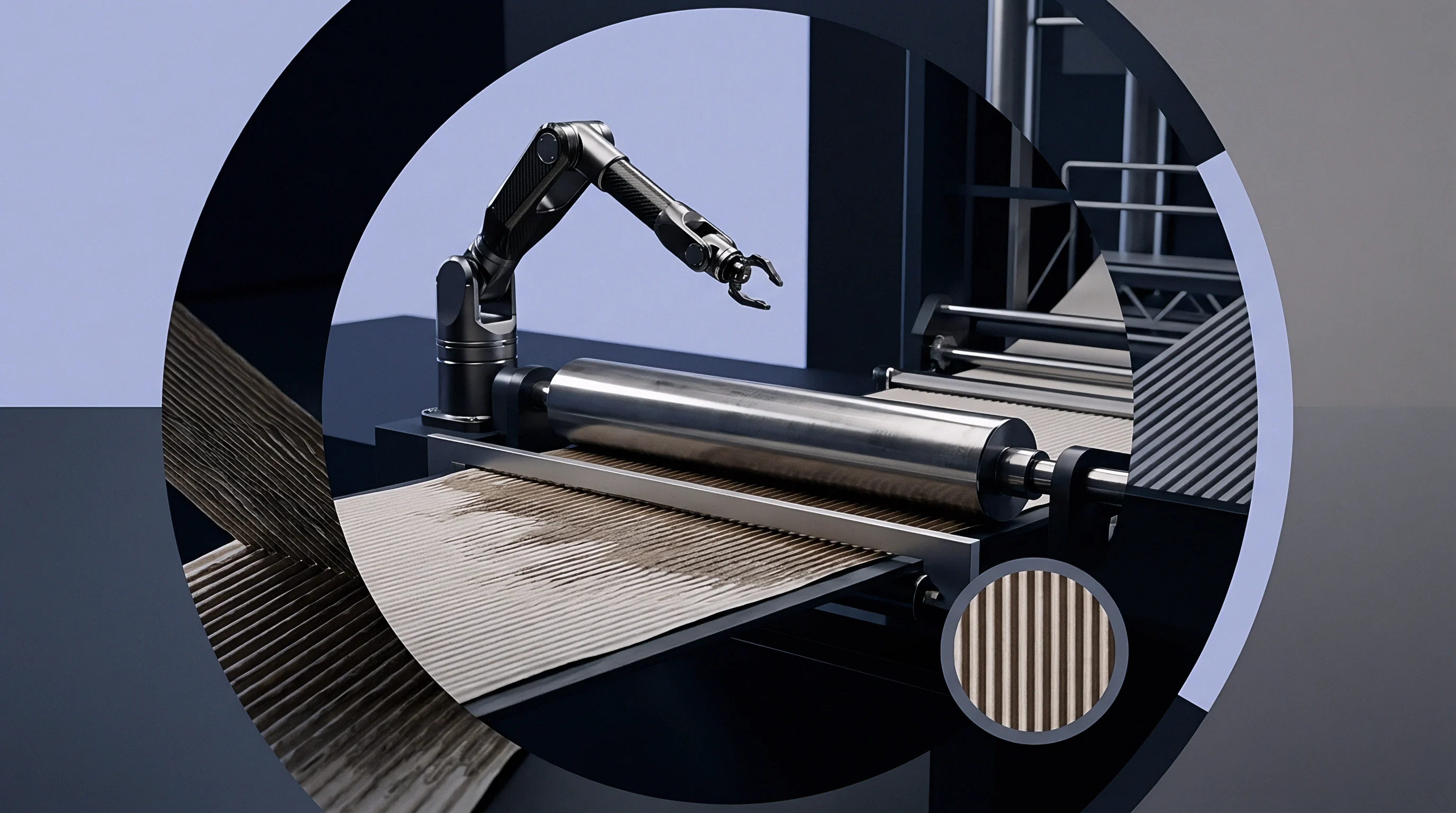
Laboratory measurements recorded under ISO 2493 test parameters provide a baseline figure for static score stiffness, yet high-speed converting machinery operates under vastly higher strain rates. Standard bench units displace folding samples at approximately fifteen degrees per second, allowing cellulosic polymers time to dissipate localized mechanical strain. Automated packaging line erection plows strike uncreased panel joints at velocities exceeding two meters per second, inducing instantaneous strain rates above ten thousand percent per second.
Paperboard exhibits viscoelastic properties, increasing its apparent modulus of elasticity as deformation rate increases.
A score line formed with an oversized counter channel folds as an uncreased hinge, driving carton panels off true square regardless of line acceleration.
Shear planes collapse. When high velocities prevent stress relaxation, uncreased fibers within the score region resist initial angular displacement far more aggressively than predicted by bench instruments. A board demonstrating a fifty percent static stiffness ratio on a laboratory bench can exhibit an effective kinetic stiffness ratio exceeding seventy percent when struck by a high-speed folding blade.
This kinetic stiffness spike demands higher mechanical force from feed belts and mechanical tuckers, resulting in jammed carton blanks, bowed side walls, and unsealed glue flaps.
A score line formed with an oversized counter channel folds as an uncreased hinge, driving carton panels off true square regardless of line acceleration.


Kinematics
Velocity profiles on modern high-speed packaging lines generate complex dynamic forces across scored paperboard hinges. Mechanical tuckers, rotating vacuum cups, and stationary guide plows fold carton blanks within timeframes ranging from ten to fifty milliseconds. Under these transient loading conditions, inertial forces, board stiffness, and kinetic friction interact continuously.
The effective stiffness ratio alters dynamically throughout the folding motion, peaking during the initial phase of angular displacement before settling into a lower steady-state moment as fiber shear planes yield.
Viscoelastic strain rate dependence governs how cellulose matrix layers deform during rapid folding cycles. Cellulose fibers, hemicellulose, and lignin form a polymeric network sensitive to deformation speed. Fast deformation increases the effective modulus because molecular chains lack sufficient time to uncoil and slide past one another.
The kinetic score stiffness ratio captures this instantaneous force peak, serving as the accurate predictor of high-speed carton erectability on automated packaging lines.
Strain Rate Effects on Bending Resistance
The total force required to fold a carton panel combines static structural resistance, viscoelastic resistance, and mass acceleration inertia. At low operating speeds, structural resistance dominates the folding force profile. As machine speeds ramp up from two hundred to six hundred cartons per minute, viscoelastic and inertial resistance components increase non-linearly.
High strain rates sharpen the resistance peak occurring between zero and twenty degrees of fold angle, where folding fingers initiate blank movement.
Pulp fibers relax slowly. When the angular deformation speed matches or exceeds the natural mechanical relaxation frequency of the moist paperboard matrix, energy dissipation within the creased zone shifts from viscous flow to elastic strain accumulation. The score line behaves like a rigid spring rather than an articulated joint.
If the localized stress exceeds the tensile limit of outer surface coatings before inter-ply delamination dissipates energy, top liner clay layers snap open, presenting severe visual surface cracking along score edges.

Viscoelastic Stress Relaxation in Fiber Networks
Mathematical modeling of high-speed creased board deformation utilizes multi-element Maxwell and Kelvin-Voigt viscoelastic mechanical networks. The characteristic stress relaxation time constant for moist packaging board ranges between five and fifty milliseconds. When a folding operation completes within fifteen milliseconds, stress relaxation remains minimal during the active sweep of the folding plow, requiring maximum peak torque from drive motors.
To quantify dynamic bending moments during converting, consider a worked calculation for a 350 micrometer Folding Boxboard running at 600 cartons per minute compared to standard laboratory bench speeds. Assume an uncreased board static bending stiffness of 24.5 millinewton-meters measured at 15 degrees angle under ISO 2493 conditioning (23 degrees Celsius, 50 percent relative humidity). The static creased bending moment measures 8.57 millinewton-meters, yielding a static stiffness ratio of 35.0 percent.
When this same board enters an automated erecter operating at 600 packs per minute, the angular displacement rate accelerates to 1,400 degrees per second. Incorporating the board strain-rate sensitivity exponent (typically 0.08 to 0.12 for bleached virgin fiber layers), the uncreased board kinetic stiffness rises to 31.8 millinewton-meters. Simultaneously, incomplete inter-ply shear yield under transient impact elevates the creased kinetic bending moment to 15.26 millinewton-meters.
Consequently, the dynamic stiffness ratio under actual line conditions surges to 48.0 percent.
This 13.0 percentage point shift in stiffness ratio under line acceleration severely narrows the operational window for automated erecters. The higher effective folding resistance places elevated lateral forces on vacuum suction heads, causing blank slippage, timing shifts, and incomplete glue seam compression. Adjusting die-cutting score rule height by 0.03 millimeters restores the kinetic stiffness ratio to 36.5 percent, ensuring consistent mechanical handling across high-speed packaging runs.
Whether high-frequency ultrasonic pre-conditioning of score lines during die-cutting permanently lowers dynamic stiffness without compromising mechanical tension in recycled fibers remains open to standardized industry verification.

Substrate
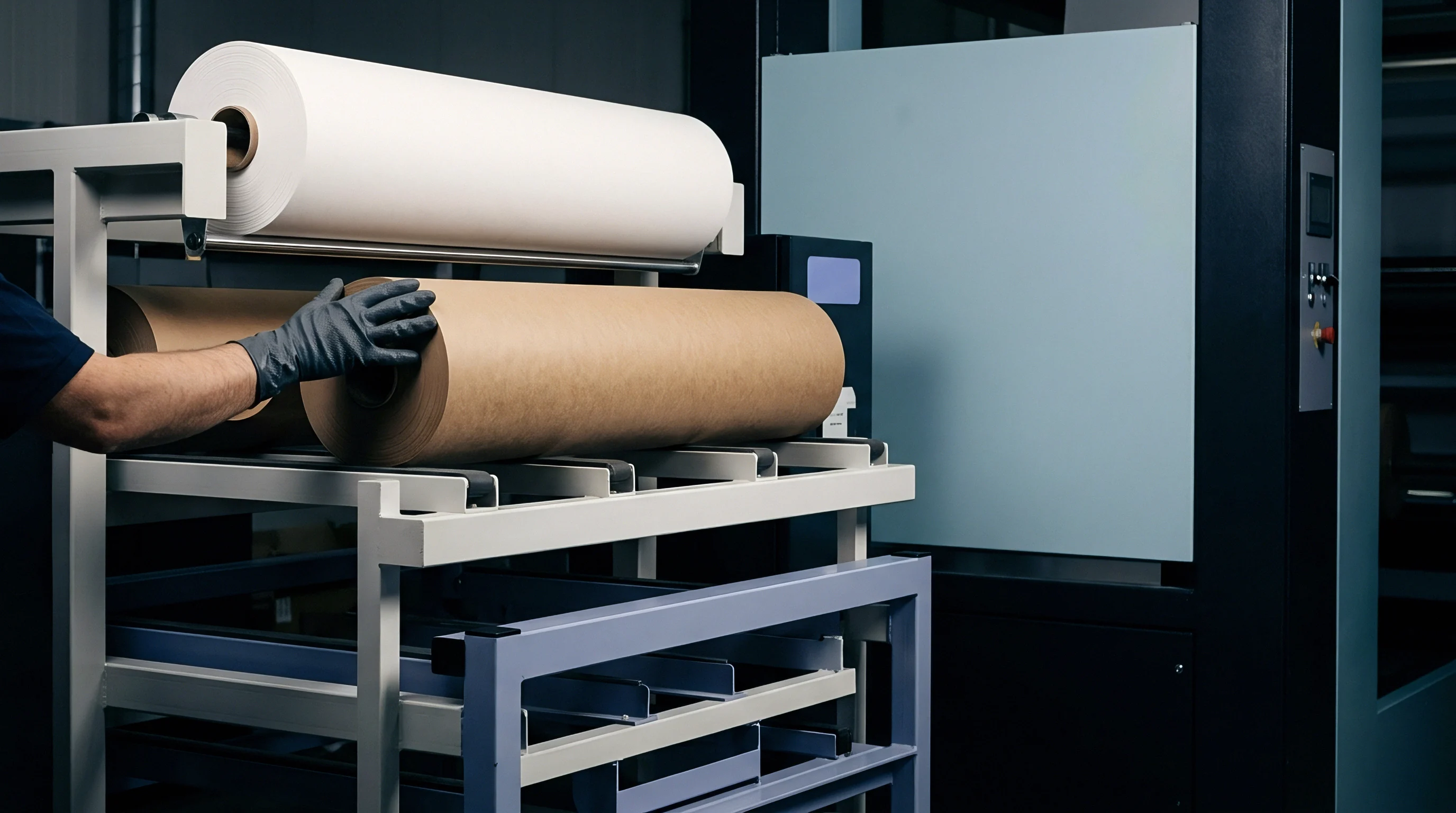
Fiber composition, sheet density, and internal bond strength dictate how paperboard responds to score line compression. Solid Bleached Board composed entirely of virgin chemical pulp exhibits high fiber length, superior tear resistance, and high tensile elongation, enabling deep creasing without surface fracturing. Coated Recycled Board contains short, recycled secondary fibers with lower internal bond strength, requiring wider counter grooves to avoid total z-direction shearing during converting passes.
Converting passes alter the physical location of the sheet neutral bending axis. Applying barrier films, extruded polyethylene layers, heavy UV coatings, or foil laminations shifts tensile loads toward surface layers. Laminated films increase total sheet springback, forcing score lines to store elastic energy that opposes panel sealing operations downstream.
Multi-pass converting operations dramatically alter the acceptable target score depth required for flawless cartoning performance.

Fiber Alignment and Grain Direction Variance
Machine direction fiber alignment creates pronounced anisotropy in paperboard mechanical properties. Bending stiffness in the machine direction typically measures two to three times higher than cross-direction bending stiffness. Score lines running parallel to the machine direction fold across cross-direction fibers, requiring lower force to establish delamination planes.
Conversely, score lines running in the cross-direction fold along machine direction fibers, resisting compression and yielding uneven delamination zones.
Rejects accumulate rapidly. Moisture content directly dictates fiber flexibility and hydrogen bonding density within paperboard layers. When relative humidity drops below forty percent, pulp fibers lose bound water, turning brittle and resisting plastic deformation during scoring.
Low moisture conditions elevate both uncreased stiffness and creased score resistance, while simultaneously increasing top liner cracking risks. Relative humidity above sixty percent softens the fiber matrix, producing shallow, spongy creases that expand after die-cutting and elevate kinetic stiffness ratios on packaging lines.
How Do Converter Surface Coatings Alter Crease Ratio Windows?
Topside clay coatings, dispersion barrier varnishes, and film laminations modify score line response by adding stiff, brittle exterior boundaries over flexible fiber substrates. Heavy mineral coatings resist compression, snapping under rule impact unless counter channels allow sufficient relief space. Film laminations maintain high elastic memory, applying continuous opening force against folded corner seams.
- Liner Separation Flaw occurs when low internal bond strength in recycled middle plies causes uncontrolled internal shearing beyond the counter groove boundaries.
- Topcoat Fracture Pattern manifests as microscopic hairline splits across top clay coatings, exposing raw fiber layers to moisture ingress and compromising print appearance.
- Elastic Springback Spikes arise from high-tensile plastic laminations that retain flexural memory, pushing sealed glue flaps open before hot-melt adhesives solidify.
- Flap Registration Drift results when uneven score rule penetration across the sheet causes carton blanks to fold out of square along high-speed line plows.
Tension fractures top coatings. Surface finished boards carrying high-gloss UV lacquers demand precise counter-matrix depth adjustments to prevent coating flaking along creased edges. Die-cutting make-ready sheets must verify that added surface coating passes do not shrink the acceptable crease ratio envelope beyond machine handling limits.
Board mills frequently explain batch-to-batch ratio drift by pointing to natural variation in pulp harvest moisture and seasonal softwood fiber length changes.


Tooling
Die-cutting machinery relies on micro-meter precision in rule height, channel width, and impression depth to establish consistent score line performance across long runs. Steel scoring rules feature ground round profiles, varying from standard single-radius crowns to specialized double-eccentric and flat-top shapes. Steel rule height tolerances must remain within plus or minus five micrometers across an entire cutting die plate to prevent uneven scoring pressure across multi-up sheet layouts.
Counter-matrix technology has shifted from temporary paper-based channels to precision-milled steel counterplates and high-density phenolic matrices. Milled steel counterplates eliminate channel wall deflection, ensuring crisp delamination boundaries across production runs exceeding one million impressions. Phenolic matrices offer reliable channel geometry for medium-length production runs, while synthetic channel tapes provide rapid make-ready capabilities for short converting jobs.
Die Precision and Counterplate Material Selection
Counter-matrix selection directly influences score line consistency and line downtime. Soft channel matrices distort under repetitive impacts, widening the effective channel dimension over time. Channel widening reduces compressive pressure directly beneath the male rule, creating shallow score lines that fail to achieve targeted fiber delamination within the board core.
Rule height dictates crush. Male scoring rules must be selected based on absolute sheet caliper minus counter-matrix depth, accounting for die-cutter platen deflection under load. Operating die-cutting presses with excessive tonnage crushes uncreased board areas, degrading overall carton structural integrity while accelerating scoring rule wear.
| Matrix Material | Hardness (Shore D) | Impression Durability (Sheets) | Crease Ratio Stability (%) | Unit Material Cost (EUR/m) |
|---|---|---|---|---|
| Pressboard Tape | 65 to 70 | 15,000 to 25,000 | ± 8.5 | 0.45 |
| Extruded Polymeric Channel | 75 to 80 | 50,000 to 100,000 | ± 5.0 | 1.20 |
| Phenolic Resin Board | 85 to 90 | 250,000 to 500,000 | ± 3.0 | 4.50 |
| Milled Steel Counterplate | 95 to 100 | 1,000,000+ | ± 1.2 | 18.00 |
Wear Profiles across Extended Production Runs
Repeated impact cycles alter male scoring rule profiles through progressive metal flattening and lateral fatigue. As scoring rule crowns wear flat, compressive forces spread over wider surface areas, reducing peak Z-direction compressive stresses within the board. This structural degradation elevates both static and kinetic crease stiffness ratios as the production shift progresses.
Tooling inspection protocols must monitor rule and matrix wear continuously across extended production runs to maintain tight control over score quality parameters.
- Rule Height Calibration checks scoring rule crown heights using digital micrometer gauges to detect localized wear across the die cutting layout.
- Channel Width Audit measures counter matrix groove widths with optical comparators to ensure channel sidewalls have not eroded past allowable limits.
- Impression Depth Verification evaluates score penetration depths across test sheets using depth-gauge micrometers calibrated to zero against uncreased board surfaces.
- Matrix Adhesion Check inspects counter tape bonding security to prevent matrix shifting under high-speed reciprocating press forces.
A reduction of zero point zero two millimeters in creasing depth elevates dynamic bending stiffness by eighteen percent on a three hundred fifty micrometer board.
Matrix height controls depth. When score depth degrades by as little as twenty micrometers during a shift, the effective kinetic bending stiffness rises dramatically, triggering feed failures on downstream cartoning machinery.
Selecting soft matrix tape for a run exceeding fifty thousand sheets creates progressive score shallowing, driving dynamic bending resistance past cartoner tolerances and causing unsealed carton flaps.

Calibration
Testing methodologies for creased paperboard must bridge laboratory precision and real-world high-speed packaging line performance. Standardized testing frameworks under ISO 2493-1 and TAPPI T 829 establish bench testing procedures that quantify static fifteen-degree bending resistance. Advanced testing facilities utilize high-speed dynamic bending meters equipped with servo-driven actuators and high-frequency load cells, capable of folding score lines at angular rates matching operational cartoning machinery.
Establishing dynamic score stiffness control windows requires defining lower and upper tolerance boundaries tailored to specific packaging machine drive types and speed profiles. Lower limits prevent score cracking, delamination rupture, and loss of carton wall rigidity. Upper limits prevent high-speed feed jams, carton squaring defects, glue flap springback, and line stoppages.

Laboratory Bench Methods versus Line Rate Simulators
Standard benchtop instruments measure bending force at slow displacement rates, yielding reproducible baseline figures suitable for mill quality certifications. However, static bench testers fail to measure rate-dependent stress spikes caused by surface lamination layers, brittle clay coatings, or heavy varnish passes. Line-rate simulators displace score samples at speeds reaching two thousand degrees per second, capturing instantaneous peak torque and continuous moment-angle curves.
Cartoners demand square blanks. Evaluating moment-angle curves reveals critical data regarding score springback torque, total energy absorption, and hinge rotation resistance. Score lines demonstrating low static resistance can exhibit severe kinetic springback torque if synthetic coatings retain high elastic elasticity under rapid deformation cycles.

Setting Upper and Lower Control Limits
Maintaining high-speed erecter efficiency requires setting strict dynamic score ratio control windows based on empirical production data.
- Measure baseline uncreased board bending stiffness across machine and cross directions using ISO 187 conditioned samples.
- Perform dynamic crease stiffness testing across a range of score penetration depths to map board response curves.
- Establish target dynamic stiffness ratio boundaries centered between thirty and forty-five percent of uncreased board stiffness.
- Verify score line visual integrity using cross-sectional microscopic inspection to ensure internal ply delamination without surface coating fractures.
- Document die-cutter setup parameters, including platen impression tonnage, rule heights, and counter matrix dimensions, in the job dossier.
Specifications referencing DIN 55437 require score resistance values to remain within forty percent of uncreased board stiffness to prevent automatic reject flags during incoming quality audits.
Moisture shifts stiffness. Temperature and relative humidity fluctuations within converting plants alter paperboard moisture content, requiring real-time scoring impression adjustments to keep dynamic ratios centered inside target control limits.
A standard purchase agreement clause referencing ISO 2493 compliance transfers full financial liability for unsealed cartoning line downtime back to the board converter whenever score stiffness ratio exceeds forty-five percent.


Waste
Improperly calibrated score stiffness ratios carry extreme financial penalties on high-speed packaging floors. Operating cartoning equipment at speeds above five hundred packs per minute transforms minor scoring flaws into catastrophic line jams, unsealed packs, and discarded material. Machine stoppages trigger immediate operational losses from idle labor, lost throughput, heat-tunnel scrap, and damaged product loads.
Commercial sustainability regulations further elevate the financial consequences of incorrect converting parameters. Extended Producer Responsibility schemes penalize packaging structures incorporating heavy plastic laminates or unrecyclable coatings added to suppress score cracking. Optimizing physical score tooling geometry allows converters to utilize lightweight, highly recyclable dispersion coatings while maintaining flawless dynamic folding performance on high-speed lines.

Line Jam Arithmetic and Machine Downtime Losses
High-speed cartoning lines represent massive capital investments requiring near-continuous operation to maintain profitability. Standard operational cost models price cartoning line downtime between two hundred and six hundred Euros per hour, excluding product destruction and secondary labor costs. A single feed jam caused by excessive score springback halts production, requiring manual clearing, machine purging, and recalibration.
Consider a high-speed line running food cartons at six hundred packs per minute across three production shifts per day. An unoptimized score stiffness ratio of fifty-two percent causes an average of four feed jams per shift, with each stoppage averaging seven minutes of line downtime. Total daily downtime reaches eighty-four minutes, directly preventing the production of 50,400 finished packages.
Assuming a net product contribution margin of zero point fifteen Euros per unit, lost throughput generates a direct daily revenue loss of 7,560 Euros. Added to board scrap waste and line clearing labor costs, annual operating losses attributed entirely to unoptimized score stiffness ratios easily exceed two hundred thousand Euros on a single packaging line. Investing in precision steel counterplates and dynamic score testing instrumentation repays its capital cost within weeks of installation.
| Dynamic Crease Ratio Range (%) | Cartoner Speed (cpm) | Unscheduled Stoppages (per shift) | Board Spoilage Rate (%) | Net Landed Unit Cost Premium (€/1,000 packs) |
|---|---|---|---|---|
| 25 to 30 (Over-creased) | 600 | 1.2 | 3.5 | 4.20 |
| 32 to 42 (Optimized) | 600 | 0.1 | 0.2 | 0.00 |
| 45 to 50 (Under-creased) | 520 | 2.8 | 2.1 | 6.80 |
| > 52 (Severe Defect) | 400 | 6.5 | 5.8 | 16.50 |

EPR Fee Implications and Recyclability Grading
Modulated eco-contributions under European packaging waste regulations penalize composite packaging designs that disrupt paper recycling streams. Applying polyethylene laminations to prevent score cracking on brittle recycled boards reduces recyclability grading under EN 13430, elevating EPR fees by up to three hundred Euros per metric ton of board placed on the market. Precision scoring geometry enables pure fiber boards with water-based dispersion coatings to achieve identical dynamic folding compliance without incurring environmental fee surcharges.
High-speed packaging lines absorb minor variations in board caliper when score penetration depth compensates for density changes across pulp batches.
Total landed packaging costs must capture initial converting expenses, raw material specifications, die-cutting tooling investments, high-speed line efficiency yields, and end-of-life EPR compliance fees. Correcting dynamic score stiffness ratios through mechanical tooling optimization represents one of the most cost-effective methods for reducing landed unit cost across high-volume packaging programs.
Optimizing scoring rule profiles, counter-matrix dimensions, and press make-ready routines stabilizes dynamic crease performance, eliminates high-speed cartoning line jams, and secures maximum operational efficiency across complex packaging lines.