Viscoelastic Polypropylene Shear Failure during Board Creasing
Polypropylene crease shear failure occurs when rapid rule penetration exceeds film yield strain, requiring corrected matrix width and temperature control.

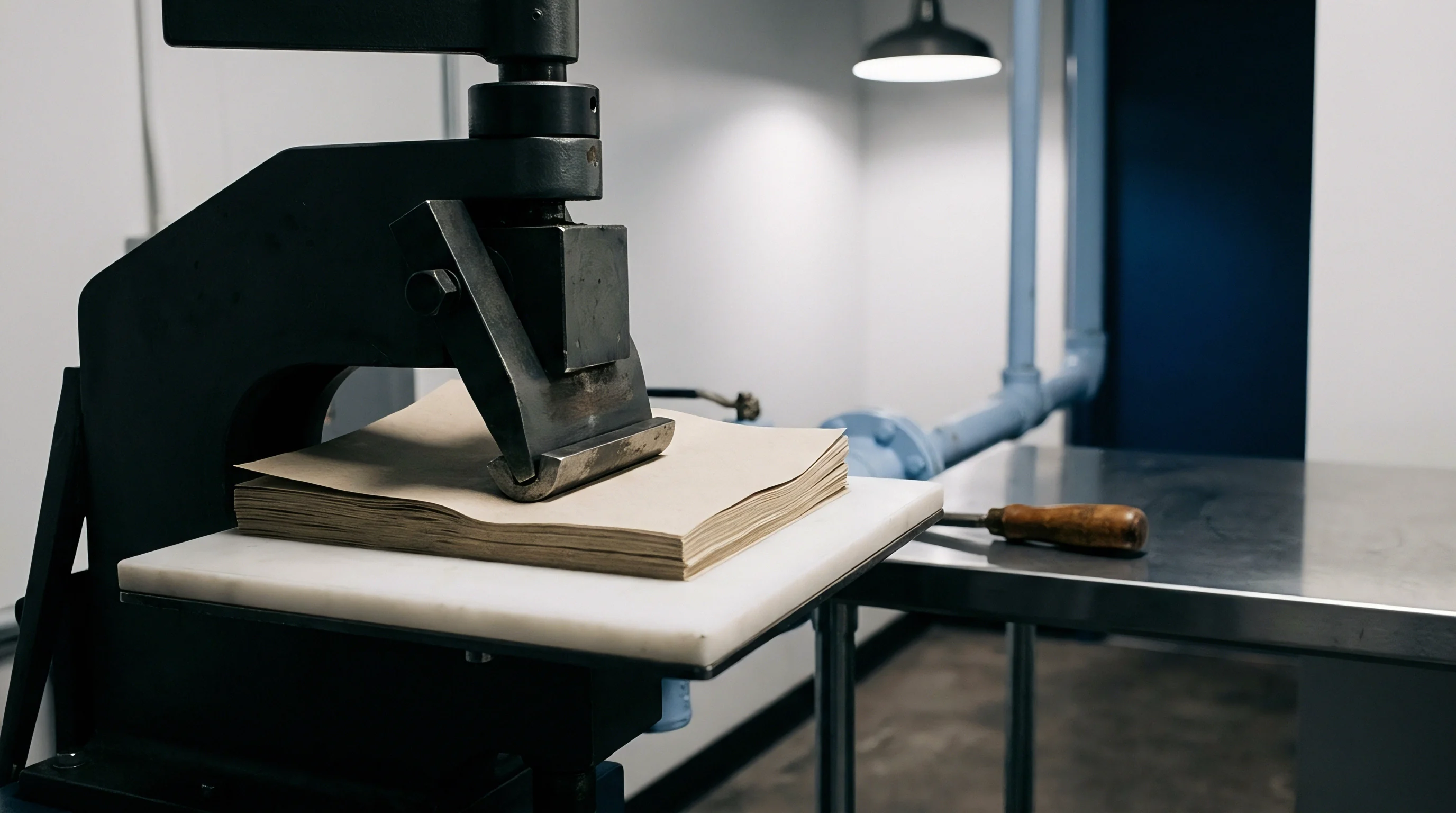
Anvil
High-speed platen creasing subjects film-laminated folding boxboard to complex shear and tensile stress states within milliseconds. During impact, a male steel rule drives the paperboard lamination composite downward into a female channel cut into a counterplate steel matrix. The upper lamination layer, typically a biaxially oriented polypropylene film ranging from 12 to 20 microns in thickness, undergoes rapid localized stretching across the shoulders of the male scoring blade.
Simultaneously, the underlying paperboard plies collapse inward along internal shear planes, delaminating along predetermined fiber lines to form a clean bending hinge. When the converting line operates at production speeds between six thousand and twelve thousand impressions per hour, deformation rates within the deformation zone exceed one hundred reciprocal seconds. At these rates, the polymer film cannot dissipate mechanical strain through gradual molecular relaxation.
The matrix geometry governs the spatial distribution of shear strain across the folded shoulder. Male rule thickness, female matrix channel width, and channel depth establish the bending radius of the composite sheet during rule entry. If the matrix width remains too narrow relative to the total board caliper plus film thickness, shear stresses concentrate sharply along the lamination interphase.
The film elongates locally. The score fractures. These micro-fractures compromise moisture barriers, ruin surface appearance, and produce unappealing whitening along printed carton edges.
Mechanical Dynamics of Female Channels during Impact
Penetration of a steel scoring blade forces paperboard layers into double-bending compression while stretched surface polymers undergo rapid plane strain. The upper surface of the sheet experiences high tensile strain across the score crest, while the sub-surface adhesive tie layer undergoes concentrated shear displacement against the top liner board. High-speed video studies of platen impression cycles demonstrate that peak shear forces occur within three to five milliseconds of blade contact.
The channel geometry dictates whether the underlying folding boxboard delaminates cleanly into internal shearing plies or resists collapse. When paperboard plies resist internal delamination, the full mechanical displacement transfers directly into the lamination film, pushing shear stresses past the polymer yield point.
A matrix width reduction from 1.6 to 1.2 millimeters increases film surface shear strain by forty-two percent at press speeds exceeding seven thousand sheets per hour.
Female matrix channels milled into steel counterplates provide rigid support along score margins. Channel edges act as pivot points around which the composite board hinges. Excessive matrix depth allows the composite sheet to drop too far into the cavity, increasing outer film tension.
Insufficient depth prevents full formation of the internal paperboard bead, inducing high residual springback torque. The balance between matrix width and rule thickness governs the shear angle experienced by the polypropylene interphase.

Channel Geometry and Shear Displacement Profiles
Female groove widths determine the lateral radius of curvature formed across outer lamination layers during die impression. Calculating optimal female matrix channel width involves adding the male rule thickness to one point five times the combined caliper of the board and lamination film. Deviating from this dimensional ratio shifts the neutral axis of bending outward toward the plastic layer, amplifying shear strain along the adhesive boundary.
| Board Caliper (mm) | Film Caliper (μm) | Rule Thickness (pt) | Matrix Channel Width (mm) | Peak Interphase Shear Stress (MPa) |
|---|---|---|---|---|
| 0.35 | 12 (BOPP) | 2.0 (0.71 mm) | 1.25 | 18.4 |
| 0.35 | 12 (BOPP) | 2.0 (0.71 mm) | 1.40 | 13.1 |
| 0.45 | 15 (BOPP) | 3.0 (1.05 mm) | 1.75 | 21.8 |
| 0.45 | 15 (BOPP) | 3.0 (1.05 mm) | 1.95 | 14.6 |
| 0.60 | 20 (BOPP) | 3.0 (1.05 mm) | 2.30 | 24.2 |
| 0.60 | 20 (BOPP) | 3.0 (1.05 mm) | 2.55 | 15.9 |
Microstructural failure within the creased zone follows distinct physical modes depending on geometry and machine parameters:
- Interfacial Shear Disbonding occurs when high shear forces overcome adhesive bond strength, causing localized film lifting along channel shoulders.
- Microvoid Coalescence Bands develop inside the polypropylene matrix when high strain rates prevent polymer chain relaxation.
- Transverse Tensile Splitting forms at score crests where outer film layers exceed ultimate elongation limits.
- Adhesive Layer Crazing appears as fine perpendicular fractures within thin polyurethane tie layers during rapid rule penetration.
Incorrect groove dimensions distort crease geometry, forcing carton assembly lines to jam and driving rejected packaging volumes into costly scrap streams.

Rheology
Polypropylene lamination films respond to high-speed mechanical loading through time-dependent molecular rearrangement. As a semi-crystalline thermoplastic, biaxially oriented polypropylene displays distinct elastic, viscoelastic, and plastic deformation regimes. Under low strain rates, polymer chains uncoil and slide past one another, absorbing mechanical energy without structural yield.
High creasing speeds change this molecular behavior entirely. When strain application rates exceed the relaxation time of the polymer networks, elastic modulus values spike sharply, causing the material to behave like a brittle solid.
The yield behavior of biaxially oriented polypropylene follows pressure-dependent yield criteria, such as the modified von Mises criterion. Shear strain rate drives the transition from ductile flow to localized necking and shear band formation. At high platen frequencies, energy delivered by the scoring rule converts into localized thermal pulses within micro-deformation zones.
Because polypropylene possesses relatively low thermal conductivity, heat remains trapped inside narrow shear bands, accelerating structural softening along immediate failure planes while surrounding areas remain rigid.
Strain Rate Sensitivity in Biaxially Oriented Polypropylene
Polymer chains within stretched lamination films resist fast displacement through steric hindrance and crystalline entanglement. Testing under ASTM D882 conditions at standard crosshead speeds of twenty-five millimeters per minute yields tensile strength values around one hundred eighty megapascals for biaxially oriented polypropylene. High-speed impact testing at strain rates exceeding fifty reciprocal seconds demonstrates yield stress increases up to sixty percent over static baseline measurements.
Press speed drives strain rate. The material stiffens under swift impact, drastically reducing total elongation at break before localized failure initiates.
Dynamic mechanical thermal analysis reveals that the glass transition temperature of polypropylene shifts upward under rapid deformation. Under high frequencies, molecular segments lose mobility at higher environmental temperatures than during static storage. A lamination film operating comfortably above its glass transition temperature under ambient storage conditions effectively transitions into its glass regime when struck by a die-cutting rule at eight thousand sheets per hour.
Polymer molecules stiffen. Shear stress accumulates quickly.
Stress Whitening and Microvoid Shear Initiation
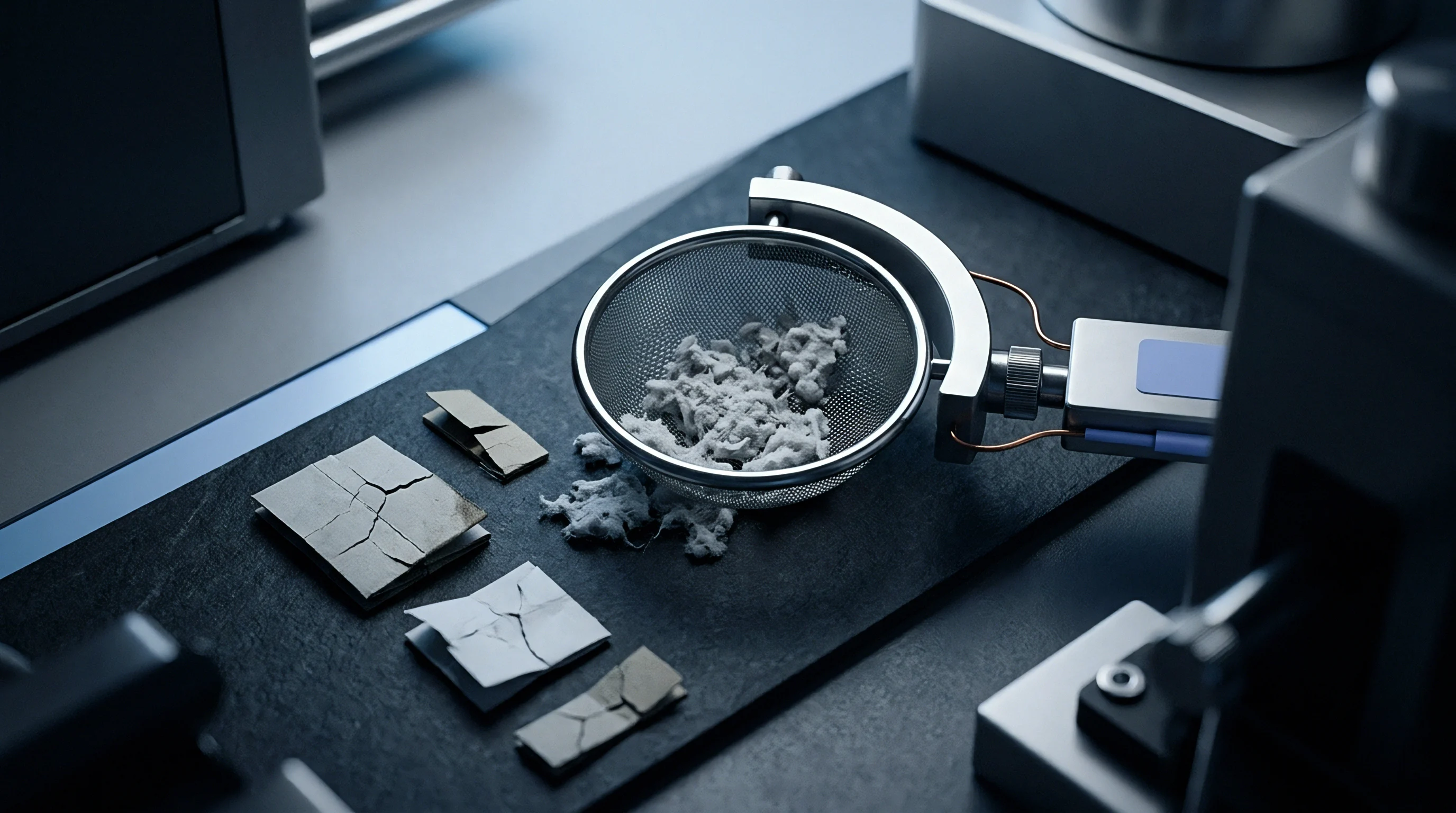
Local yield spots appear as milky bands long before macroscopic tearing disrupts surface continuity. Stress whitening inside polypropylene lamination films results from optical light scattering caused by sub-micron crazes and microvoids forming within amorphous regions between crystalline lamellae. High shear strain concentrates stress around crystalline spherulites, pulling amorphous tie molecules until micro-voids nucleate.
These micro-voids expand along Forty-Five Degree shear planes relative to the creasing rule axis, scattering incident light and creating visible white lines along dark printed graphics.
| Polymer Film Type | Static Yield Stress (MPa) | Dynamic Yield Stress at 100 s⁻¹ (MPa) | Static Elongation at Break (%) | Dynamic Elongation at Break (%) |
|---|---|---|---|---|
| Standard BOPP (12 μm) | 145 | 215 | 140 | 18 |
| High-Crystallinity BOPP (12 μm) | 175 | 260 | 110 | 12 |
| Corona-Treated Thermal BOPP (15 μm) | 130 | 190 | 160 | 28 |
| Cast Polypropylene (CPP, 20 μm) | 35 | 68 | 450 | 85 |
Measuring dynamic shear modulus requires precise high-frequency torsional rheometry. Modern research confirms that polypropylene molecular weight distribution dictates shear band formation under rapid impact. Narrow molecular weight distributions reduce crystalline lamellae entanglement, promoting uniform shear dissipation.
Standard converting grades with broad molecular weight distributions show heightened susceptibility to microvoid nucleation, worsening stress whitening and edge splitting during creasing passes.
Whether nano-clay additives in polypropylene films can suppress strain-whitening microvoids without compromising lamination optical transparency remains an open technical challenge across high-speed converting operations.
Delamination
Separation across the polymer-paperboard boundary alters stress distribution during carton fold assembly. Biaxially oriented polypropylene film lacks inherent chemical affinity for cellulosic fibers, requiring specialized primers, corona surface pre-treatment, or extrusion tie layers to establish surface adhesion. Thermal lamination uses ethylene-vinyl acetate co-polymers melted at temperatures between ninety-five and one hundred fifteen degrees Celsius.
Solventless liquid lamination applies two-component polyurethane or waterborne acrylic adhesives at coating weights ranging from one point two to two point zero grams per square meter.
During score formation, the adhesive tie layer endures severe planar shear stress as the board flexes inward while the film stretches outward. When interfacial bond strength falls below the local shear yield stress of the film, delamination occurs along the adhesive boundary. Delamination releases strain.
While controlled local debonding allows the film to bridge the crease crest without tearing, catastrophic unzipping along the fold flank destroys package structural integrity and permits ambient moisture ingress.

Why Does Corona Treatment Decay Accelerate Crease Shear Splitting?
Surface energy drop on polyolefin sheets reduces reactive bonding sites available to solventless polyurethanes or waterborne acrylic primers. Corona oxidation introduces polar functional groups, such as hydroxyl, carbonyl, and carboxyl species, onto non-polar polypropylene surfaces. Storage humidity, temperature spikes, and additive migration from polyolefin cores reduce surface tension over time.
Dyne levels drop from an initial forty-two dynes per centimeter down to thirty-four dynes per centimeter within thirty days of film production.
Surface tension drops rapidly. When dyne levels fall below thirty-eight dynes per centimeter prior to adhesive coating, wet-out efficiency drops during the lamination pass. Incomplete contact creates sub-micron air pockets across the board-film boundary.
During subsequent high-speed creasing, these micro-voids act as mechanical stress concentrators, initiating shear cleavage across the tie layer under die impression loads.
Adhesive Interphase Slip and Interfacial Cleavage
Separation along the tie-layer boundary transfers bending loads directly into unsupported film necks. The cross-link density of polyurethane adhesives governs resistance to interfacial shear deformation. Under-cured polyurethanes retain high viscous mobility, permitting interfacial slip under scoring blade impact.
Slip prevents outer film tension from rising to fracture limits, but leaves unbonded film bubbles over folded carton edges.
Under DIN 55437 testing standards, lamination delamination along folded scores exceeding zero point five millimeters invalidates batch food contact compliance certifications.
Fully cured high-modulus polyurethanes transfer shear stress directly into the outer film ply. When the adhesive bond strength exceeds forty newtons per meter under ninety-degree peel testing, no interfacial slip occurs. The film takes the full brunt of bending strain.
Tensile splitting occurs at the score line crest. Converting operations balance adhesive flexibility against bond strength to avoid both bubbling and film cracking.
Incorporating ISO 1184 compliance clauses into substrate purchase contracts shifts financial responsibility for film delamination back to lamination film suppliers when dyne decay exceeds three dynes per centimeter within ninety days of delivery.

Tooling
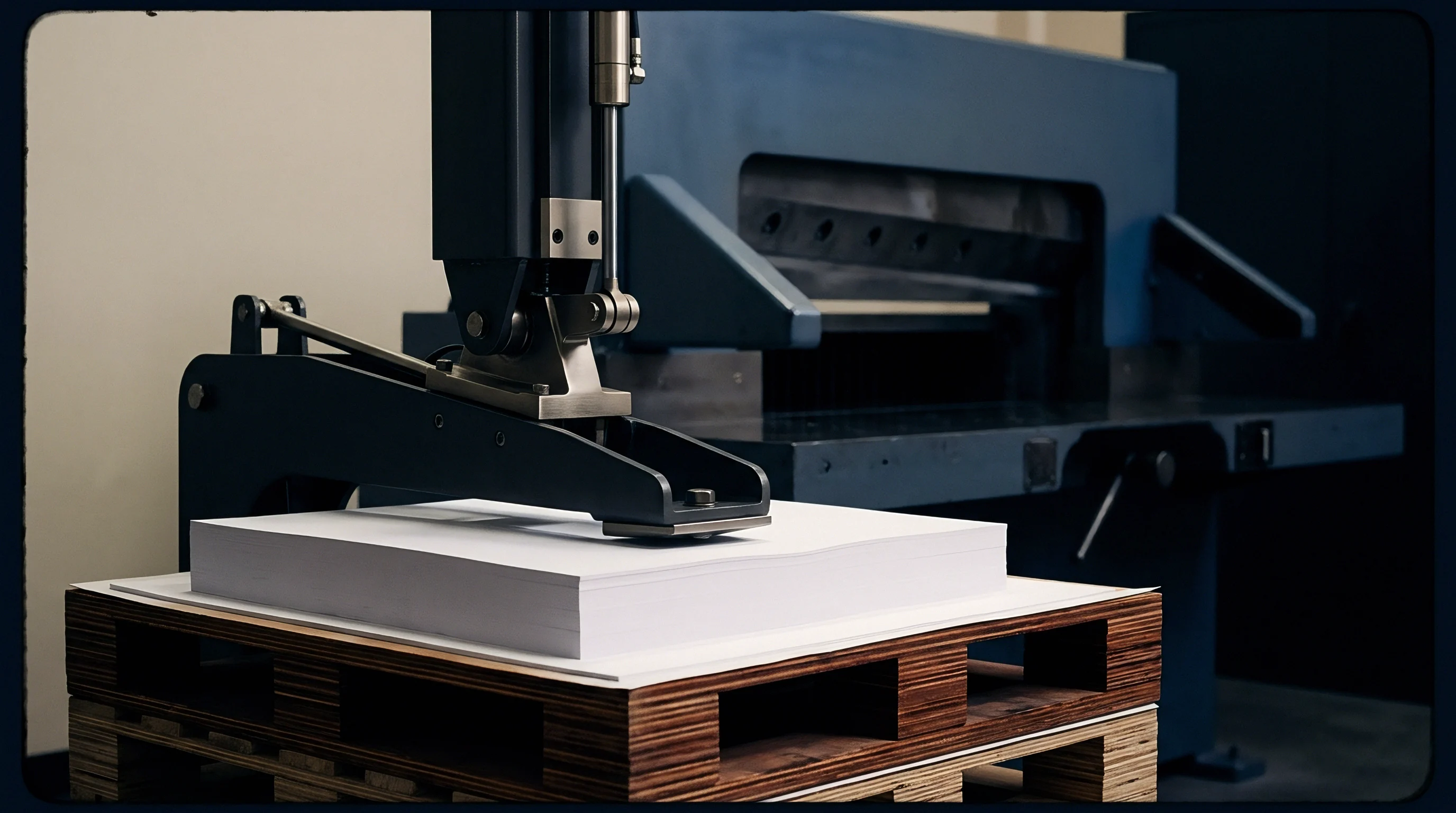
Die-cutting parameters control physical deformation rates imposed on laminated folding boxboard substrates. Converting equipment relies on flatbed platen or rotary die cylinders fitted with precision-ground steel scoring rules. Male rules feature rounded drive edges designed to compress board fibers without severing top liner sheets.
Tool manufacturing standards specify rule height, blade thickness, and tip radius to match targeted paperboard calipers and finishing lamination passes.
Selecting incorrect rule geometry triggers instant shear failure across the creased line. Sharp rule radii cut directly into top lamination films, initiating shear tears that propagate across the entire sheet during folder-gluer operations. Tooling wear alters clearance.
As steel blades make millions of impressions against counterplates, flat spots develop on male rule crowns. Enlarged crowns increase peak contact force, driving excessive board crushing and accelerating film shear stress along crease shoulders.
Male Rule Profile Selection for Laminated Stocks
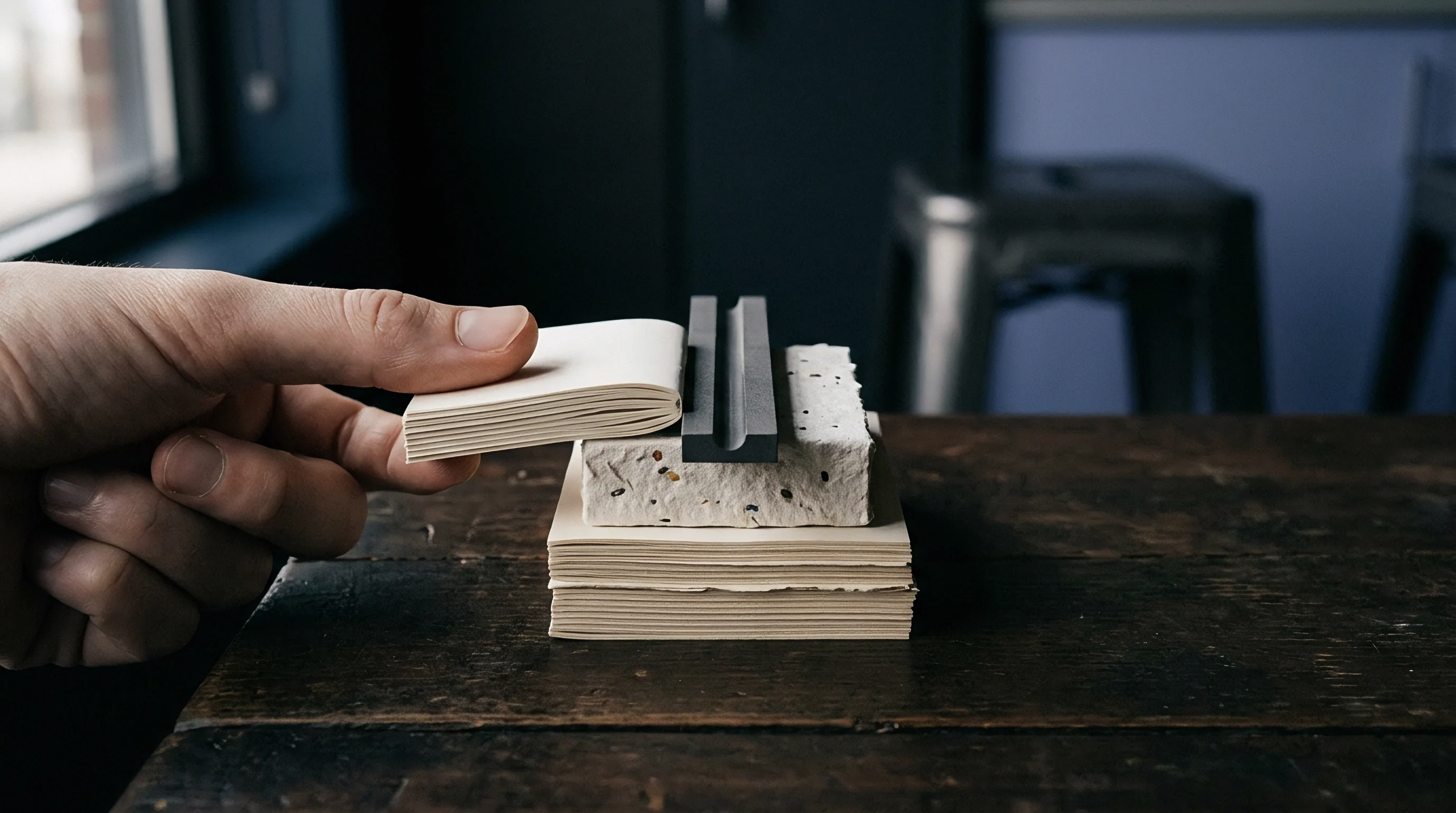
Rounded steel scoring edges with full radius profiles distribute peak contact pressure across board surfaces without cutting outer film plies. Standard scoring rules for unlaminated board feature a simple two-point (0.71 mm) or three-point (1.05 mm) thickness with a small tip radius of zero point four millimeters. Film-laminated stocks demand larger crown radii ranging from zero point six to zero point eight millimeters to distribute shear forces over a broader polymer surface area.
Creasing rule selection always balances board delamination against film necking to prevent outer surface fracture along high-speed platen presses.
Height adjustments for scoring rules relative to cutting knives govern rule impression depth into the female matrix channel. Scoring rule height usually sits zero point two to zero point four millimeters below cutting knife height to account for sheet thickness compression. Setting rule height too high causes excessive impression penetration, stretching polypropylene films past their shear yield point and generating severe stress whitening.

Counterplate Steel Preparation and Chamfering
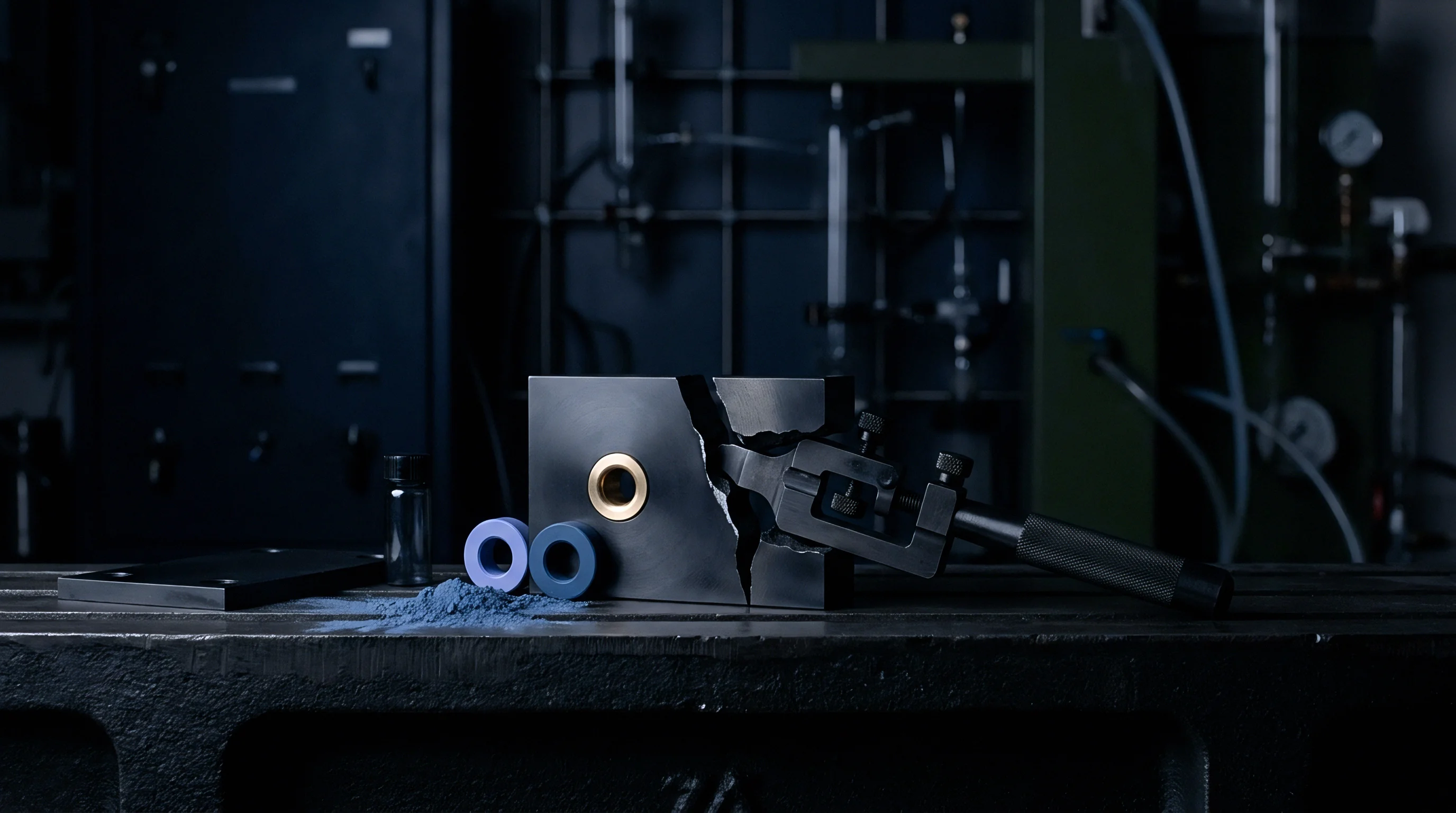
Milled steel counter-grooves demand hand-dressed bevels along entry edges to eliminate sharp shear corners during impression. Phenolic counter-rims or milled steel counterplates replace temporary creasing matrix strips during long-run production passes exceeding fifty thousand sheets. Sharp entry corners along female channel edges act as shear anvils, slicing through outer lamination films during board draw into the matrix channel.
| Board Thickness (mm) | Total Lamination Caliper (μm) | Male Rule Profile Radius (mm) | Female Counterplate Chamfer Angle (°) | Recommended Rubber Shore Hardness |
|---|---|---|---|---|
| 0.30 – 0.40 | 12 (BOPP) | 0.50 | 30 | 70 Shore A |
| 0.40 – 0.50 | 15 (BOPP) | 0.65 | 35 | 70 Shore A |
| 0.50 – 0.65 | 20 (BOPP) | 0.80 | 40 | 80 Shore A |
| 0.65 – 0.80 | 20 (BOPP) | 1.00 | 45 | 80 Shore A |
Following systematic preparation steps during die setup preserves lamination integrity across production shifts:
- Verify Rule Radius Uniformity across all scoring knife positions using optical comparators before press mounting.
- Adjust Counterplate Channel Depth to accommodate substrate caliper variations while maintaining a constant folding factor.
- Measure Matrix Width Tolerances with precision feeler gauges across every scoring impression area.
- Check Rubber Ejection Profile Shore Hardness to ensure uniform clamping pressure along score margins during high-speed stroke cycles.
Softer creasing rule edges prevent film necking on stiff board plies, while wider channel gaps preserve interphase adhesion during deep impression folding.
Conditioning
Environmental state regulates polymer chain mobility and paperboard moisture content before converting passes. Temperature and relative humidity inside converting plants fluctuate seasonally, altering physical interactions between plastic films and fiber substrates. Paperboard absorbs or desorbs atmospheric moisture until reaching equilibrium, changing internal sheet thickness, flexibility, and shear strength.
Polypropylene films exhibit strong thermal sensitivity across typical operating hall temperatures ranging from fifteen to thirty-five degrees Celsius.
Cold conversion halls induce severe brittle behavior in lamination films. Ambient temperatures falling below eighteen degrees Celsius restrict amorphous polypropylene chain rotation, dropping maximum film elongation at yield. Storing laminated pallets in unheated warehouses during winter months creates extreme risk of crease shear failure if converted immediately upon entering press rooms.
Cold sheets split early.
Thermal Transitions and Glass Transition Behavior
Cold converting environments freeze amorphous polymer segments, dropping ultimate elongation capacity during rapid bending. Standard polypropylene features a glass transition temperature ranging between minus five and plus five degrees Celsius. Under rapid strain rates during high-speed platen impact, the effective glass transition temperature shifts upward by fifteen to twenty degrees Celsius.
Operating at ambient hall temperatures of fifteen degrees Celsius pushes the film into its brittle glass region during stroke impact.
Preheating laminated web surfaces or maintaining heated scoring dies raises polymer temperature above thirty degrees Celsius during impression. Elevated temperatures boost chain mobility, reducing yield stress and increasing total shear elongation at break. Thermal energy allows the film to flow viscoelastically under scoring rules without crazing or micro-voiding.

Moisture Content Variations in Paperboard Plies
Fiber swell under elevated relative humidity softens internal board structure, shifting score collapse modes during press operation. Standard conditioning per ISO 187 requires twenty-three degrees Celsius and fifty percent relative humidity. Paperboard moisture sits around six point five to seven point five percent under these baseline conditions.
Dropping storage humidity below thirty-five percent dries out cellulosic fibers, increasing board stiffness and bending resistance.
Moisture softens interior fibers. Dry paperboard resists internal plies shear delamination during scoring, transferring impact force into the top film lamination. High internal stiffness forces the outer surface into sharp bending radiuses, increasing local shear stress concentrations and driving catastrophic film line splitting along score peaks.
- Pallets undergo climate equilibration inside converting halls for forty-eight hours prior to lamination.
- Infrared surface sensors measure sheet temperature across the pile before feeding into high-speed platen presses.
- Relative humidity within storage areas stays regulated between forty-five and fifty-five percent continuously.
- Corona surface energy tests verify polyolefin film dyne levels immediately before adhesive application.
- Inline web tension controls adjust roll draw to maintain residual strain below zero point five percent.
Material suppliers frequently maintain that score line film splitting stems entirely from improper press setup or worn counterplates rather than low polymer ductility or rapid corona degradation.

Settlement
Financial resolution of converted batch defects requires verifiable mechanical test data from physical press runs. Converting operations face strict quality rejection thresholds when delivering laminated folding cartons to automated high-speed packaging lines. Defective score lines that burst open during carton erection cause packaging line stoppages, product spillage, and immediate batch rejections.
Rejection claims trace root causes back to raw material properties, lamination processing parameters, or die-cutting tooling configurations.
Quantifying financial exposure involves separating raw substrate costs, conversion pass expenses, and downstream customer downtime penalties. Standard commercial contracts state that total supplier liability remains capped at the net invoiced value of delivered materials, excluding indirect customer downtime costs unless specific quality performance agreements exist. Accurate waste metrics established during make-ready passes prevent financial disputes between printers, laminators, and brand owners.
Waste Allowances and Line Spoilage Metrics
Production dockets account for setup sheets, registration tracking, and converting rejects before calculated unit yields lock in. High-speed platen presses run make-ready allowances averaging two to four percent of total run volume for standard carton formats. Laminated board runs with narrow matrix tolerances increase make-ready waste allowances to six percent due to necessary fine-tuning of impression pressure and matrix registration.
Consider a worked construction for a fifty-thousand-sheet carton job using 350 gsm folding boxboard laminated with 12-micron biaxially oriented polypropylene film. Assume a base board cost of ninety euros per thousand sheets, lamination pass costs of twenty-five euros per thousand sheets, and die-cutting press charges of fifteen euros per thousand sheets. If unoptimized matrix geometry causes a shear failure reject rate of four percent during cartoning, direct material scrap costs totals two hundred thirty euros on the run.
Escalating press speed from six thousand to nine thousand sheets per hour increases shear strain rates past polymer yield, driving defect rates to eleven percent. Under this higher defect rate, waste charges reach six hundred thirty-two euros, erasing operating margin on the finishing pass.
Commercial Specification Clauses for Crease Durability
Purchase orders anchor physical quality limits by tying delivery sign-offs to standardized fold testing protocols. Standardizing crease quality involves measuring score stiffness ratios using instruments such as the Marbach Crease Tester or Taber V-5 Stiffness Tester. Crease stiffness ratios represent the force required to bend a creased board sample to ninety degrees compared to the bending force of uncreased board.
Target crease stiffness ratios for laminated boxboard range between thirty and forty-five percent.
Unresolved interphase shear defects convert printable board stock into scrap during high-speed automated cartoning operations.
Unit costs escalate. Purchasing specifications define acceptable defect limits using Acceptable Quality Limit sampling per ISO 2859-1 standards. Critical defects, such as complete film shear tearing along scores, demand zero-defect thresholds across tested sample lots.
Major defects, such as light stress whitening without surface fracture, carry a maximum AQL threshold of one point five percent. Batches exceeding these statistical defect limits trigger formal quality rejection dockets, requiring full credit notes or immediate reprint passes at the laminator’s sole expense.
Final invoice adjustments reflect documented spoilage metrics, verified press drawdowns, and agreed defect thresholds established before job commencement.