Creasing Die Setup for Polyethylene Coated Board Grades
Polyethylene coated board creasing demands matrix width calculated as rule thickness plus 1.4 times composite caliper to prevent barrier film fracture.


Chemistry
Extrusion-coated paperboard combines wood pulp structures with thermoplastic barrier films. The polymer layer creates a continuous moisture and grease shield over the fibrous sheet. When die-cutting tools strike this composite substrate, the mechanical deformation forces both the cellulose matrix and the synthetic surface coating to yield simultaneously without splitting.

Substrate Architecture and Polymer Extrusion Layering
Solid bleached sulphate, folding boxboard, and coated unbleached kraft represent distinct structural bases for liquid barrier cartons. The extrusion process applies low-density polyethylene or high-density polyethylene onto raw board at melt temperatures between 300 °C and 330 °C. Film thickness alters crease depth. Standard single-sided applications deposit 12 to 25 grams per square metre of polymer, adding 15 to 30 micrometres of non-fibrous thickness to the top liner.
Double-sided constructions double this polymer load, creating asymmetrical surface elasticity that resists standard creasing matrix indentations.
| Substrate Grade | Polyethylene Coating | Grammage (g/m²) | Caliper (µm) | Density (g/cm³) | Tensile Strain at Break (%) |
|---|---|---|---|---|---|
| Solid Bleached Sulfate (SBS) | Single-side LDPE (18 g/m²) | 310 | 375 | 0.82 | 210 |
| Folding Boxboard (FBB) | Double-side LDPE (15/15 g/m²) | 295 | 440 | 0.67 | 185 |
| Coated Unbleached Kraft (CUK) | Single-side HDPE (22 g/m²) | 350 | 460 | 0.76 | 160 |
| Liquid Packaging Board (LPB) | Double-side LDPE/HDPE blend | 410 | 520 | 0.78 | 225 |
| Grammage tested per ISO 536; Caliper measured under ISO 534 at 50 kPa presser foot load after conditioning per ISO 187 at 23 °C and 50% relative humidity. Tensile strain values evaluate the isolated polyethylene film component. | |||||
Cellulose fibers in the inner plies shift under compressional loading during crease formation. Softwood fibers resist tensile tear. The outer polyethylene skin does not compress; it undergoes plastic strain and elongation along the scoring channel shoulder.
Selecting creasing tools without accounting for this elongation causes surface pinholes or micro-tearing along the score hinge line.
Extrusion of 18 g/m² low-density polyethylene onto 350 µm solid bleached board yields an elongation at break of 210 percent under ISO 1924 tensile testing at 23 °C and 50 percent relative humidity.
Polymer film density governs score line resistance. Low-density polyethylene exhibits higher flexibility, accommodating deep rule displacement before bond failure occurs at the fiber interface. High-density polyethylene provides superior vapor protection but lower ultimate elongation, increasing crack susceptibility when bent past ninety degrees.
Converters evaluating board performance analyze the specific resin melt index and thickness declaration on mill testing documentation before committing steel tooling specifications.
- Interfacial adhesion force dictates whether the poly layer delaminates cleanly or tears outer sheet fibers during indentation.
- Polymer crystallization degree governs surface hardness, where higher density resins resist matrix channel penetration.
- Furnish ply density determines internal collapse capacity during scoring die impact.
- Liner surface sizing controls moisture penetration into the raw wood pulp core if barrier micro-cracks form.
Converter technical teams frequently encounter mill claims that film delamination stems entirely from uncalibrated folder-gluer belt tension rather than low extrusion surface oxidation levels.
Channel
Die cutting operations rely on counter die matrices to form controlled indentations along fold lines. The female channel width and depth dictate how effectively board fibers fold inwardly while preserving outer surface smooth contours.
Counter Matrix Geometry and Grooved Anvil Selection
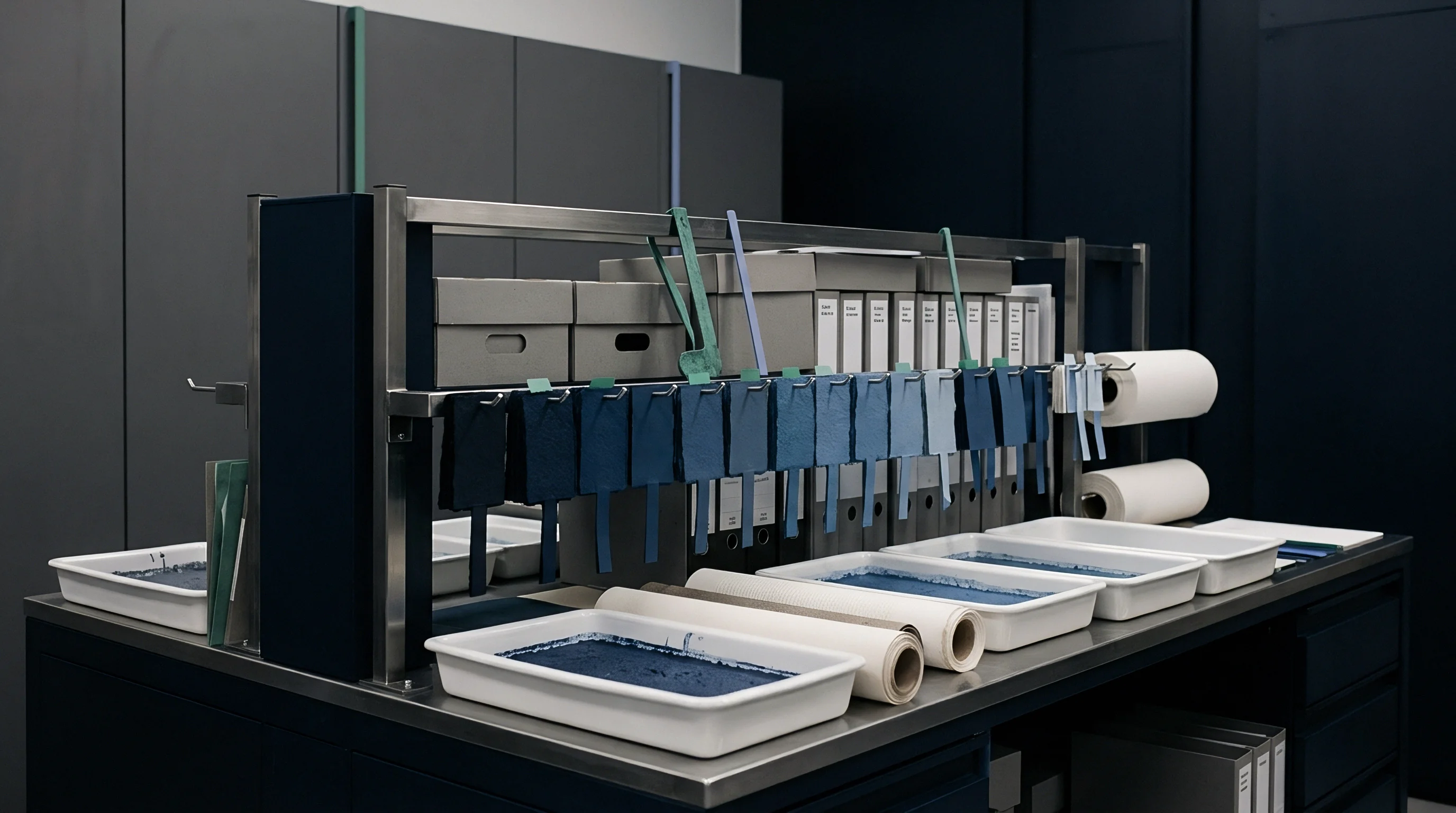
Die-cut platens press high-carbon steel blades into phenolic, pressboard, or synthetic counter grooves. Board density changes matrix selection. Standard cartonboard scoring matrix depth equals board caliper.
Polyethylene coated grades introduce composite compression dynamics, altering standard tooling math. The presence of surface polymer demands wider channel clearance to prevent shear failure along the crease shoulders.
- Measure total composite board caliper using a dead-weight micrometer under ISO 534 test conditions.
- Identify the creasing rule width from the die maker tooling layout sheet.
- Calculate base channel width by multiplying total caliper by 1.4 for single-side coated grades, or 1.6 for double-side barrier grades.
- Add creasing rule width to the calculated caliper product to determine target matrix channel width.
- Select matrix depth matching nominal sheet caliper, dropping one standard depth step if surface polymer compression exceeds ten percent under load.
Calculated matrix dimensions establish the clearance window during full platen stroke depth. Incorrect channel sizing leads to score line fracturing or weak crease stiffness that jams automatic filling lines. Excessively wide channels create rounded, ill-defined score lines that distort final carton squareness.
Selecting matrix width based solely on raw board caliper without accounting for polymer coating thickness creates high shear stress along the crease shoulder.
Platen impression force creates internal shear stresses within the fibrous core. Plastic film stretches under tension. Matrix location accuracy relative to the creasing rule centerline must maintain alignment within 0.03 millimeters across the entire cutting plate area.
Off-center penetration shifts shear stress to one side of the score, causing asymmetrical delamination and outer barrier film splitting during folder-gluer operations.
Matching channel width to total composite caliper prevents surface polymer splitting while maintaining crisp box corners.

Rule
Creasing steel blades define the indentation profile pressed into packaging board during high-speed blanking. The physical shape, thickness, and bevel radius of the rule edge determine how mechanical compression distributes through the sheet profile.

Creasing Steel Profile and Radius Engineering
Standard score blades incorporate ground radiused edges that distribute mechanical force across the sheet caliper. Edge radius variations alter local strain concentration. A narrow profile cuts into polymer coatings, creating stress concentration points that fail during carton erection.
Round profile rules distribute indentation load evenly across the top liner, encouraging controlled internal ply separation rather than surface fracture.
| Composite Caliper Range (µm) | Rule Thickness (pt / mm) | Rule Tip Profile Radius (mm) | Matrix Width Calculation Formula | Matrix Depth Range (mm) |
|---|---|---|---|---|
| 250 to 350 | 2 pt / 0.71 mm | 0.35 | Rule Width + (1.4 × Caliper) | 0.30 to 0.35 |
| 351 to 450 | 2 pt / 0.71 mm | 0.40 | Rule Width + (1.5 × Caliper) | 0.40 to 0.45 |
| 451 to 550 | 3 pt / 1.07 mm | 0.50 | Rule Width + (1.5 × Caliper) | 0.50 to 0.55 |
| 551 to 700 | 3 pt / 1.07 mm | 0.60 | Rule Width + (1.6 × Caliper) | 0.60 to 0.70 |
Height adjustments for creasing rules match cutting rule dimensions minus composite sheet caliper. Steel height controls crease depth. Platen impression pressure demands precise setting.
Operating dies with excessive penetration force crushes internal fiber structures, reducing structural stack strength in finished corrugated or folding packaging boxes.
Compliance with ISO 5628 score stiffness tolerances requires maintaining crease line depth symmetry within five percent of target specs across the entire web width.
Scoring blades wear over time. Continuous contact with abrasive wood pulp fibers and dense polymer films rounds off precision rule profiles, altering contact geometry across long production runs. Plant technicians monitor rule height degradation using optical micrometers to ensure indentation uniform consistency stays within specification boundaries.
- Excessive penetration depth chops through top liner fibers, causing immediate pinhole leaks in liquid barrier packaging.
- Insufficient rule height produces shallow score channels, resulting in high fold resistance and distorted carton side panels.
- Burred rule edges scrape surface polyethylene coatings, creating cosmetic defects and micro-fractures along score lines.
- Incorrect bevel angles concentrate shear stress on one side of the matrix channel wall during platen closure.
Specification guidelines under DIN 19303 Grade Definitions mandate a maximum score line stiffness deviation of ten percent across batch lots, shifting replacement costs to the board mill when uncalibrated tooling results from caliper drift.
Fracture
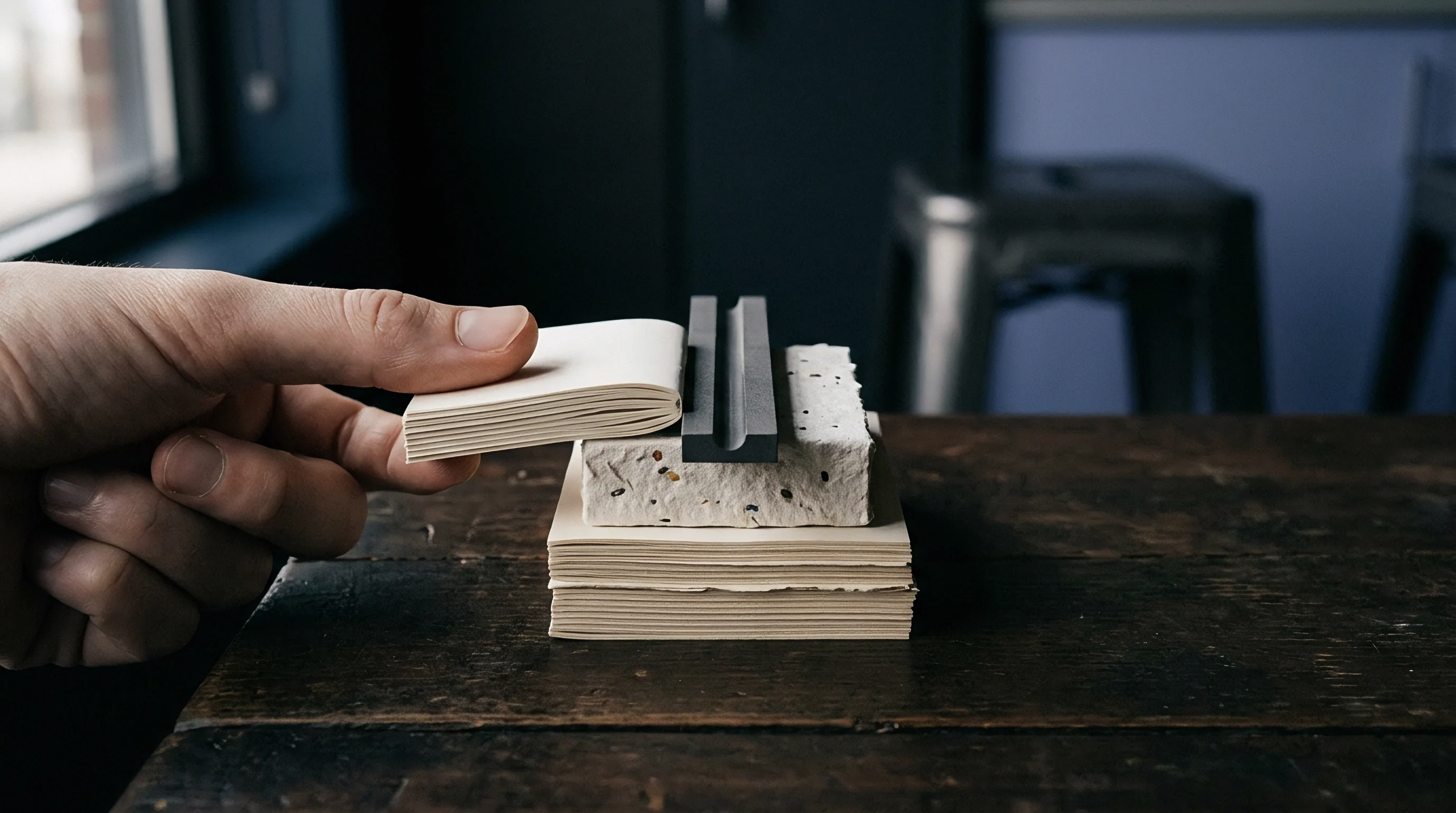
Bending paperboard past ninety degrees induces tension along the outer score line. The mechanical stress forces internal fibers to shear apart into distinct sub-layers, allowing the composite sheet to fold cleanly without snapping.
Delamination Dynamics and Polymer Strain Limits
Internal ply separation inside the cellulose substrate absorbs energy during folding operations. Shear stress causes liner separation. The outer polyethylene barrier film must stretch over the outer fold radius without exceeding its ultimate yield limit.
If internal board plies fail to delaminate cleanly, total bending strain transfers directly to the outer polymer layer, tearing the surface film and exposing raw cellulose to liquid contents.
Delamination within the fibrous core acts as a mechanical hinge that relieves bending stress on the outer synthetic barrier.
Crease stiffness testing measures the bending force necessary to fold a scored board sample to a ninety-degree angle using ISO 5628 protocols. Lower crease stiffness values indicate proper internal ply delamination. High crease stiffness signals insufficient core failure, forcing the outer liner to absorb bending energy through cracking and surface tearing.
Which Atmospheric Conditions Prevent Scoring Failures?
Paperboard equilibrium moisture content dictates the flexibility of cellulose fibers under mechanical load. Dry ambient air accelerates cracking. Storage facilities maintaining relative humidity levels below forty percent produce brittle board stock that fractures under standard creasing pressure.
Optimal converting environments hold ambient conditions at 23 °C and 50 percent relative humidity under ISO 187 standard parameters.
- Board core moisture below 5.5 percent reduces cellulose fiber elasticity, forcing outer liner tensile rupture during score folding.
- Ambient relative humidity above 65 percent softens fiber bonds excessively, yielding mushy creases with poor structural rigidity.
- Temperature drops below 15 °C stiffen polyethylene surface coatings, dramatically lowering ultimate resin elongation capacity.
- Unconditioned reel storage creates moisture gradients across the paper web, leading to inconsistent scoring behavior across production dies.
Testing continues on whether chemical cross-linking additives in bio-based barrier polymers will alter shear delamination behavior under high-speed folding die impacts.

Settlement
Commercial printing contracts allocate line spoilage costs based on delivered folding performance. Substrates failing score integrity checks incur significant financial penalties during converting and automatic filling runs.
Waste Arithmetic and Converting Machine Speeds
High-speed packaging lines run between three hundred and five hundred blanks per minute. Tooling wear raises conversion scrap. Slight matrix misalignments cause carton jam events, stopping downstream filling equipment and generating massive material waste.
Calculating financial exposure involves mapping press speed against matrix wear life and board substrate costs.
| Operating Parameter | Baseline Matrix Setup | Worn Matrix setup | Uncalibrated Tooling Setup |
|---|---|---|---|
| Die Cut Machine Speed (blanks/min) | 450 | 450 | 380 |
| Crease Matrix Service Life (impressions) | 120,000 | 180,000 | 50,000 |
| Carton Score Line Failure Rate (%) | 0.15 | 2.40 | 6.80 |
| Downstream Filling Line Jam Frequency (stops/hr) | 0.10 | 1.80 | 5.20 |
| Raw Substrate Waste per Lot (tonnes) | 0.06 | 0.96 | 2.72 |
| Landed Cost per 1,000 Delivered Cartons (€) | 42.10 | 45.85 | 51.30 |
Tooling economics favor early replacement of counter matrices. Phenolic matrix channels wear after approximately 100,000 impressions, widening the groove profile and reducing crease definition. Continuing operations past matrix wear thresholds saves small tooling costs while dramatically raising scrap rates on expensive polymer-coated board grades.
Quality assurance protocols require continuous monitoring of fold stiffness using automated creasing test instruments. Goods-in inspection departments verify that incoming board reels match certified moisture and caliper specifications before mounting rolls onto die-cutting lines. Unverified stock substitutions introduce web variability that destroys precision creasing die setups within minutes of starting high-speed production runs.
Operating creasing dies with worn channel walls causes misaligned score lines, leading to automatic packer jams, ruined barrier integrity, and complete rejection of the packaging lot at the customer filling plant.