Quantifying Gas Phase Contaminant Partition Kinetics across Polyethylene and Biopolymer Functional Barriers in Recycled Board
Gas phase partition kinetics govern contaminant transfer across functional packaging barriers, requiring precise thermodynamic and diffusion testing.


Vapor
Recycled paperboard contain complex mixtures of residual volatile compounds derived from printing inks, adhesives, and processing aids. Uncoated recycled pulp matrices continuously desorb low-molecular-weight hydrocarbons into the internal air space of paperboard packaging. Vapor pressures drive migration rates.
Gas phase transport functions as the primary pathway by which mineral oil saturated hydrocarbons, mineral oil aromatic hydrocarbons, phthalate plasticizers, and photoinitiators move from contaminated paperboard fibers toward packaged dry foods.
Gas Phase Volatilization Mechanics in Recycled Board Stocks
The thermodynamic equilibrium of volatile species within recycled fiberboard depends heavily on chemical structure and substrate temperature. Contaminants bound within the porous cellulosic matrix partition between the solid fiber phase and the interstitial gas phase. Gas-phase concentration at equilibrium relates directly to the contaminant initial concentration in the board and its specific partition coefficient.
Low-molecular-weight alkanes from C10 to C16 exhibit high vapor pressures at ambient room conditions, leading to rapid gas-phase saturation within closed packaging volumes. Heavier fractions between C17 and C28 volatilize more slowly, maintaining steady mass flux over extended storage periods.
Board recycled fiber retains volatile residual oils. The desorption rate increases significantly when storage ambient temperatures rise from ambient conditions to elevated distribution temperatures. Fiber density, moisture content, and internal sizing agents alter the sorption-desorption equilibrium constant.
High humidity accelerates desorption by occupying competitive binding sites on hydrophilic cellulose fibers, forcing hydrophobic contaminants into the gas phase. Quantifying gas phase concentrations requires automated static headspace sampling or continuous gas-flushing collection methods coupled to gas chromatography with flame ionization detection.

Thermodynamic Equilibrium Constants and Contaminant Vapor Pressures
Accurate partition kinetics modeling begins with determining pure substance vapor pressures and matrix-to-gas partition parameters. Contaminant molecules move down chemical potential gradients. The partition coefficient defines the ratio of contaminant mass fraction in the recycled paperboard to its mass concentration in the contacting gas phase at equilibrium.
Higher partition coefficients indicate strong retention within the paperboard matrix, whereas lower values signify a strong tendency to vaporize into the package atmosphere.
| Chemical Compound Class | Molecular Weight (g/mol) | Vapor Pressure at 23 °C (Pa) | Vapor Pressure at 40 °C (Pa) | Board-Gas Partition Coefficient K (m³/kg) |
|---|---|---|---|---|
| Short-Chain MOSH (C12–C16) | 170–226 | 1.2 × 10¹ to 8.5 × 10⁻¹ | 4.8 × 10¹ to 4.2 × 10⁰ | 1.5 × 10² |
| Medium-Chain MOSH (C17–C24) | 240–338 | 4.2 × 10⁻² to 3.1 × 10⁻⁴ | 2.1 × 10⁻¹ to 2.8 × 10⁻³ | 8.4 × 10³ |
| MOAH Fractions (C14–C22) | 180–300 | 3.5 × 10⁻¹ to 1.1 × 10⁻³ | 1.8 × 10⁰ to 9.5 × 10⁻³ | 4.2 × 10³ |
| Diisobutyl Phthalate (DIBP) | 278.34 | 8.2 × 10⁻⁴ | 6.4 × 10⁻³ | 1.2 × 10⁵ |
| Benzophenone | 182.22 | 1.9 × 10⁻2 | 1.4 × 10⁻¹ | 3.1 × 10⁴ |
Temperature shifts modify partition constants following van ‘t Hoff relationships. A rise in temperature from 23 °C to 40 °C increases the gas-phase concentration of medium-chain mineral oil constituents by nearly fivefold. Gas chromatography coupled with mass spectrometry yields precise quantitative detection down to sub-milligram per kilogram levels, provided calibration standards mirror the exact paperboard matrix porosity.
Laboratory evaluations missing ambient vapor pressure calibrations produce underestimations of long-term migration potential.
Standard testing protocols using modified polyphenylene oxide at 40 °C for ten days simulate worst-case gas phase migration over extended ambient shelf lives.
Measuring partition parameters without isolating gas-phase pathways introduces massive experimental error. Liquid extraction methods quantify total contaminant load but fail to isolate the fraction available for gas phase transfer. Direct solid-phase microextraction protocols capture volatile organic compounds directly from the headspace above paperboard samples without solvent intervention.
When testing laboratories evaluate barrier performance using total solvent extraction instead of gas-phase partition kinetics, buyers receive inflated containment claims that fail under real-world logistics storage conditions.
Film
Polymer coatings applied to recycled board serve as functional barriers against volatile contaminant transport. Low-density polyethylene, high-density polyethylene, and emerging biopolymer formulations exhibit distinct solubility and diffusion profiles. Polymer density alters hydrocarbon solubility.
The choice of functional barrier dictates whether volatile molecules permeate into packaged goods or remain trapped within the board matrix.

Polyethylene and Biopolymer Microstructures under Volatile Stress
Polyolefin films function primarily through semi-crystalline physical structures. Polyethylene contains amorphous domains distributed between crystalline lamellae. Volatile non-polar hydrocarbons dissolve readily into the hydrophobic amorphous regions of low-density polyethylene.
High-density polyethylene features higher crystallinity, which creates a more tortuous diffusion path and lowers overall permeability. Hydrocarbon sorption causes localized swelling within polyethylene films, accelerating subsequent contaminant transport through plasticized amorphous channels.
Glass transition limits molecular mobility. Biopolymers present contrasting barrier mechanisms due to polar functional groups and rigid backbone chemistry. Polylactic acid possesses a glass transition temperature near 55 °C, maintaining a rigid glassy state at room temperature that severely restricts gas phase hydrocarbon diffusion.
Polybutylene succinate and polyhydroxyalkanoates offer flexible ester linkages that balance mechanical flexibility with polarity-based resistance to non-polar mineral oil hydrocarbons. Aqueous dispersion coatings based on microfibrillated cellulose or modified starch build dense hydrogen-bonded networks that present virtually impenetrable barriers to hydrophobic vapors when dry.

Diffusion Coefficients across Hydrophobic and Polar Barrier Films
Diffusion within polymeric functional barriers follows temperature-dependent kinetic pathways. The diffusion coefficient measures the speed at which a contaminant molecule migrates through the polymer matrix under a concentration gradient. Hydrophobic polyolefins demonstrate high diffusion rates for non-polar mineral oil fractions but offer high resistance to polar moisture.
Polar biopolymer barriers display opposite kinetics, showing extremely low diffusion coefficients for non-polar hydrocarbons while suffering plasticization when exposed to elevated relative humidity.
| Barrier Material Type | Coating Weight / Thickness | Diffusion Coefficient D (cm²/s) MOSH C16–C24 | Diffusion Coefficient D (cm²/s) Benzophenone | Calculated Breakthrough Time (Days) |
|---|---|---|---|---|
| Low-Density Polyethylene (LDPE) | 30 μm | 1.5 × 10⁻¹⁰ | 4.2 × 10⁻¹¹ | 14 |
| High-Density Polyethylene (HDPE) | 25 μm | 8.0 × 10⁻¹² | 1.1 × 10⁻¹² | 180 |
| Polylactic Acid (PLA) | 20 μm | 3.5 × 10⁻¹⁴ | 2.0 × 10⁻¹⁵ | 1000 |
| Polybutylene Succinate (PBS) | 25 μm | 6.2 × 10⁻¹³ | 8.5 × 10⁻¹⁴ | 650 |
| Cellulose Nanocrystal Dispersion | 12 g/m² (~10 μm) | 1.2 × 10⁻¹⁵ | 4.0 × 10⁻¹⁶ | 2000 |
Humidity plasticizes hydrophilic starch layers. When storage conditions exceed 70 percent relative humidity, water molecules penetrate polar biopolymer matrix structures, swelling the polymer networks and increasing local free volume. This structural swelling leads to a dramatic drop in hydrocarbon barrier performance, increasing diffusion coefficients by up to two orders of magnitude.
Contractual specifications mandating bio-based coatings must include maximum allowable moisture vapor transmission rates alongside mineral oil barrier requirements.
Environmental stress factors trigger specific physical failure modes within functional barrier coatings during converting and storage operations:
- Flexural pinhole formation occurs during high-speed folding boxboard converting operations, breaking the continuous biopolymer layer along crease lines.
- Hydrocarbon swelling plasticization reduces polyolefin density when continuous exposure to high-concentration mineral oil vapor expands amorphous channels.
- Humidity-induced free volume expansion swells polar biopolymeric dispersion coatings under high relative humidity, permitting accelerated gas-phase migration.
- Thermal degradation of ester bonds weakens biopolymer barrier integrity during hot-melt adhesive application cycles on packaging packaging lines.
Coatings suppliers frequently claim that a fifteen-micron biopolymer film provides absolute mineral oil protection based on dry laboratory testing. That claim ignores field performance under ambient humidity fluctuations where moisture absorption degrades the polymer barrier lattice.

Flux
Mathematical modeling of gas phase partition kinetics enables precise prediction of contaminant transfer rates over commercial packaging shelf lives. Transient transport across composite recycled board and barrier film systems follows Fickian diffusion laws coupled with interface partition conditions. Calculating mass flux requires solving boundary value problems that account for transient concentration profiles across each distinct material layer.

Transient Transport Equations for Layered Substrate Matrices
Mass transport across a composite packaging wall comprising recycled board, a functional barrier film, and an internal headspace phase operates under coupled differential equations. The partial differential equation governing one-dimensional transient diffusion through the polymer layer is expressed as:
∂C_b / ∂t = D_b × (∂²C_b / ∂x²)
Here C_b represents contaminant concentration within the functional barrier layer at position x and time t, while D_b denotes the barrier diffusion coefficient. At the interface between the recycled paperboard and the functional barrier layer, thermodynamic equilibrium dictates a discontinuous concentration jump governed by the interface partition coefficient K_ib:
C_b(interface) = K_ib × C_board(interface)
The cumulative mass M_t of contaminant migrating per unit surface area A into the packaged food or dry food simulant over time t is calculated by integrating the mass flux J at the inner barrier surface:
J(t) = – D_b × (∂C_b / ∂x) | at inner surface
Piringer parameters provide empirical estimations for polymer diffusion constants based on molecular weight and absolute temperature. The dimensionless parameter A_P’ defines the relative diffusivity of the polymer matrix. Polyethylene variants present high A_P’ values between 11.5 and 13.0, reflecting rapid molecular transport.
Polylactic acid features lower A_P’ values between 2.0 and 4.0, demonstrating superior intrinsic barrier efficiency against equivalent molecular weight compounds.

Arrhenius Temperature Sensitivity and Humidity Coupling
Temperature shifts alter transport kinetics according to Arrhenius relationships. The activation energy of diffusion E_a governs how strongly temperature fluctuations accelerate contaminant flux through functional barriers:
D(T) = D_0 × exp(- E_a / (R × T))
In this expression, D_0 is the pre-exponential factor, R represents the universal gas constant, and T is absolute temperature in Kelvin. Polyethylene functional layers display activation energies between 45 and 65 kJ/mol for MOSH fractions. Biopolymer barrier layers exhibit higher activation energies between 75 and 110 kJ/mol, indicating that biopolymer barrier performance is substantially more sensitive to thermal spikes during shipping and warehousing.
Evaluating migration performance under accelerated test protocols demands precise calculation of transport parameters:
- Quantify initial contaminant mass concentrations within the unprinted recycled paperboard using total solvent extraction followed by online HPLC-GC-FID analysis.
- Determine the board-to-gas partition coefficient by static headspace gas chromatography under controlled thermal equilibrium conditions.
- Measure the barrier film thickness using optical cross-sectional microscopy across multiple converting crease zones.
- Expose the barrier-coated board surface to modified polyphenylene oxide adsorbent powder at 40 °C for specific time intervals ranging from 1 to 10 days.
- Extract sorbed contaminants from the polyphenylene oxide media using n-hexane and quantify total mass transfer per square decimeter.
- Fit experimental mass transfer data against Fickian finite-element diffusion models to calculate exact values for D_b and K_ib.
Simulant sorption alters chemical equilibrium. Consider a packaging construction consisting of 350 grams per square meter recycled folding boxboard carrying an initial MOSH C16–C24 concentration of 150 mg/kg. The board is lined with either a 25-micron LDPE extrusion coating or a 20-micron PLA dispersion coating.
At 23 °C and 50 percent relative humidity, the calculated breakthrough time for the LDPE film is approximately 14 days, reaching an equilibrium migration value of 8.5 mg/dm² into dry food simulant after 100 days. Under identical conditions, the PLA coating delays MOSH breakthrough beyond 365 days, holding total migration below 0.05 mg/dm².
Barrier thickness scaling follows square-root diffusion laws, meaning doubling layer thickness quadruples breakthrough delay time.
Uncoated board exhibits rapid contaminant release. Raising the storage temperature of the PLA-coated boxboard to 40 °C increases the diffusion coefficient by a factor of twelve, reducing the MOSH breakthrough time to 42 days. If relative humidity simultaneously rises to 85 percent, water sorption plasticizes the PLA matrix, lowering the activation energy barrier and triggering premature migration breakthrough before the declared package shelf life expires.
What fundamental mechanism explains why specific low-molecular-weight photoinitiators display anomalous non-Fickian transport behavior across polar biopolymer dispersion layers under cyclic thermal stress?

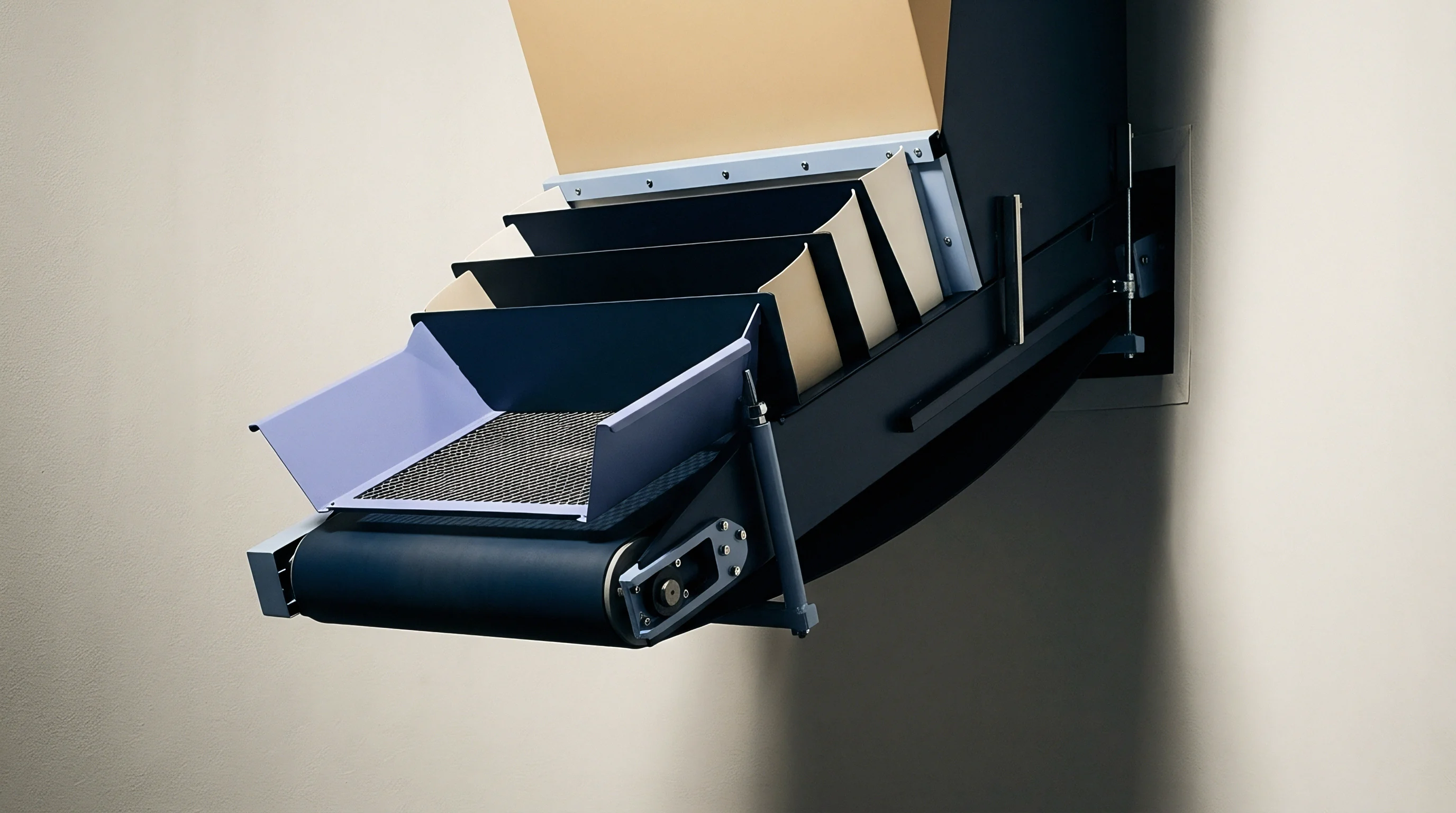
Audit
Proving functional barrier effectiveness requires rigorous verification protocols and clear documentary evidence chains. Regulatory authorities in cross-border jurisdictions scrutinize compliance declarations for food contact materials. Buyers must verify analytical test reports against public registry standards and physical batch parameters to avoid legal non-compliance penalties.

Regulatory Thresholds and Analytical Proof Standards
European regulatory frameworks enforce strict limits on contaminant migration into food products. Framework Regulation EC 1935/2004 mandates that packaging packaging materials must not transfer constituents to food in quantities that endanger human health. Commission Regulation EU 10/2011 sets specific migration limits for plastic layers, while national recommendations like the German BfR Recommendation XXXVI govern paper and board matrices.
| Chemical Class | Statutory / Recommended Threshold | Standardized Test Simulant | Testing Condition Protocol | Analytical Detection Limit |
|---|---|---|---|---|
| MOSH Fractions (C16–C35) | 0.5 mg/kg food | Poly(2,6-diphenyl-p-phenylene oxide) | 10 days at 40 °C | 0.1 mg/kg |
| MOAH Fractions (C16–C35) | 0.15 mg/kg food (draft limit) | Poly(2,6-diphenyl-p-phenylene oxide) | 10 days at 40 °C | 0.01 mg/kg |
| Diisobutyl Phthalate (DIBP) | 1.0 mg/kg food | Isooctane / Ethanol 95% | 2 days at 20 °C | 0.1 mg/kg |
| Benzophenone | 0.6 mg/kg food | Poly(2,6-diphenyl-p-phenylene oxide) | 10 days at 40 °C | 0.05 mg/kg |
| Bisphenol A (BPA) | 0.05 mg/kg food | Water / Ethanol 10% | 10 days at 60 °C | 0.01 mg/kg |
Customs holds stall distribution channels. Demonstrating compliance requires online coupled high-performance liquid chromatography with flame ionization detection to separate MOSH and MOAH fractions without interference from natural plant waxes. Standard gas chromatography missing liquid chromatography pre-separation misinterprets biogenic hydrocarbons as mineral oil contaminants, producing false positive compliance failures that destroy inventory value.

Dossier Construction and Certificate Scope Verification
A supplier declaration of compliance remains incomplete without attached analytical test reports verifying barrier performance under specific time, temperature, and simulant conditions. Chain-of-custody documentation must trace raw material inputs from recycled paper mills through coating converters down to final boxmakers.
Compliance declarations lacking explicit test simulant parameters leave importers fully exposed to border seizure enforcement actions.
Verifying supplier documentation requires systematic cross-examination of certified scope boundaries against actual delivery specifications:
- Certificate scope alignment confirms whether the accredited laboratory testing covers the precise polymer grade, coating weight, and substrate grammage delivered.
- Test simulant appropriateness verifies that TENAX dry food simulant was utilized for gas-phase migration evaluations instead of liquid simulants that dissolve biopolymers.
- Thermal conditioning validity ensures experimental exposure temperatures match or exceed maximum distribution storage temperatures listed in product specifications.
- Batch traceability coding links individual pallet tags directly to mill analytical certificate numbers and raw material production logs.
Proof rests on migration analytical reports. Standard compliance terms within supply contracts must specify that functional barrier performance is evaluated following EN 14338 protocols using modified polyphenylene oxide at 40 °C for 10 days, and any failure to restrict total mineral oil migration below 0.5 mg/kg food invalidates batch acceptance.
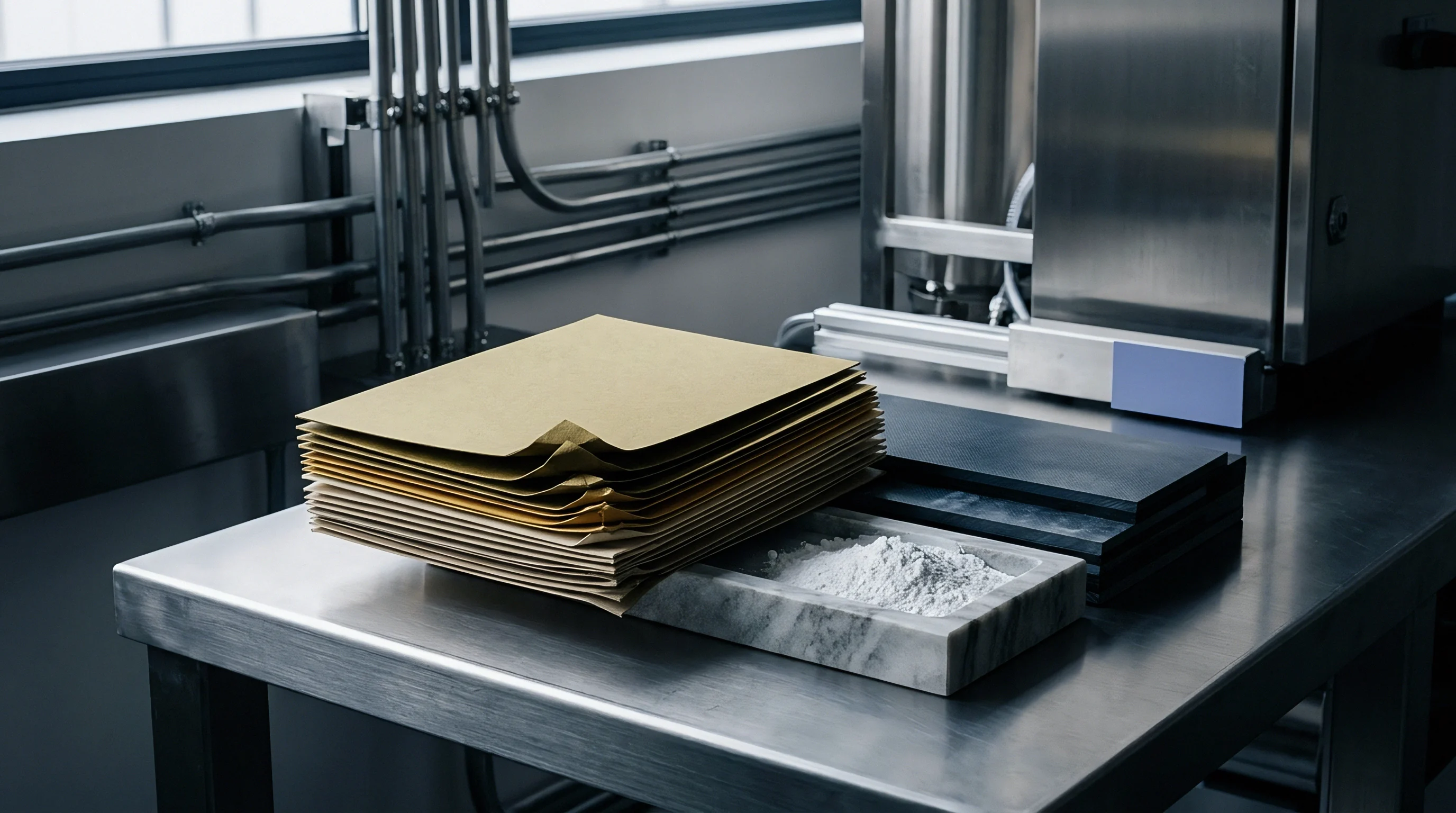
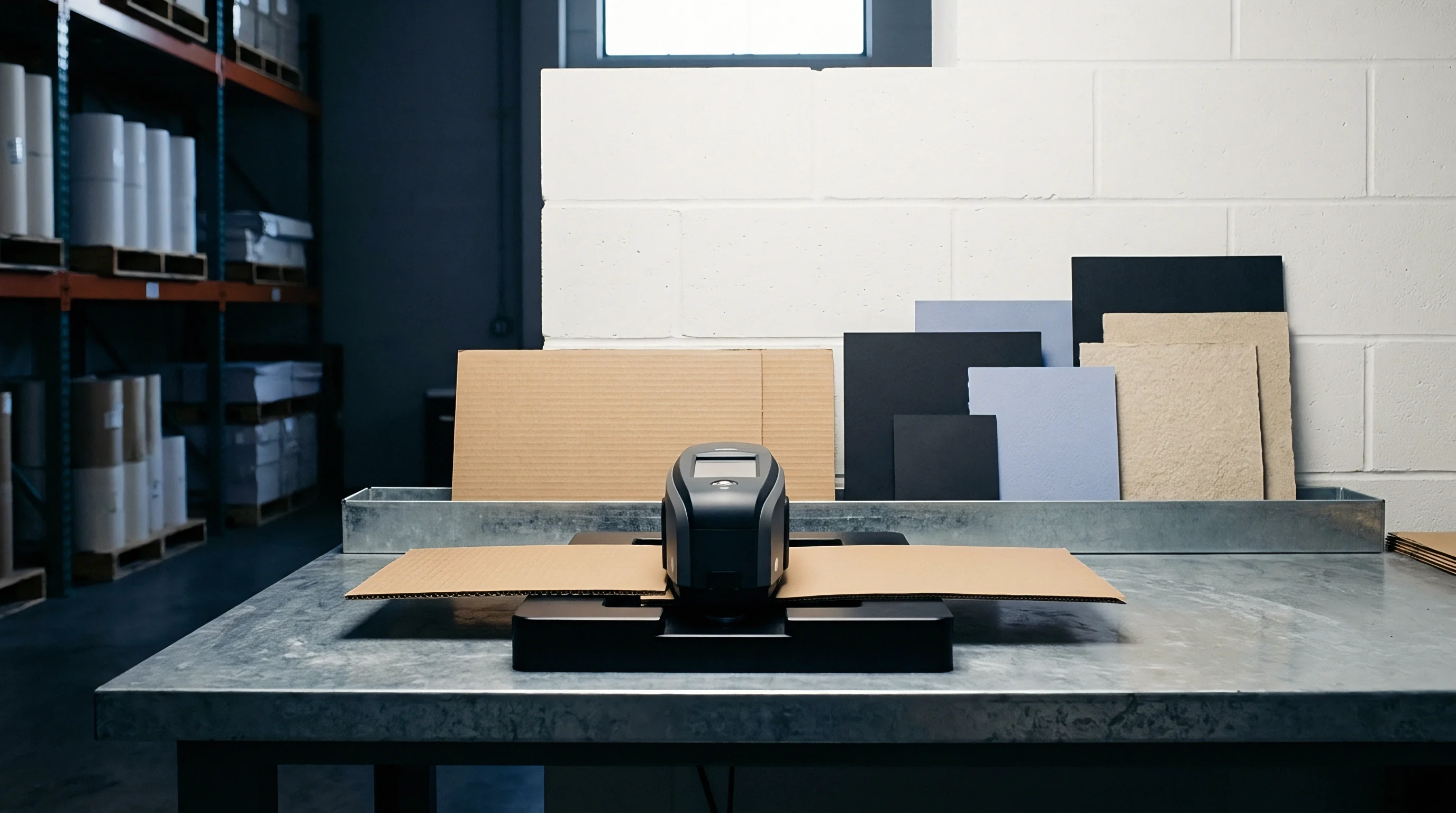
Ledger
Quantifying gas phase contaminant partition kinetics carries direct financial and commercial implications for packaging procurement. Misjudging barrier layer effectiveness results in supply chain disruptions, product recall liabilities, and packaging re-specification costs. Procurement practices must balance initial barrier material costs against long-term risk exposure at international customs borders.

Financial Risk Allocation across Converting Operations
Integrating biopolymer or polyolefin functional barriers alters the landed cost structure of recycled board packaging. Standard low-density polyethylene extrusion adds a modest cost premium to base recycled board prices, whereas biopolymer coatings such as polylactic acid or aqueous dispersion barriers increase unit packaging costs substantially. Evaluating total cost of ownership demands weighing coating material costs against potential financial losses from regulatory non-compliance.
Sourcing contracts transfer regulatory financial risks. When a retail brand owner faces product delisting due to mineral oil contamination exceeding national advisory levels, the financial impact extends far beyond the physical package value. Recall liabilities encompass inventory write-downs, reverse logistics fees, third-party laboratory re-testing charges, and retailer non-compliance fines.
Packaging buyers who procure barrier-coated boards based strictly on lowest unit price often absorb these liabilities due to inadequate supplier warranty clauses.

Customs Clearance Protocols and Barrier Warranty Structures
Importers of record bear absolute legal responsibility for packaging compliance at customs entry points. National market surveillance authorities perform random spot-checks on imported packaged goods, executing gas chromatography testing on paperboard components. Missing or invalid compliance dossiers result in immediate shipment holds, customs bond forfeitures, and mandatory destruction orders.
Structured procurement protocols mitigate commercial compliance exposure through systematic batch validation:
- Require converting suppliers to submit accredited third-party migration test certificates for every target paperboard grade prior to contract execution.
- Specify exact barrier coating weights and minimum thickness tolerances in purchase order specifications, backed by mill certificates of analysis per lot.
- Execute independent quarterly verification sampling of incoming board shipments using gas chromatography-mass spectrometry headspace analysis.
- Incorporate explicit warranty indemnification clauses transferring product recall liabilities to converting suppliers when delivered materials deviate from certified barrier specifications.
Barrier coating selection requires matching expected storage duration and ambient environmental conditions to proven transport kinetics. Selecting an over-engineered biopolymer dispersion barrier for short-shelf-life dry goods inflates packaging expenditure without delivering measurable compliance benefits. Conversely, specifying a thin polyolefin film for long-shelf-life fatty foods packaged in high-recycled-content board guarantees mineral oil migration failures.
Thicker functional coatings consistently extend contaminant breakthrough times across all temperature ranges.