Evaluating Z Direction Tensile Requirements for Folding Boxboard Creasing
Controlled delamination in folding boxboard requires maintaining Z-direction tensile strength between 160 and 220 kPa to prevent outer liner cracking.


Rupture
An anvil clamp drops onto a three hundred and fifty micrometre specimen under three hundred kilopascals of holding pressure. Inside the instrument, double-sided adhesive tape grips the bleached chemical pulp top liner and the unbleached back liner across a standard test area of fifty square centimetres. As the tensile load cell pulls the faces apart at a constant displacement rate, the force curve climbs steeply, flattens across five hundred milliseconds, and collapses as the mechanical pulp interior cleaves down its central plane.
That separation highlights the basic structural compromise in folding boxboard. The board must delaminate internally during converting so the outer printable liner can stretch around an eighty-degree or ninety-degree corner without cracking. When internal plies exhibit excessive bond strength, bending forces transfer directly to the exterior coating, splitting cartons along their primary scorelines.
Bleached sulphate liners carry the tensile load. Chemical pulp on the print surface withstands high surface strain, while groundwood or chemithermomechanical pulp plies in the middle provide bulk and bending stiffness per unit of basis weight. Creasing introduces an intense localized shear field.
As a steel creasing rule pushes the multi-ply board into a recessed counter-matrix channel, the middle mechanical layer fractures internally along distinct shear planes. This controlled fracture transforms a rigid laminate into a flexible hinge composed of independent, unbonded sheets. Delamination absorbs local bending energy, and when the crease folds on an automated carton former, the separated plies slide past each other to form an internal bead that relieves strain on the exterior coated liner.
Folding boxboard with a mechanical pulp interior exhibits optimum creasing delamination when normal tensile strength measures between one hundred and sixty and two hundred and twenty kilopascals under ISO 15754 at twenty-three degrees Celsius and fifty percent relative humidity.
Evaluating normal tensile strength ~ known across converting plants as Z-direction tensile or ZDT ~ establishes whether the middle layers will shear cleanly under the creasing rule. If the ZDT value falls below one hundred and thirty kilopascals, the middle ply lacks the internal cohesion to retain structural form during high-speed feeding, allowing suction cups on automated packaging lines to tear the board faces off the blank. Conversely, when ZDT exceeds two hundred and sixty kilopascals, internal plies refuse to shear under standard die impressions.
The creasing rule then crushes the board rather than parting it, driving tensile failure into the white clay coating.
Converters processing solid bleached board or white lined chipboard encounter fundamentally different delamination behaviours due to furnish composition. Solid bleached board consists entirely of chemical pulp plies with continuous internal fibre networks, demanding deeper creasing rule penetration to initiate cleavage. White lined chipboard contains recycled secondary fibres with inconsistent hornified surfaces, causing unpredictable delamination paths that wander between plies.
Folding boxboard balances these extremes through its sandwich construction, utilizing the weak interfibre bonding of mechanical pulp to localize internal fracture precisely along the middle plies.
| Board Classification | Furnish Construction | Mean ZDT Range (kPa) | Scott Bond Energy (J/m²) | Typical Bulk (cm³/g) | Creasing Delamination Character |
|---|---|---|---|---|---|
| Folding Boxboard (FBB) | Bleached chemical plies with mechanical middle | 150 to 220 | 120 to 190 | 1.45 to 1.90 | Controlled cleavage along central mechanical layers |
| Solid Bleached Board (SBB) | Multi-ply pure chemical kraft | 300 to 480 | 240 to 380 | 1.15 to 1.35 | High shear resistance requiring deep scoring penetration |
| White Lined Chipboard (WLC) | Chemical top liner with recycled waste interior | 110 to 180 | 90 to 150 | 1.25 to 1.45 | Erratic shear propagation following weak recycled interfaces |
| Solid Unbleached Board (SUB) | Unbleached virgin kraft plies | 350 to 520 | 280 to 420 | 1.20 to 1.40 | Extremely tough matrix resisting hinge formation |
| Data measured via ISO 15754 for Z-direction tensile strength and ISO 16260 for internal bond energy. Values reflect cross-direction and machine-direction averages across commercial lots. | |||||
Substrate specifications must account for the specific failure modes that manifest when internal ply cohesion misses the acceptable converting window:
- Tensile fracture along outer plies occurs when excessive middle-ply bond strength prevents internal cleavage, directing bending strain into the external coated chemical layer.
- Excessive crease opening resistance develops when the internal layers fail to part into discrete laminations, producing stiff packaging flaps that pop open on high-speed cartoning lines.
- Uncontrolled ply rupture across blank shoulders arises when low internal cohesion lets shear bands migrate laterally beyond the matrix channel edges.
- Liner peel during folding operations appears when shear stresses sever the adhesive boundary between the chemical top layer and the mechanical middle furnish.
When internal delamination stalls, the carton score functions as a brittle hinge. Packaging converters running pharmaceutical skillets or cosmetics cartons at speeds exceeding eight blanks per second suffer severe jamming when scorelines refuse to break smoothly along pre-creased tracks. Cartons with unyielding plies split their clay outer faces on high-speed gluers, sending whole production pallets straight into scrap bins.

Platen
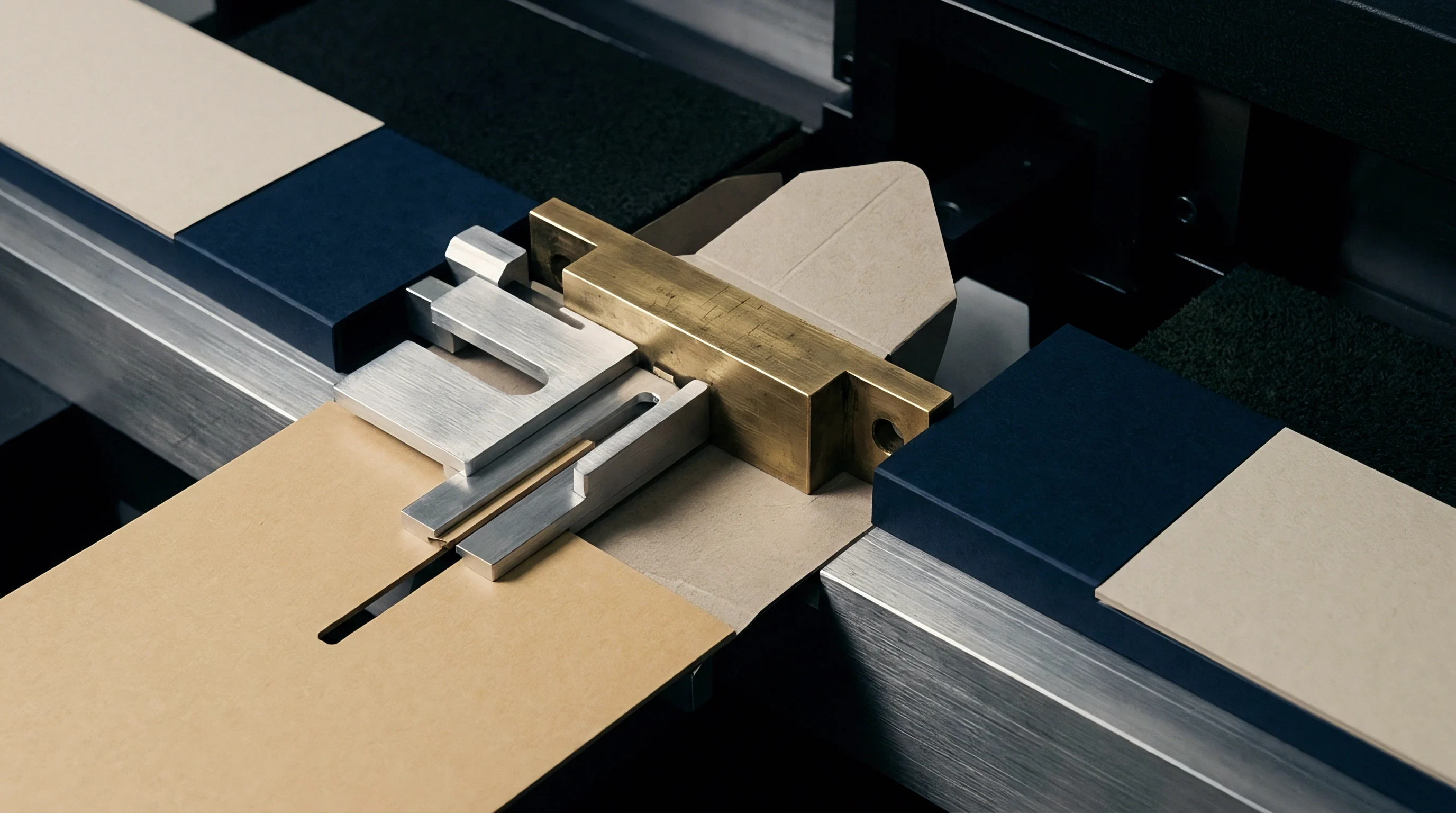
Flatbed die-cutting platens exert dynamic compressive forces across paperboard sheets in contact intervals lasting under forty milliseconds. Evaluating Z-direction tensile requirements against static laboratory methods requires understanding how strain rates alter internal fibre cleavage. Standard tensile testers running ISO 15754 apply crosshead displacement speeds of less than one millimetre per second, whereas dynamic scoring rules strike the paper web at velocities three orders of magnitude higher.
Viscoelastic relaxation within lignin-rich mechanical pulp plies diminishes as contact time shortens, meaning a sheet showing compliant delamination on a slow benchtop instrument can fracture unpredictably when hit by a rapid production press.
Where Does Internal Cleavage Prevent Surface Cracking?
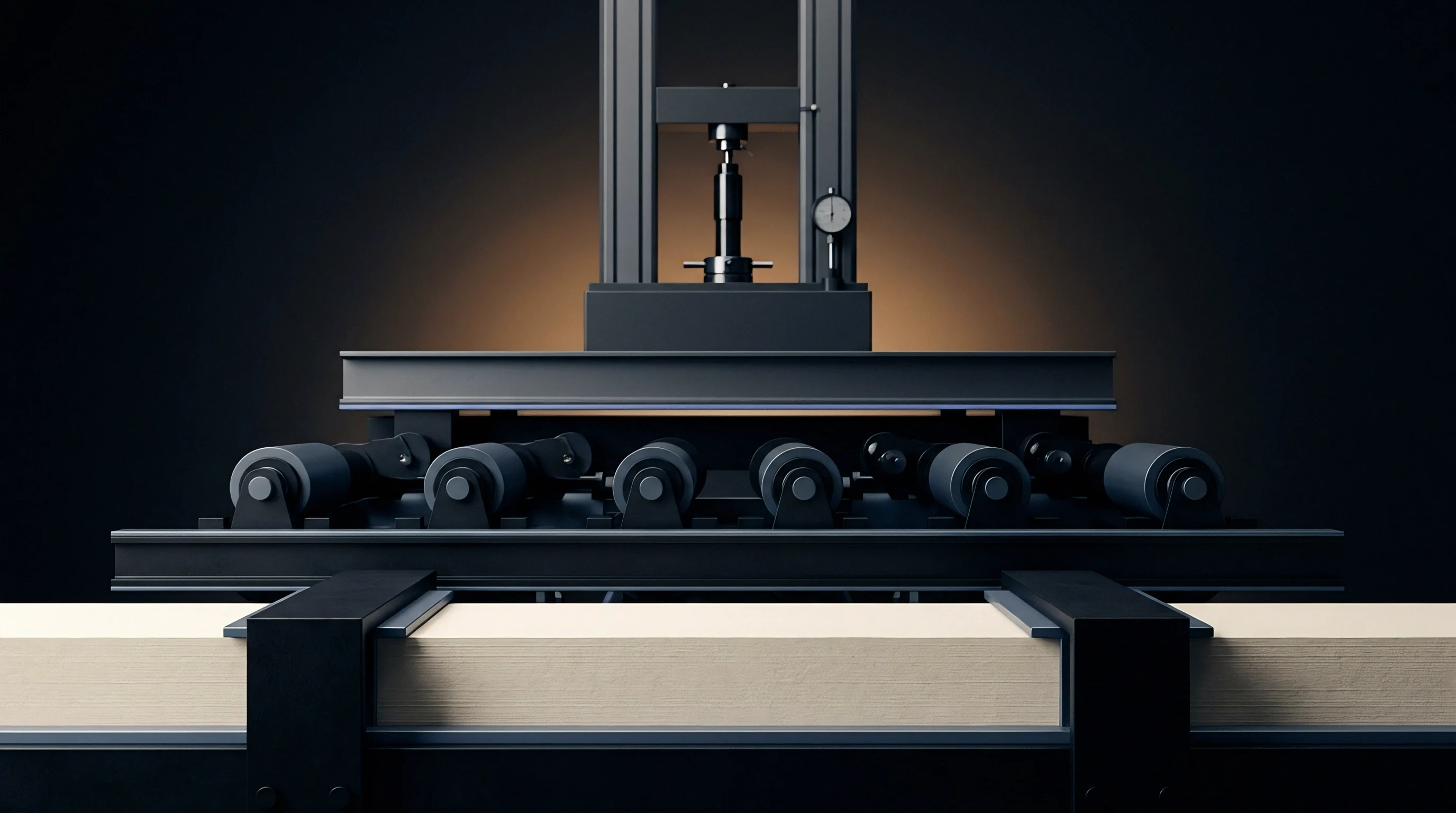
Surface liners experience severe circumferential stretch during a ninety-degree fold. The outer face elongates while the inner face compresses into the carton corner. If the mechanical pulp middle fails to split horizontally, the board behaves as a solid beam following classical Euler-Bernoulli mechanics, forcing the outermost fibres past their ultimate tensile strain limit of three to four percent.
Delamination separates that single thick beam into multiple independent thin beams. Because bending strain on the outer surface scales directly with the thickness of the unbonded outermost laminate, internal cleavage halves the effective section thickness and reduces external tensile elongation by more than fifty percent.
When Scott bond values exceed five hundred in high-density solid bleached boards, that excessive internal energy creates rigid scores that resist initial folding. In folding boxboards, maintaining a Scott bond between one hundred and thirty and one hundred and eighty joules per square metre preserves proper hinge compliance. Laboratories often substitute Scott bond impact testing under TAPPI T 569 for pure Z-direction tensile testing under ISO 15754.
The dynamic pendulum impact in the Scott test measures total absorbed rupture energy, incorporating peel components and out-of-plane shear alongside normal tensile separation, whereas ISO 15754 applies pure uniaxial tension perpendicular to the board plane to isolate interfibre cohesion.
Mill specifications omitting cross-direction internal bond metrics leave converters without legal recourse when stiff virgin plies split along outer scores.
Evaluating board compliance at incoming goods receiving follows a defined laboratory sequence:
- Sample conditioning under controlled atmosphere stabilizes moisture content inside an environmental chamber held at twenty-three degrees Celsius and fifty percent relative humidity for twenty-four hours under ISO 187.
- Tensile jaw alignment and tape adhesion applies double-sided high-tack acrylic adhesive film across clean board surfaces under uniform pneumatic lamination pressure to eliminate air voids and tape slippage.
- Rate-controlled strain separation pulls the sample assembly apart along the normal axis at twelve point five millimetres per minute, recording peak force at rupture across a minimum of ten test specimens.
Moisture changes alter delamination energy. Mechanical pulp interior layers absorb ambient moisture rapidly when skid wraps tear during transit or storage. When relative humidity climbs to seventy percent, water molecules disrupt hydrogen bonding between cellulose fibrils, dropping Z-direction tensile values by twenty to thirty percent.
The middle layers become spongy and yield too easily, causing creases to spread laterally across the channel rather than forming a tight internal bead. At thirty percent relative humidity, the middle furnish dries into a stiff mass, raising effective ZDT beyond two hundred and eighty kilopascals and inducing extensive face cracking during winter converting operations.
Incorporating an explicit ISO 15754 tensile floor of one hundred and seventy kilopascals into purchase contracts eliminates the loophole of substituting unconditioned Scott bond impact energy for proof of compliance.


Channel
Die-cutting tooling dictates the spatial distribution of shear stress across folding boxboard thickness. The steel creasing rule pushes the substrate into the channel of the counter-die matrix, which is milled into pertinax or composed of vulcanized pressboard mounted onto a steel backing plate. The width and depth of this matrix channel establish the exact boundary conditions under which Z-direction cleavage occurs.
A rule with a round tip measuring zero point seven millimetres in thickness drives the central board mass into a channel wider than the rule by one point five times the caliper of the paperboard, allowing the middle mechanical plies to expand laterally as they cleave.

Why Do Conversion Speeds Erode Delamination Headroom?
High-speed rotary and platen die-cutters operating between eight thousand and twelve thousand impressions per hour compress dwell time to mere milliseconds. Under these rapid strain rates, moisture present in the mechanical furnish cannot redistribute within the capillary structure of the fibres, causing hydraulic stiffening inside individual cell walls. The mechanical plies display an apparent ZDT value roughly twenty percent higher than their static laboratory baseline.
Unless the tooling engineer opens the counter-matrix channel by five to ten percent to accommodate this dynamic shear stiffening, the board fractures along the outer edges of the scoring channel, creating parallel surface cuts called double-creasing.
Mechanical pulp cores introduce thermal sensitivity on modern converting lines equipped with heated creasing rules. Setting the creasing platen to forty-five degrees Celsius softens lignin compounds in the middle furnish, lowering the dynamic ZDT barrier and promoting smooth lamination cleavage without increasing creasing rule penetration depth. This thermal conditioning broadens the operating window for boards whose standard normal tensile strength sits near the upper limit of two hundred and forty kilopascals.
In cold plant environments, unheated board resists shear separation, forcing operators to over-penetrate the sheet and rupture the back liner.
| Board Caliper (µm) | Nominal Grammage (g/m²) | Rule Thickness (pt / mm) | Matrix Channel Depth (mm) | Matrix Channel Width (mm) | Internal Delamination Mechanics |
|---|---|---|---|---|---|
| 300 | 215 | 1.5 pt / 0.53 mm | 0.30 | 1.00 | Single continuous cleavage band through central mechanical plies |
| 400 | 270 | 2.0 pt / 0.71 mm | 0.40 | 1.30 | Two parallel shear zones separating mechanical core from outer plies |
| 500 | 330 | 2.0 pt / 0.71 mm | 0.50 | 1.50 | Multiple micro-cleavages forming thick internal hinge bead |
| 600 | 380 | 3.0 pt / 1.05 mm | 0.60 | 1.90 | Broad shear rupture requiring generous matrix channel relief |
Tooling adjustments balance the mechanical properties of the board against the speed of the production line. A complete setup audit reviews four physical variables before running production stock:
- Matrix channel width adjustment accommodates dynamic lateral expansion of the middle layers during rapid rule penetration.
- Crease rule profile geometry utilizes rounded or profiled edge radii to distribute compressive loads evenly without piercing top liners.
- Platen impression penetration depth drives the creasing rule into the sheet to eighty-five percent of board caliper to trigger shear cleavage.
- Blank moisture equilibrium verification checks that board pallets maintain relative moisture levels between six point five and seven point five percent before entering the die-cutter.
Proper internal ply delamination softens the hinge without puncturing the white lined surface.
Thin calipers require narrow crease rules. The physics governing internal ply cleavage mirrors the interlaminar shear mechanics studied in aerospace carbon-fibre honeycomb panels, where a compliant middle structure absorbs shear displacement while stiff exterior skins maintain structural integrity under bending loads. In folding boxboard, mechanical wood fibres act as that compliant shear web.
When the matrix channel is cut too narrow, the board cannot bend freely into the recess. The creasing rule then acts as a blunt cutting blade, severing the middle layers instead of peeling them apart along natural interfibre boundaries. Back liners, lacking the tensile reinforcement of a bleached chemical coating, tear open along the crease line during reverse-folding on the packaging machine.
A crease that leaves the scoring rule with unbroken liner faces and a soft, separated internal body folds square without rolling the finished edge.
Ledger
Paperboard purchasing contracts settle tonnage prices on gross mass, yet packaging production lines consume area. A typical consumer packaging run requires one million cartons cut from five hundred tonnes of folding boxboard. A converter ordering four hundred micrometre board can source a three hundred and fifty gram per square metre solid bleached board or a two hundred and eighty gram per square metre folding boxboard.
The folding boxboard provides twenty percent greater sheet yield per delivered tonne due to the high bulk of its mechanical pulp middle plies. Choosing folding boxboard captures that yield gain while introducing the strict Z-direction tensile boundaries necessary to prevent production stoppages.
Evaluating financial exposure demands looking past the invoice price per tonne to calculate the landed cost per thousand cartons. Take a baseline packaging order requiring sixty tonnes of board at an invoice rate of one thousand two hundred euros per tonne. A folding boxboard lot displaying an excessively high ZDT value of two hundred and seventy kilopascals runs through the die-cutter with invisible micro-fractures in the clay coating.
The problem manifests three days later in the client facility, where automated gluing and cartoning machines jam on stiff, unyielding scores. Scrap rates jump from a normal baseline of zero point five percent to four point eight percent, while downtime charges on high-speed filling lines accumulate at upwards of eight hundred euros per hour.
Higher yield from mechanical pulp saves tonnage outlay only when internal bond strength accommodates standard creasing rules on existing dies.
Laboratory data published in mill technical declarations routinely lists Z-direction tensile strength as an average figure derived from twenty samples pulled across the master reel trim width. Mill test reports often report a single aggregate value of one hundred and ninety kilopascals, which masks the real cross-web variation that occurs on wide papermaking machines. Due to drying restraint profiles and basis-weight variations across the wire, edge positions on a five-metre machine often show ZDT numbers forty kilopascals lower than the reel centre.
Blanks converted from edge reels delaminate under minimal shear and drop their internal resistance, causing carton flaps to skew during automatic folder-gluer transport.
During cold-weather transport, board reels stored in unheated logistics warehouses drop in temperature to minus five degrees Celsius. Converting cold stock without a seventy-two-hour conditioning window stiffens the lignin components in the chemithermomechanical pulp interior, suppressing normal delamination and causing widespread coating rupture across all carton batches. The entire inventory must then undergo slow thermal stabilization, tying up warehouse space and disrupting delivery timelines.
When procurement teams negotiate board supply agreements, tying invoice acceptance to certified ZDT bands between one hundred and sixty and two hundred and twenty kilopascals across all delivered pallet reels prevents costly line retooling.
Whether mills running high-yield chemithermomechanical pulp can maintain cross-web delamination uniformity while pushing basis weights below two hundred grams per square metre remains an unresolved technical friction between board makers and high-speed converters.