Interply Bond Energy Requirements for Recycled Paperboard Converting
Recycled cartonboard converting demands minimum internal bond energies of 130 to 180 J/m² to prevent blistering during litho printing and delamination in creasing.


Target
Delamination resistance on high-speed folding carton lines dictates whether a recycled multi-ply board runs cleanly or shears into separate plies during converting. The standard measure of this cohesion is internal bond strength, quantified as energy absorbed per unit area when an impulse force splits the sheet. Standard evaluation follows TAPPI T 569 and ISO 16260 using an internal bond tester, commonly termed the Scott bond test.
Measurements report in Joules per square meter (J/m²) or thousandths of a foot-pound per square inch (10⁻³ ft-lb/in²), where 1 ft-lb/in² equals 2,102 J/m². Virgin solid bleached sulfate boards comfortably deliver 250 to 380 J/m² because virgin chemical softwood fibers maintain long, unblemished fibrils that cross-link tightly during wet pressing. Coated recycled board (CRB), white lined chipboard (WLC), and folding boxboard with mechanical pulp centers operate within narrower safety margins, delivering typical baseline ranges between 100 and 220 J/m² depending on furnish composition and starch application.
Modern converting equipment exerts severe mechanical stresses across three distinct phases: sheetfed offset lithographic printing, flatbed or rotary die-cutting, and high-speed folder-gluer operations. Sheetfed offset presses running high-tack inks at speeds exceeding 15,000 sheets per hour apply immediate normal tensile stress to the board surface. Die-cutting punches crease channels into the caliper thickness, forcing internal layers to yield in shear while resisting complete fracture.
Folder-gluers bend creases at 180 degrees within milliseconds, pulling outer plies apart under concentrated bending moments. When recycled cartonboard falls below specific energy thresholds, plies separate internally. The board blisters under printing blankets, tears unevenly along score lines, or separates at the adhesive seam in the packing plant.
Coated recycled boxboard requires a minimum internal bond energy of 140 J/m² under ISO 187 conditioning to withstand multi-color offset ink tack at production speeds.
The operational window for recycled paperboard converting hinges on basis weight, caliper, and final box geometry. Lighter calipers between 350 and 450 µm running on medium-speed lines function adequately at 130 J/m². Heavy calipers spanning 550 to 800 µm converted on high-speed automated packaging machinery demand bond values of 170 to 210 J/m² to prevent internal shear failure during ninety-degree folder transfers.
Secondary fibers resist internal bonding. Chemical refining recycles spent fibers at the cost of freeness, generating fines that restrict wet-end drainage and inhibit hydrogen bonding between adjacent plies. Mills compensate by adding chemical bonding agents, yet regional furnish variations create swings in delivered energy ratings.
| Board Grade and Caliper | Converting Operation | Minimum Scott Bond (J/m²) | Target Range (J/m²) | Dominant Failure Mode Below Threshold |
|---|---|---|---|---|
| CRB 380 µm (280 g/m²) | Sheetfed Offset Lithography (6 Color) | 130 | 145 to 175 | Blanket picking and top-liner delamination |
| CRB 500 µm (360 g/m²) | High-Speed Flatbed Die-Cutting | 145 | 160 to 195 | Internal shear rupture along female crease channels |
| WLC 600 µm (420 g/m²) | Rotary Cutting and Embossing | 165 | 180 to 225 | Deep-crease liner cracking and flank delamination |
| Coated Kraft Back 450 µm (320 g/m²) | Automated Folder-Gluer (600 m/min) | 155 | 170 to 210 | Glue flap peeling and manufacturer joint split |
| Uncoated Chipboard 700 µm (500 g/m²) | Rigid Box Corner Bending | 110 | 125 to 150 | Core wall split during ninety-degree mandrel wrap |
A specification sheet stating average bond energy without an explicit lower tolerance limit leaves packaging buyers unprotected. Process variation across a paper machine web creates a twenty percent spread between center-roll and edge-roll test specimens. Furnish lots containing high proportions of mixed office waste or post-consumer corrugated containers exhibit localized weak spots where hydrophobic contaminants like waxes and stickies migrate to interply interfaces.
Converter specifications establish clear parameters: the delivery lot must maintain a designated absolute floor value across all tested positions, measured under standardized TAPPI T 402 atmospheric conditions of 23.0 °C and 50.0 percent relative humidity.
Nip
The print nip of a high-speed sheetfed lithographic press generates extreme normal forces followed immediately by vertical peeling forces. As the paperboard passes between the blanket cylinder and the impression cylinder, mechanical pressure reaches 1.5 to 2.5 MPa, compressing the sheet caliper by eight to twelve percent. The sheet recovers its thickness instantly upon exiting the nip line.
Simultaneously, ink splitting occurs. High-tack inks developed for rapid four-color process printing exhibit dynamic tack values between 12 and 18 Inkometer units at 800 rpm. Ink tack pulls fibers upward.
This fluid tack imposes a sharp tensile load perpendicular to the plane of the sheet, pulling the top liner toward the blanket surface while the core plies continue down the transfer path.
When the local ply bond energy fails to match the dynamic ink tack, the top ply separates from the under-liner. This failure manifests as picking, blister delamination, or full sheet wrap around the printing blanket. The blanket pulls the white top liner clear off the grey recycled under-ply, exposing the coarse filler layer to subsequent print units.
The pendulum drops. The mechanical energy applied to shear the fibers apart is recorded directly by the testing gauge. A converter running a six-color press at 16,000 impressions per hour experiences disastrous line stops when bond values dip below 135 J/m².
The press operator must wash the blanket, extract torn fibers, reset ink keys, and clear jammed transfer grippers before restarting production.

Which Inks Induce Surface Blistering?
UV-curable and high-solids conventional inks exert the most aggressive surface pull on recycled cartonboard substrates. UV inks formulate with reactive prepolymers and monomers that present elevated dynamic tack compared to conventional mineral-oil or vegetable-oil offset formulations. Rapid curing units placed between print towers generate thermal radiation, warming the board web while driving residual moisture out of the surface plies.
This transient heat cycle alters interply moisture balance. The top plies lose moisture rapidly, contracting microscopically while the dense core plies retain moisture, creating planar shear stresses inside the board structure. When the succeeding print station applies high-tack opaque white or heavy trapping varnish, the pre-stressed ply interface separates.
The mechanical stresses induced during converting operations break down into four distinct failure mechanisms:
- Z-direction picking occurs when ink tack exceeds top-liner cohesion, lifting patches of clay coating and bleached pulp fibers onto the blanket.
- Interply blistering develops as air pockets form within the inner filler plies under cyclic nip decompression, generating visible bubbling on coated carton surfaces.
- Crease blowout appears during rotary scoring when cross-direction shear force tears the weakened center plies apart, producing bulging ridges along the carton edges.
- Flap delamination takes place on high-speed gluing belts when quick-setting emulsion adhesives pull the recycled fiber matrix apart instead of fracturing the chemical adhesive film.
Embossing and foil stamping aggravate these mechanical risks by combining concentrated thermal energy with severe localized compression. A hot foil stamping die pressing at 120 °C with 40 MPa dwell pressure crushes the board matrix, vaporizing unbound water trapped in recycled furnish capillaries. The steam expands along paths of least resistance, which run horizontally along the boundaries between the wet-laid plies.
A board exhibiting marginal baseline bond energy will rupture laterally, creating blistered pockets around intricate foil embossing borders. Delamination ruins the packaging run.

Starch
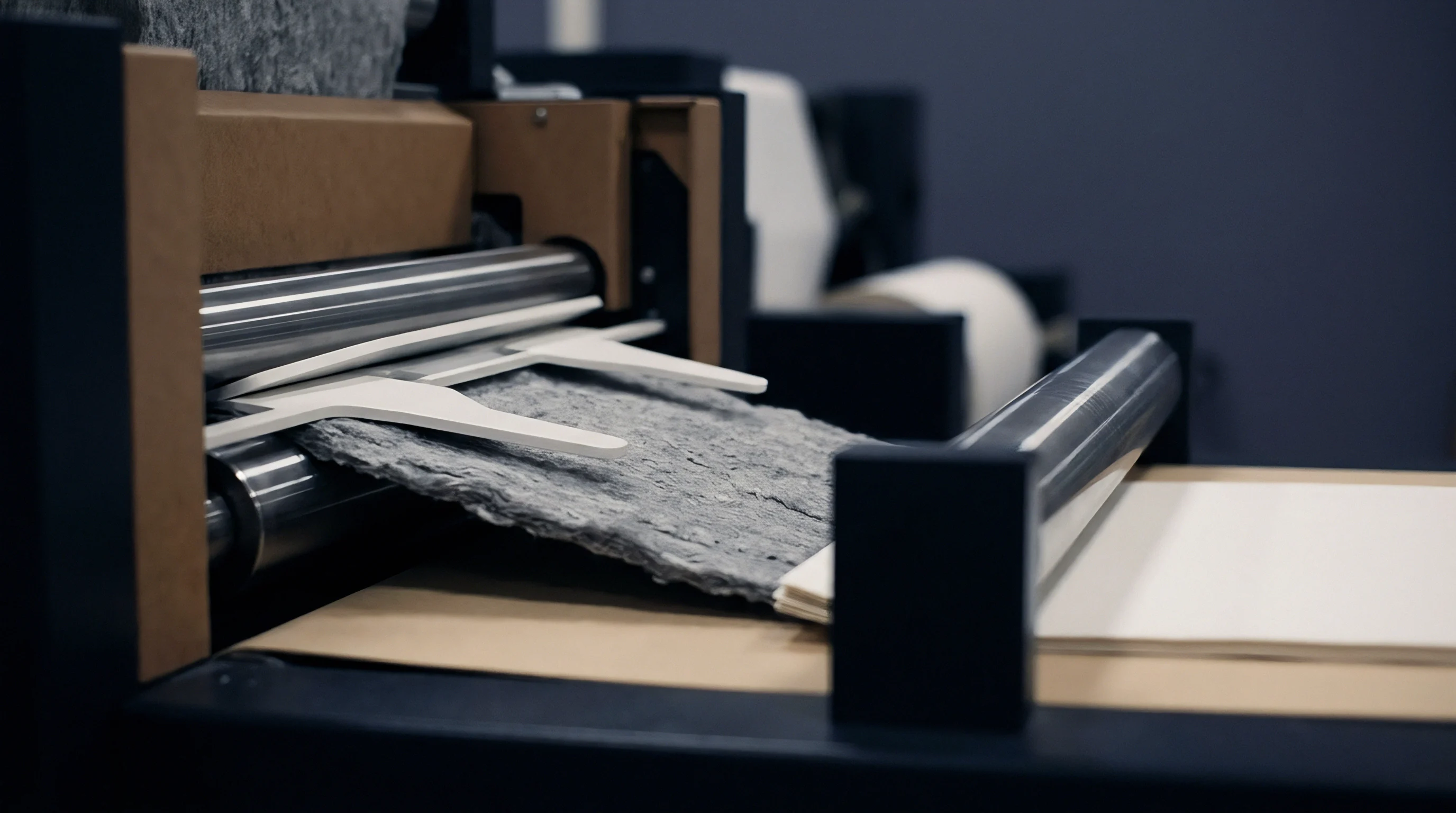
Ply cohesion in multi-ply paperboard machines originates from wet-end fiber entanglement and chemical hydrogen bonding augmented by interply starch application. Cylinder formers and multi-fourdrinier machines lay down successive plies of pulp slurry at consistencies between 0.4 and 1.2 percent. As water drains through forming wires, fibers settle horizontally, leaving very few fibers oriented in the Z-direction.
The mechanical bond between adjacent plies relies entirely on fiber-to-fiber contacts formed during wet pressing and drying. Fiber length drops with every cycle. Recycled fibers gathered from old corrugated containers and mixed papers suffer from hornification, a permanent loss of fiber swelling and conformability induced by previous drying operations.
Hornified fibers possess limited external surface area and low fibrillation levels, restricting natural hydrogen bond formation between plies.
Papermills introduce functional chemicals to compensate for hornified recycled furnish deficiencies. Wet-end cationic starches added to the approach flow increase internal fiber bonding, yet the primary tool for interply cohesion remains spray starch applied directly between plies prior to press nips. Spray bars mounted across the forming section mist an aqueous suspension of uncooked native corn, wheat, or tapioca starch granules onto the wet web surfaces.
The starch slurry enters the press section in an ungelatinized state. As the consolidated board passes through steam-heated drying cylinders, sheet temperature rises beyond 70 °C, initiating starch gelatinization. Starch granules swell, burst, and flow into the microscopic voids between plies, forming continuous cross-linked polymer networks upon drying.
A spray starch application below 2.5 g/m² between recycled core plies leaves the board vulnerable to shear fracture during mechanical scoring.
Application volume, chemical modification, and thermal profile dictate the structural success of spray starch. Under-application produces starved bond lines with insufficient adhesive mass to span the interply gap. Over-application creates a glassy, brittle boundary layer that fractures cleanly under dynamic impact loading.
Starch migration leaves core plies weak. If drying cylinder temperatures climb too rapidly at the wet end of the dryer train, starch gelatinizes prematurely before moisture gradients equalize, trapping water within the sheet core and blistering the web. Conversely, slow drying fails to supply the activation energy necessary to burst crystalline starch granules, leaving unreacted grains that provide zero adhesion.
| Starch Type and Application Method | Application Rate (g/m² dry) | Furnish Blend (Core / Tops) | Mean Scott Bond (J/m²) | Bond Failure Distribution |
|---|---|---|---|---|
| Unmodified Native Corn (Interply Spray) | 1.8 to 2.2 | 100% Mixed Waste / Deinked Pulp | 115 to 130 | Cohesive failure within spray boundary |
| Cationic Corn Starch (Interply Spray) | 2.5 to 3.2 | 80% OCC, 20% News / Semi-Bleached Kraft | 155 to 180 | Fiber tear within adjacent recycled plies |
| Oxidized Tapioca Starch (Interply Spray) | 3.0 to 3.8 | 70% OCC, 30% Boxboard / Virgin Bleached | 175 to 205 | Uniform fiber extraction across sheet plane |
| Cationic Wet-End Starch (Mass Addition) | 8.0 to 12.0 kg/tonne | 100% Recycled Mixed Paper Plies | 120 to 140 | Internal core ply shear without liner detachment |
| Dual System: Spray Plus Wet-End Cationic | 3.0 g/m² spray + 6 kg/t wet | 90% OCC / Coated Chemical Tops | 190 to 230 | Deep substrate rupture beyond print nip threshold |
Fines retention plays an equally critical role in bond energy development. Recycled paperboard pulps contain fines fractions between twenty and thirty-five percent by weight. Fines consume cationic retention aids aggressively, leaving less chemical polymer available to bridge large fibers.
If retention chemicals fail to anchor fines within individual plies, loose colloidal particles drift to the interply boundary during drainage. This creates an unbonded layer of dead silt that blocks starch penetration and weakens physical bonding. Surface sizing cannot fix core weakness.
Size press starches penetrate only two to three plies deep from the exterior surfaces, doing nothing to strengthen internal filler plies separated by two hundred micrometers of recycled bulk.
The industry leaves unresolved the exact kinetic threshold where further chemical starch addition yields diminishing returns due to fiber-void saturation at the ply interface.
Rule
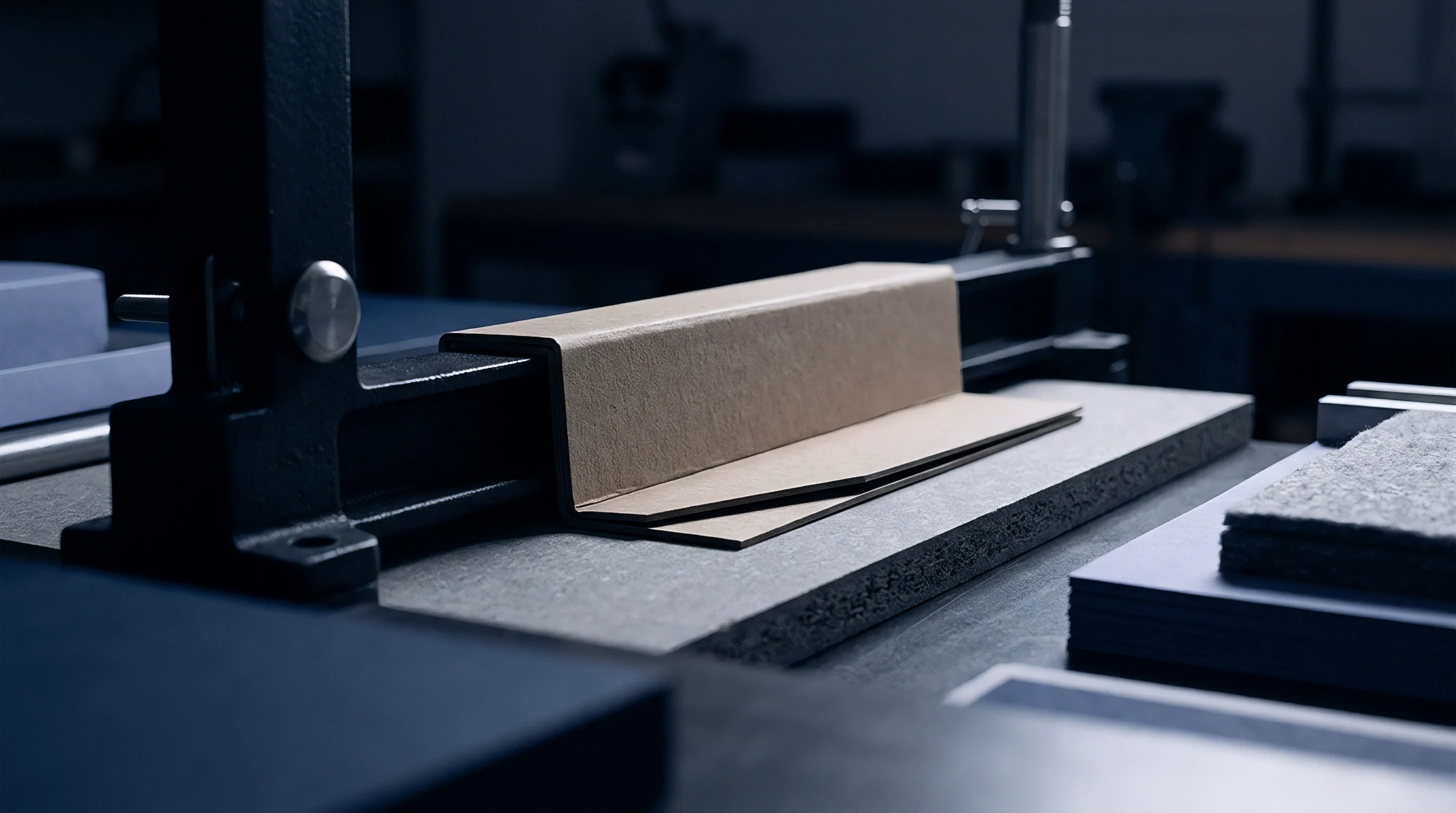
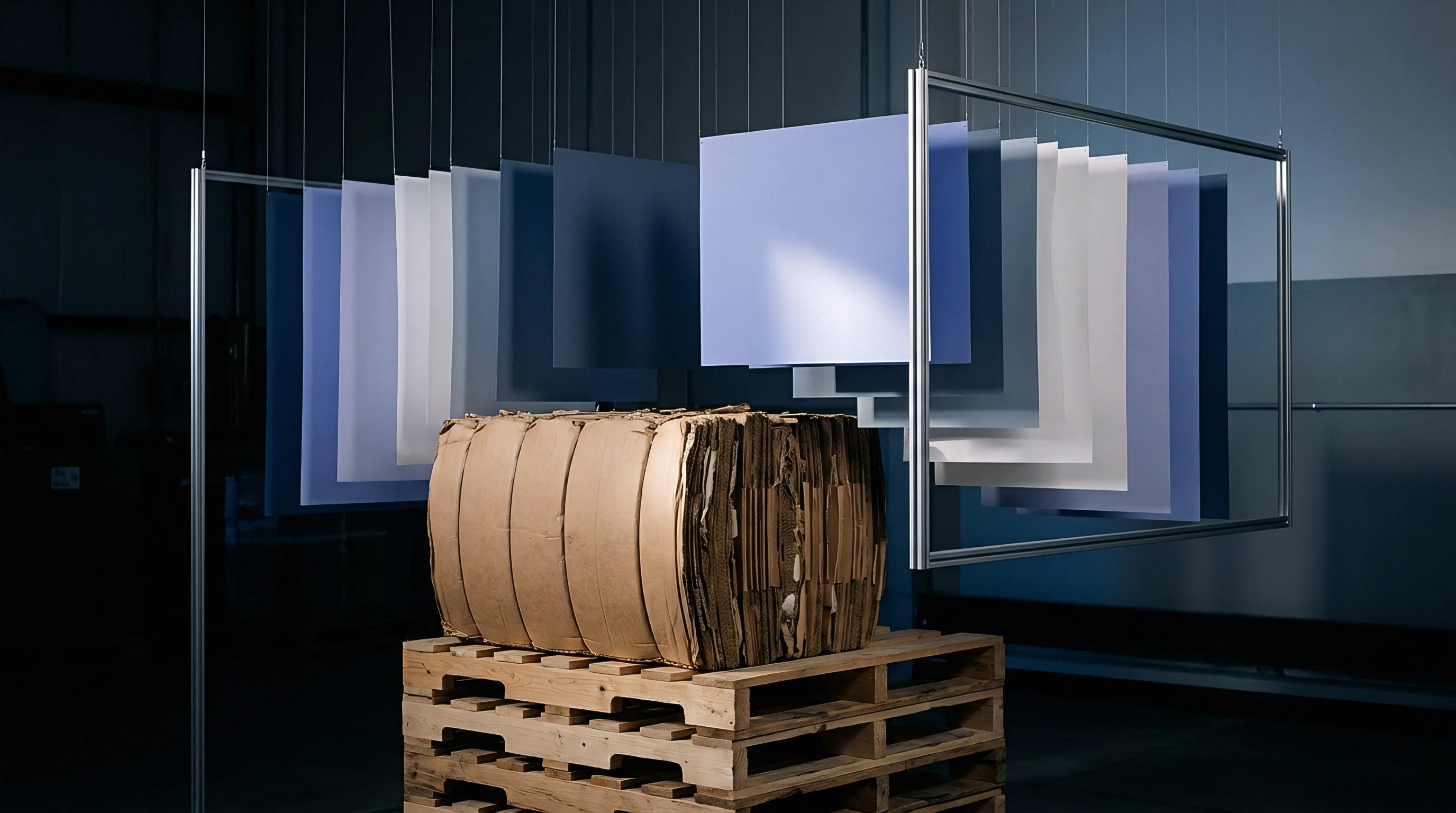
Die-cutting imposes the most complex three-dimensional deformation that recycled paperboard encounters during its converting lifecycle. In flatbed die-cutting, steel creasing rules strike the board against a counter-die or matrix channel. The creasing rule forces the board into the channel, stretching the outer liner in tension while compressing the inner plies in shear.
An ideal crease creates a controlled internal delamination across multiple ply boundaries without breaking the surface liners. The board structure must shear internally along predefined ply lines, allowing the sheet to hinge smoothly like a mechanical joint. If the interply bond energy is excessively high, exceeding 260 J/m², the plies refuse to delaminate, and the entire bending strain concentrates on the outer tension liner, resulting in cracked scores and split coatings.
Excessively low bond energy produces an equally destructive converting failure. When internal bond values drop below 130 J/m², the creasing rule pushes through the core plies without resistance, causing wide, uncontrolled internal separation that extends centimeters away from the crease center. The score loses its defined hinge point.
During carton erection on automatic cartoning lines, the wide delaminated zone folds into an irregular, bulbous curve instead of a crisp, ninety-degree angle. The folding resistance increases, causing packaging machines to fault and shut down. The adhesive creates immense peel tension.
When side seams are glued, spring-back force from poorly formed creases pulls the freshly joined flap apart before the hot-melt or cold PVA adhesive cures.
What Die Clearance Prevents Internal Separation?
Tooling geometry must calibrate directly to board caliper and measured internal bond strength. Die-makers select creasing rule thickness, rule profile, and matrix channel width using empirical formulas based on caliper thickness. For a 450 µm recycled board, standard practice specifies a two-point creasing rule (0.71 mm thickness) and a matrix channel depth equal to the board caliper.
The channel width calculates as the rule thickness plus 1.5 to 1.7 times the board thickness. If a mill ships a replacement lot exhibiting a twenty percent reduction in Scott bond energy, this standard matrix geometry produces severe delamination. The matrix channel width must widen, or the rule height must back off by 0.05 mm to prevent complete internal fracture.
| Rule Thickness (Point / mm) | Matrix Channel Width (mm) | Matrix Channel Depth (mm) | Critical Scott Bond Window (J/m²) | Creasing Performance Outcome |
|---|---|---|---|---|
| 1.5 pt (0.53 mm) | 1.10 mm | 0.40 mm | 150 to 200 | Narrow hinge, clean fold, zero liner fracture |
| 2.0 pt (0.71 mm) | 1.30 mm | 0.40 mm | 135 to 180 | Standard production profile, broad operating tolerance |
| 2.0 pt (0.71 mm) | 1.10 mm | 0.40 mm | 170 to 220 | High shear stress, liner cracking on weak plies |
| 3.0 pt (1.05 mm) | 1.70 mm | 0.45 mm | 120 to 150 | Wide internal split, pillowed fold, poor rigidity |
| 2.0 pt (0.71 mm) | 1.50 mm | 0.35 mm | 140 to 190 | Shallow crease, excessive opening force on erecting line |
Maintaining converting windows across variable recycled board deliveries involves specific operational checks:
- Caliper and moisture verification across roll profiles confirms that incoming stock falls within specified dimensional tolerances before dies are hung on the platen.
- Counter-die matrix calibration matches channel dimensions to incoming lot bond strength rather than relying on nominal caliper markings on roll wrapper labels.
- Crease stiffness evaluation using a L&W Crease Tester measures bending moments at ninety degrees to verify that folding resistance stays within line limits.
- Adhesive open time adjustment ensures that PVA glues penetrate sufficiently into top and back plies before pressure belts release the folded carton seams.
High humidity softens interply hydrogen bonds. Paperboard stored in unconditioned converting plants absorbs ambient water vapor, causing moisture content to climb from seven percent to ten percent within days. The water acts as an internal plasticizer, lowering the energy required to shear plies apart.
Under these conditions, a board specified with marginal bond strength fails completely on die-cutting platens, tearing along female matrix edges. Crease lines that bend clean in dry winter conditions fracture when summer humidity swells the sheet.
Settlement
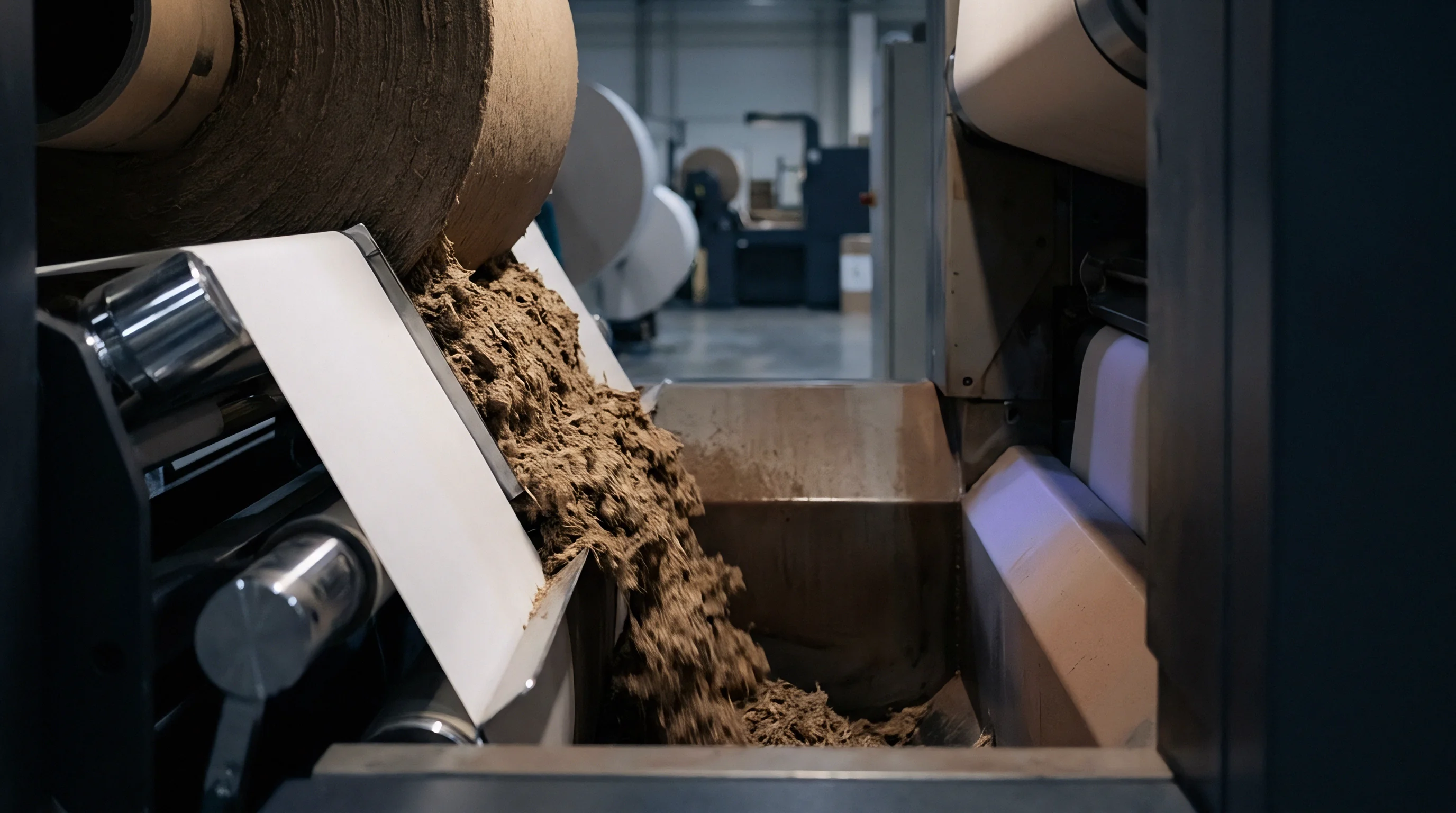
Delamination disputes between packaging converters and recycled paperboard mills center on testing methodologies and warehouse conditioning history. Mill test reports invariably show passing figures, typically presenting Scott bond numbers derived from pristine reel ends tested immediately off the winder. These reel-end samples reflect optimal paper machine operating parameters: balanced moisture profiles, fresh surface starch, and zero transit vibration.
When pallets arrive at the converter, core damage, atmospheric exposure, and moisture migration have altered board performance. Goods-in testing catches weak board batches. A lot certifying at 160 J/m² on the mill certificate can test at 125 J/m² when pulled from a cold warehouse dock, leading to rejected jobs and stalled printing presses.
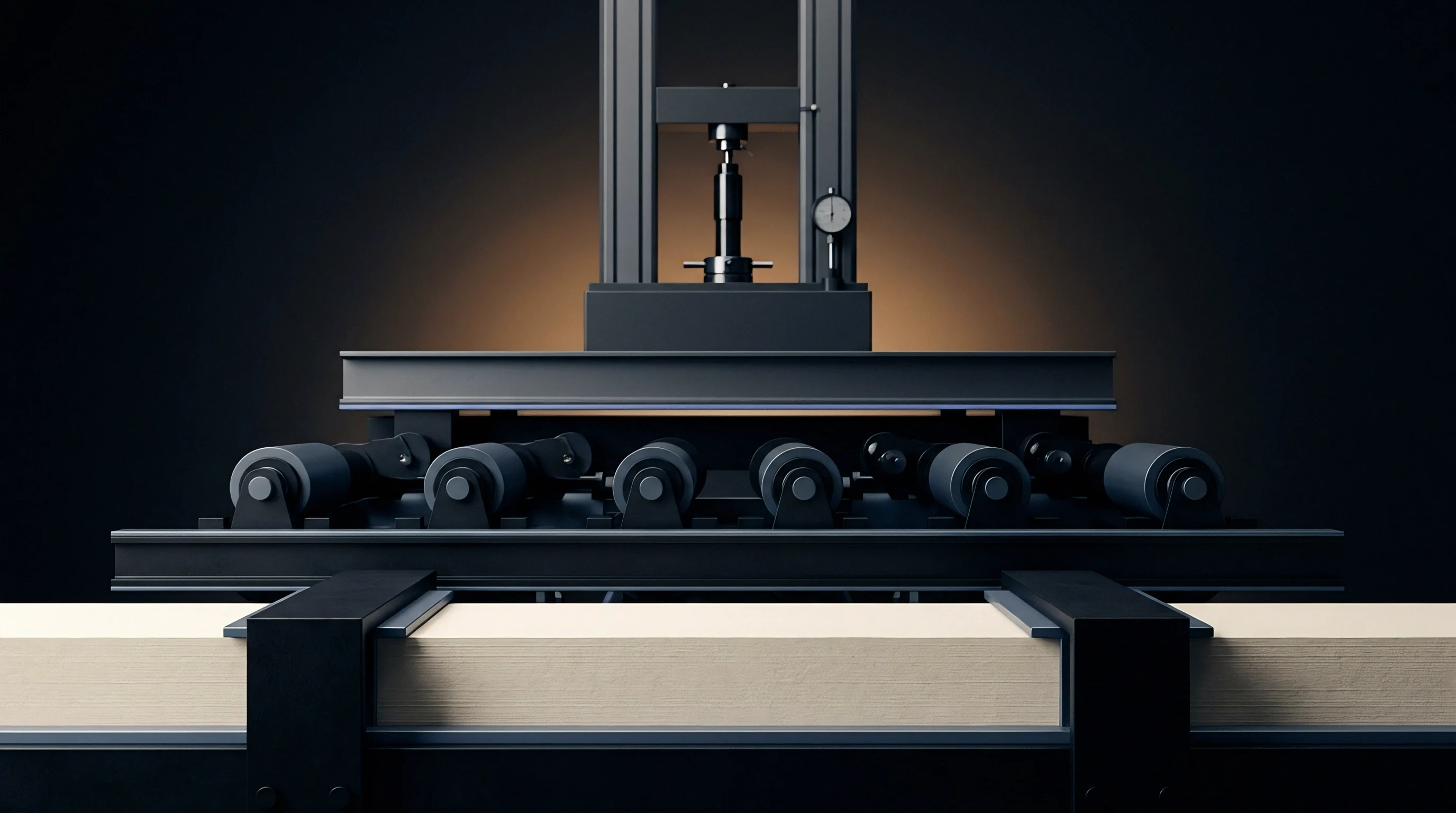
The standard verification workflow demands ten test specimens cut across the entire web width, eliminating edge-effect skew. Testing according to TAPPI T 569 requires sandwiching the board specimen between double-sided adhesive tape and aluminum angle blocks, followed by compression under a calibrated pressure clamp at 1.0 to 1.4 MPa for three seconds. The pendulum swings, striking the angle block and measuring the total energy absorbed in splitting the sheet.
A critical error occurs when converters fail to inspect the tape-to-board interface. If the adhesive tape pulls away from the coating surface rather than splitting the fiber plies internally, the instrument records an erroneously high value. True internal bond evaluation requires one hundred percent fiber tear across the exposed test area.
A contract specification must designate ISO 16260 testing at twenty-three degrees and fifty percent relative humidity as the sole binding benchmark for lot acceptance.
The economic stakes of interply bond failures dictate formal contractual protections. A typical print-and-converting facility running twenty million folding cartons per month processes twelve hundred tonnes of recycled boxboard. If a three-hundred-tonne delivery runs with low bond strength, the direct financial exposure spans machine downtime, ruined ink and coating supplies, damaged cutting dies, and commercial penalties for late carton delivery to food or pharmaceutical filling plants.
Converters cannot rely on broad commercial warranties. Purchase contracts establish explicit technical clauses detailing acceptable Scott bond ranges, minimum floor values per pallet, and the specific standardized test apparatus recognized for dispute resolution.
Commercial contracts resolve delamination claims through a standard clause stating that any board lot yielding three consecutive test specimens below 135 J/m² under ISO 187 conditioning warrants immediate rejection at the mill’s expense, covering freight and converted waste scrap.