Optimizing Triple Ply Folding Boxboard Layer Stiffness Architecture
Optimizing triple ply folding boxboard stiffness requires maximizing middle layer bulk using BCTMP while placing high elastic modulus chemical pulp in outer skins.

Beam
Composite paperboard achieves flexural rigidity through spaced structural layers rather than uniform density. A triple-ply folding boxboard functions mechanically as an I-beam during bending loads. The outer skins withstand axial tension and compression forces, while the central core maintains structural separation between the outer faces and transfers internal shear stresses across the sheet thickness.
Calculating bending stiffness per unit width relies on integrating the elastic modulus profile across total caliper. High bending stiffness per unit grammage demands placing high elastic modulus furnish at maximum distance from the neutral axis while expanding the central core using low-density, high-bulk mechanical pulps.

Moment of Inertia and Layer Modulus Distribution
Flexural stiffness scales with the cube of sheet caliper when density remains constant across the cross section. Bending resistance calculations integrate elastic modulus values multiplied by the square of distance from the neutral midpoint. The top and back plies contribute disproportionately to total stiffness because their position lies at the geometric extremes of the sheet structure.
A thin outer layer with a high elastic modulus yields significant bending resistance gains without increasing total weight. Thickness governs bending resistance. Elastic modulus in outer skins drops rapidly when mills substitute mechanical pulps for fully bleached chemical softwood kraft.
Beating and refining softwood furnish increases fiber bonding, elevating tensile stiffness in outer layers to values exceeding 8.5 Gigapascals.
The middle layer performs a different mechanical duty. Modulus requirements in the central core remain modest because stress approaches zero at the geometric center of a symmetrical sheet. The middle ply requires high bulk and adequate z-direction compression resistance to maintain sheet thickness under converting loads.
Bleached Chemi-Thermo-Mechanical Pulp (BCTMP) supplies stiff, uncollapsed fibers that establish high specific volume, often exceeding 1.8 cubic centimeters per gram. Lowering middle-layer elastic modulus does not severely degrade total stiffness provided sheet caliper expands sufficiently to offset the modulus reduction.
Bending stiffness increases with the third power of total sheet thickness when conditioned according to ISO 187 at 23 degrees Celsius and 50 percent relative humidity.

Symmetric versus Asymmetric Triple Ply Construction
Placing identical bleached chemical skins on both sides places maximum tensile strength at equal distance from the neutral axis. Asymmetric designs alter this equilibrium. Coated folding boxboard grades typically place a heavy bleached chemical top layer under a mineral pigment coating, backed by a lighter bleached or unbleached chemical layer on the reverse.
The geometric neutral axis shifts toward the thicker or denser outer skin, altering internal stress distributions during 90-degree and 180-degree folding. Outer plies carry tensile load. When back layers lack sufficient tensile capacity, bending toward the top surface causes premature tension failures on the reverse side.
Evaluating bending moment balance prevents carton distortion, corner bowing, and feeding jams in high-speed cartoning machines.
| Substrate Grade | Total Caliper (µm) | Basis Weight (g/m²) | Outer Layer Modulus (GPa) | Middle Layer Modulus (GPa) | Taber Stiffness MD (mN·m) |
|---|---|---|---|---|---|
| Standard FBB (BCTMP Core) | 380 | 250 | 7.8 | 2.1 | 19.5 |
| High-Bulk FBB (High-Yield Core) | 420 | 250 | 8.2 | 1.6 | 24.8 |
| Solid Bleached Board (SBS) | 310 | 250 | 6.5 | 6.5 | 12.2 |
| White Lined Chipboard (WLC) | 380 | 280 | 4.2 | 1.8 | 11.8 |
Ignoring layer-specific elasticity ratios leads directly to performance failures on automated packaging lines. Inadequate core thickness allows outer skins to buckle inward under low compression loads, causing creased carton walls and compromised stacking strength in distribution environments.
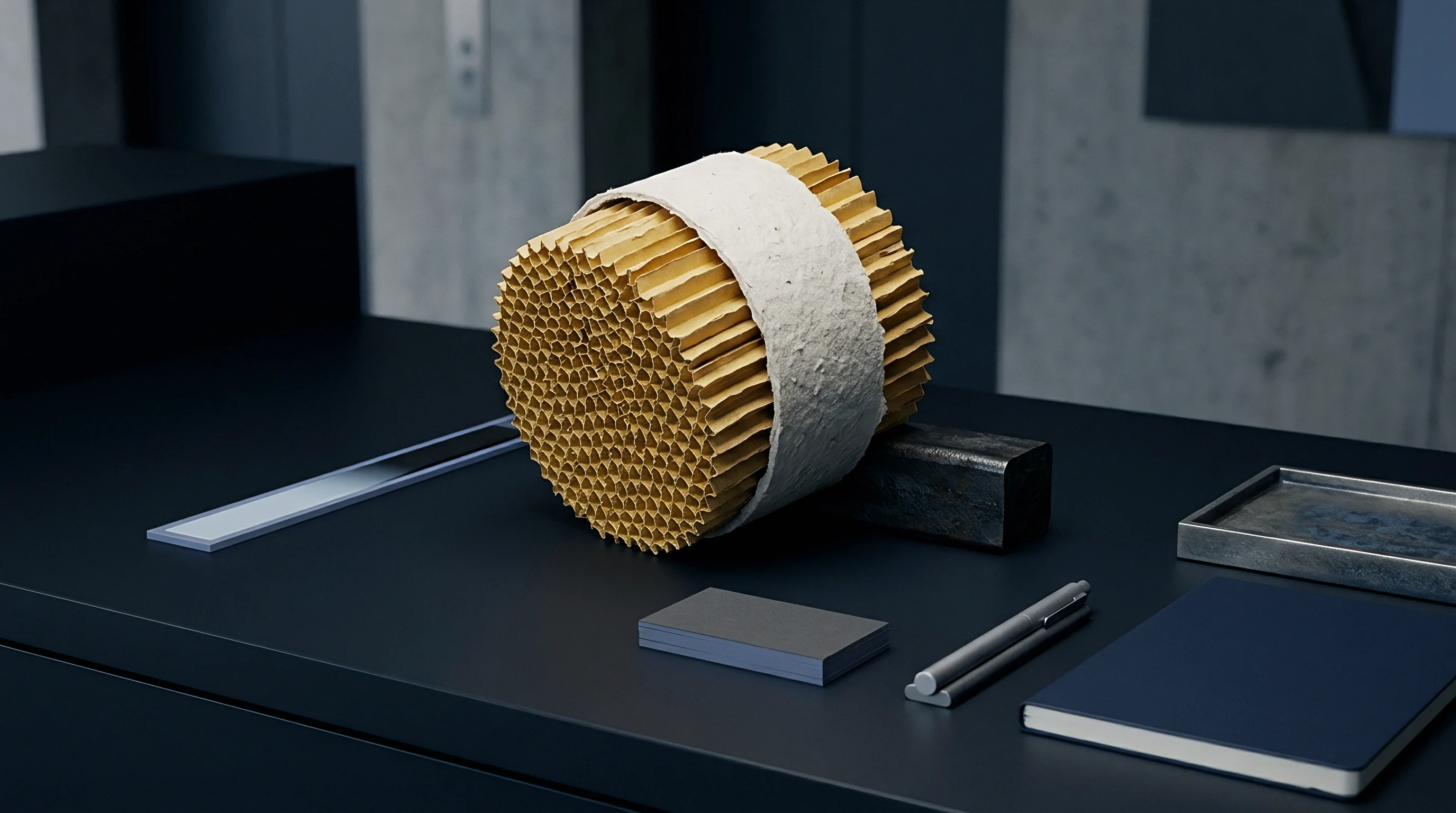
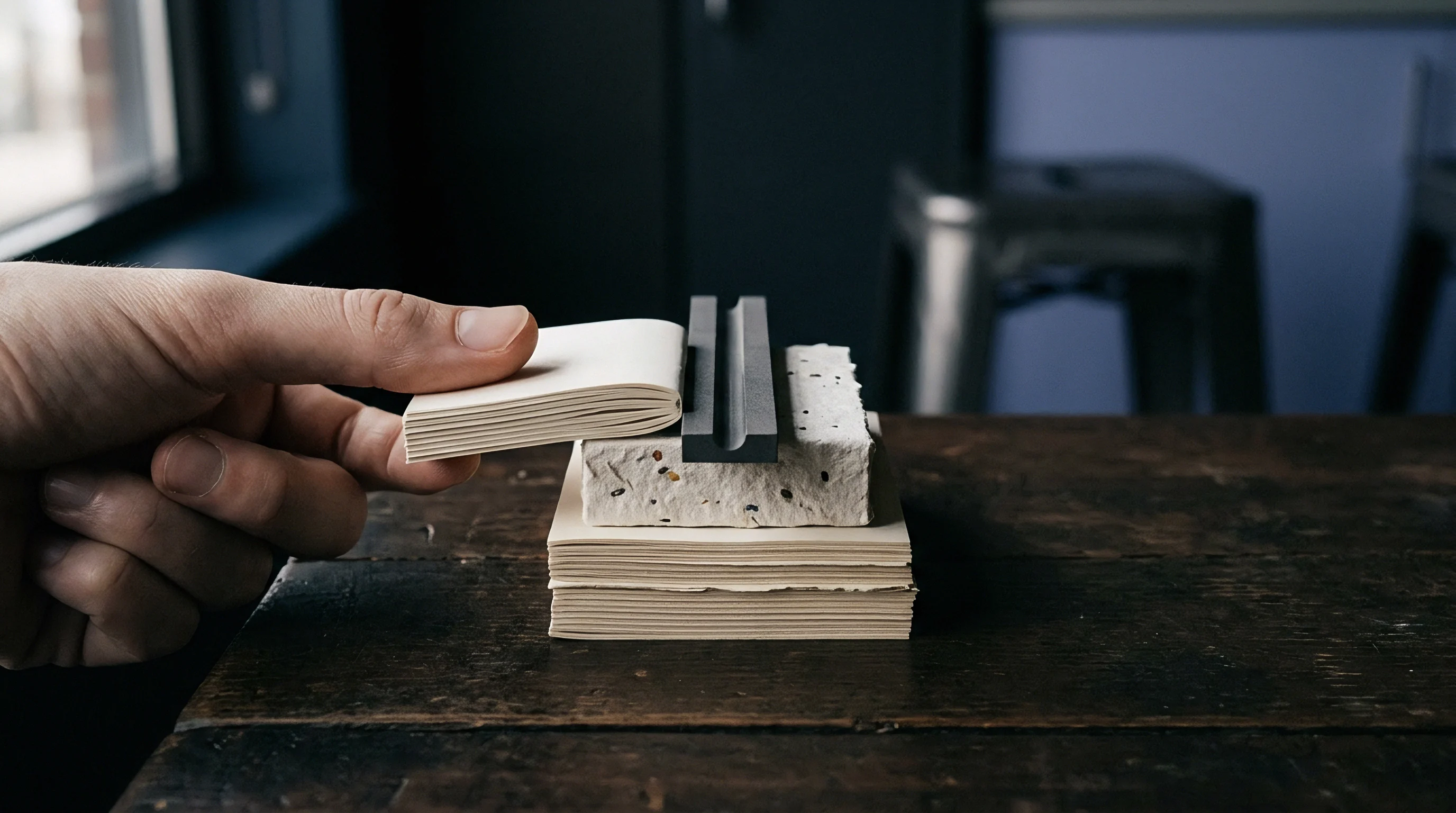
Pulp
Furnish selection dictates the elastic properties of each individual layer within a multi-ply sheet. The choice between chemical and mechanical pulps determines both bulk and fiber-to-fiber bond density. Bleached chemical softwood pulps provide long, flexible fibers that form dense networks with high tensile strength and elevated elastic modulus.
Chemical hardwood pulps add sheet formation uniformity and surface smoothness suitable for blade coating application. Mechanical pulps, including stone groundwood and chemi-thermo-mechanical pulp, preserve natural wood lignin, producing stiff, coarse fibers that resist consolidation during wet pressing and drying operations.

BCTMP Bulk Generation in Middle Core Layers
Mechanical wood processing preserves lignin, yielding stiff fibers that resist compression under low sheet density. High yield BCTMP furnish serves as the primary bulking engine for triple-ply folding boxboard. Chemical impregnation followed by pressurized steam refining softens lignin just enough to prevent excessive fiber shortening while preserving structural wall rigidity.
The resulting fibers remain stiff when wet, forming an open, porous web on the paper machine middle-wire unit. Bulk drives middle layer volume. High bulk allows the mill to generate sheet thickness using less dry fiber mass per unit area.
Increasing BCTMP content in the central layer from 50 percent to 80 percent increases total caliper by up to 15 percent at constant grammage, raising bending stiffness without increasing raw material weight.
Freeness control in mechanical pulping governs drainage speeds and core sheet density. Canadian Standard Freeness (CSF) values for middle-layer BCTMP typically range from 350 to 500 milliliters. Operating at higher freeness preserves fiber coarseness and bulk, though it reduces internal bonding capacity.
Adding wet-end starch or synthetic strength agents compensates for reduced fiber-to-fiber hydrogen bonding, preserving internal bond strength without collapsing the bulk-generating pore structure.

Chemical Skin Refining and Tensile Development
Softwood fibers beaten in disc refiners develop high inter-fiber bonding, maximizing outer surface stiffness. Chemical pulp layers require extensive refining to develop high elastic modulus. Beating softwood kraft fibers increases internal fibrillation and swelling, allowing fibers to flatten and form tight hydrogen bonds upon drying.
This consolidation raises density in the outer layers to values above 0.9 grams per cubic centimeter. The high density of outer layers is mechanically desirable because it concentrates mass at the extreme surfaces where bending stresses reach maximum values.
Delamination occurs when middle layer internal bond strength falls below 150 Joules per square meter under ISO 16260 testing specifications.
Refining must balance elastic modulus growth against drainage limits and tear strength degradation. Excessive refining shortens fibers, causing brittle outer plies that crack when scored or folded. Integrating hardwood chemical pulp into top layers improves formation and opacity, reducing surface roughness to optimize barrier coating and printing ink holdout.
- Shive Contamination unrefined bundles of mechanical wood fibers disrupt smooth layer consolidation, creating localized stress points that initiate surface cracking during scoring.
- Fines Accumulation excessive cell wall fragments slow wet-end drainage, forcing press rolls to apply higher mechanical pressure that crushes bulk out of the middle ply.
- Pulp Freeness Drift unmanaged fluctuations in drainage speed across the forming wire create basis weight variations that alter local bending stiffness profiles.
- Inadequate Sizing Agent poor hydrophobic sizing allows moisture penetration into the middle ply, weakening hydrogen bonds and reducing structural stiffness in humid storage environments.
Mill technical sales representatives often explain away edge cracking on converted cartons by claiming that high stiffness board inherently lacks score line flexibility.
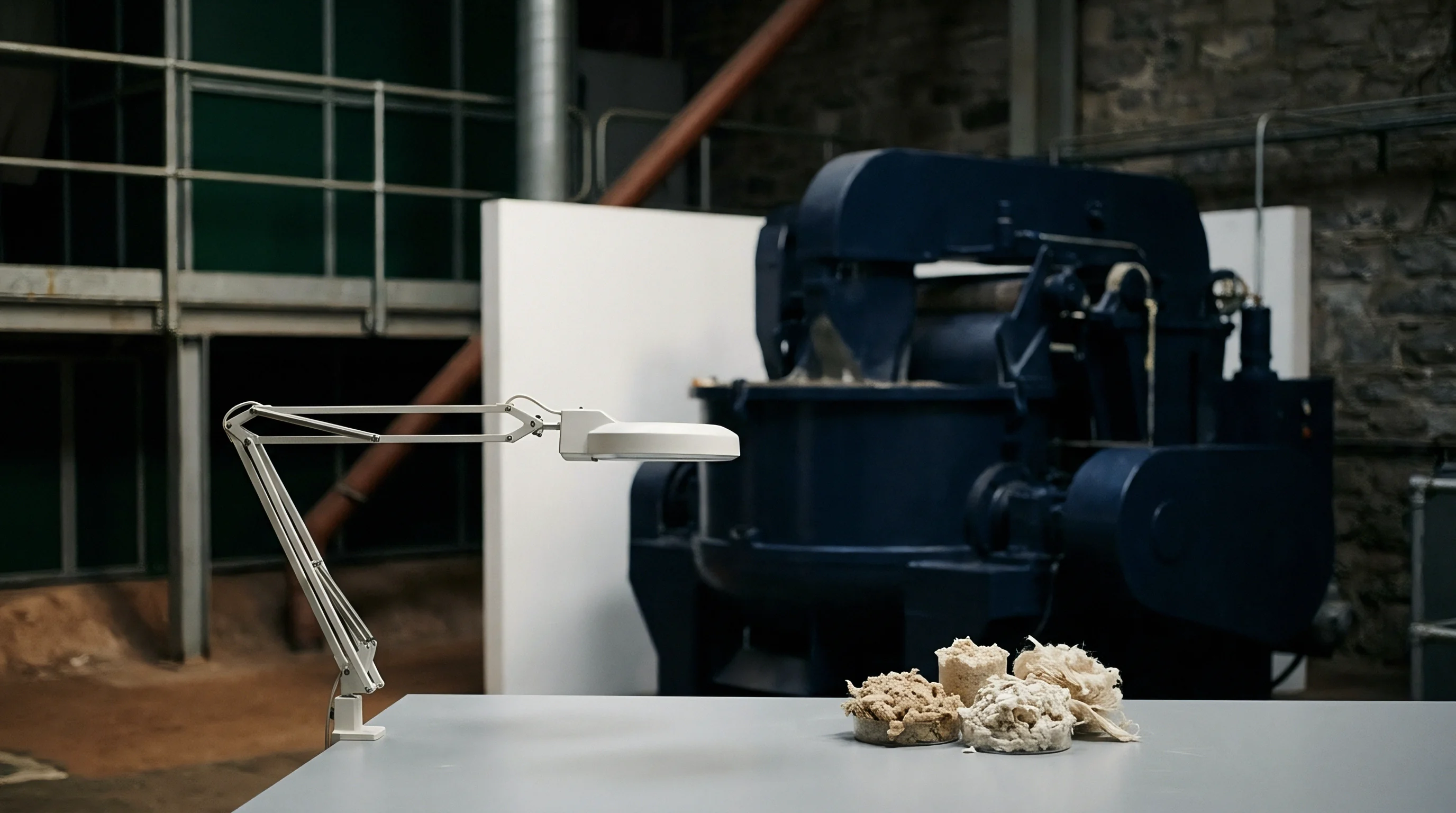

Fold
Converting paperboard into rigid cartons demands controlled shear fracture along designated score lines. Bending stiffness resists deformation during package forming, but high stiffness makes the board resistant to neat 90-degree corner formation. Creasing tools apply localized impression forces that intentionally break internal bonds within the central mechanical pulp core.
This controlled internal delamination reduces bending stiffness along the score line while preserving the continuous tensile strength of outer chemical layers. The board must delaminate internally in a narrow zone without tearing top or back surfaces.

Which Elastic Ratio Prevents Score Line Delamination?
Maintaining an outer skin to middle core elasticity proportion between 2.5 and 3.2 stops cracking during acute angle bending. When outer chemical skins exhibit excessively high modulus relative to core internal shear strength, creasing forces shear the core completely before outer fibers yield, causing loose, floppy score lines. Conversely, when the core possesses excessive bonding strength, the sheet resists internal shear, forcing outer chemical plies to stretch beyond their ultimate elongation limit and snap.
Freeness drops with mechanical shear. Optimizing internal shear strength measured by Scott Bond testing according to ISO 16260 ensures predictable score formation. Target Scott Bond values for folding boxboard typically sit between 130 and 180 Joules per square meter.
Creasing matrix geometry must adjust precisely to total board thickness and ply construction. Female channel width and male creasing rule thickness dictate the degree of internal ply separation. Shear failure splits middle plies.
Proper score line preparation drops local bending resistance at the crease line by 60 to 80 percent relative to uncreased board, enabling smooth high-speed folding without box panel distortion.
Deep crease channel depth prevents liner cracking on heavy folding boxboard grades.
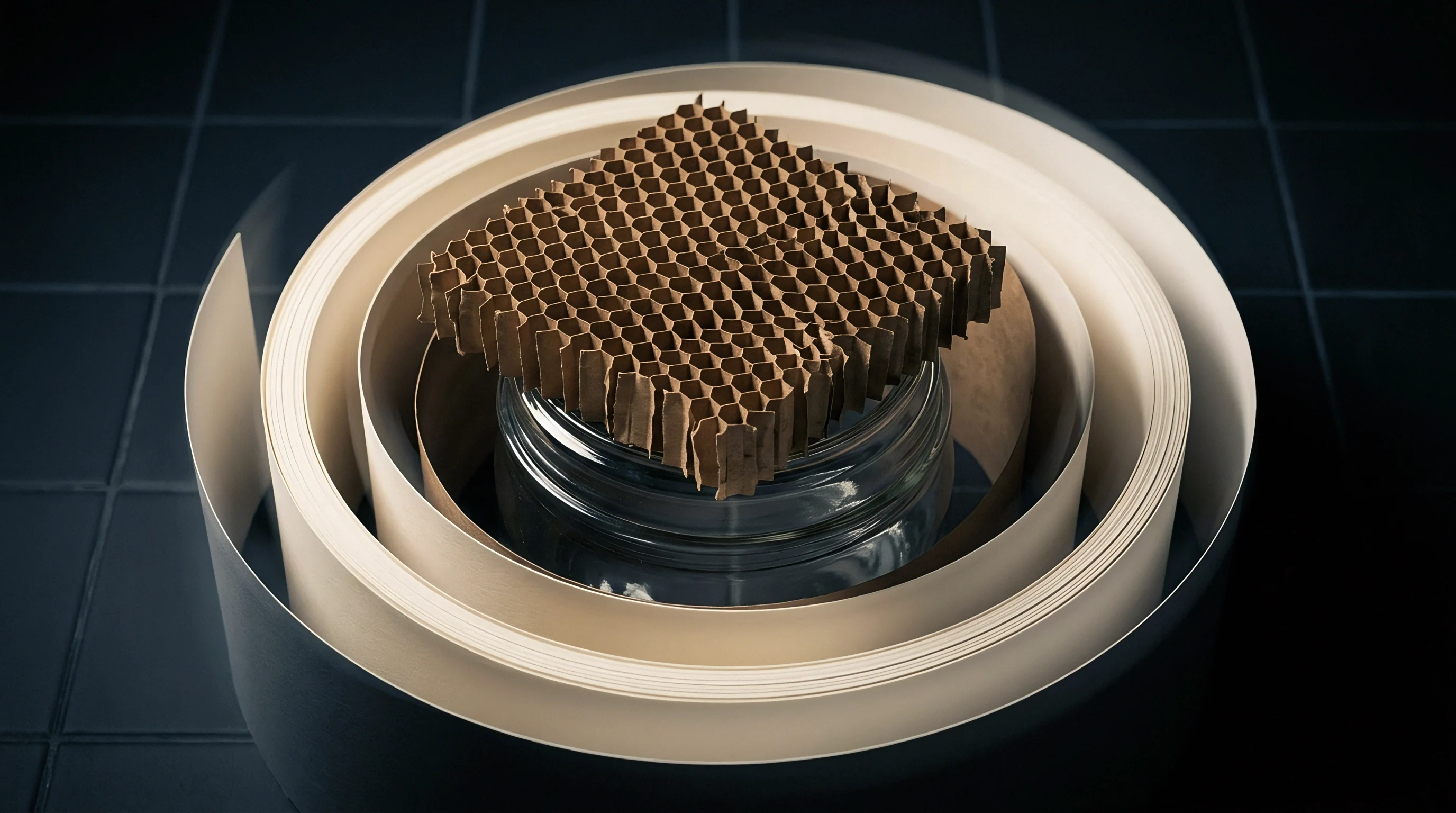
Shear Stress Transmission in Matrix Scoring
Rule impact forces the middle layer to yield internally while outer plies maintain tensile continuity. During penetration of the creasing rule into the sheet, high shear stresses concentrate in the central BCTMP layer. Low shear modulus in the core allows adjacent plies to slide past one another, forming multiple internal micro-delaminations rather than a single catastrophic fracture plane.
Stiff sheets resist box bulging. This multi-ply shear mechanism acts as a mechanical relief valve, dissipating deformation energy safely within the sheet core.
- Inspect the female matrix width and channel depth against total board caliper using precision feeler gauges.
- Align the steel creasing rule directly over the centerline of the impression channel to eliminate asymmetric shear stress.
- Apply progressive clamping force until the middle layer achieves uniform internal delamination without rupture of the outer bleached skin.
- Measure the fold resistance force at a 90-degree angle using an automated crease stiffness tester set to standard operating speed.
The exact balance between high dynamic bending stiffness across flat panels and low residual stiffness at creased corners remains difficult to stabilize across fluctuating ambient relative humidity levels during seasonal transit shifts.

Gage
Laboratory measurement of bending resistance provides the primary baseline for board specification compliance. Test instruments measure the force required to deflect a standardized sample strip through a defined angle over a set distance. Test results vary depending on testing geometry, deflection angle, and sample width.
Bending stiffness measured in Newton meters differs mathematically from bending resistance measured in Millinewtons. Converting between Taber units, L&W bending resistance, and geometric stiffness requires rigorous application of physical deflection formulas under specific conditioning environments.
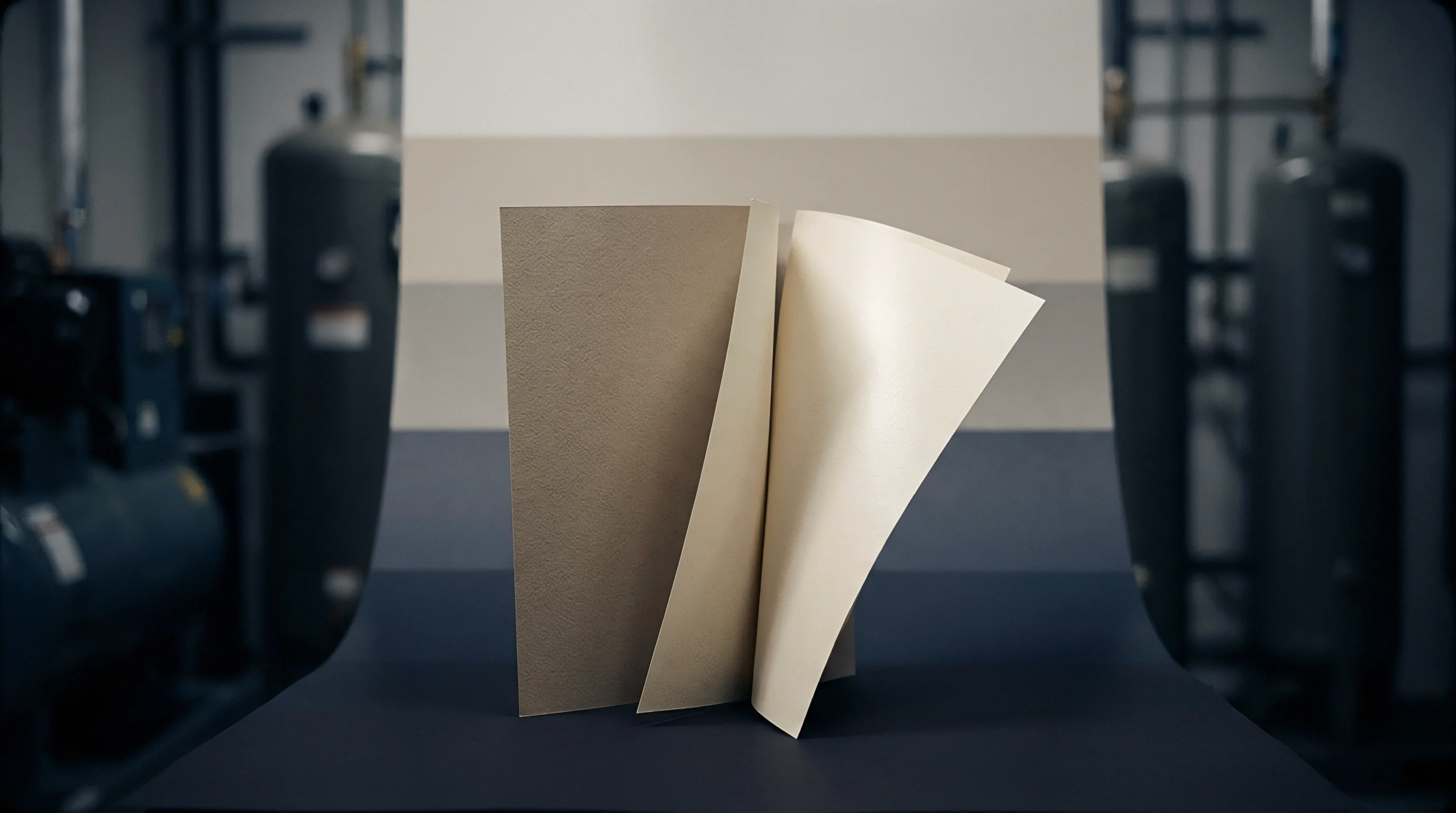
Bending Resistance ISO 2493 versus Taber 15 Degree
Two distinct testing geometries dominate commercial mill certificates across international trade routes. ISO 2493-1 specifies a 15-degree bending angle applied to a 50-millimeter gauge length, measuring force in Millinewtons. The classic Taber method according to TAPPI T489 or ISO 2493-2 utilizes a 15-degree deflection over a 50-millimeter load length, expressing results in Taber stiffness units or Millinewton meters.
Calibration drifts without standard foils. At a 15-degree angle, high-bulk triple-ply boards may experience initial internal shear yielding, causing non-linear load responses. ISO 2493-1 also accommodates a 5-degree test angle over a 50-millimeter length, which measures pure elastic deformation before internal ply breakdown occurs.
Moisture softens internal fibre bonds. Testing samples outside standard conditioning environments invalidates certified values. Paperboard absorbs water rapidly from humid air, causing BCTMP fibers to swell and soften.
A two percent increase in sheet moisture content reduces bending stiffness by up to 12 percent due to plasticization of lignin and hydrogen bond disruption within the central layer.
Cross direction stiffness values consistently run lower than machine direction values due to preferential fiber orientation on the forming wire.
Cross Direction Caliper Profiles and Sensor Calibration
Automated scanning heads across the paper machine web detect thickness variations prior to reel winding. Caliper profile drift causes jams. High-speed nuclear and optical sensors provide real-time feedback to induction heating units on calendar stacks, controlling local roll nip pressure to maintain cross-direction caliper uniformity within a plus or minus 2 percent tolerance band.
Cross-direction stiffness profiles mirror machine-direction fiber alignment. Because fibers align predominantly parallel to web travel during wet-end forming, machine-direction stiffness values typically exceed cross-direction values by a factor of 1.8 to 2.5.
- Clamping Pressure Calibration improper pneumatic clamp settings crush mechanical pulp fibers prior to testing, producing artificially low bending resistance readings on laboratory reports.
- Bending Angle Accuracy optical encoder drift in stiffness testers leads to inaccurate angular deflection, skewing modulus calculations across multi-ply samples.
- Atmospheric Conditioning Control failure to hold testing rooms at ISO 187 standards of 23 degrees Celsius and 50 percent relative humidity invalidates compliance audit records.
Under ISO 2493-1 quality specifications, delivered paperboard lots failing to meet minimum cross-direction bending resistance targets within a 95 percent confidence interval entitle packaging buyers to reject entire shipped pallets.
Yield
Commercial board purchasing relies on optimizing sheet area output per metric ton of raw material. Paperboard mills invoice tonnage, but box converters manufacture discrete packaging units. Selecting triple-ply folding boxboard engineered with high-bulk BCTMP middle layers enables significant grammage reductions while maintaining identical caliper and bending resistance compared to single-ply bleached board or dense recycled chipboard grades.
High density lowers bending moment. Replacing a dense 300 gram per square meter solid board with an engineered 260 gram per square meter high-bulk triple-ply board yields 15 percent more printable sheets per metric ton, directly lowering unit packaging costs.

Grammage Reductions through High Bulk Downgauging
Replacing dense middle plies with high-yield mechanical fibers allows board mills to lower total basis weight without sacrificing stiffness. Structural optimization focuses on maintaining required box top-to-bottom compression strength, known as BCT performance. Stacking capability correlates directly with cross-direction bending stiffness.
Downgauging grammage while holding caliper constant maintains bending resistance, ensuring filled cartons sustain vertical loads during warehouse pallet storage without panel bulges or structural collapse.
Yield gains offset higher pulp rates. Mechanical pulps cost less per tonne to manufacture than fully bleached chemical kraft pulps, though high-bulk FBB grades carry higher pricing premiums per metric ton due to specialized multi-wire machine assets. The commercial balance heavily favors high-bulk triple-ply constructions.
Calculating landed sheet costs reveals that higher per-ton substrate prices deliver lower finished unit box costs because sheet yield increases faster than the price premium per ton.
| Specification Parameter | Standard FBB (300 gsm) | High Bulk FBB (260 gsm) | Variance Impact |
|---|---|---|---|
| Basis Weight (g/m²) | 300 | 260 | -13.3% |
| Sheet Caliper (µm) | 450 | 450 | 0.0% |
| Cross Direction Stiffness (mN·m) | 14.2 | 14.0 | -1.4% |
| Total Sheets per 50 Tonne Order | 166,666 | 192,307 | +15.4% |
| Substrate Price per Metric Ton ($) | 1,200 | 1,310 | +9.1% |
| Landed Cost per 1,000 Sheets ($) | 360.00 | 340.60 | -5.4% |

Delivered Sheet Cost Calculations across Tonnage Breaks
Financial calculations evaluate unit box prices rather than raw metric ton purchase invoices. Freight calculations further accentuate yield advantages. Shipping lightweighted, high-bulk cartons reduces transport weight per unit, lowering freight expenditure and lowering carbon footprint duties under regional EPR packaging waste regulations.
Low stiffness causes packer stops. Fibre length dictates tear strength. Evaluating triple-ply board architecture on total cost per thousand converted packages establishes a clear commercial advantage for high-bulk, stiffness-optimized multi-ply structures across automated consumer packaging applications.