Corrugated Compressive Creep under Cyclic Humidity
Cyclic humidity accelerates corrugated creep collapse; structural compliance demands dynamic safety factors above 3.5 for recycled linerboards.
Kinetics
Compression failure in paperboard container structures under changing atmospheric moisture stems from sorption-induced mechanical degradation. When relative humidity fluctuates, paperboard does not merely reach a static moisture balance; it experiences transient moisture transport that disrupts internal load-bearing pathways. Water acts as a plasticizer.
As water molecules enter and leave the cellulosic network, hydroxyl groups on cellulose and hemicellulose chains continuously make and break hydrogen bonds. Under a constant compressive force, this physical activity allows micro-scale slips between adjacent fibers. The structural response is a rapid, non-linear deformation known as mechano-sorptive creep.
Static environments present a completely different physical regime. A corrugated box subjected to constant ninety percent relative humidity at a stable room temperature absorbs water until reaching equilibrium, typically around eighteen to twenty percent moisture content by weight. The initial compression strength drops, but the rate of ongoing deformation stabilizes quickly.
In contrast, cycling the environment between fifty percent and ninety percent relative humidity causes continuous moisture gradients across the thickness of the containerboard. Swelling strains break secondary bonds. The moisture absorption phase induces swelling, while the desorption phase causes shrinkage.
These dimensional shifts, occurring while the material is under dead-weight compression, force the fiber network to yield incrementally with every humidity swing.
Hydrogen Bond Disruption under Transient Moisture
Fiber network stiffness degrades when water molecules penetrate the hemicellulose matrix during absorption cycles. In dry paper, intrachain and interchain hydrogen bonding provides structural resistance to axial compression. As ambient moisture rises, free water clusters around accessible hydroxyl sites on amorphous cellulose regions.
This hydration process increases molecular mobility. Cellulose fibers swell when wet. The expansion occurs predominantly in the transverse direction of the fiber, while axial length remains stable.
This anisotropic expansion generates localized shear stresses at fiber-fiber joints within the sheet.
Desorption cycles introduce an opposing stress state. As moisture evaporates into drier ambient air, the matrix contracts. Cellulose fibers contract laterally.
However, because the structural load remains applied continuously to the box walls, the fiber network cannot recover its original geometry during drying. Instead, hydrogen bonds reform in newly deformed positions. Each complete humidity cycle locks in permanent plastic strain.
Over multiple cycles, cumulative plastic strain reduces the flexural rigidity of the containerboard panels, driving the structure toward instability well below its nominal static crush threshold.
Relative humidity cycling between fifty percent and ninety percent accelerates paperboard deformation rates by a factor of four compared to constant ninety percent relative humidity.

Mechano-Sorptive Creep versus Static Isothermal Creep
Structural deformation under constant load proceeds at a predictable rate when ambient relative humidity remains fixed. Classical viscoelastic creep models describe this process using viscoelastic compliance functions, where strain accumulates logarithmically over time. Static compression tests miss creep mechanics.
In static isothermal conditions, paperboard exhibits primary creep, where strain rate decelerates, followed by a prolonged secondary creep phase characterized by a low, constant deformation rate.
Atmospheric variation destroys secondary creep stability. During humidity transitions, the deformation rate spikes sharply, creating a step-change in total strain during both sorption and desorption legs of the cycle. This enhanced strain rate cannot be calculated by superimposing static creep data measured at high and low humidity levels.
The interaction between mechanical stress and moisture flux creates a synergistic degradation mechanism. The magnitude of mechano-sorptive strain depends directly on the total moisture turnover, defined as the cumulative change in moisture content across all cycles, and the applied compressive stress level relative to initial short-term strength.
Mills frequently claim that laboratory static compression values guarantee stack performance regardless of ambient warehouse humidity swings.
Flute
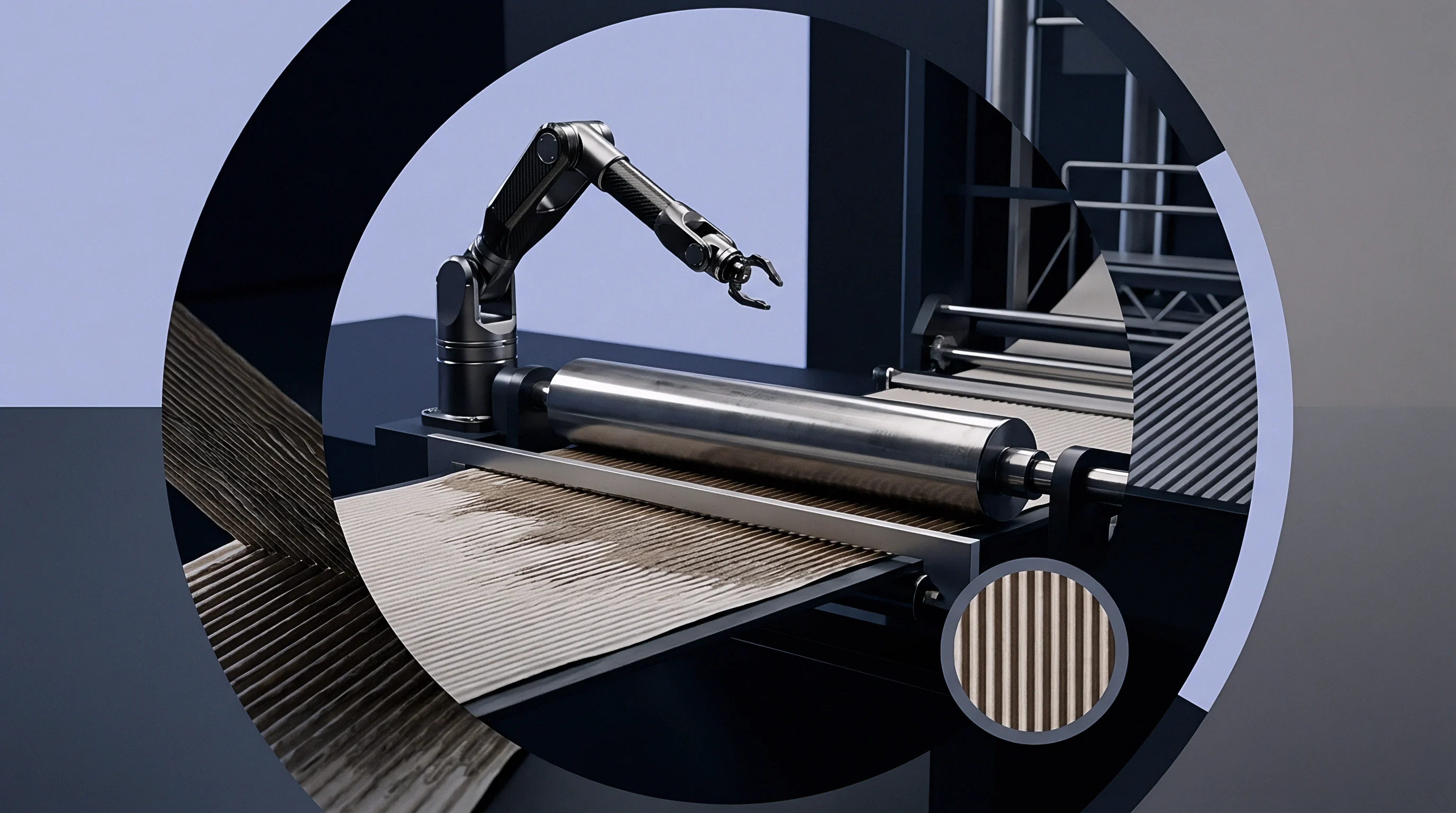
Architectural arrangement within combined paperboard determines how compressive load redistributes across the container wall. The fluted medium serves as a continuous structural bridge that maintains spacing between the inner and outer linerboards while resisting shear forces. Under vertical compression, the container panel acts as a slender plate subject to global and local buckling.
When moisture cycles through the board, the stiffness ratio between the flat linerboards and the arched medium shifts, altering the neutral axis of the combined construction and encouraging localized structural failure.
Linerboard grammage and fiber furnish composition dictate structural retention. Containerboard produced from unbleached virgin softwood kraftliner retains higher wet stiffness than recycled testliner. Softwood fibers maintain longer average fiber length and higher intrinsic tensile strength, providing superior resistance to web micro-buckling during humidity spikes.
Recycled fibers undergo hornification during repeated repulping and drying cycles. Hornification stiffens the fiber wall, reduces water retention values, and impairs hydrogen bonding capacity during subsequent wetting cycles. Recycled pulp fibers degrade faster.
Consequently, recycled linerboards exhibit pronounced loss of flexural stiffness during moisture absorption phases.

Profile Geometry and Web Load Distribution
Large arch dimensions like A-wave structures provide superior initial top-to-bottom compression strength under standard laboratory conditions due to increased overall caliper and high moment of inertia. However, taller flute structures feature longer unbraced spans of linerboard between flute tips. During moisture absorption, linerboard flexural modulus decreases, causing the unsupported liner spans to bulge outward under vertical load.
Heavy linerboard resists sidewall shear. B-flute constructions feature shorter flute heights and closer flute tip spacing, which provides continuous support to the facing liners, reducing localized panel bowing even though initial static compression strength is lower than A or C-flute options.
Double-wall combinations optimize compressive survival under fluctuating conditions. Combining a coarse flute profile with a fine flute profile distributes vertical stress while providing high bending resistance. The intermediate linerboard in a double-wall matrix functions as a central load-bearing column that stabilizes both fluted mediums.
When ambient humidity rises, the outer liner absorbs moisture first, creating an asymmetric moisture gradient across the wall thickness. The inner structural layers temporarily carry a higher proportion of the vertical load, delaying the onset of gross side-wall failure.
Furnish Selection and Fiber Hornification Effects
Secondary pulp streams contain shortened cellulose chains that absorb water rapidly during atmospheric humidity transitions. Recycled testliner sheets rely heavily on starch additions and surface sizing agents to achieve target burst and ring crush values. While surface treatments enhance dry strength, they offer limited protection against moisture vapor penetration under prolonged cycling.
Once water breaks through the surface sizing layer, the underlying recycled fiber matrix swells rapidly, causing inter-ply delamination within multi-ply testliner grades.
Virgin linerboards utilize intact lignin-cellulose matrices that resist moisture-induced plasticization more effectively. Chemical pulping preserves native cellulose orientation, enabling virgin kraftliner to sustain higher critical buckling loads when environmental relative humidity exceeds eighty percent. Specifying semi-chemical hardwood pulp for the fluted medium further enhances fatigue life under moisture cycling.
Semi-chemical hardwood medium maintains stiff, resilient flute arches that prevent cross-directional crush, ensuring the outer liners remain fixed at their design spacing throughout transit cycles.
- Creep buckling occurs when sidewall panels bow laterally under continuous static load as transient moisture reduces board flexural stiffness.
- Delamination of flute tips happens when adhesive bonds at the flute crest fail due to differential hygrometric expansion between medium and linerboard.
- Facial liner rolling takes place when unsupported linerboard spans between flute tips wave outward, inducing stress concentrations at vertical box corners.
- Corner post creasing develops when localized compressive stress exceeds the yield point of wet paperboard at the vertical creases, causing catastrophic stack tipping.
| Board Combination | Linerboard Furnish | Initial ECT (kN/m) | Retained ECT after 50 Cycles (%) | Failure Mode |
|---|---|---|---|---|
| Single Wall C-Flute (200 Kraft / 127 Medium / 200 Kraft) | 100% Virgin Softwood Kraft | 7.8 | 68 | Gradual panel bowing |
| Single Wall C-Flute (200 Test / 127 Recycled / 200 Test) | 100% Recycled Fiber | 6.2 | 41 | Flute shear & liner delamination |
| Double Wall BC-Flute (175 Kraft / 127 Medium / 150 Test / 127 Medium / 175 Kraft) | Mixed Virgin / Recycled | 11.4 | 74 | Corner crease localized crush |
| Double Wall BC-Flute (200 Test / 150 Recycled / 150 Test / 150 Recycled / 200 Test) | 100% Recycled Fiber | 9.1 | 48 | Global creep buckling |
Thicker wall structures built with unbleached virgin pulp hold load under moisture swings while recycled thin-wall configurations collapse.

Fixture
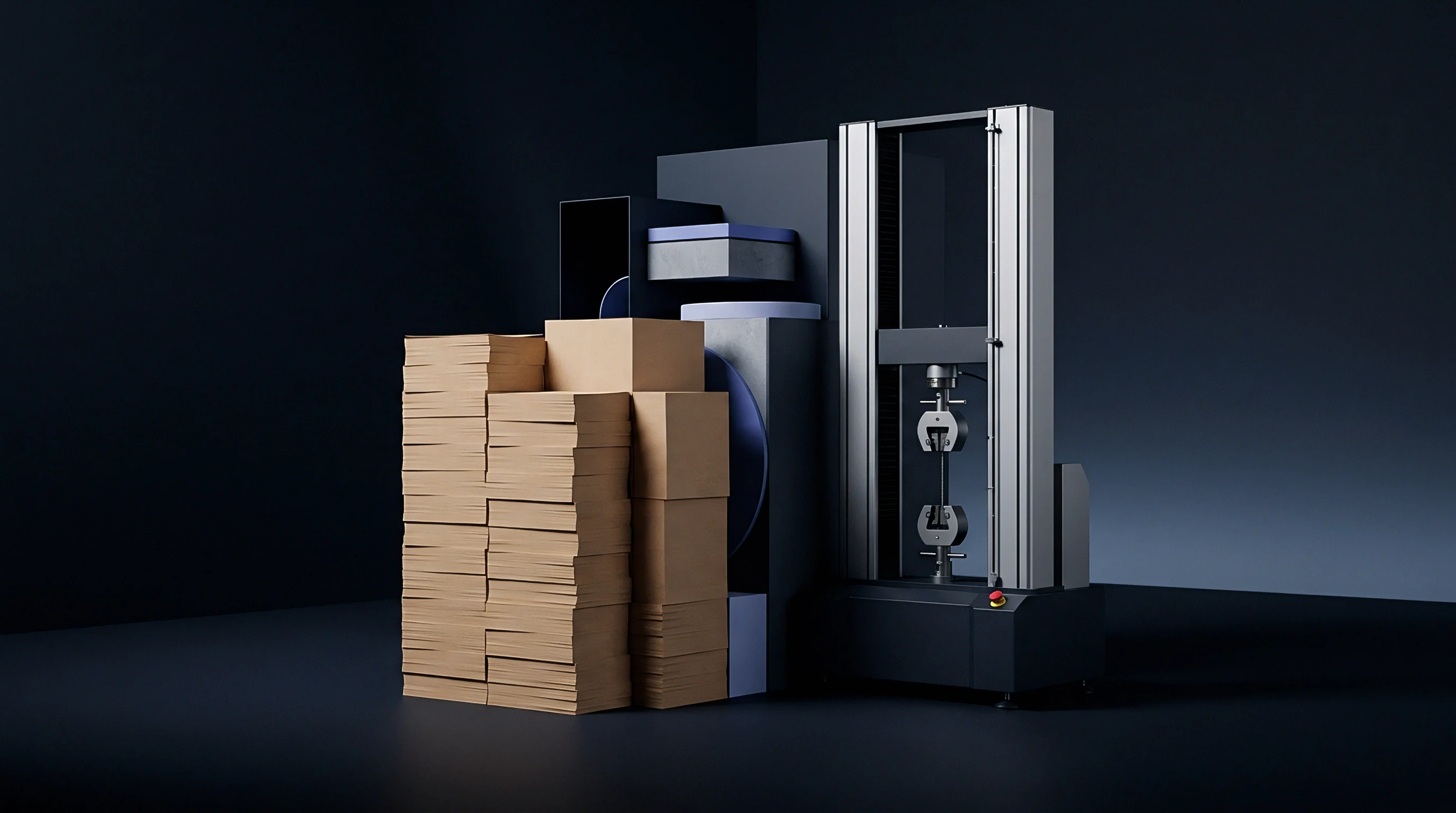
Standardized laboratory evaluation of compressive resistance relies on controlled environmental chambers and calibrated press apparatus. Conventional testing methodologies evaluate box performance under static, equilibrium conditioning regimes. ISO 12048 and TAPPI T 804 define standard box compression test procedures, requiring samples to reach thermal and hygrometric equilibrium at twenty-three degrees Celsius and fifty percent relative humidity before platen crushing.
While these baseline values enable raw material quality control, they fail to reproduce the physical forces exerted on packaging moving through real-world supply chains.
Simulating field performance requires specialized cyclic humidity test apparatus. Environmental test chambers built for creep evaluation must cycle relative humidity rapidly while maintaining precise temperature control to avoid thermal condensation on sample surfaces. Dynamic load frames apply fixed vertical forces to full-scale boxes, recording vertical displacement continuously over days or weeks.
High-accuracy linear variable differential transformers or optical laser sensors track sidewall deflections, identifying micro-yield events that precede macro-structural collapse.
Standard Test Protocols and Environmental Cycling Methods
ISO 12048 establishes static compression assessment under constant 23 °C and 50 percent relative humidity. TAPPI T 843 addresses short-term edgewise crush resistance using small board specimens. However, neither standard incorporates ambient humidity variations.
To capture mechano-sorptive effects, advanced qualification protocols utilize ISO 2234 static load testing inside environmental chambers programmed to cycle relative humidity between fifty percent and ninety percent every six to twelve hours.
Accelerated test regimes alter cycling frequency to shorten bench timelines. Rapid cycling, such as three-hour intervals, increases the rate of moisture flux across the board thickness. Care must be exercised to ensure moisture equilibrium changes penetrate into the internal fluted medium during each sorption leg.
Edge-sealed test specimens allow researchers to isolate face-sheet moisture absorption from raw-edge vapor diffusion, reflecting real-world box geometries where cut edges are partially protected inside sealed flap folds.
Why Do Constant Loads Collapse Boxes under Cycling?
Progressive structural strain accumulates during relative humidity swings because sorption steps unlock shear slip within paper sheets. Standard static tests miss creep mechanics. Applying a constant load equal to forty percent of nominal dry Box Compression Strength results in stable performance under fixed fifty percent relative humidity.
When humidity cycles to ninety percent, the effective yield point of the wet fiber network drops below the applied stress level. Bottom boxes sustain maximum compressive strain.
Deformation does not cease when humidity swings back to fifty percent. As water leaves the sheet during desorption, the material stiffens, but it freezes the structural damage incurred during the wet phase. The next humidity rise induces further plastic deformation on top of the existing panel distortion.
Creep strain curves display a step-like trajectory, ascending with every humidity transition until panel geometry exceeds critical buckling limits, producing sudden structural collapse.
Standard ISO 12048 static compression values fail to predict box survival when warehouse relative humidity shifts by more than twenty percent daily.
Whether standard cyclic test protocols reproduce multi-day maritime transit humidity swings without introducing non-physical thermal shock remains an open question in containerboard testing.
Safety
Calculating warehouse stacking capacity requires translating short-term laboratory crush values into long-term field endurance multipliers. Engineering models use structural equations to estimate the top-to-bottom load capability of filled containers based on paper and board physical properties. Because field conditions expose packaging to environmental variation, fatigue over time, and handling stresses, initial calculated strength must be derated using cumulative safety factor multipliers.
Traditional safety factors applied in packaging design range between 1.5 and 2.0 for benign warehouse environments. These baseline multipliers assume climate-controlled storage with static temperature and humidity profiles. When shipping routes traverse non-controlled environments, such as open freight docks or sea containers, standard multipliers fail.
Humidity swings cause rapid stack failure. Incorporating mechano-sorptive creep degradation requires elevating overall structural safety factors to 3.5 or higher, depending on furnish composition and cycling intensity.
McKee Equation Adjustments for Dynamic Environments
Traditional top-to-bottom compression estimates rely on edgewise crush measurements combined with box perimeter dimensions. The classical McKee formula calculates baseline Box Compression Strength (BCT) as:
BCT = 5.87 ECT (P h)^0.5
where ECT represents edgewise crush strength in kilonewtons per meter, P represents box outer perimeter in meters, and h represents combined board caliper in meters. This relationship holds true under standard laboratory testing conditions.
Field conditions invalidate unadjusted McKee outputs. Environmental correction factors must be multiplied into the baseline equation to establish allowable stack loads. The modified structural safety model calculates maximum long-term safe load (L) using individual derating coefficients:
L = BCT / (F_time F_humidity F_pallet F_vibration)
The time factor (F_time) accounts for long-term static loading. The humidity factor (F_humidity) addresses peak moisture content and cyclic moisture variations. Pallet pattern alignment (F_pallet) accounts for corner overhang, while transport vibration (F_vibration) covers dynamic road or rail forces.
Under severe cyclic humidity, F_humidity increases from 1.3 (for static 80% RH) to 2.5 or higher to account for mechano-sorptive creep acceleration.
Stacking Strength Reduction Factors in Cold Chains
Temperature shifts inside produce warehouses induce dew point condensation on container surfaces. Cold storage applications exhibit severe compressive loss due to high ambient relative humidity coupled with intermittent door openings that cycle environmental conditions. Paperboard absorbs moisture from ambient air rapidly when surface temperature falls below the dew point, driving local moisture content above twenty-two percent by weight.
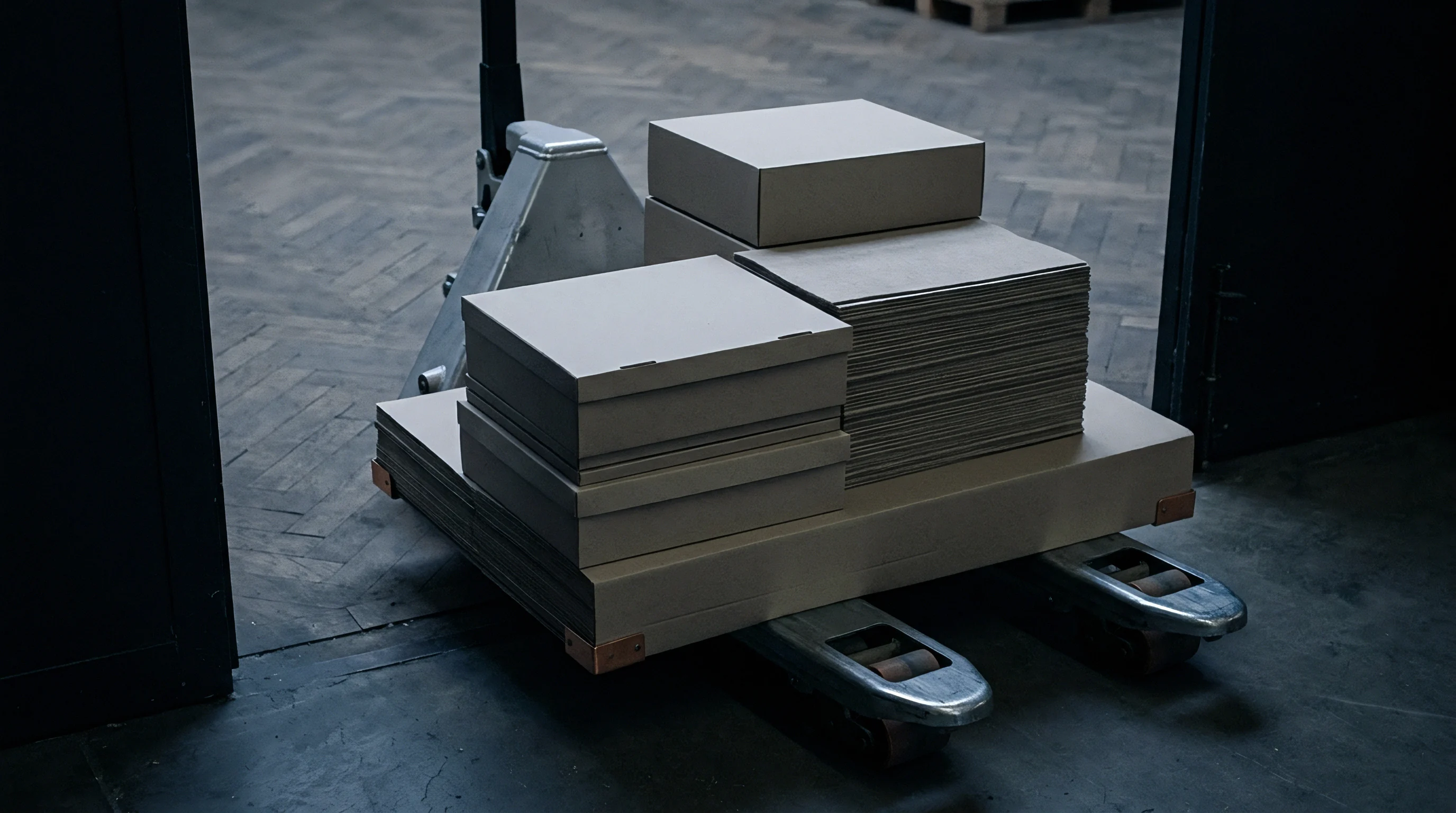
Safety factor selection directly controls warehouse stacking geometry. Applying insufficient capacity reduction multipliers leads to catastrophic bottom-tier failure in multi-pallet stacks. As the bottom box yields under weight, the stack tilts, shifting vertical loads onto box centers rather than reinforced vertical corners.
This eccentricity further accelerates panel collapse, spilling palletized goods and creating hazardous working conditions.
| Environmental Profile | Relative Humidity Range (%) | Moisture Content (%) | Compressive Retention (%) | Recommended Safety Factor |
|---|---|---|---|---|
| Controlled Warehouse | 45 – 55 | 7 – 9 | 100 | 1.5 – 1.8 |
| High Static Humidity | 80 – 90 | 16 – 18 | 55 – 65 | 2.2 – 2.8 |
| Moderate Humidity Cycling | 50 – 80 Cycle | 9 – 15 Dynamic | 40 – 50 | 3.0 – 3.5 |
| Severe Cold Chain Cycling | 60 – 95 Cycle + Condensation | 11 – 22 Dynamic | 20 – 30 | 4.0 – 5.0 |
| Retained compression figures represent retained top-to-bottom load capacity relative to standard TAPPI T 402 laboratory test values. Recommended safety factors apply to initial peak laboratory BCT values. | ||||
Container design for high-humidity logistics relies on safety factor multipliers applied to baseline crush values rather than static packaging guides.
Underestimating stacking strength decay in humid transit corridors results in collapsed bottom pallets, rejected customs shipments, and total loss of cargo value.

Clause
Packaging performance declarations submitted for regulatory review align with the precise physical characteristics of delivered production lots. Cross-border buyers routinely verify certification scopes to ensure that sustainability claims and structural engineering ratings match actual converting specifications. Under regulatory frameworks like the European Packaging and Packaging Waste Regulation (PPWR), compliance requires demonstrating structural optimization, preventing excessive board weight while ensuring transport integrity.
Sourcing practices mandate rigorous documentary verification throughout the supply chain. Certificate claims printed on shipping containers, such as Forest Stewardship Council (FSC) or Programme for the Endorsement of Forest Certification (PEFC) marks, must trace back to accredited chain of custody audit reports. An uncertified mill supplying raw paperboard breaks the compliance chain, rendering downstream FSC claims on finished boxes invalid at border inspection stations.

Regulatory Scrutiny of Over-Packaging and Structural Proofs
European packaging waste mandates penalize excessive board weight while demanding verified protection against transport failure. Articulating structural optimization requires technical documentation proving that selected linerboard weights represent the minimum mass required to survive transit humidity profiles. Over-packaging provisions prohibit inflating paperboard grammages simply to compensate for poor fiber selection or inadequate flute architecture.
Chain of custody documentation protects buyers against unverified material claims. FSC-STD-40-004 establishes requirements for physical separation, percentage, or credit accounting systems applied to certified wood fibers. When specifying virgin containerboard to resist mechano-sorptive creep, buyers cross-check mill certificates on the public FSC register to verify that the specific paper machine and grade scope cover the delivered board lot.
Sourcing departments verify supplier invoice lines against claim percentage declarations to ensure full regulatory traceability.
- Obtain certified paperboard mill test reports for each linerboard and medium lot.
- Condition container samples in ambient test chambers per TAPPI T 402 specifications.
- Subject assembled packaging units to relative humidity cycling between fifty and ninety percent under static top load.
- Verify FSC or PEFC chain of custody claim scope against the public certificate database before shipment authorization.
Documentary Verification of Fiber Sourcing and Recyclability
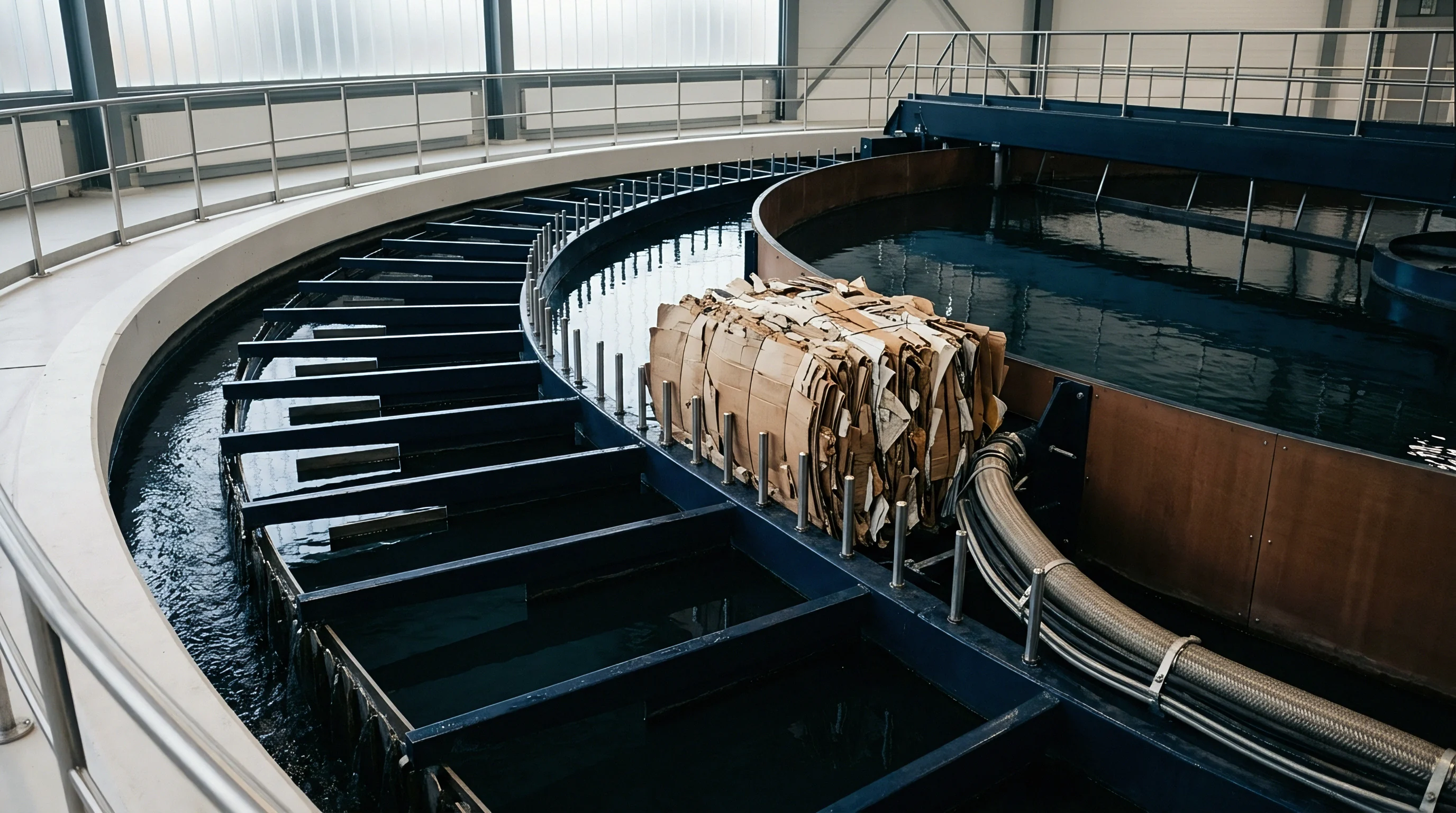
Proving material compliance involves matching technical laboratory reports with legal certification declarations. Recyclability grading per EN 13430 evaluates repulpability, fiber yield, and adhesive coarse reject content. While recycled containerboard aligns with circular economy mandates, its susceptibility to mechano-sorptive creep demands precise fiber blend documentation.
Sourcing dossiers maintain clear distinction between post-consumer recycled content claims and structural performance qualifications.
Contractual specifications define precise physical test methods and minimum retained strength thresholds after environmental exposure. Procurement agreements incorporate clear acceptance boundaries for delivered box lots, protecting buyers against supplier fiber substitutions that compromise creep resistance. Inspection files capture certificate codes, test report reference numbers, and batch sampling records to defend claims during regulatory packaging audits.
- Chain of custody certificate verifies that paperboard fiber origin adheres to certified forest management and traceability rules.
- Recyclability qualification report confirms compliance with EN 13430 standard repulpability and yield thresholds for packaging waste recovery.
- Edgewise crush test documentation specifies initial dry strength values and post-humidity cycling strength retention percentages.
- Packaging waste declaration details total tare weight, material composition percentages, and recycled fiber content for regulatory fee calculation.
Inserting ISO 12048 compliance combined with a minimum seventy percent retained edgewise crush rating after humidity cycling into supply contracts transfers financial liability for stack collapse to the converter.
Margin
Commercial decisions regarding linerboard weight and box construction determine landed financial risk across international supply lines. Engineering a box for static warehouse storage represents a low-cost specification baseline. However, when produce or manufactured goods travel through multi-climate transit corridors, under-specifying paperboard performance introduces substantial commercial exposure.
Safety factor multipliers prevent pallet collapse. Evaluating landed cost requires balancing initial packaging unit costs against potential freight loss and regulatory penalty exposure.
Consider a practical engineering evaluation for a bulk agricultural export run. Assume a shipment comprising 40 tonnes of fresh produce packed into corrugated containers, moving from ambient packing facilities through refrigerated marine transport. Each pallet carries 800 kilograms of product stacked 5 pallets high in warehouse storage, with individual box dimensions of 400 mm length by 300 mm width by 250 mm height.
The target storage duration under variable humidity is 45 days.
Worked Load Budget for Multi-Climate Transport Corridors
A shipment of 40 tonnes of fresh produce moving from ambient packing facilities through refrigerated sea transport highlights stack integrity limits. Bottom boxes in a 5-high pallet stack sustain compressive loads derived from the weight of 4 overlying boxes. Each box weighs 16 kilograms fully loaded.
With a pallet pattern stacking boxes 4 per layer and 5 layers per pallet, each column corner bears significant dead weight. The static load on a single bottom box equals 64 kilograms, representing 627 Newtons of continuous downward force.
Standard laboratory testing indicates a nominal initial Box Compression Strength (BCT) requirement. Under controlled 23 °C and 50 percent relative humidity, applying a conventional static safety factor of 1.8 yields a baseline target BCT:
Target BCT (Static) = 627 N 1.8 = 1129 N
Selecting a single-wall C-flute box built with 140 gsm recycled testliners achieves an initial dry bench BCT of 1350 Newtons, comfortably exceeding the static engineering threshold. The purchasing department approves this recycled specification, achieving a unit packaging cost of 0.85 EUR per box across a 2,500-box order, total packaging spend amounting to 2,125 EUR.
Transit conditions invalidate the dry static model. Relative humidity inside the marine container cycles between 65 percent during refrigeration cycles and 95 percent during defrost and loading phases. Mechano-sorptive creep degrades the recycled fiber matrix rapidly.
Table data indicates a compressive retention of only 40 percent under moderate humidity cycling, while the required dynamic safety factor rises to 3.5.
Target BCT (Cyclic) = 627 N 3.5 = 2195 N
The 140 gsm recycled container, featuring an initial bench rating of 1350 Newtons, operates far below the required 2195 Newton dynamic threshold. Under continuous dead-weight compression, mechano-sorptive strain causes the bottom boxes to buckle on day 12 of transit. Bottom boxes carry the full load.
The stack tilts, crushing 30 percent of the cargo and causing pallet collapse inside the marine container.
Upgrading outer linerboard from recycled testliner to virgin kraftliner increases container cost by twelve percent while double-wall stacking endurance triples under cycling moisture.
Quantifying the resulting financial loss illustrates the true cost of unadjusted packaging specifications:
- Damaged product value (12 tonnes of fresh produce): 24,000 EUR
- Container re-sorting, port handling, and disposal fees: 3,500 EUR
- Customs rejection penalties for compromised packaging: 1,800 EUR
- Total financial exposure from stack collapse: 29,300 EUR
Re-engineering the specification to withstand cyclic moisture requires upgrading to a double-wall BC-flute construction utilizing 175 gsm virgin unbleached softwood kraftliner facings with a 127 gsm semi-chemical medium. This heavy-duty virgin kraftliner provides superior creep resistance. Initial bench BCT rises to 2,450 Newtons.
The unit box price increases from 0.85 EUR to 1.15 EUR, elevating total packaging spend for 2,500 boxes to 2,875 EUR, an incremental spend of 750 EUR.
Investing 750 EUR in correct structural design eliminates 29,300 EUR of landed financial exposure. Physical testing verifies linerboard performance. Matching paperboard furnish selection and safety factor multipliers to actual humidity profiles eliminates structural warehouse failures while maintaining compliance with international transport requirements.