Finite Element Modeling of Mechano-Sorptive Creep in Chilled Corrugated Transit
Finite element models of mechano-sorptive creep predict corrugated container collapse in chilled transit by coupling transient moisture diffusion to orthotropic stiffness decay.


Humidity
Because cold air holds less vapor, refrigerated shipping containers operating between 2 and 4 degrees Celsius generate sustained relative moisture levels above 85 percent. Cellulose fibers inside containerboard adsorb surrounding moisture until reaching equilibrium, and mechanical properties deteriorate as moisture content climbs from standard testing levels of 7.5 percent to as much as 16 percent by weight under maritime transport conditions.
Refrigeration units undergo automatic defrost cycles every 6 to 12 hours to melt ice accumulated on evaporator coils. During these intervals, internal container air temperatures rise by 3 to 6 degrees Celsius while relative moisture rapidly spikes toward saturation. Water molecules quickly enter the amorphous regions of cellulose, breaking inter-fiber hydrogen bonds and accelerating structural softening.

Moisture Diffusion Dynamics in Chilled Containers
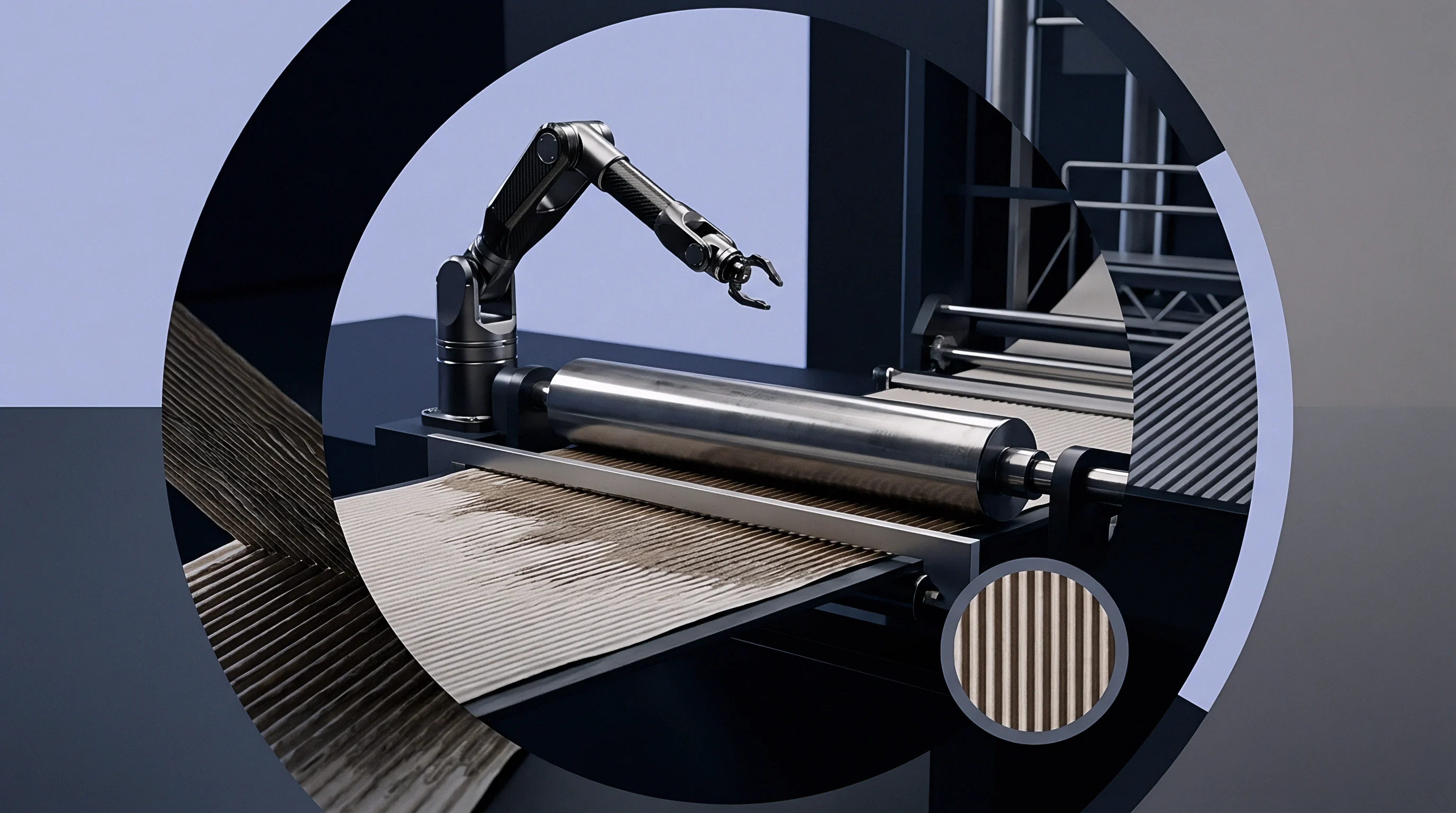
Moisture moves through corrugated board by vapor diffusion across internal flute channels and liquid capillary transport within the paper matrix. Fickian diffusion governs mass transport at low to moderate humidity levels: the transient concentration gradient follows Fick’s second law, where the diffusion coefficient depends directly on local moisture concentration and ambient temperature.
Once relative humidity exceeds 80 percent, capillary condensation takes over inside micro-pores. Liquid water bridges form between adjacent microfibrils, swelling the fiber wall and altering mechanical stiffness tensors. In chilled transport, low temperatures reduce the kinetic energy of water molecules, slowing overall diffusion rates while increasing the total equilibrium moisture sorption capacity of the board.
Container defroster pulses elevate local ambient relative moisture from 82 percent to 98 percent within fourteen minutes, causing rapid surface moisture absorption in outer linerboard layers.
Equilibrium Sorption Isotherms at Refrigerated Temperatures
Sorption isotherms describe the relationship between ambient relative humidity and equilibrium moisture content at fixed temperatures, with both the Brunauer-Emmett-Teller model and Guggenheim-Anderson-de Boer equations fitting experimental data for paperboard substrates under refrigerated conditions. Lower temperatures shift sorption isotherms upward, meaning paperboard holds higher moisture percentages at 4 degrees Celsius than at 23 degrees Celsius for identical relative humidity levels.
Conditioning standards specified in ISO 187 and TAPPI T 402 mandate testing at 23 degrees Celsius and 50 percent relative humidity. Packaging design calculations based solely on standard room-temperature data understate actual moisture accumulation inside cold-chain supply loops. Sizing agents, starch adhesives, and wet-strength resins modify isotherm shape by restricting water access to hydrophilic hydroxyl groups.
| Component | Substrate Type | Diffusion Coefficient (m²/s) | Equilibrium Moisture Content (%) | Hygro-Expansion Ratio (%) |
|---|---|---|---|---|
| Outer Liner | Virgin Kraftliner (175 g/m²) | 1.45 × 10⁻¹¹ | 14.2 | 0.18 |
| Corrugated Medium | Semi-Chemical Fluting (120 g/m²) | 2.10 × 10⁻¹¹ | 16.8 | 0.26 |
| Inner Liner | Recycled Testliner (150 g/m²) | 1.85 × 10⁻¹¹ | 15.6 | 0.22 |
Structural deformation during ocean transport is frequently blamed on unrecorded refrigeration equipment failures rather than inadequate paperboard sizing, though both compromise carton strength.


Constitutive
Orthotropic paperboard models express stress-strain responses through transient stiffness tensors dependent on moisture flux. Because cellulose fibers align predominantly along the machine direction during paper manufacturing, mechanical properties differ markedly across machine, cross, and thickness directions. Inelastic deformation under sustained load involves three primary components: elastic strain, viscoelastic creep, and mechano-sorptive strain.

Mechano-Sorptive Material Matrices
Mechano-sorptive creep occurs exclusively when paperboard experiences active moisture changes while subjected to external mechanical stress. While static high humidity causes moderate viscoelastic creep, cyclic moisture sorption accelerates strain rates by orders of magnitude. The total strain rate tensor decomposes additively into elastic, viscoelastic, hygro-expansion, and mechano-sorptive terms.
The mechano-sorptive strain rate acts proportional to the stress tensor magnitude and the absolute rate of moisture change. Tensile and compressive stresses yield asymmetrical creep rates: mechano-sorptive strain under axial compression exceeds tensile strain by a factor of 2.5 to 3.8, leading to early local wall buckling in corrugated container panels.
- Creep-induced compression buckling accelerates when compressive stress aligns with active moisture desorption, causing local wall instability.
- Flute delamination under stress gradients occurs as adhesive lines experience differential hygro-expansion rates between linerboard and corrugated medium.
- Corner post crushing via asymmetric strain distribution develops when moisture penetrates outer package corners faster than interior panels.
- Crease line shear yielding under cyclic loading reduces top-to-bottom load carrying capacity long before nominal material strength limits are reached.
Coupled Hygro-Mechanical Differential Equations
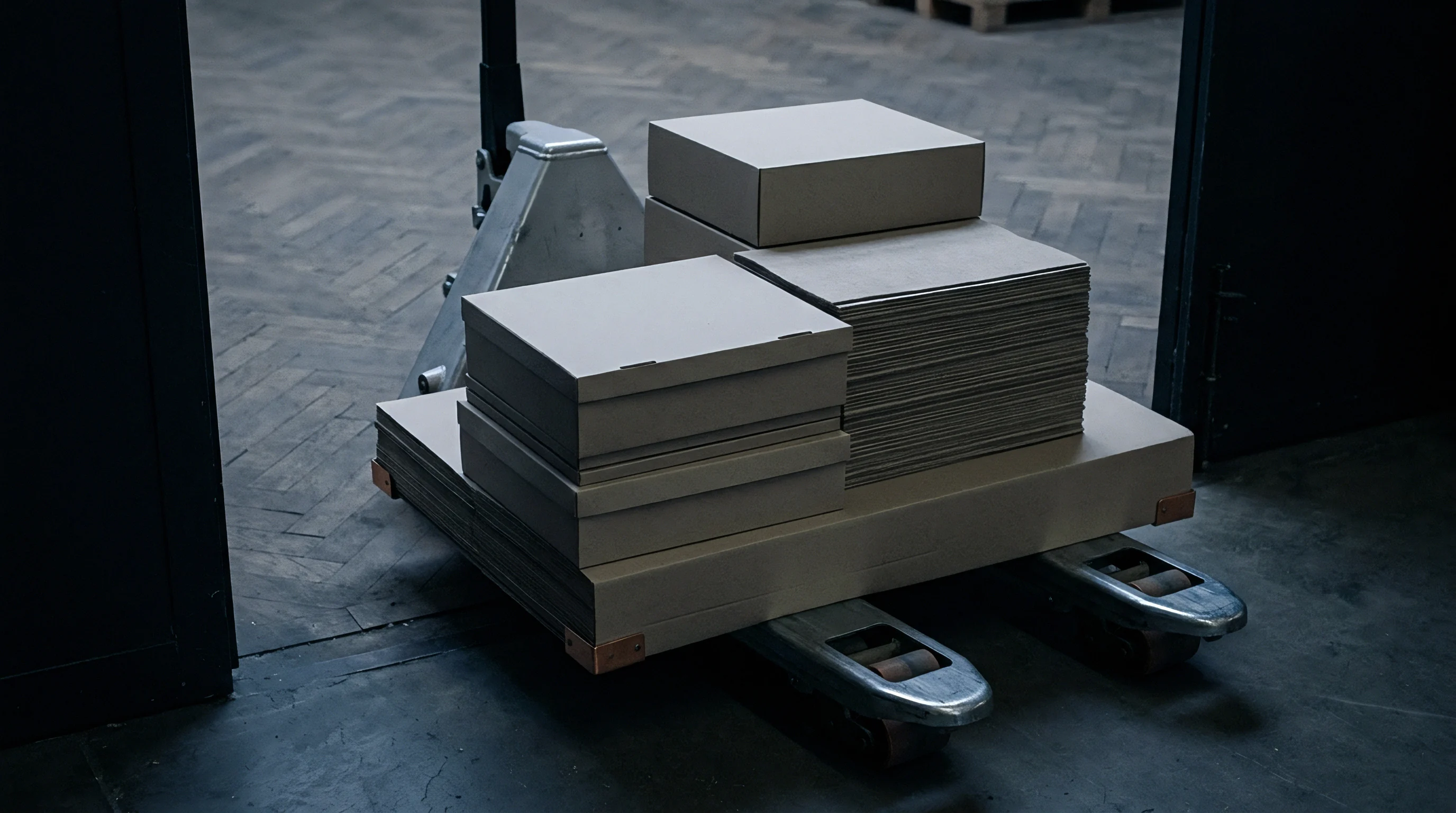
Coupled differential equations combine Fickian moisture diffusion with momentum balance equations. Moisture concentration fields feed into material stiffness matrices, while local stress states influence local moisture transport properties. Finite element implementations update element stiffness matrices at every converged time step based on local moisture concentration and stress history.
Compliance with FEFCO Testing Code No. 50 demands static compression loads to be sustained under dynamic moisture cycling without structural deflection exceeding four millimeters.
User-defined material subroutines calculate tangent stiffness matrices by updating directional elastic moduli (E11, E22, E33) and shear moduli (G12, G13, G23) as functions of moisture content. Non-linear compressive yielding behavior uses Hill yield criteria modified for orthotropic strength degradation under moisture uptake.
The precise point at which microstructural cellulose bond ruptures transition from reversible creep strain into permanent structural damage remains an open question in dynamic moisture modeling.

Stack
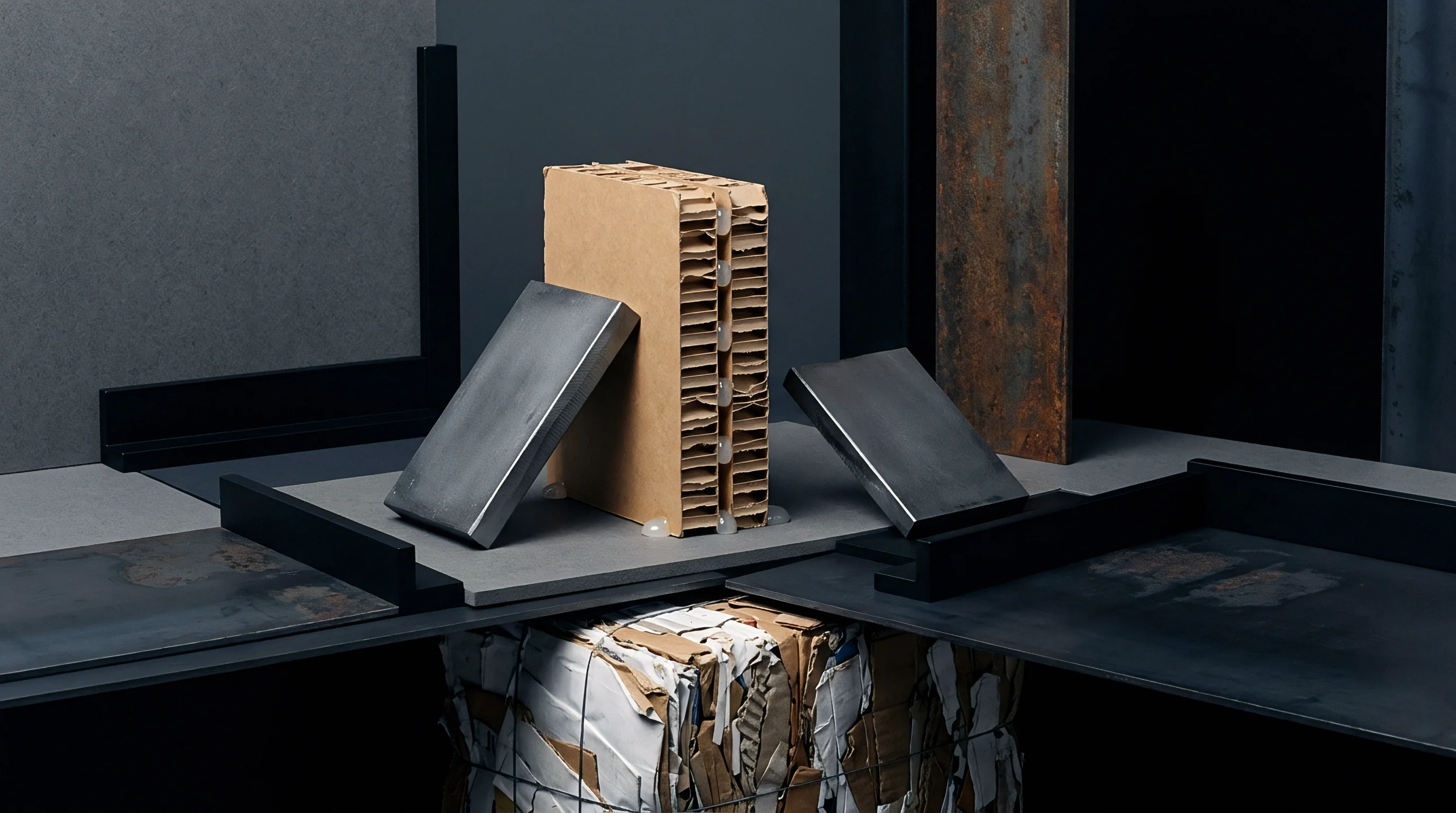
Palletized corrugated containers experience non-uniform distribution of vertical loads when static equilibrium breaks down over extended transit. Top-to-bottom compression capacity drops as bottom-tier boxes bear deadweight loads while absorbing ambient moisture from refrigerated container floors. Because fiber orientation dictates load paths, container corners carry up to 75 percent of vertical compressive forces, while central panel sections bulge outward under internal package pressure.

Compressive Capacity Reduction in Chilled Storage
Classical design methods rely on the McKee formula to estimate Box Compression Test strength from Short-span Compressive Test values, flexural stiffness, and box perimeter. The traditional formula assumes static ambient conditions and homogeneous material behavior. In chilled supply chains, mechano-sorptive degradation reduces effective wall stiffness, rendering standard McKee predictions dangerously non-conservative.
A packaging design evaluated under static room conditions carrying a safety factor of 3.0 can experience effective safety factor degradation below 1.0 when exposed to 21 days of cyclic reefer humidity. As moisture enters the liners, panel bending stiffness falls and buckling develops at panel centres, transferring load onto package corners and initiating creep-buckling collapse.
Can Finite Element Shell Models Predict Pallet Slump?
Non-linear finite element analysis models corrugated board as a multi-layer composite plate using shell elements. Each liner and flute layer receives specific orthotropic constitutive parameters. The simulation imposes deadweight loads on top container surfaces while applying transient humidity boundary conditions along outer liner faces.
Consider a 40-tonne commercial produce consignment stacked 6 boxes high in a reefer container for 18 days at 4 degrees Celsius. Individual bottom-tier containers bear a static vertical load of 1.95 kilonewtons. Initial dry Box Compression Test strength equals 4.50 kilonewtons.
Under static 90 percent relative humidity, predicted Box Compression strength falls to 2.92 kilonewtons, maintaining structural stability. When introducing cyclic moisture fluctuations between 80 percent and 98 percent relative humidity, the finite element mechano-sorptive model predicts effective compressive capacity collapse to 1.71 kilonewtons on day 12, causing column collapse and pallet slump.
| Evaluation Method | Test Conditioning | Predicted BCT (kN) | Observed Capacity (kN) | Prediction Error (%) |
|---|---|---|---|---|
| Standard McKee Formula | 23°C / 50% RH (Static) | 4.50 | 4.42 | +1.8 |
| Environmental McKee Factor | 4°C / 90% RH (Static) | 2.92 | 2.78 | +5.0 |
| Linear Viscoelastic FEA | 4°C / 90% RH (Static) | 2.65 | 2.60 | +1.9 |
| Mechano-Sorptive UMAT FEA | 4°C / 80-98% RH (Cyclic) | 1.71 | 1.65 | +3.6 |
Container top-to-bottom compression resistance degrades faster under active moisture flux than under static high moisture saturation.
Because adhesive bonds transfer shear stress, flute-to-liner bond integrity dictates whether corrugated board acts as a monolithic structural sandwich or as detached individual layers. When starch adhesive lines soften under moisture condensation, shear transfer capability collapses, accelerating out-of-plane panel deflection.
Pallet structural integrity relies on maintaining symmetrical panel stress distribution rather than over-specifying nominal linerboard basis weight.

Discretization
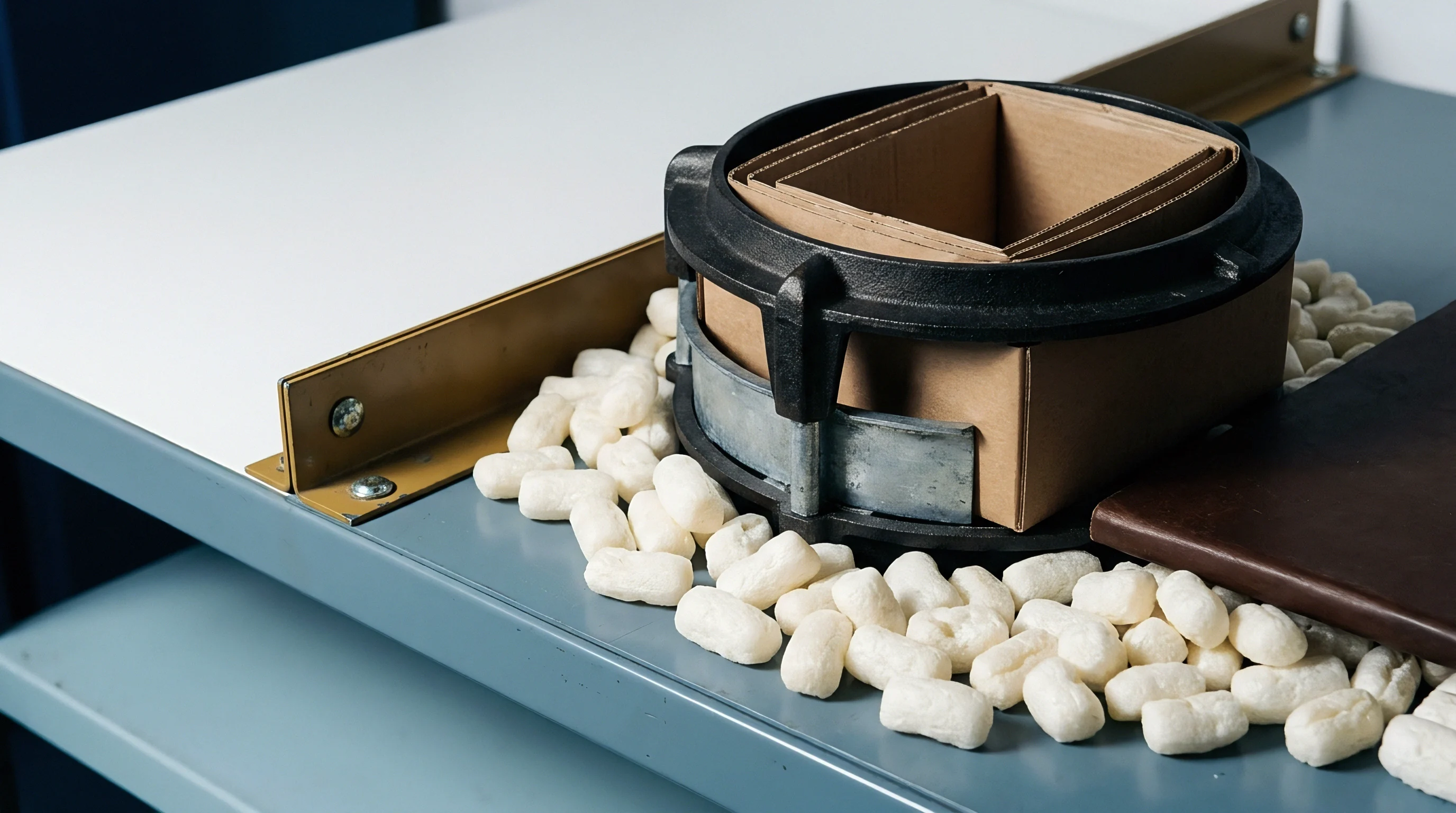
Meshing strategy determines numerical stability when modeling thin paperboard laminates subjected to moisture transport. Corrugated board structures present multiple spatial scales, ranging from sub-millimeter liner thickness up to meter-scale packaging dimensions. Modeling flute geometry explicitly requires small element sizes, increasing computational costs during long-duration transient creep analyses.
Homogenized Solid Elements versus Explicit Flute Shells
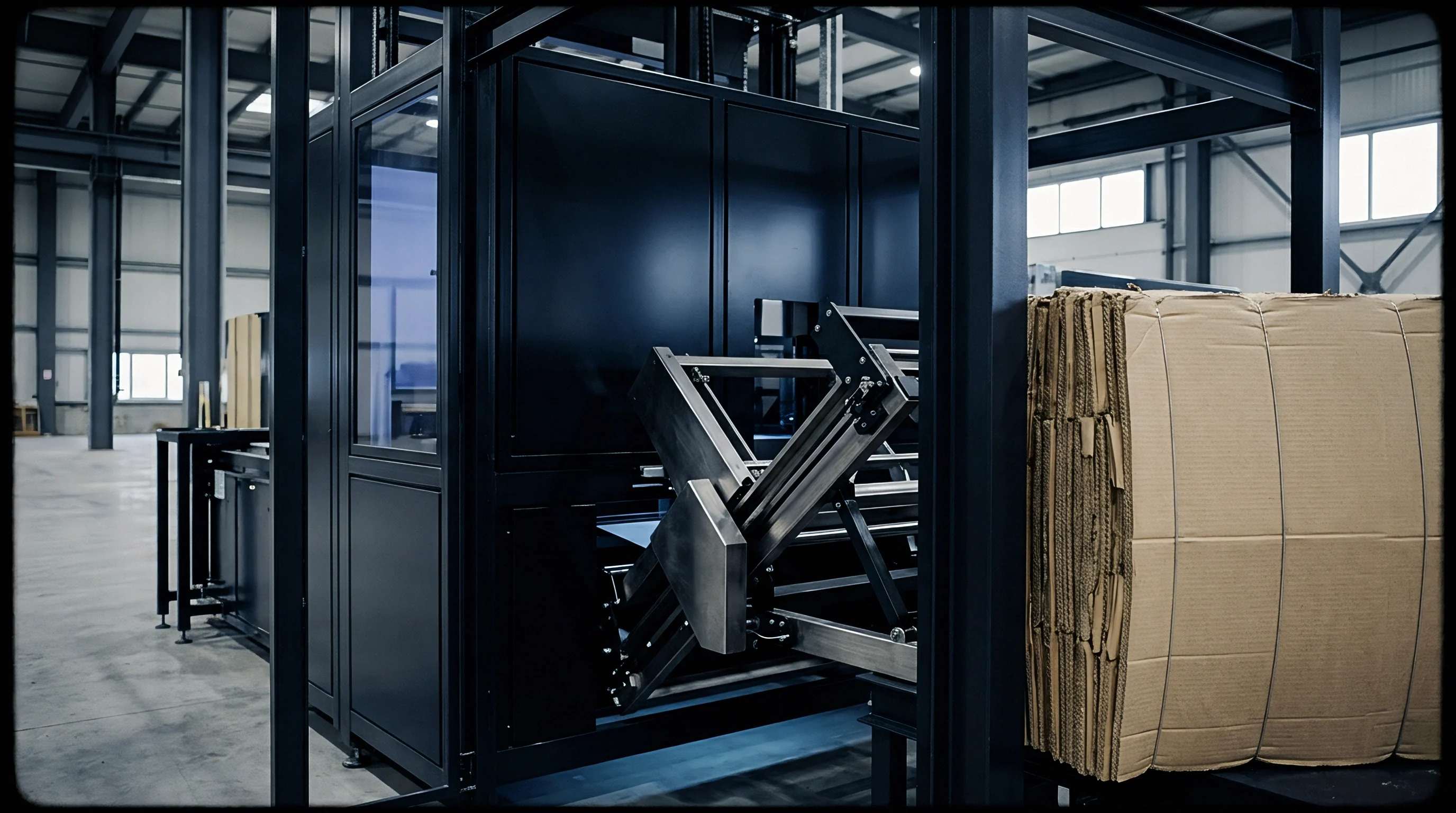
Representative Volume Element homogenization techniques collapse liner and corrugated medium geometry into equivalent single-layer shell or continuum elements. Homogenized models compute global pallet deformation efficiently, though homogenization smoothing masks localized stress concentration at flute peaks and adhesive joint interfaces.
Explicit shell discretization models top liners, fluting profiles, and bottom liners as separate interconnected surfaces. Four-node reduced-integration shell elements (S4R) prevent shear locking during large deflection bending. Inter-ply adhesive connections use surface-to-surface contact pairs or cohesive zone elements to model delamination during moisture cycling.
- Extract directional tension and compression moduli across machine direction and cross direction using standardized ISO 1924-3 physical testing.
- Determine moisture transport parameters by measuring liquid diffusion coefficients across varying ambient relative humidity levels.
- Formulate the user-defined material subroutine to couple stress tensors with transient moisture changes.
- Construct representative volume elements for the target flute profile to generate equivalent orthotropic plate stiffness matrices.
- Apply static vertical deadweight loading alongside cyclic boundary moisture fluxes within the implicit finite element solver.

Boundary Conditions and Contact Penalty Formulations
Model boundary conditions govern numerical convergence: applying fixed displacement constraints at pallet support bases models rigid wooden or plastic pallet decks. Friction penalty formulations govern contact between stacked container flaps, using directional friction coefficients that decrease as surface moisture rises.
Flute profile geometry dictates local shear strain accumulation at adhesive bond lines during rapid humidity transitions.
Implicit solvers handle non-linear material stiffness matrices through Newton-Raphson iteration loops. Severe stiffness degradation during mechano-sorptive creep requires adaptive time-stepping algorithms to maintain solver convergence when local panel buckling occurs.
Incorporating ISO 2233 environmental conditioning clauses into containerboard purchasing agreements shifts financial exposure for transit creep failure directly to packaging suppliers who fail to validate substrate performance.

Validation
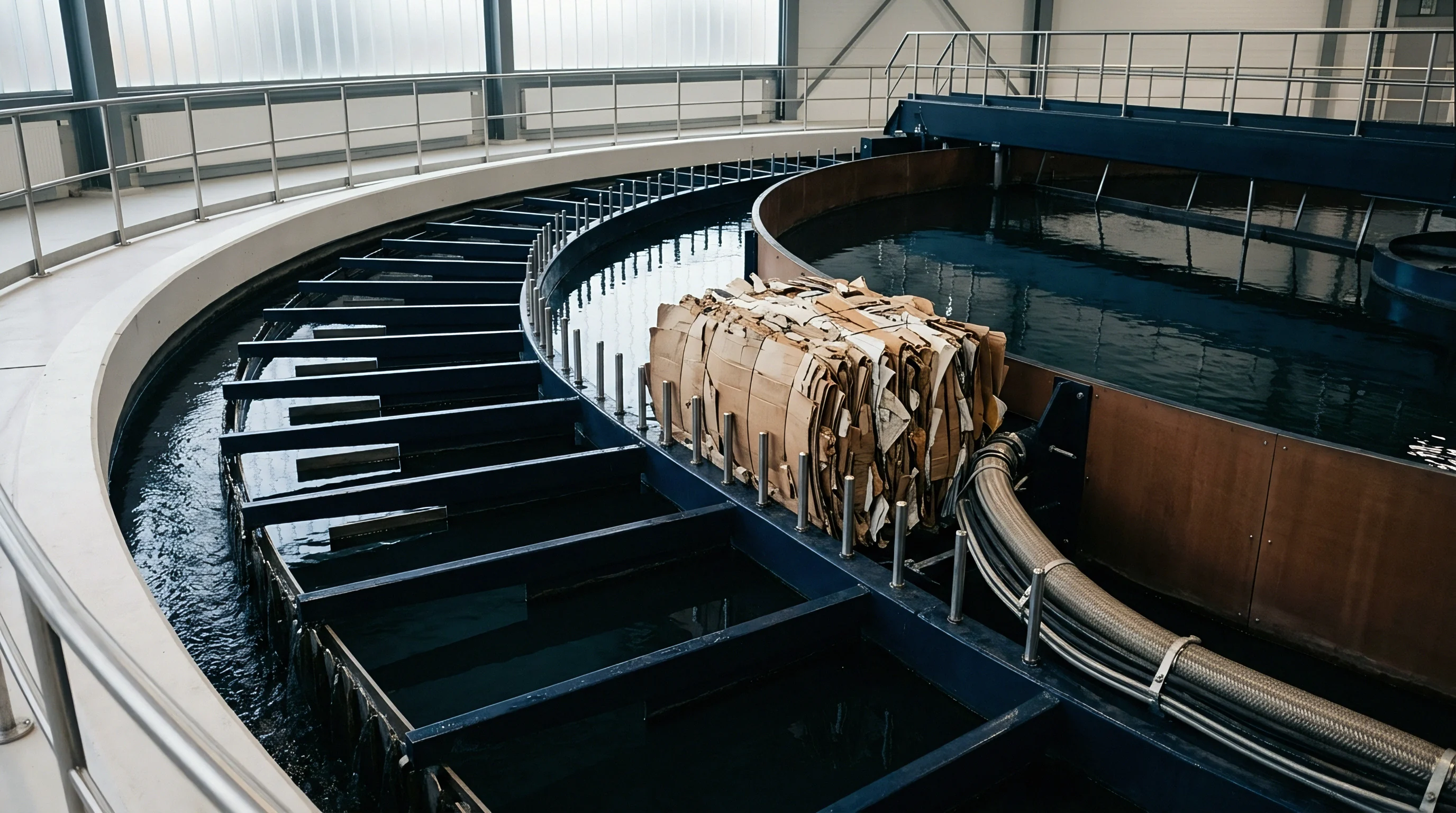
Physical bench verification requires controlled environmental chambers capable of executing programmed moisture ramps to validate finite element model predictions against real substrate behavior. Environmental chambers simulate reefer transport profiles by cycling relative humidity between 70 percent and 95 percent at 4 degrees Celsius while hydraulic actuators apply constant compressive deadweight loads.
Laboratory Environmental Chamber Protocols
Short-span Compressive Test measurements conducted according to ISO 9895 define intrinsic sheet strength under axial load, though standard SCT testing evaluates only dry swatches. Testing swatches inside modified climate cells under active moisture flux reveals that cross-direction compressive strength drops by up to 55 percent during desorption phases.
Flute geometry alters internal stress distribution: C-flute board provides superior stacking strength compared to B-flute board of identical basis weight due to a greater moment of inertia. B-flute displays higher flat crush resistance, resisting localized point loads from internal produce movement.
| Substrate Metric | Virgin Kraftliner | High-Performance Testliner | Standard Recycled Testliner |
|---|---|---|---|
| Dry Cross-Direction SCT (kN/m) | 3.85 | 3.20 | 2.65 |
| Moisture Sorption Rate (%/hr at 90% RH) | 0.82 | 1.15 | 1.48 |
| SCT Retained at 85% RH (%) | 68.5 | 58.2 | 46.0 |
| Mechano-Sorptive Creep Factor (1/MPa) | 1.2 × 10⁻⁴ | 2.4 × 10⁻⁴ | 4.1 × 10⁻⁴ |

Certificate Scopes for Recycled Fibre Substrates
Because recycling processes introduce short, damaged fibers and fines that possess lower intrinsic strength and higher swelling potential, recycled furnish sorbs moisture rapidly. Hornification during repeated paper drying cycles reduces internal fiber wall flexibility, accelerating mechano-sorptive creep kinetics.
Chain-of-custody documentation under FSC-STD-40-004 or PEFC ST 2002 tracks fiber sourcing percentage claims. FSC Mix or PEFC Recycled certificates confirm environmental origin but guarantee no specific mechanical creep resistance under cold-chain conditions. Buyers specifying high recycled content for sustainability goals must adjust panel basis weights upward to compensate for elevated mechano-sorptive strain rates.
- Fibre origin verification confirms whether linerboard certificates specify virgin kraft or recycled furnish percentages under scheme rules.
- Wet-strength additive dossier evaluation checks compliance against BfR XXXVI migration limits for polyamidoamine-epichlorohydrin resins.
- Equilibrium strain threshold testing establishes maximum allowable deflection rates under dynamic humidity cycling prior to commercial sign-off.
- Recycled content percentage verification matches physical board stiffness metrics against claim categories listed on delivery documentation.
Food contact packaging for chilled fresh produce requires wet-strength resin additions, such as polyamidoamine-epichlorohydrin (PAAE). German BfR Recommendation XXXVI and Regulation EC 1935/2004 regulate chemical migration limits for wet-strength additives. Excessive wet-strength resin application preserves wet tensile strength but fails to prevent mechano-sorptive compression creep during long-distance maritime transit.
Failing to account for recycled fibre hornification in finite element creep models produces understated pallet slump rates, resulting in crushed produce packaging and complete cargo rejection at receiving ports.

Exposure
Financial claims arising from crushed produce shipments usually settle on evidence of substrate qualification rather than nominal box compression strength. Maritime cargo underwriters analyze temperature and humidity logs from reefer data recorders, and when shipping records reveal relative humidity excursions with uncertified liners, carriers attribute package collapse to sub-standard packaging design, denying insurance recovery claims.

Commercial Liability in Cold-Chain Container Collapses
Extended Producer Responsibility rules and the EU Packaging and Packaging Waste Regulation mandate design for recyclability while penalizing over-packaging. Heavy wet-strength resin treatments move containerboard from Class A recyclability to Class C or D, increasing producer responsibility fees. Packaging engineers balance recyclability compliance against structural integrity needed for cold-chain transit survival.
Importers of record must maintain valid technical dossiers proving compliance with food contact safety, structural transportation standards, and environmental recycling requirements. When containers collapse during transit, customs inspectors can hold entire shipments for inspection, escalating demurrage charges daily.

Contractual Risk Transfer for Substrate Substituted Pallets
Substrate substitution represents a frequent source of field failure. Mill suppliers replacing virgin kraftliner with recycled testliner of equivalent nominal basis weight alter the mechano-sorptive creep response of the box. Procurement contracts specifying only basis weight and burst strength leave buyers exposed to creep collapse.
Defensible purchasing contracts specify minimum Short-span Compressive Test values at 85 percent relative humidity alongside maximum allowable mechano-sorptive creep rates under ISO 2233 environmental conditioning profiles. Finite element simulation reports attached to purchase orders establish legally binding performance thresholds, shifting financial liability for transit deformation back to converting suppliers who substitute inferior paperboard grades.