Microfibril Barrier Coating Application on Baseboard Converting Lines
Applying microfibrillated cellulose on baseboard needs pre-sizing, controlled rod metering, and precise drying to pass oxygen barrier compliance audits.
Substrate
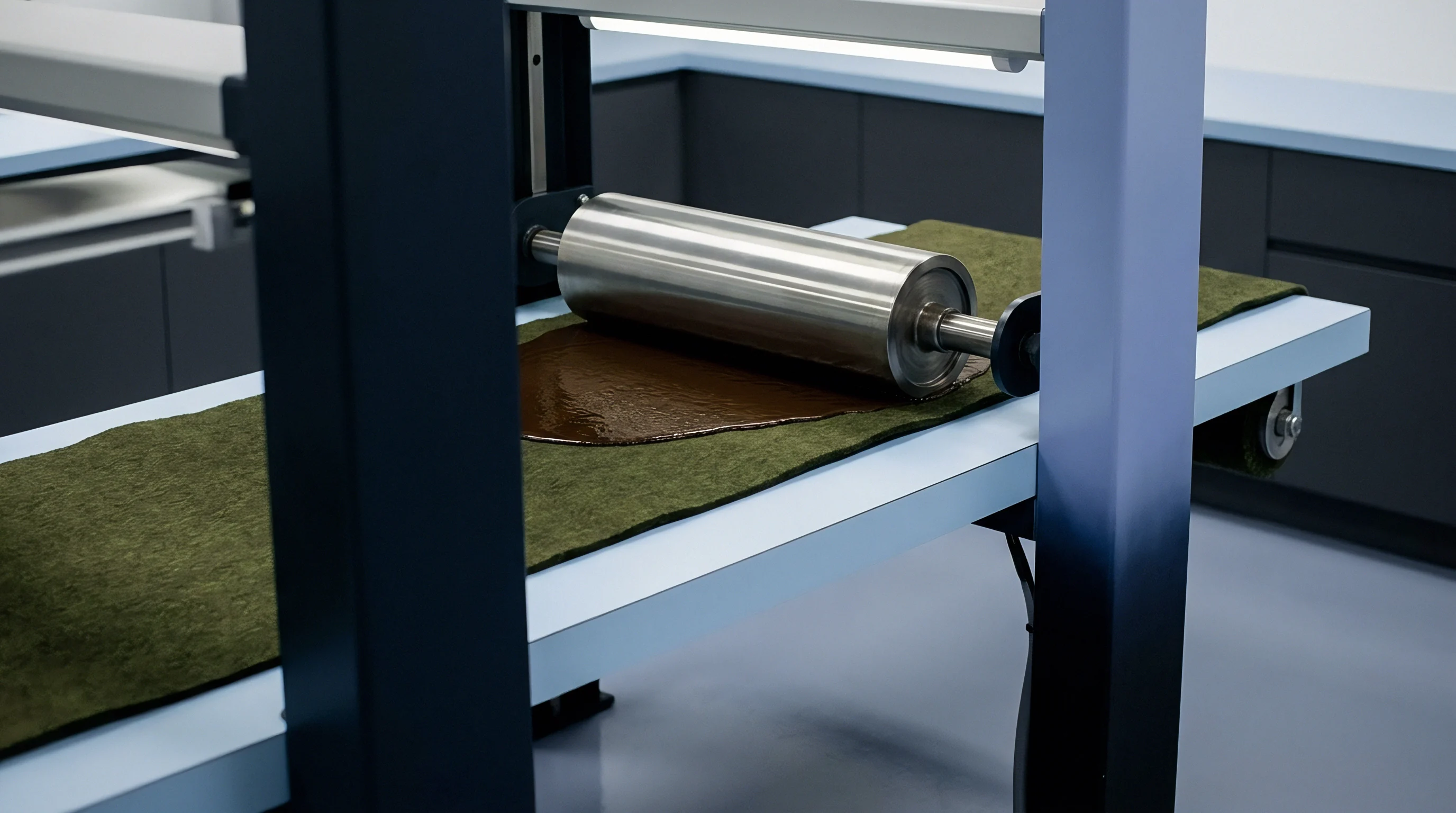
Pulp refining and sheet formation govern how high-solids aqueous suspensions behave during liquid film deposition. Uncoated baseboard furnishes present distinct porosity gradients, surface energy variations, and mechanical absorption rates that directly dictate barrier film continuity. Applying microfibrillated cellulose (MFC) slurries directly to raw paperboard without structural preparation leads to excessive water phase penetration, binder migration into the sheet core, and irregular pinhole formation upon drying.
Modern high-speed converting lines demand precise baseboard selection and pre-sizing protocols to establish a continuous non-porous foundation.
Baseboard Surface Topography and Pore Size Distribution
Uncoated paperboard sheets carry raw capillary networks that instantly drain water out of applied chemical suspensions. Solid Bleached Board (SBB), Folding Boxboard (FBB), and Coated Unbleached Kraft (CUK) display widely divergent surface roughness and pore radius distribution profiles. High Sheffield roughness ratings correlate directly with coat weight variation across the cross-machine direction.
Pores drain wet coat rapidly. When large capillary pores absorb the aqueous carrier phase before fibril orientation finishes, the applied coating loses liquidity, resulting in uneven film thickness and structural voids.
| Board Grade Type | Sheffield Roughness (SU) | PPS Micro-roughness (100 kPa, µm) | Gurley Air Resistance (s/100 mL) | Cobb60 Absorption (g/m²) | Mean Pore Radius (nm) |
|---|---|---|---|---|---|
| Solid Bleached Board (SBB) | 140 – 180 | 3.2 – 4.1 | 35 – 50 | 28 – 34 | 110 – 160 |
| Folding Boxboard (FBB) | 200 – 260 | 4.5 – 5.8 | 20 – 35 | 35 – 45 | 180 – 250 |
| Coated Unbleached Kraft (CUK) | 220 – 280 | 5.0 – 6.2 | 15 – 28 | 40 – 52 | 210 – 300 |
| Recycled Linerboard (WTL) | 280 – 350 | 6.5 – 8.0 | 8 – 18 | 50 – 65 | 320 – 450 |
| Test conditioning: 23°C, 50% RH per TAPPI T 402. Parker Print-Surf (PPS) measured under soft backing configuration. | |||||
Converter experience shows that FBB middle plies containing mechanical pulp require heavier sealing than virgin chemical pulp plies found in premium SBB. The higher macro-porosity of mechanical pulp networks demands targeted mechanical or chemical intervention to prevent liquid sinkage during web passage through the coating station.
- Measure raw sheet contact angle using deionized water at three-second contact times to set baseline wetting tension.
- Apply inline hard sizing or modified ethylated starch at 1.5 g/m² dry mass via film press to plug pore throats.
- Calibrate infrared dryer zone temperatures to fix surface moisture between six and eight percent prior to barrier metering.
- Run continuous online optical profilometry to flag micro-roughness peaks exceeding five micrometers before web entry.
Fibre Holdout and Surface Energy Calibration
Pre-metering starch or carboxymethyl cellulose seals surface voids to restrict liquid phase infiltration before main coat application. Liquid holdout determines whether the nanocellulose barrier forms an intact surface skin or becomes embedded within the Z-directional fiber matrix. Surface energy calibration ensures that the aqueous dispersion spreads evenly without bead-up or streak development.
Dynamic contact angle measurements indicate how rapidly water leaves the applied suspension. Wet gel handles poorly. Maintaining high liquid holdout allows the microfibrils to align parallel to the sheet surface, maximizing interfacial hydrogen bonding during water removal.
Coating suspensions applied to unsealed stock drain water prematurely, leaving micro-voids that break the gas barrier.

Rheology
Fibrillated plant fibers suspended in aqueous media form intricate three-dimensional gel structures at low concentration levels. The flow behavior of microfibrillated cellulose suspensions dictates their performance across coating pumps, supply pipework, and application nozzles. Unlike conventional pigment slurries or synthetic latex emulsions, bio-based microfibril suspensions exhibit extreme shear-thinning characteristics coupled with high yield stress values.
Understanding these flow dynamics prevents pump cavitation, streak formation, and severe coat weight variation on converting machinery operating at production speeds above three hundred meters per minute.
Shear Thinning and Network Structure under Strain
Fibril entanglements create high yield stress at rest, resisting flow until applied mechanical forces disrupt physical bonds. At low shear rates, the entangled network acts as a viscoelastic solid, preventing sag and sag-induced defects. Once the applied shear stress exceeds the network yield value, the entanglements align along the flow vectors.
Viscosity drops under shear. This rapid shear-thinning response allows high-solids suspensions to flow smoothly through narrow metering gaps between the application roll and the baseboard web.
At a shear rate of 100,000 reciprocal seconds, a three percent dry mass microfibril dispersion drops viscosity from 4,500 millipascal-seconds down to 42 millipascal-seconds.
Upon leaving the high-shear metering zone, the suspension undergoes structural recovery. If re-flocculation occurs instantly, the wet film locks in blade lines and surface ridges, creating non-uniform coat weight distribution across the sheet. If structural recovery is excessively slow, the applied liquid runs or drips along web turns prior to entering the dryer.
Balancing the thixotropic recovery time with web line speed represents a primary control parameter for converting line operators.
Solids Content Limits and Water Retention Dynamics
Pumping high-viscosity bio-polymer suspensions above five percent dry mass introduces severe line pressure spikes and degassing challenges. Entrapped air bubbles in high-viscosity slurries create micro-voids in the final dry film, causing localized pinholes that degrade oxygen holdout. Water retention value measures the ability of the fiber slurry to retain water against centrifugal or filtration forces.
High water retention values keep the coating gel fluid under mechanical stress, suppressing pre-dewatering before the metering element. Low water retention leads to rapid cake formation under the blade, increasing mechanical drag and inducing web breaks.
Chemical vendors frequently attribute web streak defects to incoming raw pulp variability rather than incorrect dispersion solids calibration.
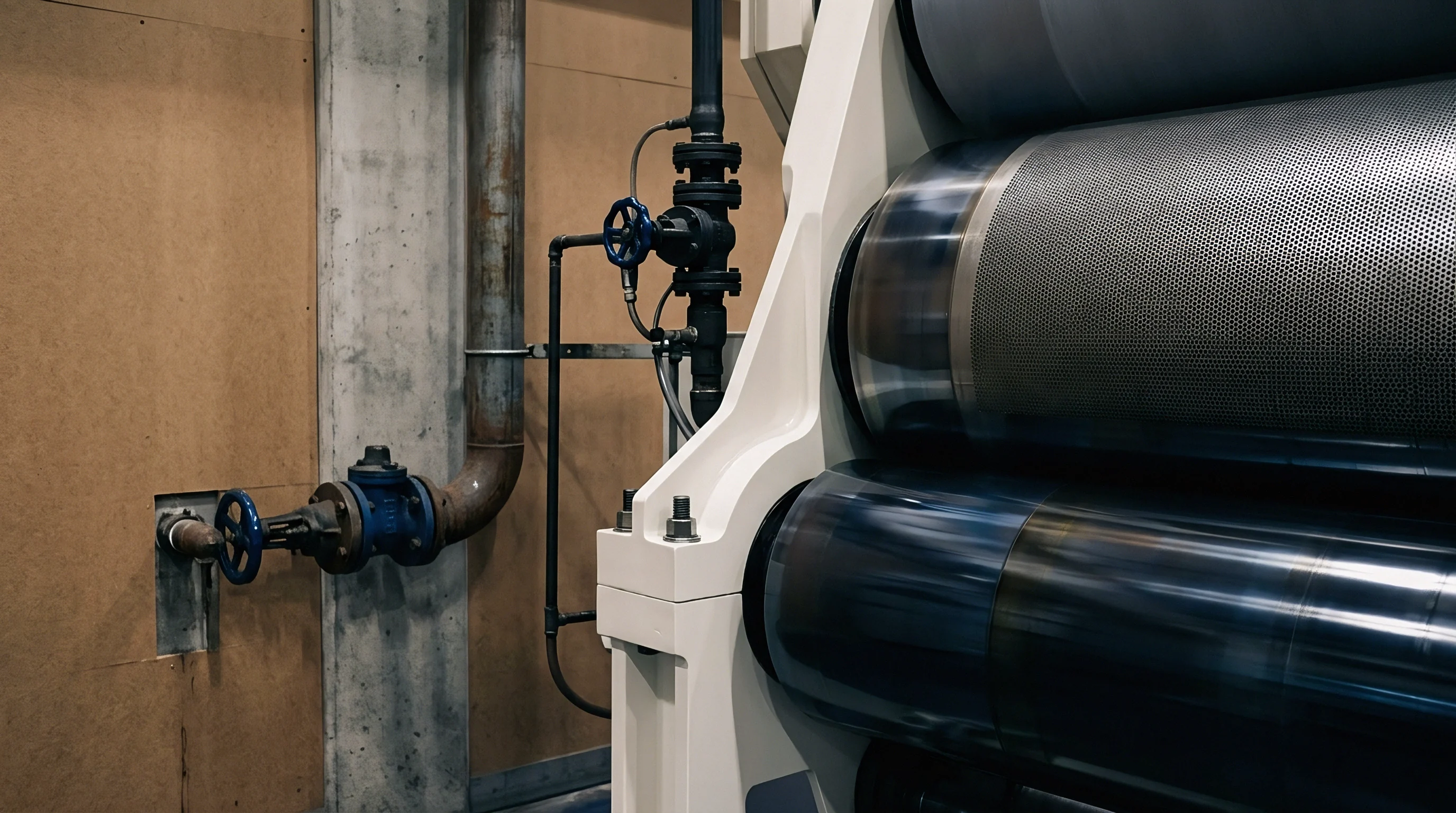
Blade
Mechanical metering hardware dictates film uniformness when transferring bio-based barriers onto fast-moving web surfaces. Station selection depends on target dry coat weight, web speed, slurry rheology, and baseboard surface smoothness. Converting lines deploy smooth metering rods, grooved metering rods, bentonite-backed blade metering stations, or non-contact curtain coaters.
Each metering geometry imposes unique hydrodynamic pressure profiles on the wet layer, influencing final barrier density and film integrity.
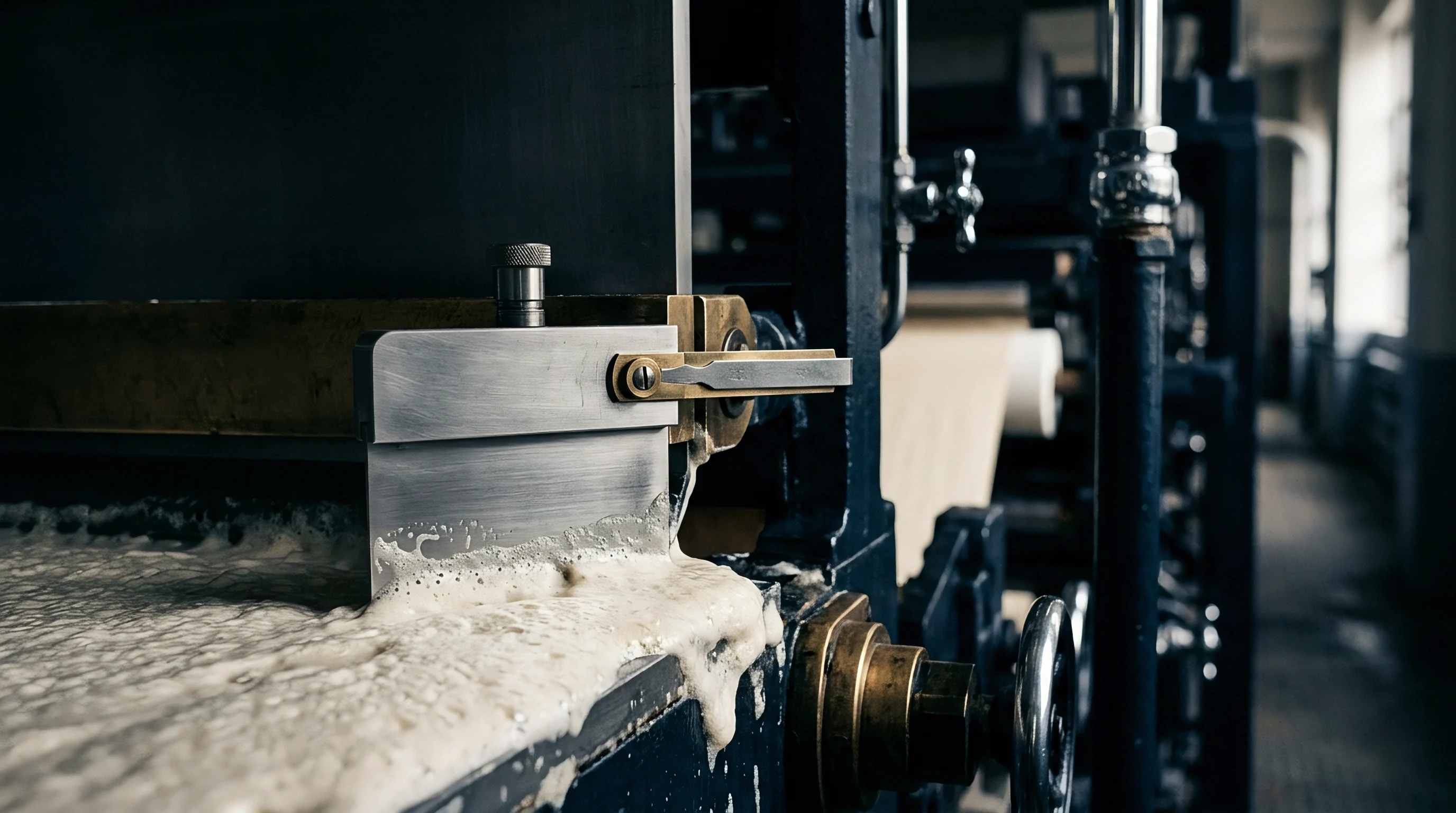
Metering Station Dynamics and Metering Rod Mechanics
Smooth and grooved metering elements experience extreme hydrodynamic lift when running viscous aqueous gels above three hundred meters per minute. Metering rod selection requires matching groove wire diameter or volumetric capacity to target wet film thickness. Blade angle dictates thickness.
High application speeds generate hydro-dynamic forces that push the rod back, causing coat weight drift if pneumatic backing pressures are improperly set.
- Grooved metering rods disperse uniform wet film profiles across variable cross-machine caliper profiles while maintaining constant hydraulic pressure.
- Smooth metering rods produce higher surface smoothness but demand tight control over slurry viscosity to avoid film splitting.
- Bentonite rod beds provide vibration damping at high web speeds, preventing cross-machine coat weight ripples.
- Air knife coaters deliver non-contact film leveling over rough substrates, eliminating mechanical contact streaks on fragile webs.
Under standard converting delivery terms, off-spec coat weight variations exceeding half a gram per square meter trigger lot rejection across commercial packaging runs.
Drying Profile Optimization for Crack-Free Microfibril Films
Rapid evaporative heating causes early skin formation that locks in trapped water vapor and creates pinhole micro-cracks. High speeds create misting. Thermally induced moisture vapor pressure beneath a dry surface skin causes localized blistering, destroying gas transport resistance.
Dryer configurations must use staged temperature profiles, combining medium-wave infrared pre-heating with gentle air flotation drying to maintain uniform solids concentration throughout the film thickness during dewatering.
Consider a commercial converting line running a 2.2-meter wide Solid Bleached Board web at 400 meters per minute. The production target demands a dry microfibril coat weight of 5.0 g/m² using a slurry supply calibrated at 4.0 percent dry solids content. The wet coat weight requirement equals 125 g/m² (5.0 divided by 0.04).
The volumetric slurry throughput calculates as 2.2 meters multiplied by 400 m/min multiplied by 125 g/m², equaling 110,000 grams per minute or 6,600 kilograms per hour of wet supply. The dewatering demand requires evaporating 120 g/m² of water from the wet film, generating a total evaporation rate of 105.6 kilograms of water per minute (6,336 kg/hr). Assuming a specific heat and vaporization heat load of 2,450 kilojoules per kilogram of water, the thermal drying system must deliver 4,311 kilowatts of effective energy to the moving web.
If air flotation blower temperatures rise too fast in zone one, surface skinning occurs within 0.4 seconds of web entry, increasing pinhole density from zero to over 450 count per square meter.
Improper dryer temperature staging induces internal film shrinkage stresses that split the barrier layer, resulting in total loss of gas holdout and complete rejection of the converted roll.
Permeation
Gas and liquid transport resistance measures how effectively a deposited biological film isolates packaged contents from ambient air. Functional barrier performance relies on creating a continuous, crystalline hydrogen-bonded network that prevents small molecules from diffusing through the material. Oxygen transmission rate (OTR), water vapor transmission rate (WVTR), grease resistance (Kit rating), and mineral oil holdout (MOSH/MOAH) constitute the primary physical metrics evaluated during converting line qualification trials.
Oxygen and Grease Barrier Performance under Humidity Stress
Dense hydrogen-bonded cellulose networks block non-polar gas molecules while remaining susceptible to moisture plasticization. At low relative humidity (50% RH), a 5.0 g/m² dry microfibril coating achieves oxygen transmission rates well below 2.0 cm³/m²·day·atm under ASTM F1927 test conditions. Water plasticizes cellulose fibers.
When ambient relative humidity rises to 85% RH, absorbed water molecules break inter-fibril hydrogen bonds, swelling the polymer matrix and increasing oxygen diffusion rates by orders of magnitude.
Relative humidity elevations collapse nanocellulose gas resistance by swelling inter-fibril hydrogen bonds.

Why Do Microfibril Coatings Flake under Creasing Shear?
Mechanical folding forces concentrated along package score lines induce severe compression and tensile strain in brittle surface layers. Folding fractures thin coatings. Nanocellulose films possess high elastic moduli but limited elongation at break.
When a converting line creases and folds coated paperboard into rigid carton structures, the outer radius of the fold experiences tensile elongation exceeding five percent. This strain exceeds the ultimate tensile failure limit of un-plasticized microfibrils, producing localized micro-fractures along the crease axis. Crease lines expose fibers.
Gas molecules and oil droplets readily pass through these structural fractures, defeating the barrier package.
| Dry Coat Weight (g/m²) | OTR at 23°C / 50% RH (cm³/m²·day·atm) | OTR at 23°C / 85% RH (cm³/m²·day·atm) | WVTR at 38°C / 90% RH (g/m²·day) | TAPPI T 559 Kit Value | EN 13676 Pinhole Count (per m²) |
|---|---|---|---|---|---|
| 2.0 | 45.0 | 850.0 | 320.0 | 5 | 120 |
| 4.0 | 4.5 | 310.0 | 210.0 | 9 | 14 |
| 6.0 | 0.8 | 145.0 | 160.0 | 12 | 1 |
| 8.0 | 0.3 | 85.0 | 130.0 | 12 | 0 |
| 10.0 | 0.2 | 60.0 | 115.0 | 12 | 0 |
| Oxygen Transmission Rate (OTR) tested per ISO 15105-2 / ASTM F1927. Water Vapor Transmission Rate (WVTR) tested per ASTM E96 (tropical conditions). Kit rating tested per TAPPI T 559. Pinholes evaluated via turpentine dye penetration test EN 13676. | |||||
Grease resistance evaluated via TAPPI T 559 Kit tests yields outstanding values of 12 at dry coat weights above 4.0 g/m². Non-polar oils cannot penetrate the tightly packed hydrogen-bonded fiber structures. Mineral oil hydrocarbons (MOSH and MOAH) remain completely blocked over extended storage intervals provided the barrier coating maintains pinhole-free continuity across the entire surface profile.
Whether chemical cross-linking additives can stabilize high-humidity gas barrier performance without forfeiting repulpability remains an open debate among packaging engineers.
Certification
Regulatory compliance files determine whether a functional paperboard package can legally enter commercial supply chains. Certificates cover specific physical scope lines, legal definitions, and standardized test conditions. Converting operations must compile verifiable compliance dossiers covering food contact authorization, material repulpability, industrial compostability, and chain-of-custody sourcing before releasing microfibril-coated packaging to market.
Food Contact Scrutiny and Specific Migration Thresholds
Direct food contact requires complete toxicological evaluation of all residual monomers, cross-linking agents, and anti-foaming chemistry. In the European Union, paperboard barrier packages fall under Framework Regulation EC 1935/2004 and national recommendations such as BfR Recommendation XXXVI. In the United States, compliance follows FDA 21 CFR 176.170 governance for paper and paperboard in contact with aqueous and fatty foods.
Compliance files determine duty. Overall migration limits under EN 1186 specify that chemical constituent transfer into food simulants (3% acetic acid, 10% ethanol, 95% ethanol, or Iso-octane) must remain below 10 mg/dm² of packaging surface area.
Recyclability Qualification and Fiber Recovery Yields
Standard repulpability protocols evaluate how cleanly surface layers release from underlying structural fibers during aqueous agitation. Cepi Recyclability Test Method Version 2 and PTS-RH 021/97 establish laboratory standards for repulpability verification. Clean separation yields fiber.
Microfibril barrier coatings offer continuous bio-based composition, avoiding the coarse plastic film shedding associated with polyethylene extrusion laminates. If cross-linking agents or wet-strength resins are over-dosed during coating formulation to resist moisture, the barrier layer resists disintegrating in standard mill pulpers, causing high reject rates during stock preparation.
- Overall migration testing under EN 1186 confirms that total substance transfer into aqueous and fatty food simulants stays below ten milligrams per square decimeter.
- Heavy metal limits set by CONEG and EU packaging directives restrict total lead, cadmium, mercury, and hexavalent chromium content to under one hundred parts per million.
- Industrial compostability criteria specified in EN 13432 mandate greater than ninety percent disintegration into organic material within twelve weeks under controlled composting conditions.
- PEFC and FSC scope lines on shipping manifests verify that raw baseboard fibers originate from independently audited, sustainably managed forest resources.
| Regulatory Domain | Governing Standard | Test Condition / Simulant | Acceptance Threshold | Required File Evidence |
|---|---|---|---|---|
| EU Food Contact | BfR Recommendation XXXVI | 95% Ethanol, 40°C, 10 days | < 10 mg/dm² overall migration | Accredited lab migration dossier |
| US Food Contact | FDA 21 CFR 176.170 | n-Heptane extraction, 21°C | < 0.5 mg/in² net extractables | Supplier FDA compliance letter |
| Material Recyclability | Cepi Recyclability Method v2 | Standard pulping, 40°C, 20 min | > 90% fiber yield, < 5% sticky macro-residuals | PTS or Cepi laboratory test certificate |
| Industrial Compostability | EN 13432 / ISO 14855 | Aerobic composting, 58°C, 12 weeks | > 90% disintegration (2mm sieve screen) | TÜV OK Compost certificate |
| Chain of Custody | FSC-STD-40-004 | Annual physical ledger audit | 100% verified certified input credit balance | Public register certificate entry |
Clause 4.2 of Cepi Recyclability Test Method Version 2 penalizes non-dispersible surface films that produce sticky micro-platelets, reclassifying otherwise repulpable board as non-recyclable mill waste.
Economics
Commercial viability hinges on comparing total applied wet slurry cost against poly-extrusion alternative coatings. Converting plant financial models balance raw material acquisition costs, thermal energy consumption, equipment modification capital expenditure, and speed penalties against savings realized through reduced regulatory packaging waste eco-fees.
Slurry Logistics and Dewatering Power Balance
Freight expenditures for transporting aqueous suspensions containing ninety-five percent water drastically inflate raw material unit prices. Shipping wet gel incur high transport costs per dry ton of active barrier chemistry. Plant economics favor localized microfluidization equipment or dry powder re-dispersion systems integrated directly at the converting line location.
Dryers consume massive power. Freight costs limit margin.
High web speeds lower fixed plant overhead while driving up thermal energy consumption per ton of finished paperboard.

Packaging Waste Regulation Fees and Landed Unit Parity
Extended producer responsibility schemes impose financial surcharges on packaging materials that disrupt standard recycling streams. Eco-fees favor monomaterial board. Under the European Packaging and Packaging Waste Regulation (PPWR) directives, traditional polyethylene-laminated folding cartons incur modulated eco-fee surcharges ranging from 150 to 450 Euros per ton.
Monomaterial microfibril-coated paperboard qualifies for baseline eco-fee rates, reducing downstream compliance taxes for brand owners. Landed cost calculations must factor in the total financial picture, combining wet chemical application costs, line energy usage, scrap rates, and extended producer fees to calculate true cost per thousand finished cartons.
When converter lines balance coat weight efficiency against thermal drying expenditure, bio-based barrier coatings achieve direct cost parity with fluorinated grease-proof boards across high-volume production runs.