Dynamic Mechanical Analysis Test Protocols for Z-Axis Core Ply Compression
Dynamic mechanical analysis of z-axis core ply compression identifies viscoelastic limits that govern caliper retention and creasing performance under dynamic load.


Mechanics
Out-of-plane compressive stiffness governs caliper retention, fluting flat crush resistance, and container stack durability under dynamic transit loads. Standard static compression tests, such as short-span compressive strength or flat crush evaluation, measure ultimate destructive load limit rather than time-dependent structural response. In contrast, dynamic mechanical analysis subjects paperboard core plies to oscillating z-axis compressive forces across defined frequencies, temperatures, and moisture levels.
This analytical method resolves the complex modulus into two distinct components: the elastic storage modulus, representing energy stored deformably within the fiber matrix, and the loss modulus, measuring viscous energy dissipation through internal fiber friction and binder displacement. The ratio of loss modulus to storage modulus defines the damping factor, which indicates how effectively a packaging core absorbs structural shock without permanent thickness loss.
Stiffness dictates stack durability. Paperboard core plies exhibit pronounced viscoelastic anisotropy due to preferential fiber orientation in the machine direction and layered z-axis fiber distribution. Under cyclic compression, thin core plies experience continuous load redistribution between the solid cellulosic fiber walls, inter-fiber starch networks, and internal air voids.
When dynamic stress amplitudes remain within the linear viscoelastic region, structural deformation stays fully reversible. Exceeding this boundary initiates micro-buckling of individual fiber walls and localized delamination between core layers, causing catastrophic drops in storage modulus. Characterizing this linear limit under z-axis compression requires high-resolution force transducers and ultra-low amplitude oscillation to isolate ply mechanics from gross structural collapse.
| Substrate Grade | Grammage (g/m2) | Caliper (um) | Storage Modulus E’z (MPa) | Loss Modulus E”z (MPa) | Damping Factor tan delta |
|---|---|---|---|---|---|
| Virgin Kraft Fluting | 120 | 175 | 42.5 | 3.8 | 0.089 |
| Semi-Chemical Medium | 140 | 195 | 51.2 | 4.1 | 0.080 |
| Recycled Containerboard Core | 160 | 225 | 31.8 | 3.9 | 0.123 |
| Solid Bleached Board Core Ply | 210 | 270 | 64.7 | 4.5 | 0.069 |
| Dynamic frequency set at 1.0 Hz with an oscillating force amplitude of 0.5 N overlaying a 2.0 N static pre-load under TAPPI T 402 conditioning. | |||||
Cellulosic core plies respond dynamically to load frequency variations. Low-frequency oscillation allows long-chain cellulose molecules and inter-fiber binders sufficient time to reorient, yielding lower elastic moduli and higher mechanical damping. High-frequency cycles force the fiber network into a stiffer response, suppressing viscous flow and shifting mechanical stress directly into the rigid cell walls.
Container stacks resting on transport vehicles experience multi-frequency vibration profiles ranging from 2 Hz structural swaying to 50 Hz engine-induced excitation. Evaluating core ply performance across this full spectrum prevents unexpected transport failure caused by resonance matching the material peak loss tangent.
Density scales with compressive modulus. Dense fiber consolidation reduces void space, forcing compressive loads directly into the solid cellulosic structure. Higher sheet density raises the absolute storage modulus while lowering the loss tangent, producing a stiffer sheet that transmits shock rather than dampening it.
Lower density furnishes absorb dynamic impacts through localized cell wall flexure, but risk progressive thickness loss under sustained fatigue loading. Core ply selection balances storage modulus requirements against necessary energy absorption to maintain overall box caliper throughout the logistics chain.
Clamp
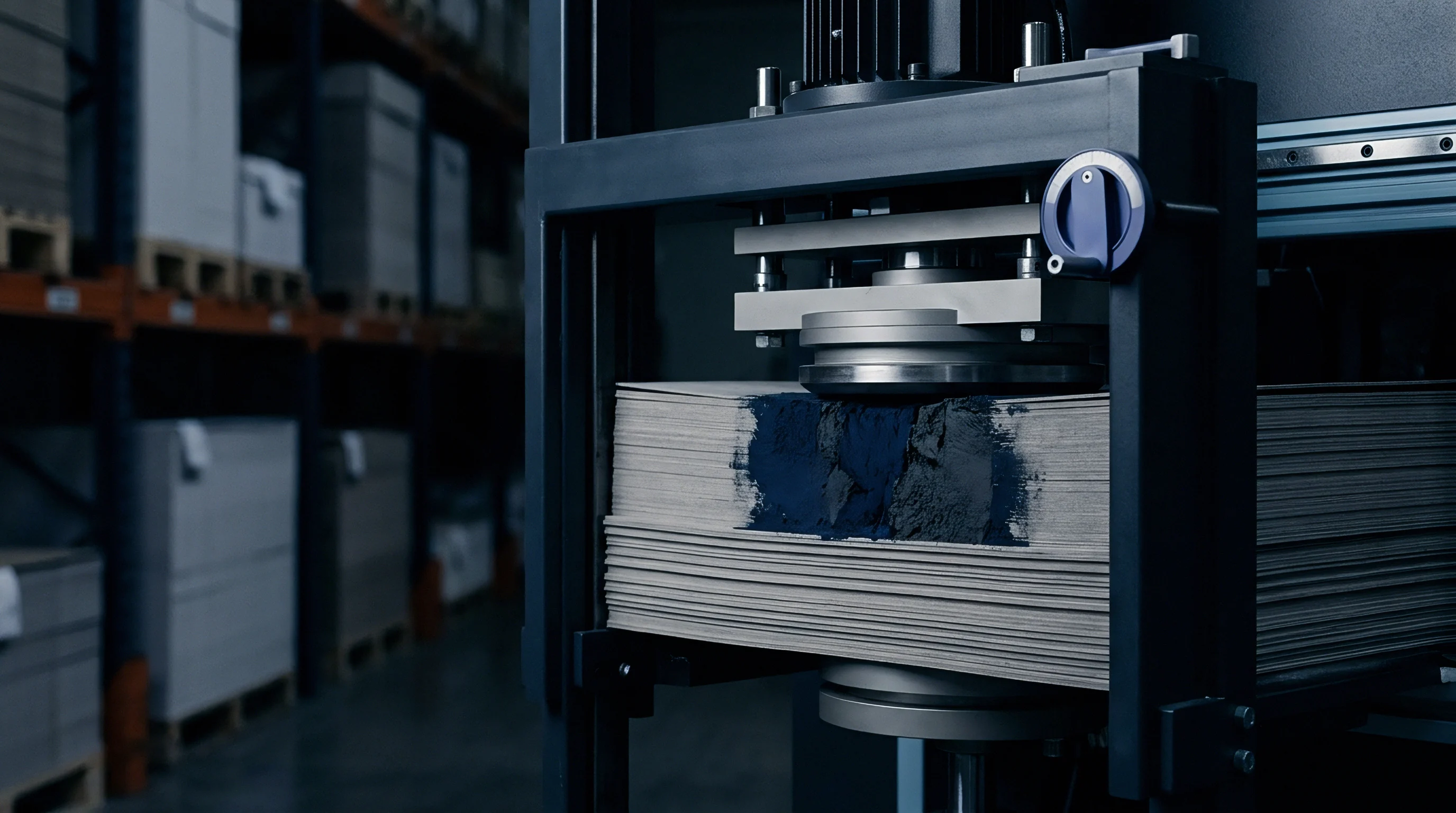
Hardware selection determines data integrity when executing out-of-plane compression measurements on thin fiber webs. Standard tensile or flexural DMA geometries fail under z-axis loads because specimen thickness rarely exceeds 300 micrometers. Compressive analysis requires precision parallel compression platens mounted within a rigid instrument frame.
Flat platen geometry presents severe calibration challenges: minor platen misalignment introduces non-uniform edge stresses, creating parasitic shear forces that invalidate out-of-plane compression calculations. Platen surfaces require optical flat polishing, and alignment checks using pressure-sensitive film establish uniform contact pressure before placing paper specimens.
Calibration eliminates frame flexure. Machine compliance introduces significant displacement error when measuring stiff core plies under z-axis compression. The measured displacement represents the combined deflection of the instrument frame, load cell, drive shaft, and the paperboard sample.
Subtracting instrument compliance requires running baseline compression cycles on a zero-compliance steel disk across the full temperature, force, and frequency range. The instrument software applies this baseline correction to isolate true sample deformation down to sub-micrometer scales.
Dynamic strain amplitude kept at 0.05 percent relative to initial sheet caliper prevents non-linear plastic collapse at 23 C and 50 percent relative humidity.
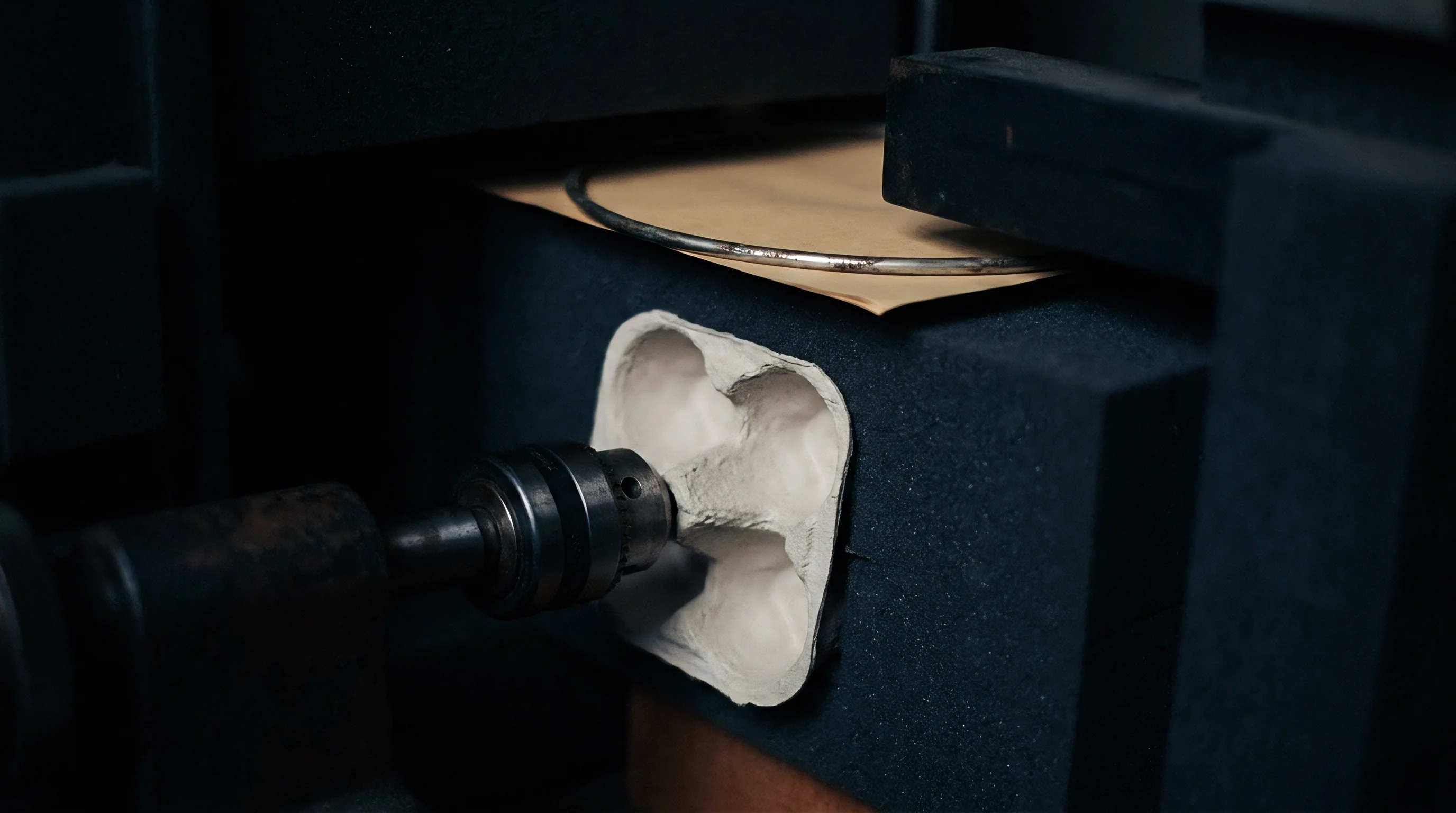
Parallelity limits shear deformation. Specimen geometry requires precise punch dies to eliminate ragged edges that crush prematurely during platen closure. Circular specimens with surface areas between 50 and 100 square millimeters yield clean force responses without exceeding driver motor current limits.
Contact area changes during loading. Specimen preparation involves strict edge inspection under optical magnification to verify that die cutting created no pre-existing edge delamination or surface fiber compaction.
- Platen misalignment error forces asymmetric stress concentration along sample edges, yielding artificially low storage modulus calculations.
- Excessive static pre-load crushes fragile inter-fiber binder networks prior to dynamic testing, shifting measured loss tangents into non-linear regimes.
- Uncompensated thermal expansion of drive shafts during temperature sweeps introduces artificial displacement signals that distort storage modulus readings.
- Specimen edge burring creates premature localized compression points, generating false initial strain data during load application.
Static force control balances dynamic force amplitude. Standard operation applies a static pre-load to maintain continuous contact between platens and specimen surfaces throughout the oscillation cycle. Setting the static force too low causes platen separation during the unloading segment of the cycle, producing clipped wave signals and artificial harmonic distortion in Fourier transform algorithms.
Setting static force too high compresses the porous core structure into its non-linear compaction phase before dynamic measurement begins. A static-to-dynamic force ratio of 1.2 to 1.5 maintains continuous contact while preserving the elastic baseline of the native fiber sheet. Incorrect force ratio setup leads directly to rejected mill lots, false yield calculations, and unresolvable disputes between substrate suppliers and packaging converters.
Protocol
Testing begins with precise environmental conditioning to lock equilibrium moisture content prior to fixture mounting. Samples remain inside a controlled atmosphere maintained at 23 C and 50 percent relative humidity according to ISO 187 for a minimum of 24 hours. The testing chamber enclosing the DMA compression platens holds these exact ambient parameters throughout room-temperature frequency sweeps.
Thermal sweeps require dry nitrogen purge gas to prevent condensation accumulation on platen surfaces during sub-zero cooling cycles or moisture flashing during high-temperature runs.
Standard testing conditions specified under ISO 187 require 23 C and 50 percent relative humidity, where a 2 percent humidity drift alters out-of-plane loss modulus by up to 14 percent.
Moisture shifts fiber relaxation spectra. Executing an isothermal frequency sweep requires systematic execution steps to capture the true dynamic modulus profile of the core ply without introducing artificial thermal or moisture histories into the specimen.
- Die-cut circular specimens to a uniform area of 78.5 square millimeters using a high-precision rotary hollow punch.
- Measure baseline sheet caliper across five points using a digital micrometer applying 50 kPa dead-weight pressure per ISO 534.
- Mount the specimen centered onto the lower rigid platen inside the DMA environmental chamber.
- Lower the upper compression platen until contacting the sheet at a pre-load force of 0.1 N.
- Equilibrate the enclosed chamber at the target temperature and relative humidity for 15 minutes before load application.
- Apply a sinusoidal dynamic strain amplitude of 0.05 percent overlaying a constant static compressive stress of 100 kPa.
- Scan dynamic frequency logarithmically from 0.1 Hz to 100 Hz, recording storage modulus, loss modulus, and loss tangent at five points per decade.
Static compression alone misjudges dynamic shock. Environmental moisture controls dictate dynamic storage modulus stability in recycled core plies. Lignin softens under ambient humidity.
Water molecules penetrate amorphous cellulose regions, disrupting hydrogen bonds between adjacent fibers and acting as an internal plasticizer. As relative humidity increases from 30 percent to 85 percent, the z-axis storage modulus drops precipitously while the loss tangent spikes, signaling a shift from elastic structural support to viscous, permanent deformation. Test routines must track this transition by coupling relative humidity generators directly to the DMA specimen enclosure.
Operating tests without strict humidity tracking renders dynamic data useless for predicting corrugated box performance in cold-chain transit environments. Continuous climate verification keeps test data aligned with real converting performance.


Furnish
Fibre morphology directly shapes out-of-plane dynamic compression behavior. Softwood fibers feature long, thick-walled structures that create resilient, high-bulk networks capable of retaining elastic storage modulus under dynamic loading. Hardwood fibers deliver superior sheet smoothness and even density distribution but yield lower z-axis compressive resilience due to shorter fiber lengths and thinner wall geometry.
Recycled fibers shorten over processing cycles. Repeated repulping and refining cycles degrade cell wall integrity, increase fine content, and reduce internal hornification resistance. Consequently, high-recycled-content core plies exhibit lower elastic moduli and elevated loss tangents when subjected to dynamic z-axis compression.
Starch networks increase elastic storage modulus while reducing mechanical damping across all dynamic frequencies.
Consider a 180 g/m2 recycled containerboard core compared against a 170 g/m2 virgin kraft fluting substrate operating in a dynamic transit environment. The recycled core possesses a 10 percent higher basis weight, yet DMA testing at 10 Hz and 23 C reveals a storage modulus of 32 MPa compared to 43 MPa for the virgin kraft sheet. Under a simulated transport vibration profile delivering 200 kPa peak compressive stress, the recycled core enters its non-linear plastic deformation regime after 1,200 loading cycles, losing 18 percent of its initial caliper.
The virgin kraft sheet maintains linear elastic behavior past 10,000 cycles, sustaining less than 3 percent caliper loss. The lightweight virgin sheet achieves superior structural durability because unbroken native cellulose chains preserve internal energy storage capabilities under dynamic load cycles.

How Does Starch Loading Alter Dynamic Z-Axis Damping?
Surface starch applications and internal strength additives reinforce inter-fiber bonded nodes, altering the dynamic response of the core network. Amphoteric cooked starch forms rigid chemical bridges across fiber crossover points, effectively raising the elastic storage modulus under z-axis loads. Starch networks increase elastic storage.
However, high starch loading reduces the sheet ability to dissipate energy through internal micro-slippage, lowering the loss tangent. Under sudden impact shocks, low-damping starch-heavy core plies transfer force directly through the matrix, causing brittle bond fracture rather than controlled energy absorption. Optimizing furnish formulations requires balancing native fiber length ratios against chemical additive rates to hit specific dynamic performance windows.
Synthetic dry-strength resins and polyacrylamide additives modify matrix elasticity without increasing sheet grammage. Adding one percent glyoxalated polyacrylamide raises z-axis storage modulus by approximately 12 percent without triggering the brittleness associated with heavy native starch loads. How fiber bonding chemistry influences long-term dynamic fatigue limits under high-humidity storage conditions remains an open operational question for packaging development laboratories.

Score
Converting operations inflict severe out-of-plane compressive deformation during scoring, creasing, and rotary die-cutting. Scoring wheels compress the core ply thickness locally by up to 50 percent at high mechanical deformation rates, forcing the material well beyond its linear viscoelastic limit. High loss tangent values under rapid compression prevent clean crease formation, leading to outer liner cracking and uneven fold resistance during automatic box erection.
Dynamic mechanical analysis predicts how substrate cores respond to these high-speed converting tools by mapping high-frequency stress-strain behavior.
Crease depth alters local density. Delamination destroys vertical compression resistance. Material subjected to severe z-axis compression experiences internal sheet delamination, breaking mechanical bonds between individual furnish layers.
When dynamic storage modulus drops excessively during initial creasing, the core layer loses its structural capacity to hold score lines straight under automatic folder-gluer operations. Assessing dynamic stiffness recovery after compression identifies substrates that spring back cleanly versus those that permanently collapse at the fold line.
| Storage Modulus E’z Range (MPa) | Loss Tangent Threshold | Scoring Depth Headroom (%) | Score Line Cracking Risk | Fold Resistance Variability |
|---|---|---|---|---|
| Under 25.0 | Above 0.140 | 30 to 40 | High | Severe (+/- 25%) |
| 25.0 to 35.0 | 0.100 to 0.140 | 40 to 50 | Moderate | Moderate (+/- 12%) |
| 35.1 to 50.0 | 0.070 to 0.099 | 50 to 60 | Low | Low (+/- 5%) |
| Above 50.0 | Under 0.070 | Above 60 | Very Low | Minimal (+/- 2%) |
Dynamic shear yield under z-axis compression indicates internal fiber bond breakdown before macro-cracking appears on the fold. Qualification procedures verify mill lots before committing tonnage to high-speed converting lines.
- Verify dynamic storage modulus baseline on incoming reels using standard 1.0 Hz compression testing at standard humidity.
- Conduct frequency sweep screening from 1 Hz to 50 Hz to confirm structural stability across high-speed packaging machinery strain rates.
- Evaluate loss tangent shifts under 85 percent relative humidity to predict cold-storage creasing behavior and score line springback.
- Inspect compression recovery rates following high-amplitude stress pulses to ensure score line memory meets erection limits.
Dynamic shear yield under z-axis compression indicates internal fiber bond breakdown before macro-cracking appears on the fold.
Converting machinery operators report that recycled board grades run inconsistently across scoring rollers, claiming furnish variation makes accurate score setting impossible. Laboratory analysis confirms that basis weight drift combined with fluctuating loss tangents creates unpredictable depth-of-cure requirements on the converting floor, forcing operators to stop machines and alter creasing clearance manually.
Specification
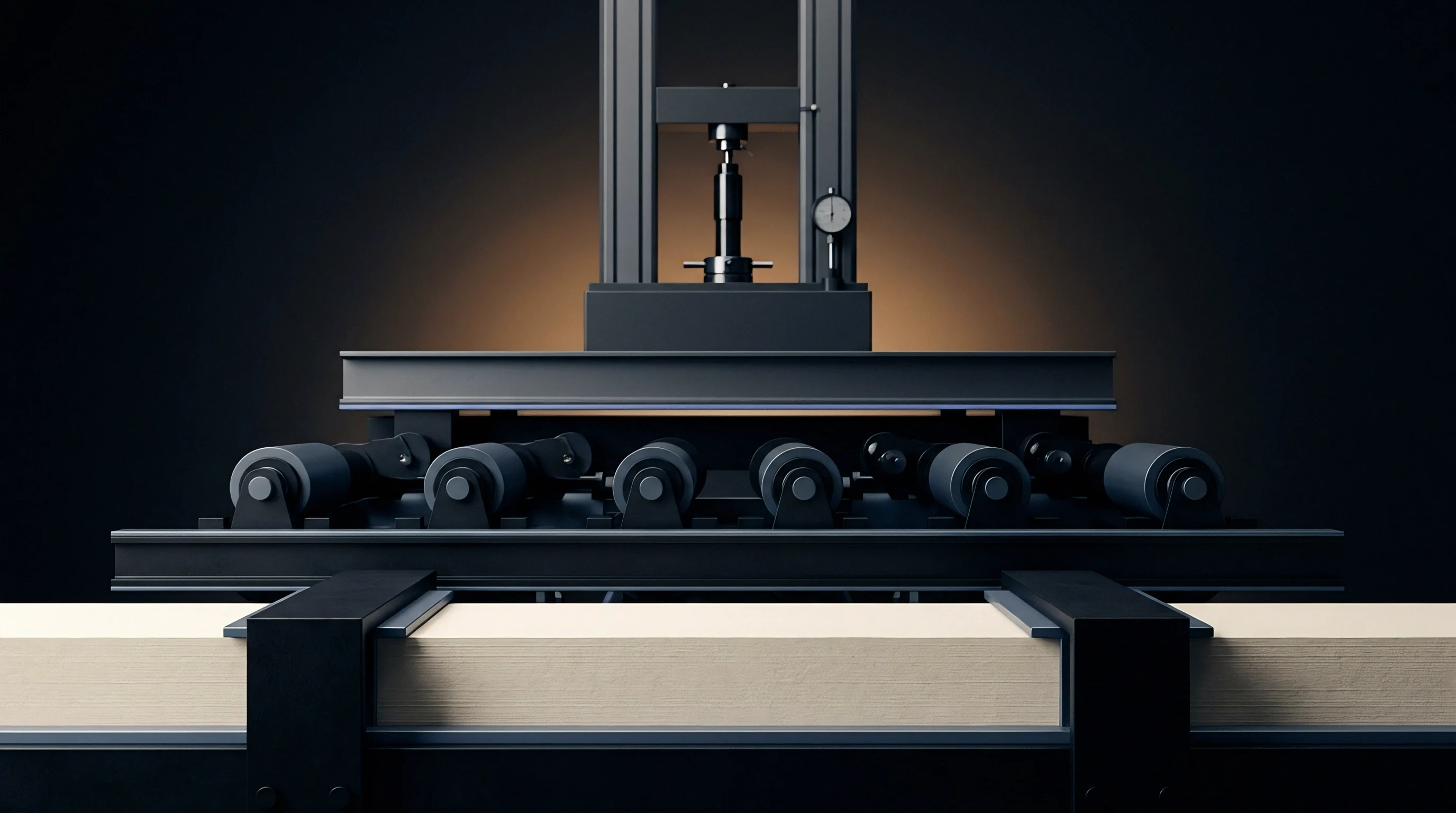
Procurement documents must anchor z-axis mechanical criteria to verifiable laboratory parameters rather than generic burst or crush targets. Incorporating dynamic storage modulus and maximum allowable loss tangent thresholds into procurement specifications holds paper mills to rigid quality standards. Specifying these parameters protects converting plants against substrate lots that pass routine static strength testing but collapse under dynamic transit vibration or high-speed scoring operations.
Mill certificates must cite test conditions, frequency, dynamic strain amplitude, and conditioning standards alongside measured modulus values.
| Measured Parameter | Target Specification | Acceptable Tolerance | Out-of-Spec Threshold | Commercial Penalty Action |
|---|---|---|---|---|
| Storage Modulus E’z (10 Hz) | 40.0 MPa | +/- 5.0 MPa | Under 32.0 MPa | 5% Price rebate per metric tonne |
| Loss Tangent tan delta (10 Hz) | 0.085 | +/- 0.015 | Above 0.115 | 10% Price rebate or lot rejection |
| High Humidity E’z Retention (85% RH) | 70.0% of baseline | – 5.0% absolute | Under 60.0% of baseline | Full reel lot rejection at dock |
| Caliper Loss under 200 kPa Fatigue | Under 4.0% | + 1.0% absolute | Above 6.0% | Converter credit for waste scrap |
Target moduli prevent box failure. Setting tighter viscoelastic tolerances reduces box crush claims but raises mill production costs. Mills running high recycled content furnish may demand price premiums or refuse commitments when required to guarantee z-axis storage moduli above 45 MPa.
Buyers weigh the landed cost per metric tonne against the structural risks of container downgauging. Setting dynamic performance criteria aligns paper purchasing contracts with real-world distribution demands.
Contractual agreements incorporate mandatory quality verification clauses. The contract dictates that substrate lots failing to meet minimum z-axis dynamic storage modulus thresholds during incoming dock testing face immediate rejection or mandatory price adjustments calculated directly from the structural deficit percentage.